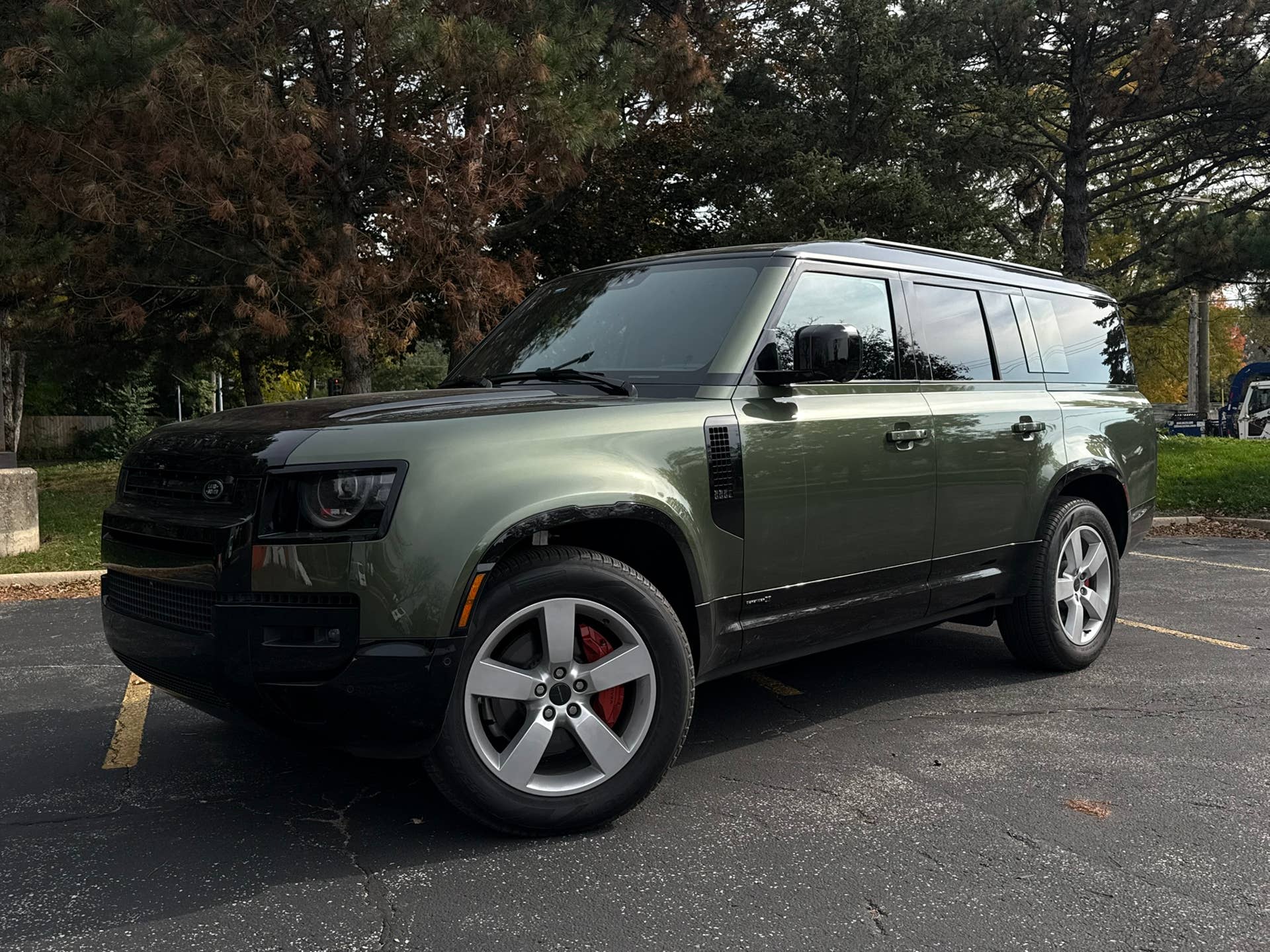
The entire Scout project is both exciting and mystifying to me. The idea of Volkswagen resurrecting the old International Harvester brand to make big hybrid and electric trucks is an exciting one, and the products look fantastic. At the same time, VW has continuously deprived its existing brands of competitive products.
In theory, Scout goes into production in 2028, though it remains to be seen if the number of trucks delivered in 2028 will be larger than the number of times I write about Scout in The Morning Dump. It’s been interesting to watch, in no small part due to the fact that Volkswagen’s own dealers really, really do not want it to happen the way it’s happening.
Volkswagen brands have been taking it on the chin lately, and I’m not trying to add in too many punches of my own, so here’s some good news: Porsche’s profits are on the rise again. The new CEO seems to be doing a good job, and it’s starting to show. His tactical retreat from China was smart. Mercedes is sort of in the opposite position, and it’s starting to weigh on its profits.
Are you in the UK? One of the best car shows is happening again and tickets are on sale.
VW Dealers In California Can Continue To Sue Volkswagen

The most important car market in the United States for most vehicles is California, which typically makes up more than 10% of the total new car sales in any year (followed by Texas and Florida). This is especially true for any sort of fancy EV, hybrid, or otherwise startup vehicle.
If you want a great comparison for Scout, just look at Rivian. The State of California is reportedly responsible for about a third of Rivian’s total sales volume. Given that Volkswagen is now the savior of Rivian, it makes sense that the Scout brand should follow the lessons and example of that EV carmaker.
This has included taking Rivian (and Tesla’s) direct-to-consumer model. Rather than go through Volkswagen or Audi dealers, Scout is planning to sell directly to consumers as well. It was a big part of their launch presentation, which David attended. As David wrote:
… Scout anticipates higher returns for its company (and also promises lower prices for the consumer, though I’d be surprised) by going direct-to-consumer; it says this setup allows for more nimbleness compared to a dealer model — the ability to scale back or crank up volume more quickly in certain markets.
What’s more, Scout says a model in which it is interacting directly with consumers — and not through dealers — lets the company more easily launch targeted incentive programs based on where vehicle sales are succeeding and where they are falling short. Plus, Scout says it can understand the vehicle weaknesses better in different markets, it no longer has to worry about vehicles being offered with options that consumers don’t want, and what’s more, Scout says it expects a reduction in warranty expenses. (I later asked about how this model could reduce warrant expenses, and the answer, as I understood it, is that it comes down to having more granular data; you can know things like the training level of techs in certain regions, you can make sure parts are located near where they’re most needed, etc.)
Sure. Maybe. I could see all of that happening.
One group of people who cannot see that happening, or at least don’t want to see that happening, is Volkswagen dealers. Those dealers view the whole Scout DTC model as an existential threat. Why? There’s the first layer, which is that Volkswagen dealers have had years of lost products. In the first part of the century, VW gave dealers an edge with a mix of affordable sedans (like the Passat) and ‘clean diesel’ technology. That’s all gone, and the intended replacements were a bunch of EVs that either didn’t sell well enough (ID.4), didn’t ever show up (ID.7), or showed up and were quickly pulled (ID.Buzz).
VW dealers are starving for more products, and the thing they probably would love most–especially in California–is a high margin, competitive SUV and truck pairing. Being deprived of that sucks. (I guess here I should disclose for those who have somehow missed it that our cofounder Beau has a VW dealership, though I can’t remember talking at any length about the Scout issue, and it doesn’t impact my views).
The even bigger issue, of course, is that if Scout is successful at cutting out dealers it doesn’t stop Volkswagen from doing this with other brands until it no longer needs dealers. For that reason, dealers in various key markets are suing.
How’s it going in California? Not well for Scout thus far. Volkswagen and Scout obviously don’t want to go to trial to fight the California New Car Dealers Association’s claims that the automaker is unfairly competing with its own franchised dealers, in violation of California law (which was amended in 2024 to prevent exactly this from happening).
VW and Scout tried to have the case dismissed earlier this year, but the dealers won. The companies tried again and, as Automotive News reports, they got the same result:
The ruling from Chief Judge Cynthia Bashant of the U.S. District Court for the Southern District of California is another legal setback for Scout and VW of America in the nation’s largest new-vehicle market.
Scout is preparing to launch U.S. sales straight to consumers, a practice vehemently opposed by franchised dealers.
VW and Scout argued the California New Car Dealers Association’s claims of unfair competition from the automaker and startup weren’t viable and don’t have legal standing, Bashant wrote in the October ruling.
Who knows what’s going to happen in discovery, if it continues, but it creates the opportunity for lawyers representing dealers to find out how Volkswagen talked about Scout. The company can’t really afford to not sell trucks in California, and the dealers can’t afford to cede their market to Volkswagen.
Porsche’s Retreat From China Is Working

I think I like the new Porsche CEO, Michael Leiters, who has done the hard work of listening to his employees, viewing the harsh world as it is, and forming a plan that makes sense. His plan, which is called Sportwagenschmiede 35, is focused on that awkward “medium-term” space. The idea is to become a little less of a volume automaker and a little more one that can be profitable with fewer vehicles.
One of the key parts of this, to me, is where the company said “The break-even point is to be reached at fewer than 200,000 vehicles sold. This is based on very conservative forecast for China.” Porsche became close to a full line automaker with products like the Panamera and Macan, then added on an even greater ambition with a sense that it would sell electric cars everywhere on the strength of its brand. That wasn’t going to happen–especially not in China–so the strategic retreat was necessary.
According to the company, it’s working out, as through the first nine months of the year the company has managed a margin of 6.9%. Not bad, considering for all of 2025 the return was 1.1%. Here’s Leiters in a note to shareholders:
We are implementing our strategic realignment consistently and at a rapid pace. Our focus is on our core business, a competitive cost structure and a sustainable increase in our profitability. With the measures already implemented, we are creating the conditions to position Porsche as a stronger, more focused and more profitable company in the long term.
Higher margins, more expensive vehicles, a little more Ferrari and a little less SEAT. It all makes sense to me.
Mercedes-Benz Sees A 2-3% Margin, Blames China

I’m not a huge fan of what Mercedes is doing right now, though the new S-Class is apparently great, and I’m looking forward to trying it at some point. The company is just one of many German brands reeling from the loss of cash from China, and is now downgrading its profit forecasts, again.
The luxury-car maker now sees an adjusted return on sales in its core cars division of between 2% and 3% for the year, it said Tuesday, compared with as high as 5% previously. The cut makes Mercedes the latest German automaker, after Volkswagen AG and BMW AG, to warn of worsening conditions in China.
Mercedes also pointed to higher fourth-quarter costs, partly driven by more expensive materials. The company now expects group earnings before interest and tax to be roughly flat from a year earlier, abandoning its previous forecast for a significant increase.
Maybe Porsche is right.
Festival Of The Unexceptional Tickets On Sale
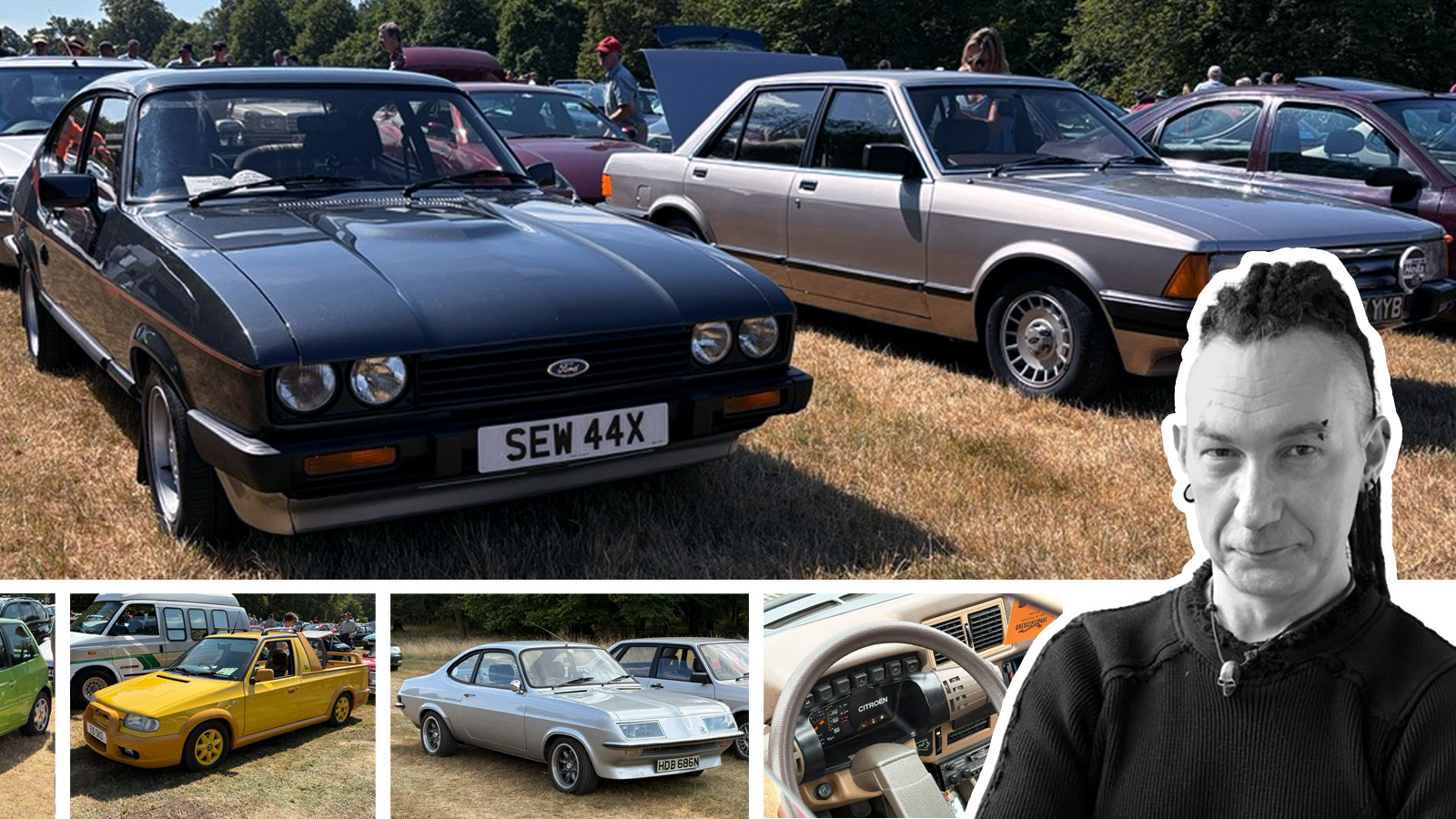
One of Britain’s best car shows is the Festival of the Unexceptional. Don’t believe me? Just listen to our own resident goth Brit car designer:
It’s the equivalent to your Concours D’Lemons, but with more British self-deprecating humor and less Jason Torchinsky. A huge celebration of the most mediocre cars to ever soil the tarmac during the seventies, eighties and nineties, if Generation X-ers like me ever shed our apathy long enough to organize a car show, FOTU (to use its accepted internet-friendly abbreviation) would be it.
Tickets are on sale now. Who knows, maybe we’ll try to buy something truly terrible for Adrian to drive again.
What I’m Listening To While Writing TMD
It seems so unlikely that The Flaming Lips ever happened, and I’m so glad they did. Here’s the original breakout song, “She Don’t Use Jelly.”
The Big Question
Which German brand will be the most important German brand in 2035?
Top photo: Scout
The post Scout Just Lost A Court Battle In The One Place It Can’t Afford To Lose One appeared first on The Autopian.