The name Evel Knievel often comes up as the Ultimate Stuntman, but Evel had an unsung Canadian rival who took on a seemingly impossible feat in the quest to take over the greatest stuntman position: jump a rocket-powered car over the Saint Lawrence River from Ontario to New York, a full mile of flight from takeoff to touchdown. This absurd stunt spawned an outstanding documentary film and later inspired a musician to make an album about it that was then turned into another film. I’m not making this one up.
Evel Walks Behind You
In the mid-seventies, this ad appeared in newspapers that might have you asking two questions: “Who is Ken Carter, and is he insane?”

Maybe there’s a reason that Ken Poleschuk – who changed his last name to Carter – was dubbed “The Mad Canadian.” The Montreal-born daredevil made a decent living for nearly twenty years with a traveling stunt show business he’d built, but somehow Ken wanted more than just the summer fairs and between-race ramp-to-ramp jumps at oval dirt tracks. No, he wanted to “amaze the world,” in his own words. Besides, now in his late thirties, Ken knew that he could only do these kinds of antics for a few more years, so a big final payday would be nice.

Carter’s courage in an airborne beat-up sacrificial old Ford or Chevy was matched only by his salesmanship. With the rise of Knievel, Ken saw his chance to pitch a stunt for ABC’s Wide World of Sports. This was a Saturday afternoon program us kids watched that “spanned the globe” to bring us all sorts of odd competitions, and they showed us “the thrill of victory and the agony of defeat” (where each week a guy on the intro would wipe out at the end of a ski jump in a satisfying wreck).
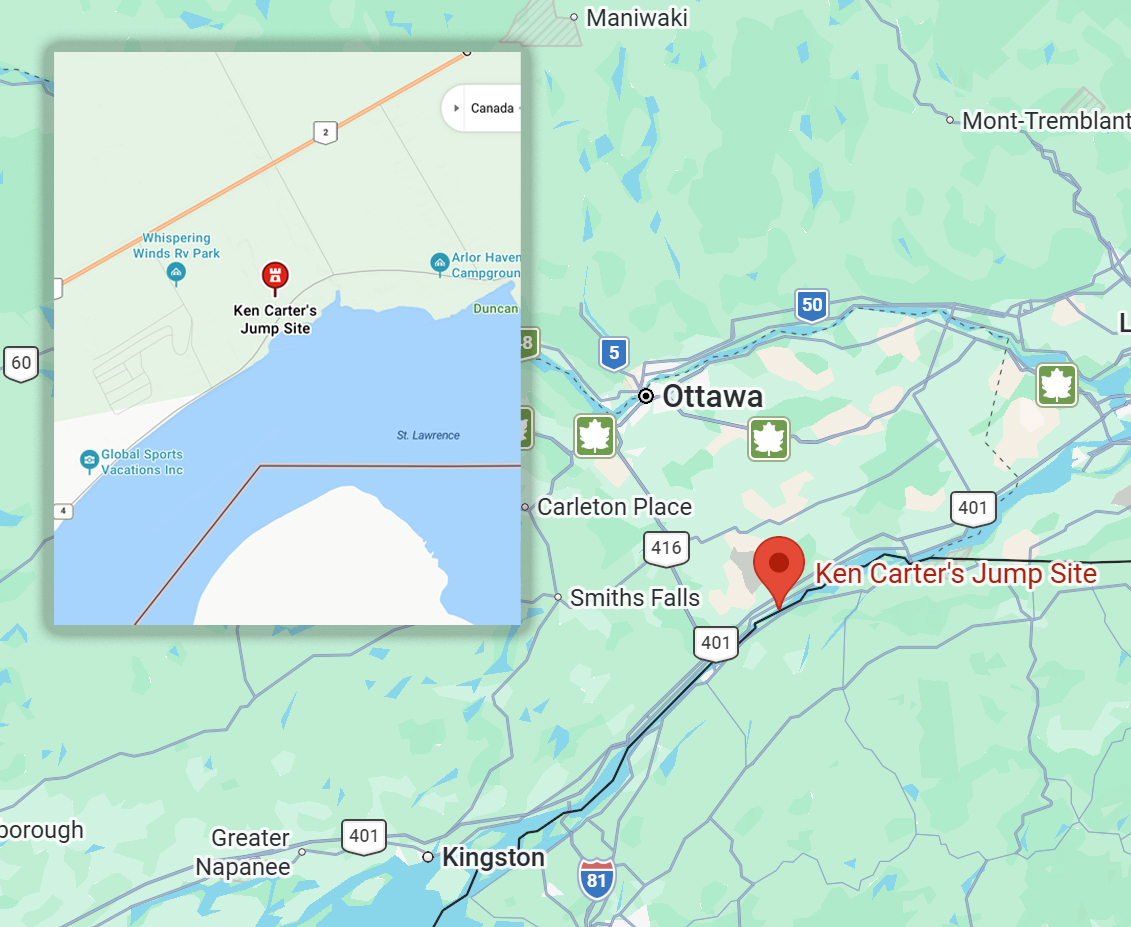
Ken’s idea was simple: build a runway and ramp next to the Saint Lawrence River in Morrisburg, Ontario, and essentially “fly” the car over to crash-land on the American side in New York. Carter was able to secure $250,000 in funding from ABC to air the stunt on Wide World of Sports on Sept. 25, 1976. That was seemingly enough time and a big chunk of change back then (around $1.5 million today); it turned out to be not enough
Not Sure How They Dealt With The Passport Situation
There were two major things needed for this jump, or more accurately a “short distance flight.” One was a car. To accomplish the over one-mile distance, a rocket producing around 25,000 pounds of thrust was required, as well as the on-board fuel tanks to supply it. Now, a rocket-powered car is obviously a tube-frame specialty build, so the body placed on it could look like essentially anything you’d want. If I were trying to get maximum distance from my land-based rocket, I’d probably make something that looked a bit like a Citroën DS with a full belly pan for the most wind-cheating shape imaginable. Having owned a Malaise-era Lincoln, it never would have occurred to me to cover the rocket in the body of a Continental Mark IV, a car with aerodynamics that likely match your house.

For whatever reason, Carter decided that this boxy automobile would be the ideal shape for flight; the car even featured silly winglets on the sides which were reportedly adjustable and controlled by the steering wheel to allow Ken to change the course of the car as he was flying to the States in his oval opera window-equipped coupe. Seriously, I pegged the 85MPH speedometer on my Lincoln a few times, and the wind noise told me that speeds over 200 were not recommended.

The second and even bigger challenge was making the launch ramp. To get the car on a trajectory to New York, the ramp needed to be 1400 feet long and nearly 90 feet tall, built on 50 acres near Morrisburg, Ontario, along with a paved runway. It looks hilarious, like something from a Wile E. Coyote cartoon. A live audience of around 100,000 was planned for.

Naturally, nothing went as planned. The fuel tanks for the car couldn’t hold pressure without exploding. Constant rain caused the construction equipment to get stuck wheels-deep in the mud, and construction mistakes meant that parts of the ramp didn’t meet and needed rework.


These delays got ABC scared, so Ken’s worst nightmare came true: they brought in Evel Knievel himself to assess the situation. Of course, an American comes to judge the Canadian upstart; you can see where this is going.

Evel claimed that there was too much work to be done to meet the deadline, and that the lack of preparation made this stunt far too dangerous; something that he would never attempt himself. Coming from a man who tried to take his own (failed) rocket ride of Snake River Canyon, the network listened.

ABC didn’t want to broadcast a deadly accident, so they promptly pulled their support and cancelled their coverage. Carter saw this as an attempt by Evel to kill his shot at glory. Rivalry aside, Knievel was right, but Ken wouldn’t find that out until too late.
I Need To Stress The Fact That It Was Designed As A Lincoln Continental With Wings
Naturally, Ken Carter didn’t give up. He tried again the next year unsuccessfully to stage the jump, and again the year after, but in 1979 Carter finally had everything come together to make an attempt. It’s not entirely clear where the financial backing from the company that wanted exclusive film rights came from; claims of mob cash were raised but never verified.

On September 26, 1979, all was ready to go, but within five seconds of the launch Ken aborted the stunt due to a supposed mechanical failure. The company backing the stunt didn’t really buy it; they were convinced that Carter had lost his nerve and had other plans. Ken was lured to a hotel “meeting” on October 5 in Ottawa, and while he was there, they brought in stuntman Kenny Powers to Morrisburg to do the job.
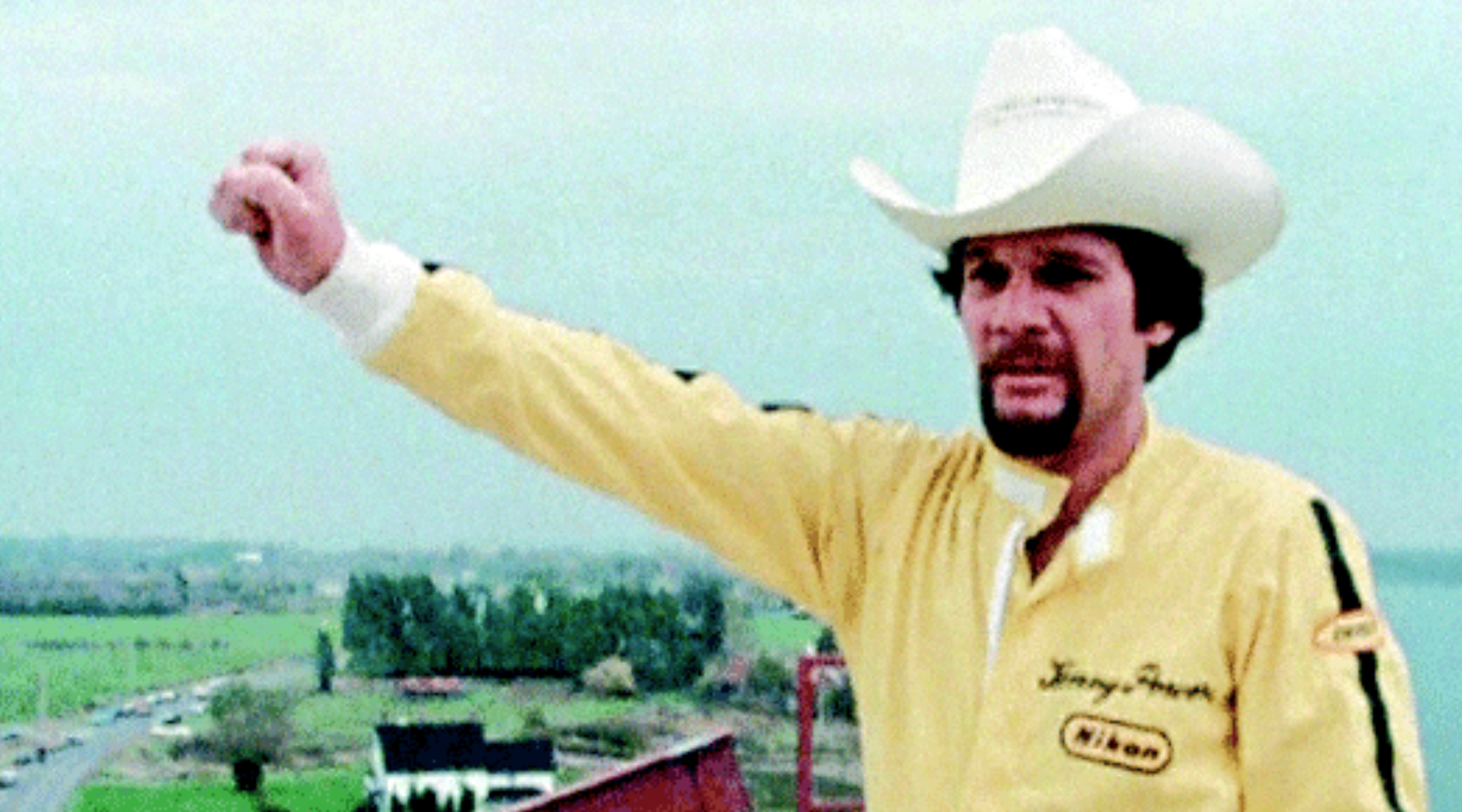
Powers was apparently at least the partial inspiration for the lead character of the same name on the HBO comedy series Eastbound and Down, so that should tell you a bit about this South Carolina daredevil. He promptly hopped in the Lincoln while Carter was blissfully unaware and rocketed down the runway, headed to his home country across the river.
He did not make it. He didn’t even come close to making it. Battered by four years of Canadian winters, the ramp and runway had settled, creating a bumpy surface that shook the car loose and cracked the body. Wind quickly ripped at the blocky fiberglass Lincoln Continental shape, and only one of the five parachutes opened prematurely not long after the car left the ramp (an accident that likely saved Power’s life). The remains of the car crash landed in the water, having traveled only 500 feet. Powers broke eight vertebrae in his back, three ribs, and a wrist. Carter was irate, though the backers claimed they were “concerned for Carter’s health” as the reason for the switch.

According to Adirondack Almanac, Ken Carter never held any ill will towards Powers; honestly, from all accounts Carter seemed like an incredibly nice guy and far removed from his vastly more famous, rather obnoxious American stuntman rival who beat people with baseball bats. Carter never attempted the Saint Lawrence River jump again; the ramp has since been leveled, but the weed-covered remains of the runway can still be seen.
Sadly, for one of Carter’s later jumps on September 3rd, 1983, he was concerned about his Pontiac Firebird rocket car making the distance over a pond at a racetrack in Peterborough, Ontario. He had extra fuel added, which caused the car to overshoot his landing site, fly up to over 80 feet in the air, and land on its roof. Ken Carter was killed instantly. That might have been the end of Carter’s life, but the legend was just beginning.
The Movie That Spawned An Album That Spawned A Movie (And Later Another Movie)
In 1981, the Film Boards of Canada released The Devil At Your Heels, a documentary about the events leading up to and during the failed Saint Lawrence River jump. I implore you to watch it in its entirety when you can. An unintentional comedy in many parts, it nonetheless shows what one person can do if they put their mind to it.
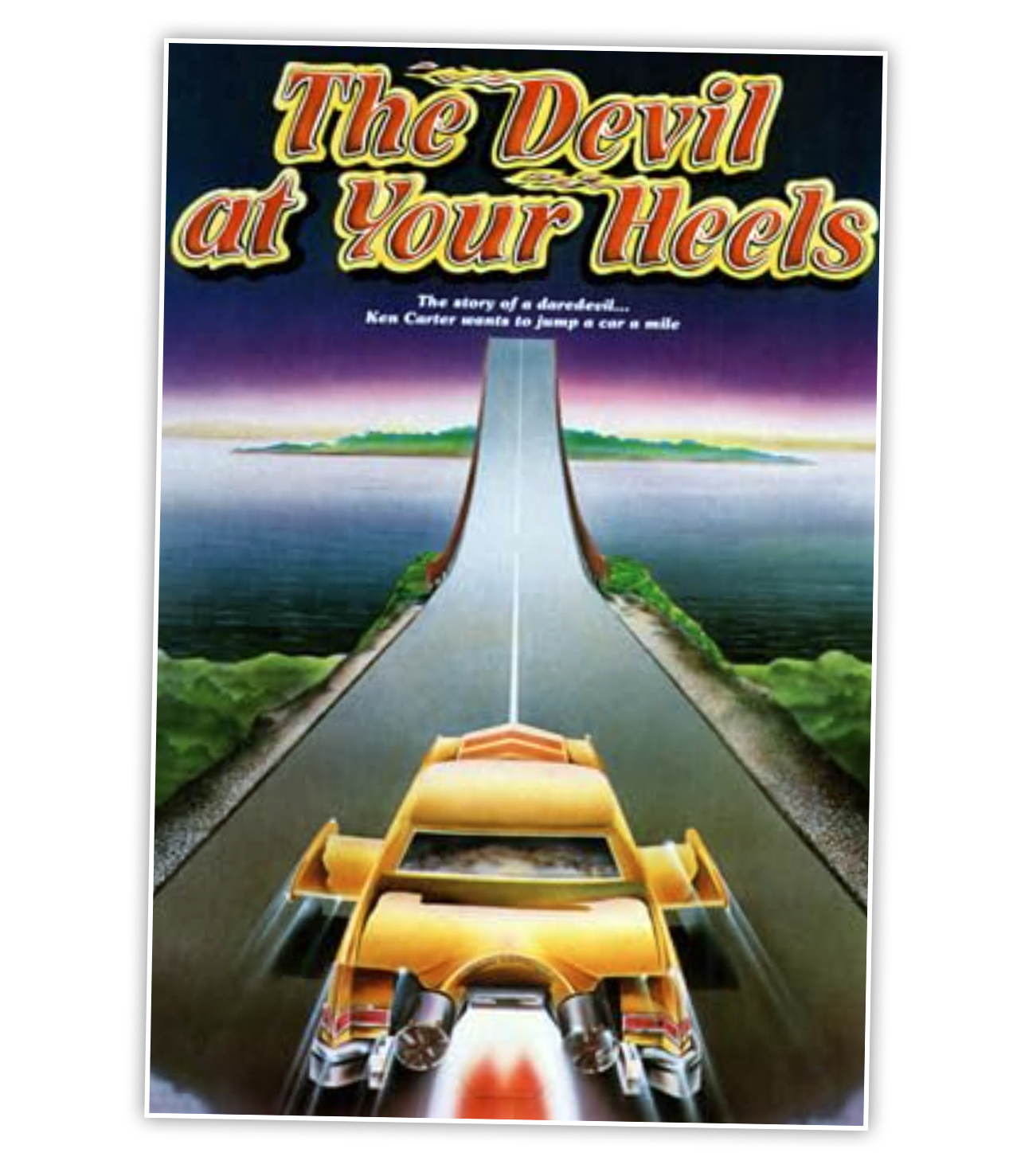
The film has gained a cult following over the years, but we Americans are late to the Canadian’s party on this one; few here knew of his existence. However, many kids that grew up in the land of maple syrup were well aware of and inspired by Ken’s story from a young age, including a musician named Mark Haney. This double-bass player came up with a 2010 concept album called “Aim For The Roses.” The title comes from a quote out of The Devil At Your Heels, where Ken Carter claims to have planted a bed of roses on the New York side of the jump as a “soft landing place.” Yes, he really had no idea what he was doing.

It’s a bizarre, ambitious piece of music with odd song titles such as “Jump Day- I Nearly Had A Heart Attack” and “You’re All Going To Jail” (what Carter said after learning of Kenny Power’s failed attempt in his car).
You’d think that such an obscure work of art has to end there with a few dozen album sales. It does not. In 2016, producer Mark Bolton filmed a documentary that juxtaposed Ken Carter’s ambition with the composer Mark Haney’s equally powerful drive to make such an improbable work of music.
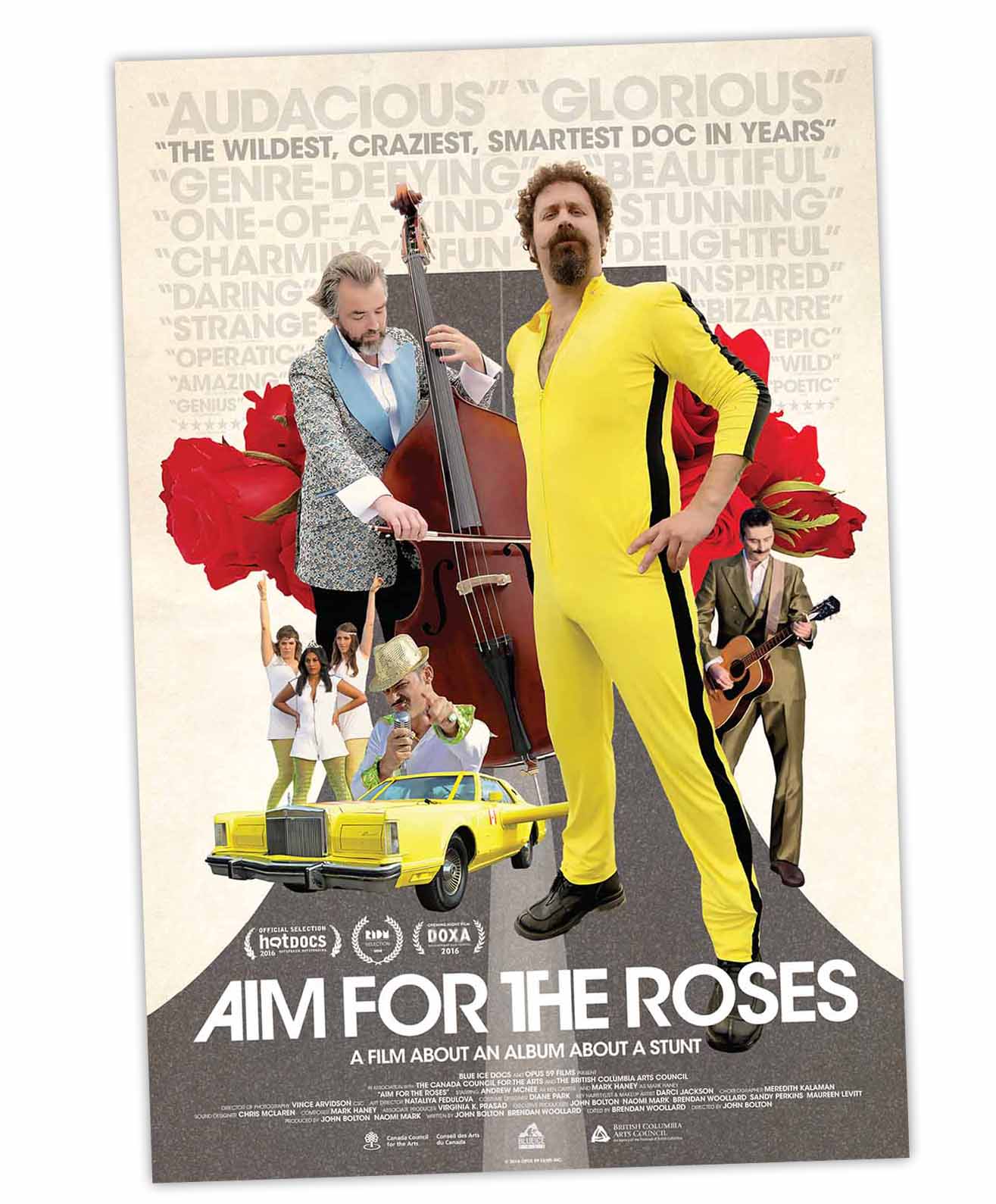
How does one even describe such a film? A double bass player?

Here’s the trailer which will possibly leave you with more questions than answers:
The film also inadvertently becomes a chronicle of the equally ambitious task that Bolton took on to make this insane docudrama; the fact that Bolton did a GoFundMe to raise cash to build a ramp and purchase a Lincoln Continental was similar to the fundraising for exactly the same objects that Ken Carter had to do in the first place. It’s like the same ambition coming full circle. Yes, they procured a Mark V for filming and not a Mark IV like the real thing, but who cares?

We Should All Aim For The Roses
We never got Ken Carter toys from Mattel, but at least the legacy of this insane stunt lives on. In Morrisburg, a few residents still possess “holy relics” of the jump, such as a wing off of the wrecked Lincoln to keep the memory of Carter fresh. Let’s face it; nobody was making tributes to Evel Knievel in the 2010s – or today. Just a month ago, another new Ken Carter movie called The Stunt Driver was released in Canada on almost exactly the fiftieth anniversary of the original 1976 planned launch date.
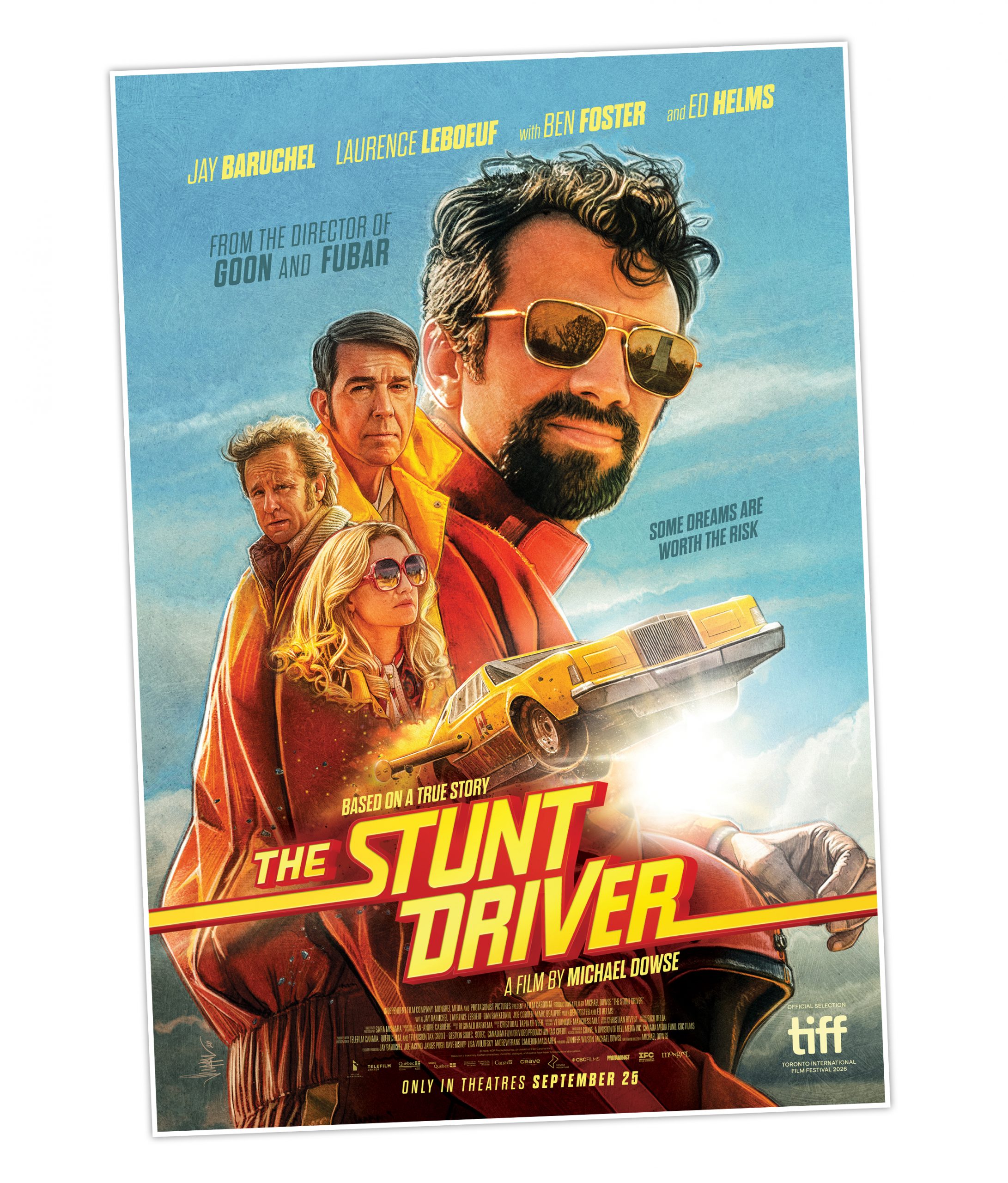
Some say that it wouldn’t have been a quintessential Canadian story if he had actually made the jump to New York. If that’s the case, then no wonder Ken Carter is the tragic hero for the ages.

Few people have the vision to see themselves flying a mile in a yellow Lincoln Mark IV to land at nearly 200MPH into a bed of roses, and fewer still can actually convince other people to give them enough money to make such a stupid thing a reality. Ken Carter did, and he should be an inspiration to us all.
Top graphic images: Robert Fortier/Visionsmiths Inc.
The post The Insane Story Of How One (But Actually Two) Guys Tried To Jump A Rocket-Powered Lincoln And The Crazy Media It Inspired appeared first on The Autopian.