The Competition Is Coming
Earlier this year, Ford CEO Jim Farley warned that Chinese automakers entering the U.S. would be “devastating” to American manufacturing. He later said their arrival could happen within the next decade. Now, Hyundai, another mass-market player in the U.S., is offering its perspective, pointing to pressure on its market share and profitability in Europe from the arrival of more Chinese-branded cars.
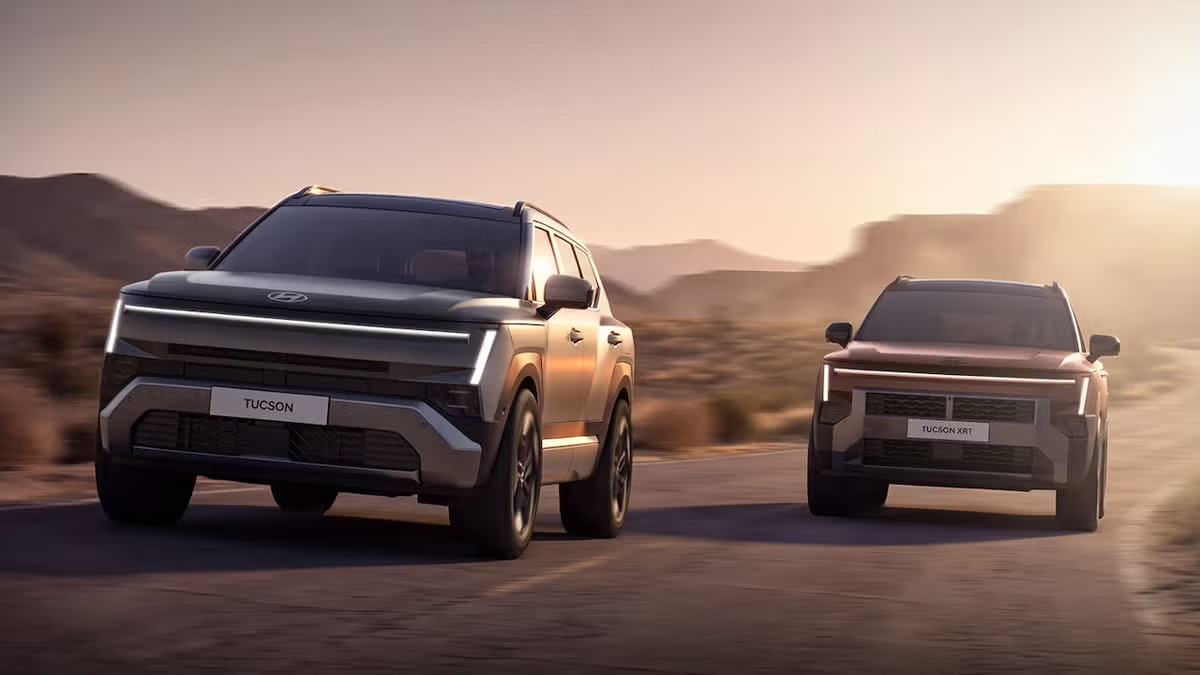
Hyundai may also be a foreign brand in the U.S., but Chinese automakers’ access to state subsidies has become a major trade concern. The EU imposed additional tariffs on Chinese-built EVs after concluding that they benefited from unfair subsidies. Jose Muñoz, Hyundai CEO, told Reuters that Chinese cars are 30% to 40% cheaper than rival models in some markets, including Italy, Spain, and France. He argued that the U.S. should maintain safeguards to limit the pressure on established automakers.
Hyundai
Europe Is Already Feeling It
Numbers-wise, Chinese brands accounted for more than 9% of new-car sales across the EU in the first half of the year, according to the European Automobile Manufacturers’ Association. In Britain, which has not imposed comparable additional tariffs on Chinese EVs, they represented 15% of new registrations earlier this year, per the Society of Motor Manufacturers and Traders.
A major selling point of Chinese cars is offering loads of in-vehicle technology without the premium price. A study from Cox Automotive earlier this year supports their perceived value appeal. Value for money was their highest-rated attribute, with 49% of respondents rating Chinese brands excellent or very good in that category. That helps explain why more Gen Z buyers in the U.S. would consider them. However, views on reliability were less favorable.
U.S. President Donald Trump has said he would welcome Chinese automakers if they built vehicles domestically and hired American workers. Chinese brands face steep barriers, including a 100% tariff on Chinese EVs and restrictions targeting Chinese-linked connected-vehicle technology, essentially pushing Geely-owned Polestar out of the U.S. market. Even so, their affordability and expansion overseas are putting pressure on established automakers to rethink their product strategies.
Jared Levenson/Autoblog
China Is at the Gate
Considering what’s happening in Europe, Muñoz is calling on the U.S. to impose conditions on Chinese companies to “be able to minimize the impact.”
After all, China already has a growing presence in the North American automotive landscape. Chinese brands reportedly accounted for 17% of Mexico’s new-vehicle sales in the first half of this year. Meanwhile, Canada has agreed to allow an initial quota of 49,000 Chinese-made EVs annually at a reduced 6.1% tariff.
Cole Attisha/Autoblog