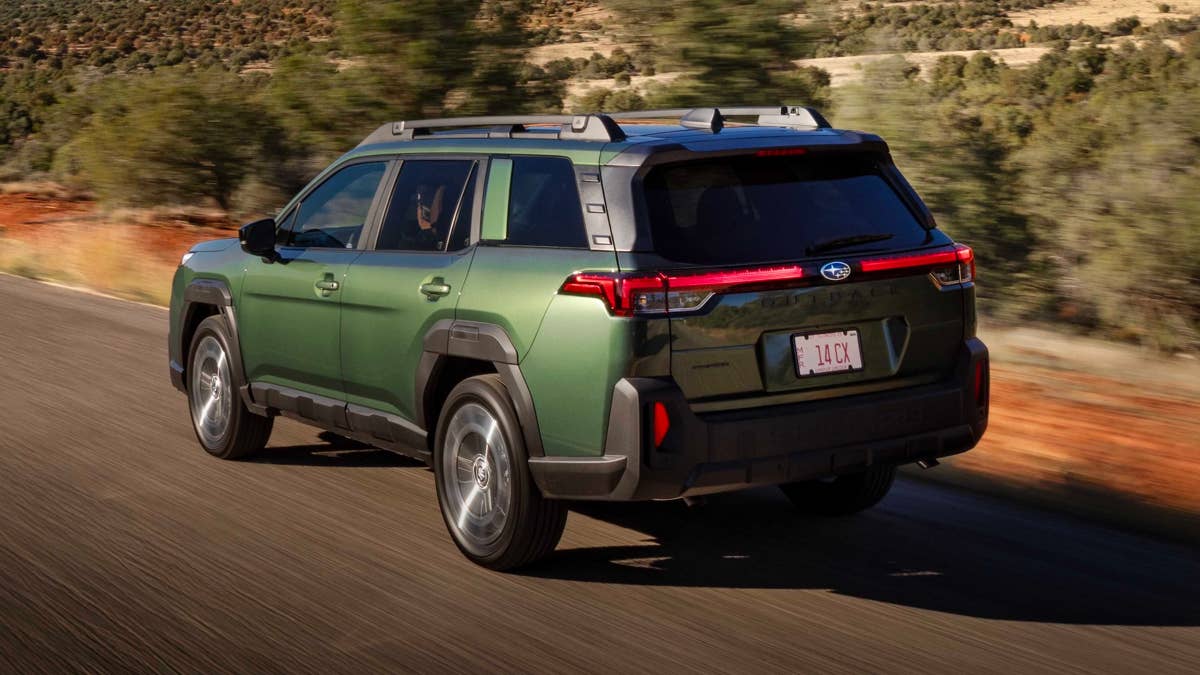
Since Chrysler only really makes a minivan today, it feels almost nostalgic to think back to the early 2000s, when the full-size 300C sedan was launched. The 300 could be considered the crown jewel of the DaimlerChrysler merger, which would unravel just a few short years after the 300C was introduced, but since the LX and LD cars ended up being built forever and ever, it might have been their best shot. The 300C, looking at it from here, was a traditional, large sedan with a good dose of the retro-inspired design Chrysler had pivoted into around the turn of the millennium.
In the North American market, the division between Chrysler and Dodge badged LX cars was clear: the 300C would be sold as a sedan only, and Dodge’s Magnum would take the station wagon responsibilities. There would be no Magnum sedan, largely because the Dodge Charger nameplate was also revived in 2006 for a four-door sedan. Until the Avenger and Caliber arrived, Dodge passenger cars hadn’t been sold in Europe since the times of Darts and Aspens, and the Magnum was crafted into a Chrysler 300C wagon for the European market. It became one of the few American cars that weren’t sold in America, and of course it received a diesel engine as well.

Chrysler’s Ralph Gilles and Freeman Thomas gave the 300C wagon handsome, commanding lines, a wide departure from the cab-forward LH generation design that still had some Renault 25/Eagle Premier bones somewhere deep inside it. The wagon’s belt line is so high up that the rear side windows are incredibly narrow, and the tailgate opens some way up into the roof panel.
While the chrome eggcrate grille looks far more expensive than the Magnum’s front-end design, the rear end including its tail lights was shared with the Magnum, just with a bit more chrome and the winged Chrysler emblem on top of the 300C’s tailgate handle.
To benefit from the DaimlerChrysler merger, some of the body and chassis engineering was done with access to Mercedes-Benz S-Class and E-Class architecture, including the multilink rear suspension. The LX generation also used Mercedes-Benz steering columns, and the indicator and cruise control stalks are obvious Merc items.

The 300C wagon wasn’t built in North America, alongside the sedans in Brampton. Instead, it was assembled in Austria, at Magna Steyr in Graz, which has a wild and varied history of manufacturing cars for other brands. The Mercedes-Benz G-Class has been built there since 1979, gradually transforming from a military vehicle to a luxury SUV that resembles the original, but over the years, vehicles as different as the final-generation Saab 9-3 cabriolet, the Aston Martin Rapide, the Toyota GR Supra, the Fisker Ocean and the lifted VW Golf Country have rolled out of the factory gates.
Magna also built the Chrysler Voyager for the European market, and the 300C’s wagon version was a logical companion for that. The Voyager’s diesel engines always came from VM Motori, an Italian supplier, but the 300C’s diesel powerplants were more suitable for a full-size wagon: they came from Mercedes-Benz.
For a car brand that’s not Mercedes-Benz, there are few things that can help its sales more than getting to use Mercedes-Benz engines. Take, for example, the South Korean carmaker SsangYong: it’s not unreasonable to expect a fair share of all the SUVs it built from the 1990s to the 2000s were sold because they had Daimler diesels under the hood. Heck, all of the engines for the first-gen Musso and second-gen Korando came from Mercedes-Benz, including the M111 four and the M104 straight six, as well as the 2.9-liter OM602 diesel.
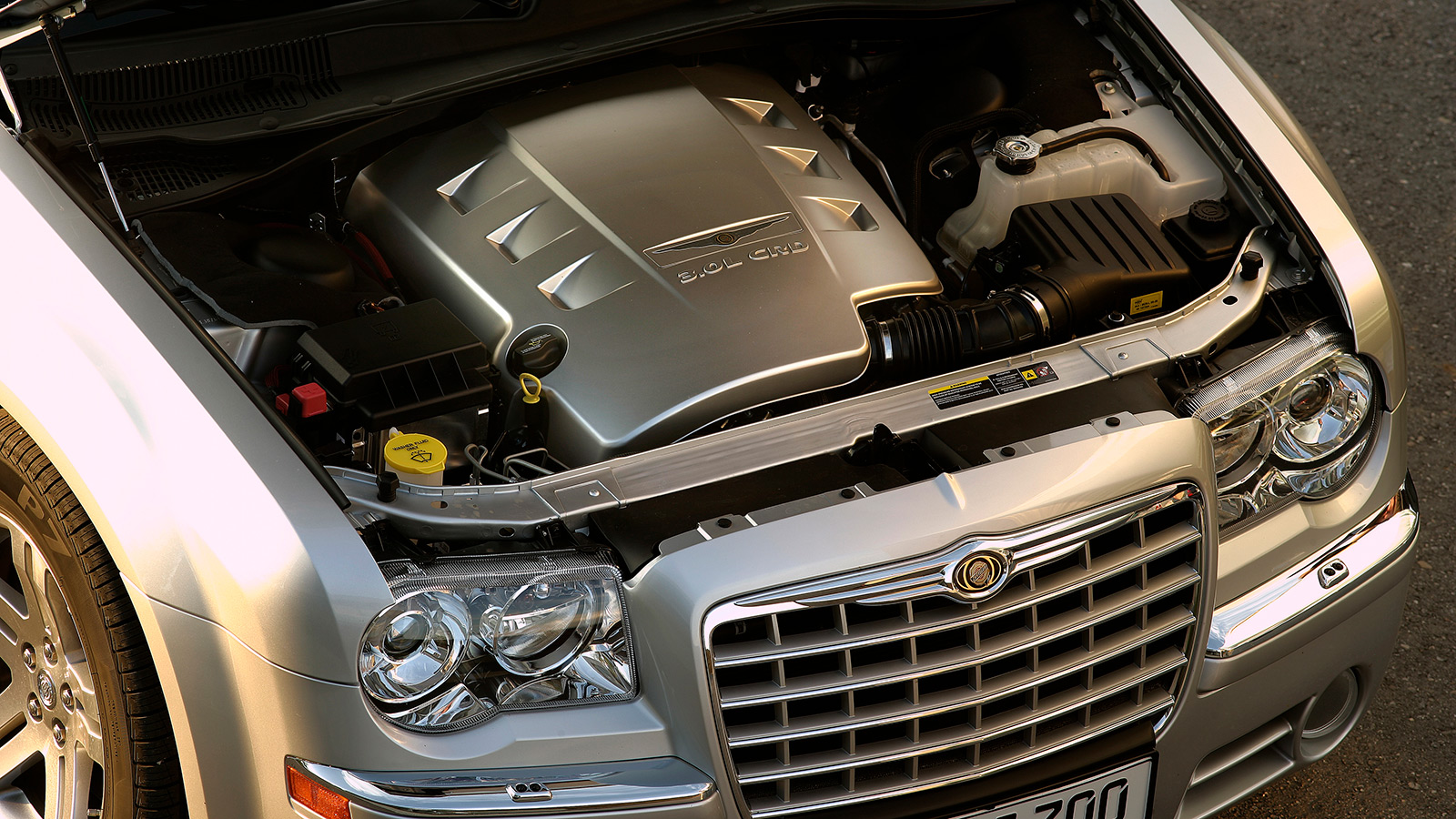
Instead of that five-cylinder unit, the 300C received the brand-new OM642 V6 turbodiesel. The CRD-badged 300Cs were not sold in North America with the 215-horsepower diesel engine, but the same powerplant was available for the WK-generation Jeep Grand Cherokee in its homeland for a couple of model years, 2007 to 2009. The post-crisis WK2, built after Daimler and Chrysler separated, once again used a VM Motori diesel, which was not an option in the States.

The European 300C kept the Mercedes-Benz diesel until the LX generation ceased production in 2011, and its successor, the LD gen, got VM Motori. Since European customers could also buy those cars (and Voyagers) with Lancia badging, the Italian connection makes perfect sense – but it’s no Mercedes-Benz.
While the diesel-engined variants likely formed a fair share of the 300C’s European sales, customers could also get the Hemi here, even in AWD specification. The AWD system was built on Mercedes-Benz 4Matic technology, and I will always defend my right to joke that 4Matic stands for a 4-speed automatic. Obviously it doesn’t, but it’s what I consider humor. That said, I’d love to try one of those as an ice track car. The track just needs to be wide enough for the wide-track Chrysler.
The diesel engine wasn’t paired with the AWD setup in the 300C, perhaps to protect Mercedes-Benz E320 CDI 4Matic sales.

In the States, the Dodge Magnum sold so poorly compared to the 300C sedan that the wagon option was dropped for the LD generation. In the years the Magnum was offered, the 300C oversold it at a ratio of four to one, and it was cancelled in late 2008; the European 300C Touring was built in Austria until 2010.
These days, it’s not difficult to find old 300C diesel wagons for sale here. The engines have proved to be reliable, especially compared to the 2.7-liter base V6 engines that earned a reputation for sludge and timing chain tensioner issues, but the diesel’s swirl flaps and sooted-up EGR systems need to be kept in check, as well as possibly blocked DPFs.
Currently, the cheapest road-legal 300C wagon for sale here is a 2.7, and it has a noise that the seller’s tracked down to the chain tensioner. It’s priced at $1,900 and doesn’t look too rusty.
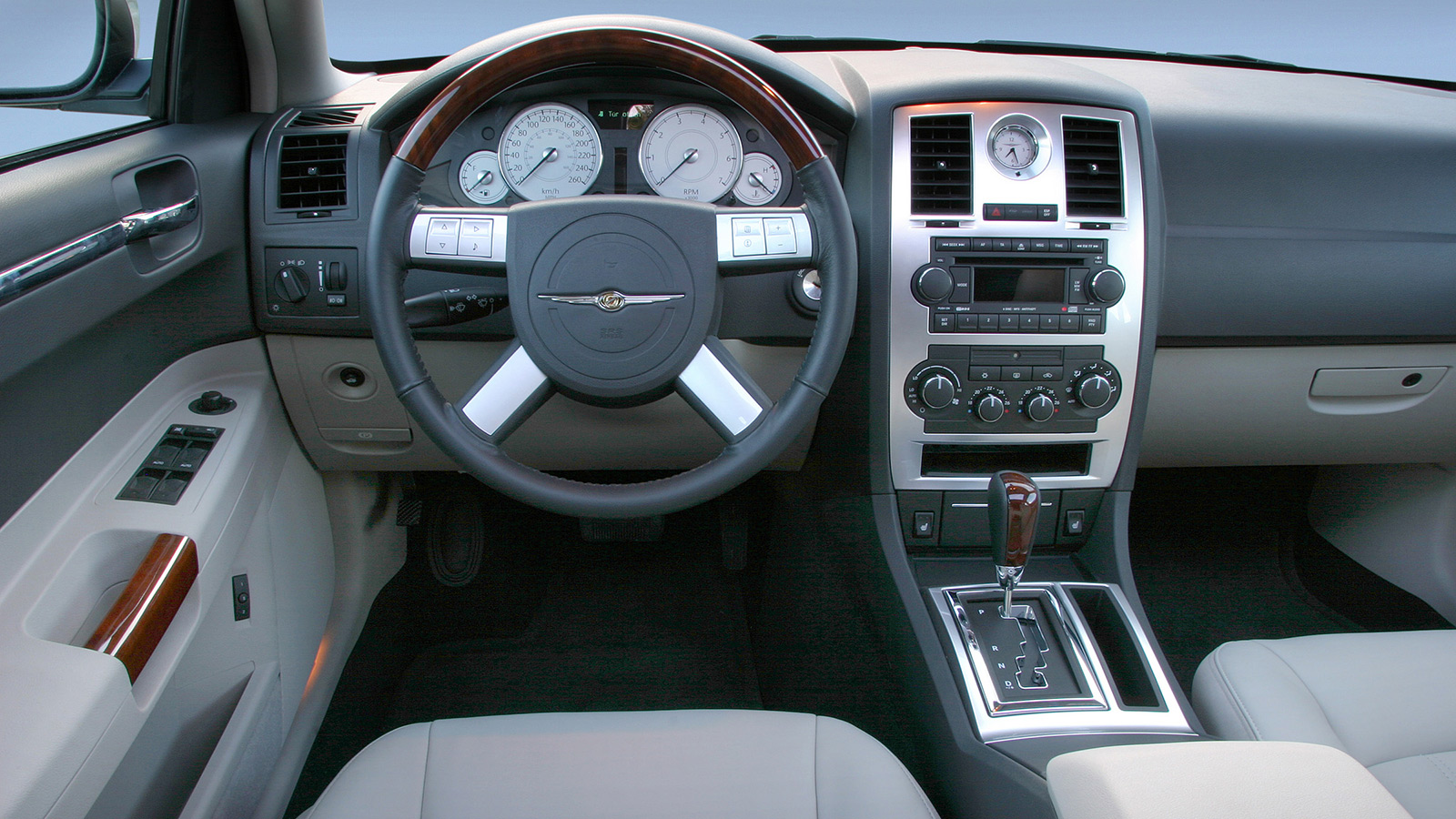
The 2.7 V6-engined cars also got Chrysler’s 42RLE Ultradrive transmissions (the true 4-speed-matic, huh?) while bigger-engined cars received the 5-speed Mercedes-Benz 722.6 transmissions, which are more stout, especially in a car that weighs nearer to two tons. The CRD engine produced a handsome 510 Nm of torque (376 lb-ft), which also sets some demands for the transmission. The diesel version averaged 30MPG in magazine tests of the time, a great figure for a big wagon. No manual option was offered, even if Mercedes-Benz would have had suitable gearboxes in stock. It’s likely that Chrysler thought about possible manual 300C wagon customers and decided to disappoint both of them.
Body rust is a factor in all of these cars when driven in areas that use road salt as heavily as we do, and one spot that’s worth checking out is the frame right next to the car’s catalytic converters. The rustiest 300C I’ve seen was a Swedish import, likely from the southern end of the country, and it looked like it had barely any doors left. Road salt eats Volkswagen Passats for breakfast there, and snacks on Chryslers afterwards. Some of the wagons have also been converted to vans here by removing the rear seat, to help bring down the yearly Finnish diesel road tax. Since diesel is actually more expensive here now than gasoline, running a CRD wagon isn’t as cheap as it used to be.
(All images: Chrysler Corporation)
The post The Chrysler 300C CRD Touring Is The 300C Diesel Wagon America Never Got appeared first on The Autopian.