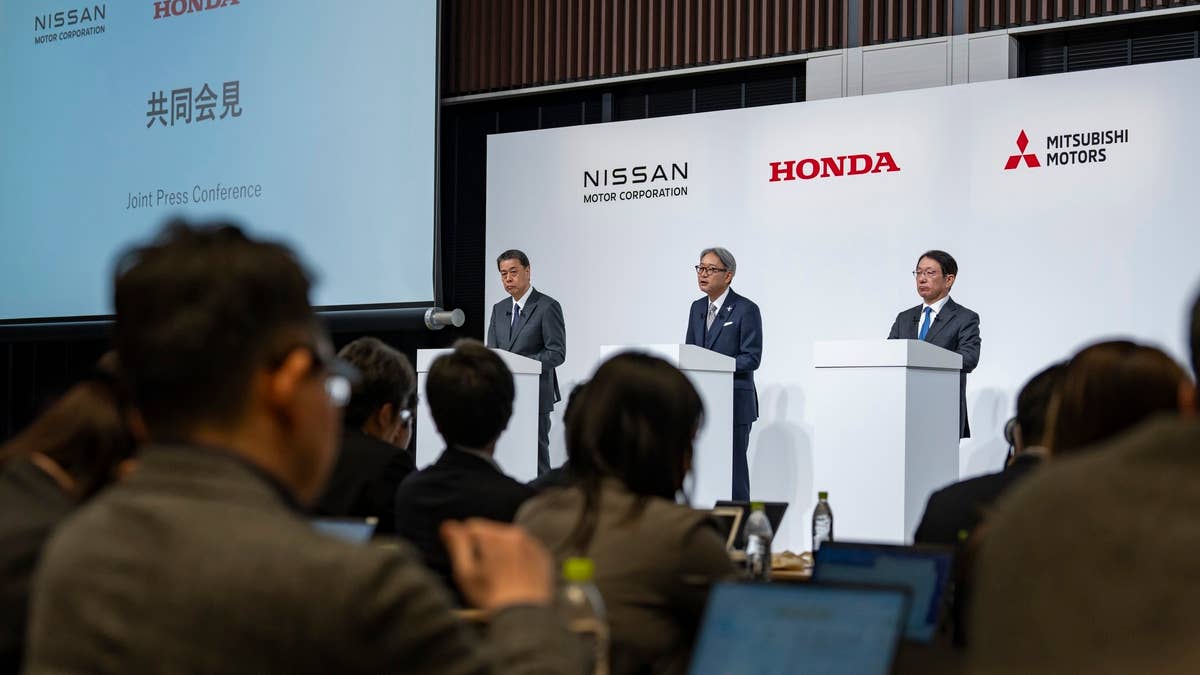
Late in 2024 and early in 2025, it seemed as if Honda and Nissan would merge, but despite the deal ultimately falling apart, the two automakers are still cordial with each other and have been discussing other ways of collaborating, potentially involving bigger SUVs. Recent reports have suggested the two would team up on software, and this has now been confirmed, with an official statement from each company saying that they have “entered into a joint development agreement to standardize multiple electronic control units (ECUs) that form the core of next-generation software-defined vehicles (SDVs), along with the in-vehicle operating system and key parts of the middleware, and vehicle control software that run on these ECUs.” Let’s break that down.
Honda And Nissan Working Together From 2029
The electrical/electronic architecture that Honda and Nissan will co-develop is expected to be integrated into both automakers’ next-gen vehicles from fiscal year 2029, and it’s a smart move because software and electronics are going to be critical to how buyers perceive and interact with increasingly digital vehicles, and creating their underlying structures will be costly. Under the agreement, the two will figure out common specifications for multiple core/zone ECUs in these next-generation SDVs. As seen in Neue Klasse BMWs, zone ECUs are like super brains that group electronics and wiring together by physical location (e.g., front, middle, rear, left side, right side of a car), shortening wiring lengths, improving manufacturing efficiency, saving weight, and improving communication speeds. More importantly, zone ECUs provide better software control, making it easier to upgrade vehicles over the air without new hardware, and because there are fewer individual ECUs with fewer wiring connections, there are fewer potential failure points. Faster communication speeds and better software control also mean zone ECUs are ideal for use with advanced driver assistance features like semi-autonomous driving.
Autoblog’s Take: The Benefits Of Honda And Nissan’s Partnership

Honda
With any collaboration, the chief benefits include splitting costs and sharing expertise, but Honda and Nissan are also aiming to “accelerate progress toward carbon neutrality and help realize a future with zero traffic fatalities involving their vehicles,” the latter a goal shared by Volvo. With Chinese cars continually setting new standards for electrified vehicles and the things they can do, Honda and Nissan hope that leaning on each other and sharing in the development process will help make them more competitive. Granted, while these discussions have been happening in Japan since 2024 and are now scheduled to bear fruit two years later than originally planned, the collaboration may yet prove highly beneficial in Nissan’s push to deploy ProPilot driver aids and Honda’s push to integrate its Asimo operating system in a wider range of vehicles. Rather than deals that involve shared powertrains or chassis systems, this deal should let Honda and Nissan maintain their individuality while introducing shared electronic architecture that can compete with the world leaders in SDV innovations.