The specter of China hangs over the rest of the car industry, which means it floats above The Morning Dump as well. The country’s government has created a massive customer base and a large number of automakers to feed it. It’s also created a monster, and now Chinese authorities are having to wrestle with what that means.
Right off the bat, having created an industry built on undercutting rivals, Chinese authorities have released guidelines telling its own automakers to stop doing that crap when it goes to other markets. The so-called “China Speed” that’s allowed for quick evolution of models is also putting carmakers ahead of regulators, and the regulators are hoping to curb that behavior as well.
Chinese automakers aren’t alone. Volkswagen is having to contend with the its own ghouls. Specifically, the modular platforming that allowed it to spin off more than a hundred nameplates is now haunting the automaker. In the United States, August sales numbers are starting to roll in, and the ghost of tax incentives past must be confronted.
China To Carmakers: Export Cars, Not Problems
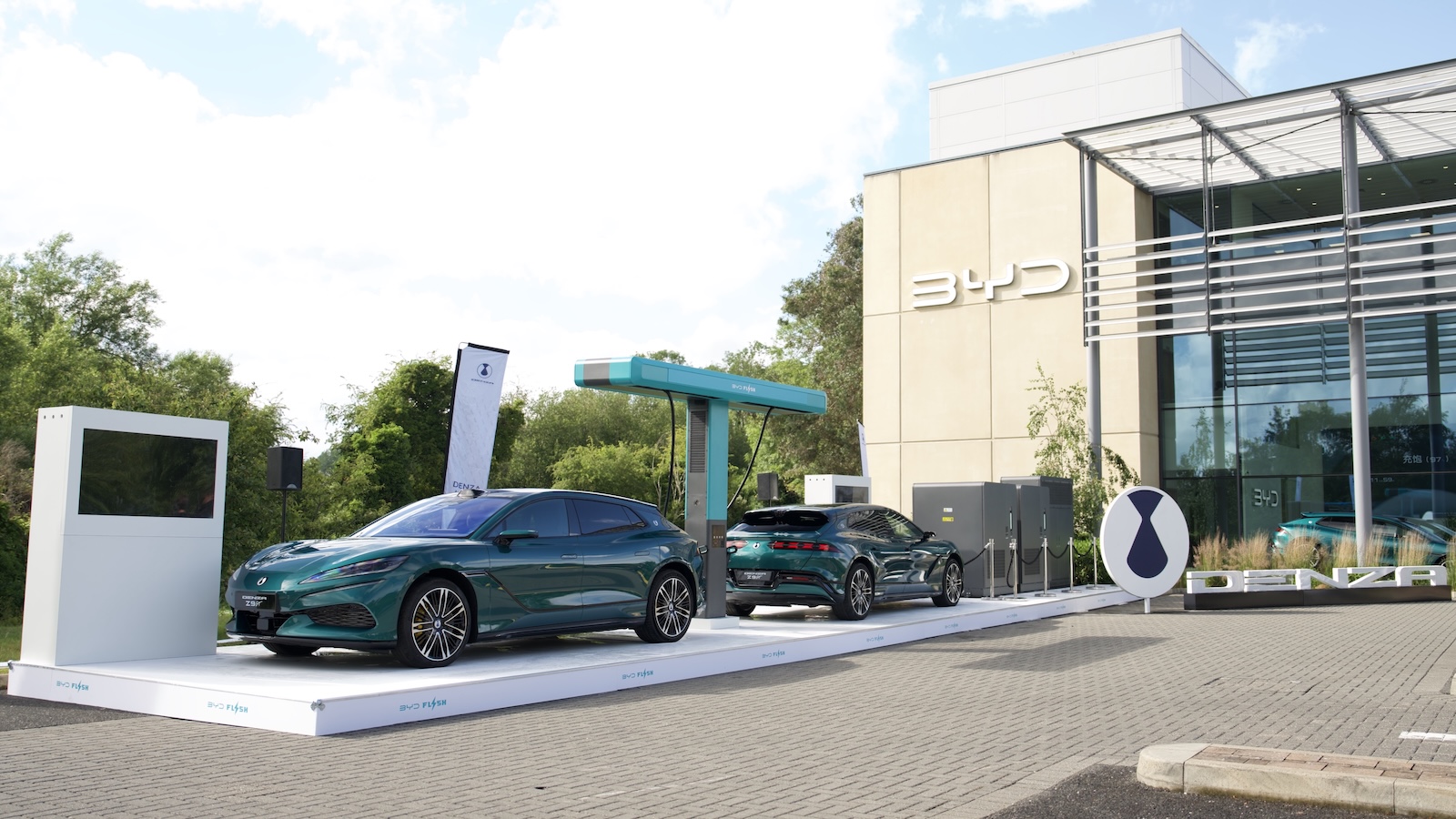
The Chinese government, via the Ministry of Commerce, has sent some guidelines out to automakers hoping to take advantage of global markets. The basic premise is that the outrageous price war waged on its own turf, the sales trickery, and all the other crap that automakers pulled shouldn’t be tried in foreign markets.
Nikkei Asia has the full rundown of guidelines, which include some real gems:
The guidelines state that automakers should “establish pricing strategies based on cost and guided by international market supply and demand,” and “refrain from disrupting market competition in order to gain unfair competitive advantages.”
The document also warns that companies’ promotional activities must comply with local regulations. They must avoid “false advertising, deceiving or misleading consumers, and safeguard the image of Chinese automotive brands.”
One chapter is dedicated to localization. Carmakers should “avoid exporting products that do not meet the needs of the target market and usage environment.” In local operations, enterprises should “recruit employees according to the principles of equal opportunity and fair treatment.”
The ironies embedded in all of this are a little hard for me to reckon with this early in the morning. First of all, I have to acknowledge that I’m not sure my own country has this kind of commitment to market fairness anymore, so any critique I have of Chinese automakers has to be set against that reality.
Having nodded to my own position inside a glass house, the biggest contradiction here is that Chinese automakers act like this because China’s government put a huge amount of focus and money behind spinning up as many carmakers as possible to start producing good cars, consequences be dammed. It’s why so many Chinese carmakers are barely profitable, if profitable at all. To just heap more ironies on the pile, it’s also why Chinese carmakers need export markets.
One way to look at it is that China created all the necessary conditions for carmakers to thrive (money, quick permitting, regulations, buyer incentives) without enough of the conditions necessary for a healthy market (competition). It’s like what happens with deer if there’s no hunting season.
Having been essentially kicked out of the United States and with Europe warily approving Chinese cars, it makes sense that the government doesn’t want carmakers to bring their bad habits abroad and risk losing access to those markets entirely.
[Ed Note: I find the advertising guideline to be rather fascinating. Here’s an entire nation — scores of companies — working together because it clearly believes that all it takes is one misstep from one company to ruin the reputation of all cars from that nation. -DT]
China Speed Is Too Speedy For Regulators

Even with all my critiques of Chinese business practices, the way that the company has been able to conquer the electric car market is still impressive. The rest of the industry is in awe of how fast China moves. The Chinese government? Maybe a little less so these days.
Chinese regulators are pushing hard on safety, launching a yearlong campaign that includes surprise inspections at carmakers to address concerns that quality could deteriorate in the pursuit of speed. Their view is in line with recent comments from executives at Zhejiang Geely Holding Group, Great Wall Motor Co. and Chery Automobile Co., who have warned that the faster development times essentially turn customers into guinea pigs who test durability or safety in real time.
“Cars aren’t fast-moving consumer goods. They touch the safety of millions of families and must endure the test of diverse road conditions, climates, and driving habits worldwide,” Li Xueyong, vice-president at Chery, said in an Aug. 26 social media post. “There are simply some development timelines we cannot afford to shortcut.”
Someone please tell that to Tesla.
Volkswagen’s Own Modular System Is At The Root Of Its Problems

As I mentioned in July, Volkswagen is looking to cut a bunch of its nameplates as it looks to a future that’s a lot more competitive. I didn’t hit the irony of this hard enough, which is that the modular platform expansion is what fueled VW’s growth over the last two decades. Thankfully, S&P Global Mobility is here with a hammer:
In practical terms, the plan will require the company’s engineers and accountants to scrutinize every model’s profitability. That process could prove useful given the size of VW’s portfolio, which currently includes nearly 150 models.
Ironically, this unwieldy lineup stems from the very strategy that fueled VW’s sales and profit growth: platform sharing across brands and segments. The iconic VW Golf, for example, has shared its platform with the Audi A3, the SEAT Leon and the Škoda Octavia since the late 1990s.
This kind of overlap can also occur within a single brand. The VW passenger car brand currently offers three models—the Tiguan, the T-Roc and the Taigo—that compete against each other in the European SUV-C segment. In today’s more challenging market, maintaining multiple models that compete within the same segment is increasingly difficult to justify.
You leave my Škodas alone!
It’s Going To Be A Hard Month For Automakers Who Sold A Lot Of EVs Last Year

With tax credits for EVs expiring last year, there was a rush of sales as both automakers and customers tried to claim the credits while they could. That’s starting to show up in August sales reports. Right now it looks like Hyundai’s monthly sales streak is going to end (it’ll still probably set an annual record), whereas Honda, which didn’t have a lot of EVs to sell, is doing better.
Automotive News has the early data, and hybrids continue to be the bright spot:
Honda continues to get a major boost from hybrids, with the Accord hybrid up 16 percent and CR-V hybrid up 8 percent last month.
The Honda brand’s light-truck sales fell 3.8 percent last month on weaker Pilot volume and the discontinued Prologue EV.
Three Acura models ― Integra, ADX and MDX ― posted double-digit gains of 17 percent or more last month.
Hyundai, too, saw hybrid sales rise.
What I’m Listening To While Writing TMD
Speaking of haunting, no one does ethereal quite like Phoebe Bridgers, who has a new album out that I’m digesting. There’s a little Bon Iver in it, for sure. Some Sufjan. I’m not sure I’ve got a favorite song yet, but the video for “I Can’t Wait” has some nice moves and a sweet Toyota truck.
The Big Question
What’s your all-time favorite MQB vehicle?
Top photo: BYD, DepositPhotos.com
The post China Tells Carmakers To Play Nice Abroad After Years Of Encouraging Them To Fight Dirty At Home appeared first on The Autopian.