The sheer scale of Stellantis is almost incomprehensible. We’re talking about some 14 brands and factories on every continent except Antarctica, yet the weirdest thing the group makes might be the Jeep Gladiator. It’s a convertible crew cab pickup truck that’s essentially a stretched Wrangler with a bed, and that makes it rather different from its rivals.
There’s a lot going against the Gladiator on paper. It’s not the most efficient midsize truck, nor is it the least expensive. It’s lacking in one critical off-road angle compared to its peers, but the off-road-focused solid front axle results in its own compromises. And yet, there’s something captivating about it you won’t find on a spec sheet. After spending a week with one, I totally and completely get it.
[Full disclosure: Jeep Canada let me borrow this Gladiator for a week so long as I kept the shiny side up, returned it clean with a full tank of fuel, and reviewed it.]
The Basics
Engine: Dual overhead cam 24-valve 3.6-liter V6.
Transmission: Eight-speed torque converter automatic.
Drive: Part-time shift-on-the-fly four-wheel-drive with low range, available locking rear differential.
Output: 285 horsepower at 6,400 RPM, 260 lb.-ft. of torque at 4,400 RPM.
Fuel Economy: 17 MPG city, 22 MPG highway, 19 MPG combined (13.7 L/100km city, 10.8 L/100km highway, 12.4 L/100km combined)
Maximum Towing Capacity: 7,700 pounds.
Maximum Payload Capacity: 1,720 pounds.
Base Price: $42,010 including freight ($52,890 in Canada).
Price As-Tested: $58,280 including freight ($71,025 in Canada).
Why Does It Exist?
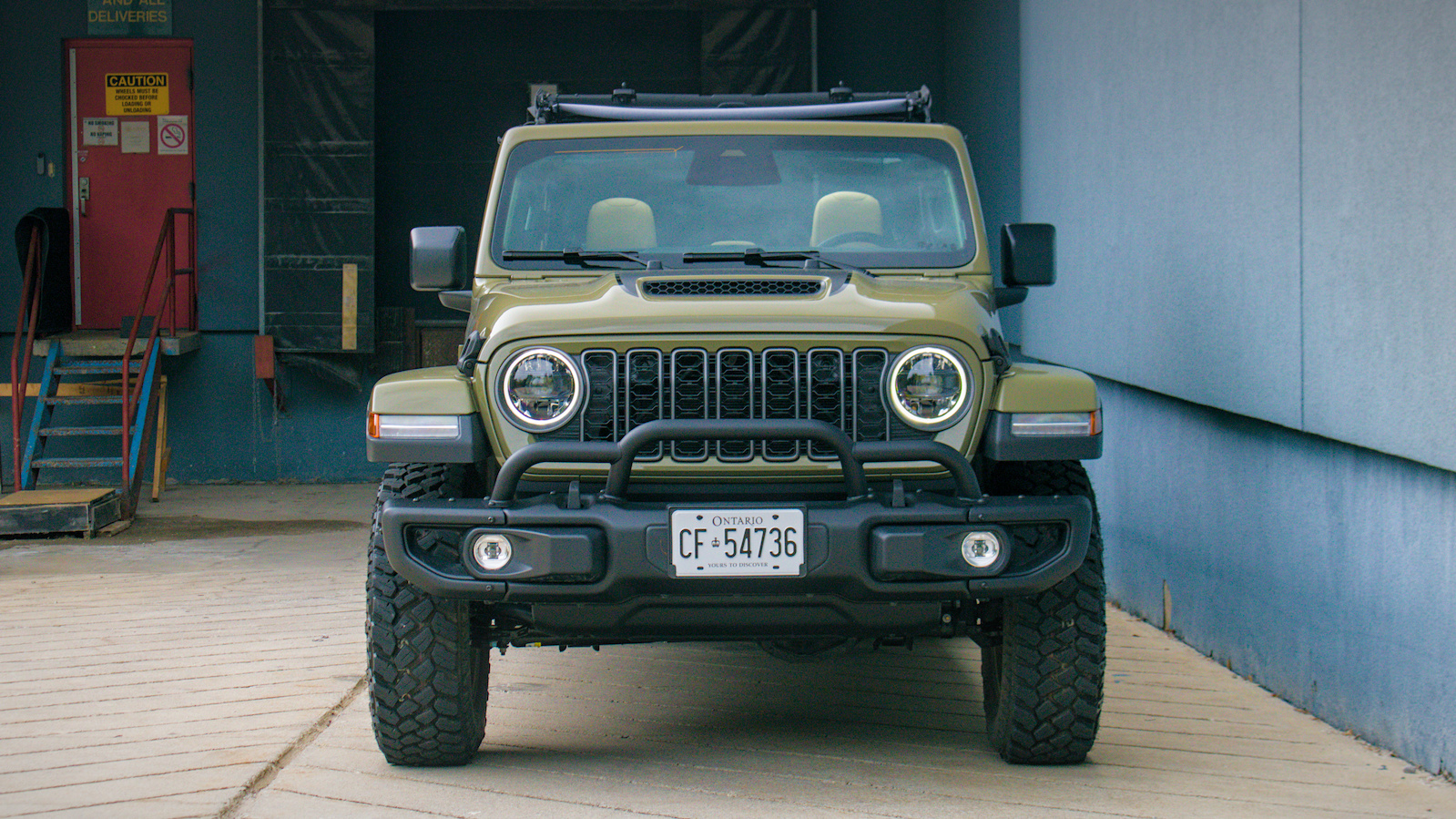
From the moment the Comanche was discontinued in 1992, a small subject of Jeep fans clamored for another pickup truck from the brand. Something they could load up with gear and hit the trails in. It would take until 2019, but Jeep answered the call with the Gladiator, a Wrangler-based midsize crew cab pickup truck that’s a decidedly left-field choice among Toyota Tacomas, Ford Rangers, Chevrolet Colorados, and Nissan Frontiers.
How Does It Look?
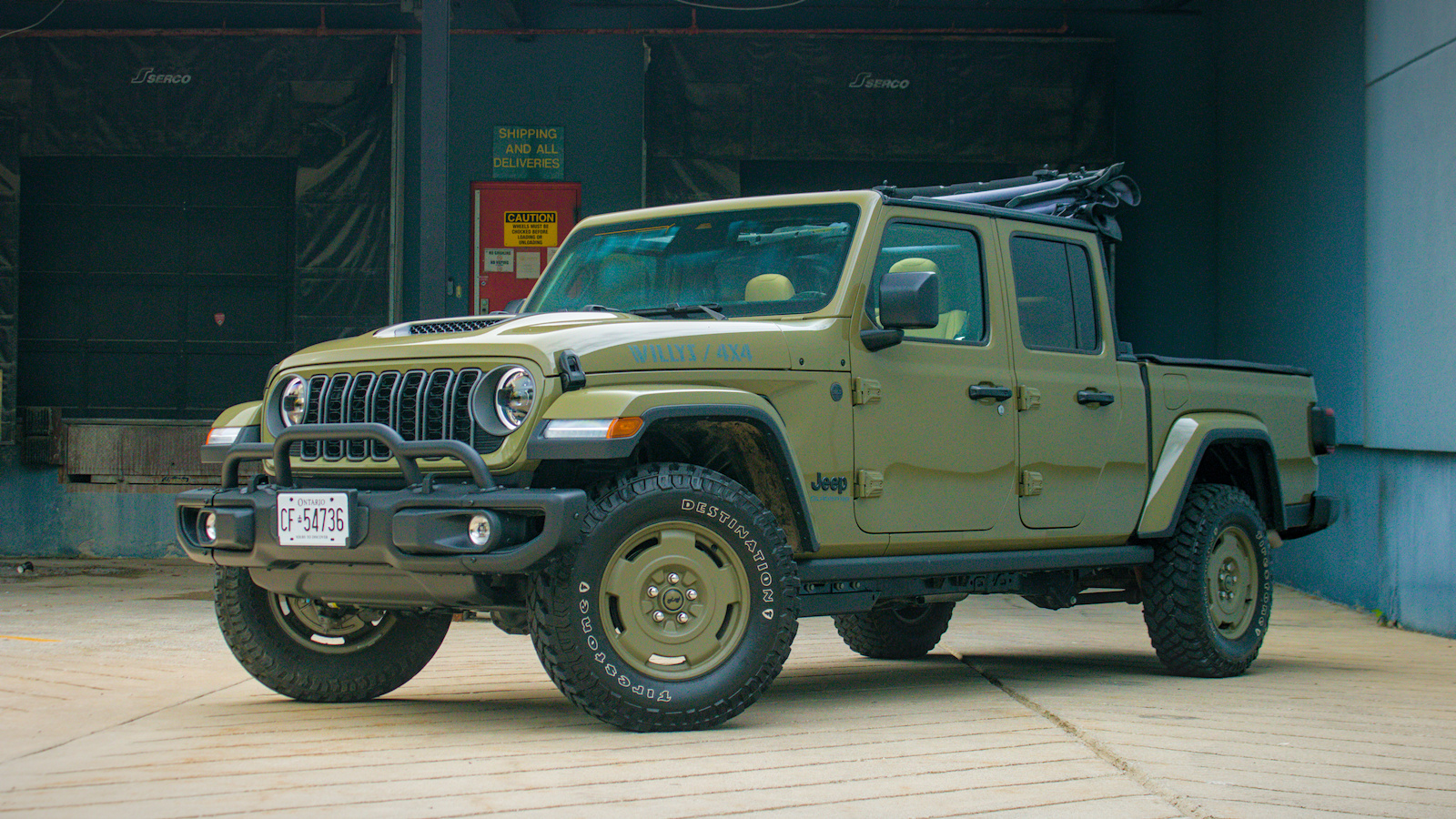
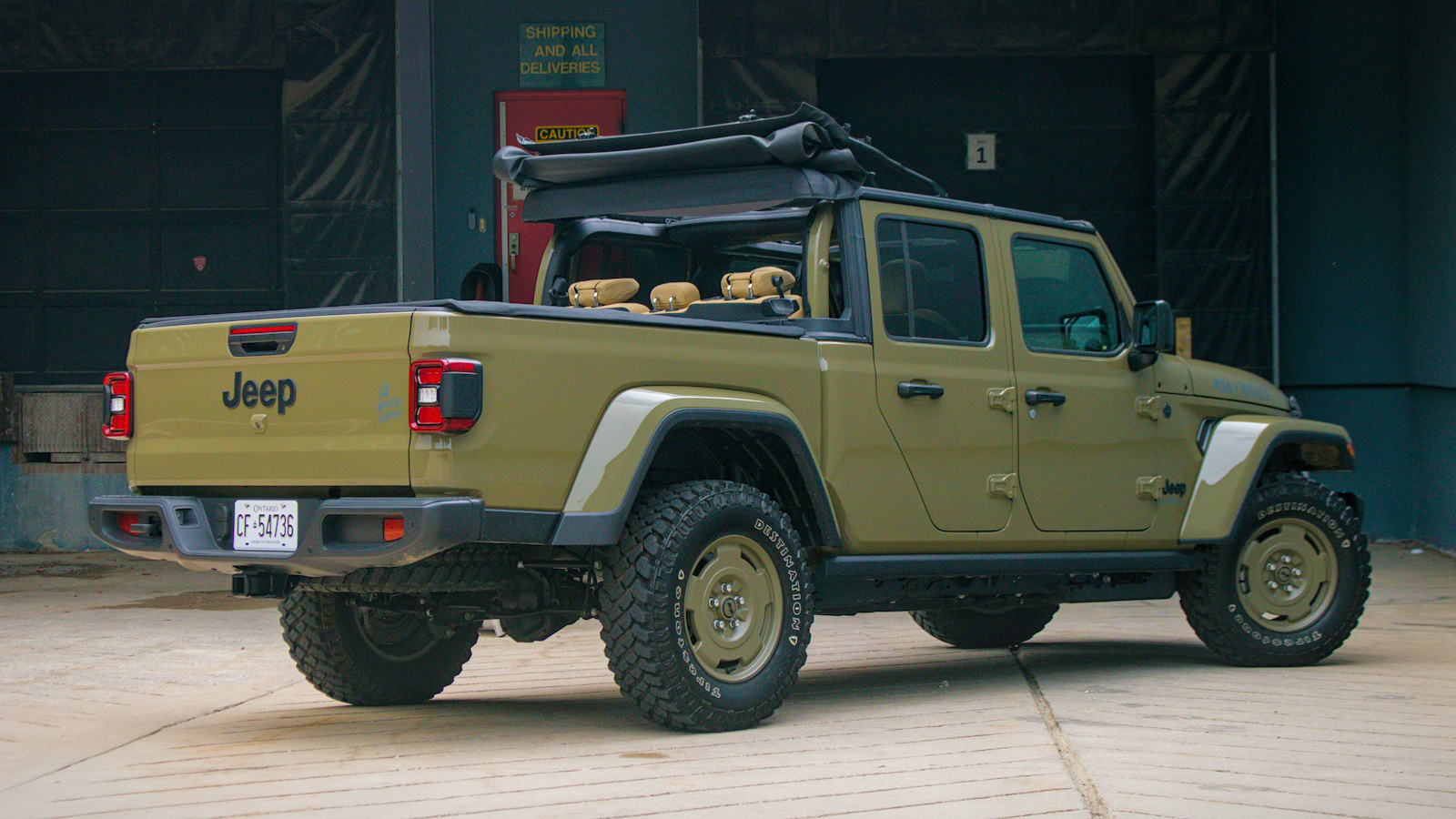
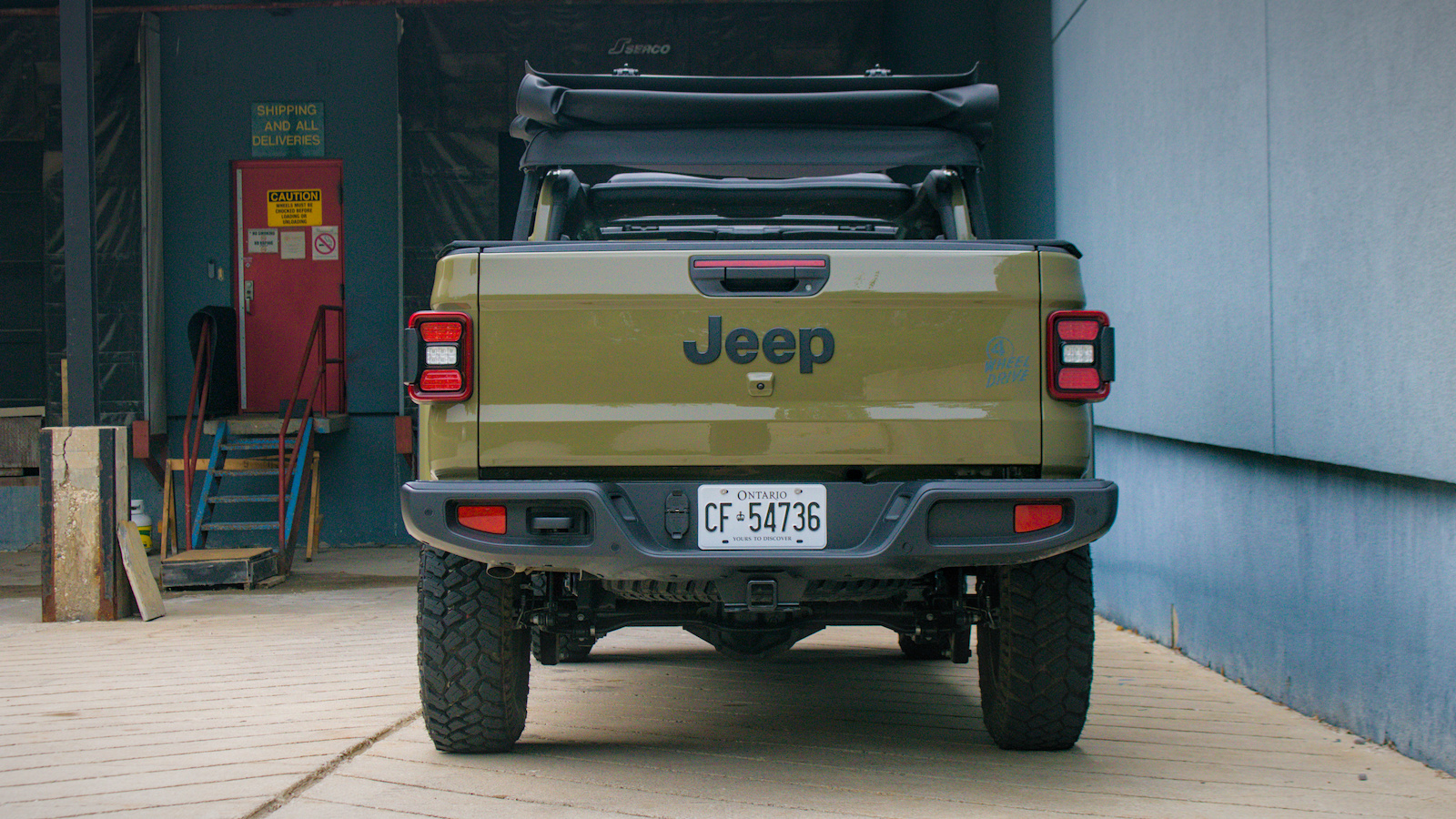
From the seven-slot grille to the fenders to the shape of the rear doors, there’s no denying that the Gladiator is basically Wrangler, but truck. This particular Gladiator is the Willys ’41 Edition, which means it comes with an excellent set of retro alloy wheels that are color-matched to the body. Olive green just works on a Jeep, although you know what doesn’t work? The hood scoop. It’s entirely fake, a slab of all-American faux machismo. As for the five-foot bed, it’s noticeably narrower above the wheel wells than on most rivals, and there’s quite a step up into it. However, it still proved fine for a series of dump runs loaded up with stuff you wouldn’t want to haul inside an SUV.
What About The Interior?
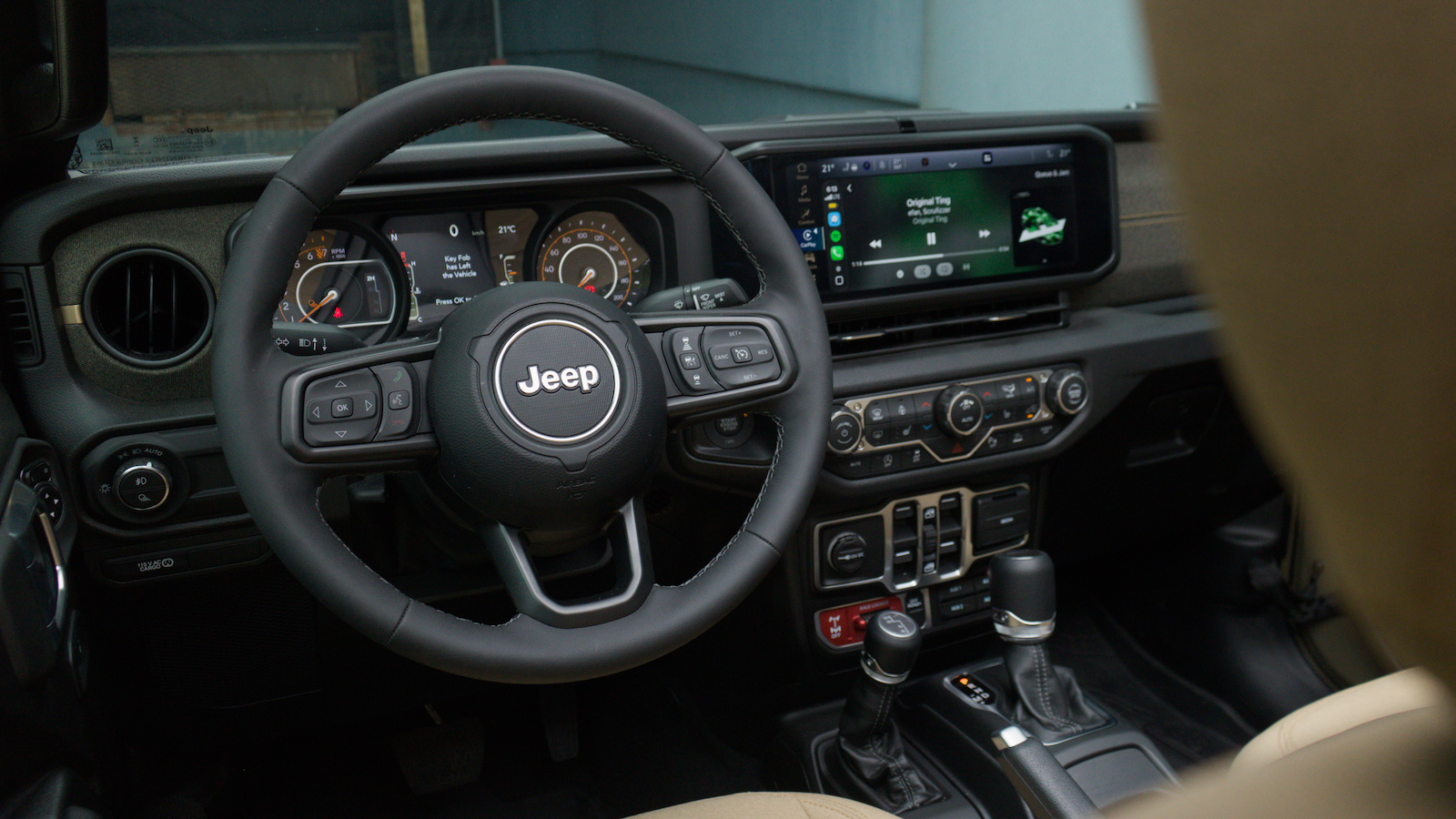
The Wrangler familial traits continue inside the Gladiator, because this truck borrows its entire dashboard, console, and door cards from its shorter-wheelbase sibling. You won’t find much in the way of soft-touch plastic here, fitting for a vehicle with easily removable doors and a top you can’t put up from the driver’s seat whilst on the move. Did some raindrops get inside? Wipe it off, it’s built for it. However, don’t think it’s as spartan as a portable lavatory in here. Some cloth on the face of the dashboard and splashes of red and pewter accents go a long way towards livening up the cabin.
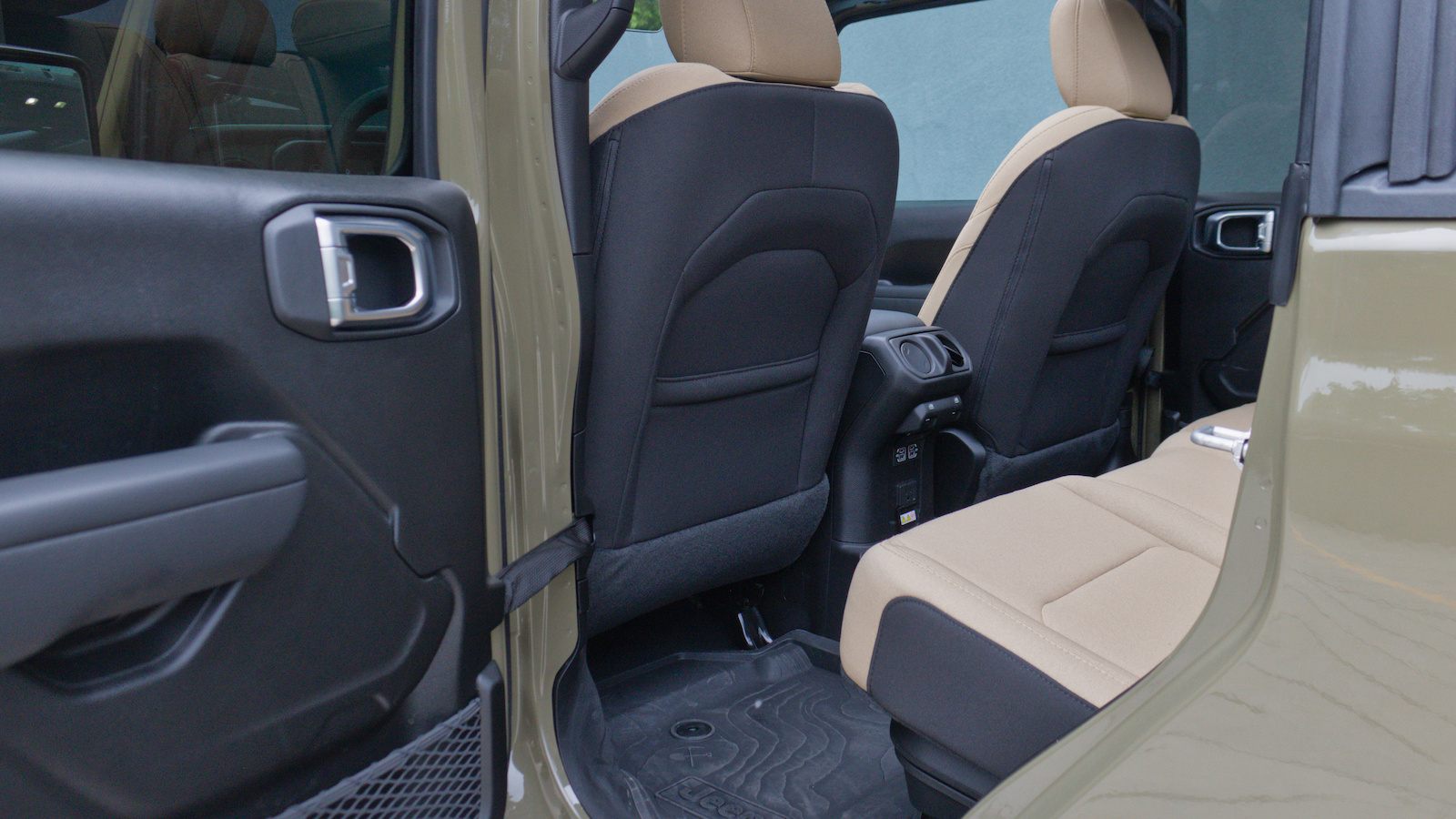
As for comfort, the Gladiator features a weird mix of ergonomic benefits and hinderances. The netted door bins are virtually useless, there’s no dead pedal for the driver’s left foot, and the dashboard-mounted window switches are awkward to use. On the other hand, the front seats are reasonably comfy, the window sill’s low enough to rest an elbow on, and this thing has by far and away the most spacious rear seat of any body-on-frame midsize truck. We’re talking more than four extra inches of legroom over a Tacoma, and there’s even still space behind the rear seat to stow the soft top window. This particular test car came optioned with lockable storage under the rear seat squabs too, just in case the big center console bin isn’t enough.
How Does It Drive?
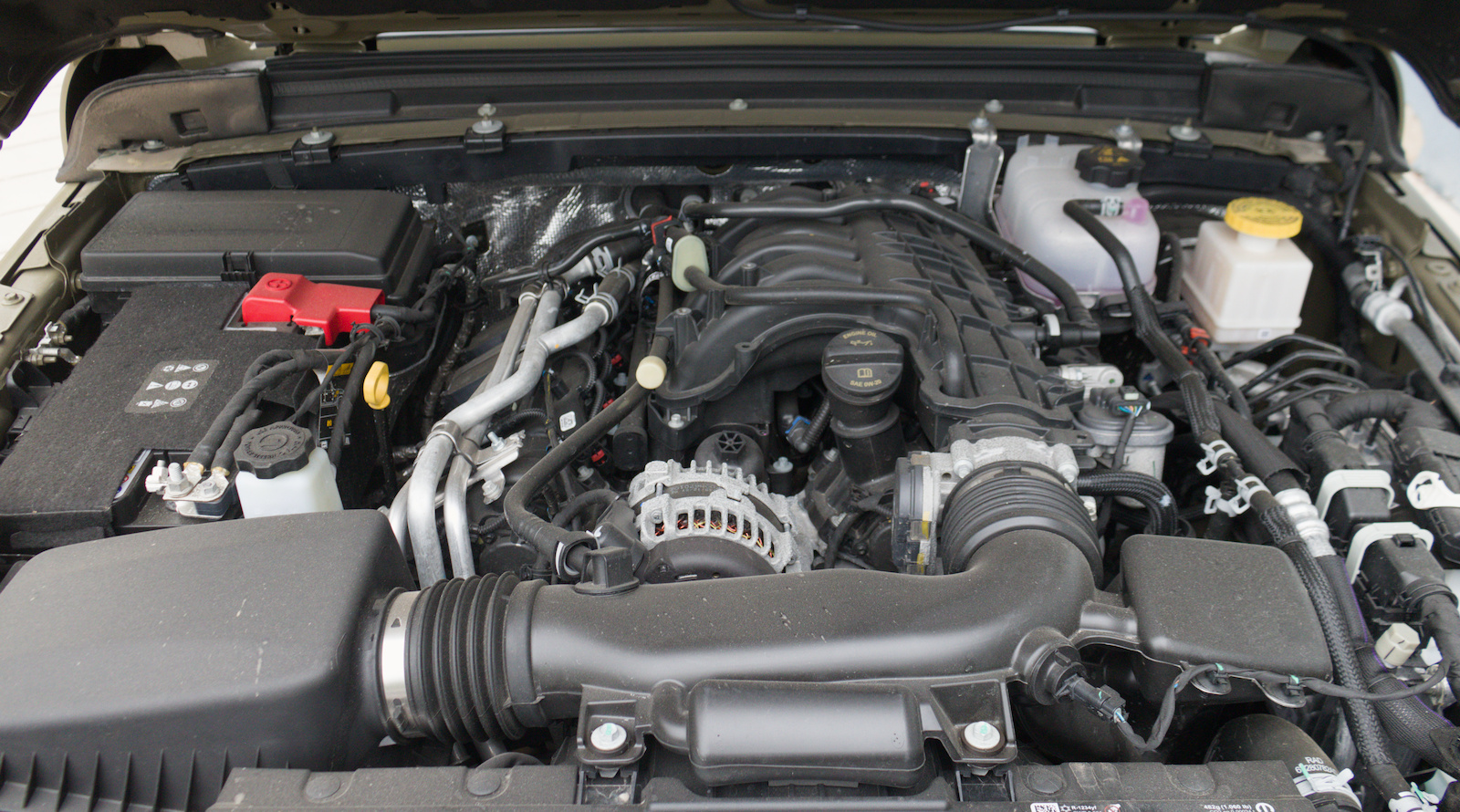
While the Wrangler is available with Chrysler’s two-liter turbocharged four-cylinder engine, you won’t find forced induction under the hood of its brother. Each and every Gladiator gets the long-running Pentastar 3.6-liter V6, a 285-horsepower naturally aspirated engine with rather peaky power delivery. Its maximum torque output of 260 lb.-ft. doesn’t arrive until 4,400 RPM, so it’s no surprise that the eight-speed automatic transmission is keen to let the engine rev out. While not brilliant for fuel consumption, such behavior does allow for rather reasonable acceleration. Plenty sufficient given the Gladiator’s handling tradeoffs made in the pursuit of off-road performance.
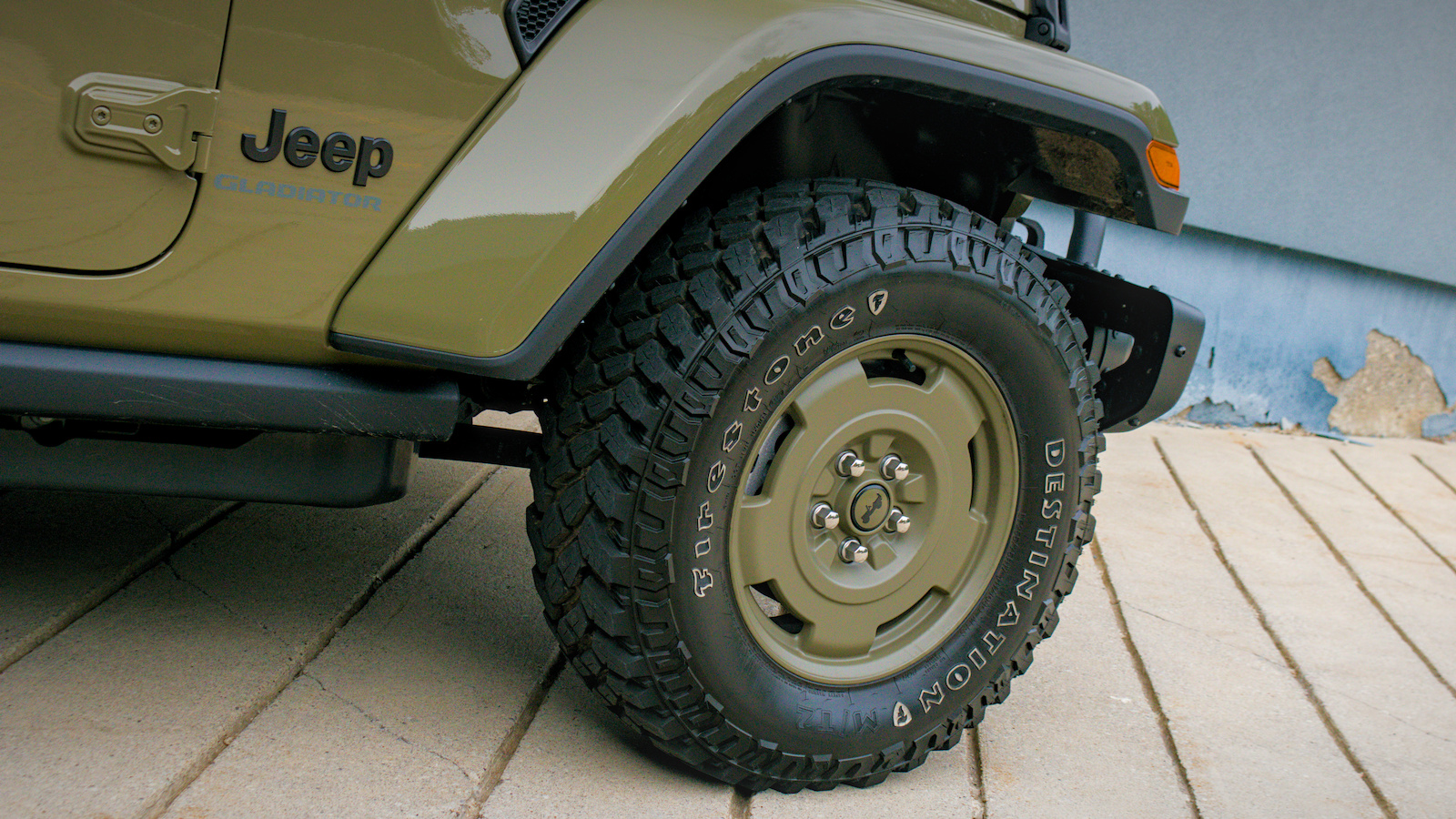
See, the Gladiator is the only mainstream midsize truck to come with a solid front axle. Amazing for articulation when the going gets rocky, but solid front axle vehicles aren’t known to have the most precise steering. Indeed, thanks to a relatively slow ratio in the Gladiator’s steering box, flat bodysides that catch the wind like a sail, and likely the inherent geometry of the truck’s suspension setup, you’ll be making larger corrections on the highway than you would in a Ranger or Colorado. It’s much better than it used to be thanks to an upgraded steering box, but it’s a quirk you’ll need to get used to. It’s the same deal with the road noise through the soft top and the whine from the optional all-terrain tires: All part of the program.
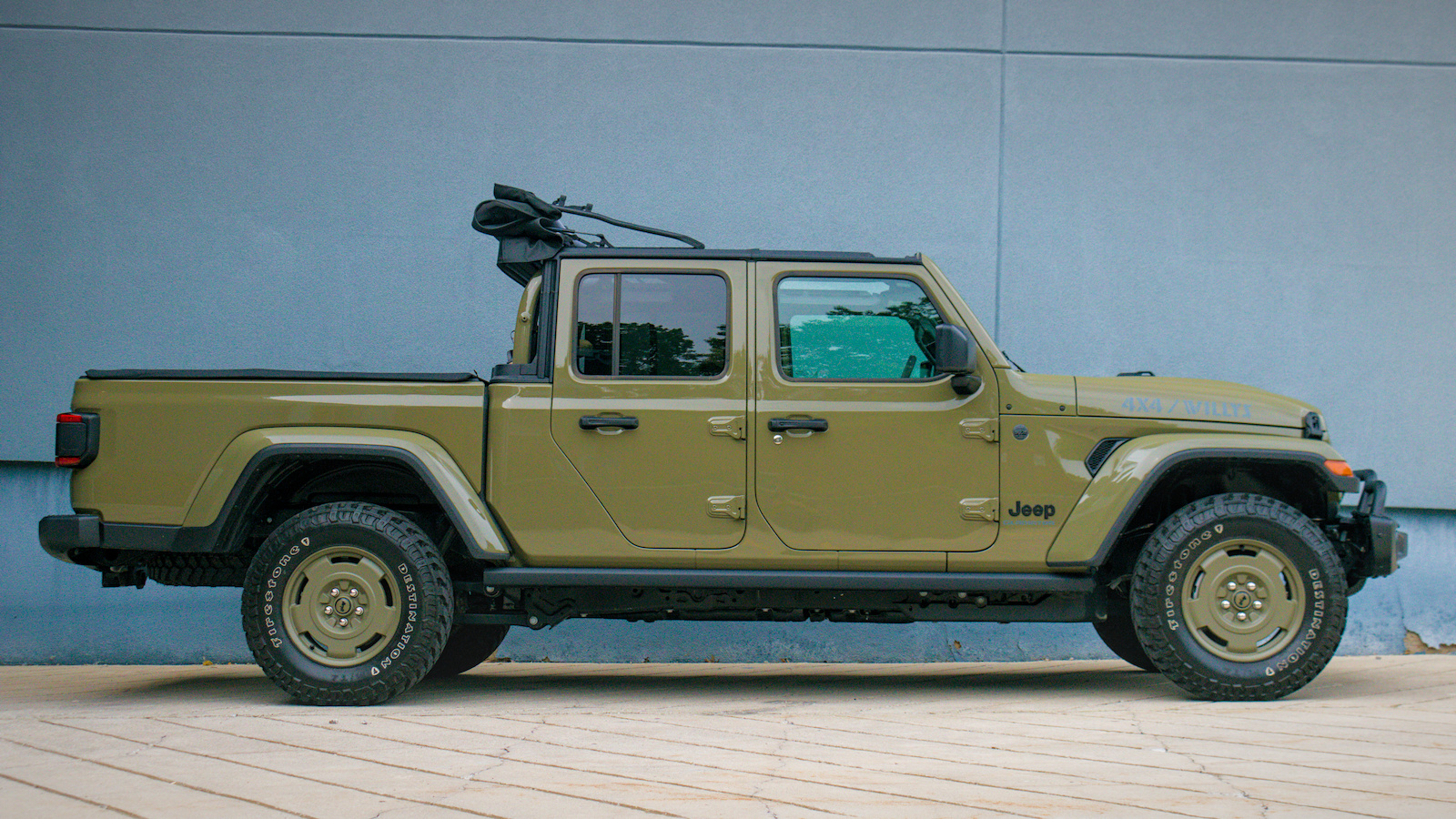
However, it doesn’t take long to make peace with the Gladiator’s quirks. There’s a pure sense of occasion that comes with dropping the top and feeling the breeze through your coiff. Visibility’s outstanding by midsize truck standards, whispers of actual steering feedback make their way up the column, and ride comfort’s nicely judged. You don’t need to set a wheel off the tarmac to have fun in the Gladiator, but when you do, proper four-wheel-drive and an available locking rear differential are there to help make up for a slightly subpar breakover angle.
Does It Have The Electronic Crap I Want?
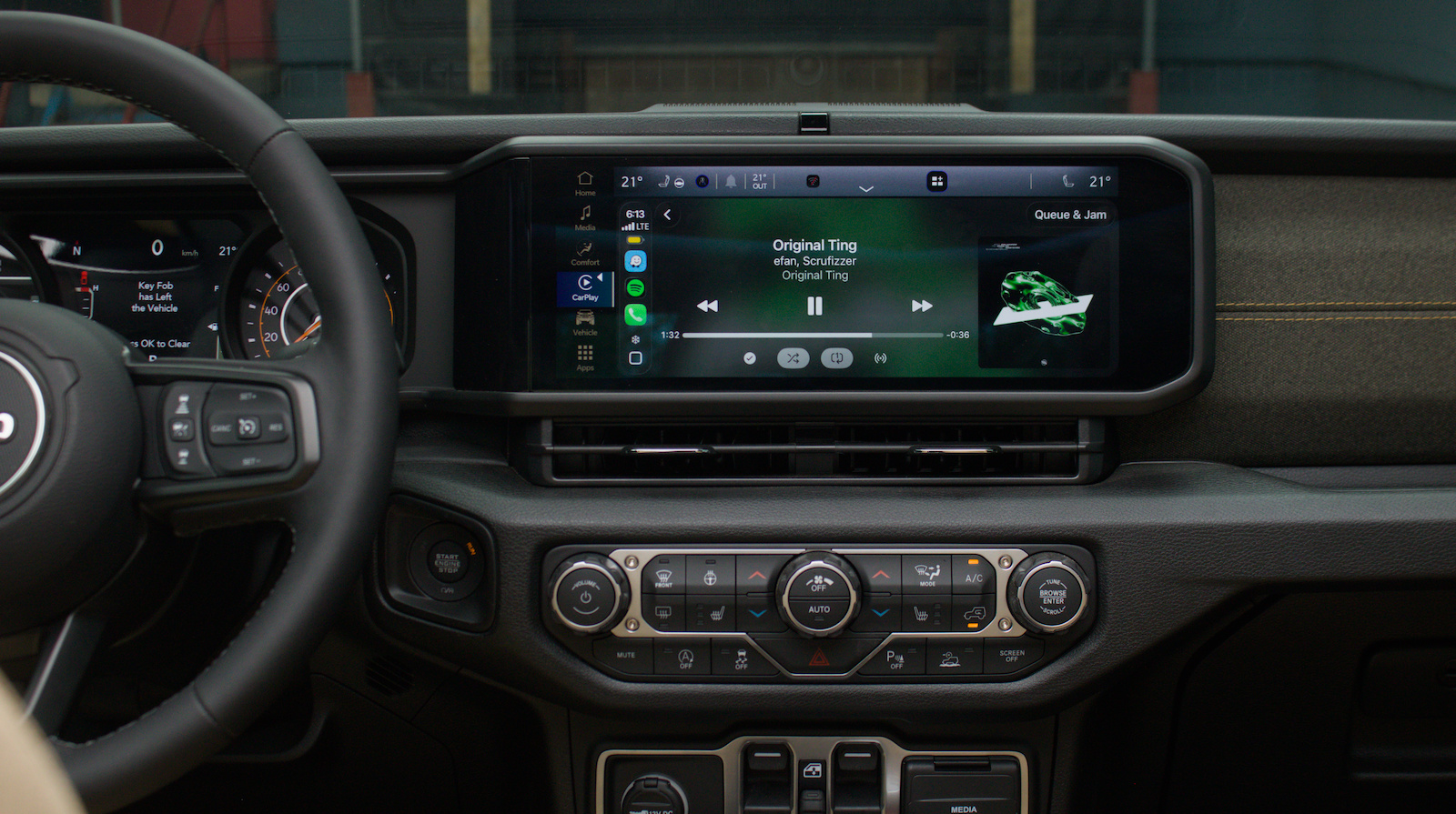
Thanks to a 2024 facelift, every new Gladiator gets a 12.3-inch touchscreen infotainment system that’s a big step up in clarity over the old screen, even if the menu structure isn’t the easiest to navigate. Wireless Apple CarPlay and Android Auto are also on deck, the dashboard’s bursting to life with physical buttons and knobs, and every new Gladiator comes with adaptive cruise control with automatic emergency braking. However, the cheapest Gladiator is sparsely equipped beyond those key highlights. Things like the seven-inch color screen in between the dials, heated seats, blind spot monitoring, LED headlamps and taillamps, and remote starting are all optional extras. As for the optional Alpine sound system, it’s loud enough to drown out road noise but rather muddy when you crank it up.
Three Things To Know About The 2026 Jeep Gladiator
- With the right option box ticked, it can out-tow a Tacoma, Frontier, or Ranger.
- It has substantially more rear legroom than any other body-on-frame midsize truck.
- It still drives like a Jeep.
Does The 2026 Jeep Gladiator Fulfil Its Purpose?
That depends on how you define the Gladiator’s purpose, as there are a litany of reasons to choose other midsize trucks over it. The Chevrolet Colorado matches the Jeep’s maximum towing capacity and blows it out of the water on breakover angle, the Ford Ranger offers a hugely punchy twin-turbo V6 that beats the Gladiator on the economy, the Toyota Tacoma still offers a manual gearbox, and the Nissan Frontier is cheap. It helps to look at the Gladiator as a convertible that can do everything a Miata can’t, but is that what most midsize truck owners are looking for?
However, the Gladiator shines bright when it comes to character, a nebulous sort of thing you won’t find on any spec sheet. The steering and sightlines feel like they come from a brand new old truck, folding the top adds a bit of occasion to the daily commute, and muscling the transfer case lever into position is something you don’t get to do on many new trucks. Add in all the truck capabilities you’d expect, and it’s easy to see the Gladiator’s appeal. It’s a real Jeep that can do real truck stuff, and if you view that as its purpose, it’s unequivocally successful.
What’s The Punctum Of The 2026 Jeep Gladiator?
Perfectly irrational in exactly the right sort of ways.
Top graphic image: Thomas Hundal
The post The Jeep Gladiator Isn’t Perfect But It’s Still A Whole Lot Of Fun appeared first on The Autopian.