I had the Ford E-Transit for three weeks and used it the way most people actually use a full-size van: hard, continuously, and for a mix of jobs that don’t neatly fit one “use case.” It moved a house over multiple runs, carried equipment to an event 200 miles from home as a genuine highway test, and then helped my uncle clear his garage, making multiple runs to the tip.
Across all of that, the E-Transit proved to be an unusually competent tool: easy to drive, reassuringly stable, and more comfortable over distance than I expected. The main compromise wasn’t capability; it was energy management. Regular charging is simply part of ownership, and sustained speeds above 70 mph make that need markedly more acute, especially in cold weather.
The Vehicle I Drove
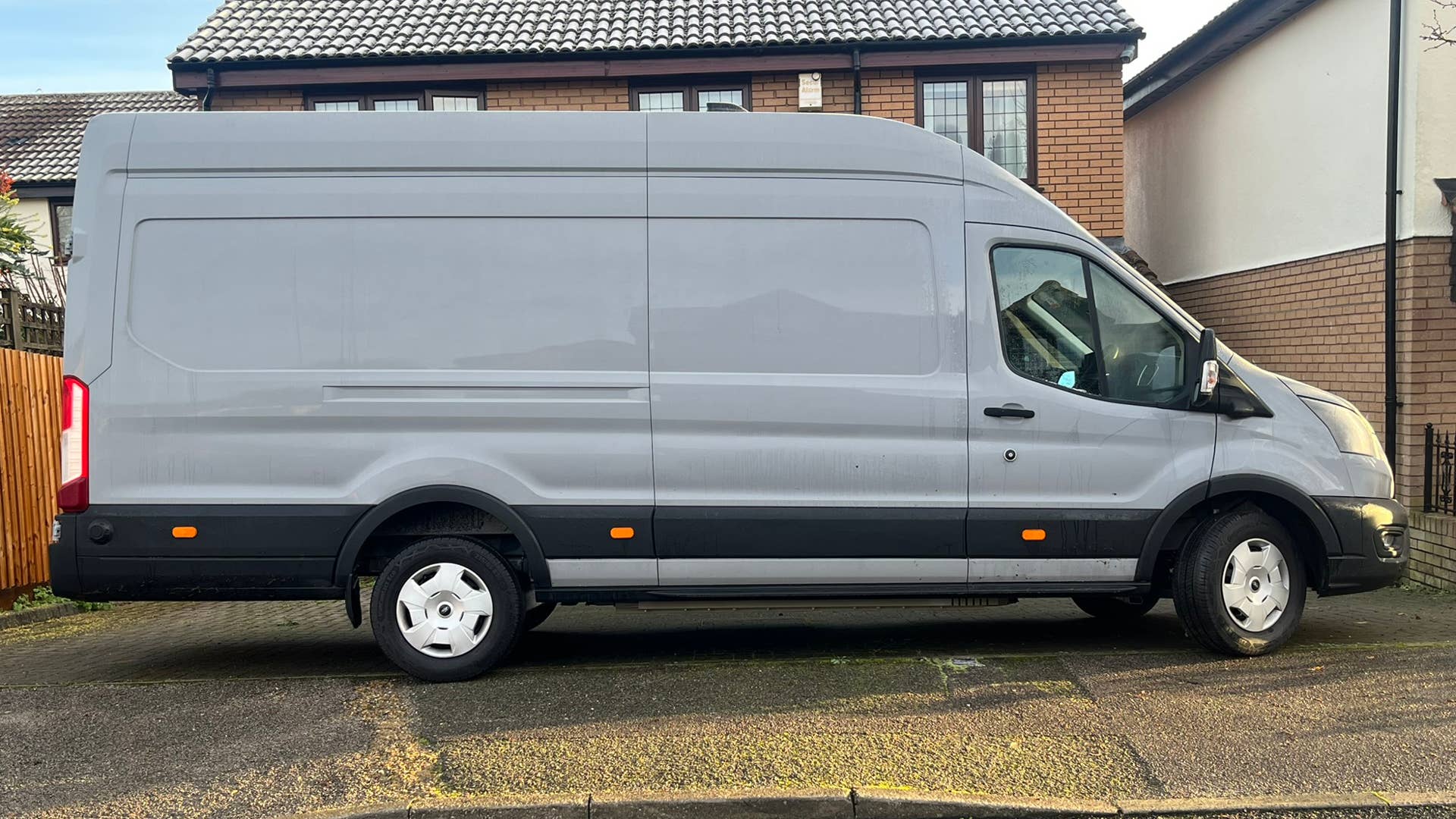
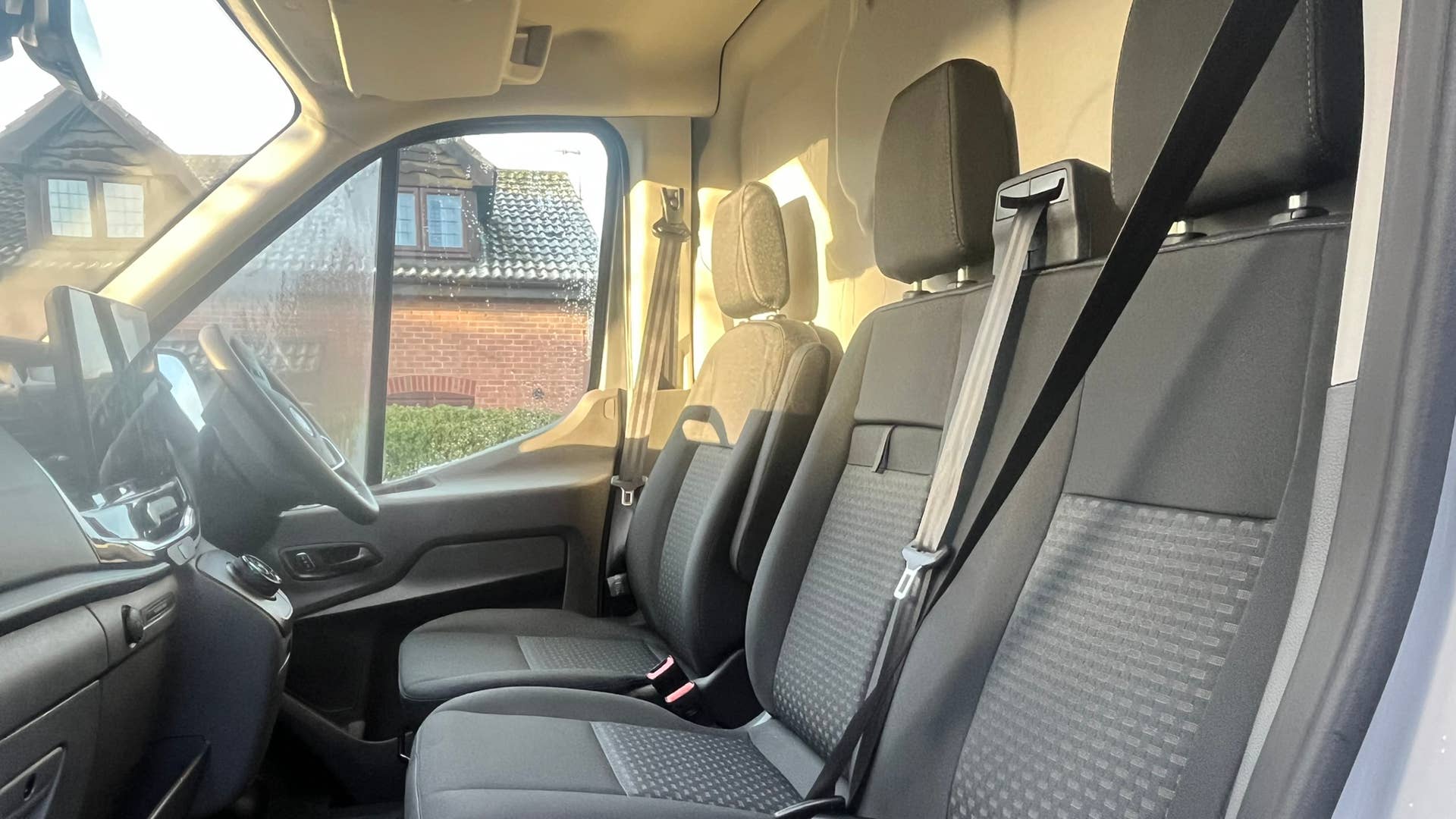
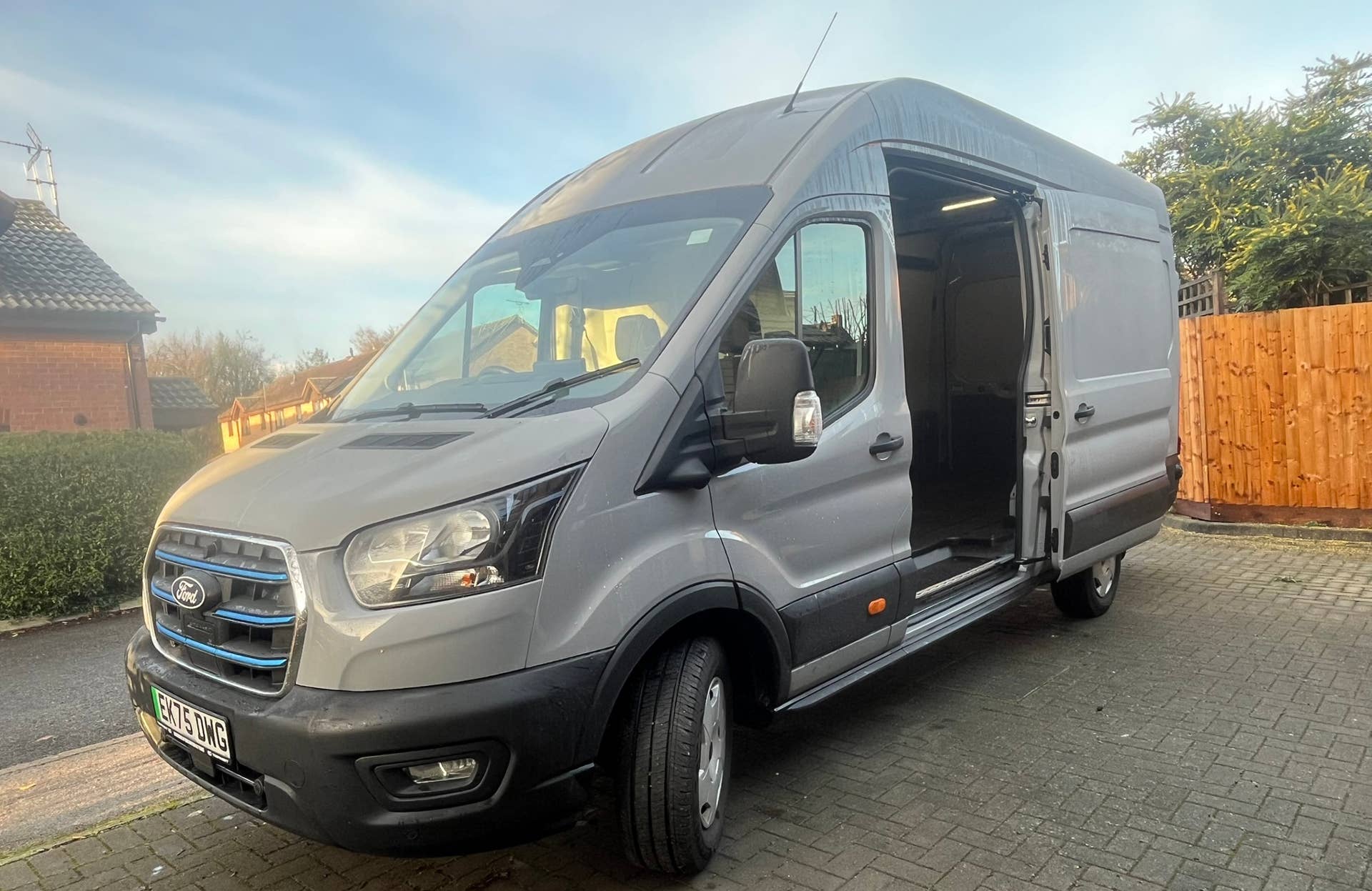
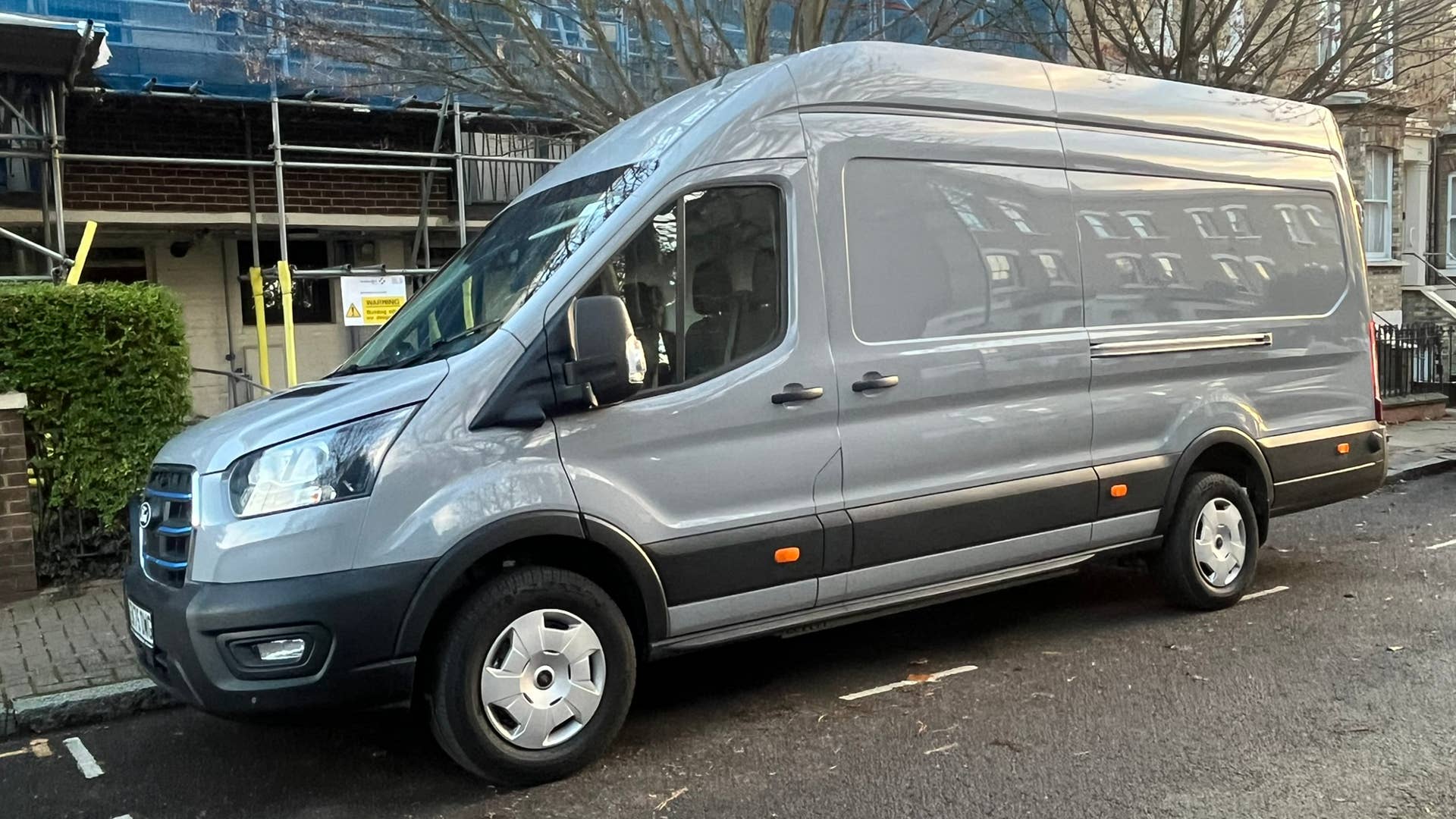
The van I drove was a UK-spec Transit Van Trend in Grey Matter with a high-roof (H3) body and long wheelbase configuration. It had the standard-range 68 kWh battery (NB: in the US, a 89 kWh battery comes as standard) and a 198 kW motor (265 horsepower). Cabin trim was the Capitol fabric in Ebony/City in Ebony, and it was fitted with Continental tires. It also comes with a dedicated driver’s seat and a dual-passenger bench seat, so three can sit across the front.
Design and Everyday Usability
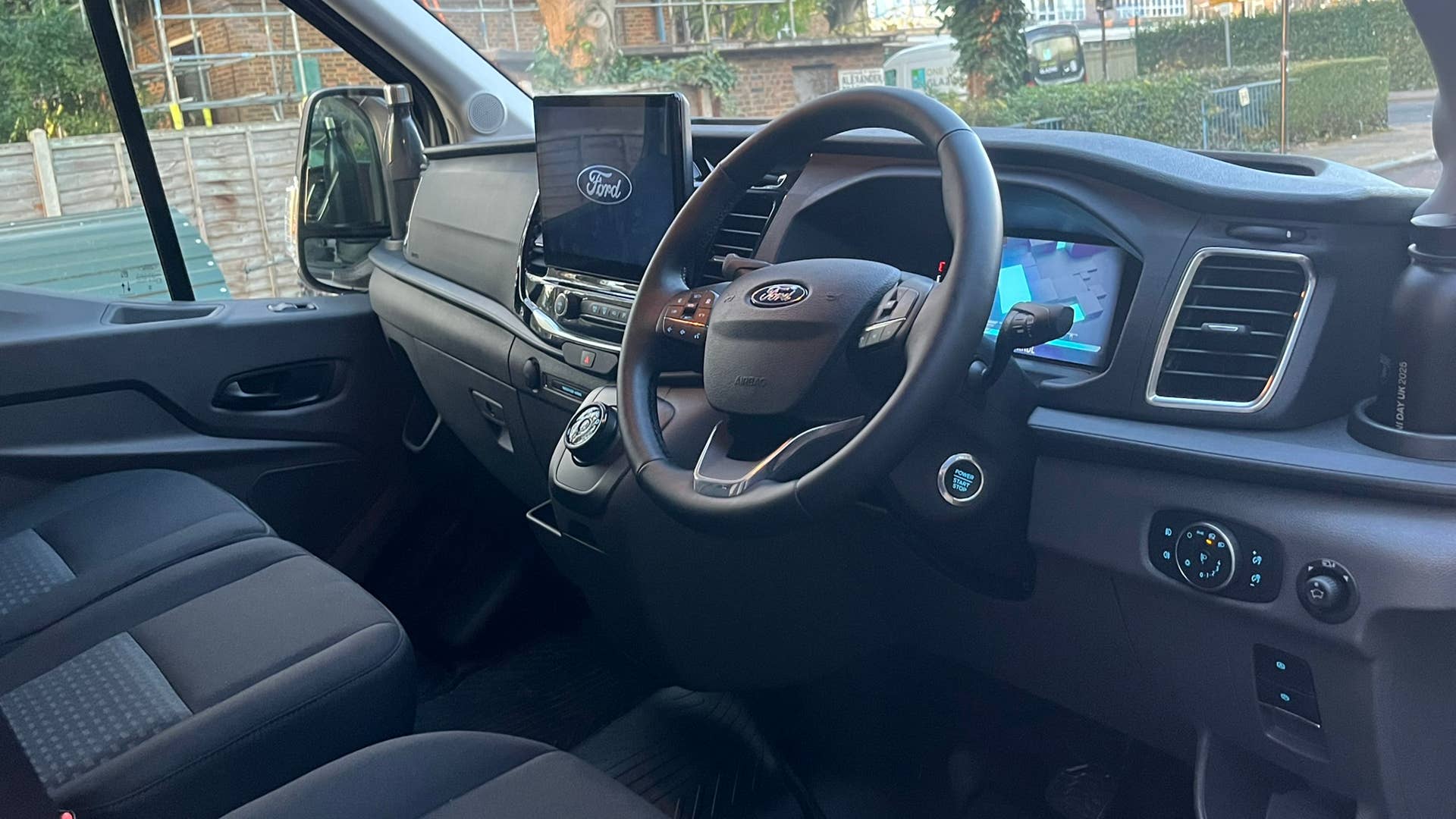
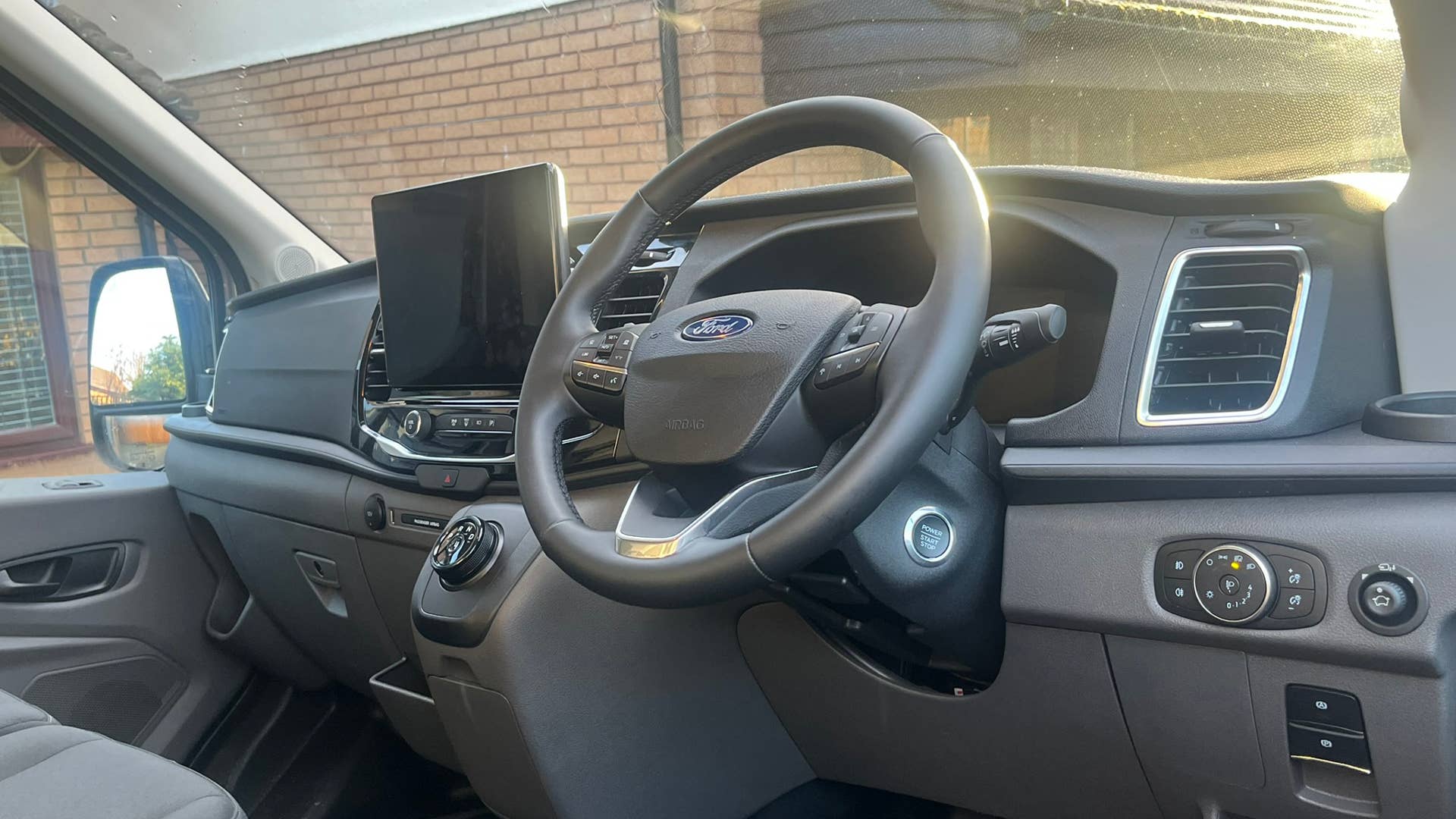
As a daily workhorse, the E-Transit succeeds because it doesn’t feel like a radical departure from a conventional Transit. The driving position is familiar, visibility is good, and the controls are intuitive. That matters in a vehicle designed to be used all day, every day.
The power delivery is one of the van’s most convincing attributes. The electric drivetrain’s immediate response makes low-speed work easier, particularly when you’re loaded and constantly stopping, turning, reversing, and rejoining traffic.
Related: Ford’s Affordable New EV “Family” Will Start with a Small Electric Pickup
Cargo Work: Moving House and Heavy-Lift Reality
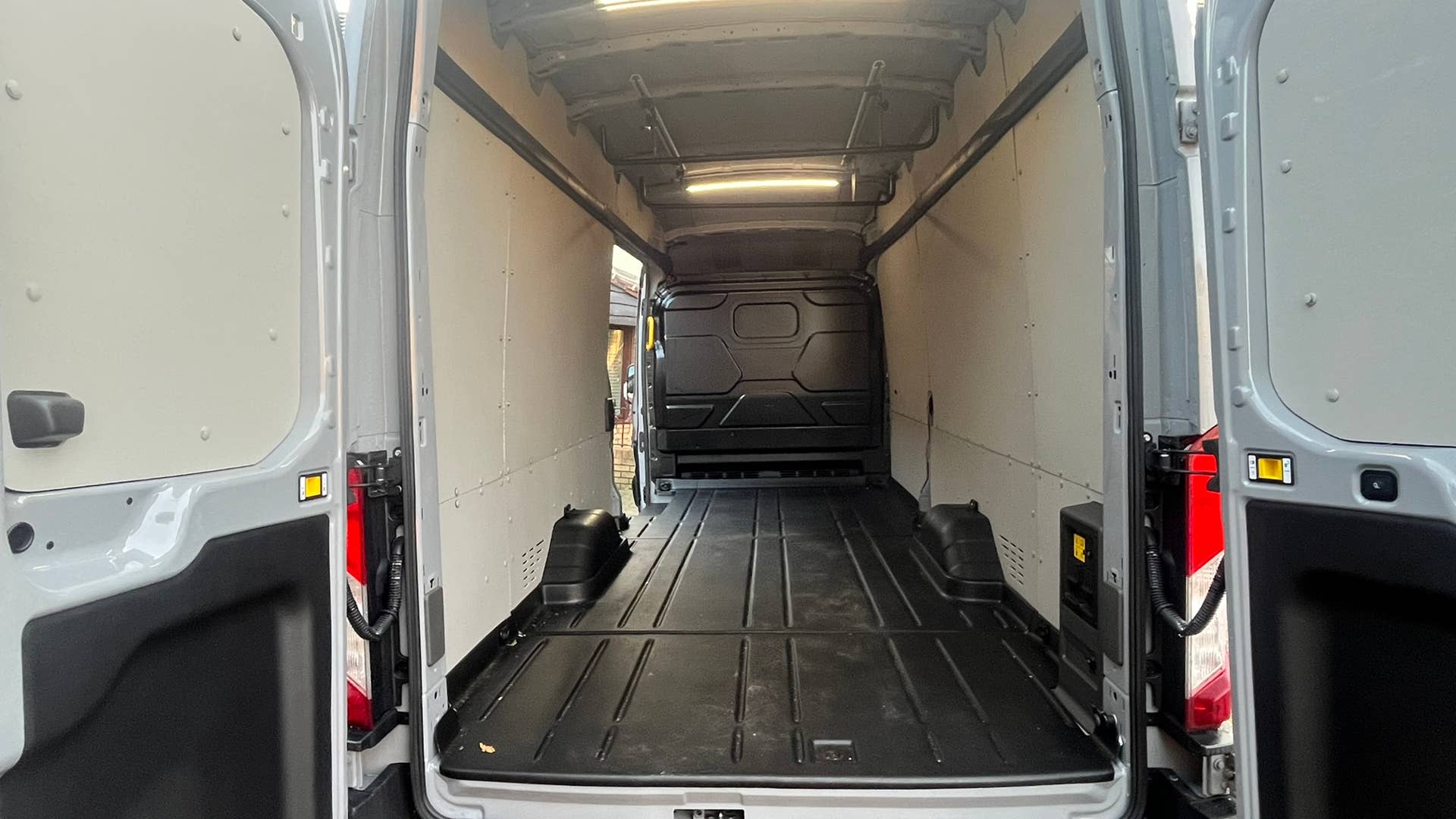
Moving house is the most honest van test because it blends weight, volume, awkward items, repeated loading cycles, and city driving. I had several runs where the van was completely full. The E-Transit handled those days without fuss.
Electric torque is a genuine advantage here. Pulling away with a load is smooth and immediate, and the single-speed drive removes the shuffling and hesitation you often get from a conventional powertrain when the vehicle is heavy and you’re navigating stop-start traffic. Low-speed control is also strong, which helps when you’re maneuvering in tight streets or parking under pressure.
Highway Driving: 400-Mile Round Trip
The London to Leeds trip (central London to Leeds United’s Elland Road stadium and back) was the clearest demonstration of where the E-Transit is excellent and where it asks you to adapt.
From a comfort and stability standpoint, it performed better than expected. It tracks straight, feels settled at speed, and avoids the constant nervousness some large vans can have on faster roads. “Comfortable over long distances” is always relative in a commercial vehicle, but the E-Transit sits on the right side of that line.
The trade-off is energy consumption, and it’s not subtle. With the van’s size and the winter temperatures close to zero degrees, speed became the main lever that determined how the day would go. As a rough real-world anchor for planning, the difference felt like this: at a steady 60 mph the van behaved like a 2.0 mi/kWh vehicle in spirit, while above 70 mph it dropped into something closer to 1.5 mi/kWh. That change doesn’t sound dramatic until you translate it into range. On a 68 kWh pack, you’re effectively moving from “comfortably over 120 miles” territory to “closer to 90–100 miles before you start thinking seriously about the next stop,” and that gap is exactly why the same route feels manageable at one pace and demanding at another. With the US model’s 89 kWh battery, you’d get around 50 miles more range.
Those figures are not lab data and will vary with wind, temperature, traffic, and load, but if you intend to run long highway legs at 70mph in cold weather, you should make charging stops part of the schedule.
Related: Next Ford Lightning Won’t Arrive Until 2028 as EV Plans Shift
Charging Experience and Real-World Time Cost
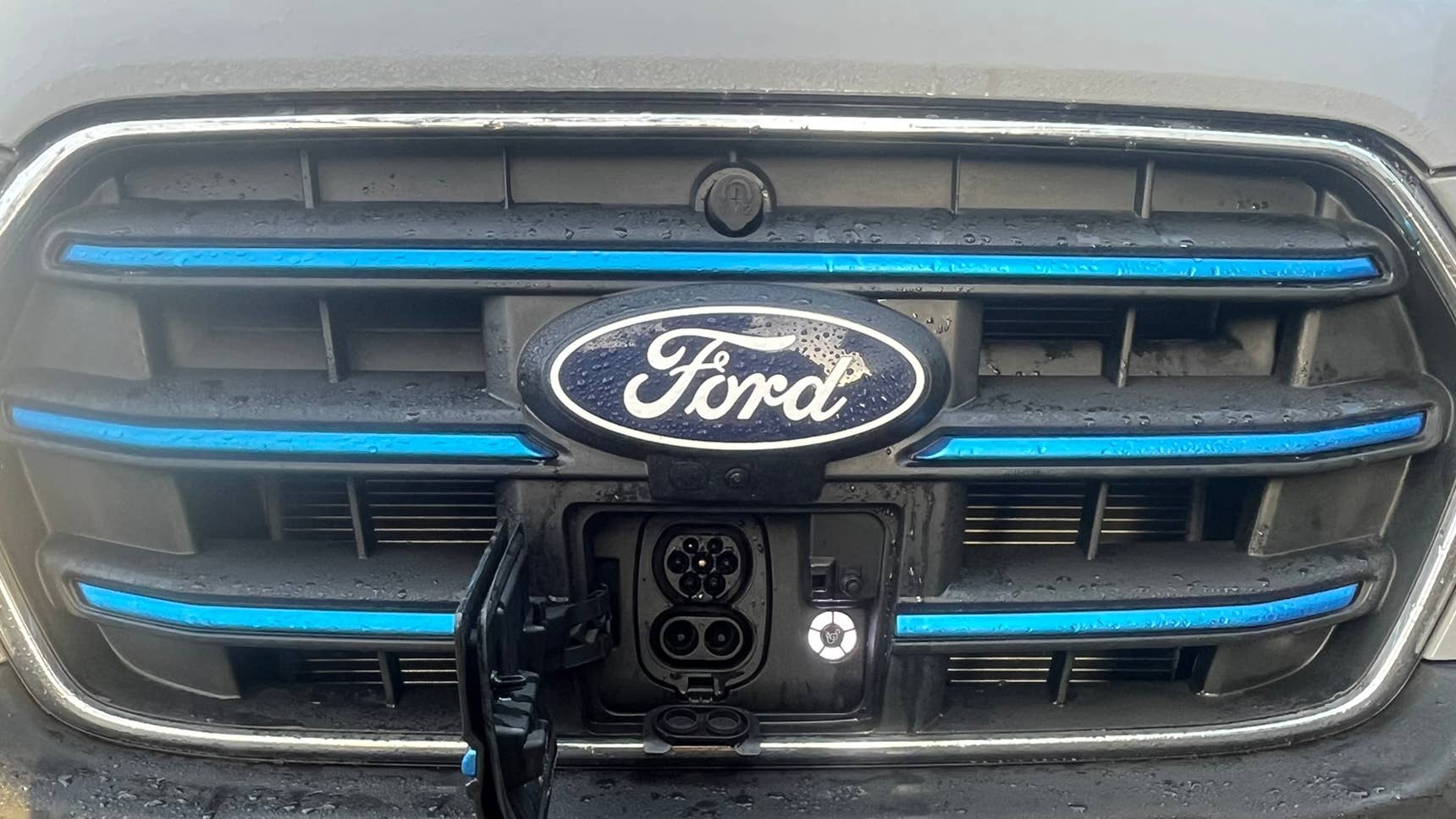
Charging was a mix of highway DC fast chargers and a local supermarket fast charger. On the Leeds run I charged three times: two fast-charger top-ups on the highway and one slow overnight charge in a Leeds car park.
That overnight session was a planned decision to reset the van cheaply while it was parked anyway, rather than pay premium rates to keep topping up on rapid chargers. The practical takeaway for owners is that multi-day logistics with an E-Transit get much easier the moment you can treat the van like a device that recharges while you’re doing something else, not a vehicle that needs a dedicated “fuel stop” every time.
The most frustrating part of the experience was not the charging speed itself. It was the friction at the charger: payment and setup took time, and I had issues getting the charger to release properly. Those delays matter more in a work-vehicle context because they add unexpected minutes that can mess up a carefully planned schedule.
Ride, Comfort, and Driver Load
One of the E-Transit’s strengths is that it reduces fatigue. The cabin is functional and easy to live with. This is an important point because comfort in a vehicle like this is not about luxury. It’s about whether the vehicle makes long days easier. Over three weeks of varied, demanding use, the E-Transit consistently did.
Related: Ford Transit SuperVan Just Smoked the Corvette ZR1X at the Nürburgring
Is This The Right Van For Me?
The E-Transit makes the most sense when your daily work pattern is predictable and you can charge consistently where the van parks.
It is a strong fit for last-mile delivery, trades, service routes, and any operation with defined daily mileage and reliable overnight charging. In those conditions, the E-Transit’s quiet operation, smooth low-speed drivability, and reduced driver fatigue are advantages you notice every day, and the published range matters less than the ease of using the van.
Price is part of that decision. In the US market, published starting MSRPs for the E-Transit land in the low-to-mid $50,000 range before options, which keeps it positioned as one of the more accessible full-size electric van entries.
It is less ideal for repeated long interstate days at sustained high speeds with unpredictable stops. The E-Transit can handle highway work, but the combination of speed, weather, and charging availability increases your dependence on public chargers, and charging becomes part of the workday rather than something that happens in the background.
There is also a hard constraint for US buyers: if you need to tow regularly, the E-Transit is the wrong tool. Ford does not recommend towing with the US-spec E-Transit, and that alone will disqualify it for some use cases.
Competitors
The E-Transit sits in a small but growing US electric full-size van field, and the key alternatives are defined less by badge preference than by what you value most: range, cost, packaging, and job requirements.
Mercedes-Benz eSprinter is the most direct alternative. It is typically positioned around a larger battery and longer driving range than the Ford, and it is one of the few electric full-size vans in this segment commonly marketed with towing capability in the US. The trade-off is cost with published starting prices in the low $60,000s.
Ram ProMaster EV is a credible alternative with a similar starting MSRP in the mid $50,000s albeit with a different packaging philosophy. It tends to appeal to buyers who prioritize cargo access, loading ease, and the practicalities of working out of the van. It is not positioned as a towing-focused option, and it generally does not outperform the E-Transit on payload. In practice, it is often a choice made on layout and how you work rather than on headline power figures.
Related: Ford Updates Plans: 5 New Affordable Vehicles by 2030
Verdict
Used hard over three weeks, the E-Transit proved itself as a serious working van first and an EV second. It handled heavy cargo tasks, family logistics, and a meaningful highway run without feeling fragile or compromised. The driving experience is calmer and more approachable than many conventional vans, and that translates directly into reduced fatigue.
The deciding factor is whether your schedule can accommodate charging. If you can charge reliably at home, at a depot, or at a consistent overnight location, the E-Transit makes a strong case. If your work routinely demands long, fast highway days with unpredictable stops, it can still do the job, but you will spend more time planning and more time charging than you might want.
In short, the Ford E-Transit is a genuinely capable full-size van that feels better to drive than most of its class, and it is at its best when charging is routine rather than a recurring problem you have to solve mid-day.
Pros & Cons
Pros:
- Easy, low-stress driving in urban conditions
- Strong low-speed control and load-friendly performance
- Good stability and comfort for a full-size van
- Practicality that supports real work rather than just reading well on a spec sheet
Cons:
- Regular charging is part of the routine
- Sustained speeds above 70 mph materially increase charging frequency
- Cold weather intensifies those effects
- Public charging friction can be the most time-wasting part of the experience