It’s 2025 and diesel passenger cars are as good as dead in America. Right now, nobody offers a diesel-powered vehicle that isn’t some sort of SUV or pickup truck, but it wasn’t always like this. Even after the great diesel scandal of the 2010s broke, a whole host of compression-ignition machines burst on the scene to relatively little fanfare. One of the more obscure offerings to be sold here was the Jaguar XE 20d.
Out of all the manufacturers that could’ve launched a diesel sports sedan in America in the late-2010s, Jaguar probably isn’t the one you’d expect. On the one hand, Mercedes-Benz never sold a modern diesel C-Class in America, which feels like a missed opportunity. On the other hand, there’s a good chance everyone forgot that the Chevrolet Cruze diesel existed, so the XE 20d slipping under the radar isn’t unprecedented.
Still, here’s a premium compact diesel sedan that isn’t a BMW or an Audi, and that deserves a bit of retrospective. Especially since Jaguar doesn’t really have any new cars right now. Instead, it’s gearing up for an all-electric future. Shall we hop in the time machine for a minute?
The Aluminum Baby
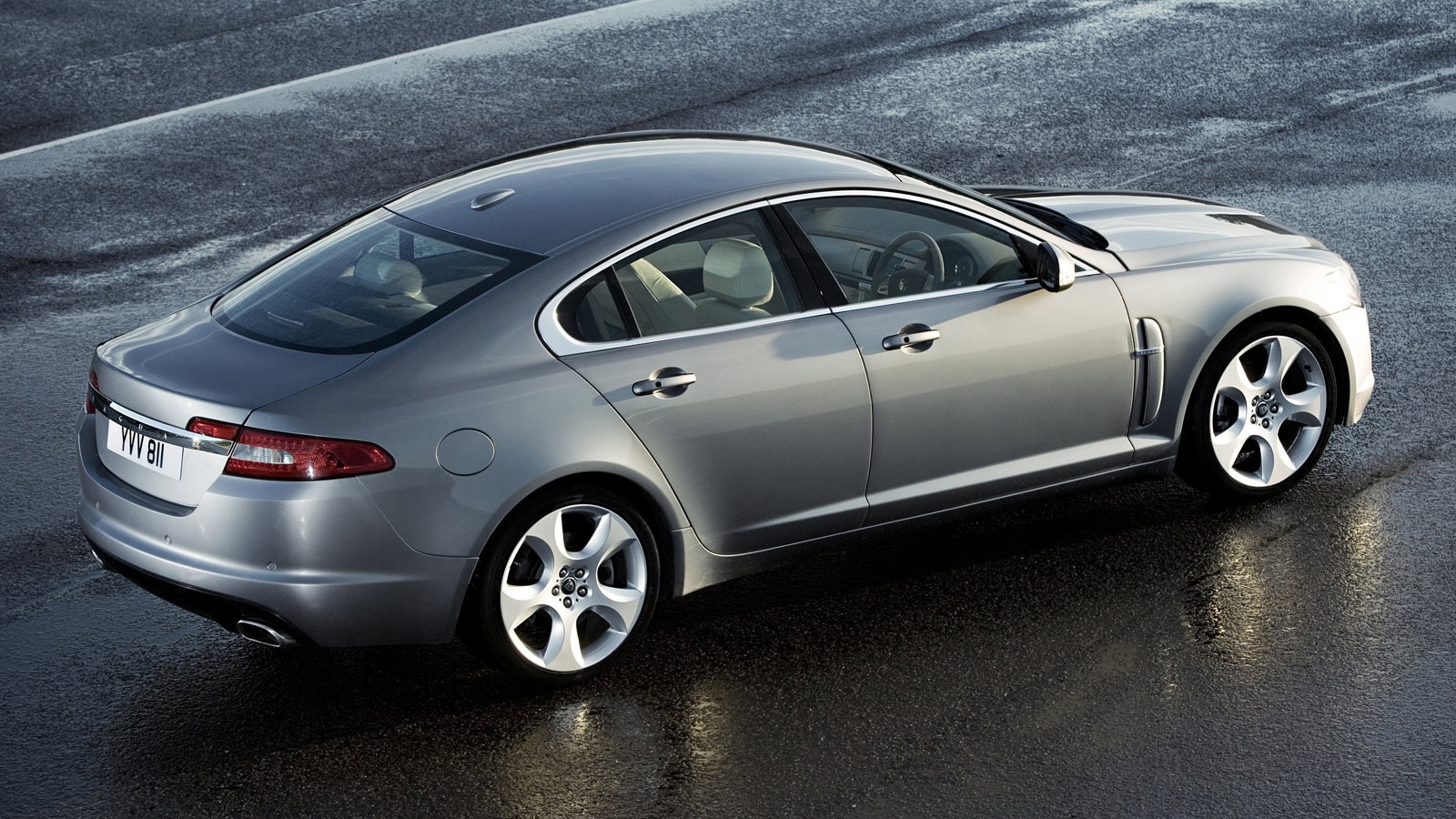
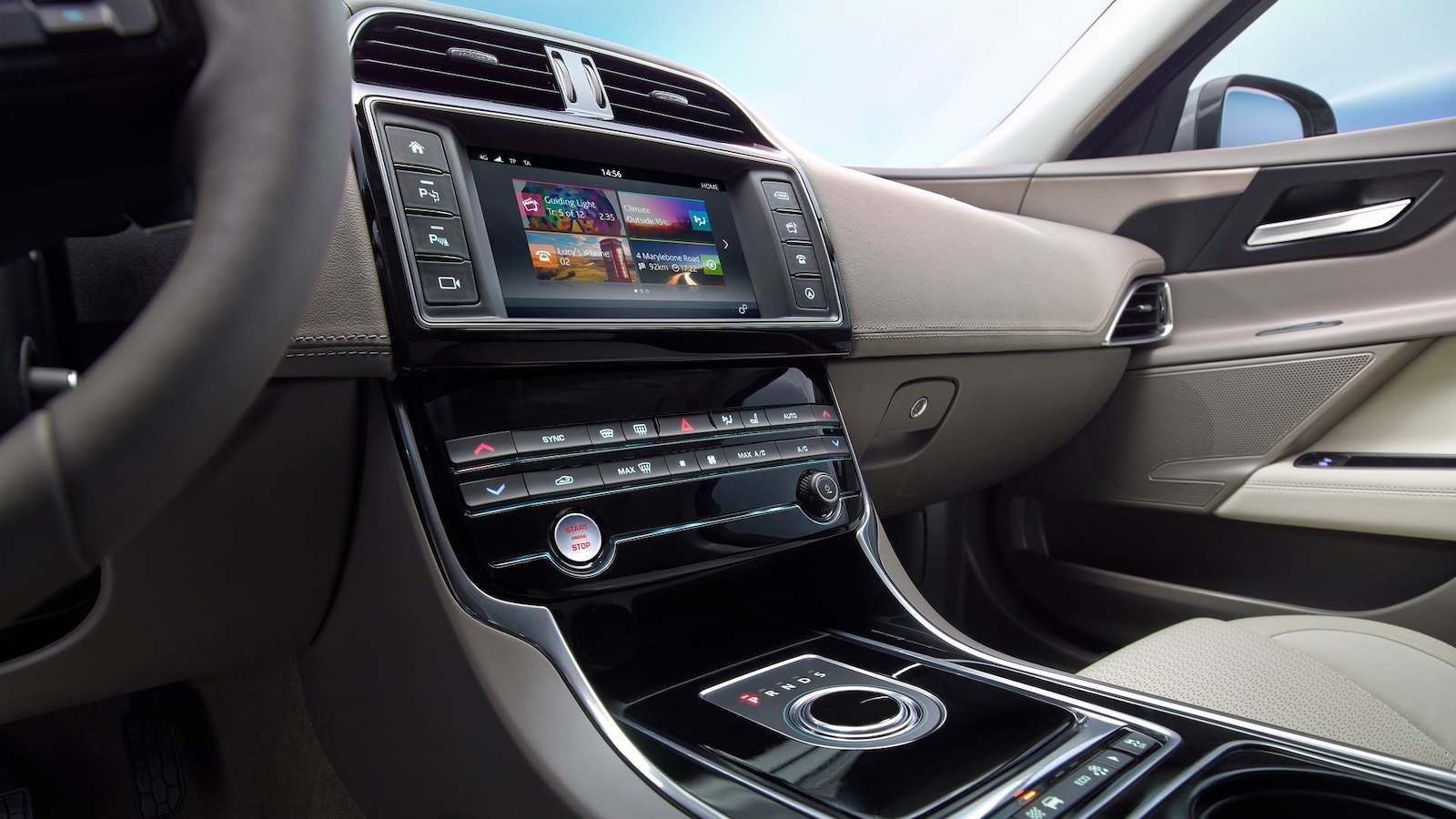
If you’ve been around for a minute, you’ll know that Jaguar’s electric pivot isn’t the first big change the brand’s seen in the 21st century. Although the marque started the millennium with two scoops of old-fashioned heritage influence, by the end of the 2000s, it had taken a turn towards modernity. The 2007 XK was the starting point, but the first-generation XF was a real salvo. It had climate controls reminiscent of a Motorola Razr, a rotary gear knob that sat flush with the console until you turned the car on, and just a hint of soft blue lighting. Very cool. The 2010 XJ was another big step towards revitalization, and with stability seemingly assured for the near-term, Jaguar geared up to take on the Germans.
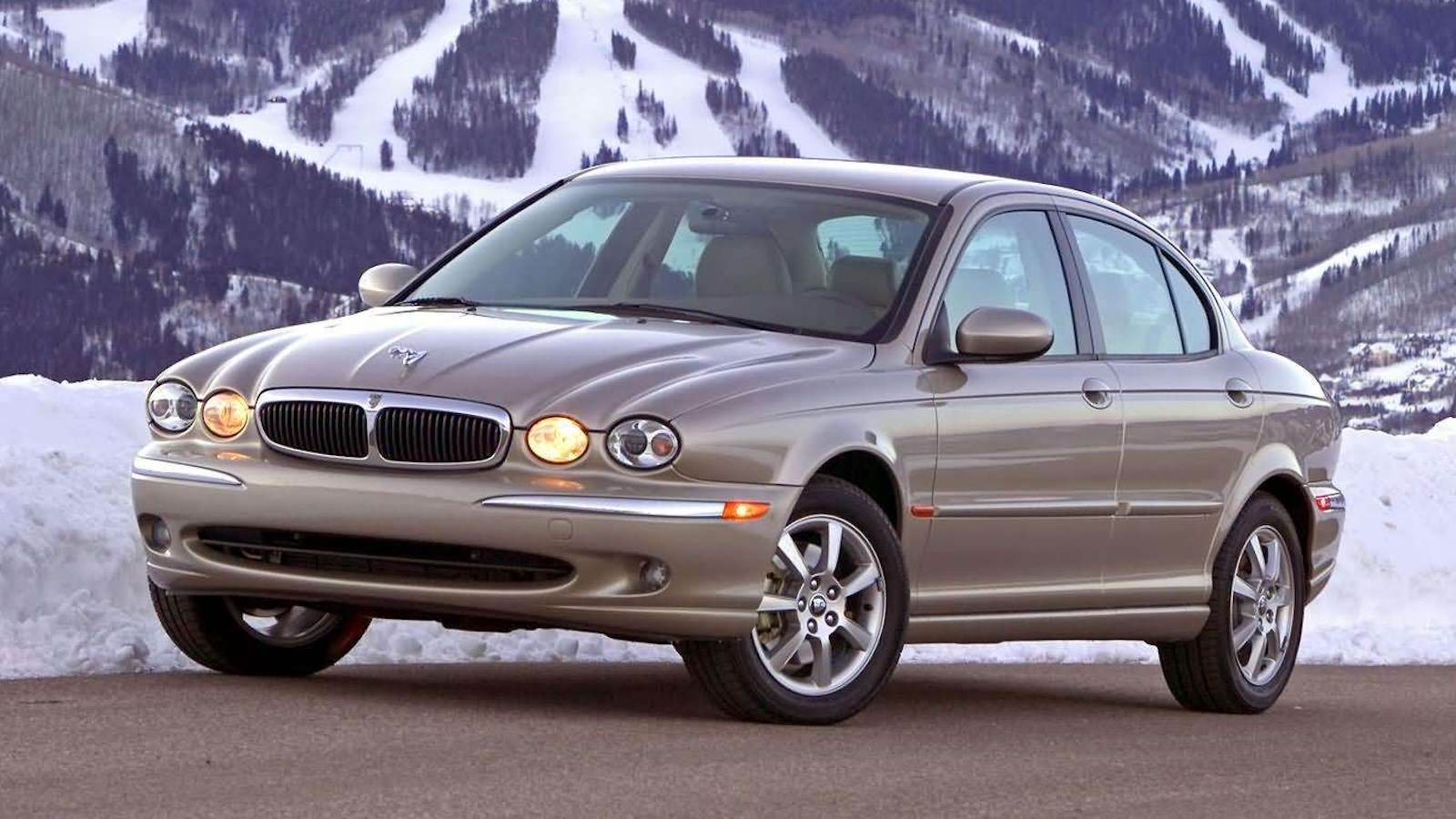
We all know the F-Type had a huge cultural impact when it launched, but it was merely the first step in a new top-to-bottom lineup. When you’re going to compete with BMW and Mercedes-Benz, you’ll need more than a sports car and two big sedans. You’ll need a small sedan too. While Jaguar tried this before with the X-Type, that car’s transverse Ford-based underpinnings meant it never quite measured up to rear-wheel-drive rivals. This time, Jaguar wouldn’t make the same mistake.
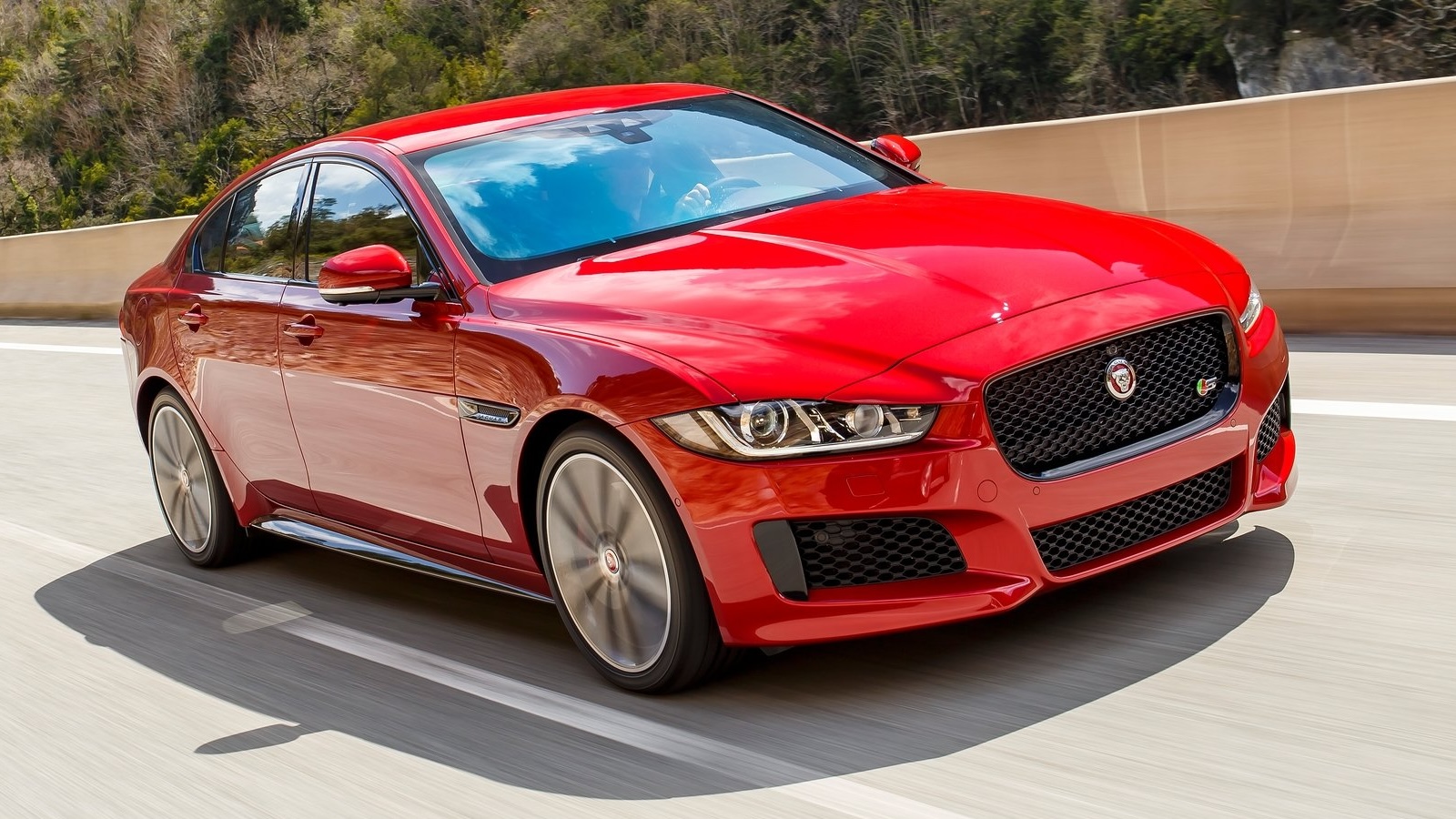
The new baby Jag was called the XE, and it was unlike anything else in the segment. While the Germans were building their compact sports sedans out of steel, Jaguar went with bonded and riveted aluminum, scaling down technology previously introduced in the XJ sedan of the mid-2000s. Indeed, Jaguar’s three-liter supercharged V6 was also downloaded from larger models, with up to 380 horsepower in XE S trim. Mind you, the V6 was thirsty, so Jaguar also offered Americans something the brand never brought stateside before: A diesel engine.
Midnight Oil

Indeed, coinciding with the XE’s delayed arrival in America, and in a post-Dieselgate landscape, Jaguar decided the time was right to offer diesel passenger cars on this side of the Atlantic. The Ingenium two-liter turbodiesel inline-four used electrohydraulic variable valve timing technology originally developed by Fiat to crank out 180 horsepower and 318 lb.-ft. of torque. That’s the same horsepower as the BMW 328d but 38 more lb.-ft. of torque. Pair that with a ZF eight-speed automatic transmission, and the result was an EPA rating of 32 MPG city, 42 MPG highway, and 36 MPG combined. Right on par with its closest rival, despite higher output.

However, let’s just say that the XE 20d needed more torque than the BMW 328d. See, an all-wheel-drive diesel XE would tip the scales at nearly two tons despite aluminum construction, which meant that it wouldn’t exactly set your follicles ablaze in a straight line. When Car and Driver tested a diesel XE, the magazine only managed zero-to-60 mph in 8.4 seconds. At the drag strip, this reasonably elegant sedan would be in a dead heat with a stick-shift Toyota Echo. Granted, the Jaguar was more economical than an Echo, and it offered decent stick too. As Car And Driver wrote:
Ripping around our favorite winding, two-lane roads, the XE certainly feels less isolated than the 3-series—a great start. Even though this particular car wore 18-inch all-season tires—R-Sport V-6 models are available with 20-inch performance rubber—lateral grip was a still impressive 0.88 g, which is more stick than the XE’s minimally bolstered seats can handle. However, despite more than ample grip, taut wheel and body control, and quick steering, linking corners in the XE doesn’t come as naturally as in our transcendent favorites.
So, a competitive but not superlative sports sedan with excellent fuel economy. While it didn’t exactly make a huge dent in BMW 3 Series sales, the Jaguar XE 20d was a competent machine for serious mile-munching. Or at least it would be if it weren’t for one big issue.
Timing Is Everything
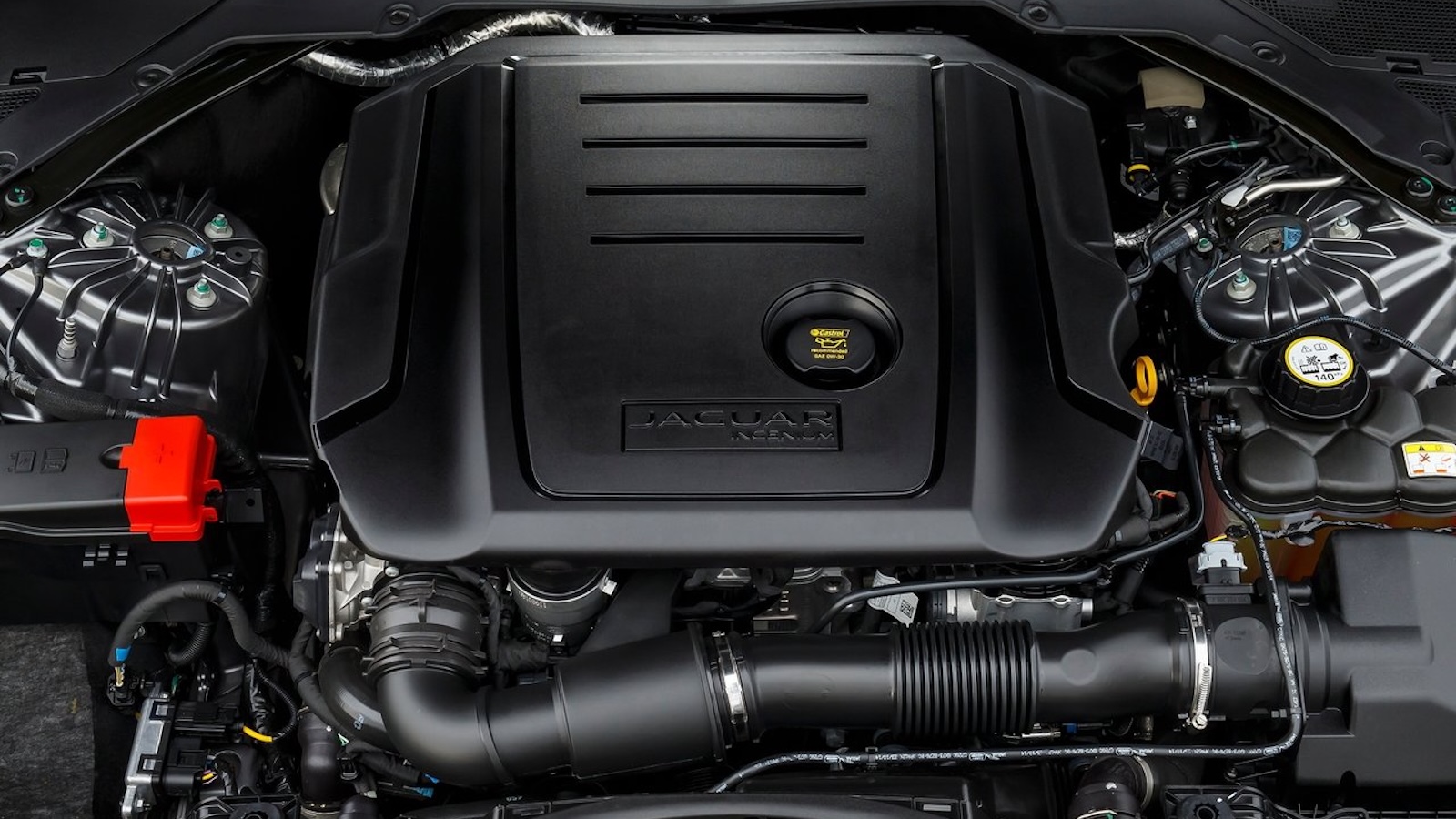
As these Ingenium two-liter diesel four-cylinder engines aged, a common problem started to rear its ugly head. In theory, a timing chain should be essentially maintenance-free. With hydraulic tensioners and a metal chain that doesn’t dry rot like a rubber timing belt, this sort of timing arrangement should last the life of a vehicle. However, not only did Jaguar use wearable plastic timing chain guides, the chains themselves are known to stretch on occasion. Some owners report hearing a rattle on start-up and needing a new timing chain with less than 100,000 miles on the clock, and it’s a big job. We’re talking thousands of dollars to sort.
At the same time, turbochargers can fail, and a leaking thermostat housing can take out the solenoid controlling oil flow to the piston oil squirters. Then there’s how the particulate filter on this diesel engine isn’t always happy with prolonged around-town use. It really needs a good run down the highway every week or so to clear out the particulate filter, otherwise owners may be looking at bills for forced DPF regeneration. In short, while there’s a chance an XE 20d could be just fine, it also could produce repair bills that eliminate any cost savings of the excellent fuel mileage. Perhaps that’s part of the reason why these cars are so cheap secondhand.
Bargain Bin

Jaguar only sold the XE 20d for three model years in America, from 2017 through 2019. Unsurprisingly, sales volumes weren’t huge, but you can find higher-mileage examples for less than $10,000 if you poke around. Here’s a 2017 model that recently sold on Cars & Bids for $8,200. It had 102,300 miles on the clock at the time the hammer dropped, but it looks tidy and boasts a clean Carfax.

Likewise, here’s another 2017 XE 20d, and this one’s up for sale in Tennessee for $8,951. Alright, it has 104,465 miles on the clock, but it’s a decent spec with the split-five-spoke wheels and leather seats. Then again, it does look like it needs at least a pair of tires soon, and some interior wear is evident.
Sorry, You’re Not A Winner

Alright, so the Jaguar XE 20d wasn’t particularly quick, or impressively reliable, or significantly more economical than its rivals. It didn’t sell in huge numbers, and the interior had its own whiffs of cheapness. However, it’s definitely a strange car to offer in America, which is why we should celebrate that Jaguar tried it for three years. It wouldn’t be my first pick for a used diesel sedan, but that 20d badge is interesting to see in the wild.
Top graphic image: Jaguar
The post For Just Three Years, Americans Could Buy A Small Diesel Jaguar Sport Sedan appeared first on The Autopian.