Both companies have been making off-roaders since the 1980s, and either went in a different direction or stayed in the same lane. Here’s what I think after driving both.
The Nissan Pathfinder hit American dealerships in 1987 (yes, just three years after the Toyota 4Runner), with a simple mission: provide an affordable, approachable, and perfectly capable off-road-ready option to the perfectly average American. Similar to the 4Runner of the time, the Nissan was a two-door SUV based on the Hardbody truck (the 4Runner was based on the aptly named Toyota Pickup), had a smaller 2.4-liter four-cylinder engine, or a more robust 3.0-liter V6 with an optional manual 4WD powertrain.
Kristen Brown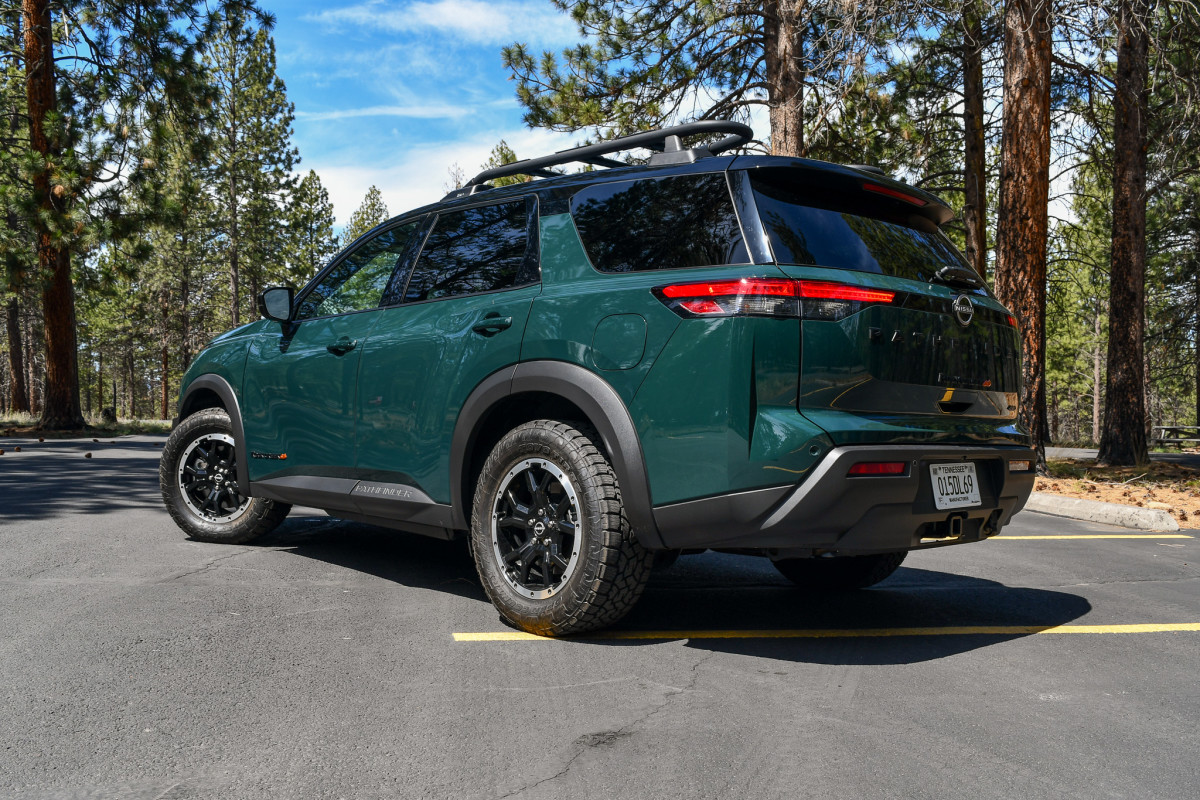
Both SUVs have remained relatively faithful to their 1980s mission statements. But after driving both, I feel like the Nissan Pathfinder is closer to its original mission than the Toyota. The Pathfinder comes in a variety of flavors, and, unlike the newly redesigned 4Runner, still comes with a potent V6: although, instead of a 3.0-liter, it’s a 3.5-liter for 2025. Aside from radical redesigns on both ends, here’s what I think has changed—or hasn’t—since their first model years.
Styling-wise, the Pathfinder doesn’t look as off-roady as the 4Runner does
If we compare the 1987 Pathfinder to the 1984 4Runner, the designs are eerily similar. If the 4Runner didn’t have such a distinctive cover for the trunk, it would be nearly impossible to distinguish them based on a glance. One major difference, though, was the fact that the first model year of the 4Runner didn’t have rear seats–only two in the front, and the rear was covered with a fiberglass shell that could be removed. It was then classified as a light truck rather than an SUV, allowing Toyota to sell it at a lower price.
Toyota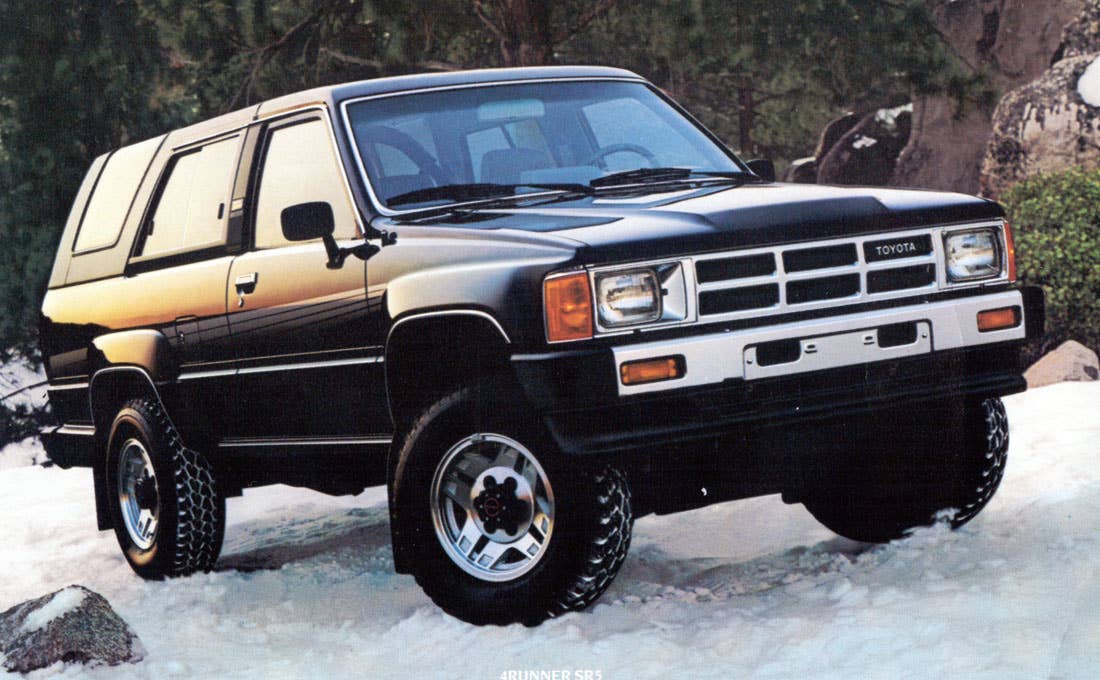
Because the Pathfinder was an SUV that had rear seats, it cost a bit more than the Toyota. But it made it much more appealing to those who needed the extra seats without paying a whole lot more than the Toyota Land Cruiser of the time. Now, if we compare the designs of today’s examples, they look entirely different. The Pathfinder, unless you get the Rock Creek Edition, looks more like a run-of-the-mill 3-row mom-mobile as opposed to a rough and tough truck, while the 4Runner is a whole lot bigger, can now have three rows of seats, and is about as tough as they come.
Today’s Pathfinder has a lot of sleek, smooth lines that define its exterior, and everything is rounded off. Even the rear end is rounded and soft, and while it doesn’t necessarily help with aerodynamics, it gives it a premium look, especially with all the chrome and color choices. The Rock Creek has all-terrain tires, black body cladding, a tubular roof rack, and blacked-out badging, but otherwise, it looks like a smooth highway cruiser instead of a four-wheeler–despite having a truck-esque V6 and a robust full-time, “intelligent” 4WD system.
Kristen Brown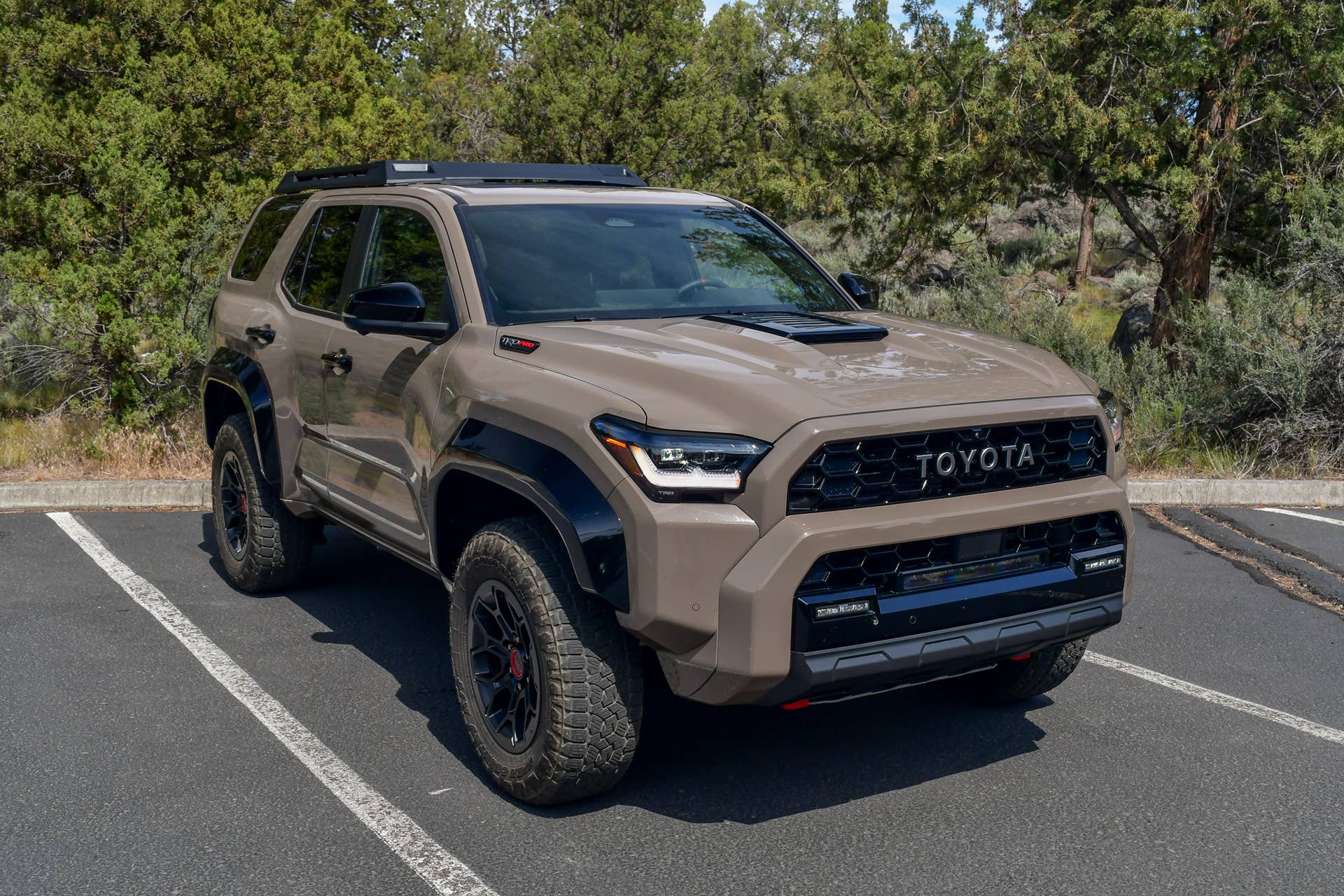
The 2025 4Runner, even at the base trim, looks like an off-roader. It has pointed and angular edges, sharp corners, and bold colors. The TRD Pro and Trailhunter trims are the most expensive and off-road-focused trims, with bigger all-terrain tires, trim-exclusive wheels, an updated suspension system, metal underbody protection, and tons of off-road technology to make the most challenging trails seem easy. Yet, like the Pathfinder, there’s a borderline-luxurious trim—the Limited for the Toyota and the Platinum for the Pathfinder—that offers a quieter ride and a fancier interior, without sacrificing a capable part-time 4WD system.
When it comes to price, the 4Runner is a lot more expensive
There are 12 trims of the 2025 4Runner, six of them with the gas-only 2.4-liter turbocharged four-cylinder I-FORCE engine churning up 278 horsepower and 317 lb-ft of torque. The new 4Runner also comes with the company’s i-FORCEMAX hybrid system, which pairs the same engine with a 48-horsepower hybrid battery to make a combined 326 horsepower and 465 lb-ft of torque. The gas-only 4Runner ranges from $41,270 to $55,900, while the hybrid setup runs between $52,490 and $67,400.
Kristen Brown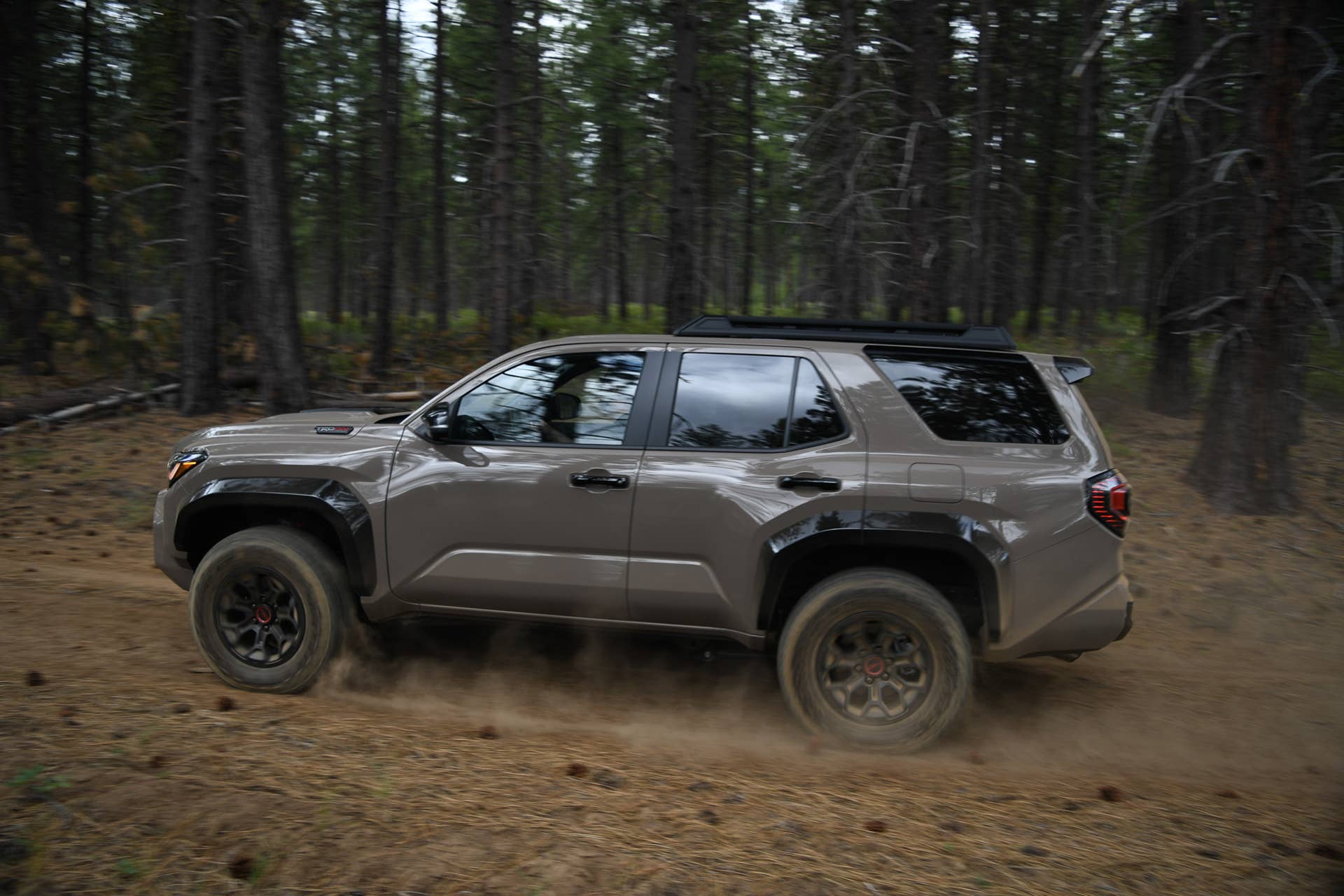
Since the Pathfinder only comes with the 285-horsepower (295 for the Rock Creek) 3.5-liter V6 and is not a hybrid (at least not yet, there’s reportedly a hybrid coming for 2026), there are only five trims to choose from. T S, SV, SL, and Platinum can be configured with 2WD, which lowers the base price by $2,000. Of course, those trims can also come with 4WD, and the Rock Creek is 4WD-only. The prices range from $36,400 to $48,460, which are notably lower than the 4Runner’s prices. The starting price of the Toyota is over $40,000, so, for once, the tables have turned—the Pathfinder used to be more expensive than the 4Runner.
Kristen Brown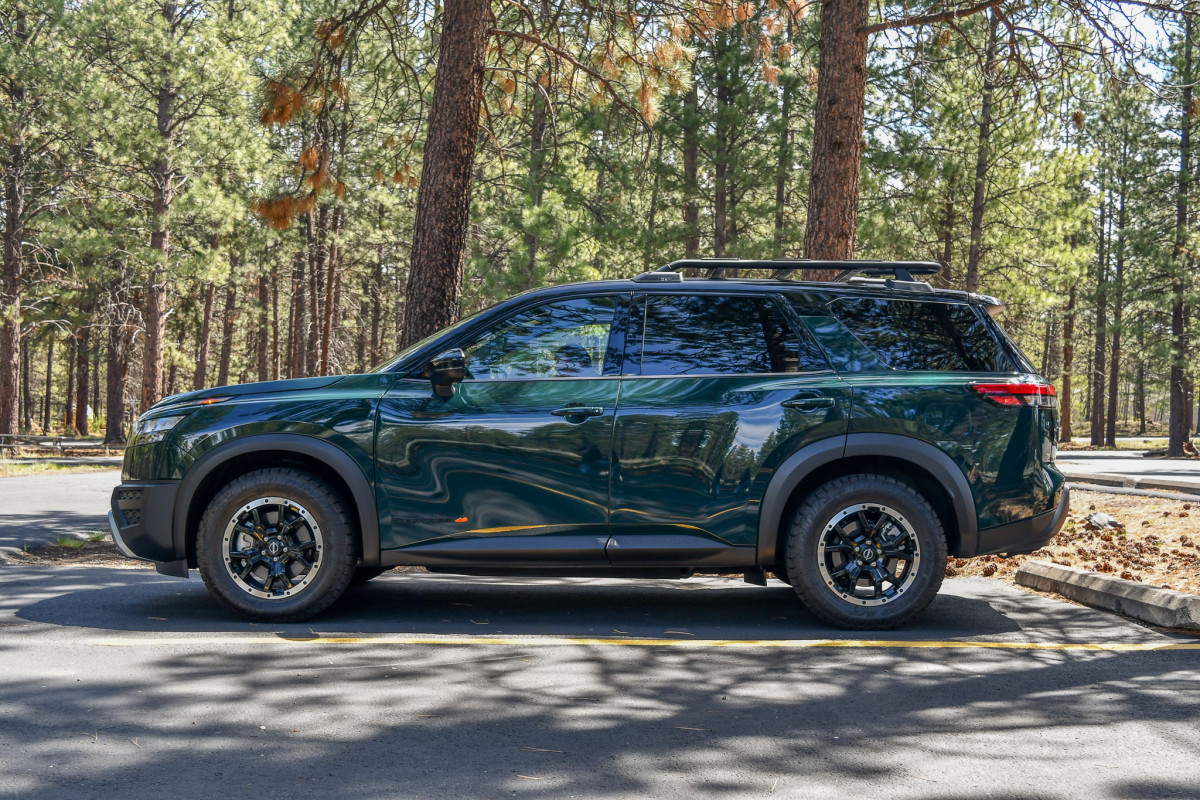
That can be, though, because the 4Runner has more to offer this time around instead of being a bare-bones truck built around a 4WD system. The interior is a lot nicer in the Toyota (though the Pathfinder is certainly not lacking in style, but it is lacking modern technology), with a larger screen, clear, crisp digital gauges, in-depth off-road information in the higher trims, and more power if you go with the hybrid setup. So, with the 4Runner, you’re definitely getting what you pay for. But the same could be said for the Pathfinder. This aligns with the differences, advantages, and disadvantages of both SUVs since their first model years, too.
If you want an off-roader, the 4Runner is a no-brainer
You can get any trim of the Pathfinder with Nissan’s intelligent 4WD system that essentially acts as an AWD system with a brake-actuated limited-slip differential and electronic transfer case with seven drive or terrain modes to help change the transmission or engine’s behavior depending on what you pick. The 4Runner, on the other hand, has a very traditional and capable part-time 4WD system with a two-speed transfer case and an electronic locking differential in the rear.
Kristen Brown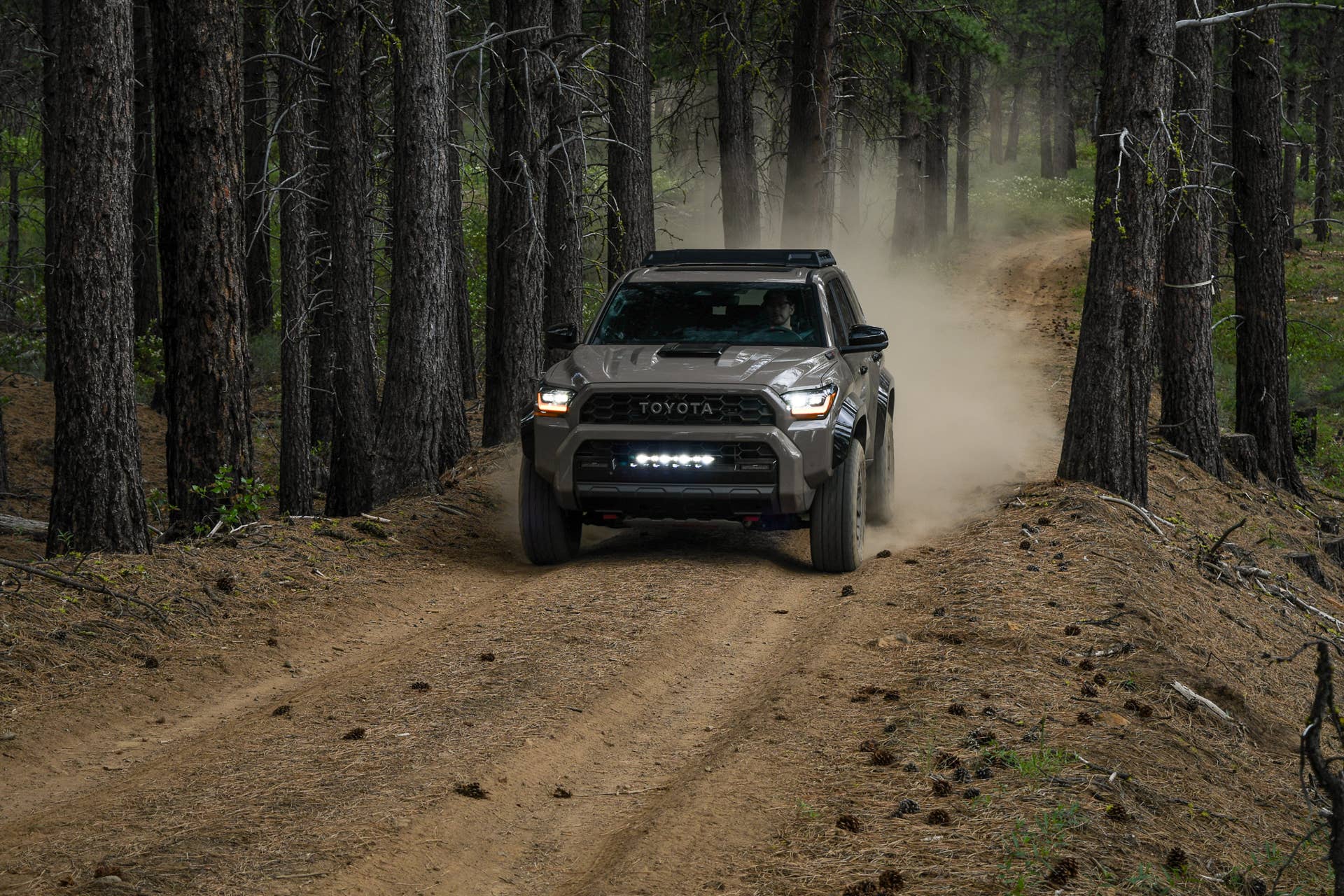
The TRD Pro also has a quick disconnect option for the front sway bar, off-road cameras as part of the company’s Multi-Terrain Monitoring system (like the Rock Creek has), crawl control (which the Pathfinder Rock Creek also has), hill descent, and a myriad of off-road-focused information displayed on the large infotainment screen. However, the TRD Pro, like the Trailhunter, has much greater ground clearance. They have 10.1 inches of ground clearance, while the Pathfinder has 7.1 inches.
The TRD Pro (and Trailhunter) trims also come with metal underbody protection, off-road tuned Fox suspension setups, and an integrated tire compressor in the truck. They can tow a good amount as a hybrid, too, with a maximum rating of 6,500 pounds, which is higher than the Pathfinder’s rating of 6,000 pounds.
Kristen Brown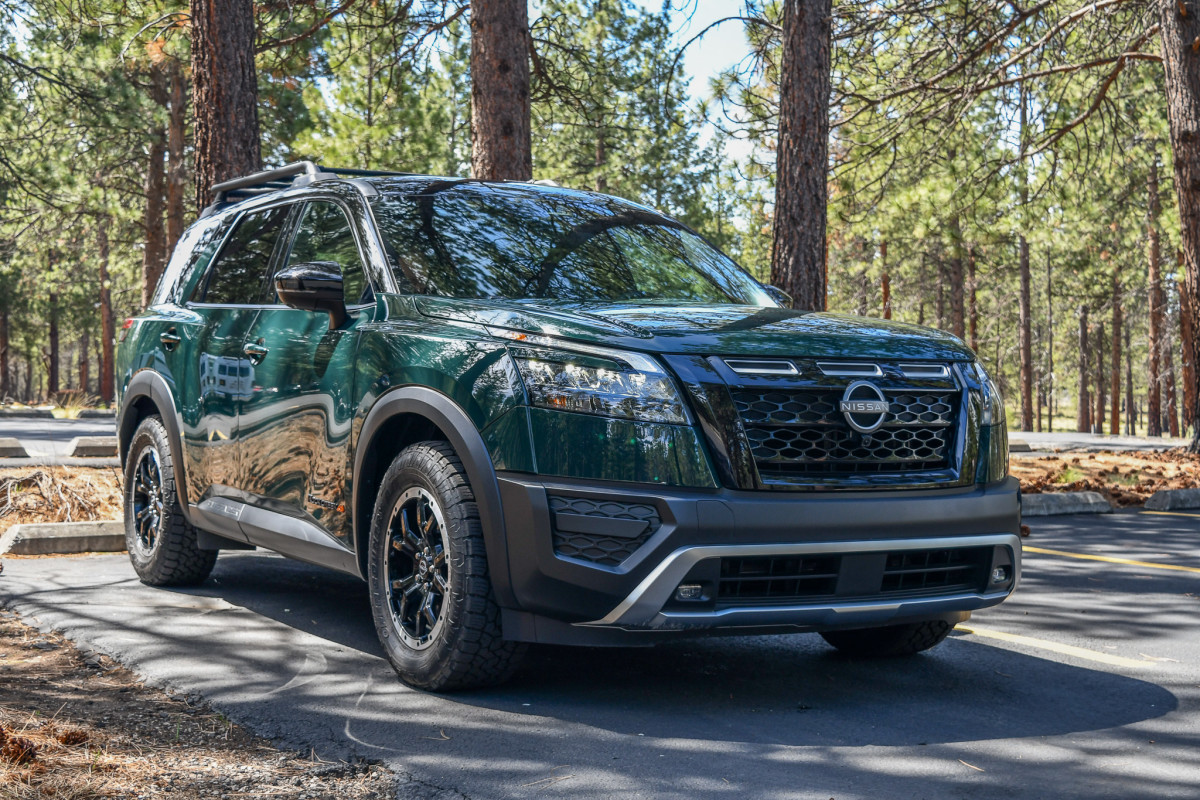
That’s not to say that the standard 4Runners or the Pathfinder aren’t capable–they will happily traverse your everyday muddy trails, snowy and rainy days with ease, but the more off-road focused trims of the 4Runner are a lot better equipped for the roads less travelled over the Pathfinder’s Rock Creek. But, if you want to save money and get a starter-friendly off-roader that can comfortably haul the family, the Pathfinder isn’t a terrible choice. Which follows the song they’ve both sung since they’re first model years.
Related: How the 2025 Nissan Pathfinder Rock Creek Made Life with Toddlers a Breeze
For daily driving, I enjoyed the Nissan’s ride over the 4Runner’s
To preface this part of the review, I’ll say that the only trim I’ve driven of the 4Runner is the TRD Pro, and the only trim I’ve driven of the Pathfinder is the Rock Creek, so obviously, for both models, I didn’t get the most comfortable trims of either SUV. However, for being an “off-roader,” the Pathfinder’s ride was a lot nicer than the TRD Pro’s. But my verdict might have been different if I drove a different trim, like the Platinum trim of either SUV, the 4Runner’s Limited, or the base model of either one.
Kristen Brown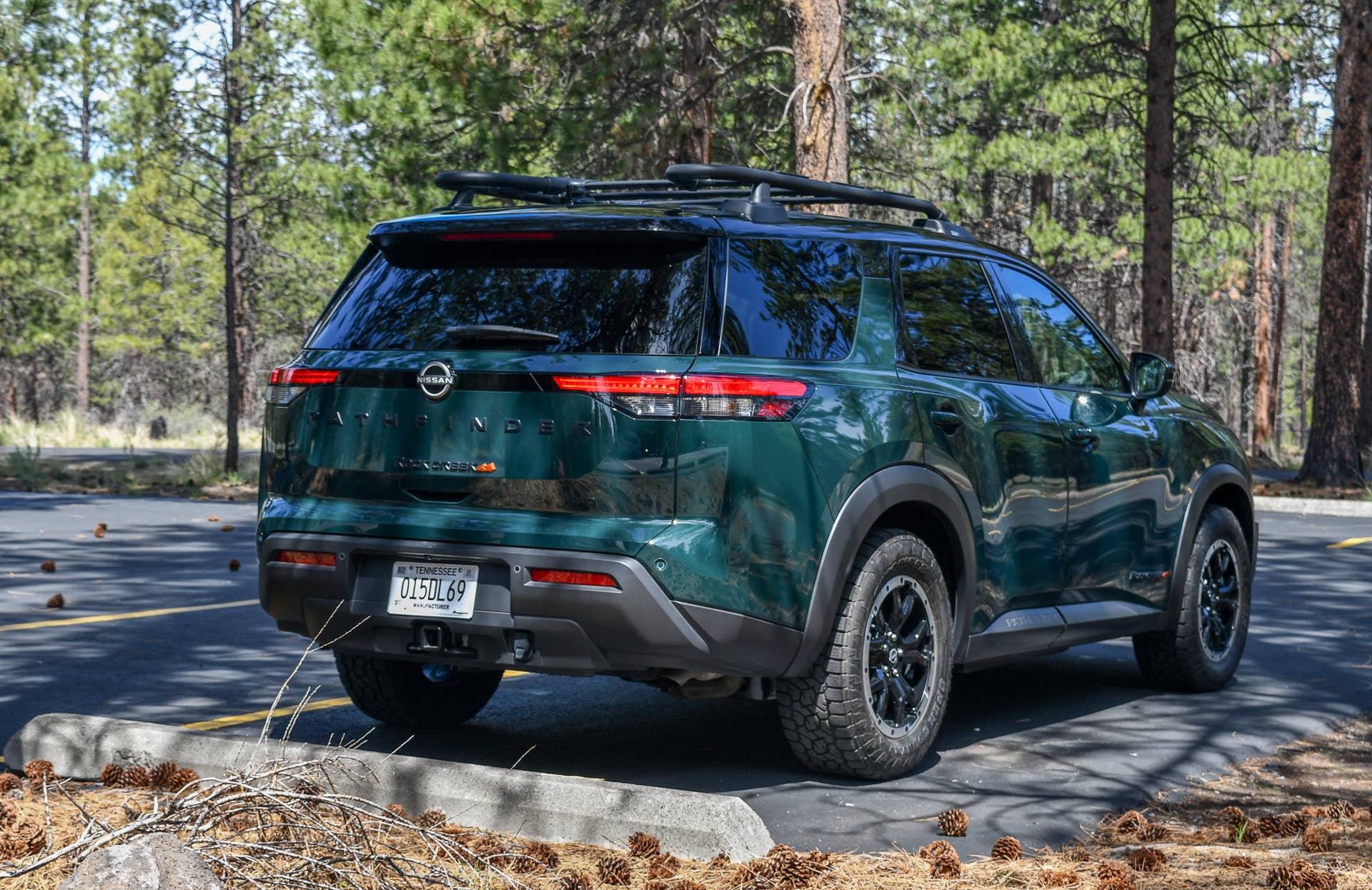
The Pathfinder’s ride dynamic is more for families, while the TRD Pro is obviously geared more for wheelers, overlanders, and rock crawlers–not necessarily for the daily errands, school drop-offs, and grocery runs. Though the TRD Pro can undoubtedly do it, the Pathfinder was much more comfortable, easier to maneuver, and easier to get kids in and out of. Plus, the hybrid battery takes up a lot of vertical space in the trunk, so the Pathfinder was easier to load with gear and other heavy items. And that’s largely thanks to the lower entry point. Trunk-wise, they have about the same amount, especially if you have the third row folded in the Pathfinder.
The 4Runner has never been known for a comfortable ride, while the Pathfinder was described as a lot more relaxed than the Toyota–even back in the 1980s (though not by much, since, you know, ride quality wasn’t a priority back then).
Final thoughts
Both SUVs are fantastic choices for folks who enjoy a good adventure, but the 4Runner is better for off-roaders, overlanders, and rock crawlers. At the same time, the Pathfinder is better suited for families who enjoy the occasional camping trip or a jaunt down a trail that makes grandma grab hold of her seat just a bit tighter than she usually would. Plus, with the price difference, the 4Runner’s higher cost can be harder to justify for the average American, while the Pathfinder’s feature-to-price ratio is much friendlier for a much wider range of buyers.