It’s hard not to love a good sleeper. A car that looks almost completely ordinary but packs a surprisingly explosive punch, not dissimilar to that of eating seven Taco Bell Doritos Locos tacos in one sitting. Among greats like the original BMW M5 and Lotus Carlton sit those that are relatively unknown, even among this class of cars that speak with acceleration rather than aesthetics. I bet you forgot about the Buick Verano Turbo, didn’t you?
Around the turn of the 2010s, the infamous Chevrolet Cobalt SS took a bow. This 260-horsepower turbocharged sport compact may have been built cheap, but the result was a genuine world-beater when it came to performance. It managed to lap the Nürburgring in 8:22.85, just 2.8 seconds slower than a Camaro SS. As a result, enthusiasts were hoping that GM would build a sequel based on the Cruze. It turns out, the closest successor wasn’t quite what speed merchants had in mind.
Not only did the 2010s mark a rebirth for General Motors after rabbit-earing its pockets in front of legislators, but it also marked a turning point for Buick. The days of rolling waterbeds were over, and as GM’s sub-Cadillac brand, it seemed like the perfect place to stick rebadged Opels left without a home after the demise of Saturn. The European-market Opel Insignia was reworked into the Buick Regal, and topping that model’s range was a stick-shift turbocharged high-performance Regal GS. With a two-liter turbocharged engine cranking out 270 horsepower, available forged wheels and Brembo brakes, and clever suspension geometry, it was a total about-face for Buick. However, an image shift can rarely be done with one model alone. The Regal needed support, and that’s where the Verano came in.
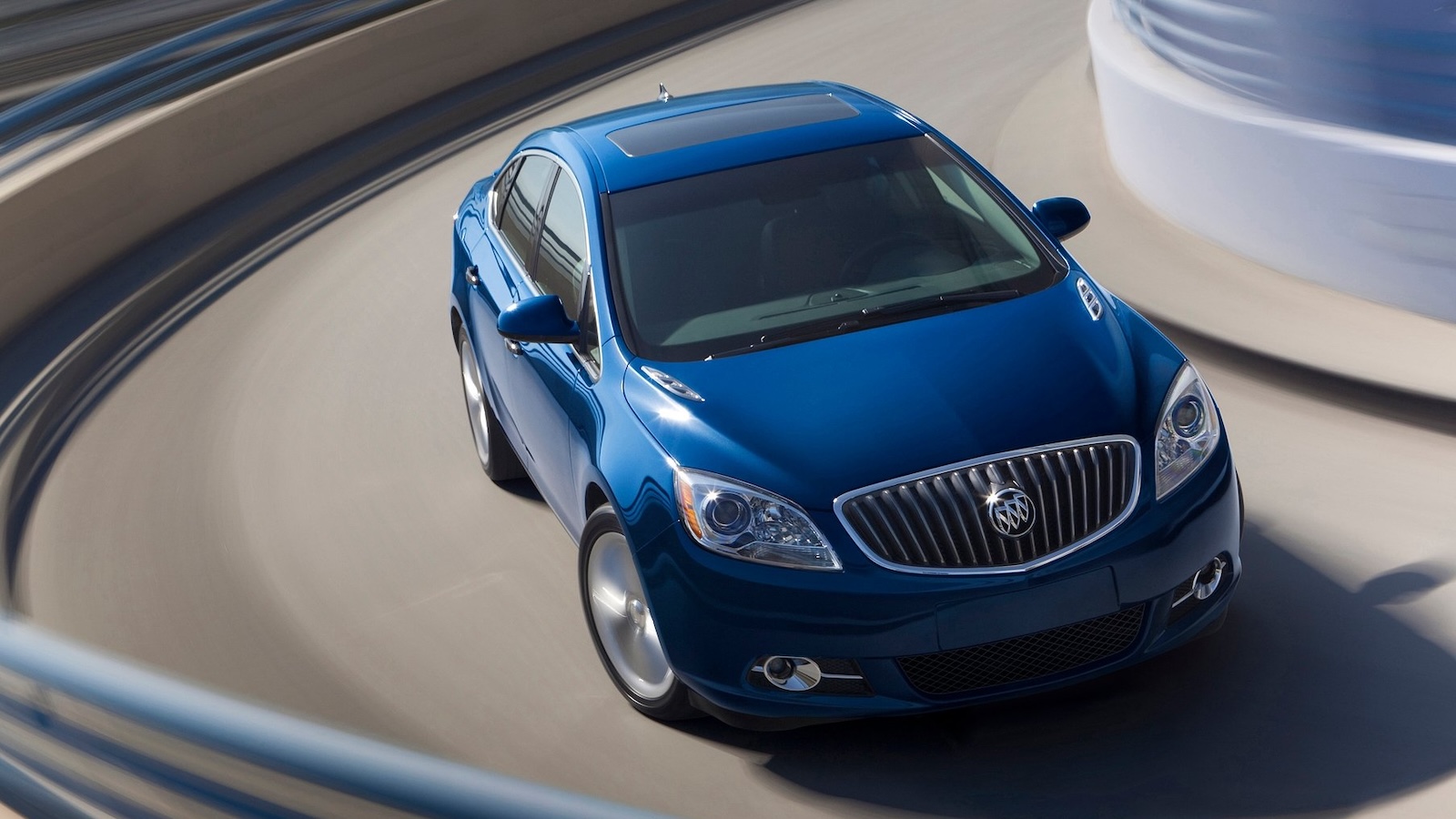
See, Buick needed an entry-level car, not just to get first-time buyers in showrooms but also because the entry-level premium car segment was about to get red hot. In the first half of the 2010s, Acura rolled out the ILX, Mercedes-Benz launched the CLA, Lexus offered the CT, and Audi already had the A3. So what did Buick do? It rebadged the Opel Astra sedan as a model of its own, sharing the same Delta II platform as the Chevrolet Cruze but adding refinement and amenities. Touches like laminated glass, triple-layer door seals, and extra sound insulation kept things quiet. Although a standard 2.4-liter naturally aspirated four-cylinder engine put out 42 more horsepower than the 1.4-liter turbocharged four-cylinder engine available in the Cruze, it still wasn’t enough puff to help the Verano keep up with the Audi A3.

The solution was simple: Pluck the two-liter turbocharged four-cylinder engine out of the Regal GS, detune it to 250 horsepower and 265 lb.-ft. of torque, pair it with either a six-speed automatic or a six-speed manual transmission, and put it in the little Verano for the 2013 model year. Unsurprisingly, this had a dramatic effect on acceleration. When Car and Driver tested the Verano Turbo, this unassuming sedan sprinted from zero-to-60 mph in 6.2 seconds, two-tenths quicker than a stick-shift 2012 Volkswagen GTI. Cowabunga!
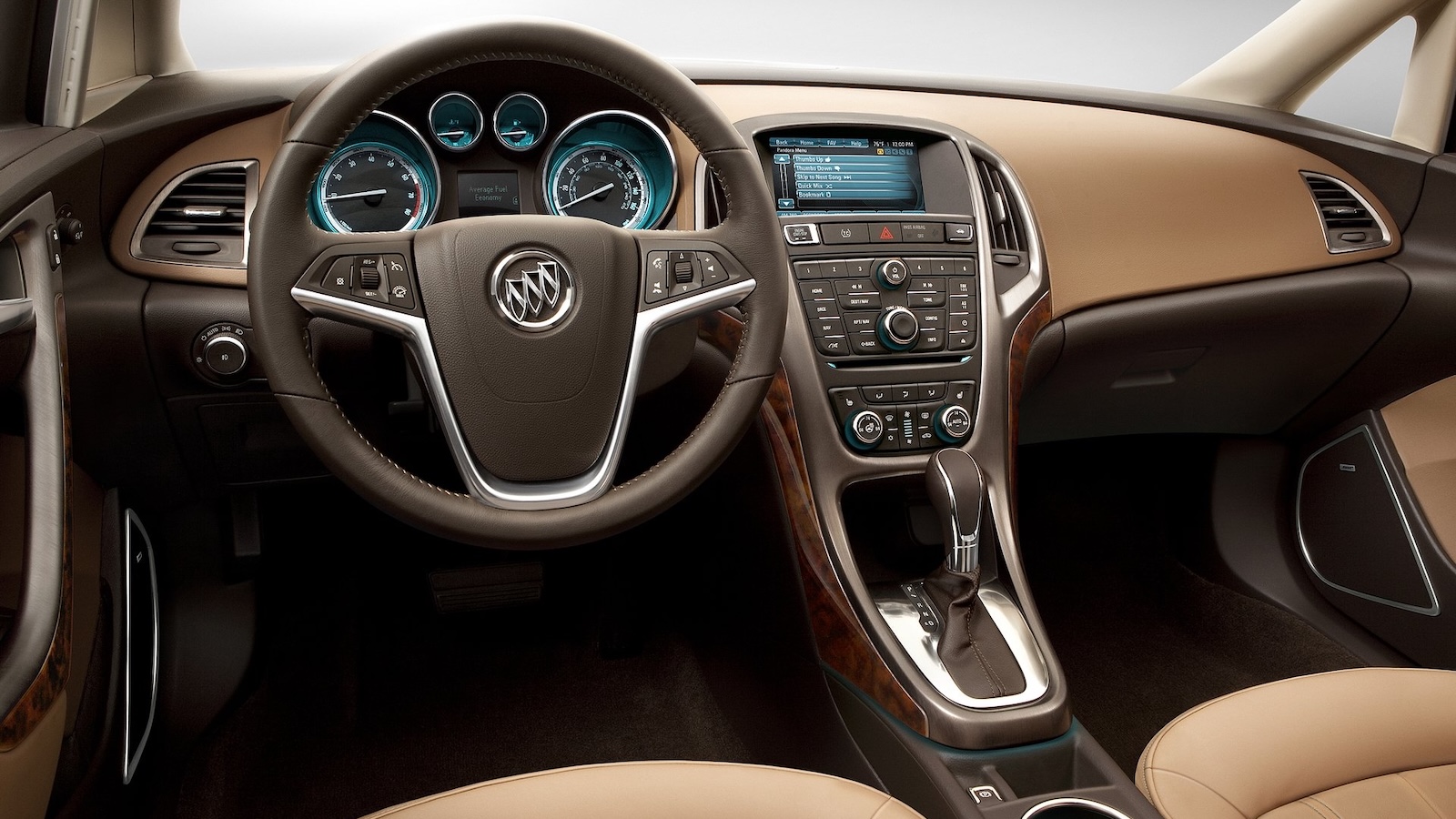
However, don’t mistake respectable straight-line pace with performance car chops. A Mercedes-Maybach S680 may have a destroyer-of-worlds V12, but it displays a cosseting attitude rather than aggression. Indeed, while the Verano Turbo drove well, a sport compact it was not, as Car And Driver wrote:
The suspension is well damped, the steering accurate and possessed of some feel, and the body motions are nicely controlled, but any sportiness is buried beneath a layer of marshmallow-like luxury. The car as a whole lacks character even with the manual, which prioritizes silken operation over mechanical feel. In braking and handling, the Turbo is virtually indistinguishable from its compressor-free sibling. Also, they look the same, the Turbo distinction consisting of badges, dual exhaust tips, and a vestigial trunklid spoiler.
What we have here is a sort of Midwest sleeper. Something that’s quiet and refined and unassuming but can still wipe the smirk off an IROC-Z driver’s face. All with comforts like a heated steering wheel, leather seats, a Bose audio system, and push-to-start.

While the Verano sold well enough with 197,017 making it into driveways across America over its production run, the turbocharged model is a bit of a unicorn, especially when paired with a manual transmission. At the time of writing, there are no stick-shift Verano Turbos for sale on any of the major used car classified sites, and even the automatics are properly rare. Looking for a high-mileage hero? This 2013 Buick Verano Turbo has 124,628 miles on the clock, but it’s up for sale in Washington for a reasonable $6,950. With one previous owner and a clean history report, it seems to be in decent shape for those looking for a small car with big car refinement.
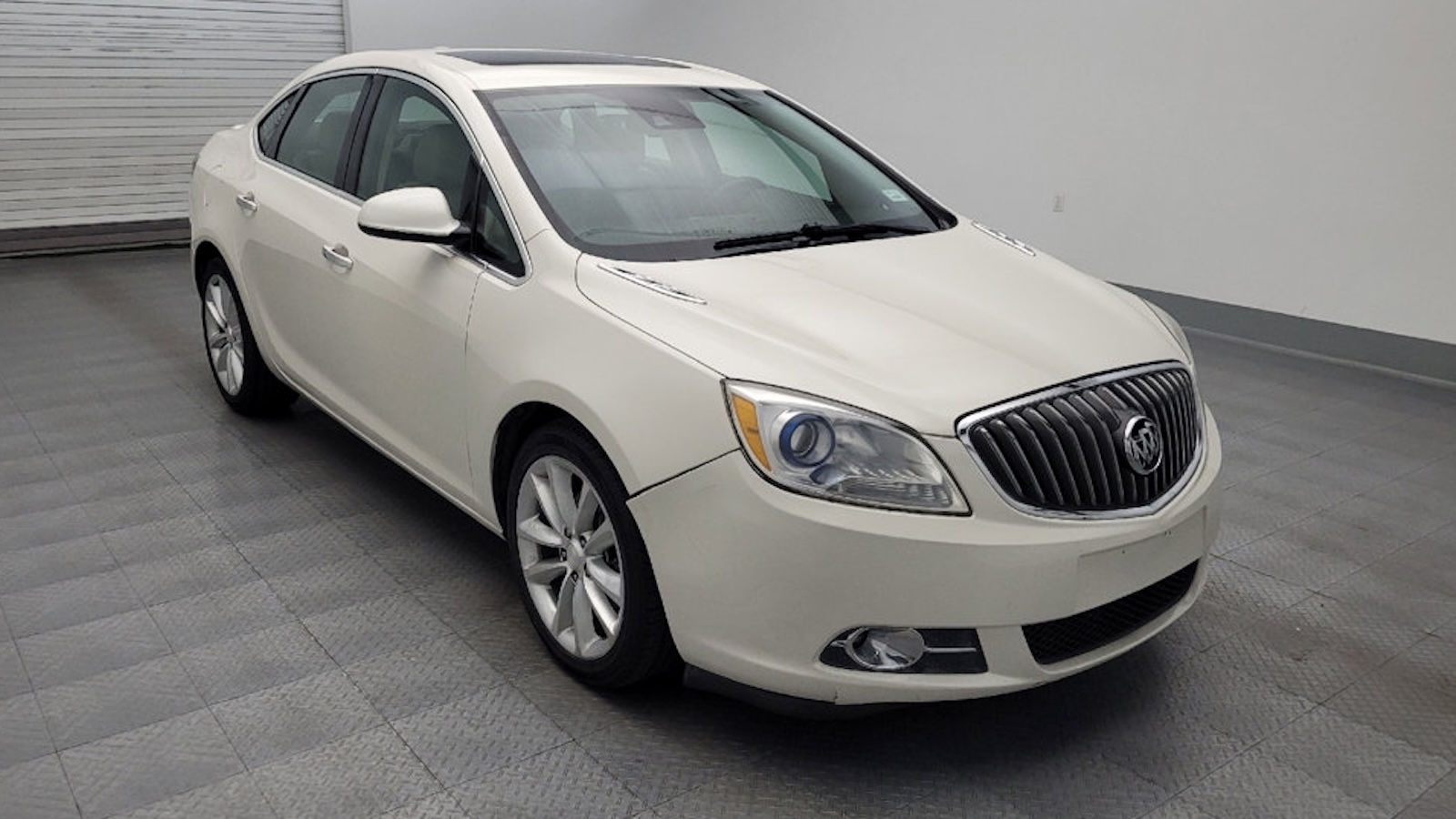
On the other end of the spectrum, this 2016 Buick Verano Turbo is up for sale in Arizona with a mere 59,118 miles on the clock, and the asking price is $13,795. Granted, it has half the mileage of the other one and is three model years newer, but top-of-the-market with this sort of funky bumper fitment seems a bit much.

Still, if you find a stick-shift Verano Turbo up for sale near you and are looking for a sensible daily driver, it might be worth pouncing on. These things can make noticeably more than 250 horsepower with simple bolt-ons and a tune, and they’re surprisingly comfortable commuters. At the minimum, the next time you see a Verano in the wild, check for a spoiler, dual exhaust tips, and a little “T” badge. If you know, you know.
Top graphic image: Buick
Support our mission of championing car culture by becoming an Official Autopian Member.
The post 13 Years Ago, Buick Built A Compact Stick-Shift Sedan That Could Keep Up With A GTI appeared first on The Autopian.

