The 2025 Cadillac Escalade IQ doesn’t stray from the internal-combustion formula that put “Escalade” on the map decades ago. It’s huge, with plenty of space inside and an appropriate amount of swagger on top of endless tech-forward features. As a fully-electric model, the Escalade IQ is also a range champion. Cadillac claims about 460 miles on a charge, with some outlets achieving up to 550 miles in their testing.
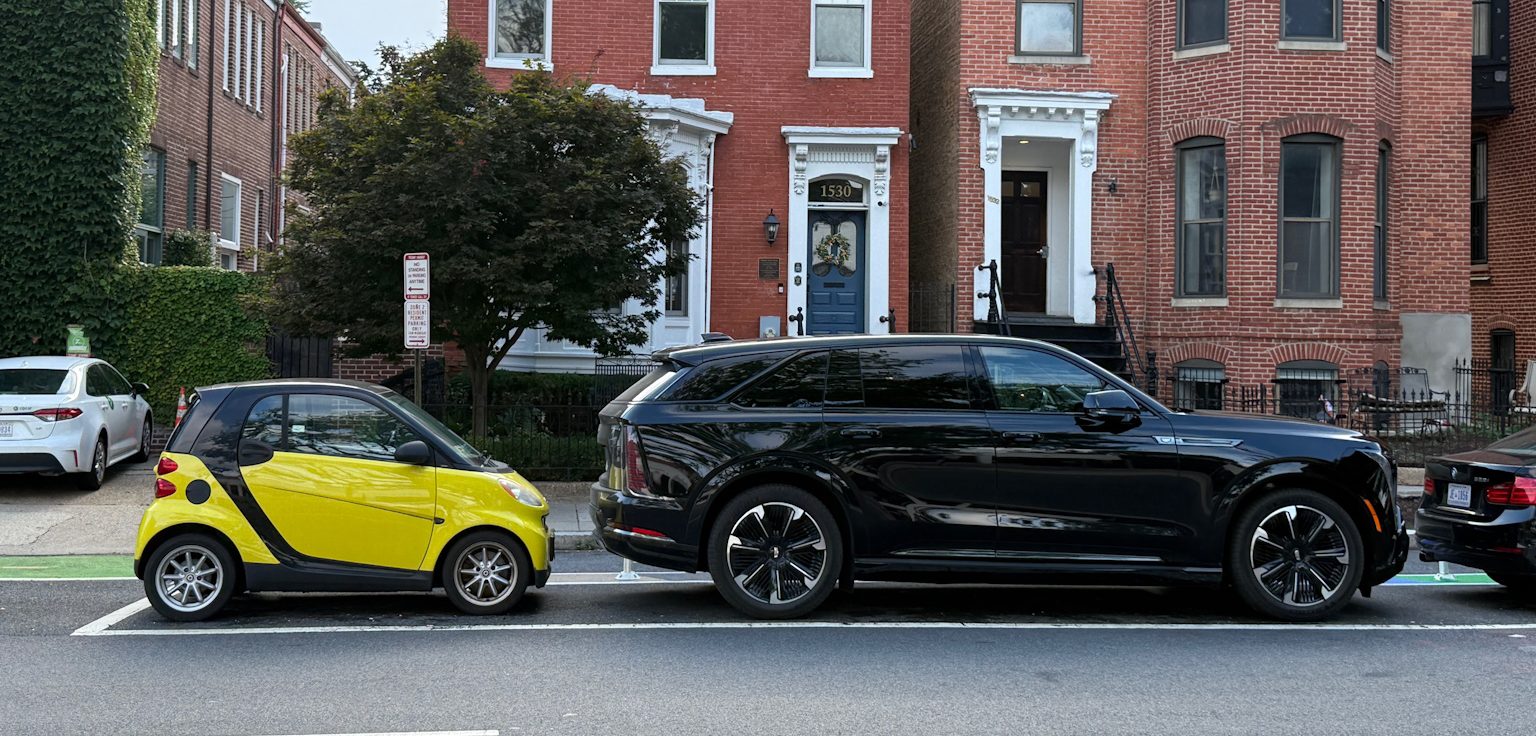
Range isn’t cheap, of course, in dollars or pounds. The Escalade IQ has a 205 kilowatt-hour battery, one of the biggest in the industry. And that gives it a curb weight of roughly 9,100 pounds – more than the maximum takeoff weight of some small planes and certainly not “sporty.”
Regardless, I was determined to make the Escalade IQ fly through corners. Cadillac wanted to support a road rally that I hosted in Athens, Ohio, but couldn’t locate a suitable Blackwing sedan for the trip. With the Escalade IQ offered instead, I kind of giggled to myself and accepted, figuring it would be a great road-tripper and, if nothing else, be a good story once I got off the highway.
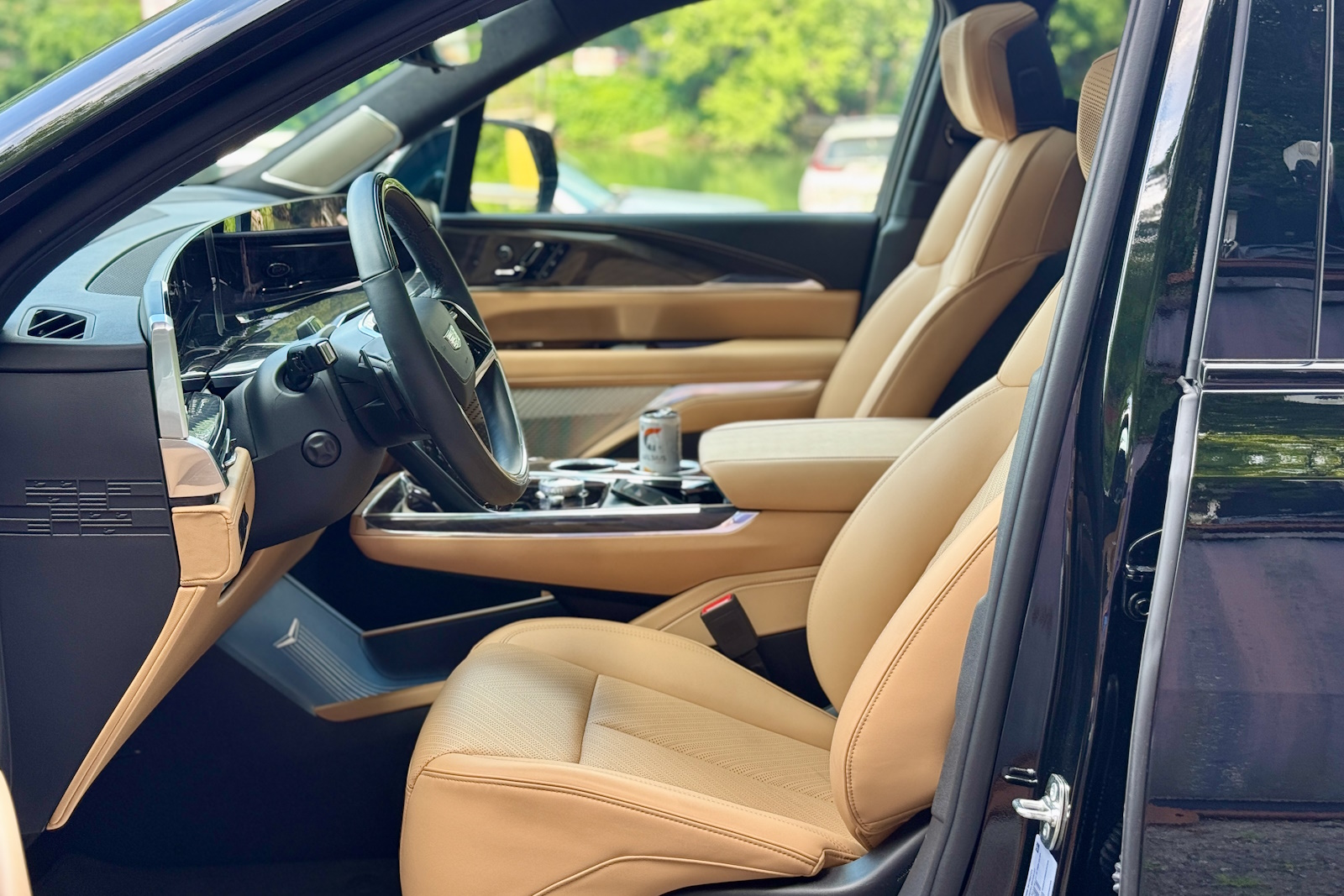
The 350-mile journey from Washington, D.C. to Athens confirmed that the Escalade IQ is indeed a highway star. The seats are comfortable (though the massagers could be stronger, a first-world complaint if I’ve ever made one) and the ride at highway speed is well-damped. SuperCruise, GM’s hands-free Level 2 driver assistance technology, continues to be one of the best in the business. And Cadillac’s claim of 460 miles between charges is valid, despite my driving like I was sitting on a lit cigarette as I (rapidly) covered the miles.
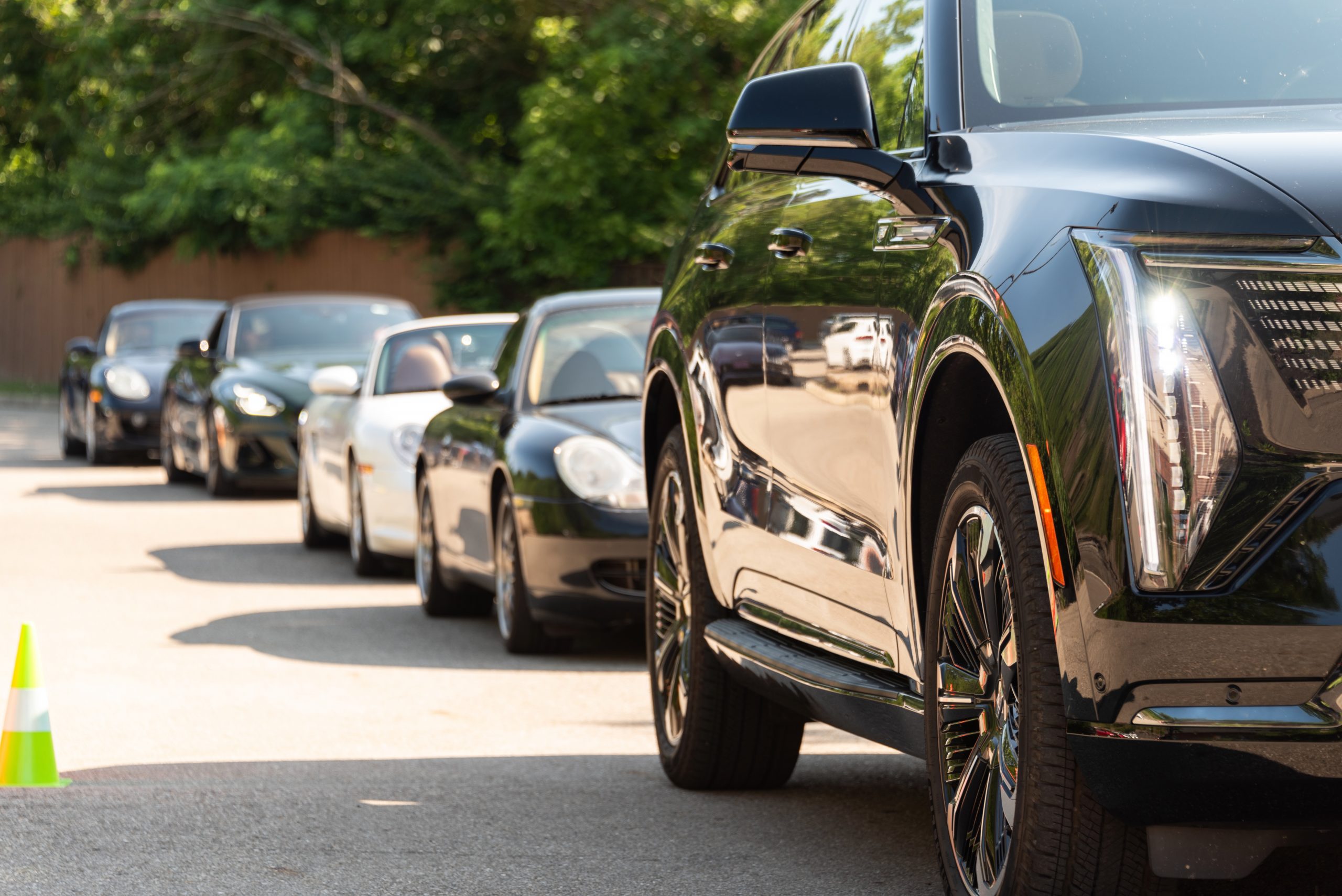
Waking up on Saturday morning, though, I was still nervous about chucking the big electric brick through a three-hour road rally that covered some of Ohio’s twistiest roads. I was leading a group full of sports cars. Could the Escalade IQ pull it off, or would I be disappointing a group of drivers at my own event?
It’ll Be Like Autocrossing A Dually Pickup Truck
Those were the words my friend and fellow automotive journalist Aaron uttered when I told him I was using that Escalade to lead that drive group. I’m no stranger to pushing Escalades, ironically, as I’ve hucked two different Escalade Vs around back roads in Minnesota and (gently, as a pace truck) around Gingerman Raceway in Michigan.
The Escalade IQ is about as fast as the supercharged, gas-powered Escalade V in a straight line. And much like the V, Cadillac made it Very Fast but added no other performance features to help with turning or stopping.
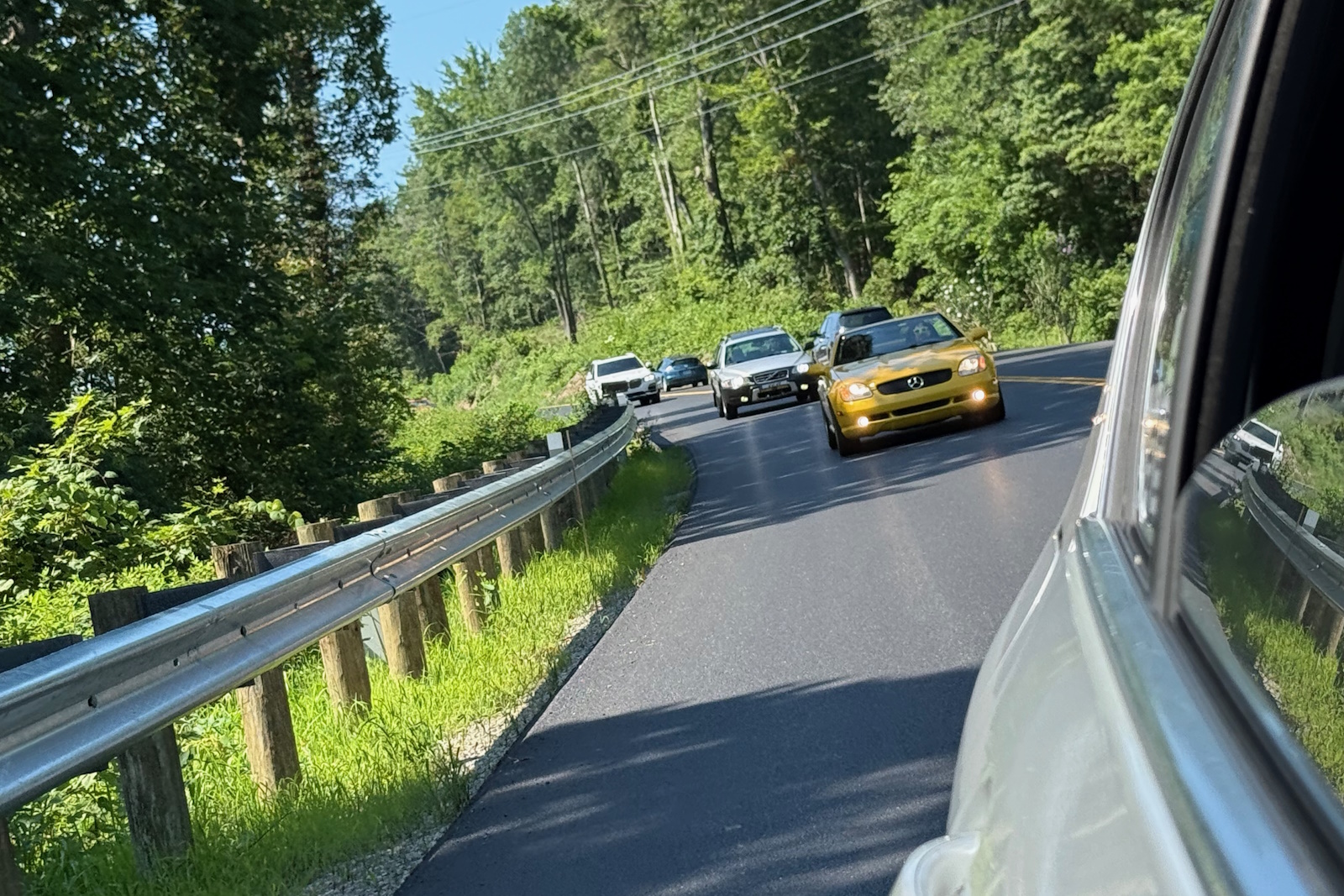
I approached the road rally with optimism, knowing I could at least use the Escalade IQ’s 750 horsepower to set big gaps on the straights, giving the fast group a chance to play catch-up. I figured the IQ would be a mess through corners, given it weighs as much as a mixed-use retail facility and isn’t marketed as an especially sporty thing.
My moderate-speed pace laps of Gingerman in the Escalade V culminated in an OnStar call. Thankfully, the Escalade IQ didn’t find my driving habits quite as worrisome. And yes, despite the obnoxiously-high curb weight, the electric ‘Slade can absolutely boogie if you’re willing to just … believe in it.
The Helpful Bits
Despite not being performance-oriented, the Escalade IQ does have some tricks up its leaden sleeves. Every Escalade IQ includes four-corner air springs, which lower the vehicle in Sport mode and theoretically pump up their spring rates as well. Those pair to GM’s latest Magnetic Ride Control dampers, which can adjust their damping rates up to 1,000 times per second and stiffen up in Sport mode. Finally, every Escalade IQ gets four-wheel steering, allowing the rear wheels to provide up to seven degrees of counter-steer at lower speeds and reducing the turning circle to almost that of a Toyota Camry.
The IQ’s battery also plays a role in handling. Mounted low, it weighs as much by itself – about 2,900 pounds – as my E36 BMW 325is racecar.
Though regenerative braking is an EV highlight, fourteen-inch rotors are employed at each corner, ready to step in when your foot demands more stopping power than regen can provide.
So then, on paper, this … might not be so bad? I was optimistic and still kind of nervous. I knew I could dial my driving back to meet the IQ where it was, though the brakes were my top fear. I’ve driven plenty of high-horsepower EVs that felt under-braked, as engineers rely on regen and save cost on braking hardware to the detriment of outright performance.
Turns Out The Escalade IQ Can Handle
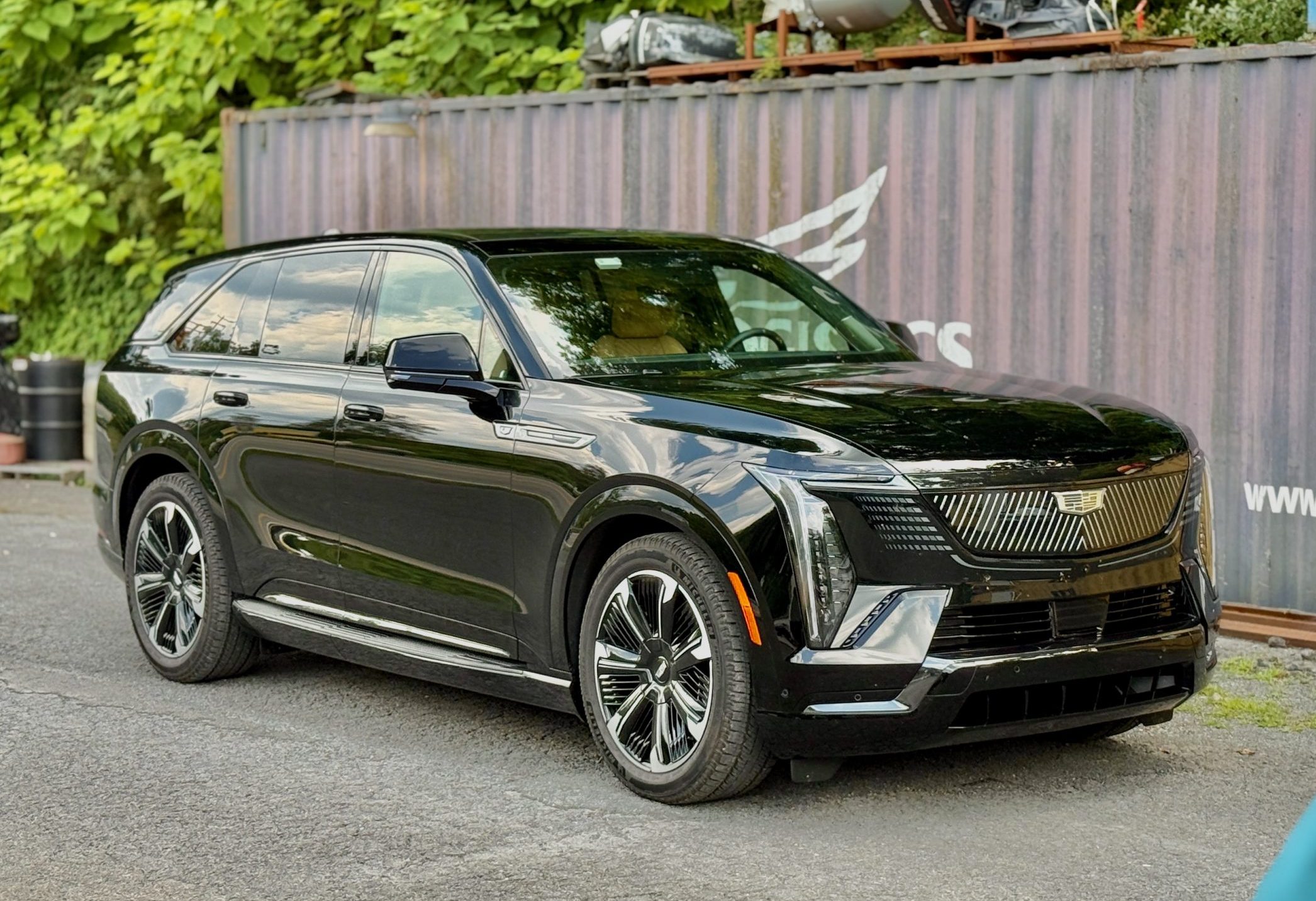
Cadillac’s engineers deserve a round or three on me. The Escalade IQ handles far better than it should, and better than its gas-powered counterpart, too.
That heavy battery keeps the center of gravity low, so despite feeling heavy, the big IQ is remarkably happy to be pitched through a corner. The MagneRide dampers and four-corner air suspension reduced body roll to a manageable degree, while the rear-wheel steering keeps the arm-flailing to a minimum.
Acceleration is quick but not brutal, despite the 750 horsepower on tap. They’re only available in “Velocity Max” mode, otherwise you’re working with a mere 680. Regardless, flooring the accelerator results in torque steer and a squirmy steering wheel, one I had to actively fight a few times as I (legally, safely) passed slower-moving traffic. The sensation added character to the Escalade IQ and felt a bit unnerving.
My braking fears were unfounded. Regenerative braking did the bulk of the work, with the friction brakes stepping in as needed. Again, engineers did a great job, blending the two generally seamlessly. If there was fade, it had been calibrated out of the pedal feel, and I had confident stops all day long.
It’s Not All Perfect, Though
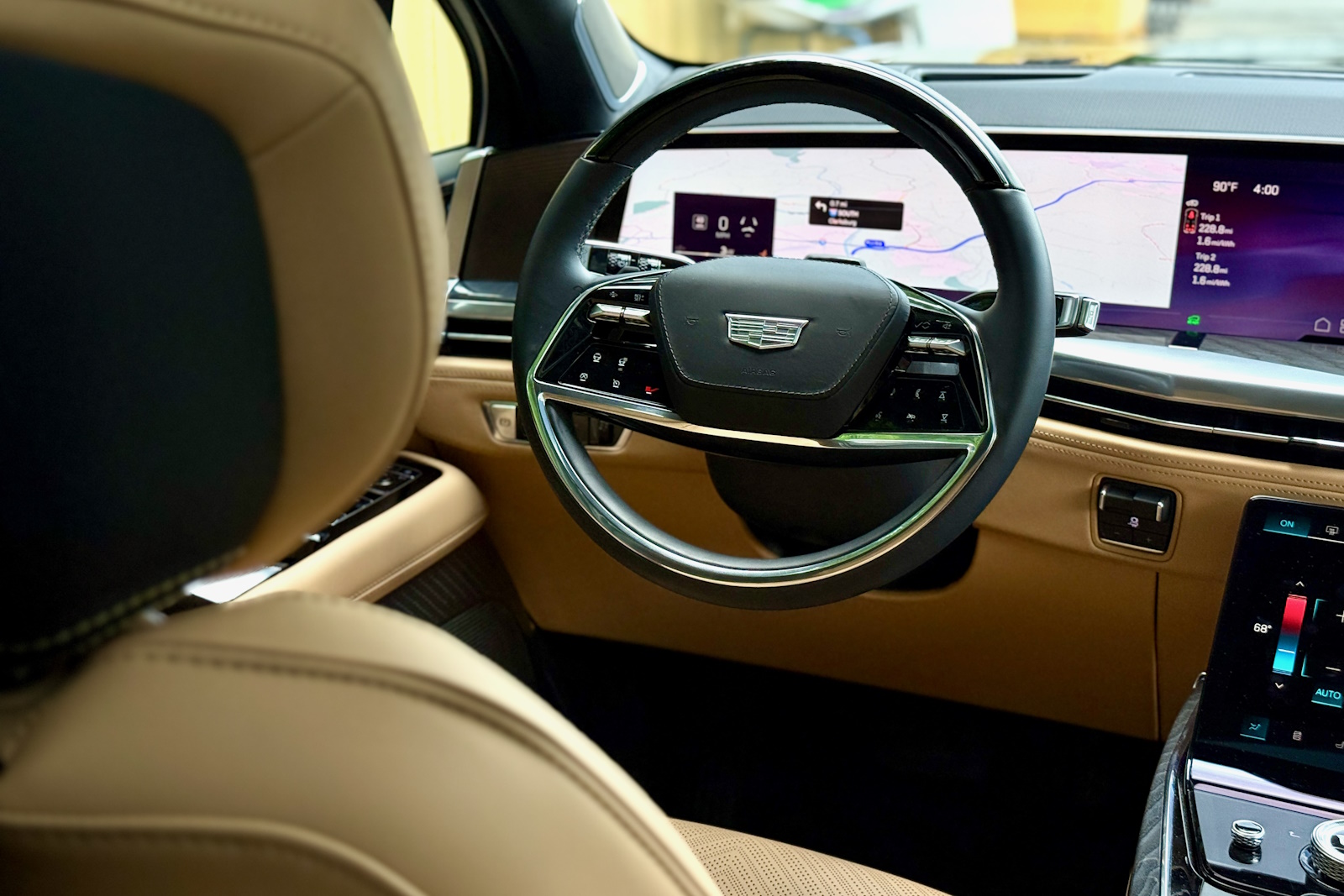
Yes, the Escalade IQ is surprisingly impressive when pressed into sports-truck duty. As an overall package, though, I found a few nits to pick. They’re small complaints, but I do expect relative perfection from a $156,000 vehicle.
While the Escalade IQ was comfortable over low-speed bumps, the front suspension consistently made some knocking sounds that reminded me of bad control arm bushings on my old, high-mileage BMWs. I’ve experienced this sensation in a few Chevy Silverado EVs, with which the Escalade IQ shares a platform, and while everything feels tight, the noise is disconcerting.
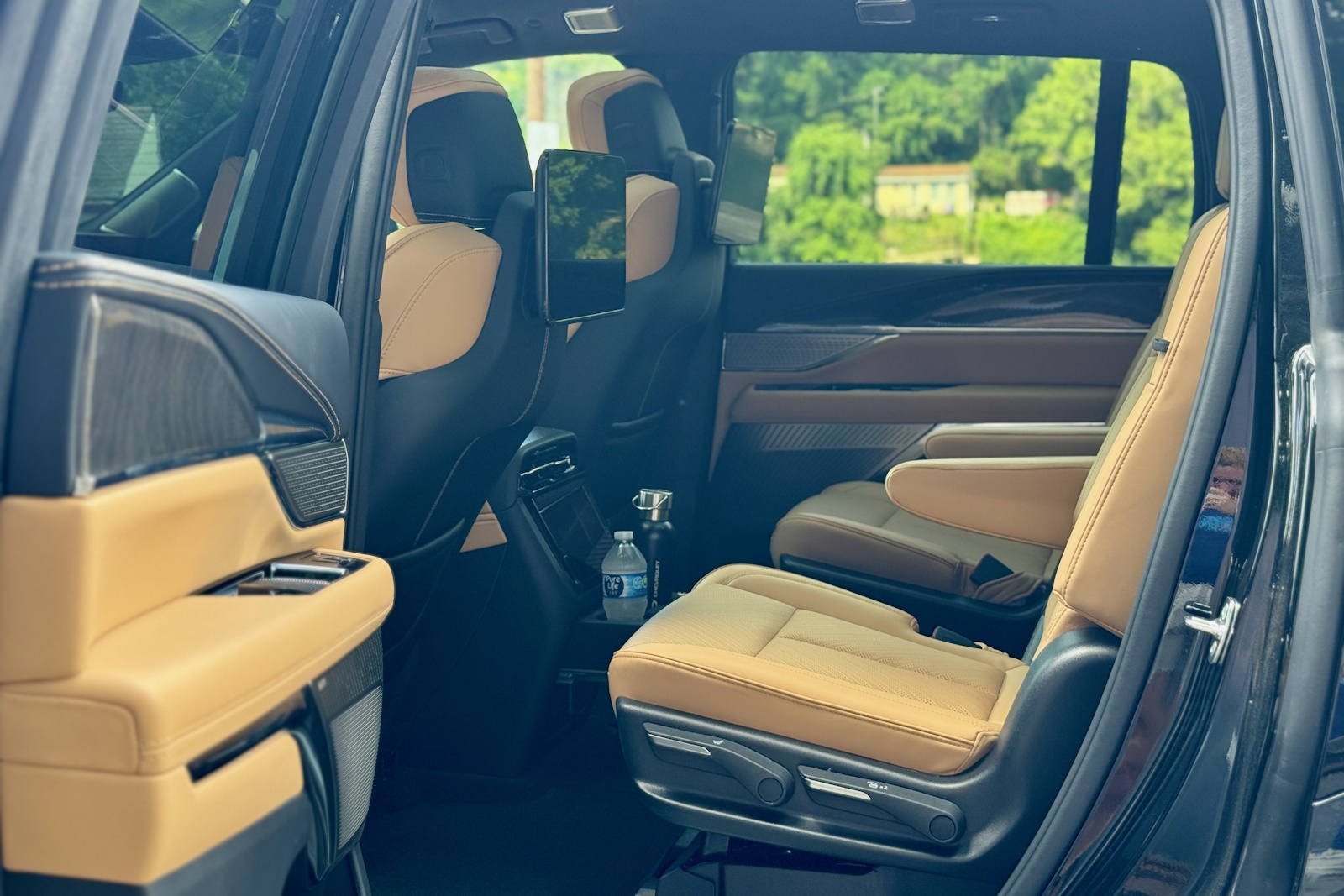
The second row seats were moved by a few balky manual levers, the same ones you’ll find in a gas-powered Escalade and thus, the same ones you’ll find in a far-cheaper Chevy Tahoe. Yes, Cadillac offers an Executive Seating Package, but why do buyers who want three useful rows of seats get penalized?
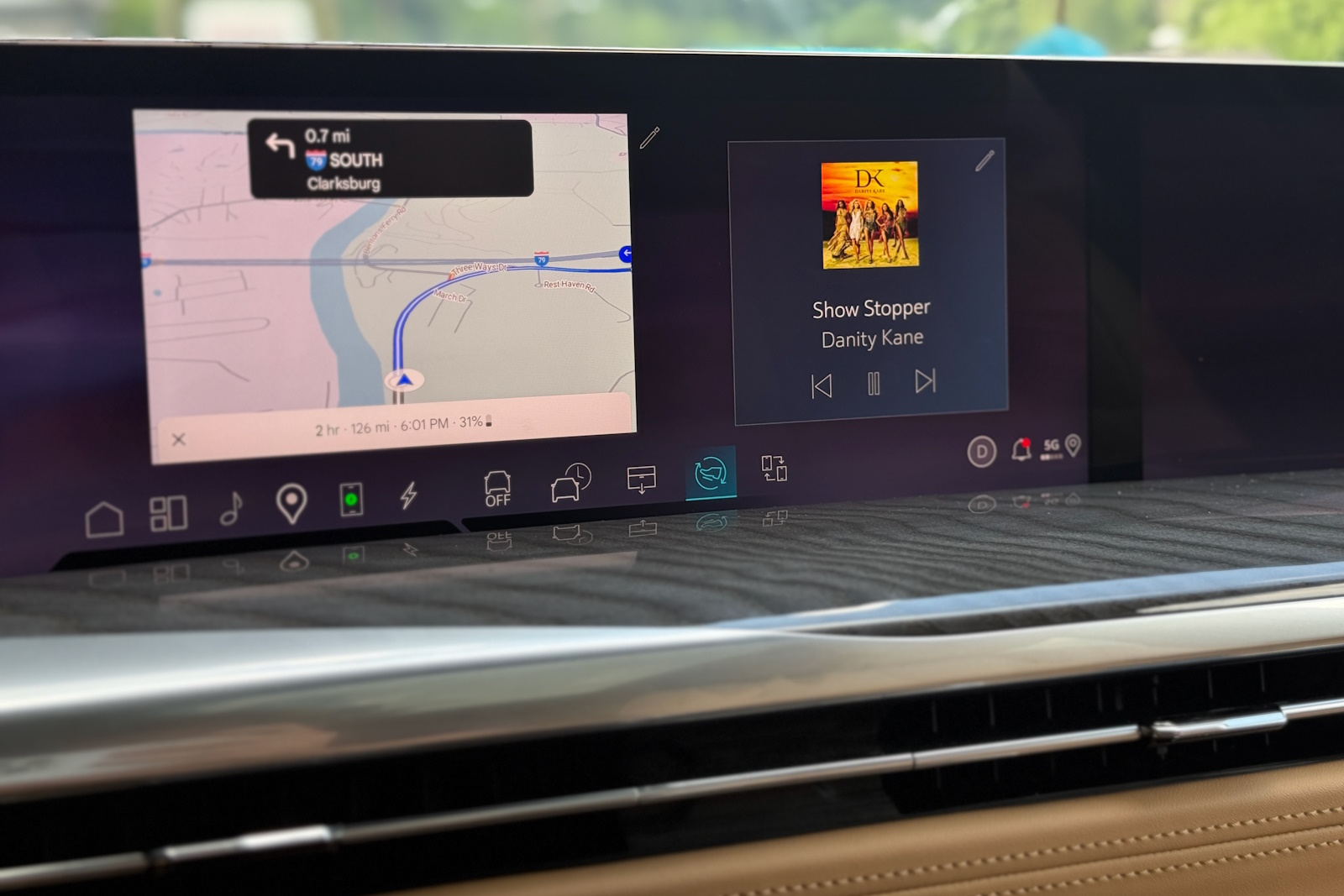
Finally, while I’m not as avid a hater of the “no CarPlay” decision that GM has made with their electric cars, Cadillac offering a superbly-bangin’ 36-speaker AKG sound system and then providing no easy way to stream Apple Music in Dolby Atmos (or heck, even lossless) is a big letdown. Spotify doesn’t have the bitrate, and Apple Music via Bluetooth doesn’t cut it.
It’s The Best Escalade Yet
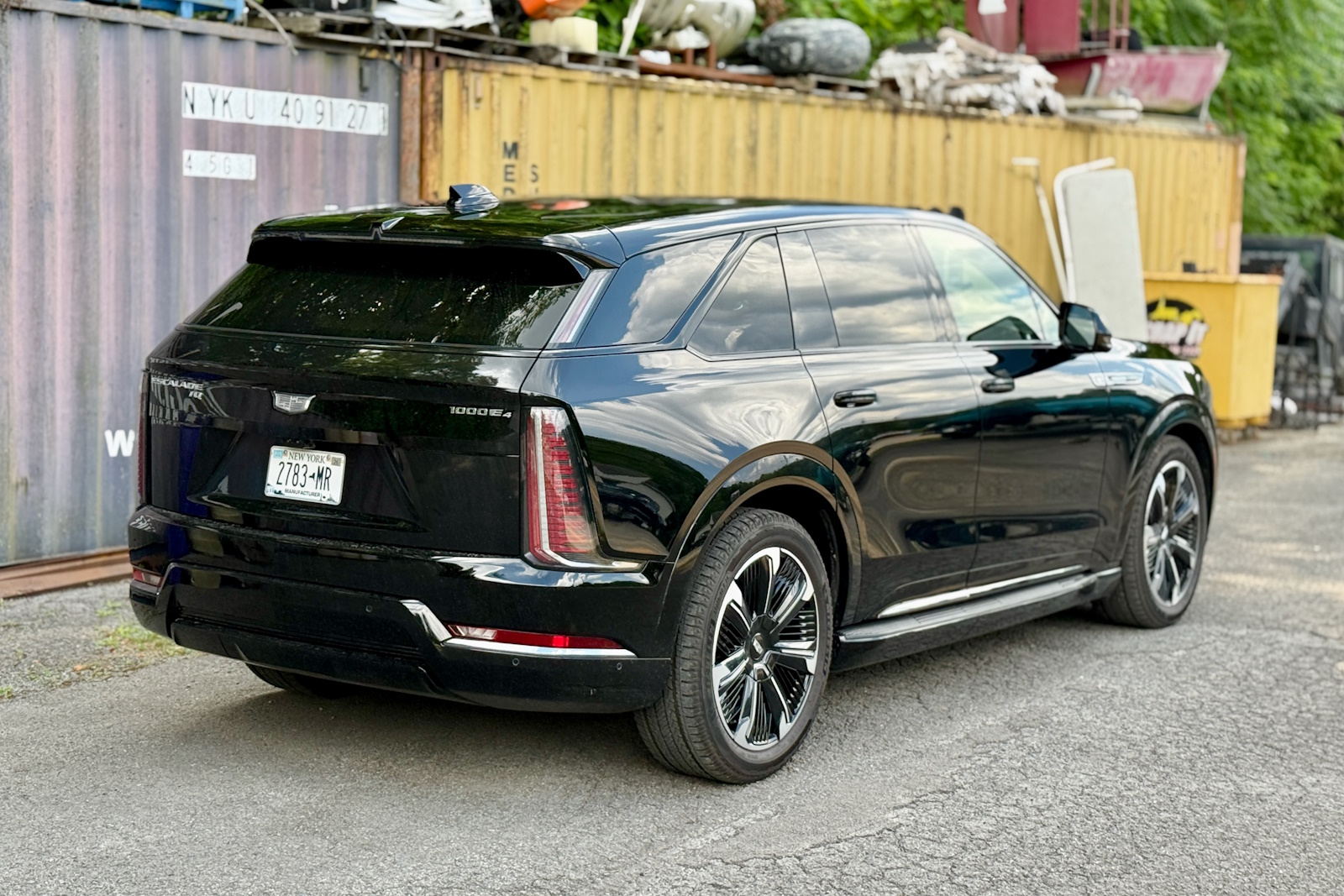
Despite my qualms, I firmly believe the Escalade IQ is Cadillac’s best Escalade to date. We can all define “luxury” differently, but the absence of noise, vibration, and harshness is one way to experience luxury. Cadillac combines an utter lack of NVH with the best hands-free driver assist, other simple yet advanced technology, a good ride, and great seats. What more does a luxury buyer need?
The fact that this Escalade is also a bit flingable is just the cherry on top.
Top graphic image: Jake Thiewes
Support our mission of championing car culture by becoming an Official Autopian Member.
The post Here’s How The 9,100 Pound Cadillac Escalade IQ Keeps Up With Sports Cars On Backroads appeared first on The Autopian.

