The phrase “Concorde Moment” is reserved for the handful of times one of humankind’s creations is discontinued and entire industries take a leap of regression as a result. It’s been nearly 22 years since the supersonic airliner took to the skies for the last time, and the world of aviation has never been the same since. Less than two years after that final flight, another Concorde Moment happened: The last Chevrolet Astro and GMC Safari rolled off the production line in Baltimore.
Flash back to 1985, and the Chevrolet Astro and GMC Safari offered glimpses of the future. Flush glass made an appearance on the Astro before making its way to the GMT400 pickup trucks, as did an aero-look front end with an air dam, and hidden drip rails. It all added up to a van that looked more futuristic than a Plymouth Voyager, even if underneath, it wasn’t exactly revolutionary.
Contrary to popular myth, the Astro is not body-on-frame. Like an old Camaro, it uses a massive K-member to mount the engine and transmission in the vehicle. The front suspension used upper control arms straight out of the B-body full-size sedans and wagons, but the powertrain selection and live rear axle with leaf springs was very S-10-ish, even if the leaf springs here were composite. The result was a rather literal interpretation of shrinking a full-size van down a bit, and like many GM products of the Smith era, there were some stumbling blocks.

For one, the Astro and Safari debuted as standard with a 92-horsepower 2.5-liter Iron Duke four-cylinder engine. Fine in a Fiero, but not enough grunt to pull the skin off a rice pudding in something like this, even when paired with a four- or five-speed manual transmission. Mercifully, the other available engine was Chevrolet’s 4.3-liter pushrod V6 from the full-size sedans, and with 145 horsepower and 225 lb.-ft. of torque, this was a far better match for the application.

When it came to use as a passenger van, the Astro and Safari were originally outclassed by the Chrysler minivan. Sure, the GM van had amazing space, but its traditional cab-forward packaging with an engine doghouse meant that the footwells were incredibly cramped compared to the Chrysler’s, and a height some 9.3 inches taller than the Chrysler hindered garage clearance. Still, thanks in part to the powerful available V6 and options like a comprehensive overhead console, swing-out rear door glass, and dual air conditioning, the Astro and Safari sold well enough to families. However, it sold even better to companies.

The same sort of traits that made the Astro and Safari suboptimal for family transport made it brilliant for commercial use. Its truckish nature meant it was often durable, its maximum rated towing capacity of 6,000 pounds when properly equipped blew the Chrysler minivans out of the water, its upright design and 1,700-pound payload capacity was great for hauling boxes and being a service vehicle, and seating for two, four, seven, or eight added huge flexibility depending on what you wanted to do with it. Plus, being much smaller than a big van, it was more economical to run than a G-series full-sizer.
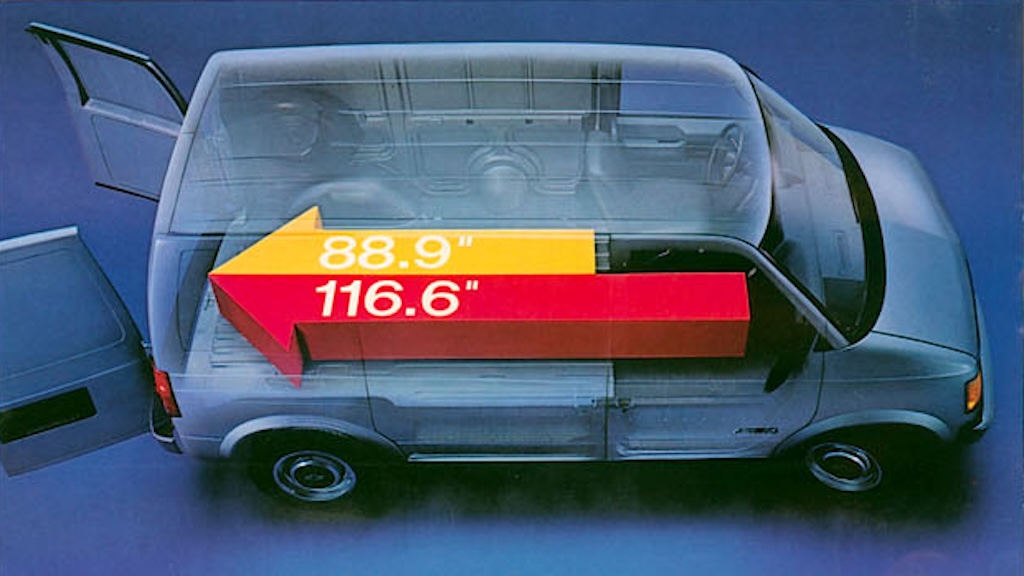
As a result, the Astro and Safari started appearing everywhere, in all sorts of roles. You were just as likely to see one in the school pick-up line as you would if you called a plumber to your house, and it became a defining commercial vehicle for America. Smaller and more refined than a full-size van, but still capable.

Over the years, updates rolled in. The four-cylinder engine was eventually discontinued, full-time all-wheel-drive, upper control arms from the half-ton trucks, and an available extended body style joined the party for 1990, and 1992 saw the greatest rear door arrangement of any minivan, Dutch doors. In this configuration, the rear window flipped up and two half-doors swung out to the sides, reducing swing space over a liftgate and improving rearward visibility over two traditional hinged rear doors. Perfect for the conversion van rush of the ’90s, which saw Astro and Safari vans gain sleeping quarters, high roofs, televisions, and all manner of road trip creature comforts.
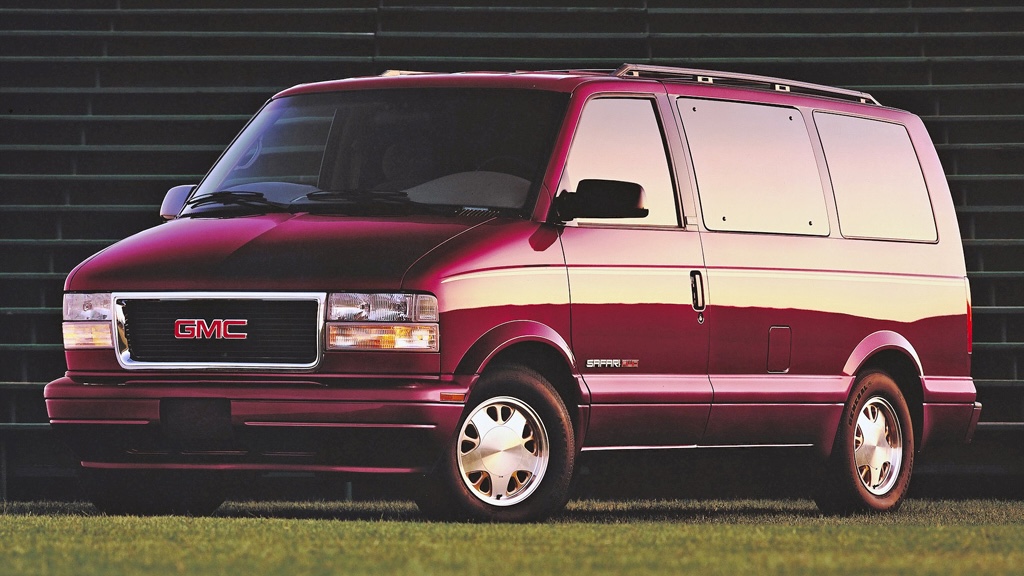
By 1995, these unusual mid-size vans were a decade old, but rather than admitting that the transverse front-wheel-drive layout that just about every other manufacturer adopted was superior, GM kept the Astro and Safari going alongside its front-wheel-drive minivans, doubling down on the inbetweeners. Not only were the vans restyled to mimic the Express full-size van, but the short-length bodystyle was dropped, equipment levels were beefed up, noise levels were tamped down, and the 4.3-liter V6 gained sequential fuel injection. While 190 horsepower was nothing to sneeze at, 250 lb.-ft. of torque at 2,800 RPM made for serious pulling power, and even though revised tow ratings had dropped to 5,500 pounds, that’s still plenty.
However, the Chevrolet Astro and GMC Safari had another problem by the mid-’90s, and that was a matter of safety. While it did okay in NHTSA frontal crash testing, the structural age of a mid-’80s vehicle really reared its head by the end of the grunge era. When the IIHS sent one of these vans into a deformable offset barrier at 40 MPH, the results weren’t pretty. Not great for families looking for a safe way to transport their children, but it didn’t do much to hamper the commercial appeal of these vans.

By 2002, the Astro and Safari were both ancient and some of the least crashworthy new vehicles on American roads. Production was initially slated to wind down in 2003, but incredibly, the midsize vans were still making GM money and selling tens of thousands of units, mostly to contractors and other fleet customers who wanted a little bit more than a minivan, so the General re-charted its course, this time to the end of the 2005 model year. As Automotive News reported:
GM has told workers of the decision. It had said earlier that there were no plans for the plant after the 2003 model year, spokesman Pat Morrissey said.
In part because of strong fleet sales, the rear-wheel-drive minivans remain profitable, Morrissey said.
When the Chevrolet Astro and GMC Safari finally left the new vehicle market, something interesting happened to these 20-year-old, ancient, unrefined vans. People who used them for work held onto them forever. It’s been two decades and yet you still occasionally see these vans were last made, but because they’re simple, tough, and relatively spacious yet relatively compact, nothing launched since has been able to touch it. The closest modern equivalent is the Mercedes-Benz Metris, and you can’t truly beat the brakes off of one of those without expecting at least some sort of repair bill.
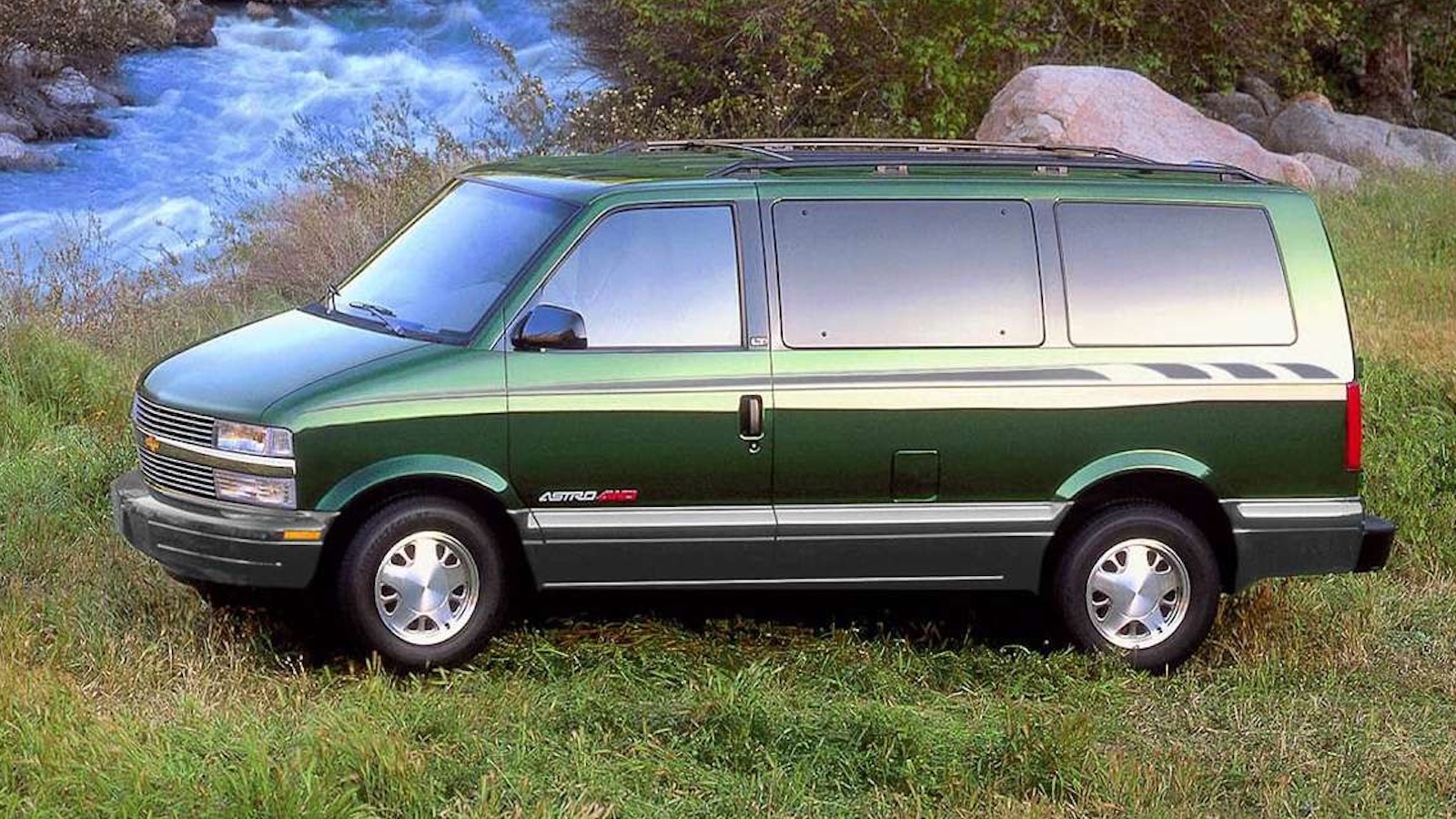
Plus, the all-wheel-drive Astros and Safaris have found a huge following among Van Lifers, because where else are you getting an all-wheel-drive van with a live rear axle and a 111-inch wheelbase that can help get you to the trailhead? It’s basically this or importing a Mitsubishi Delica, and good luck getting every part you need for a Delica from Autozone.
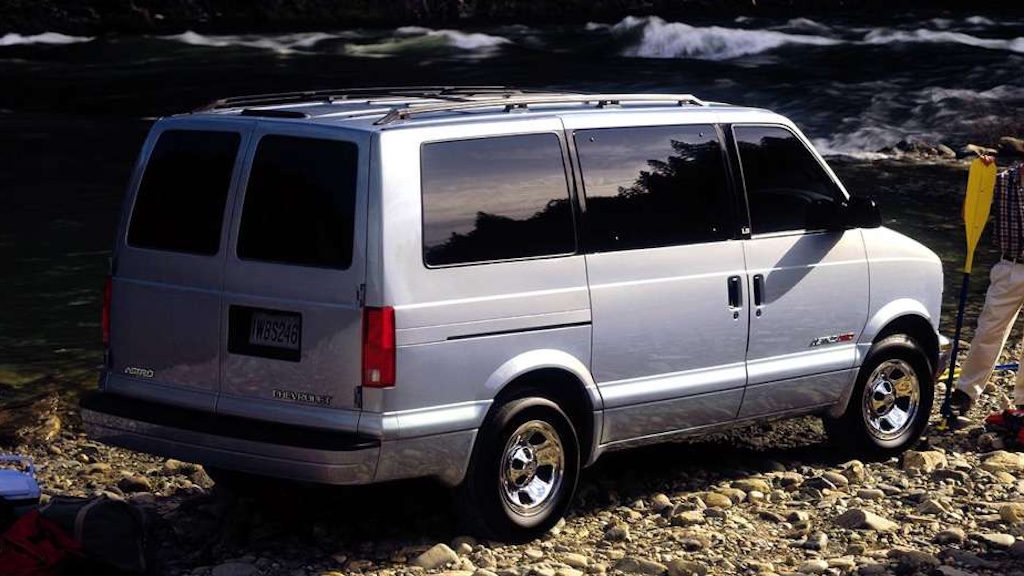
The Chevrolet Astro and GMC Safari failed at beating the Chrysler minivans, but they absolutely succeeded at giving hard-workers and adventurers a cheap, tough, Goldilocks-sized van that got the job done. Keep the transmission fluid cool, keep up on regular maintenance, and the later ones should last essentially forever. If GM made a modern equivalent, would it sell? Maybe. There really hasn’t been a true modern equivalent, and with regular consumers having surfed the SUV wave of the ’90s into the crossover-mania of today, the heart of the original Astro market is exactly where a new one could work. However, the age of automotive simplicity is over, and simplicity is what helped the Astro and Safari become enduring machines. Either way, GM ended up creating just about the perfect van for America here, which explains why people still keep them around today.
Top graphic image: Chevrolet
Support our mission of championing car culture by becoming an Official Autopian Member.
The post Why Nothing Can Replace The Chevy Astro And GMC Safari appeared first on The Autopian.