BYD plans to install its solid-state battery technology in a demonstration vehicle next year, Executive Vice President Stella Li confirmed during an interview in Valencia, Spain. The announcement marks a concrete step forward in real-world vehicle testing, though the company emphasized that the initiative represents a technical demonstration rather than an immediate retail launch or mass-production timeline. BYD maintains active research across all battery chemistries, positioning its battery division to lead both technology development and eventual commercialization.
China’s broader industrial strategy supports the effort, including the government-backed All-Solid-State Battery Collaborative Innovation Platform (CASIP), linked to an estimated $830 million state research budget. As domestic manufacturers align under this framework, Chinese industry regulators have established regulatory standards to clarify technology criteria as global competition accelerates.
Engineering Challenges and Long-Term Commercial Timelines
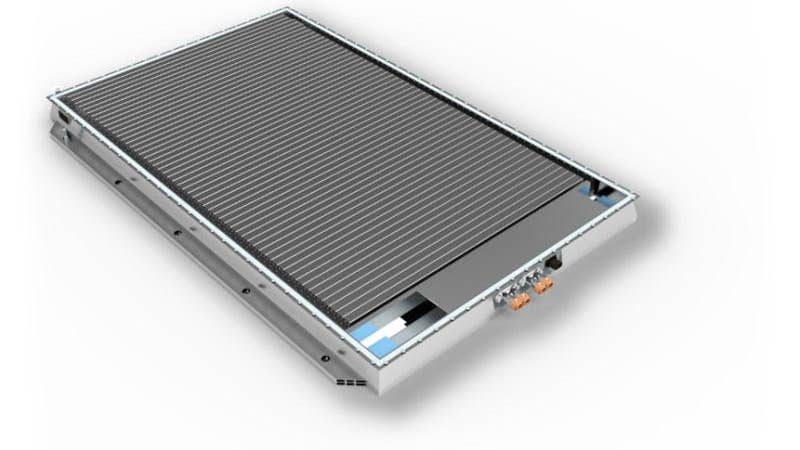
According to a report from Car News China, BYD’s battery subsidiary, FinDreams, is focusing development on inorganic sulfide solid-electrolyte chemistry based on lithium phosphorus sulfur chlorine (LPSC). FinDreams has developed 20 Ah and 60 Ah cell prototypes with target energy densities approaching 400 Wh/kg. Although laboratory prototypes have cleared key cell tests, translating cell performance into durable, multi-cell vehicle packs remains an ongoing engineering challenge.
Sulfide electrolytes deliver high ionic conductivity but suffer from contact degradation as solid electrodes expand and contract. Maintaining contact requires continuous mechanical stack pressure, complicating pack engineering and structural design. Additionally, wet electrode processing causes chemical reactions with sulfide materials, forcing FinDreams toward dry electrode manufacturing methods that remain difficult to scale. Industry peers like Toyota and Honda have noted similar production obstacles when evaluating high-volume commercial feasibility.
BYD is planning small-batch fleet trials of roughly 1,000 vehicles around 2027, focusing on high-end Yangwang and Denza models where higher initial material costs can be absorbed. Large-scale commercial production is targeted for around 2030, putting BYD on a comparable path with Geely, whose prototype fleets are scheduled for operational testing in the coming years.
BYD
Getting the Tech Ready for Real-World Use
BYD’s announcement marks strategic progress rather than an immediate market disruption. Placing a solid-state pack into a running test vehicle demonstrates significant engineering progress, but pilot vehicles exist primarily to expose vulnerabilities in vibration, thermal cycling, and continuous pressure management. BYD Chief Scientist Lian Yubo noted that liquid lithium-ion batteries will likely coexist alongside solid-state systems for 15 to 20 years, underscoring a gradual industry transition rather than an overnight replacement.
By separating early vehicle trials from commercial production goals, BYD avoids overpromising while maintaining strong momentum in battery development. Navigating high material costs and dry-electrode manufacturing will take years of refining equipment and processes. Next year’s test vehicle will offer valuable real-world data, but mainstream solid-state adoption remains a long-term engineering pursuit.
BYD
