For VIP shuttles, taxi fleets, and tradespeople, electric vans hold several advantages over gas-powered alternatives. They’re quieter, cheaper per mile, and have reduced maintenance needs. It’s a segment that Kia wants a slice of, and the newly unveiled PV7 will allow the Korean marque to achieve that. Available as the PV7 Passenger or PV7 Cargo, the modern van is the next model from the all-electric Platform Beyond Vehicle (PBV) lineup. The Kia will take aim at Ford’s E-Transit and is a level above the award-winning PV5 in size and capability.
Fast Charging and Two Battery Sizes
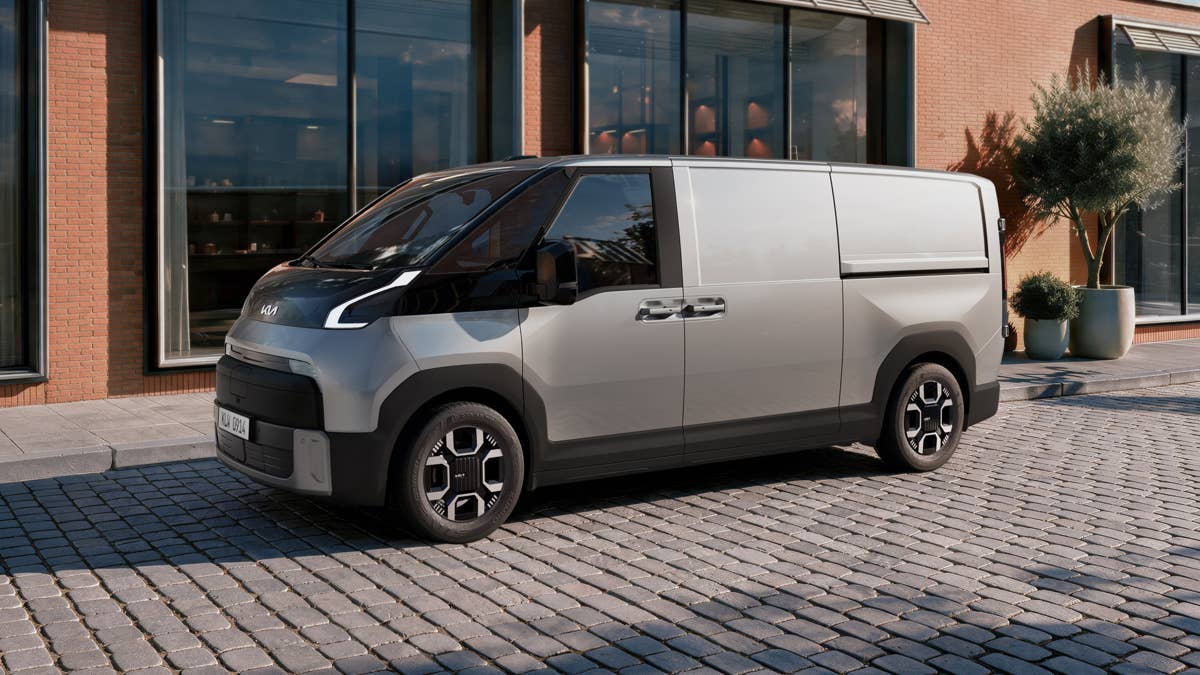
Kia PV7 Cargo
Kia
The Kia PV7 will be offered with 71.5-kWh or 96.2-kWh nickel cobalt manganese battery packs. Initially, front-wheel drive will be standard, but an all-wheel-drive version will be available at a future date. Depending on the market, the electric van will produce up to 268 horsepower and 310 lb-ft of torque, which puts it right into Ford E-Transit territory (266 hp/317 lb-ft).
Kia hasn’t published range figures for all variants, but the Long Range Cargo derivative can cover around 286 miles on a single charge on the WLTP cycle. By EPA standards, that should translate into around 250 miles or so. That’s a lot better than the E-Transit’s 159-mile claim.
Thanks to its 800V architecture, the Kia’s battery can be recharged from 10 to 80% in around 25 minutes when connected to a 350-kW DC fast charger. A practical touch and a first for Kia is the inclusion of dual charging ports. A front AC/DC port and optional rear-side AC port enhance charging flexibility for different parking situations. Vehicle-to-Load (V2L) functionality is also available, allowing the PV7 to power and charge various devices, tools, and business equipment.
Related: Kia’s Cheap Electric Van Is So Popular America Can’t Have It
PV7 Cargo Vs. Passenger: Catering To Different Needs
Kia PV7
Kia
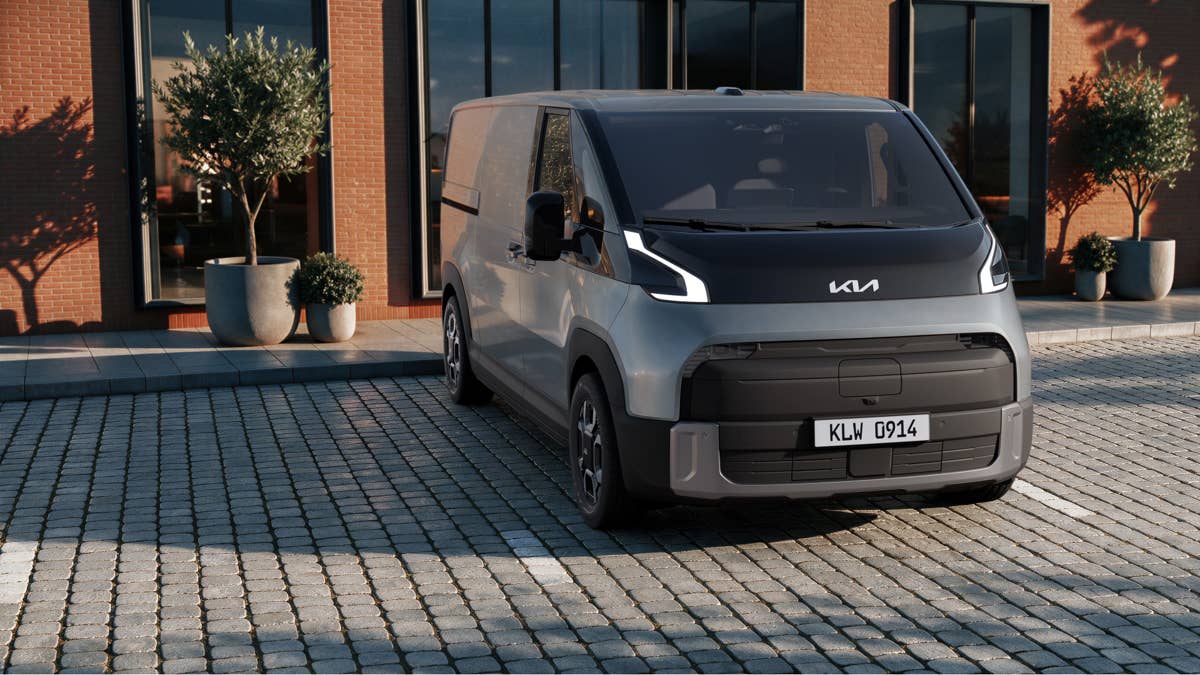
The two PV7s look similar from the outside, with typically boxy van proportions and short overhangs. They’re up to 210.6 inches long. The obvious difference is the Passenger’s rear windows. This model can seat up to nine occupants globally and 11 in Korea, with various seating configurations available. It’s aimed at shuttle/rental services, tourism, and family use. In the seven-seat Passenger model, there are Long-Rail Easy Remove Seats, while the nine-seat version can be had with or without a fourth row.
The PV7 Cargo is aimed at logistics, delivery, fleet, and business operations. Two- and three-seat variants are on offer, and the Cargo High Roof model has up to 282 cubic feet of cargo space. The payload maxes out at 2,646 pounds for the Compact model, and there’s a dedicated heavy-load driving mode that keeps the van stable when fully loaded.
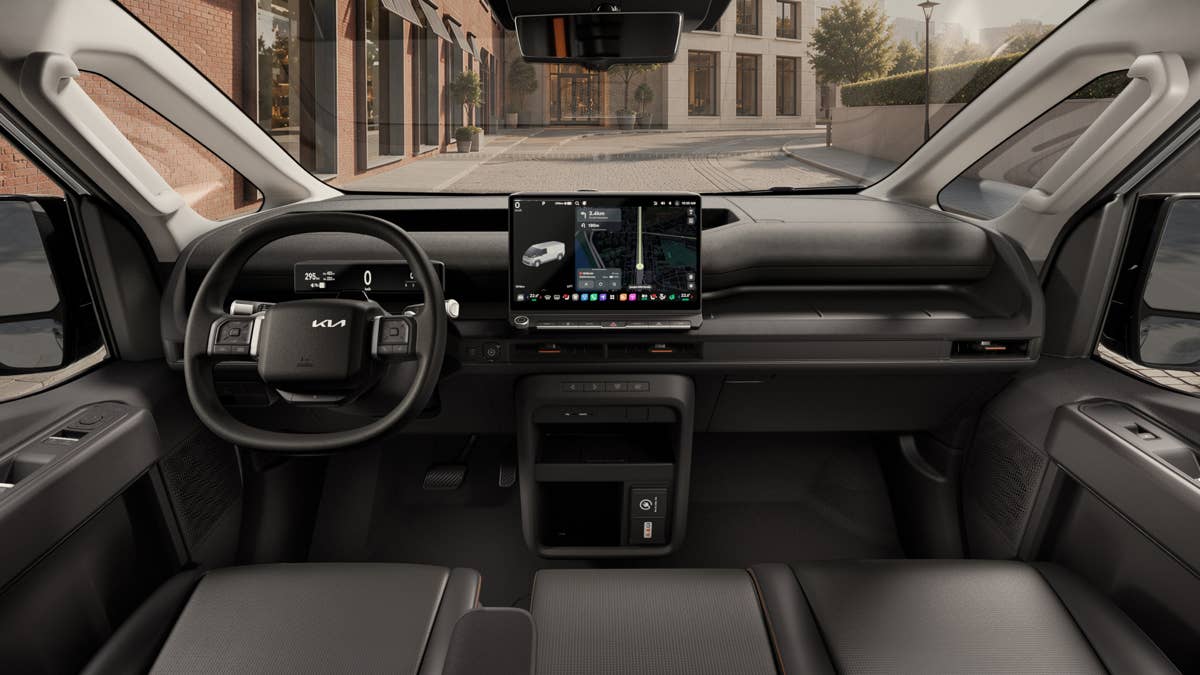
The dashboard is modern and airy, with a digital driver’s display and center touchscreen. The PV7 is available with a wide range of driver-assistance tech, from smart cruise control to a surround-view monitor and lane-keeping assist.
“The PV7 marks the next step in our journey toward personalized mobility, building on the foundation established by the PV5,” said Ho Sung Song, President and CEO at Kia. “By bringing together hardware developed for specific applications, business-tailored software and dedicated PBV services, the PV7 goes beyond the vehicle itself to deliver a complete business solution that helps customers achieve greater productivity, flexibility and long-term value.”
Availability and Pricing
Kia
The PV7 will be launched in Europe and Korea in 2027, with the automaker saying that additional derivatives and markets will follow. The U.S. was not explicitly mentioned as being one of those markets, so its arrival here is uncertain. However, the smaller PV5 was spotted testing on American roads earlier in 2026, which raises hopes that Kia has plans to launch the bigger PV7 in America.
Pricing for the PV7 has not yet been announced, but the Ford E-Transit Cargo Van starts at $53,260 (2026 pricing), so the Kia will likely cost around that much if it goes on sale here.
For businesses that have relied on thirsty and generally slow gas-powered cargo or passenger vans for many years, a new era of electric alternatives promises lower lifetime costs and more refined travel, especially for passenger versions.
Related: Kia’s New Electric Van Just Set a Guinness World Record for Range