These are rare cross-country athletes in a segment full of wannabe mountain climbers
With hopes of attracting more manly buyers to the ever-popular compact crossover segment, countless automakers have discovered that tacking endless plastic “protective” cladding onto various fenders and fitting loud, inefficient all-terrain tires onto their crossovers tends to attract those kinds of buyers who insist on “macho” looks when it comes time to head down to the showrooms and pick out a new car for the family.
Cole Attisha
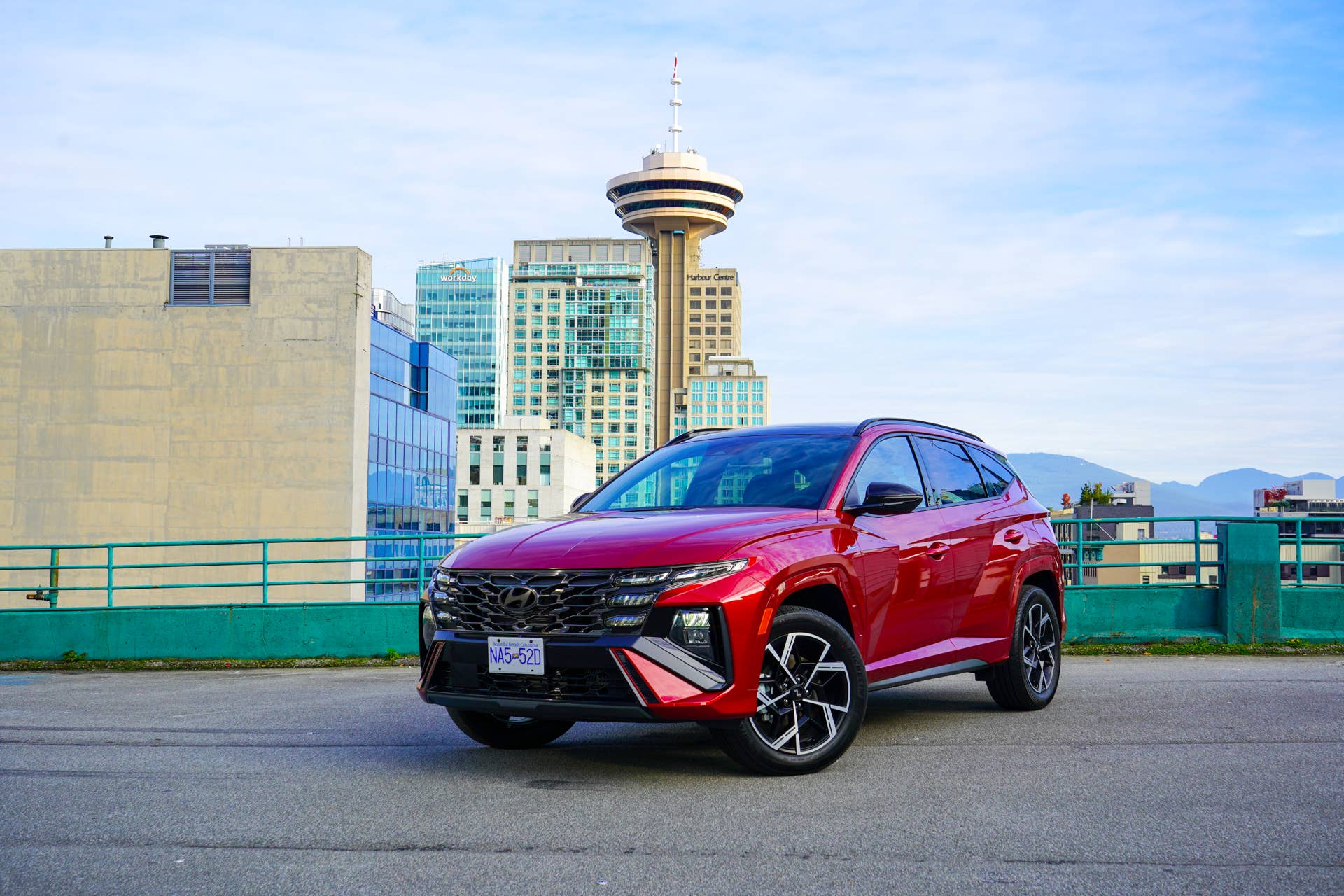
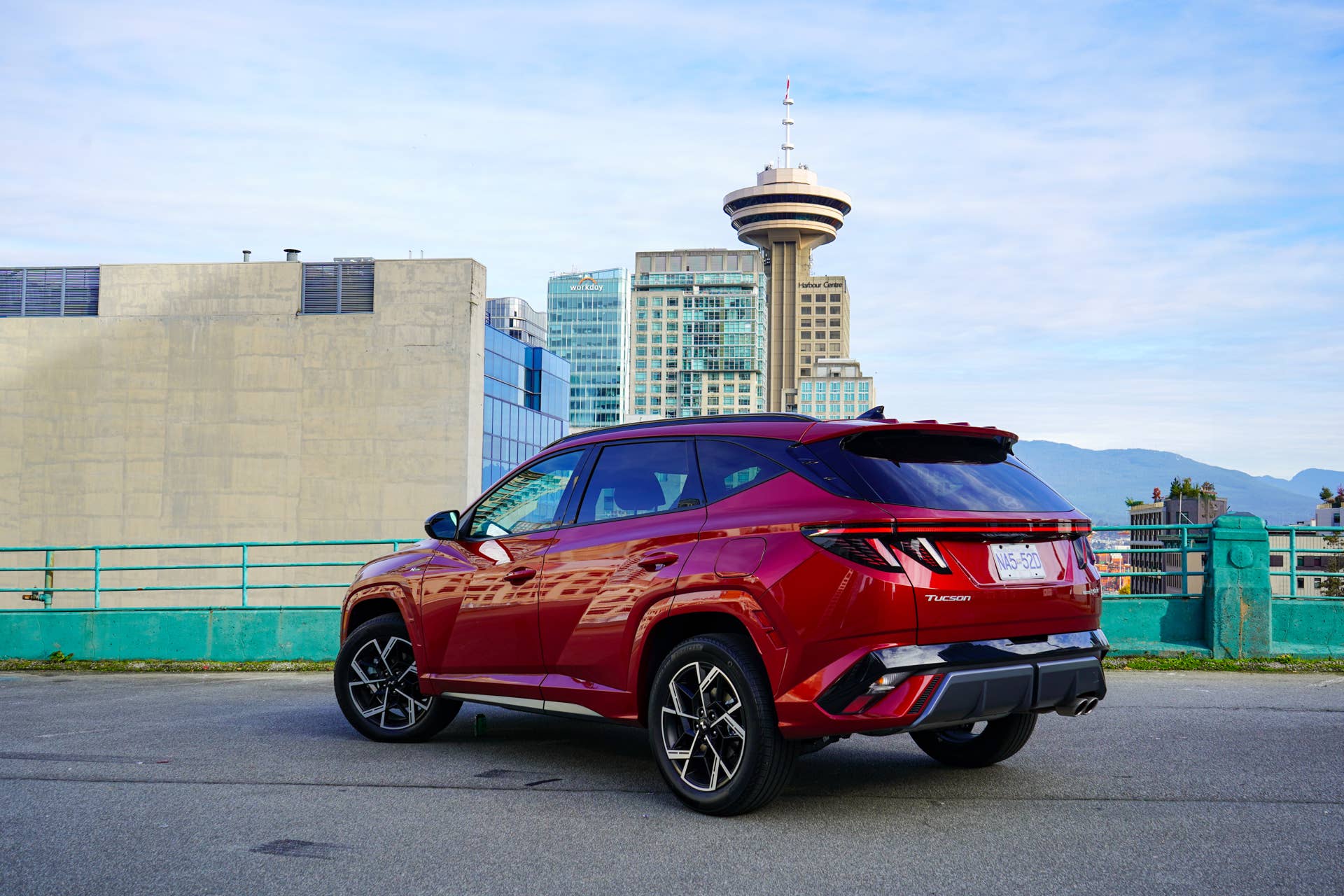
This new-age strategy began once automakers discovered that traditional crossovers tended to attract females significantly more than males, who tended to prefer larger, boxier, body-on-frame SUVs out of a sense of stubbornness. Don’t worry if that sounds like you, I’m the same way—I feel that if I’m going to buy an SUV, then it damn well better be a true SUV. Since then, we’ve collectively witnessed the debuts of tougher, adventure-ready crossover variants such as the Subaru Forester Wilderness, the Ford Bronco Sport Badlands, the Mazda CX-50 Meridian Edition, the Toyota RAV4 Woodland, the Honda CR-V TrailSport, the Nissan Rogue Rock Creek, and even the Hyundai Tucson XRT AWD. After spending time driving a few of these rugged crossover offerings, I have to admit that getting some seat time in the 2026 Hyundai Tucson N-Line HEV and the 2026 Toyota RAV4 GR Sport offered a refreshing change of pace; a sense of authenticity that the others lacked.
Cole Attisha
As successful as the aforementioned “rugged” crossovers have been at capturing greater male market share in the compact crossover segment, the truth is, they don’t make all that much sense in reality. The fact of the matter is, every one of those crossovers sacrifices a palpable quantity of road comfort and fuel efficiency in favor of a more masculine presence, and, sure, off-road capability. What this means, though, is that buyers of these hiking-boot-ified crossovers often sacrifice much of the sensibilities that make these crossovers so convenient to live with to feel like they appear more “manly,” and to give off the impression that they’re often used for tough mudding and mountain climbing, even if the truth is far from it.
Cole Attisha
Where the Tucson N-Line HEV and the RAV4 GR Sport differ from all these models, however, is that they instead aim their appeal in a different direction; one that is not as gender-specific, and one that actually makes living with them more enjoyable, without sacrificing convenience. What Hyundai and Toyota have done here is take their tried-and-tested crossover formulas and simply made them a little bit more fun to drive (and, of course, to look at). After experiencing both, I had to ask myself, “Why don’t more brands offer more fun, driver-oriented variants of their best-selling crossovers?”
Cole Attisha
The market is sorely lacking driver-focused, convenient crossovers, but the Hyundai Tucson N-Line and the Toyota RAV4 GR Sport might be proof that some automakers already know this
The Hyundai Tucson N-Line is accompanied in its niche only by Toyota’s recently debuted RAV4 “GR Sport,” which, in terms of brand lore, broadly means the same thing as “N-Line.” They both embody the spirit of each brand’s respective performance-focused subdivision, but don’t quite qualify for full-time membership. This trend follows what European luxury brands have successfully done for over a decade, in that they go about adding moderate levels of spice to their otherwise sensible SUV offerings, à la M Sport and S-Line nomenclature, and market their “sportified” crossovers to buyers who believe they’re at least getting a little taste of fiery hot cars like the BMW M3. Like those SUVs, the hotted-up Tucson and RAV4 don’t quite satisfy the desire for piping hot Buldak Chicken Ramen like the Elantra N and GR Corolla do so brilliantly, but they can still set your stomach on fire if you press on hard enough.
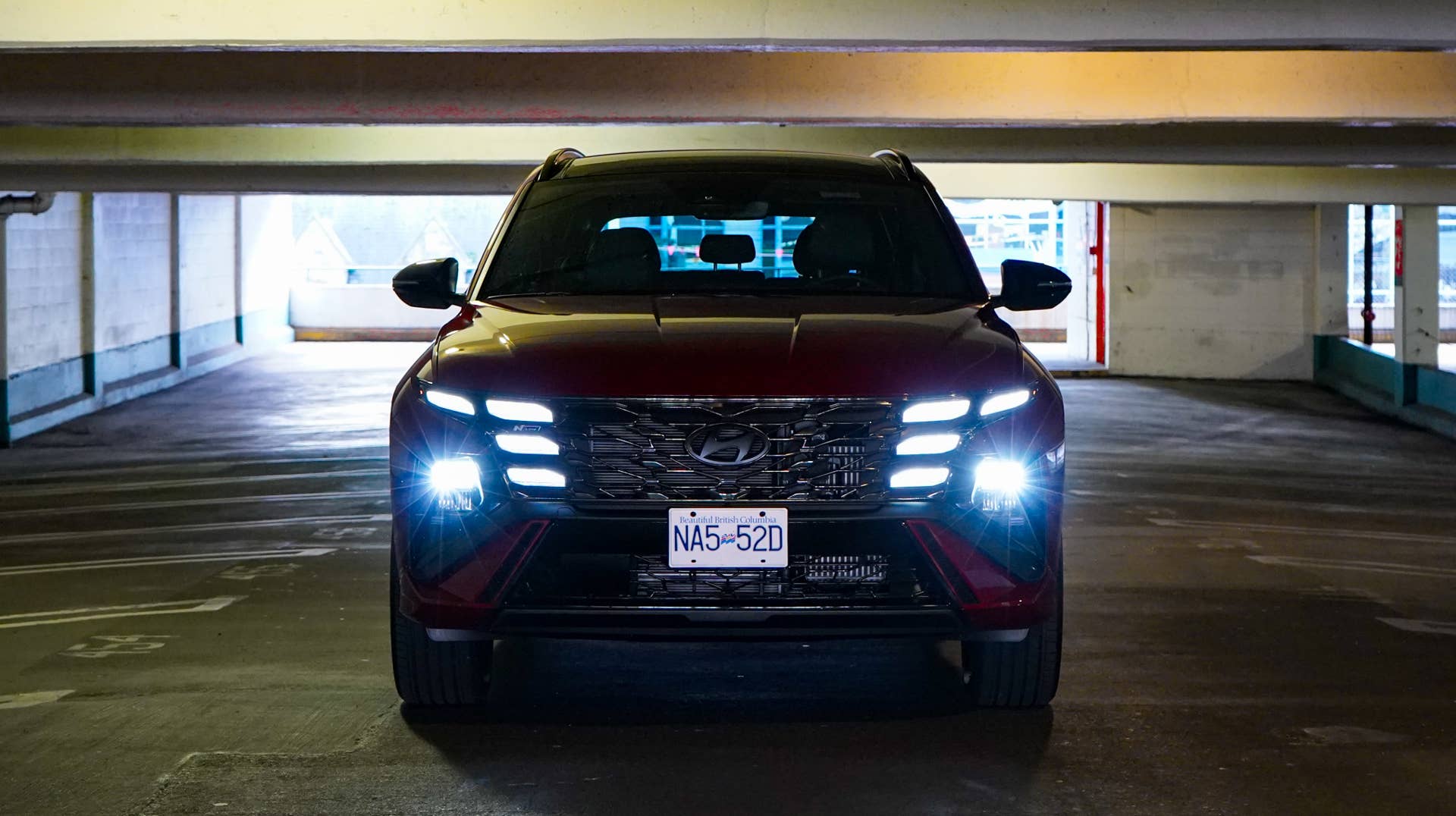
2026 Hyundai Tucson N-Line HEV Cole Attisha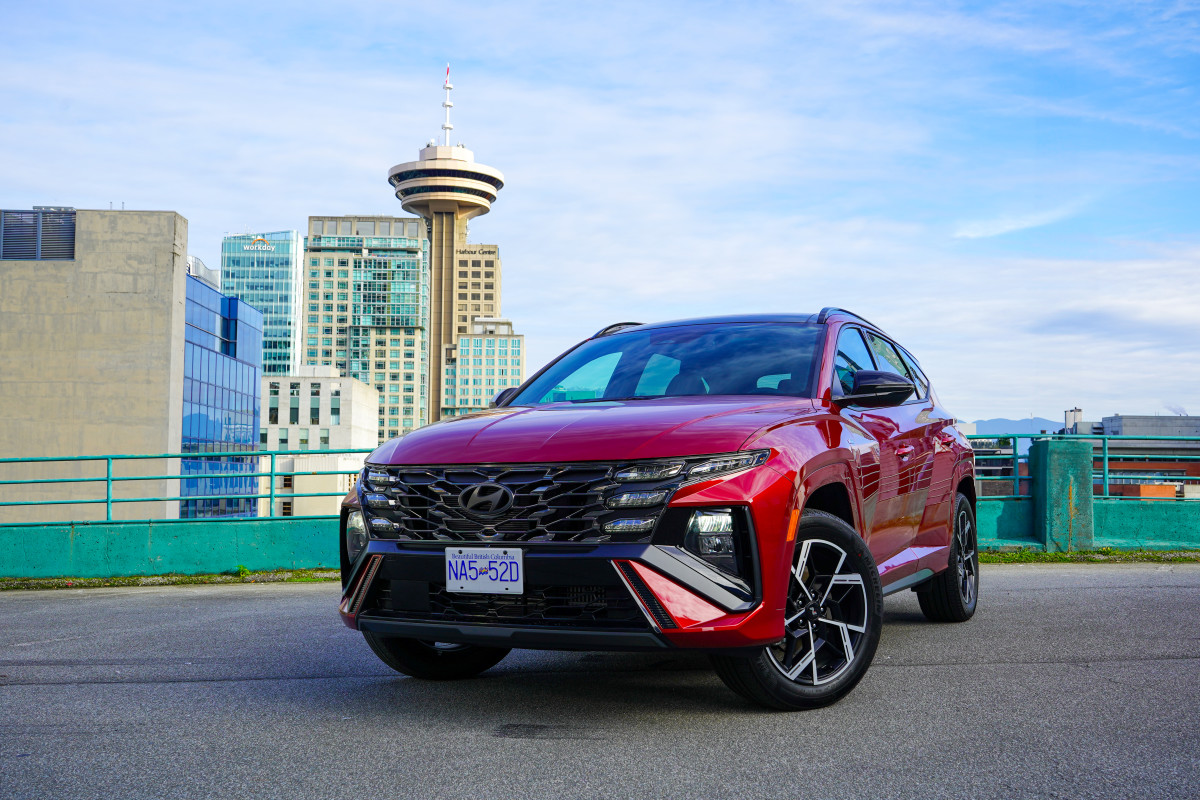
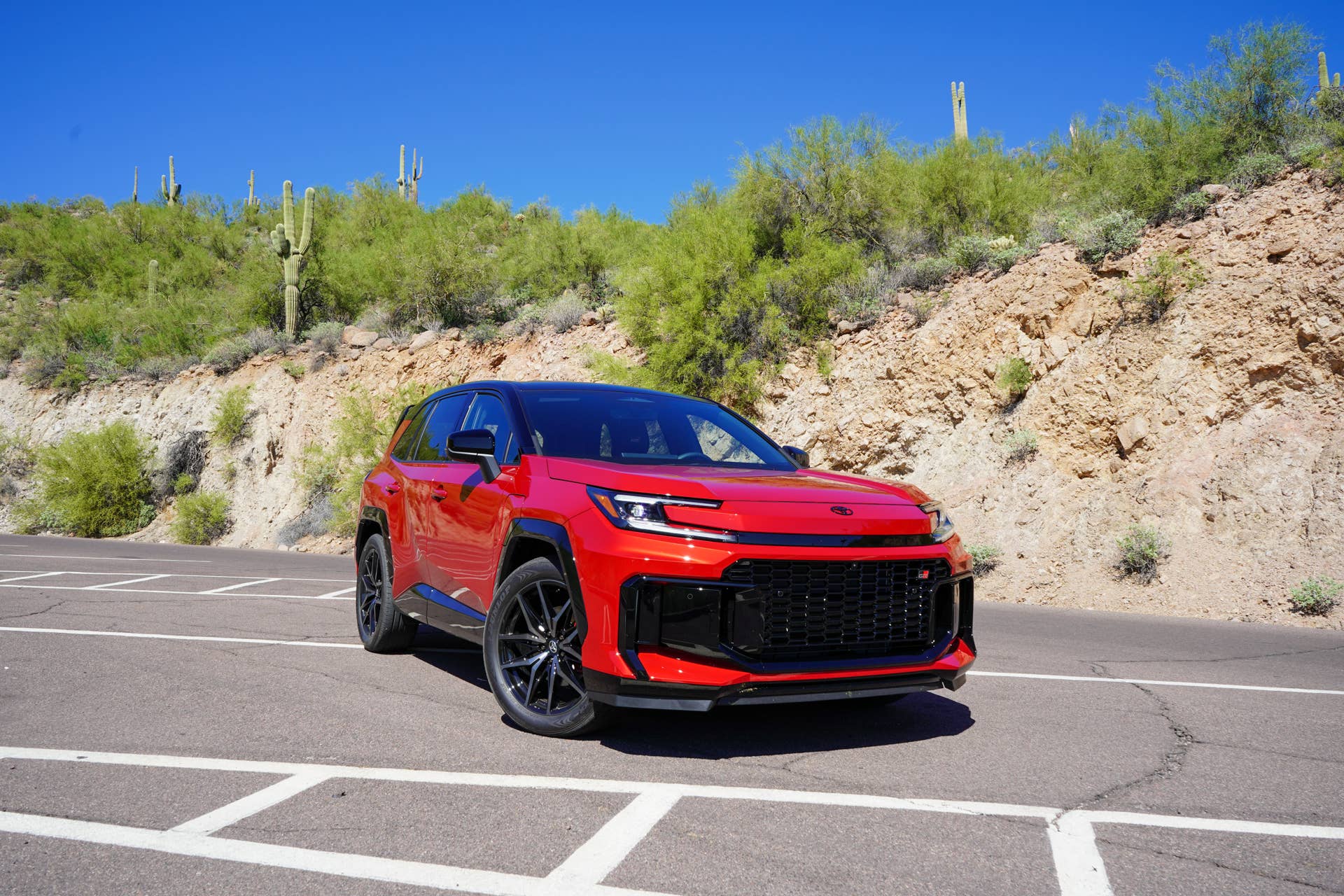
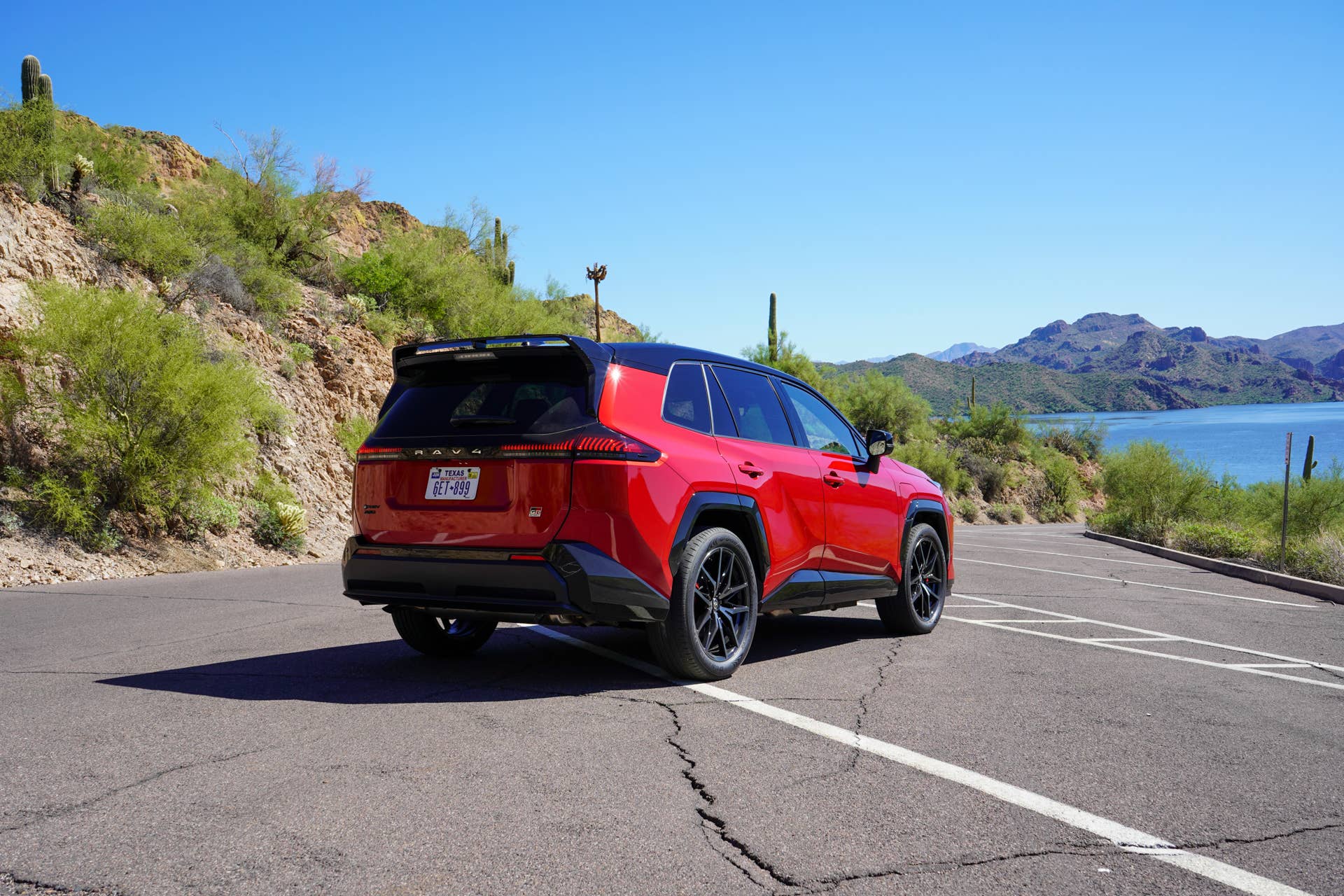
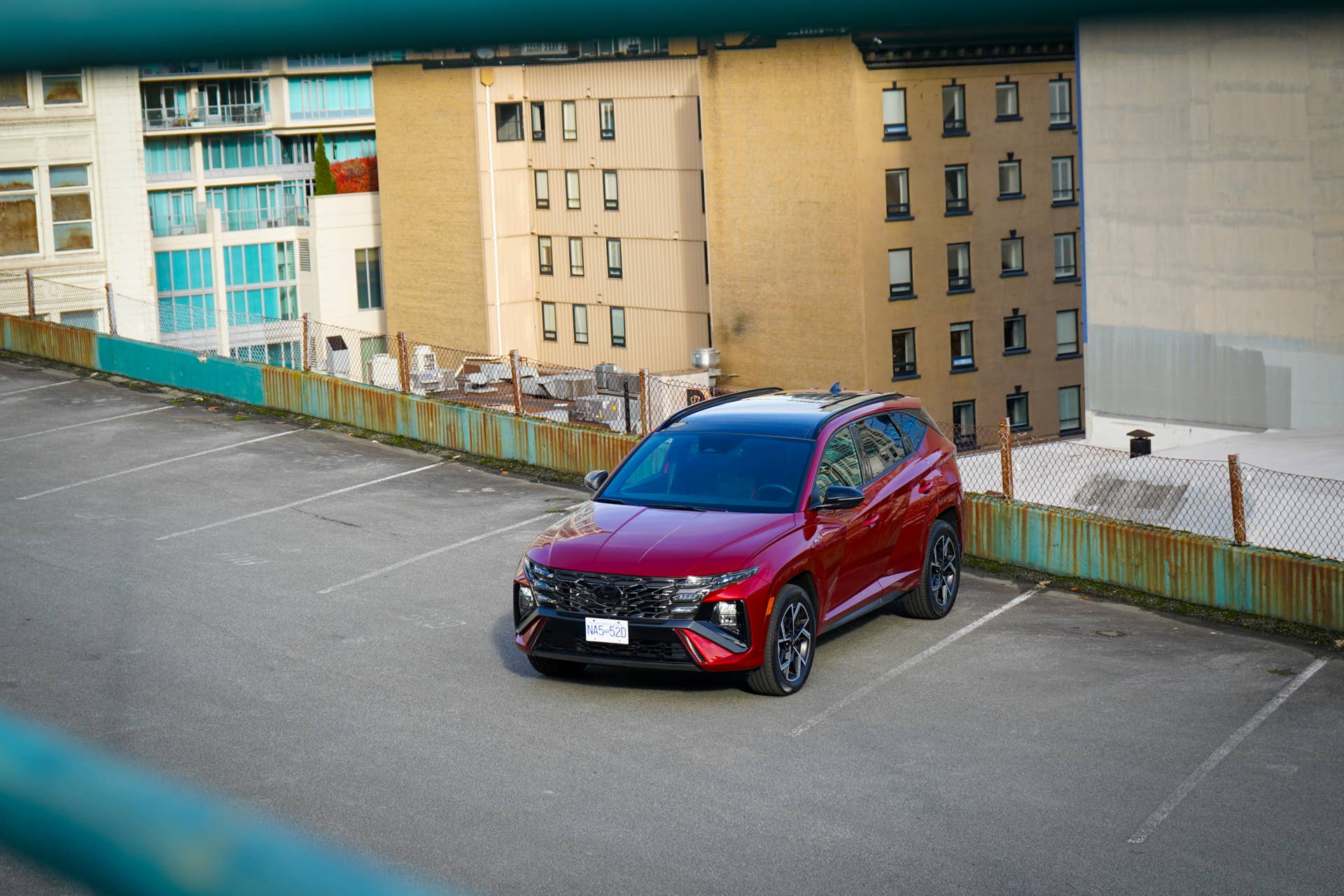
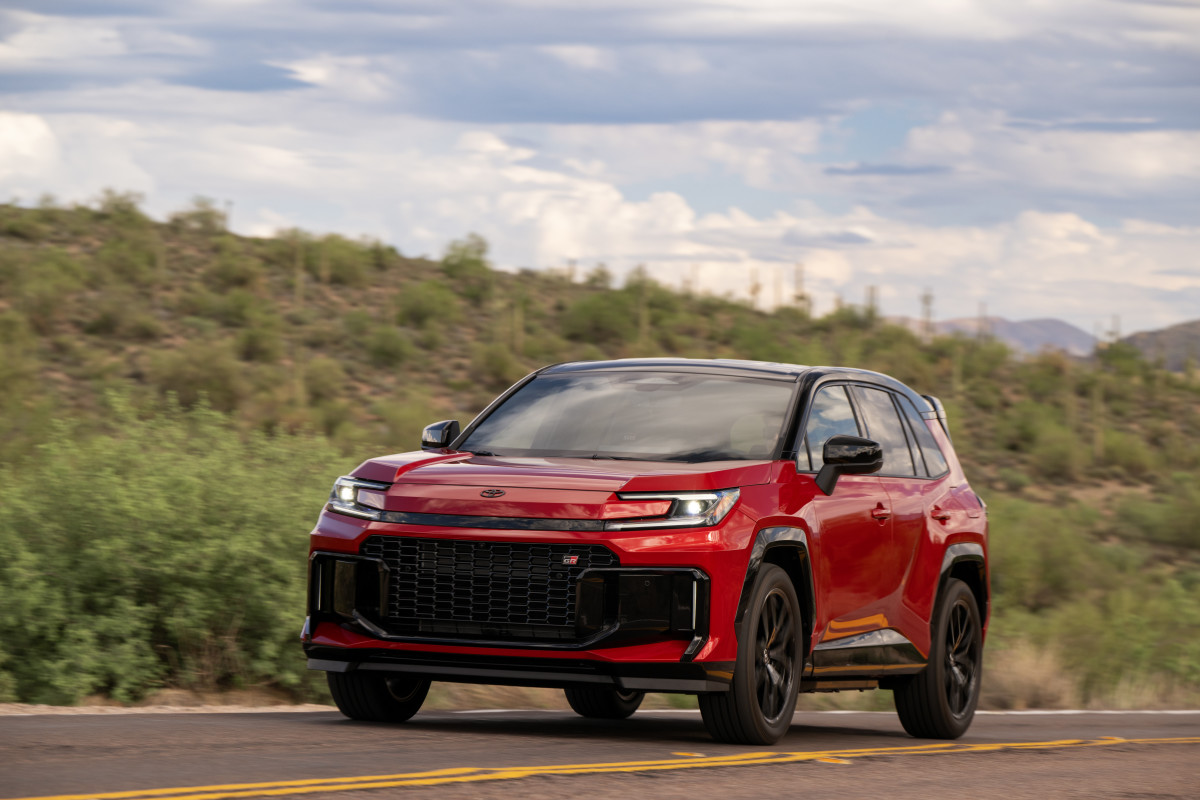
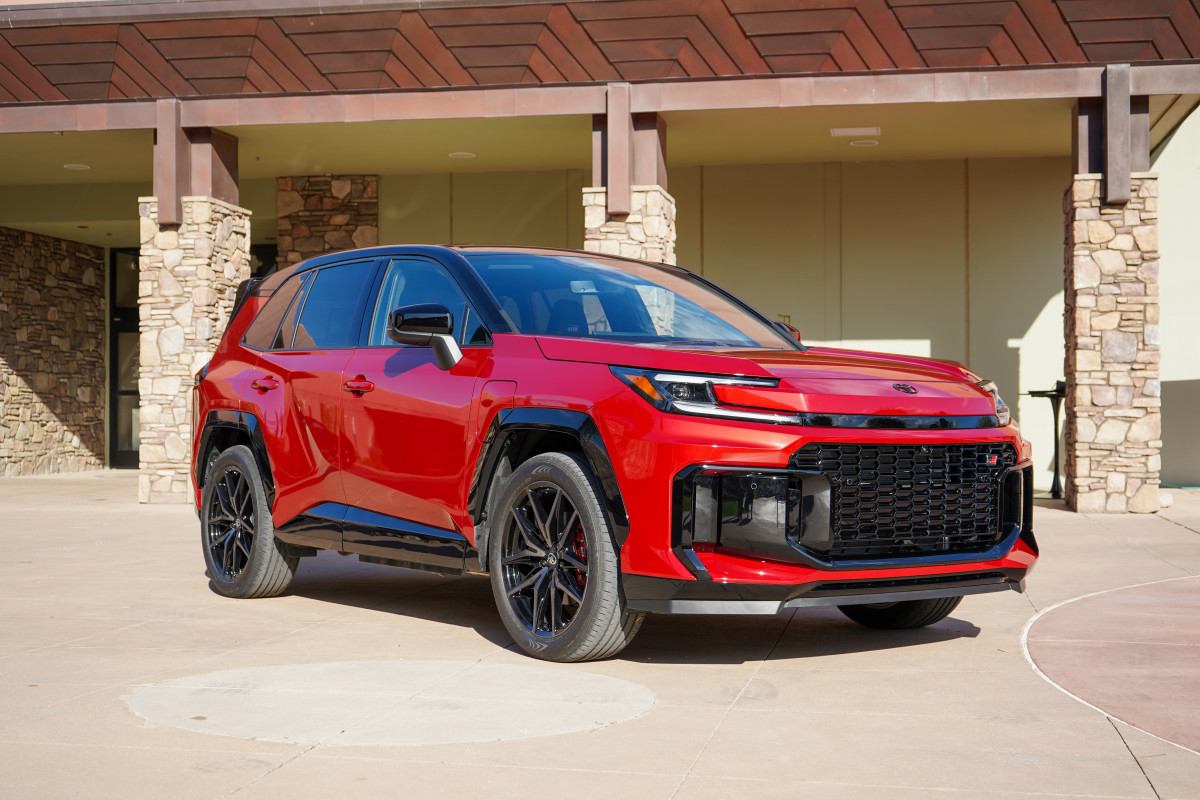
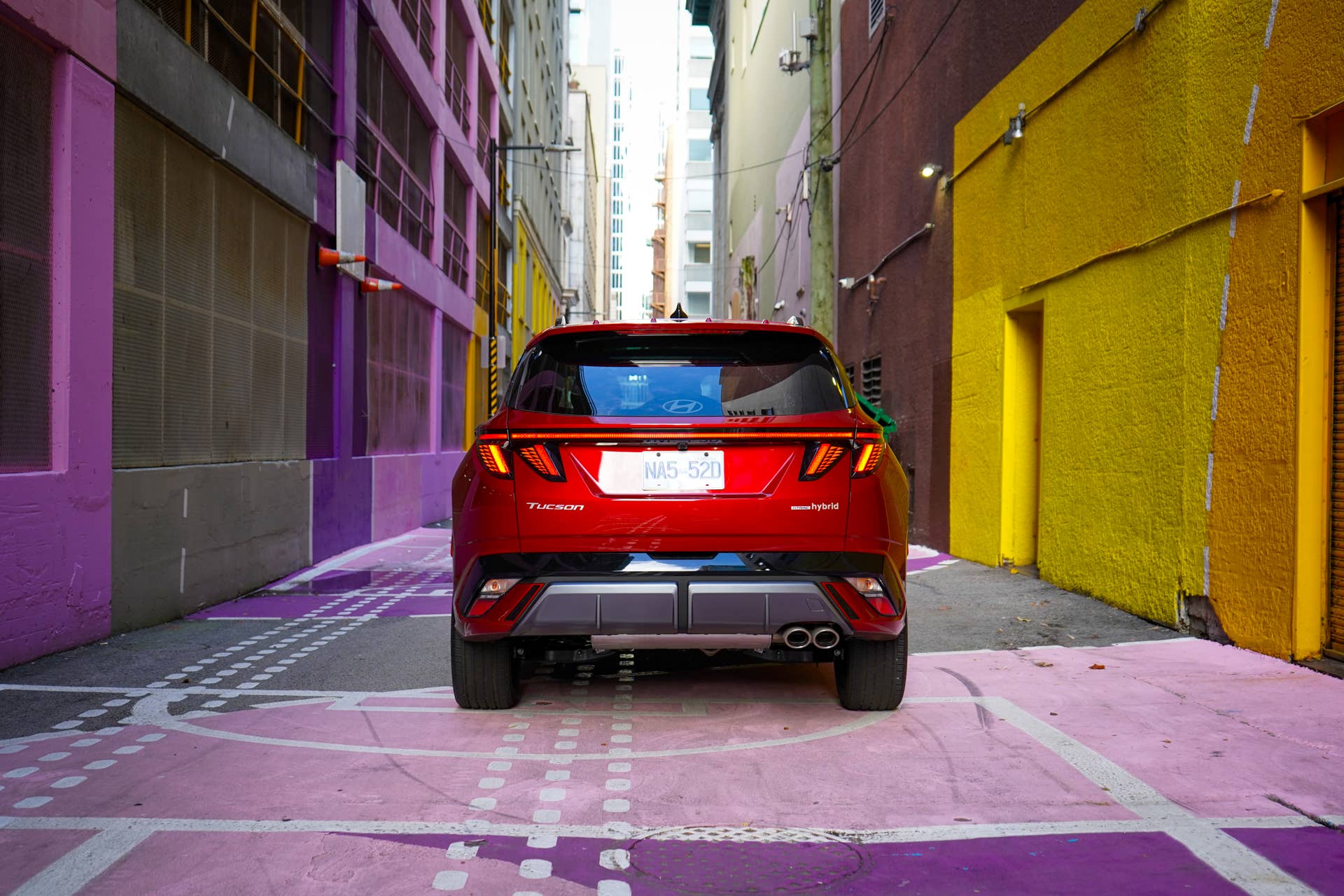
Even visually, both the N-Line Tucson and the GR Sport RAV4 sit somewhere between racey and restrained, offering buyers aggressive styling that still won’t attract too much attention. I think it’s fair to say the GR Sport RAV4 is objectively more appealing to look at, with a far fresher appeal and a heavier lean into its athletic persona, what with its roof-mounted wing spoiler and massive grille, but that’s because the RAV4’s overall design is entirely brand-new. In contrast, the Hyundai Tucson’s style has been in production since 2020 and is in desperate need of an update. Still, both SUVs do an excellent job of translating their sporting intentions through intricate visual cues, such as their unique wheels, enhanced bumpers, and painted overfenders. When people see them on the street, they know immediately that these SUVs like to party.
Cole Attisha
Both SUVs are surprisingly engaging behind the wheel, but one stands above the other when you actually drive it like a sports car
Plainly, the Toyota RAV4 GR Sport beats out the Hyundai Tucson N-Line…on paper. That is, the RAV4’s power figure absolutely stomps the Tucson’s. The RAV4’s plug-in hybrid, 2.5L four-cylinder churns out an impressive 324 horsepower—almost a full hundred more than the Tucson N-Line’s max figure of 231 horsepower, produced by a turbocharged 1.6-liter four-cylinder mill paired with a less-complicated hybrid system.
Here’s the kicker, though: the GR Sport RAV4 is more than 700 pounds heavier than the N-Line Tucson, so the Tucson dances through corners with superior agility. What’s more, the Tucson benefits from a genuine, old-school six-speed torque converter automatic gearbox—not a CVT with simulated (and therefore inauthentic) shift points, like what the RAV4 uses to send power to all four wheels. That means more driver control, enhanced further by the ability to shift manually with paddles. Yes, I’m aware the GR Sport RAV4 has paddles as well, but they’re essentially useless, whereas the Tucson’s are genuinely engaging.
Toyota
Regardless of whether you prefer less weight or more power, both of these SUVs are great fun to drive fast and superbly comfortable at slow speeds. They are excellent, relatively affordable grand touring cars in a way, and they’re perfect for hauling around families who like to go fast (and who don’t suffer from motion sickness). These are the cars you can drive daily, comfortably, and confidently, without sacrificing too much fun. That way, your Elantra N or GR Corolla can hang out in the garage, patiently awaiting its next weekend outing, safely sheltered away from the elements, vandals, salty roads, inattentive traffic, and the racking up of unfulfilling commuter mileage.
How do both SUVs stack up against each other on paper?
Although both the Tucson N-Line and the RAV4 GR Sport are close rivals on the road and in terms of comfort and convenience, the pros and cons aren’t quite as nuanced when it comes to the most key factor imaginable: price. Although official pricing for the RAV4 GR Sport has yet to be confirmed, it’s expected to cost over $50,000 in the United States. On the other hand, the Tucson N-Line HEV I tested came in at just CAD 44,059, or roughly USD 31,400. That means, instead of opting for the GR Sport RAV4, for the same money, you could have purchased the Tucson N-Line HEV, this 30,500-mile, six-speed manual Chevy Corvette that recently sold on Cars & Bids, and then some.
Cole Attisha
You aren’t likely to see that added cost come back to you in the long run through fuel savings, either, as the GR Sport RAV4 gets just 2 mpg more than the Tucson, with combined ratings of 37 mpg and 35 mpg for the two SUVs, respectively. Perhaps the best way to make back all that extra money is to take the RAV4 GR Sport down to your local drag strip and place some big-time wagers. The RAV4 will shoot from 0-60 mph in just 5.6 seconds, according to Toyota, whereas the Tucson takes noticeably longer, rated at over 7 seconds. Still, I find it hard to believe, realistically, that anyone buying either of these SUVs really cares more about a second and a half with each launch than they do about almost twenty thousand dollars. For that reason, it’s difficult to argue in the RAV4’s favor over the surprisingly compelling Hyundai Tucson N-Line.
The real verdict: Sorry, the real winner is for Canadians only, eh? At least, for now, that is
The unfortunate truth is that if you live in the United States, Hyundai will no longer sell you a Tucson N-Line. Ditched late last year, the Tucson N-Line Hybrid is, for 2026, a Canadian-market exclusive. So, if you’re a Canadian reading this, then to you I say cheers, and I also say you should take a serious look at the Tucson N-Line if you need a new family hauler but don’t want to feel like you’re dead inside while driving it. If you’re American, though, do not fret. The reason why Hyundai is weaning off its current Tucson models is that a new one is on its way, expected to arrive sometime next year with a bold new redesign. We’ve even caught a few spy shots of the Tucson’s near replacement. This, then, should provide Hyundai with a unique opportunity to attack Toyota where it hurts most: by potentially offering an even more compelling product than its undisputed best-seller.
Considering that Hyundai’s five-year-old (albeit recently updated) Tucson already offers a compelling case against the brand-new, tarted-up RAV4, and having witnessed, firsthand, the generational run Hyundai has been on in recent times as a sales associate, there’s little doubt in my mind that Hyundai’s next-gen Tucscon could, and likely will, be the model that brings Hyundai closer than it’s ever been to Toyota’s rear bumper in the drag race that is automotive sales volume. Hyundai has already quickly become the world’s third-largest automaker by sales volume and is also the second-most profitable, behind only Toyota. Their next-gen Tucson’s arrival will be a key moment for the brand, and judging by the massive appeal that the outgoing Tucson still possesses, I think Toyota had better watch its back.
Cole Attisha