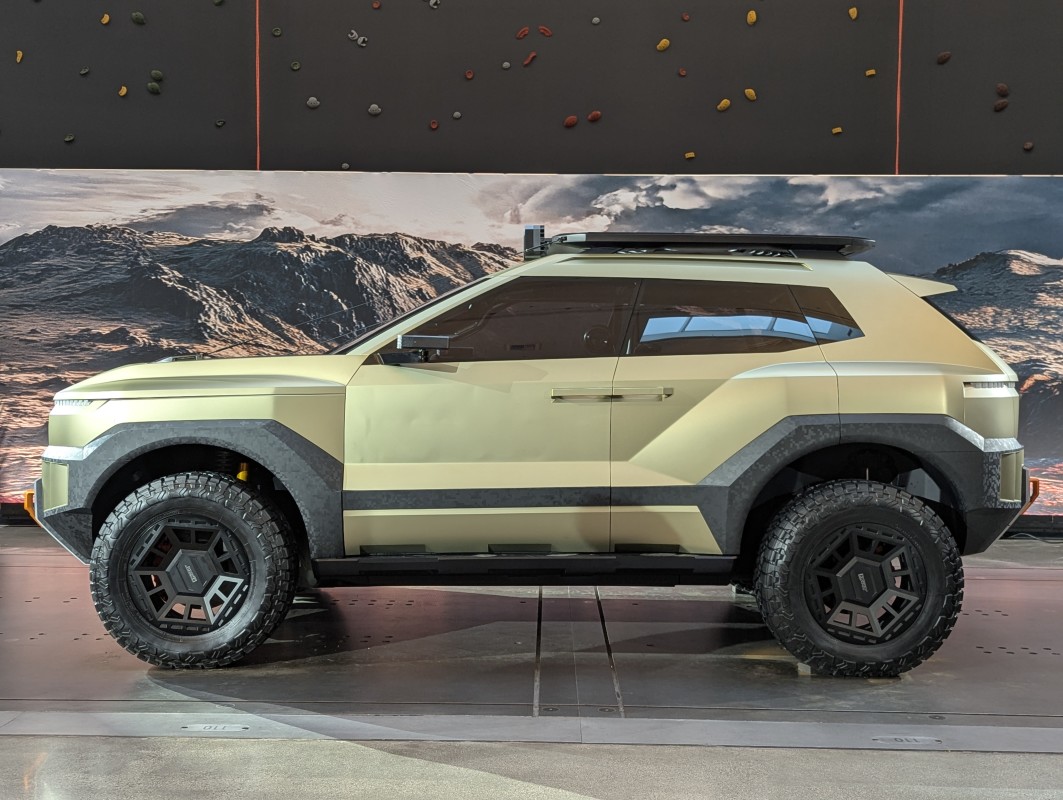
The Hyundai Crater Concept was easily the most intriguing model to emerge from this year’s Los Angeles Auto Show – and, despite its name, you shouldn’t confuse it with the typical fantasy in chrome show car.
“This is not just a concept car,” acknowledged SangYup Lee, executive vice president and head of global design at Hyundai Motor Co., in an exclusive interview with Autoblog. “It could very easily be turned into a production car.”
Gabriel Ionica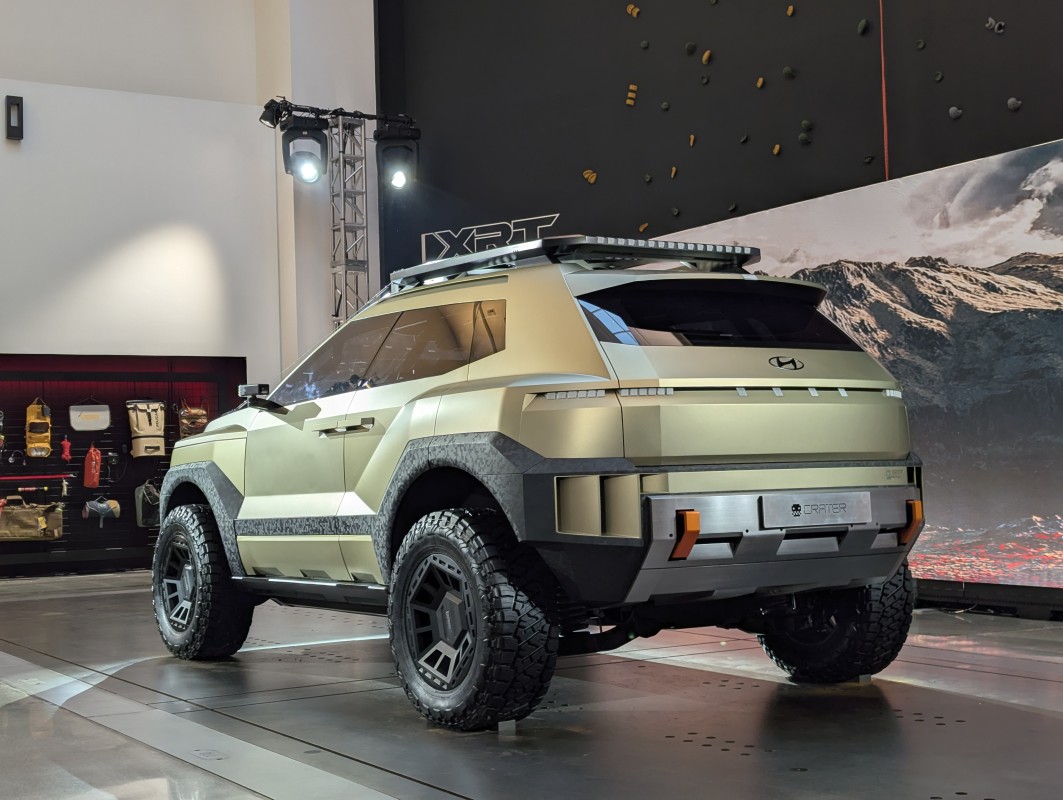
Indeed, that’s precisely what is likely to happen, Lee and other senior officials acknowledged following Crater’s debut. Crater is one of the first designs to emerge from the “Sand Box,” a new facility set up at Hyundai’s advance design center in California. Formerly the Genesis brand’s design studio, the Sand Box focuses on the development of off-road products that start where Hyundai’s current XRT models leave off.
Getting “More Adventurous”
The interest in off-roading has been growing for decades, said Sam Fiorani, lead analyst with AutoForecast Solutions. And that was rapidly accelerated by pandemic lockdowns, offering a way for people to safely get out of their homes and out into the country.
Hyundai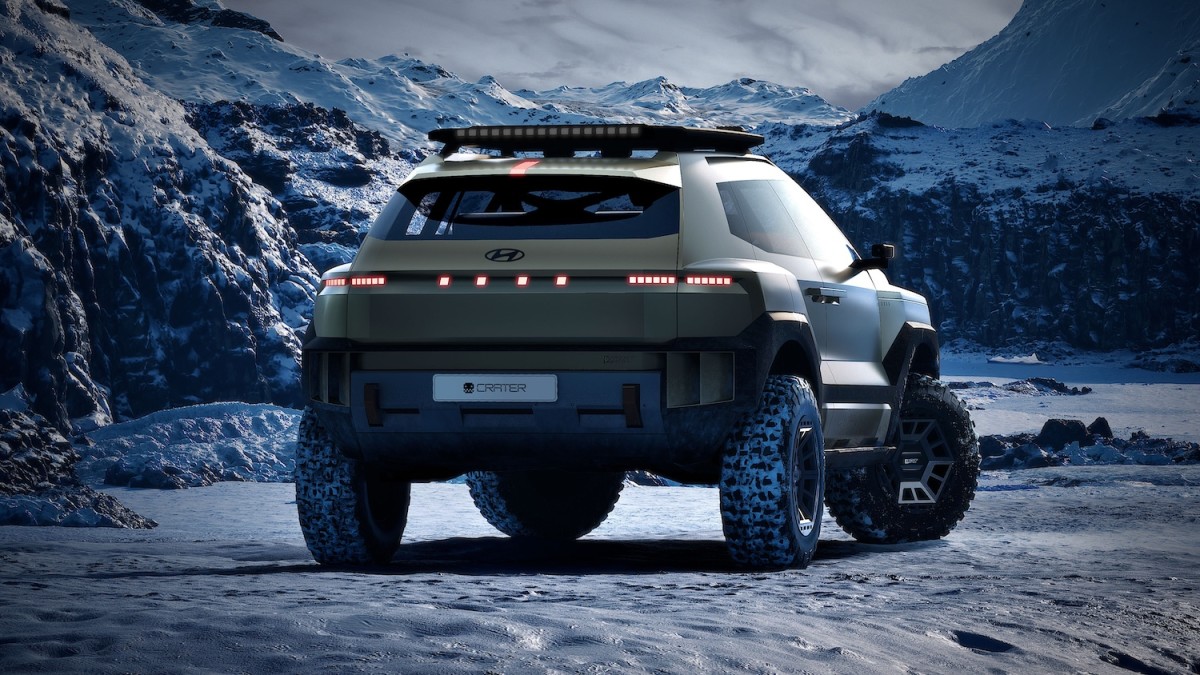
That’s a trend the industry hasn’t ignored. We’ve seen virtually all brands, large and small, start rolling out more adventurous product lines. There’s the latest-generation Honda Pilot and Nissan is bringing back the Rogue. In many cases, manufacturers are adding beefed up versions of their mainstream products and, in some cases, developing entire sub-brands, like Subaru’s Wilderness trim. Hyundai has done the same thing with XRT packages – taking things to the next level with the XRT Pro version of the big Palisade SUV.
Related: I Drove The 2026 Hyundai Palisade XRT Pro For A Week, Here’s My Honest Review
Crater signals plans to go a big step further. “We’re very serious” about building a vehicle based on the LA concept, Randy Parker, president and CEO of Hyundai North America, said in an interview. “The plan is to definitely embrace our off-road capabilities and be more adventurous.”
What is the Hyundai Crater Concept?
Gabriel Ionica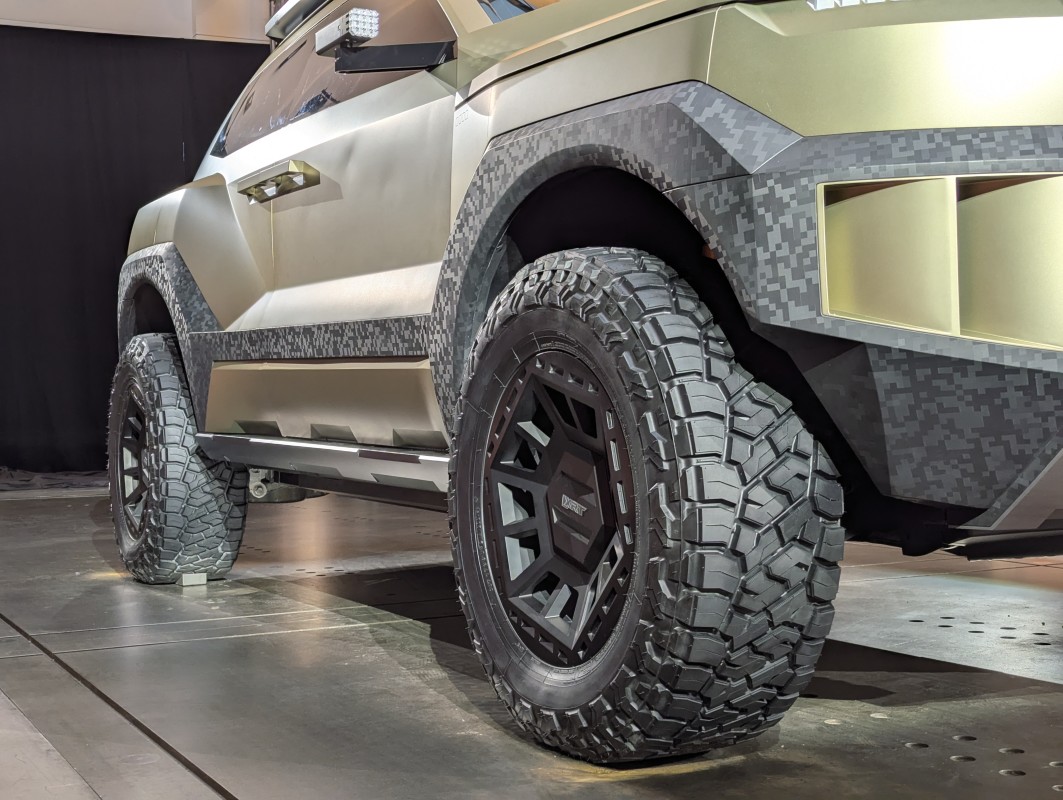
Built on a compact monocoque architecture, Crater features chiseled body panels, softened only slightly by its aggressive wheel arches. Obvious skid plates are designed to protect its underbody even while tackling tough trails like those found in Moab and along the legendary Rubicon Trail. That extends to critical portions of the body, said Lee, which is painted in a green-gold matte “drawing inspiration” from the California coast.
In show car form, its 18-inch wheels – shod with 33-inch off-road tires – were “inspired by envisioning a hexagonal asteroid impacting a sheer metal landscape, leaving a fractal crater in its aftermath,” Hyundai explained.
The design chief describes the look of Crater as “the Art of Steel,” something meant to highlight its strength and capabilities. Hyundai is exploring the use of new alloys that would be stronger, yet lighter, Lee added, noting that the automaker has the advantage of being able to tap the expertise of the steel company that is part of the vast Hyundai conglomerate.
How Close to Production is it?
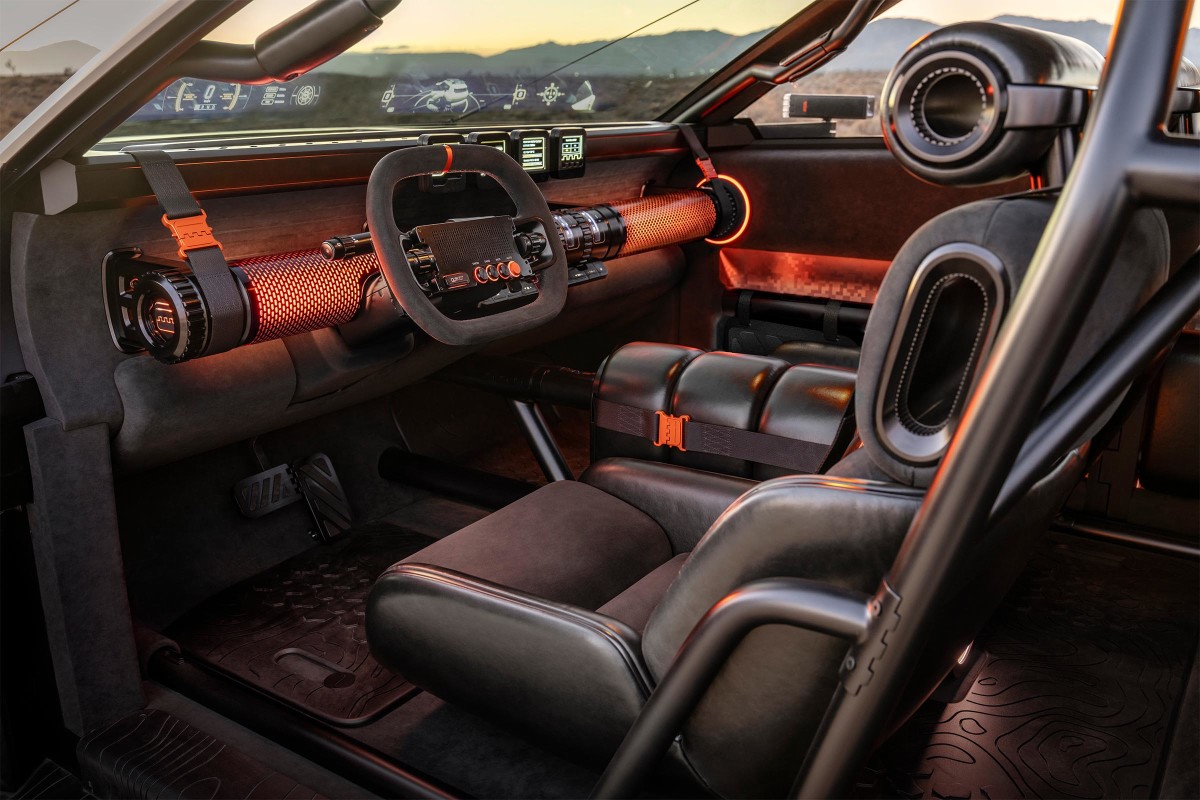
As with any concept vehicle, Hyundai designers got a bit playful with Crater, adding features like a built-in recovery hook that “performs double duty as a bottle opener,” it noted in a news release. Crater’s side mirrors contain cameras which perform additional duties as flashlights. They can be removed from the vehicle to record “breathtaking views or even record exciting adventures,” explains a Hyundai news release.
It’s hard to tell whether a production version would feature Crater’s subtly perforated dashboard which lets soft ambient lighting pass through, or the full-width head-up display that could serve a variety of simultaneous functions: projecting vehicle data, navigation and more. And the “coach” doors are all but certain to be replaced by more conventional designs. But other features are more practical, like the auxiliary lights on the roof which pick up on the brand’s now-signature parametric pixel lighting theme. And both a fire extinguisher and first aid kit are built into the cabin. And the show car’s downhill brake control and trailer brake control are part of the price of entry into the modern off-road market..
Powertrain? TBD
Gabriel Ionica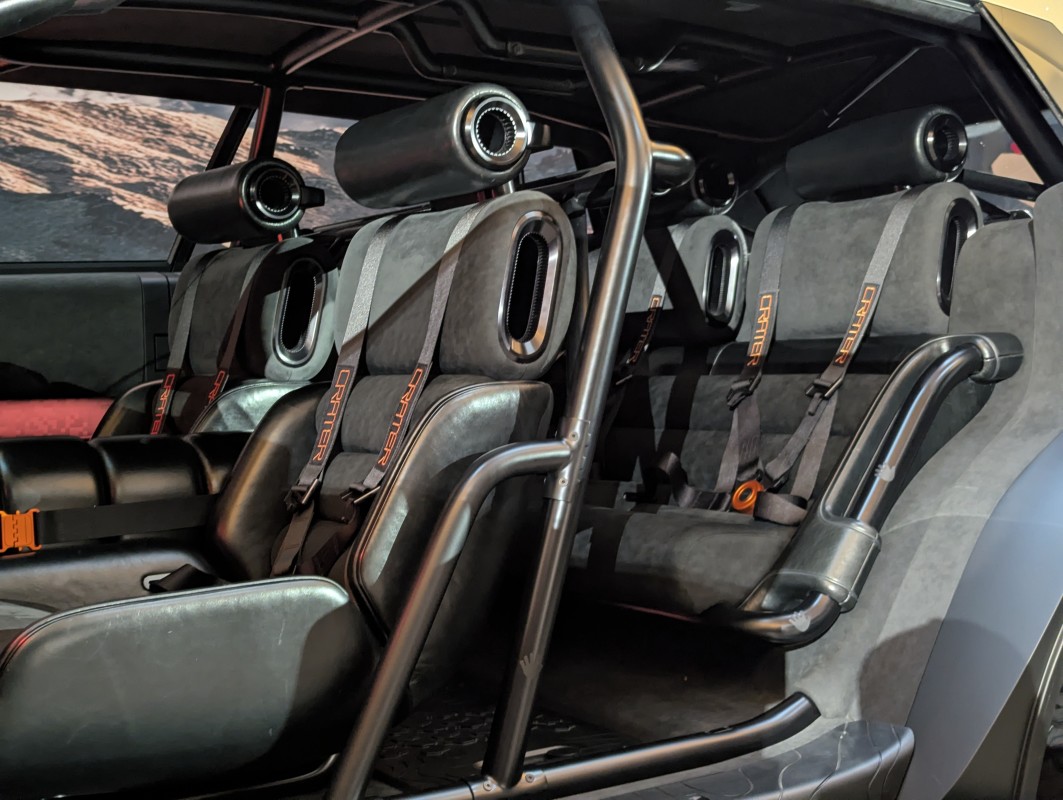
While Hyundai officials were happy to offer glimpses of Crater’s cabin, the hood stayed firmly shut and neither Parker nor Lee – or any of the other insiders in LA – would discuss what was underneath. Autoblog did learn that the concept vehicle shares the same E-GMP platform used for all-electric Hyundai products like the Ioniq 5 EV. But that was more for convenience than anything else.
Related: 2026 Hyundai Ioniq 5 Gets Massive Price Drop—Should You Still Consider 2025 Models?
Pressed further, Parker acknowledged that the automaker is “studying” a variety of powertrain options that could be used for serious off-road products, like Crater, going forward. And it has a lot of options available, everything from pure internal combustion engines to all-electric alternatives – and a variety of hybrids in-between.
Electric propulsion has some real advantages for off-roading, providing plenty of instant torque that’s particularly useful while rock-crawling, among other things. The drawback is range, and the challenge of charging up when deep on a back trail. That’s where range-extenders could come into play. Unlike more conventional plug-in hybrids, the technology only use electric motors to power their wheels. An onboard internal combustion engine is there solely to keep the batteries charged up. Notably, rival Jeep is planning to introduce its first range-extender in the near future and Parker said it very well could be used by Hyundai, as well, on future off-road offerings.
Gabriel Ionica