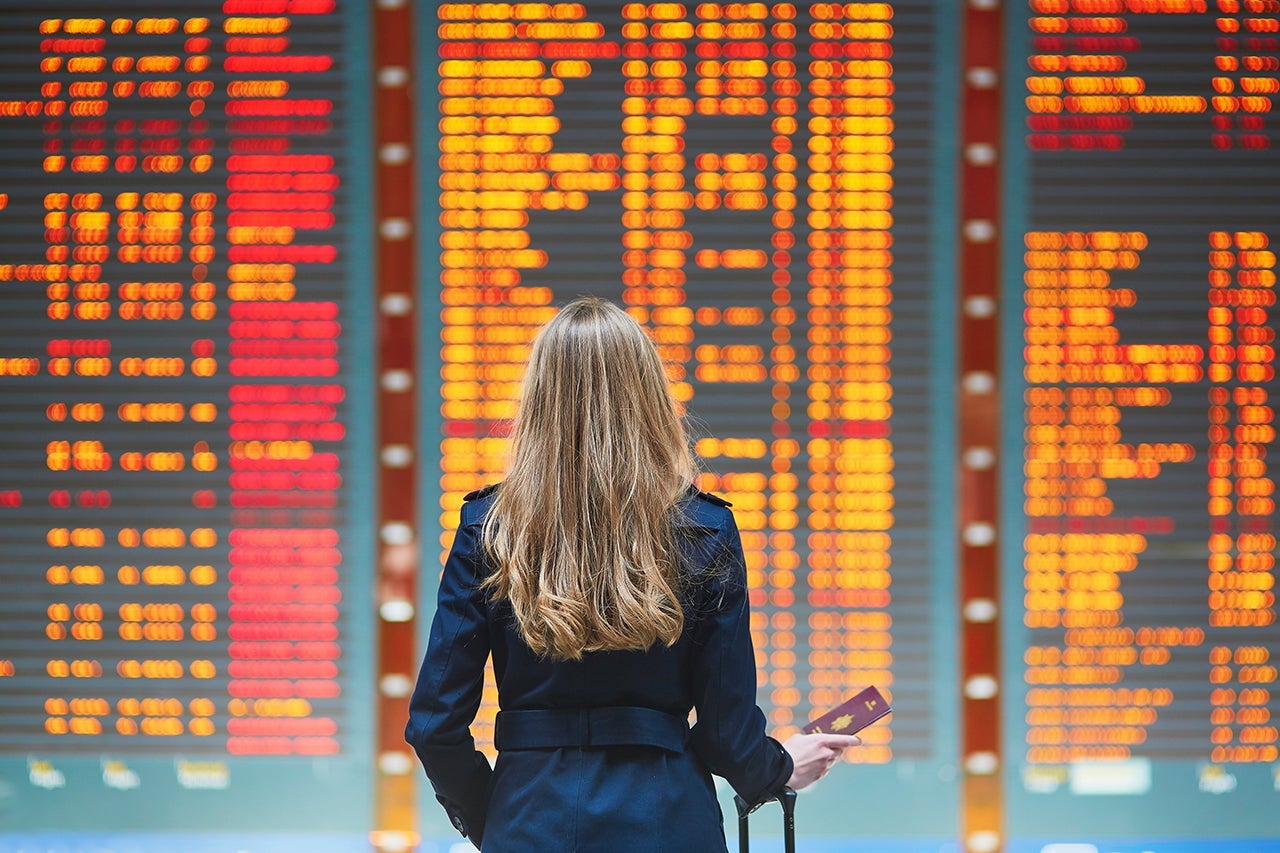
It’s going to be a rough weekend at airports, as the U.S. air travel system rebounds from one of the most significant disruptions in decades.
Thousands of flights have been canceled for Saturday, continuing fallout from the Federal Aviation Administration’s move to halt most takeoffs and landings across the country for about four hours Friday evening.
Airlines were cleared to resume service at 8:15 p.m. EST Friday evening, but travelers will face significant disruptions into the weekend — especially Saturday.
By 7:45 a.m. EST Saturday, flight cancellations for the day were nearing 3,500, according to data from FlightAware.
Nationwide, more than 12,000 departures have been scrubbed since Friday.
“It’s going to take us some time to unwind what’s happened,” Transportation Secretary Sean Duffy said, speaking Friday evening at the White House.
Most departing flights in the U.S.were grounded indefinitely late Friday afternoon after the FAA reported communication issues impacting air traffic control centers.
The fallout for travelers was severe, stranding travelers across the country and forcing hundreds of flights to divert.
Now, the race is on for airlines to reset their operations — and get passengers, planes and crewmembers to the right destination.
Passengers on a Delta Air Lines flight from New York’s John F. Kennedy International Airport (JFK) to Los Angeles International Airport (LAX) monitor coverage of Friday’s nationwide ground stop. ERIC ROSEN/THE POINTS GUY
Why flights were grounded
The FAA ordered a nationwide ground stop late Friday afternoon after discovering a communications outage affecting air traffic control.
It happened as crews were working to upgrade critical FAA equipment, Duffy said.
The disruption marked only the second time since 9/11 that a ground stop affecting the entire nation had been issued.
All told, airlines canceled more than 9,000 flights on Friday, according to FlightAware. Another 7,000-plus were delayed.
Some international flights and service within Alaska and Hawaii continued, despite the outage.
But the vast majority of domestic departures on Friday evening were affected.
What happens next?
With the ground stop lifted, airlines can now begin the complex process of resetting their operation.
That means getting aircraft, travelers, crews and baggage to the right destinations.
That will likely take some time.
Expect to see the tally of flight cancellations continue to climb on Saturday. Beyond Saturday, schedules should begin to improve — but only if no additional problems pop up and Mother Nature cooperates.
Airlines issue flexible travel waivers
Airlines issued travel advisories in the midst of the travel chaos. These waivers typically allow passengers with flights booked more flexibility to change their itineraries:
American
Delta
United
Southwest
Alaska and Hawaiian
JetBlue
A flight departure board at New York’s LaGuardia Airport (LGA) amid Friday’s disruption. ADAM GRAY/GETTY IMAGES
What to do if your flight is impacted
If your flight is affected by this weekend’s disruptions, stay glued to your airline app — you may be able to search for a new flights and re-book yourself without waiting on hold or in line at the airport.
Don’t see a good flight option for days? Keep checking back: with a lot of passengers shifting plans across the country, it’s still possible seats will open up.
What about refunds?
Passengers whose flights are canceled or significantly delayed are entitled to a refund if they choose not to travel or accept a rebooked flight, regardless of the reason for the disruption.
Under Department of Transportation rules, a significant delay generally means arriving at your final destination at least three hours late on a domestic itinerary or six hours late on an international itinerary. For passengers who decide to not travel on those flights, airlines must provide refunds to the original form of payment, not just travel credits.
Passengers navigate Friday’s ground stop at Ronald Reagan Washington National Airport (DCA). ZINA DESMAZES/AFP VIA GETTY IMAGES
In large-scale travel disruptions like this, rental cars and hotel rooms at or near airports can book up quickly, so it can make sense to act fast if you want to secure a backup option.
If you have airline miles you can use to book a flight for this weekend, that can also be a good self-insurance policy in case the disruption isn’t resolved quickly. Just make sure you understand the cancellation and refund rules before booking a backup ticket.
Will airlines pay if you get stuck?
Not likely.
Because this disruption was due to issues outside airlines’ control, carriers are unlikely to reimburse stranded passengers for hotel, ground transportation and meal costs.
Some rewards credit cards do offer built-in trip delay or cancellation protection if you used them to book your original airline tickets.
However, it’s not guaranteed that those benefits will cover FAA groundings of this nature. Still, save your receipts for any unexpected expenses in case you’re eligible for reimbursement.
Related reading:
Flight delayed or canceled? Here’s what to do
Getting a refund for your flight: What to know in 2026
TPG’s favorite credit cards with travel insurance
EU261 compensation: What is it, and how does it work?
Why it’s so important to make sure your boarding pass says ‘TSA PreCheck’
Editorial disclaimer: Opinions expressed here are the author’s alone, not those of any bank, credit card issuer, airline or hotel chain, and have not been reviewed, approved or otherwise endorsed by any of these entities.