If there’s one category among those we see here at Hackaday that has something for everyone, it’s retrocomputing. Spanning everything from relay-based machines that fill a wall through to modern machines with a retro twist, there must be few of us who haven’t seen such a project as been impressed. Our most recent contest challenged you to come out with your best retrocomputing projects, and we’re extremely pleased to say that you didn’t disappoint us. Here are the results, both the outright winners, and the honourable mentions.
First up, our top three. For these, we are happy to award the prize of a $150 DigiKey gift certificate.
A Vacuum Tube Computer
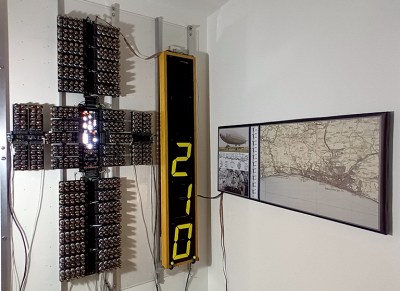 It’s difficult not to be impressed with [Mike]’s Vacuum Tube Computer, a behemoth of a machine composed of wall-mounted panels studded with 460 Russian 6N3P dual-triodes. These along with 1840 1N33 point-contact diodes form the physical implementation of a fairly conventional 8-bit computer. It uses a NOR gate architecture, and there are only 16 instructions. It comes with a flip-digit 7-segment display, using modules salvaged from redundant British railway platform clocks, and runs a simple airship simulator as its demonstration program. We wish we had the dedication to see a project like this one to its conclusion.
The Microtronic Phoenix, Old Firmware On A New Computer
When we think of a 1980s computer our minds are immediately drawn to the 8-bit home computers of the period, a desktop console case with a keyboard and a TV used as a monitor. But these were far from the only machines in town at the bottom end of the market, they were joined by a range of much more bare-metal educational designs.
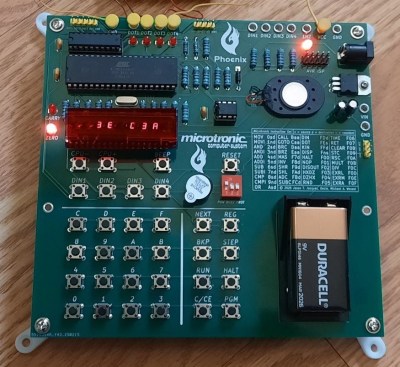 The Busch Microtronic was one of them, made in then-West Germany, it was unusual in having a 4-bit TMS1600 processor. A group of hackers has come together and recreated the device as an emulator using an Atmel microcontrolloer, with the big difference from other Microtronic emulators being that theirs runs the original firmware. It’s called the Microtronic Phoenix, and the difficult task of retrieving the mask-programmed firmware was achieved using a logic analyser.
Making a PCB with a microcontroller and associated peripherals may not be a task in itself worthy of attention, however the board itself is only the carrier here. The attention to detail and skill required to make it do its job so accurately by persuading a 1970s microcontroller to reveal its secrets is what makes this project special, and you can count us impressed by it.
Fast Factoring With A Number Sieve
We deal with all manner of computing devices here at Hackaday so it’s very rare indeed for a Hackaday writer to be presented with an entirely new one. Yet that’s the case with A Tiny Sieve, it’s a Lehmer number sieve, machine for very quickly factoring very large numbers. A mechanised version of modulo arithmetic, it’s a real-world implementation of sieve theory.
 The first Lehmer sieve used bicycle chains of varying lengths, while later versions progressed through gears, film strips, and mercury delay lines before eventually becoming fully electronic. They were only surpassed by computers in the mid-1990s, which provides some indication of how fast they could be.
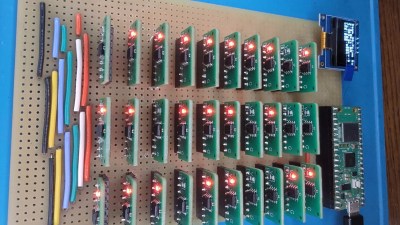
The Tiny Sieve implements a Lehmer sieve with 30 ATtiny412 microcontrollers replacing those bicycle chains or delay lines, with an RP2040 performing the task of controller. This reflects in a curious way the delay line sieve of the 1960s, where the controller task was performed by an IBM minicomputer passing a paper tape to the machine. Its results are comparable to those in the paper describing the bicycle chain sieve so perhaps it’s not the fastest, but it works.
This project is special on many levels, impressing the judges because of its unusual subjkect, and its explanation of this niche in mathematical and computing history. We may never need one, but now at least we’ve seen one and know how it works.
Honorable Mentions
The quality and breadth of the entries to this contest was a joy to read through, and it’s sad that we had only three prizes to award. We came up with a set of categories for the competition, and here follows just a small selection of the ones which caught our eye.
Retro-Modern
 This category was for old hardware doing something much newer. Can your 8-bit micro compete in 2026? Here was its time to shine!
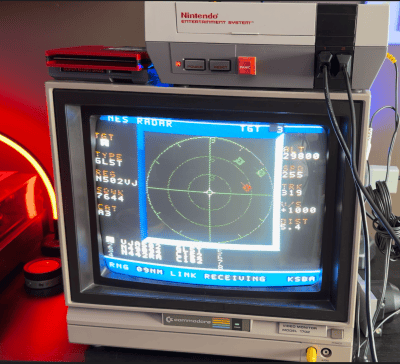
We’re used to air traffic displays, usually based around a single board computer or a microcontroller. What we’ve not seen before is NES Radar, the venerable game console doing the honours. It uses a small server on another computer squirting the data down a controller cable, a novel interface method.
Continuing the fresh take on an old idea, replacing a cassette storage or a floppy drive with modern high capacity alternatives has been a thing for years now. Meatloaf takes it a step further, using an ESP32 to allow your Commodore 64 to run code from any network resource it can see, up to and including an Internet URL.
The Commodore SID is a staple of the chiptune scene, and there have been many emulators and standalone SID players. USBSID-Pico does it with a pair of real SID chips, and a Pi Pico to control them.
Modern Retro
This category turns the previous one on its head. Let’s take the hardware we have, and make it act like the hardware we used to have.
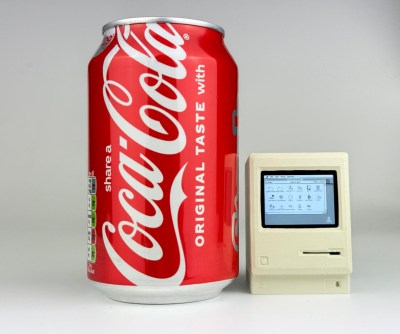 Microcontrollers are now powerful enough to run emulators for machines of the 16-bit era, so emulated hardware is starting to look almost powerful. Among these is the original Mac 128k on the RO2040, but Pico-mac-nano takes the basic idea to a new level. The emulated Mac sits in a miniature version of the famous all-in-one Mac case that’s perfect to the n’th degree. If only an accompanying keyboard and mouse could be made this small.
The Cheap Yellow Display has lowered the barrier to entry for projects with a touchscreen, and we’ve seen it in all manner of projects. A weather display on a CYD isn’t that special in itself, but Win95 Retro Weather Display caught our attention for its retro attention to detail. In a lovingly crafted mini CRT monitor case, it uses a Windows 95 display aesthetic to perfection. We could almost be in a diminutive version of the ’90s.
David Rumball made a single board computer back in the 1980s called the Microbox. Here in the 2020s he’s recreated it, but not in the way many other emulators do the job. In Microbox 2K2 he’s used an Xmos XU216 SoC, an unusual highly parallel multicore architecture, allowing him to devote an individual core to emulating each component of the system. We think this emulation technique deserves a lot more attention, and could deliver emulated versions of some of the more difficult or powerful retro platforms.
Old Iron
This category is for the retro hardware itself. Repairing it, upgrading it with contemporary parts, or getting it to do things which might have been done when it was new.
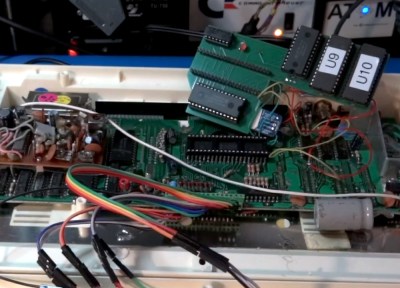 Old hardware can be fragile, especially so when someone tries to repair it. It’s easy to damage a PCB, and in the Lazarus Daughter Board for the Lazer (Vtech) Vz200 we see a practical way to recover from this. It’s a CPU daughter board that puts the device’s memory on a new PCB alongside the processor, allowing the damaged board to be ignored. This technoique could save other machines aplenty.
It’s a welcome sight to have several entries using obscure educational computers, of which the Philips MC6400 with its National Semiconductor INS8070 was one. With the aid of a resistor ladder DAC, we’re seening Oscillocope vector graphics on a machine from 1984.
Another educational computer of that era was the Kosmos CP1, which reatured a very unusual emulated decimal architecture. Here it is running Towers of Hanoi on an LED matrix.
Coding Like It’s 1999
The experience of writing software has changed immeasurably since the days when your computer booted into a BASIC interpreter. This category is for those who prefer to write software the old way.
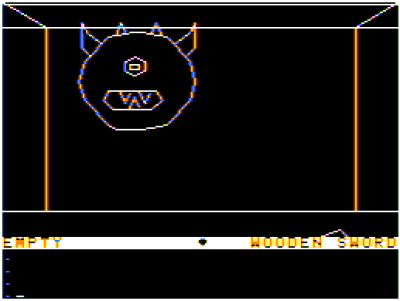 Getting DOOM running on a machine is now no real novelty, as we’ve seen it on all manner of unexpected devices. Getting it to run on a TRS-80 CoCo is impossible, but that doesn’t mean you can’t try to code something that looks a bit like it.
The daddy of all video games is Spacewar! written in 1962 for a DEC PDP-1. Later games passed the early DEC minicomputer by, but never fear. Here’s Lunar Lander for the (emulated) PDP-1.
AI is all the rage these days, and we’re told that to be a player you need a huge data centre stuffed with expensive NVIDIA GPUs. Not at all, it seems, for here’s A Transformer Trained in HyperCard.
We’d like to thank you all for participating i this contest, for submitting entries, or for reading about them here. Judging it has been fun, and we look forward to what you produce in our next contest. And special thanks again to DigiKey for sponsoring!