I got an email this morning from my kid’s school that included a clearly AI-generated poster. This didn’t upset me at first, as there are some totally reasonable uses for the technology. Was this one, though? Most school posters prior to this were made using generic templates and clip art, giving them a sort of boring sameness. The theory was that generative AI would allow people to unlock new creativity by overcoming a skills gap, yet, this poster looked like every other AI-generated poster. All that work, all that water, all that energy, to just wind up with a new kind of boring sameness.
When I was in college, I was part of the student union, which had two artists on staff to make signs, business cards, and posters. Those posters were inventive and unique. I can’t remember the names of most of my professors, but I can remember the poster for the Dave Attell comedy show. Expertise has its place, and you can track some of Ford’s many quality woes to a decision to get rid of it. The question is: how quickly can it get it back?
In Friday’s Morning Dump I mentioned that the board agreement made my Volkswagen allowed the company to avoid a nuclear option, though it wasn’t clear at the time how likely that was. It turns out, the nuclear option was the only other option given. What VW desperately needs, other than time and money, is a hybrid platform, and maybe an off-roader. Perhaps the new waterproof Horse engine could work?
While a lot of the good Japanese cars have already been raided by importers, the yen continues to appreciate to the dollar, so maybe it’s not a terrible time to buy a JDM car.
Ford Needed Engineers With ‘Scars On Their Backs’

As someone who covers the car industry, I’ve become a bit inured to car recall stories. I lived through Takata airbags, Toyota floormats, and GM ignitions. There is no automaker truly immune to recalls, though even I noticed how many Fords have been recalled these last few years.
While recalls stretch across model years, it’s not hard to notice that a lot of the problematic vehicles seem have been developed in a stretch from the late 2010s to early 2020s. Some of this is just timing, as recalls tend to lag by a couple of years as customers and regulators identify issues, though Ford has trended above its peers recently.
If one can pick a single point in history where this may have developed, I’d like to point you to this Reuters article from 2019, and a quote from an email sent by then-CEO Jim Hackett to employees:
“2018 was mediocre by any standard,” Hackett said in the email. “Yes, we made $7 billion last year. But think of it this way: this represents a 4.4 percent operating margin, about half what we believe is an appropriate margin. So we are aiming for much closer to $14 billion.”[…]Hackett, who has been on the job for 20 months, also said that it was “time to bury the year (2018) in a deep grave, grieve over what might have been and become super focused on meeting, and, in fact, exceeding this year’s plan.”
“They have the scars on their back,” Charles Poon, Ford’s vice president of vehicle hardware engineering, told Automotive News. “We realized that we needed some subject-matter experts in all of our key technology areas — individuals who are experts in their particular field.”[…]“There was a recognition as we were struggling through our quality performance several years ago that something needed to change,” Poon said. “We were not effectively solving problems, and we were not effectively preventing problems.”
That’s when Ford started promoting engineers and other specialists from within, and looking outside to other automakers and suppliers. It informally refers to the group as “graybeards” for their expertise.
The rest of the article goes onto note that, while AI is useful when dealing with a large amount of data, the data it has is key and that most of the valuable collaboration is between humans.
Back in 2023, Ford said it was going to make real changes to fix its quality problems, and now that it’s 2026 there have been some signs of improvement in JD Power’s Initial Quality Survey, which is something. It’ll still be a couple of years before we really know if the graybeards truly fixed the problem.
[Ed Note: At Chrysler, there was a similar problem. Not only had the company gone through enough bankruptcies/bailouts that many of the qualified old-timers took the money and ran, but the company did not write down nearly enough best practices, so many of those experts took their knowledge with them. What’s more, there was a culture of “do two years in this department, then gain new skills in the next role so you can broaden your skillset and make more money.” The result was a lack of true subject matter experts who have seen enough disaster to help you avoid it in the future. So, this is very much a real thing; bless the old-timers. -DT].
VW Really Did Offer Up The Nuclear Option

The headline of last Friday’s TMD mentioned that Volkswagen avoided the “nuclear option” in securing a deal with its board. Here’s how I described the nuclear option:
It’s been hinted that Blume and chair Hans Dieter Pötsch could move to skip the board altogether and go for the nuclear option: hold a general shareholder vote if he didn’t get his way. This would have meant that, in theory, Blume could ignore the competing interests on the board (specifically, the workers and the state) and push forward a plan that likely included breaking off parts of the business and closing plants without any kind of veto. No one knows what would happen if it was attempted, but assume large strikes and massive political upheaval.
Welp, new reporting from Reuters lays out that the threat of a nuclear option is what got the deal done:
This threat to use what the sources called a “nuclear option” paved the way for a compromise on Sept. 2, with the growing sense that the outcome of failing to reach a deal could be even worse than the mooted job cuts, with legal battles dragging on for years, hurting VW even more.
“The damage would have been unimaginable if there hadn’t been a solution,” one of the four people said.
That, along with a first meeting of top stakeholders on Sept. 1 in Hanover, set the basis for the next day’s crucial meeting. Blume, Lies and Poetsch, VW’s former finance chief and the CEO of its largest shareholder Porsche SE, began to draw up the contours of an agreement, knowing they had to move fast.
That’s one catastrophe avoided, at least. Now Volkswagen has to do the hard work of making cars people want, cutting jobs without losing capability, building a truck, and bringing a bunch of trucks to the US market.
Horse Now Has A Waterproof Hybrid Motor For Off-Road Use
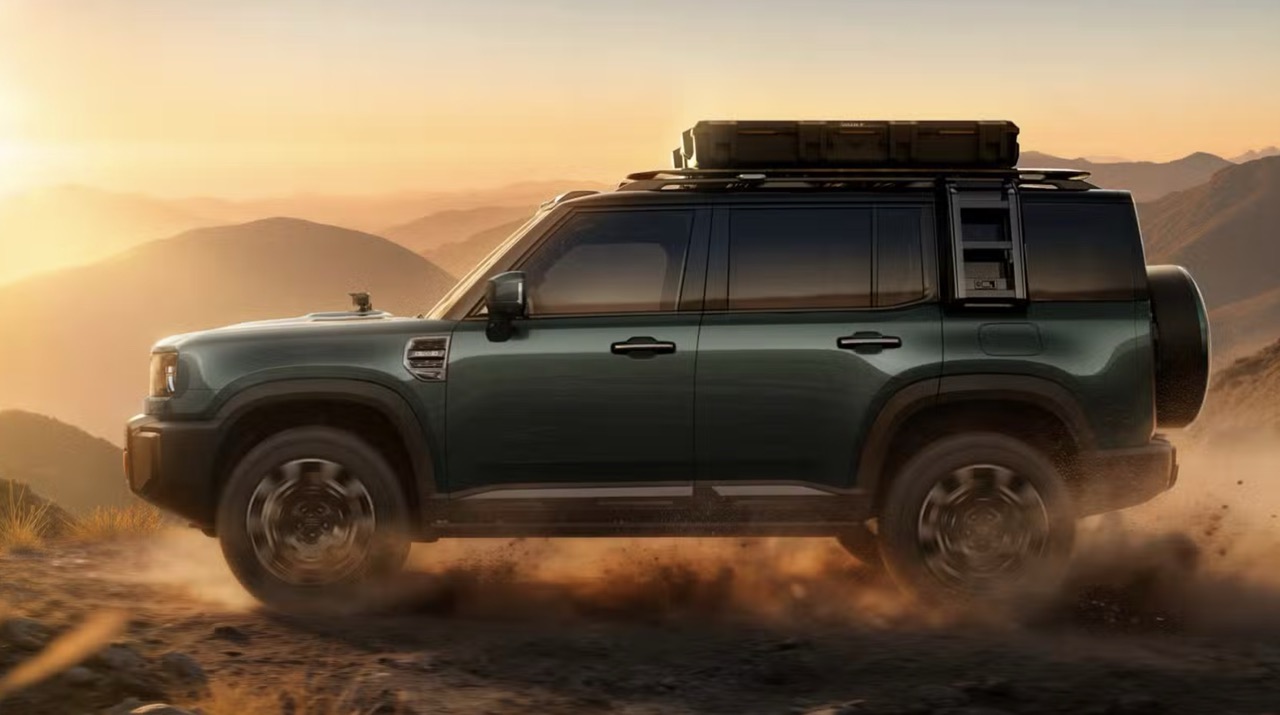
While Chinese automakers have excelled in building electric vehicles, one of the more interesting companies has been Horse Powertrains, which is a London-based JV between Renault and Geely. This is the company behind the turn-your-EV-into-a-hybrid solution.
The company’s latest project? A waterproof hybrid motor:
Designed for extreme off-road vehicles and deep-water wading, the HORSE B20 brings all-terrain capabilities to hybrid vehicles, including applications for SUVs and pick-up trucks. Fully compliant with IPX8 waterproofing standards, the HORSE B20 can operate up to depths of 1.1 meters. It is also capable of maintaining continuous and stable power output under extreme off-road high-load conditions including 100% grade climbing.
Weighing just 130kg, the HORSE B20 is a four-cylinder, 2-liter inline gasoline engine designed for HEV, PHEV, and REEV applications. Featuring a turbocharger and direct injection technology, it can output up to 140-185kW of power and 300-380Nm of torque. The engine is powered by an advanced Miller cycle, enabling a brake thermal efficiency of 48.4%.
Geely is now testing this new engine in its Geely Galaxy Cruiser 700.
The ‘Yen Carry Trade’ Unwinding Is Maybe Good For Enthusiasts

I’ve talked about the ‘yen carry trade‘ before, but the gist of it is that super lower interest rates in Japan have meant that traders can borrow money cheaply in yen, convert it to dollars for investment, then do the whole thing backwards in order to realize profits without paying a large interest penalty for it. With Japan facing inflation, the expectation is that Japan is going to raise interest rates, which reduces the appeal of the trade.
Per Nikkei Asia:
As of 11:30 a.m. in Tokyo, the yen was up 1.7% at around 152.88 per dollar, the highest level since mid-February. The currency has risen close to 3 yen from its level at 5 p.m. the previous day.
Analysts point to the potential unwinding of yen carry trades, which involve borrowing yen at low interest rates and investing the proceeds in higher-yielding assets like the dollar, as a reason for the surge.
The popularity of these trades helped keep the yen weak for years. But growing speculation that the BOJ could raise interest rates more quickly has reduced the strategy’s appeal.
It’s clear to me that now is the time to buy a Cappuccino.
What I’m Listening To While Writing TMD
Fall is on the doorstep, and Tom Waits is on the radio, raspily crooning “Downtown Train.”
The Big Question
Who is the wisest person you’ve ever worked with?
Top photo: Ford
The post Why Ford Needed ‘Graybeards’ To Fix Problems AI Couldn’t Even See appeared first on The Autopian.