I have to take issue with the tactics that some of auto giants use to make products for different brands: the dreaded concept of “badge engineering.” That’s the catch-all term to describe slightly modifying the exteriors of identical cars to make them usable by several divisions under the same umbrella.
A few posts back, our Mercedes Streeter reported on this kind of half-assed technique and how it’s now used with campers. Those are made by small, low-tech industries with limited resources, so I can let that slide a bit, but with the Big Three, I’m not as forgiving. In some cases, they did absolutely nothing but change the logos and graphics to appease competing brands; a bit of a “you get a car, you get a car” situation. Worse than that, they’ve sometimes provided a product to a brand that really had little to no business in selling the type of car. Or, in today’s case, a “car” that was also a “truck”: the rare-as-hen’s-teeth GMC Sprint.
Welcome to Badge Bodge, a new limited series where we look at badge-engineered vehicles so wrong-headed that you have to wonder why nobody stood up and said, “does this brand really need this kind of car on the lot?” They’re so rare that you can’t necessarily call them “forgotten”; you probably never knew they existed in the first place. Now, for better or worse, you will!
So We Killed Pontiac And The Awesome G8 But Kept This Brand?
Toddlers will often ask “but why?” over and over again until well after you think you’ve answered their questions multiple times; you finally just give up and say that you don’t know. I’m pretty sure I was that kid, and one of my questions for grownups was “Why does GMC exist?” Now, decades on, I could still ask that same question since I feel like I’ve never gotten a valid answer.

The corporate line is that GMCs are “professional grade trucks” or “just below Cadillac luxury vehicles,” like a kind of Kirkland Land Rover. Even as an elementary school-age child, it was painfully obvious that these GMCs were just Chevy trucks with very slightly different bodywork (if at all) and possibly some options that bowtie buyers were locked out of. This way, GMC could charge a slight premium for being “upscale.” When you realize that this scheme lines the pockets of GM executives even more than already-money-making Chevy trucks, you can understand how GMC is one of The General’s most profitable brands. Obviously, as a consumer, this doesn’t strike me as a good, acceptable answer. Seriously, they’re all just freaking Chevys:

Admittedly GMC is a historic brand, going all the way back to 1911, but less than a decade later in the 1920s they started to share components with Chevrolet trucks. Other than some differences in engines and trim, for the most part the products slowly became virtual clones of each other. The marketing of GMC was initially aimed at tradesmen, but in more recent years the push shifted to those who want higher-end products just below Cadillac (often put in tandem with Pontiac or Buick dealers to give them trucks to sell). Still, “higher end” in this case tends to mean certain equipment that could easily be offered on a nearly identical Chevrolet. Other than a Typhoon-style special edition, I generally don’t see why anyone would darken the door of a GMC showroom unless your brother-in-law worked there and could snag you a deal.
It’s especially confusing when GMC inexplicably decided to market a consumer product that wasn’t really a truck at all.
Dos El Caminos, Por Favor
Don’t get me wrong: I have the utmost respect for those who designed, developed, and built cars half a century ago without the benefit of things like CNC routers, 3D printers, or even email and cellphones. Just to make one car model with the Stone Age tech they had seems unfathomable, so badge engineering was a logical path to satisfy different brands. There’s also the cost involved in making significant body changes for different brands. It’s understandable that during their lean years of the late seventies and early eighties, Chrysler Corporation sold cars like the Omni/Horizon or Colt with essentially no differences beyond the brand logo and grille detail. Dodge dealers wanted some of the same products as Chrysler/Plymouth stores, and Iacocca had government-backed loans to pay back.

Still, some examples of badge engineering from the past make me wonder why they even bothered.
If you wanted a GM half car-half pickup in 1971, you would instantly think “Chevy El Camino.” The name had been around for a dozen years by then, initially based on a full-sized Chevy wagon when introduced for 1959 and abruptly discontinued after 1960.

For 1964, the El Camino shifted to the mid-sized platform, based on a Chevelle wagon platform.
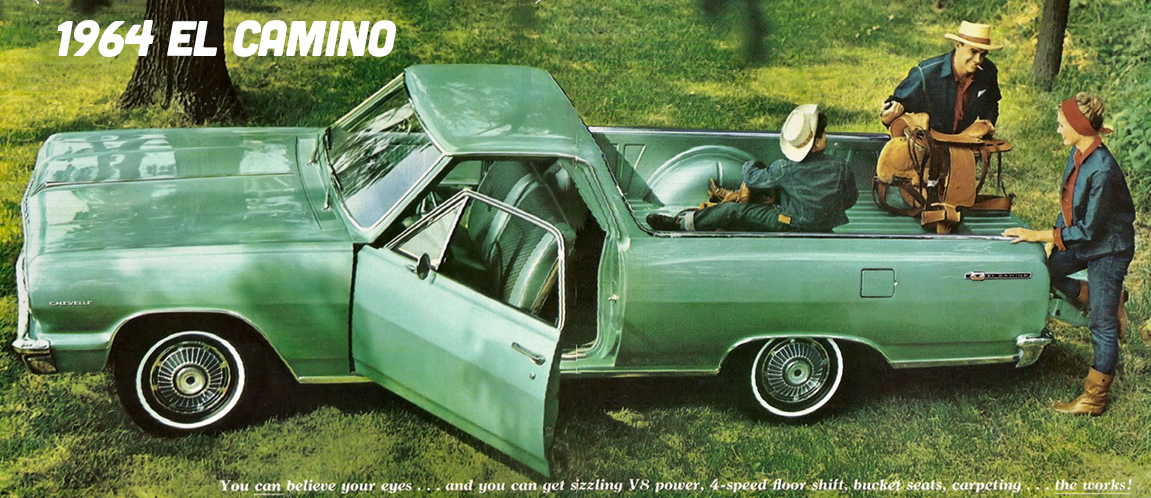
Probably my favorite intermediate-sized GM products ever were the slick 1968-1972 cars, and the El Camino based on this series are some of the fastest as well as being the best-looking in SS form.
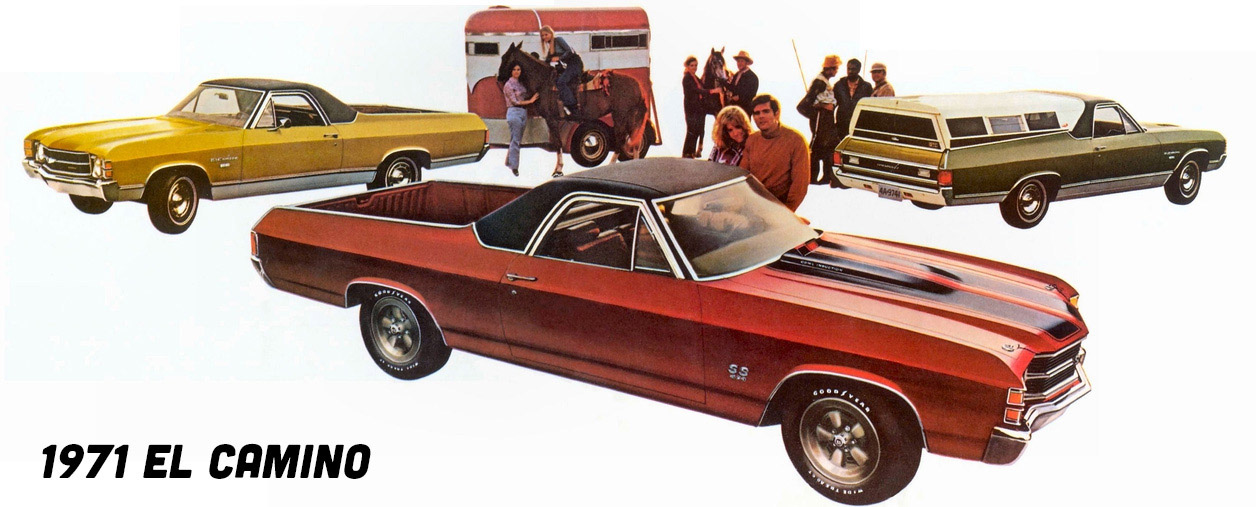
For whatever reason, midway through the lifespan of this particular El Camino in 1971, GMC inexplicably decided that they wanted something like this to sell as well. Chevy’s ute was never really a mega-seller, and the whole idea of a vehicle that was fundamentally more car than truck being sold at a division devoted to commercial and heavy-duty users made as much sense as Arby’s selling tacos (hey, maybe roast beef tacos? Nah). Regardless, the powers that be figured that providing a GMC coupe-ute would be the least they could do for the profitable division. And by “least they could do”, I really mean it.
Wasn’t The Sprint A Three-Cylinder Chevy?
Make no mistake: dubbed the GMC Sprint, the coupe-utility provided to GM’s truck division was literally nothing more than an El Camino with different badges. Nothing else. Zilch. Zero.

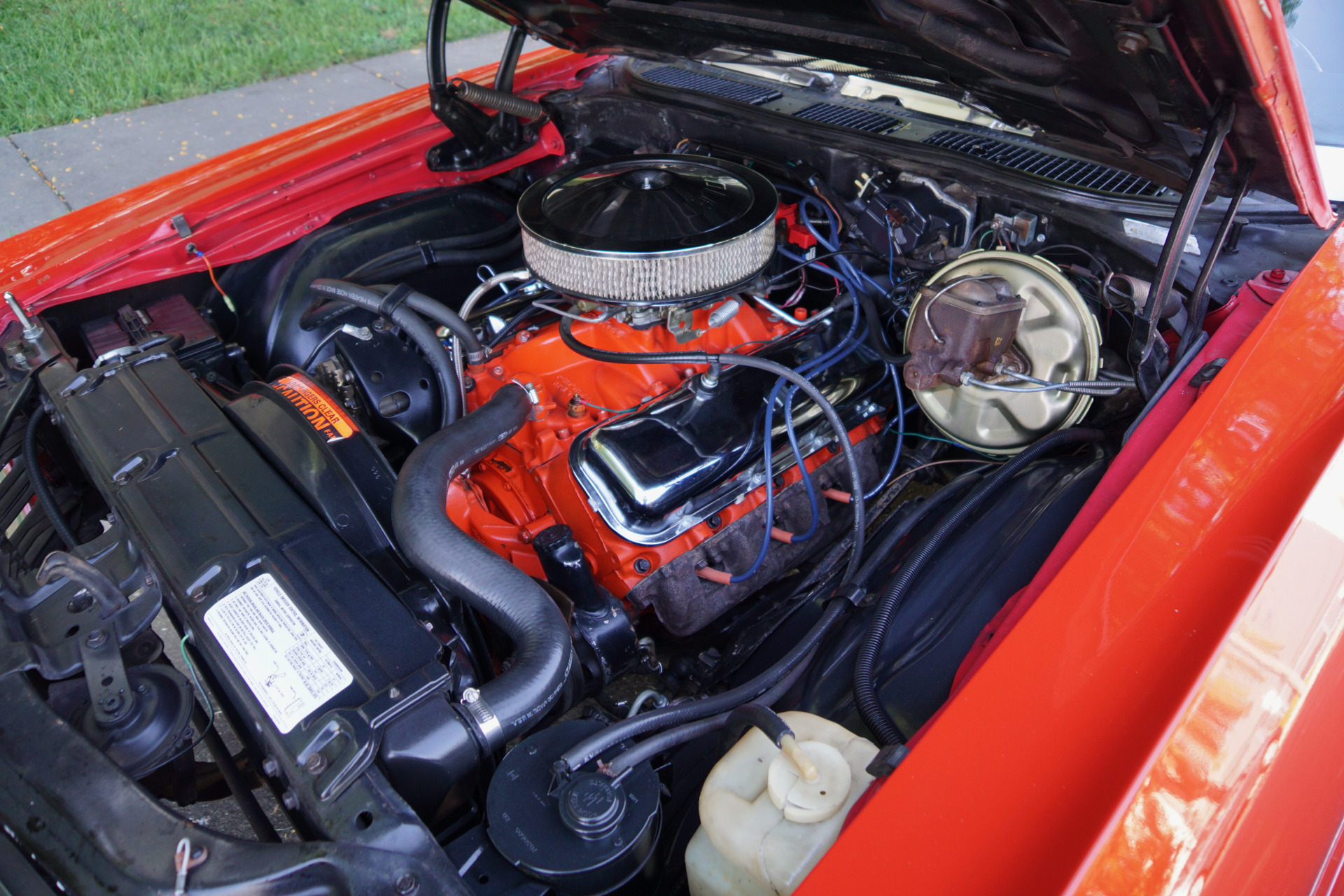
Even their tagline about “truck people” in the image above seems to prove how out of place this thing was. That Sprint on the brochure cover looks loaded up enough, but if you think that since GMC was sort of an upscale-and-tough brand they wouldn’t sell wimpy, stripped-out versions of this Sprint, think again. Here’s a rather bare-bones 1972 model with the 250 cu. in. straight six below:
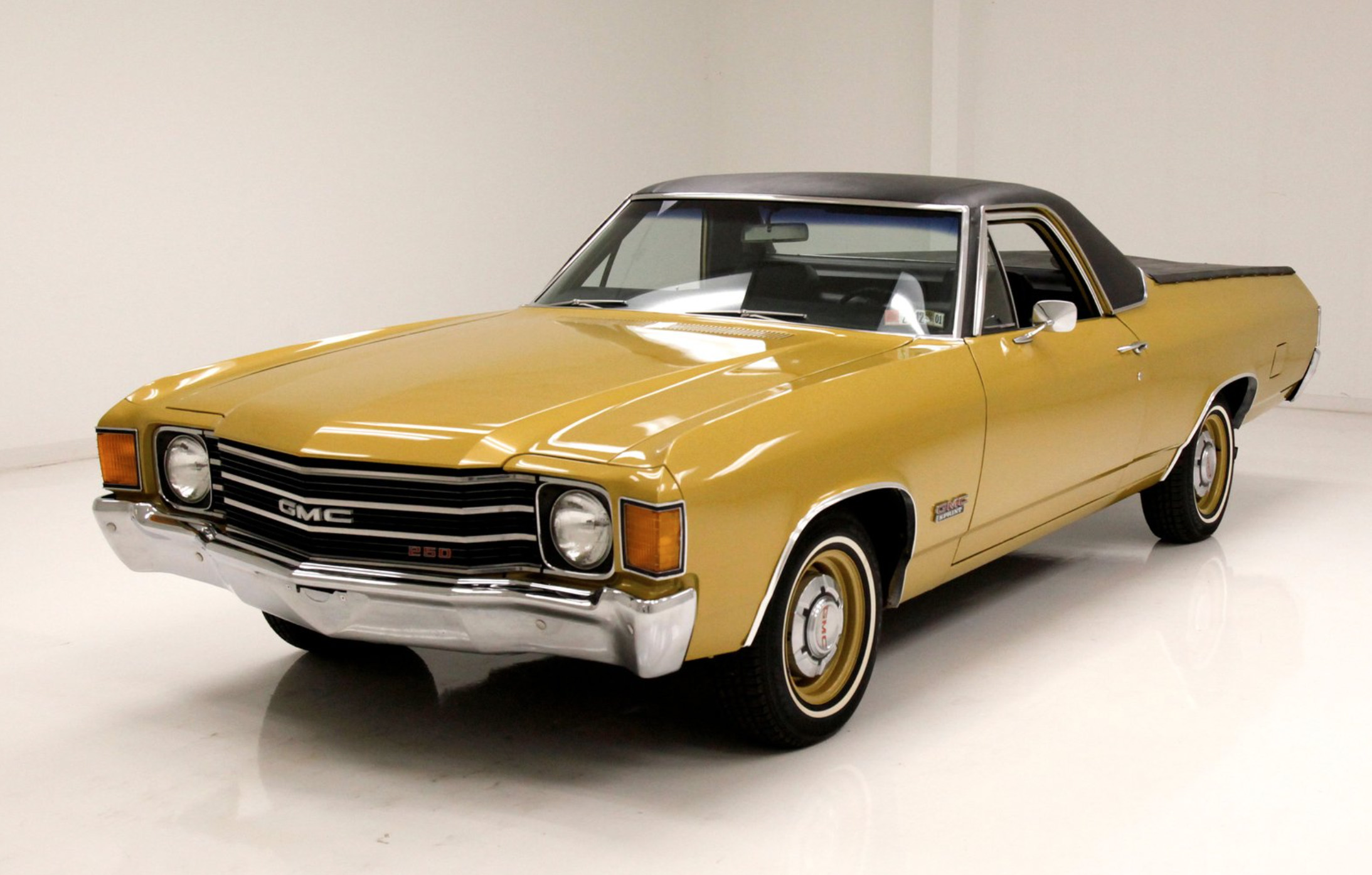
Thankfully, most Sprints were optioned out with V8s like a 350 or, in rare cases, bigger motors like a 454. However, GMC did go ahead and offer a version of the Sprint that was the equivalent of the El Camino SS: the Sprint SP.

The SP (Special Performance) had essentially all of the upgrades of the Chevy SS versions like the special rims and upgraded mechanicals, but the reason why anyone would want and SP 454 over a SS 454 is beyond me. Either way, though, you got 360 to 365 horsepower (gross) for 1971, dropping to 270 in 1972 when the industry changed to net horsepower ratings in an effort to be more realistic and to cover up the sad, steady decline of emission-strangled output in these twilight muscle car years.

Actually, it turned out to be beyond a lot of people’s comprehension as well. Compared to 47,606 El Caminos sold in 1971, GMC could only move around 5,500 Sprints that year. Only 249 of them were Sprint SPs, and of those, a mere 25 had the 454. You want really, really rare? There are no reliable figures I’ve found, but if you bought a SP 454S with a manual four-speed it’s estimated that you would have been one of only about six people that did so. Today, if you have one of those at a car show, I’ll accept the fact that you had a sign made for it without laughing – you’ve earned it.
For 1972, GMC was able to move out 6,473 Sprints against 51,147 of Chevy’s version. Of those, a much larger run of 749 Sprint SPs were made, about 114 of which were 454s. I couldn’t find manual transmission numbers but assume it was Bugatti-level low.
How could you blame buyers? Out in the wild, there was nothing to differentiate it from the much-more-popular Chevy original. What’s odd is that during the 1968 to 1972 time period the pickup trucks that GMC sold actually had significantly different noses than their Chevy counterparts. Notice that the GMC sports four-shot headlights, while the bow tie one gets a mere two:

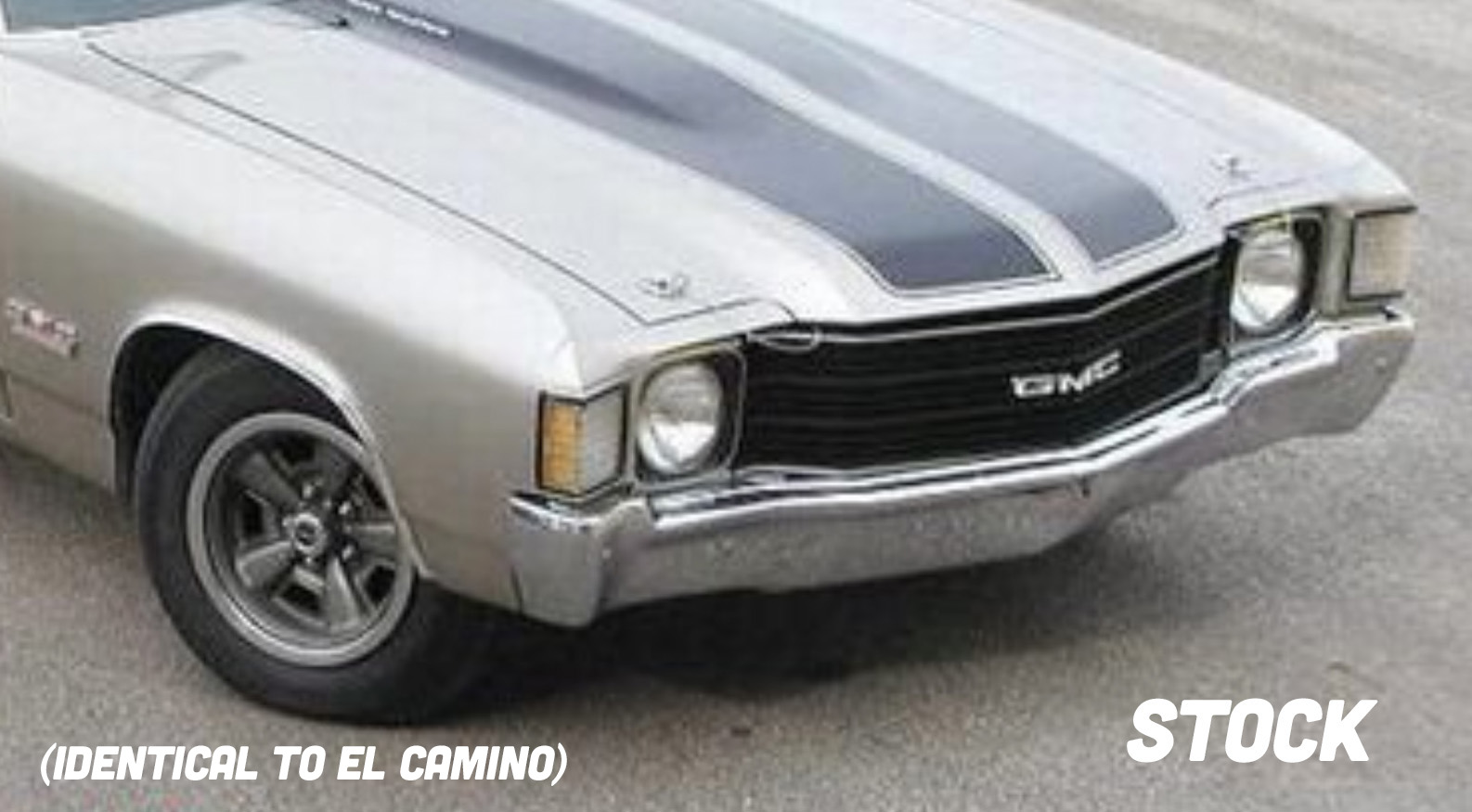
If GM did that on trucks, why couldn’t they have spent a few pennies to make the GMC ute a little different from the Chevy? Let’s look at the Sprint front end, which, besides the logo in the center, is absolutely identical to the El Camino of the same year:
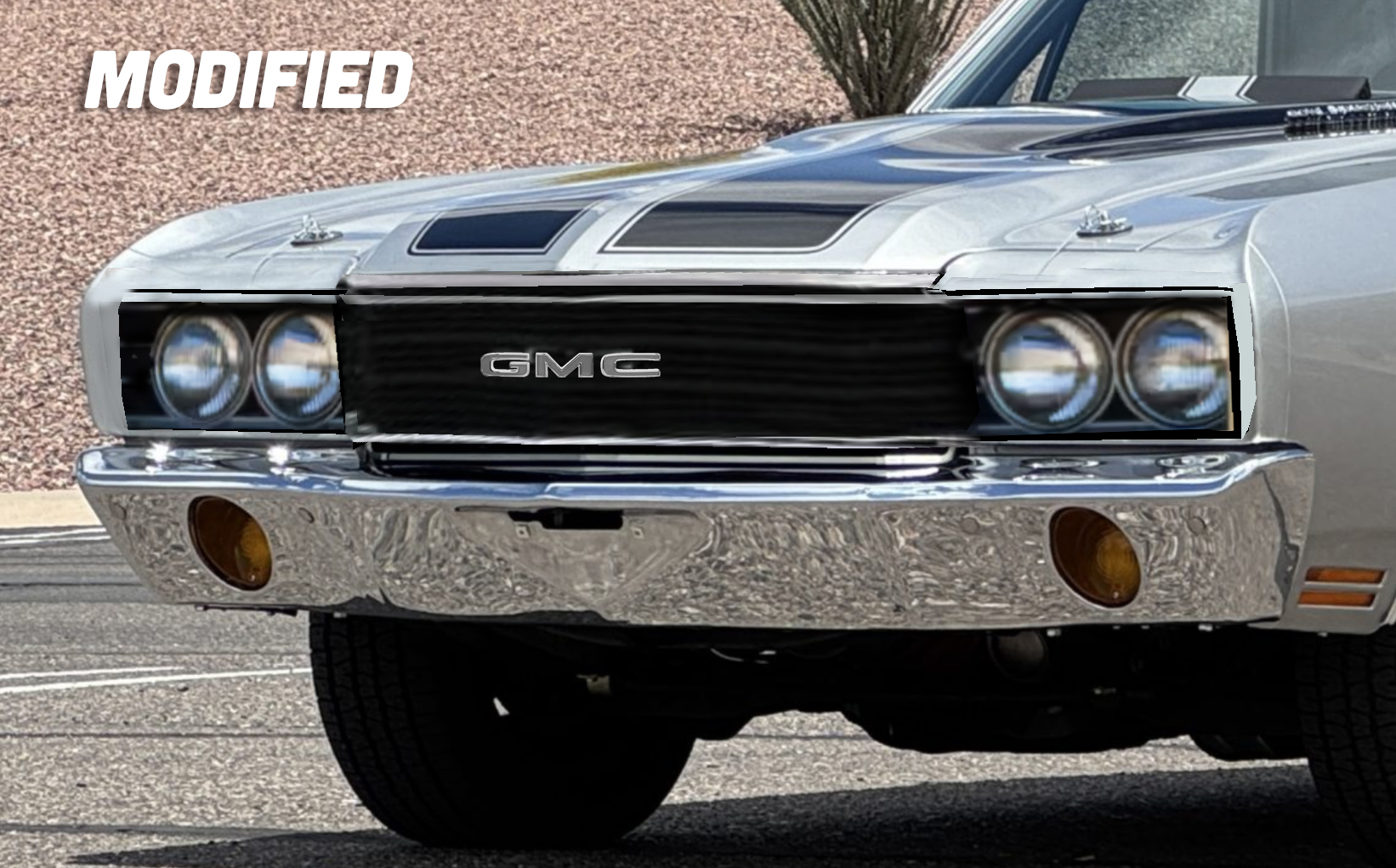
Like, they could have taken the bumper off of the now-discontinued 1970 Malibu (with signals in it) and made a new grille with four headlights. It ends up looking sort of Buick-like, which actually is a good thing considering that’s a more premium brand (I’ve reported before how Pontiac tried three times to make their own El Camino). Here’s a rough Photoshop of it:
In back, for next to nothing, they could have made a few changes. Here’s the back of a GMC Sprint, identical to an El Camino SS except for badging:

Reflectors could have turned to back-up lights and the El Camino’s reversing lamp holes in the tailgate covered with a full-width trim panel featuring taillight-extending reflectors (they would be surface-deep and not light up). Here’s a Photoshop:

That might not be the final answer, but you get the idea; subtle differences to make the GMC more “upscale” on the outside, and maybe even the interior trim could get some special features as well. As it was, the interior was essentially all stock Malibu/El Camino.

Oddly enough, after two years of such horrendous sales, GMC didn’t give up.
Really, You Don’t Have To Keep Doing This
After the 1972 model year, GMC inexplicably kept selling the Sprint on the new 1973 “Colonnade” body style; it was still just unchanged from the El Camino besides badges and stickers.
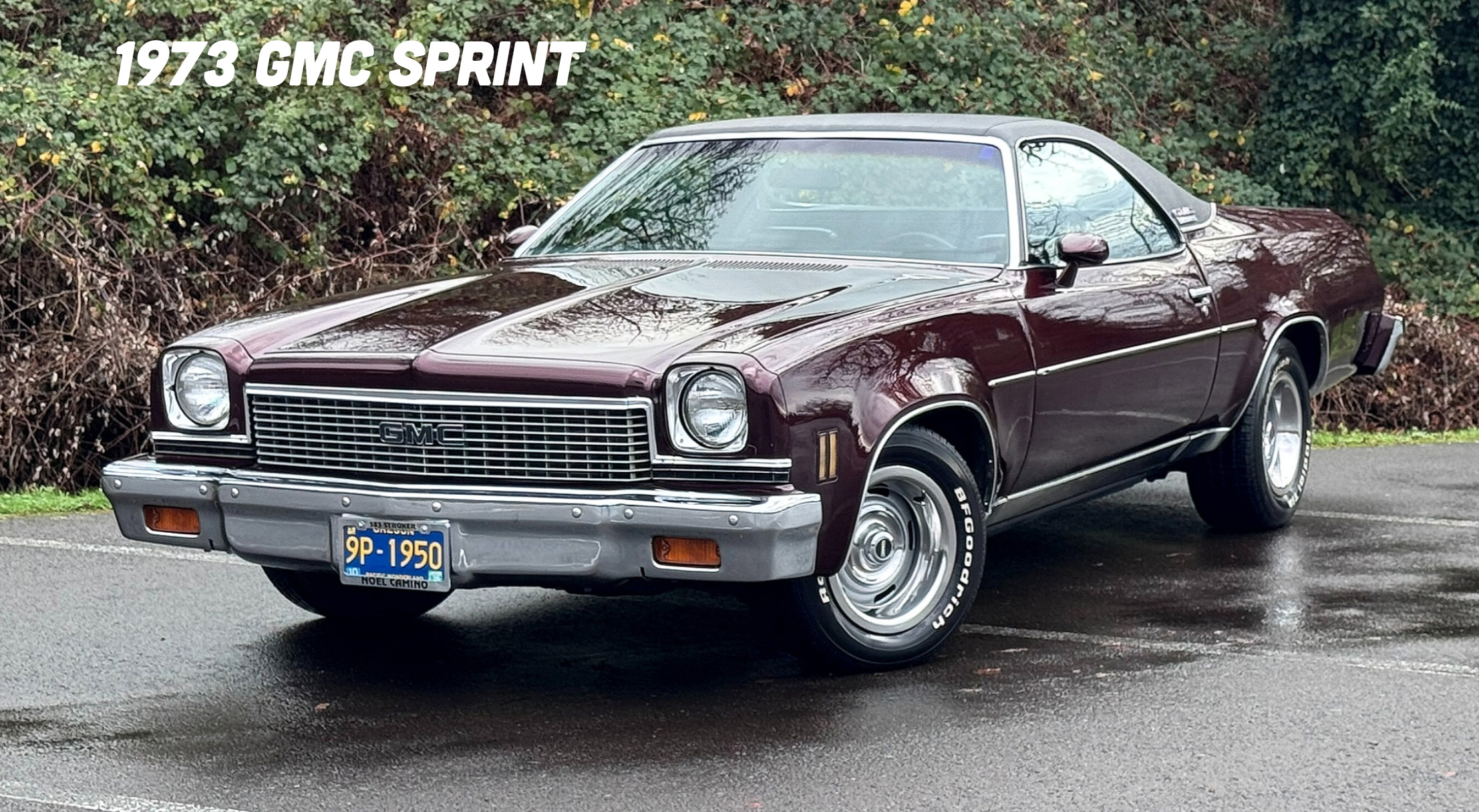
When the Malibu sprouted a Mercedes-style grille at the end of its Colonnade run, the Sprint got it as well; a pretty absurd addition to what was supposed to be a GMC “truck” product. You can see on the 1977 model below that the SP edition was continued, but the now-anemic 454 engine was discontinued after 1975; leaving only a 44-barrel350 with a pathetic 175 horsepower by 1977.

Reportedly in the last year of production, the Sprint sold a mere 6000 units against 35,000 Chevrolet El Caminos; I’m surprised they pushed out that many.
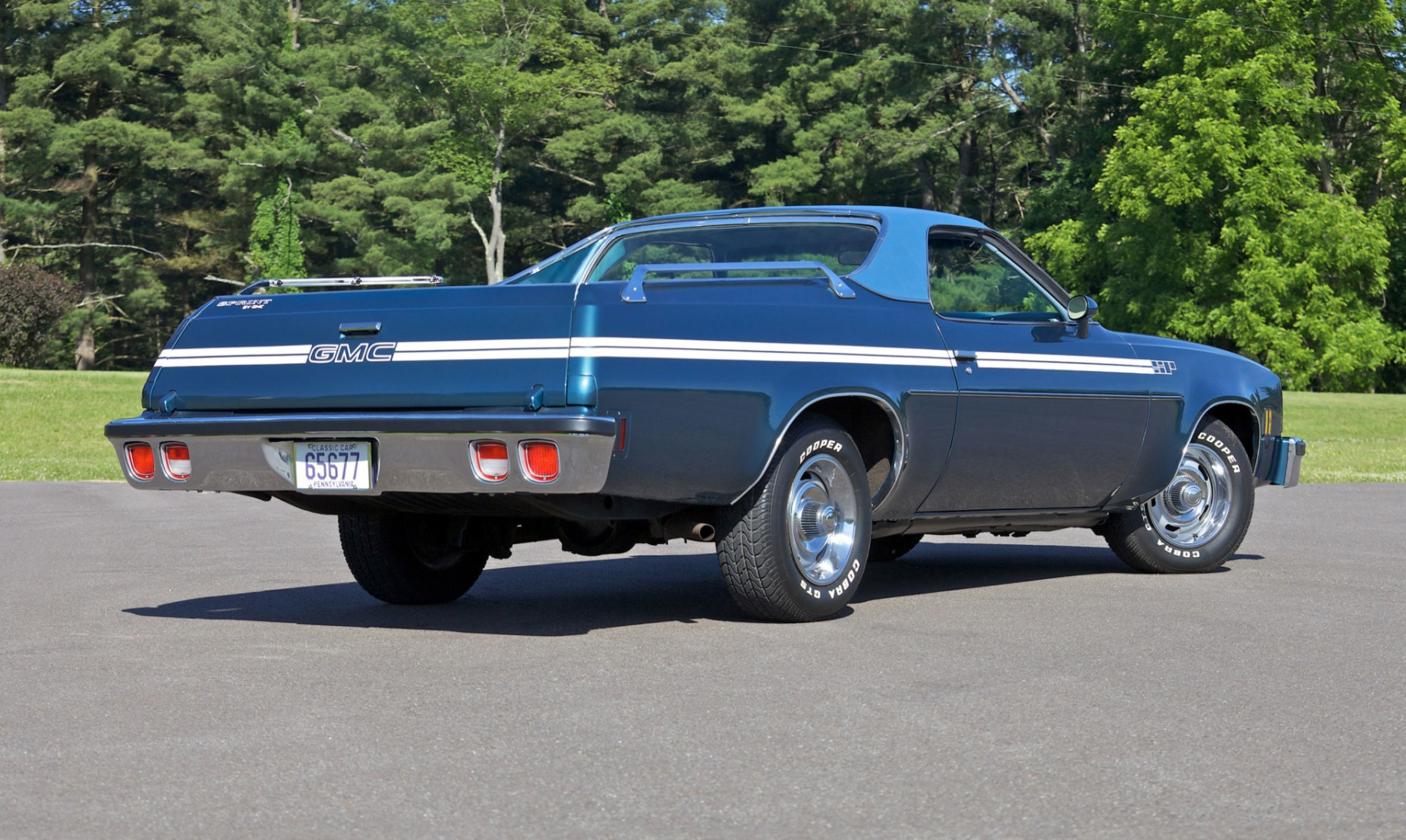
At least the “SP” typography is pretty damn cool looking:

GMC continued to sell barely-changed El Caminos after the introduction of the downsized 1978 model. The name was now changed from Sprint to Caballero, and it featured the same total lack of changes from the Chevy; sales were again as minuscule as always.

This unicorn shown below actually has the 5.7-liter diesel engine under the hood; the total number of these built with that motor has to be small enough to barely fill the parking lot of a diesel repair shop (which is where they all lived, sadly). There’s more proof, if you needed it, that “rare” doesn’t always mean “desirable.”
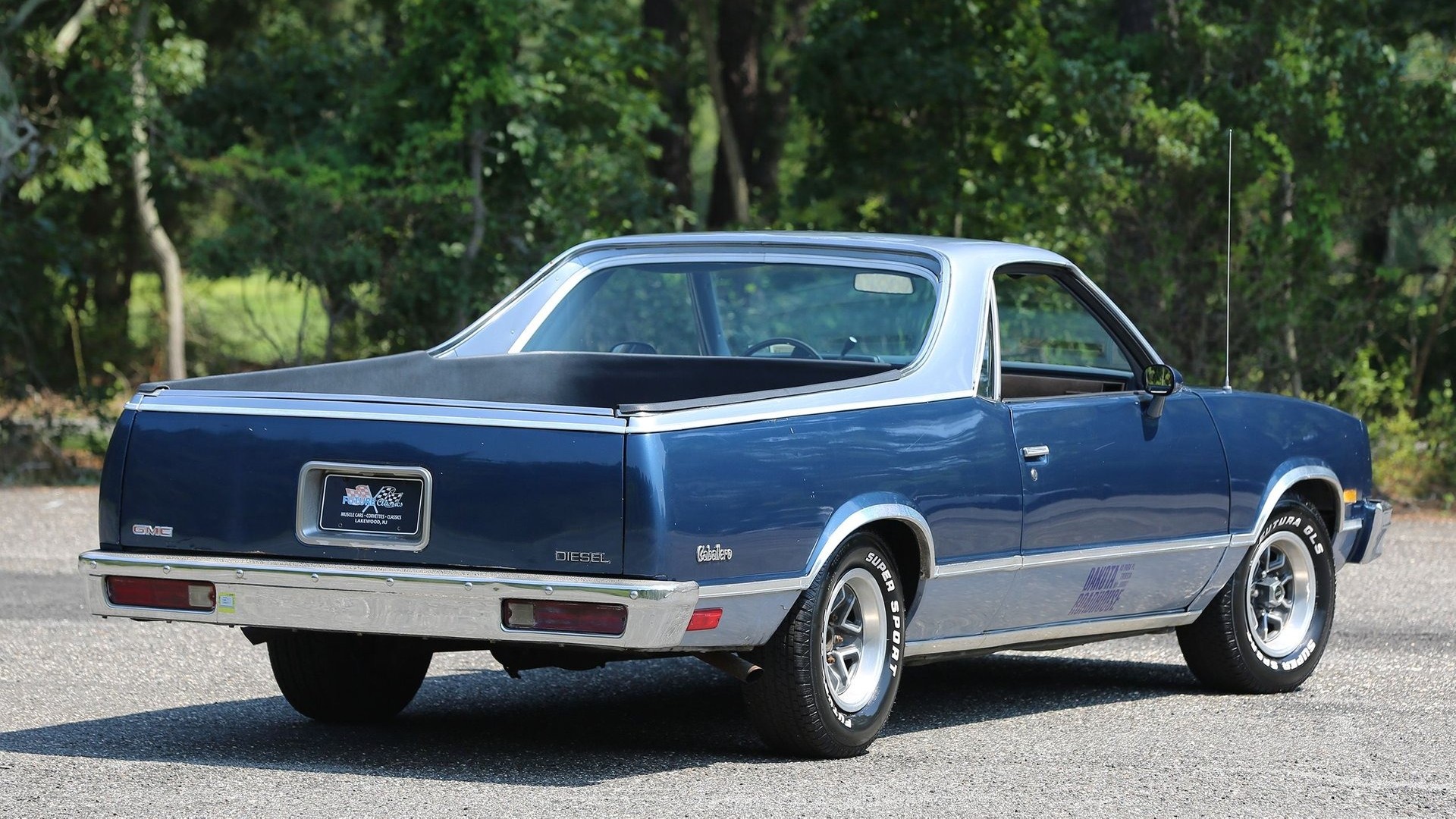
GMC kept selling their El Camino clone all the way up until the end of both in 1987 at quantities that probably made Fiero sales look like Cavalier numbers by comparison.
At Least They Didn’t Sell A Rebadged Corvette, Right?
Was selling El Camino clones a mistake? Ultimately, adding subtle styling modifications to differentiate the competing utes might not have done anything to help the fortunes of either one, but we’ll never know. Still, as with all badge bodges, would it have killed them to just change at least something out?
As it is, the GMC Sprint continues to make little sense to me; so much so that I feel the need to look for one and buy it right now.
Top graphic image: Autohunter (car for sale)
The post GMC’s Version Of The Chevy El Camino Was One Of The Laziest Rebrands Of All Rebrands appeared first on The Autopian.