I do a lot of kvetching about the sad lack of color to be found in the automotive world, and I think I’m right to kvetch, as we are in the grips of a severe chromatic crisis, where actual, genuine colors have been muscled out of our global carscape by the pervasive and insidious specter of achromatic colors. You know what I mean, the brutal grayscale horde, white, black, and a never-ending gradient of gray.
Anyone who looks out a window at any random road or parking lot knows what I’m talking about here; the vast majority of cars out there are some shade of gray. Sure, automakers try to mask this by giving the non-colors evocative names like Slate and Dusklight and Graphite and Ennui and Abandonment, but the result is a world further denuded of color.
This is a well established trend, not just in the automotive world, but among almost all human-made things. For whatever reasons, we seem to be sucking the color out of everything, and there’s even been studies showing this to be true. Also, it sucks.

That’s the global color chart from BASF’s 2023 Color Report, and you can see how dominant the grayscale goons are. It’s 81% achromatic! Ugh. How is it in just America?

Oh it’s a little better in America. 80% achromatic. Again, ugh. Has it gotten any better recently? Here’s the 2025 global report:
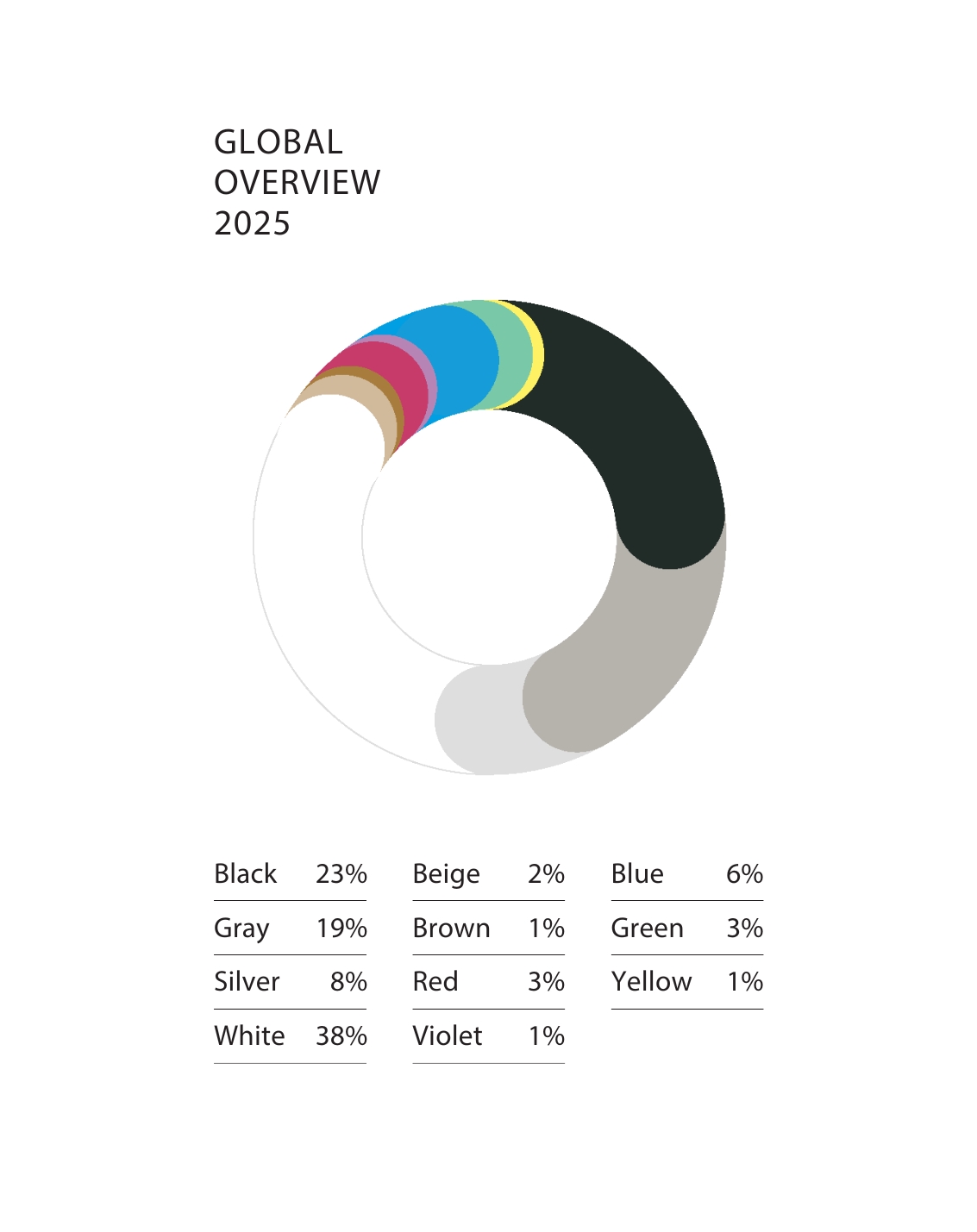
Oh crap, it’s worse. 88% grayscale. And that’s not even counting beige. Blue is the top color at 6%, then red and green at 3% – green making a sort of surprise increase here – and everything else is barely hanging on at 1%.
My headline was hopeful, though! And here I am being all gray and gloomy! But I am hopeful, and I’ll explain why: the past two press cars I’ve received have both been blessed with actual, real colors! Honestly, it’s been far too long.
The first was a Volkswagen Tiguan R-Line, which arrived in a deceptively subtle shade of green:
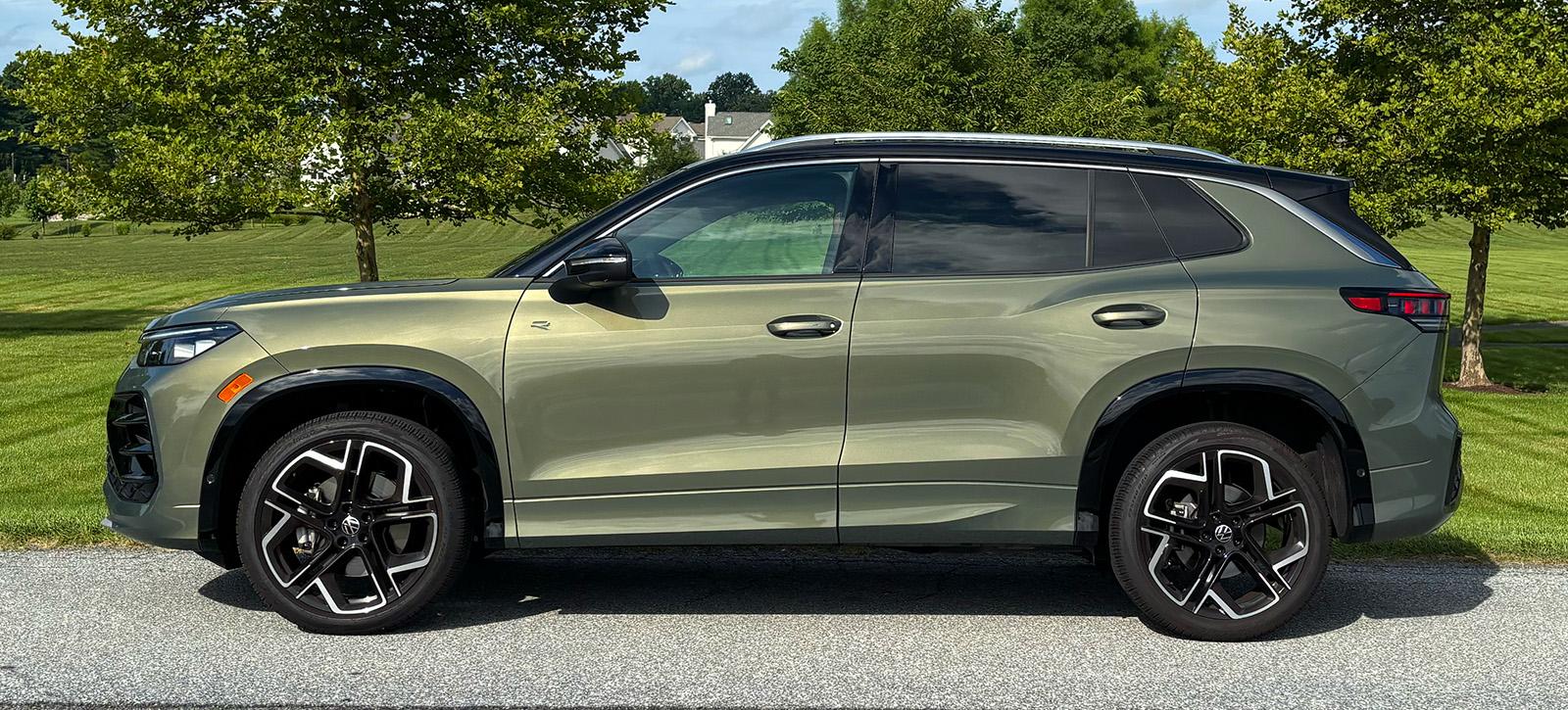
In certain lights, it had a golden cast to it as well, almost iridescent in a way I was not able to fully catch on film. Or pixels. Whatever. I’ll just say it’s better in person, and the color has some real depth and complexity.
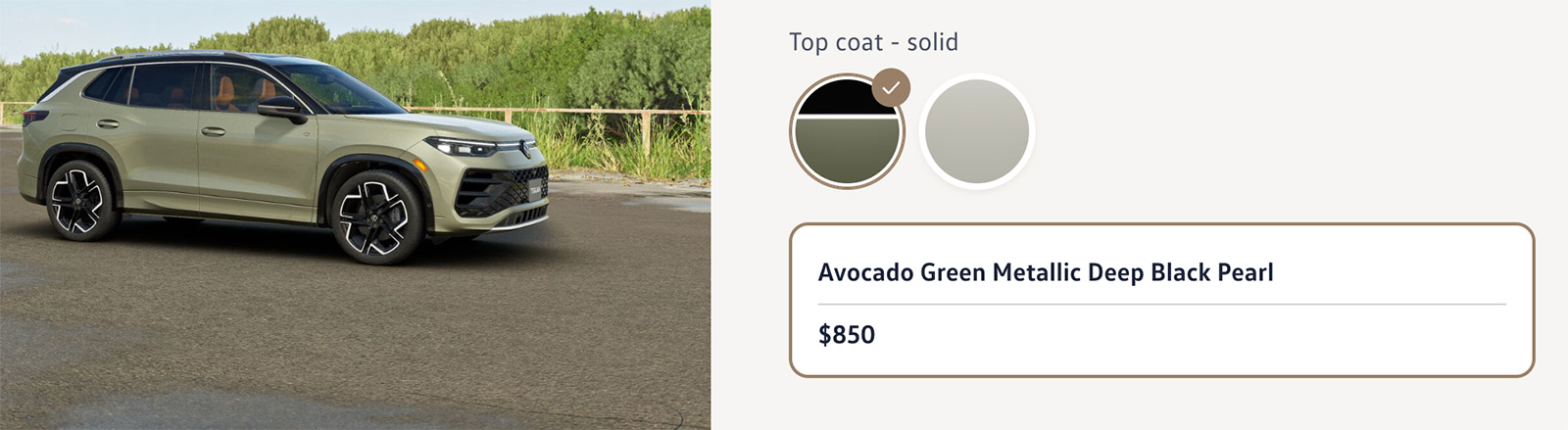
Volkswagen calls it “Avocado Green Metallic” after that stuff you can put on toast that will eventually prevent you from being able to buy a house, or something like that. It’s definitely a real color, but it’s also subtle enough that it could be a good way to lure those candy-asses too afraid of real colors to come over to the side of light.
I liked it a lot, and I have to donate props to VW for offering an actual, if perhaps subtle, green.
But then the real whammy rolled up to my house:
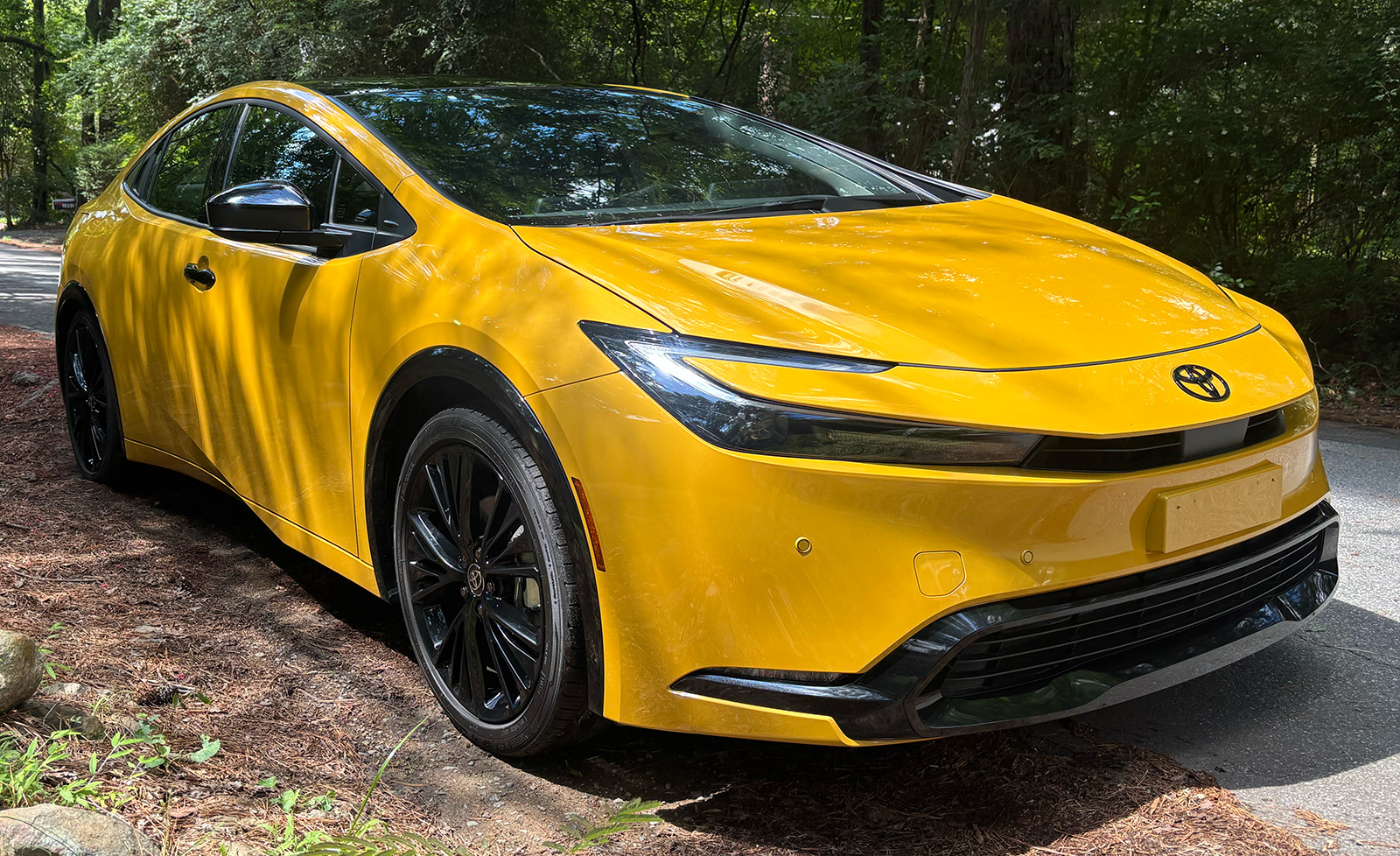
Hell yeah, Toyota! Yellow has been my favorite car color for decades – over the years, I’ve owned, let’s see, five yellow cars, and still have two. And this Prius is clad in a wonderfully, unashamed yellow! It’s close to School Bus yellow, but not quite. It’s less orange, and a little deeper. Toyota calls it Karashi:
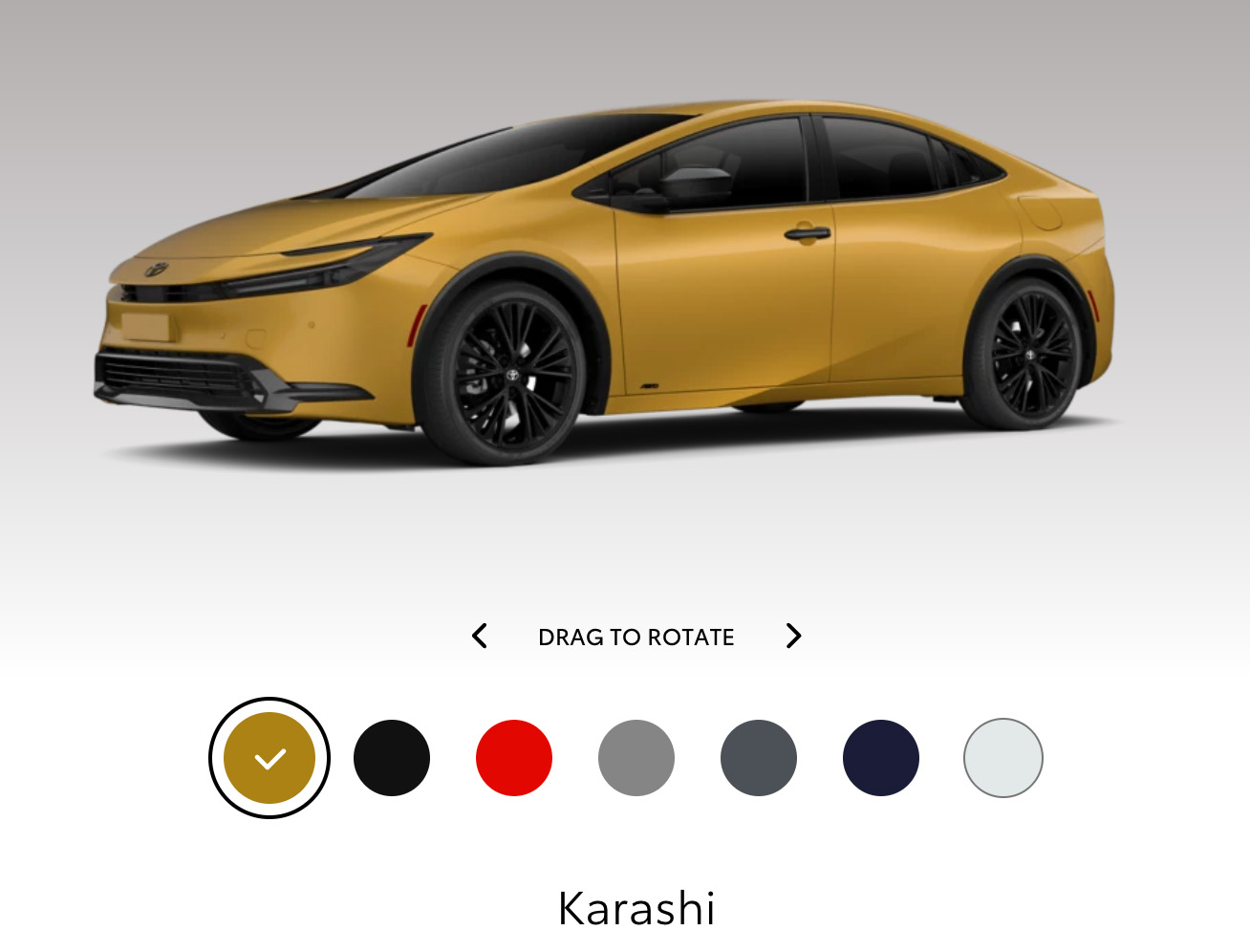
For those of you who don’t know, like me ten minutes ago, Karashi is a kind of Japanese Mustard:

Here’s how our pals at Kikkoman describe it:
Karashi / Japanese mustard (辛子 in Japanese) is a condiment made by adding powdered Japanese mustard seeds into water or kneaded into paste form in warm or cold water. Karashi is primarily sold in tubes in Japan. The distinctive spice, felt at the back of your nose, is perfect for enhancing the taste of Oden hot pot dishes, “aemono” (dressed dishes often made with fresh seasonal vegetables) or “natto” (fermented soybeans).
That “felt at the back of your nose” thing struck me as odd at first, until I realized I know exactly what they’re talking about.
This yellow works so well on the new Prius design – which is vastly better than the previous generations of awkward-looking Priuses – and it made me realize how a, say, silver Prius can just turn into another anonymous suppository, but put it in this yellow and then the sporty, sleek, fun aspects of the design really shine.
Color matters.
When the press fleet driver dropped off the car, he mentioned that he wasn’t sure about the color, and he said it like it made him uncomfortable. That struck me as sad, because it’s a reminder of how conditioned we have become to being uneasy with real colors, which is a miserable state of affairs.
But the fact that these two huge carmakers, VW and Toyota, have both decided to let their press fleet cars exist in bold, unashamed colors, I take that as a good sign, a sign of hope. If these are they cars they want the press to see, the cars they want photographed and shown to the world, then maybe, just maybe, that means the pendulum is swinging back to a world with colorful cars.
I have a vision! A vision that requires color vision, a vision of a future where our roads look like a bag of Skittles was decanted all over them, a myriad of color everywhere. Seeing these cars ignited a little spark of hope, a hope that we will be freed from this automotive grayscale prison, led out by mustard and avocado-colored cars.
We all just have to believe!
The post Finally A Bit Of Hope For Real Car Colors appeared first on The Autopian.