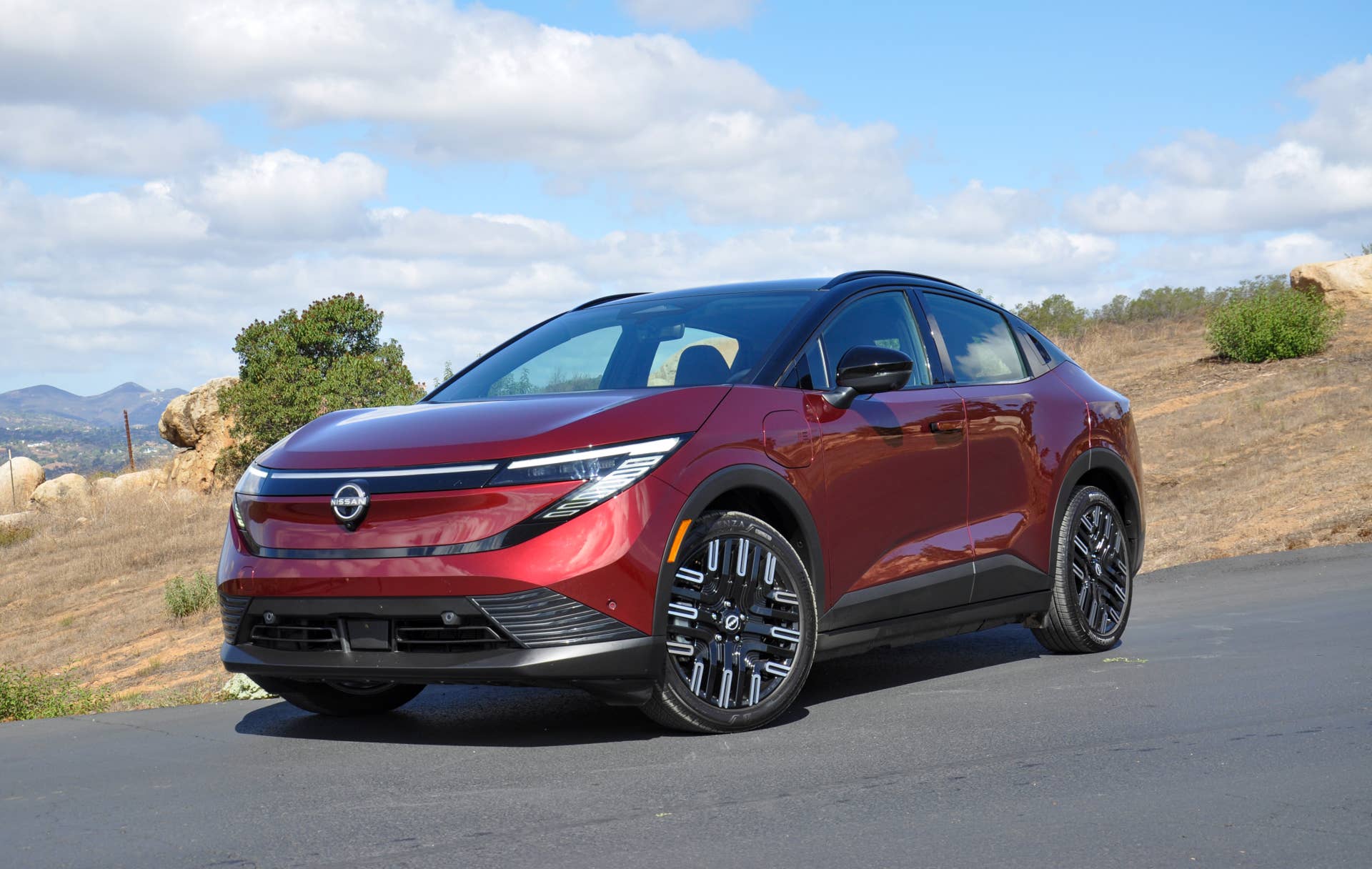
It’s one thing to build an electric car with an affordable starting price, but it’s another thing entirely to build one that still feels truly desirable, useful, modern, and sufficiently painless to live with. The 2027 Chevrolet Bolt and 2026 Nissan LEAF both aim to achieve this common goal in similar ways. Both are returning nameplates with long histories in affordable electric motoring; both now offer NACS charging access; both are front-wheel-drive compact EVs; and both are aimed at buyers who want to go electric without spending luxury-car money. But is one more worthwhile than the other?
The Bolt feels like Chevrolet took the old Bolt EUV, fixed several of its most urgent problems and sent it back out with faster charging, native NACS compatibility, better tech and a still-attractive price. The LEAF feels like Nissan looked at everything that was wrong with the old LEAF, threw most of it away, and started all over again. So, who builds the better attainable EV?
Cole Attisha
Specs And Pricing Compared
| Specification | 2027 Chevrolet Bolt RS | 2026 Nissan LEAF Platinum+ |
|---|---|---|
|
Drivetrain |
FWD |
FWD |
|
Battery |
65-kWh LFP |
75-kWh lithium-ion |
|
Horsepower |
210 hp |
214 hp |
|
Torque |
169 lb-ft |
262 lb-ft |
|
EPA range |
262 miles |
259 miles |
|
Max DC fast charging |
150 kW |
150 kW |
|
DC fast-charge claim |
10–80% in about 25 min |
10–80% in about 35 min |
|
Charge port |
Native NACS |
NACS DC + J1772 AC |
|
U.S. base price |
$27,600 before destination, LT |
$29,990 before destination, S+ |
|
Trim starting price |
$31,600 before destination, RS |
$38,990 before destination, Platinum+ |
|
Notable available tech |
Super Cruise, Google built-in, V2H |
ProPILOT Assist, Google built-in, V2L |
Thinking about selling your car? Get an instant cash offer online now. Click here to get started.
The pricing comparison depends heavily on trim. The Bolt has the lower entry point, and in a segment where affordability is the entire point, a Chevrolet Bolt LT starting at $27,600 before destination is a very strong statement indeed. The RS trim adds some sportier visual touches, but the core Bolt argument isn’t really about looking special. It’s about being a new EV that many buyers can actually justify.
The LEAF S+ starts higher, at $29,990 before destination, but it also offers up to 303 miles of EPA-estimated range in that form. My LEAF experience was in the Platinum+, which trades some range for bigger wheels and more equipment. It starts at $38,990 before destination, making it much more expensive than the Bolt RS on paper, but also much richer in terms of presentation and amenities. In other words, the Bolt might win the pure affordability argument, but the LEAF still gives you what you’re paying for.
Cole Attisha
The Bolt Fixes The Old Bolt’s Biggest Issues
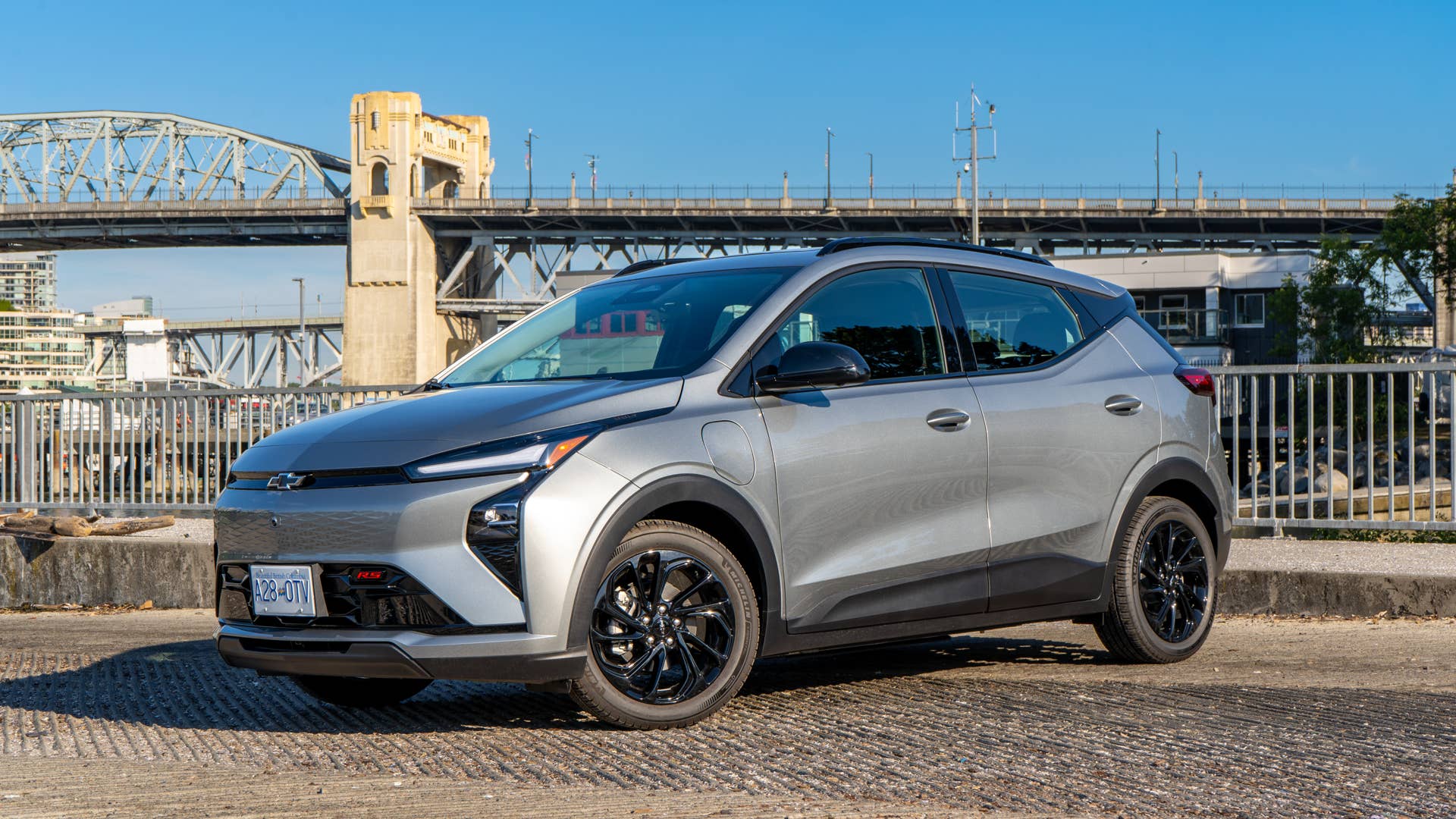
The 2027 Bolt doesn’t feel all-new. It feels heavily updated, and that is both its weakness and its strength. The good news is that Chevrolet fixed the stuff that most needed fixing. Native NACS charging makes life easier. A 150-kW-capable DC fast-charging system finally drags the Bolt into the modern EV conversation. Its 262-mile EPA range is useful, the cabin is roomy for its footprint, and the price remains compelling.
Around Vancouver, the Bolt felt like a very easy car to live with. It is quiet, practical, compact and straightforward. Its 210 horsepower feels like plenty, even if the throttle can occasionally be jolty from a stop. It’s still front-wheel drive only, but traction was never an issue during my summer test, and the Bolt remains quick enough to feel natural in city traffic.
But it also still feels like a budget EV. The steering is vague, the suspension is rolly, and the cabin layout has some odd ergonomic choices. The center screen felt aimed too high, almost toward the ceiling, and the central armrest was positioned too far back to comfortably support my right elbow while holding the wheel. None of this ruins the car, but it keeps the Bolt from feeling fully transformed. The no-CarPlay situation also matters. Google built-in worked, but the screen could be slow to respond, and voice controls were hit-or-miss. If Chevrolet is going to remove Apple CarPlay and Android Auto, the built-in system has to feel nearly flawless. This one did not.
Cole Attisha
The LEAF Feels Like The Bigger Leap Forward
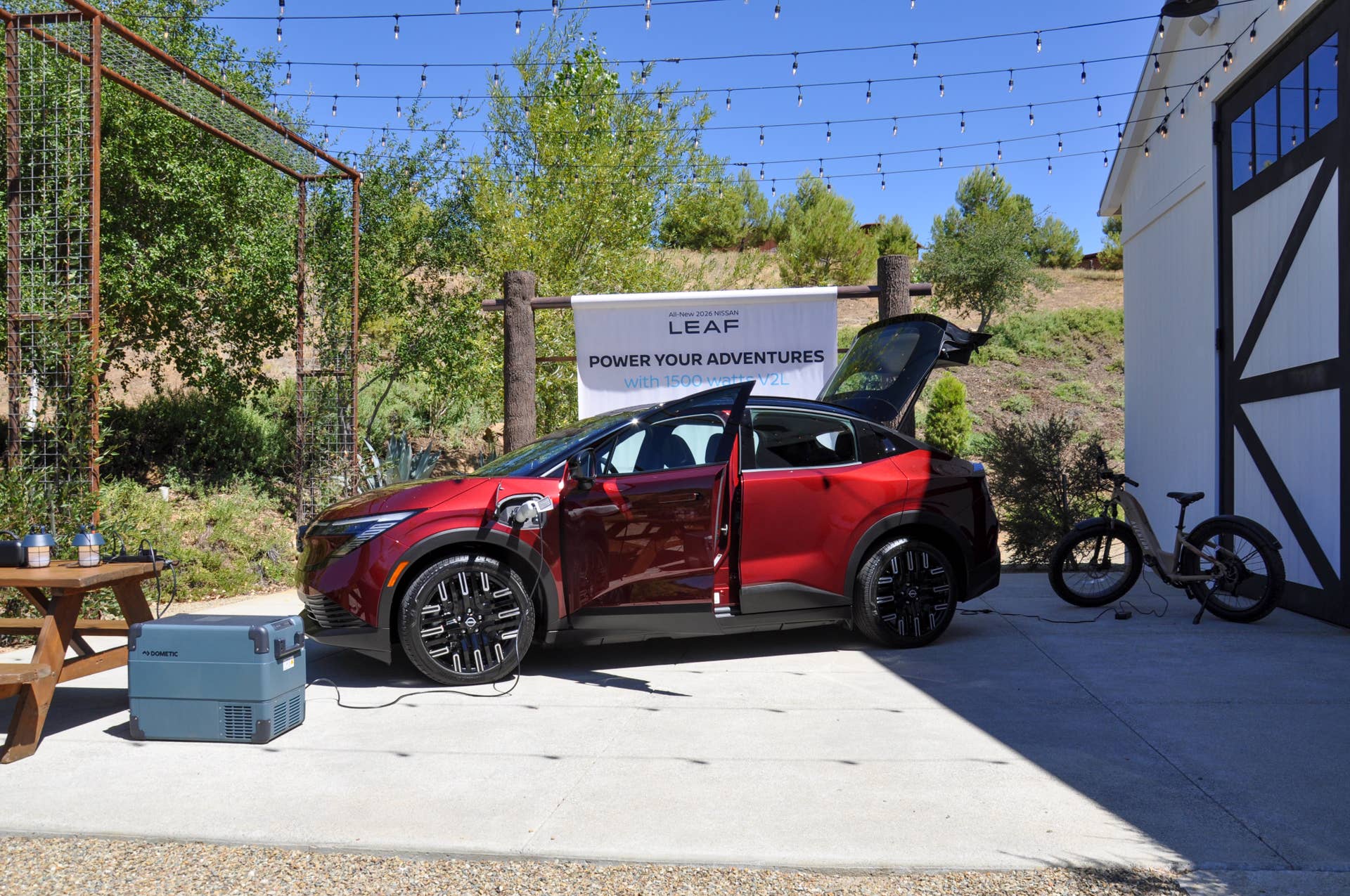
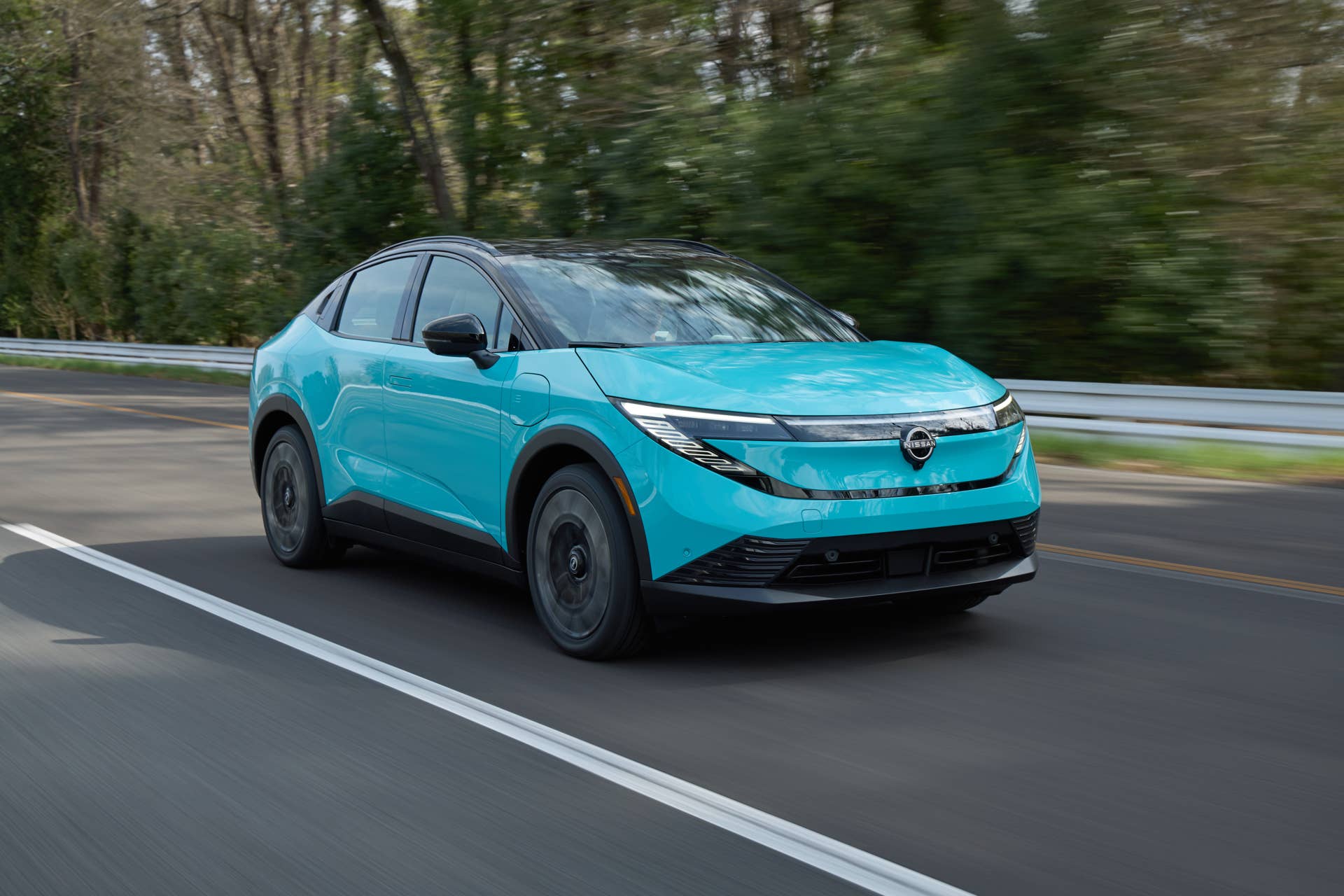
The 2026 LEAF left a stronger impression because it feels genuinely new. Nissan didn’t merely update the old LEAF. It turned the model into a sleeker, more modern, compact crossover-like EV with a far more contemporary cabin, longer range, better design, and a more premium-feeling overall execution. In S+ form, it offers 303 miles of range, 214 horsepower, and 262 lb-ft of torque for less than $30,000 before destination charges. That is a seriously strong, affordable EV formula.
On the road, the LEAF felt more composed and more cohesive than the Bolt. Its acceleration is not shocking, but it has enough power for normal use, and its throttle response encourages smooth driving. The steering is more communicative than the Bolt’s, the ride is comfortable, and the overall driving experience feels more polished. Wind noise from the mirrors was noticeable at highway speeds, but tire and road noise were well controlled.
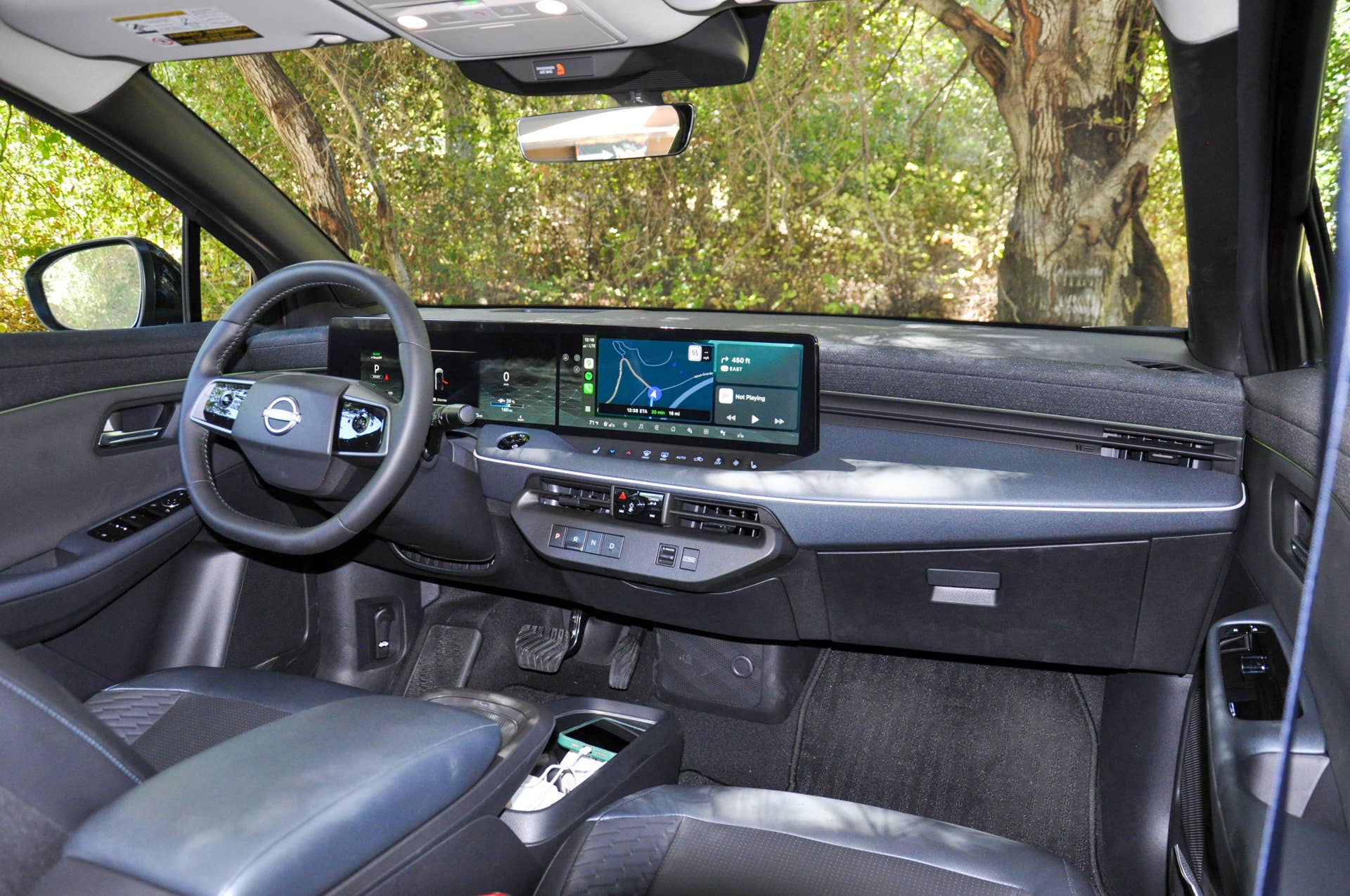
Inside, the LEAF also makes a stronger case. Its cabin feels modern, user-friendly and more premium than expected without pretending to be a luxury car. The top trims’ dual 14.3-inch displays, available dimming panoramic roof, Bose Personal Plus audio and V2L capability make the Platinum+ feel meaningfully upscale for the money. Even the lower trims retain the sense that Nissan invested in making the LEAF feel like a real next-generation product.
Cole Attisha
Cabin Space And Cargo Compared
| Measurement | 2027 Chevrolet Bolt | 2026 Nissan LEAF |
|---|---|---|
|
Length |
169.6 in |
173.4 in |
|
Width |
69.7 in |
71.3 in |
|
Height |
63.9 in |
61.3 in |
|
Wheelbase |
105.3 in |
105.9 in |
|
Front legroom |
44.3 in |
42.4 in |
|
Rear legroom |
39.1 in |
31.8 in |
|
Cargo behind rear seats |
16.2 cu-ft |
20.0 cu-ft |
|
Max cargo volume |
56.3 cu-ft |
55.5 cu-ft |
Shopping for a new car? Click here to get a great deal on your next vehicle. Powered by Carvana, no haggle pricing, 100% online.
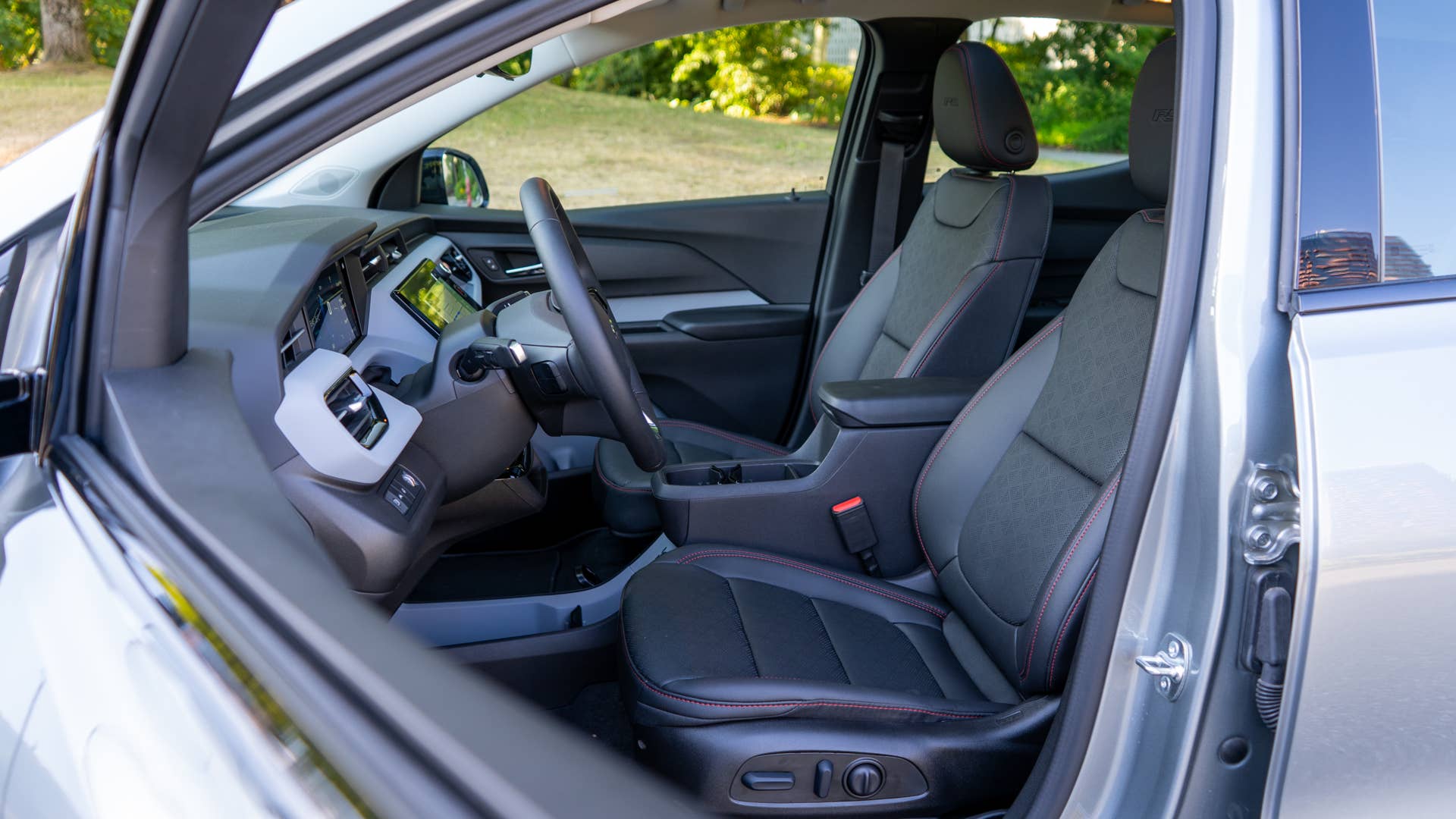
The Bolt’s roominess was one of my biggest surprises. Headroom is notably generous, rear-seat space is better than expected, and the compact footprint makes it easy to use in a city. It also has useful underfloor storage, which became a natural place to keep charging adapters.
Cole Attisha
The LEAF has more cargo space behind the rear seats, while the Bolt offers more rear legroom and slightly more maximum cargo volume with the seats folded. In practice, both are useful, but they emphasize space differently. The Bolt feels tall, upright and efficient. The LEAF feels lower, sleeker and more crossover-like, but still practical. For passengers, the Bolt may be the easier sell. For cargo and overall cabin atmosphere, I prefer the LEAF.
Cole Attisha
Charging: Bolt Is Faster, LEAF Is More Thoughtful
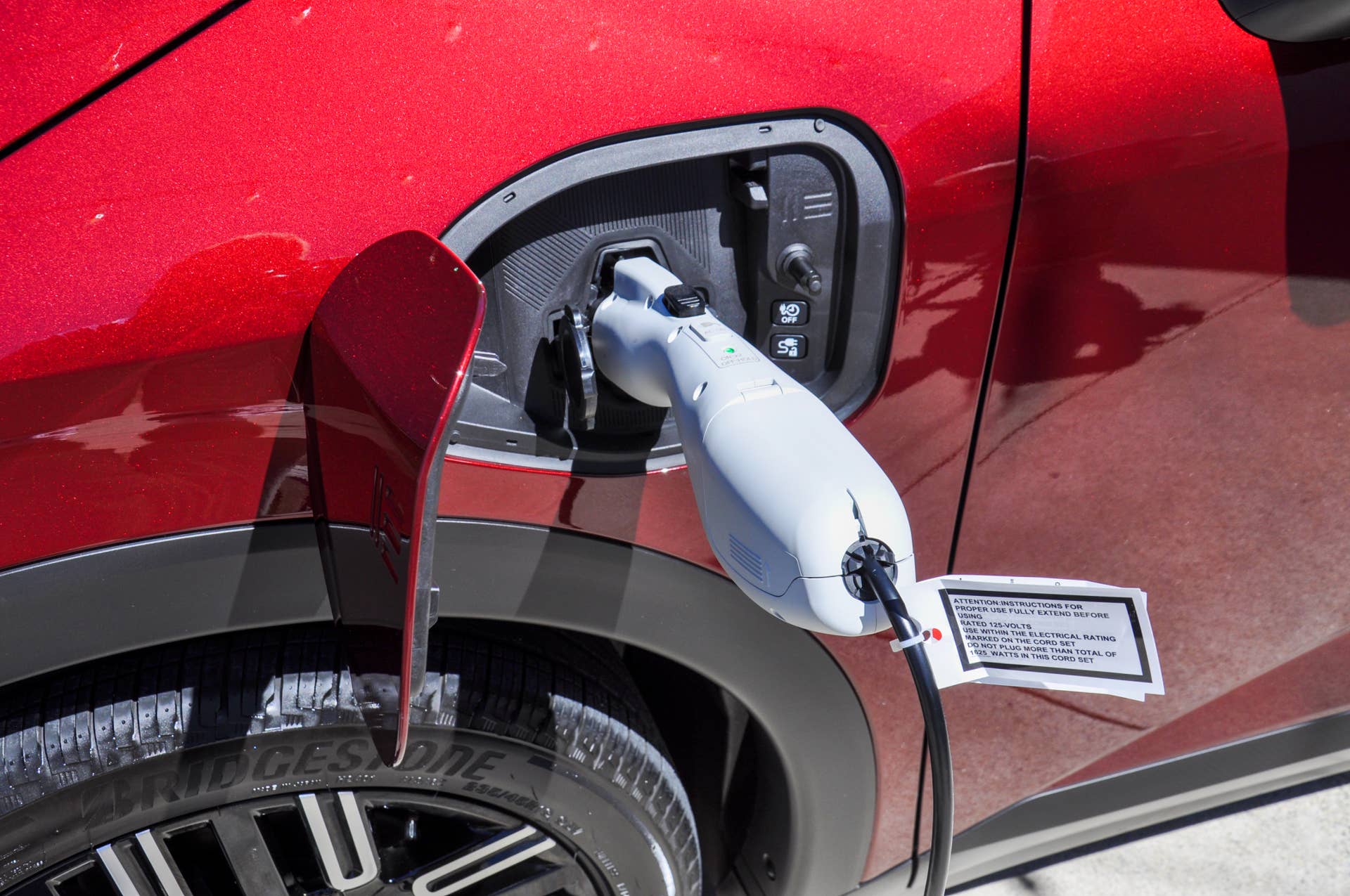
The Bolt has the better headline number: Chevrolet says it can charge from 10 to 80 percent in about 25 minutes at a compatible DC fast charger. The LEAF’s comparable claim is about 35 minutes. That sounds like a clean win for the Bolt, and in some ways, it is. But the LEAF’s charging-port setup is more thoughtful. It uses separate ports: NACS for DC fast charging and J1772 for AC charging. That means LEAF owners can access modern NACS DC fast chargers without abandoning the older AC charging infrastructure many EV owners already use at home or in public.
The Bolt’s native NACS port is simpler and more future-facing. The LEAF’s dual-port setup is more transitional, but arguably smarter for buyers moving from older EVs. My real-world Bolt charging experience was mixed. I charged from 75 to 100 percent at a BC Hydro NACS fast charger in about 45 minutes, averaging roughly 25.1 kW without preconditioning. That is not representative of its best-case charging speed, since charging slows near the top of the battery, but it reinforced my feeling that the Bolt is still mainly a commuter EV with occasional road-trip ability. The LEAF feels a little more road-trip-ready, mostly because of its added range in S+ form and broader sense of polish.
Nissan
Verdict: The Bolt Is Cheaper, But The LEAF Feels Better
The 2027 Chevrolet Bolt is easier to justify on a purely price basis, but I still think the 2026 Nissan LEAF is the one I like more. The Bolt is cheaper, roomier than expected, quieter than the LEAF on the highway, and more convenient than before, thanks to faster charging and native NACS access. It is a strong choice for budget EV buyers who insist on buying new and mostly need a practical commuter.
But the LEAF feels like the more complete product. It looks better, drives better, has a nicer cabin, offers more range in its most efficient trim, and feels like a genuine multigenerational leap over its predecessor. The Bolt feels corrected, but the LEAF feels truly reborn. Choose the Bolt if price, rear-seat space and new-EV affordability matter most. Choose the LEAF if you can spend a bit more and want the affordable EV that feels more modern, more thoughtfully executed and more satisfying overall.
Autoblog aims to feature only the best products and services. If you buy something via one of our links, we may earn a commission.