When Volkswagen axed the iconic Caravelle nameplate in 2021 for the “Multivan,” it felt like the end of an era for the beloved VW Bus. The new badge never quite resonated with the brand’s core demographic. Now, VW has admitted its misstep: the Multivan name is officially dead, and the Caravelle is back to reclaim its heritage.
Exterior Changes
Volkswagen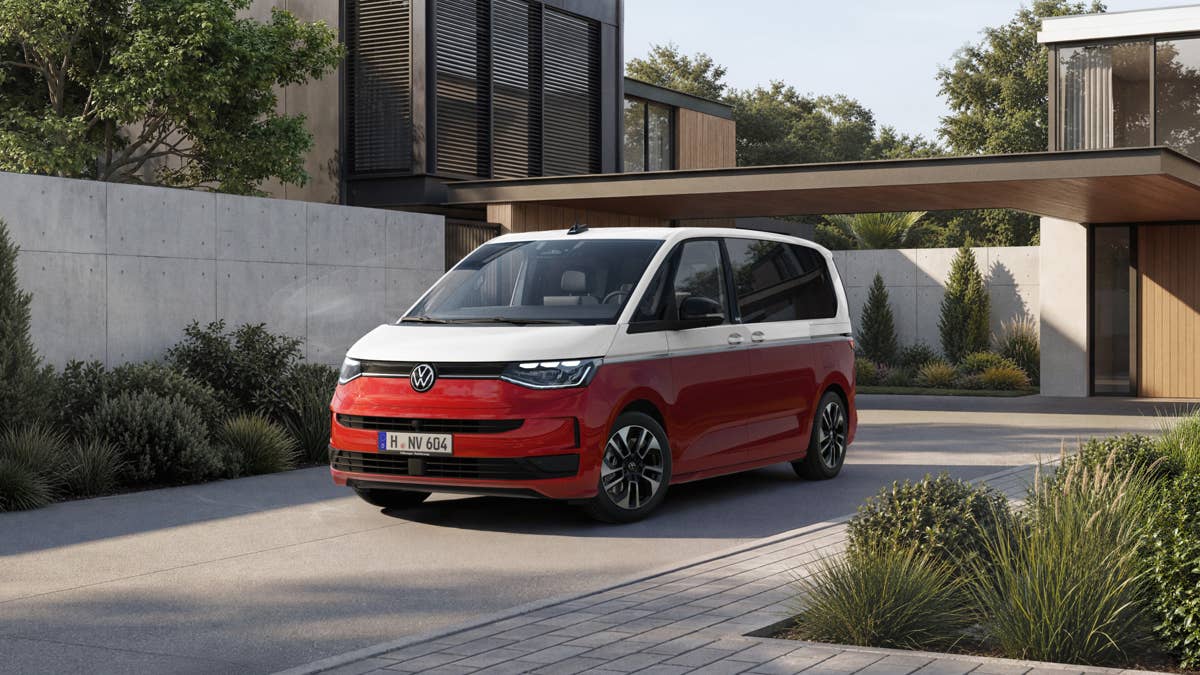
With larger LED headlights, a redesigned front end, and new colors and dual-tone paint options, the updated Volkswagen Bus, or “Caravelle”, looks undeniably smarter than the outgoing Multivan. Changes to the exterior also include new alloy wheel designs, and for the base model, the old 16-inch steel wheels have been replaced by a 17-inch steel wheel setup.
Technical Specifications
The updated Caravelle features similar drivetrains to the “Multivan” that it replaces. Its eHybrid 4MOTION system pairs a 1.5L turbocharged gas engine with electric motors on each axle, giving it true all-wheel drive and a combined output of 241 horsepower. The battery pack is a small but significant 19.7 kWh. That translates to an electric-only range of around 50 miles. Charging the pack takes roughly five and a half hours via a standard AC home charger. For traditionalists, the Caravelle is also available with a 148-horsepower turbodiesel and a 201-horsepower turbocharged gas engine, both of which are only offered with a front-wheel drive setup.
Interior and Tech Upgrades
Volkswagen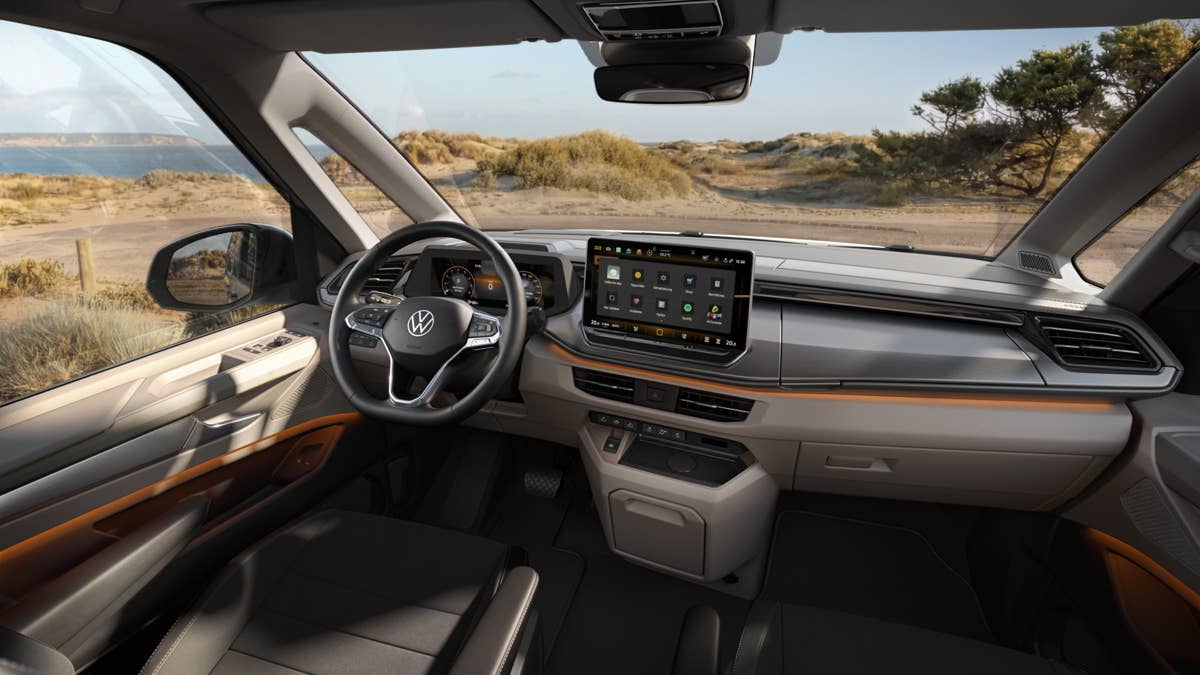
On the inside is where the most significant changes lie. A new 12.9-inch infotainment screen replaces the old 10.0-inch version and includes touch sliders for audio and climate control, more similar to what we see Stateside in the ID.Buzz. Volkswagen has improved material quality on the inside, moved the drive selector to the steering column, provided illuminated cup-holders, and increased the power of both the wireless charging pad (now 25 watts) and USB ports (now 60 watts). For front seat occupants, the van now comes with massaging and memory seats, and offers a new eight-seat configuration, allowing two three-seat benches to face each other.
The Caravelle and California eHybrid 4MOTION feature an upgraded stationary climate system capable of cooling or heating the cabin for up to eight hours while parked or charging, while the California campervan retains the traditional, fuel-operated auxiliary heater for uninterrupted use.
As for safety, the new Volkswagen Caravelle offers an enhanced “Travel Assist System” which now incorporates automated lane-changing and traffic light recognition.
Volkswagen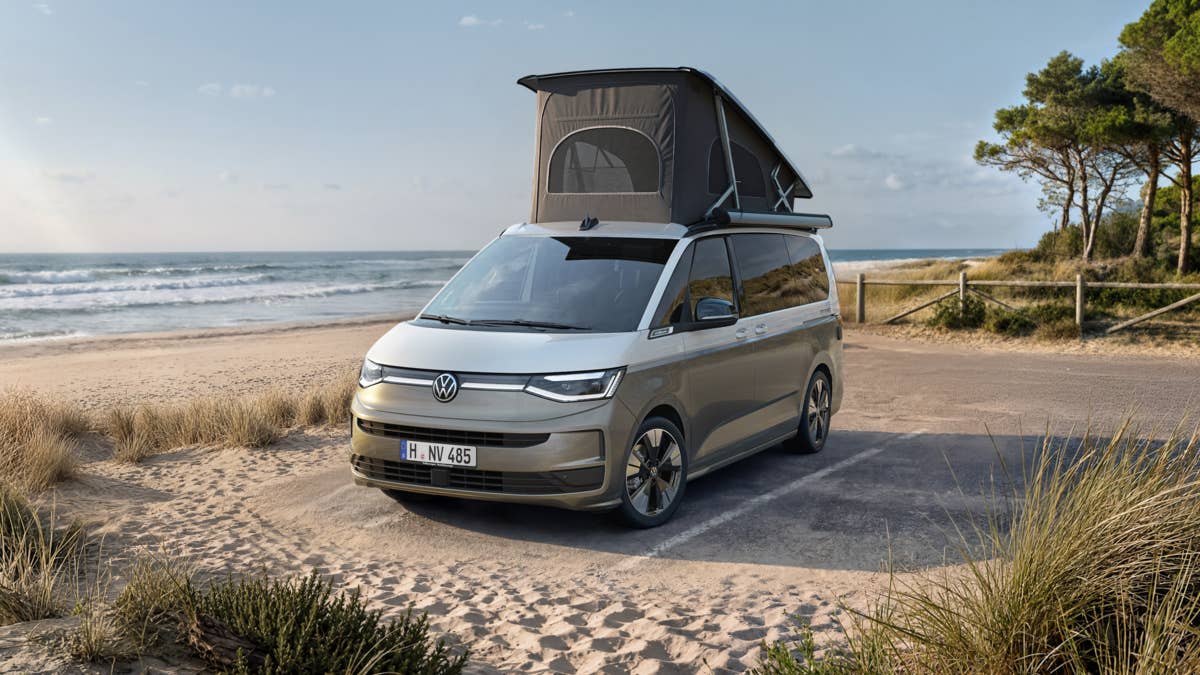
Will Americans Get The Caravelle?
In short, no. Volkswagen has drawn a firm line in the sand regarding its commercial vehicles. American buyers are exclusively getting the fully electric ID. Buzz to satisfy their retro-bus cravings. The gas-powered and PHEV T7 models—including the Caravelle and the California campervan—remain locked out of the US market. If it were to cross the Atlantic, it wouldn’t be cheap. Based on UK pricing, the outgoing Multivan started around $63,000. For a fully loaded eHybrid 4MOTION Caravelle, American buyers would easily be looking at a sticker price well over $80,000.
The return of the Caravelle label proves that heritage matters, and automakers are willing to admit when a rebranding experiment fails. It’s just a bitter pill to swallow knowing the most capable VW bus on the market remains strictly European property.