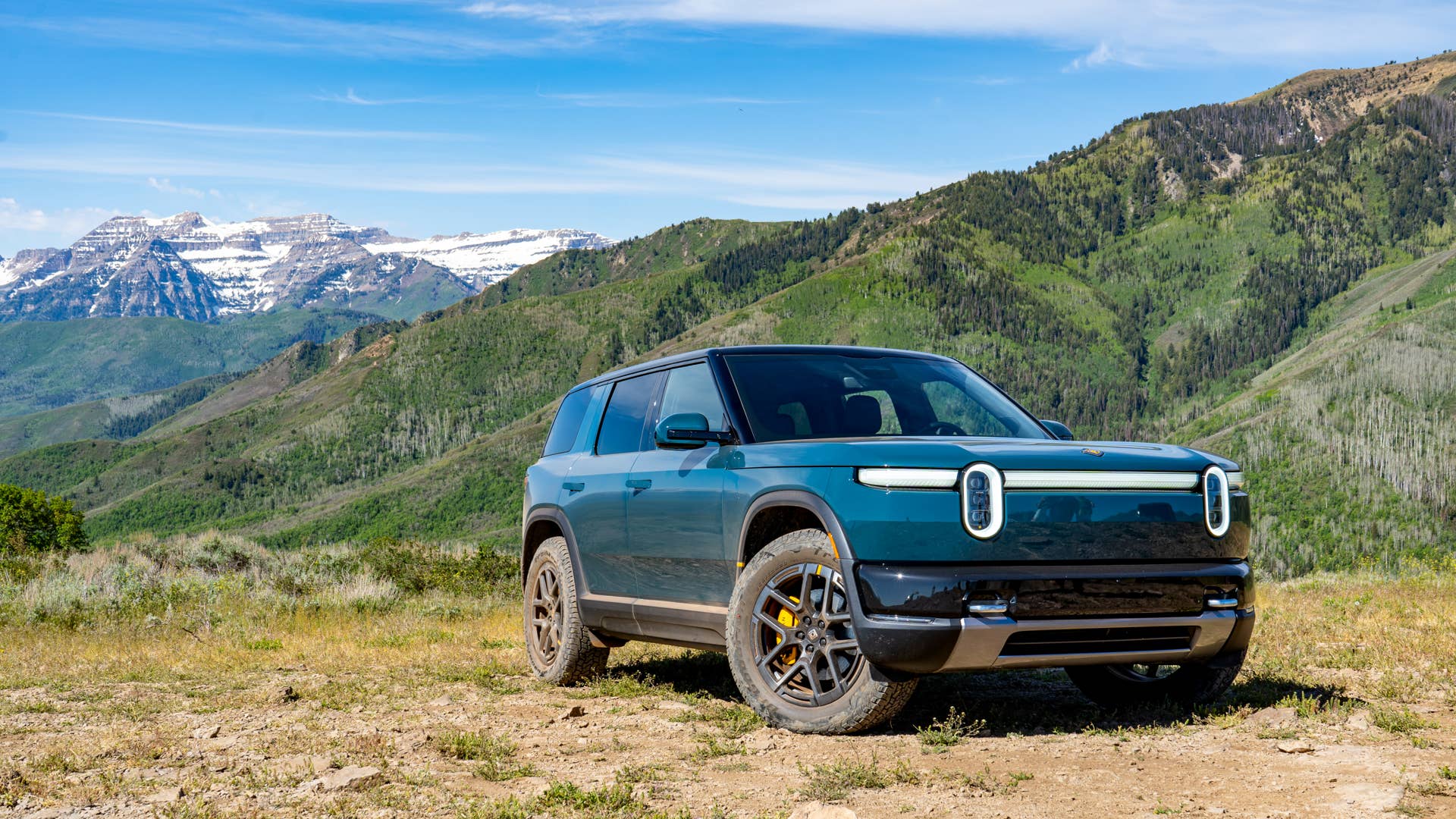
Standing in the mountains outside Park City, Utah, listening to Rivian explain its idea of the future of artificial intelligence, robotics, zonal architecture, and edge computing while a boxy electric SUV sits nearby looking as if it would rather be covered in mud, sitting by a campfire, revealed a duality that exists so abundantly in the company’s aptly named R2—Rivian’s latest model, a midsize SUV aimed squarely at would-be Tesla Model Y buyers.
On the one hand, the 2027 Rivian R2 is the brand’s most approachable product yet: a smaller, simpler, more attainable electric SUV that retains the visual charm and adventure-minded personality of the R1S but scales it down to a size and price point that makes it relevant to far more people. On the other hand, Rivian is still Rivian, which means the R2 is more than just a vehicle. It’s also a platform, a software-defined mobility device, an autonomy host, an AI-powered interface and, depending on which executive you ask, a node in some larger technological ecosystem still being assembled around us.
Cole Attisha
Even as someone who still listens to vintage cassette tapes in his thirty-year-old Land Rover, I completely accept why all of that is so important. As a more recent startup hoping to outpace other tech-forward automakers in the 2020s, Rivian doesn’t have the luxury of focusing solely on tires and cupholders to keep its books balanced. It has to compete against Tesla, legacy automakers, the next wave of Chinese EVs, and whatever other fresh Silicon Valley fever dreams appear between now and next year.
Regardless of all this, the R2 still appealed to me most when it was doing simple car things well: looking handsome, driving quickly, cornering with unexpected confidence, clawing through technical off-road trails, lugging around camera gear in its spacious frunk, and letting all five openable windows drop at once so the fresh Utah mountain air could waft in through the cabin. The R2 Performance tries, with noble effort, to be everything at once. At its best, it feels like a classic two-box SUV from another era, time-warped into the electric future. At its least convincing, it feels like Rivian is trying to sell you on a future you might not actually want, even though the car itself is already interesting enough.
Rivian
The R2 Performance Looks Like Rivian Finally Found Its Perfect Size
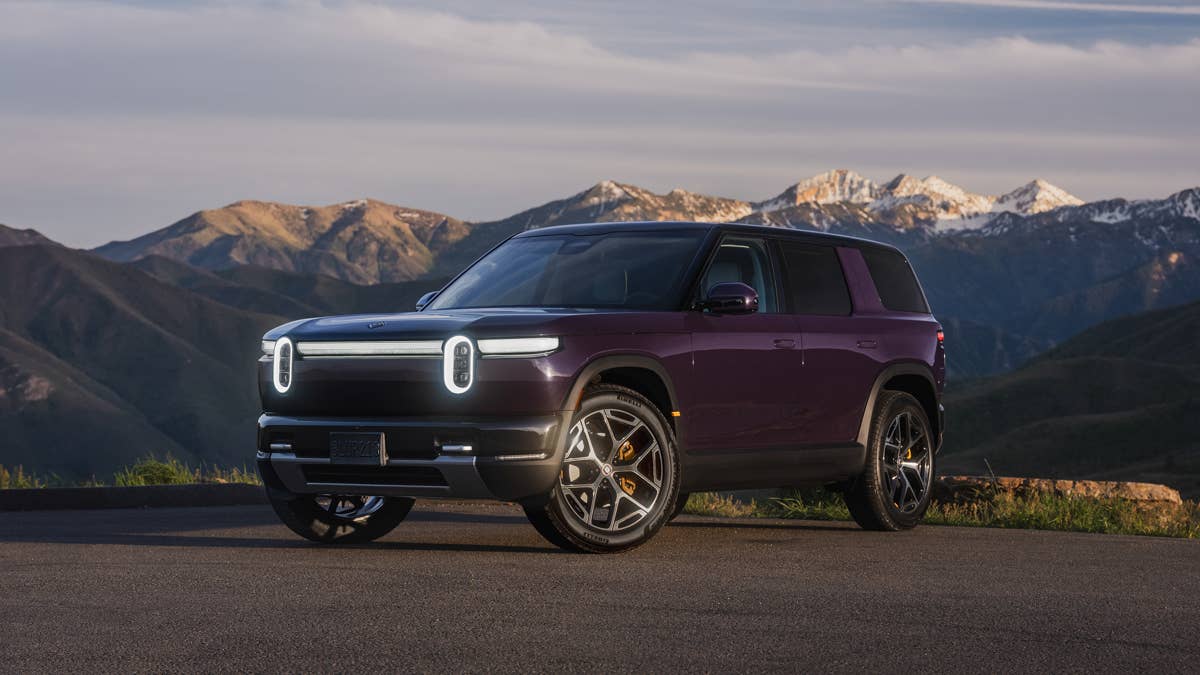
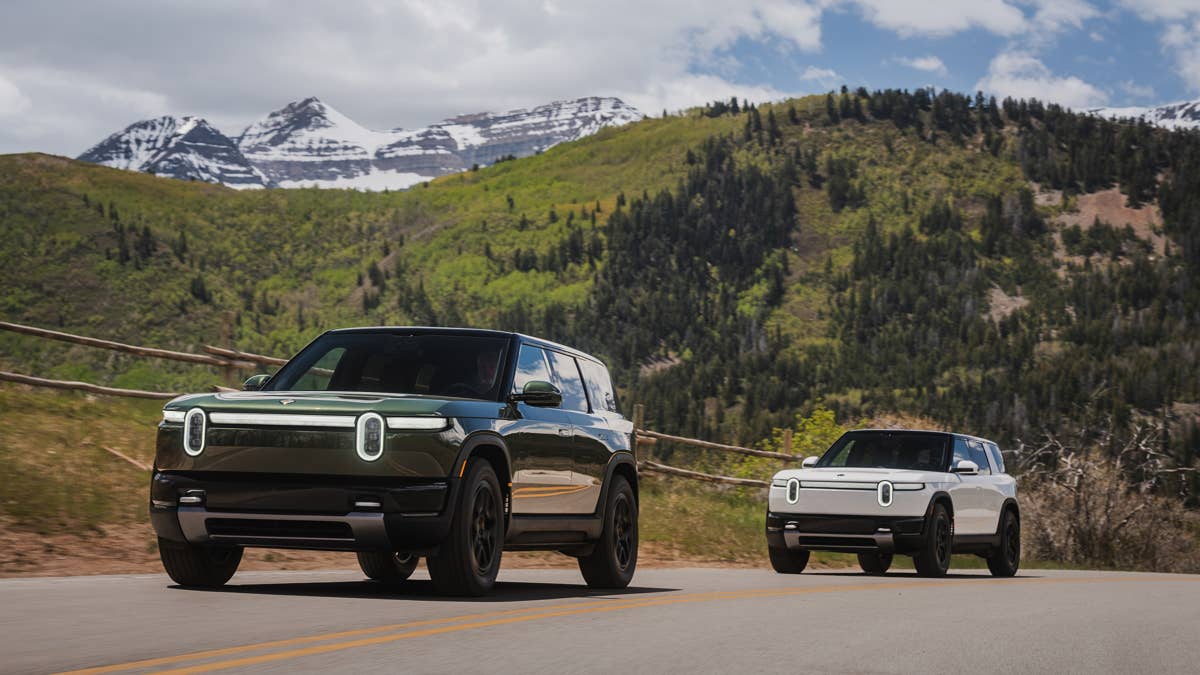
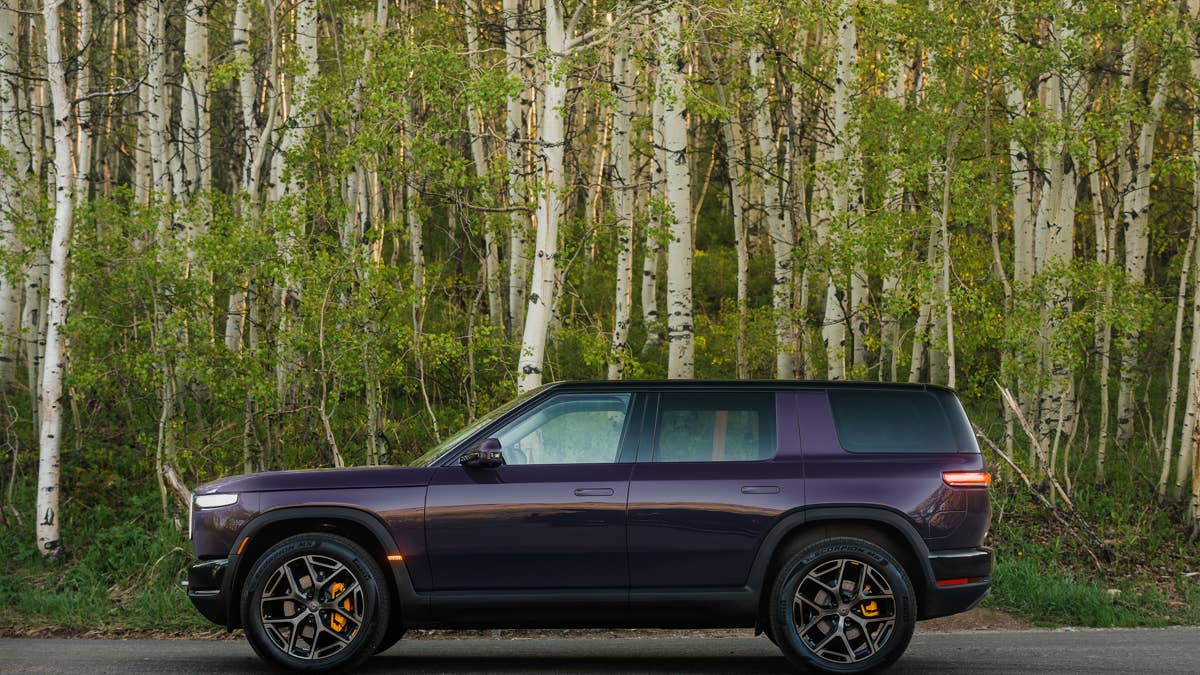
My first reaction to the R2 was simple: the proportions are excellent, and, man, does she ever look good dressed in purple. Proportion is where so many modern SUVs seem to go wrong, often attempting to invent some new body style by mashing two seemingly opposite things together—such as an SUV and a coupé. Some are too tall, too soft, too pinched, too swollen, or just too dull and generic. The R2 avoids a lot of that by using a clean two-box silhouette that evokes classic adventure SUVs like the Land Rover Discovery, Toyota Land Cruiser, and old-school Range Rover without directly copying any of them.
Rivian
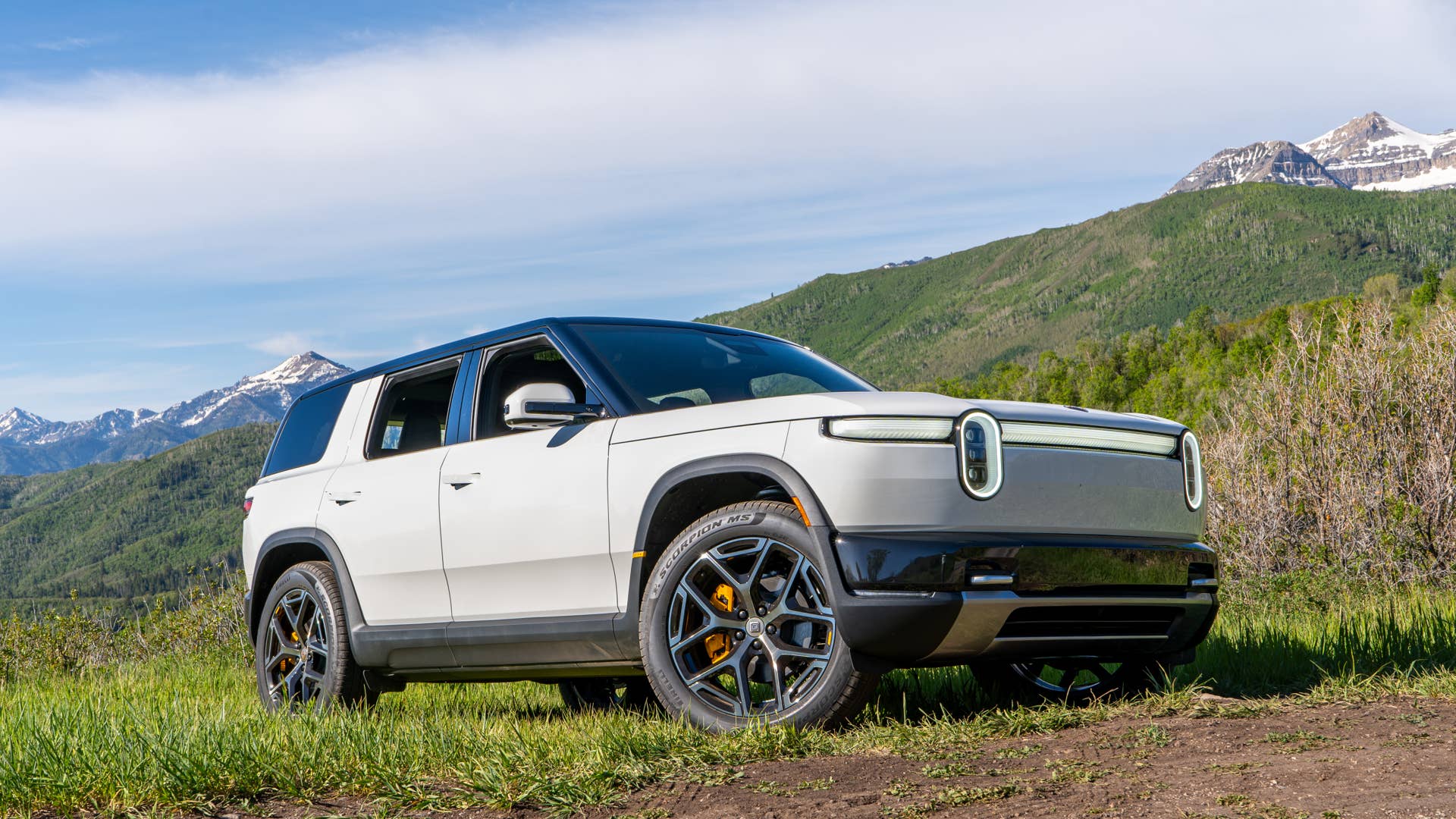
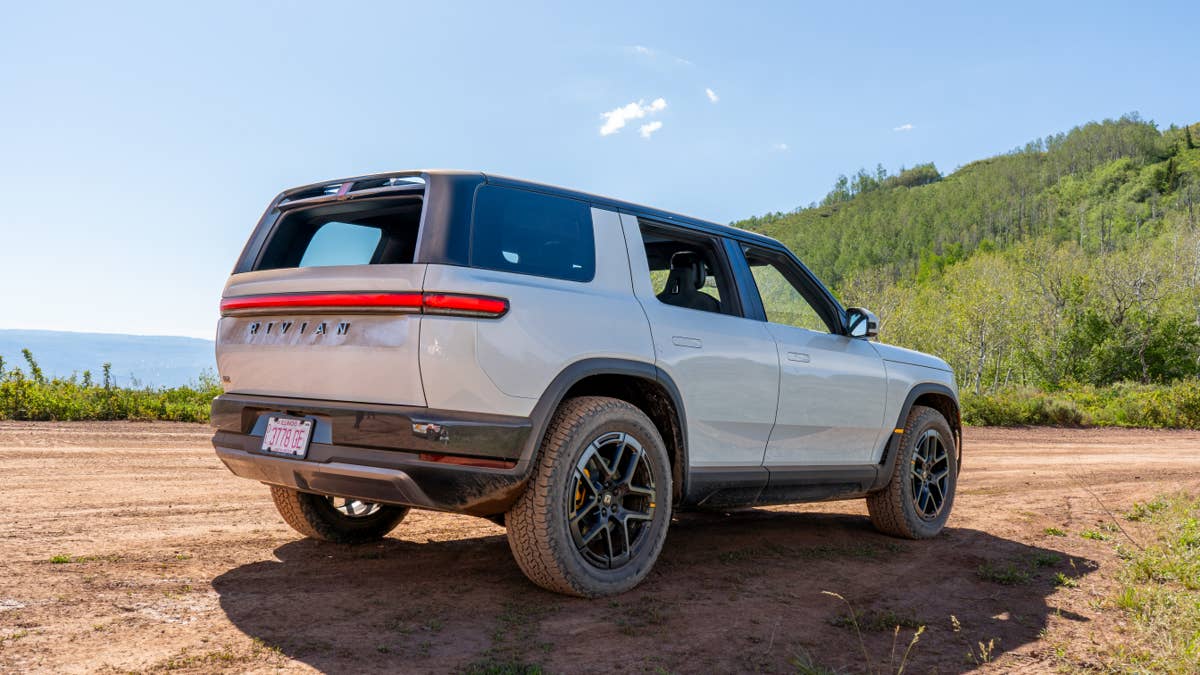
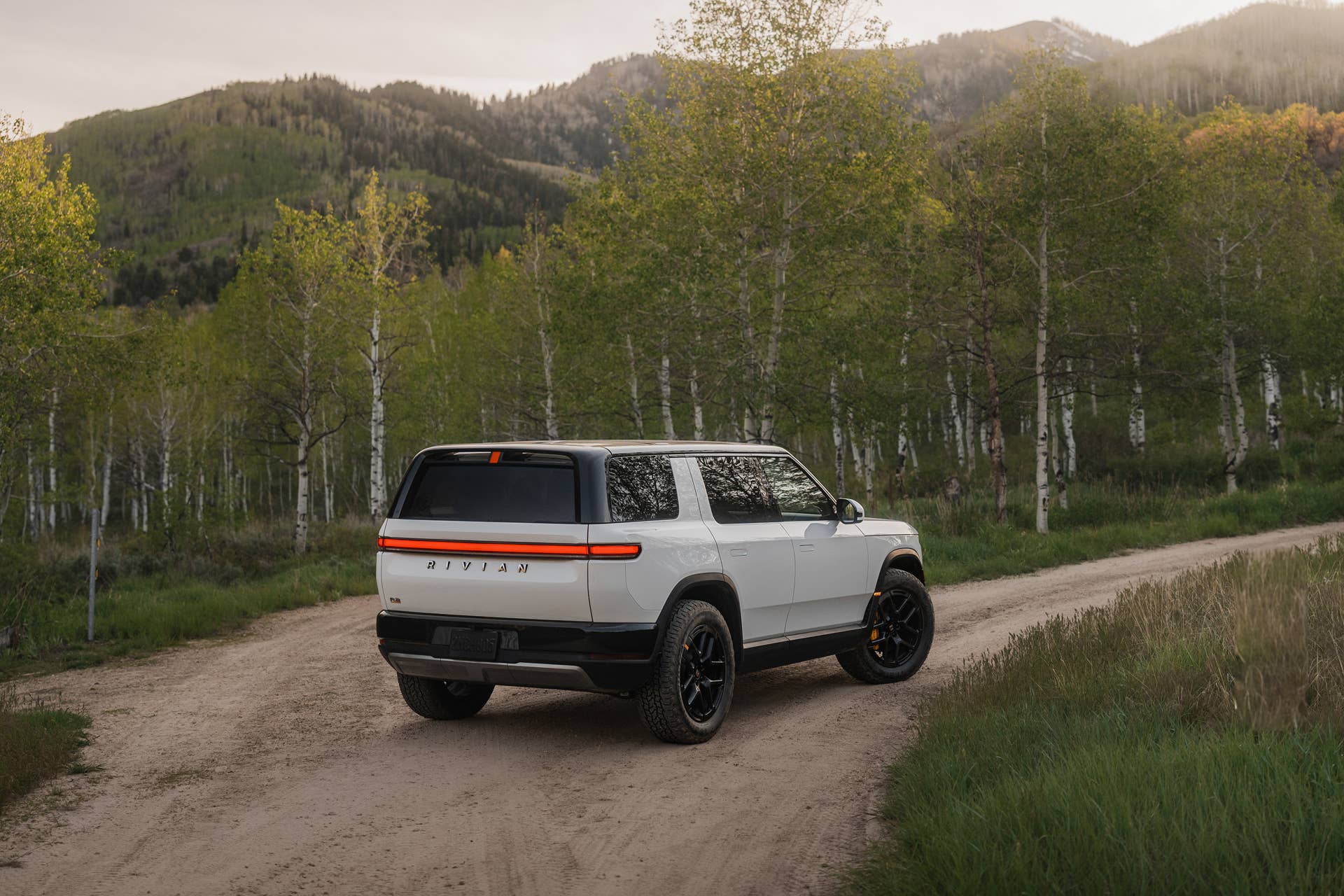
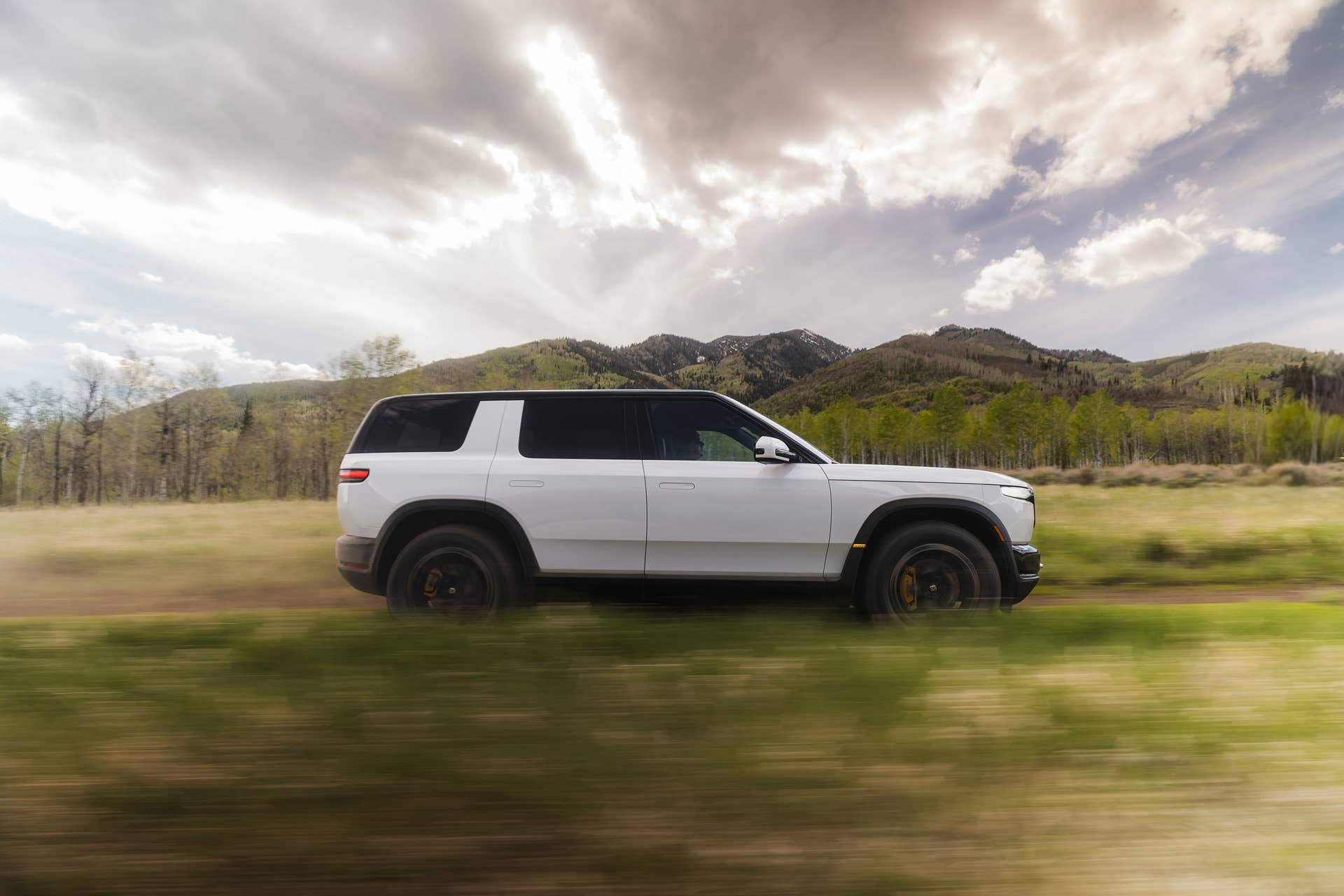
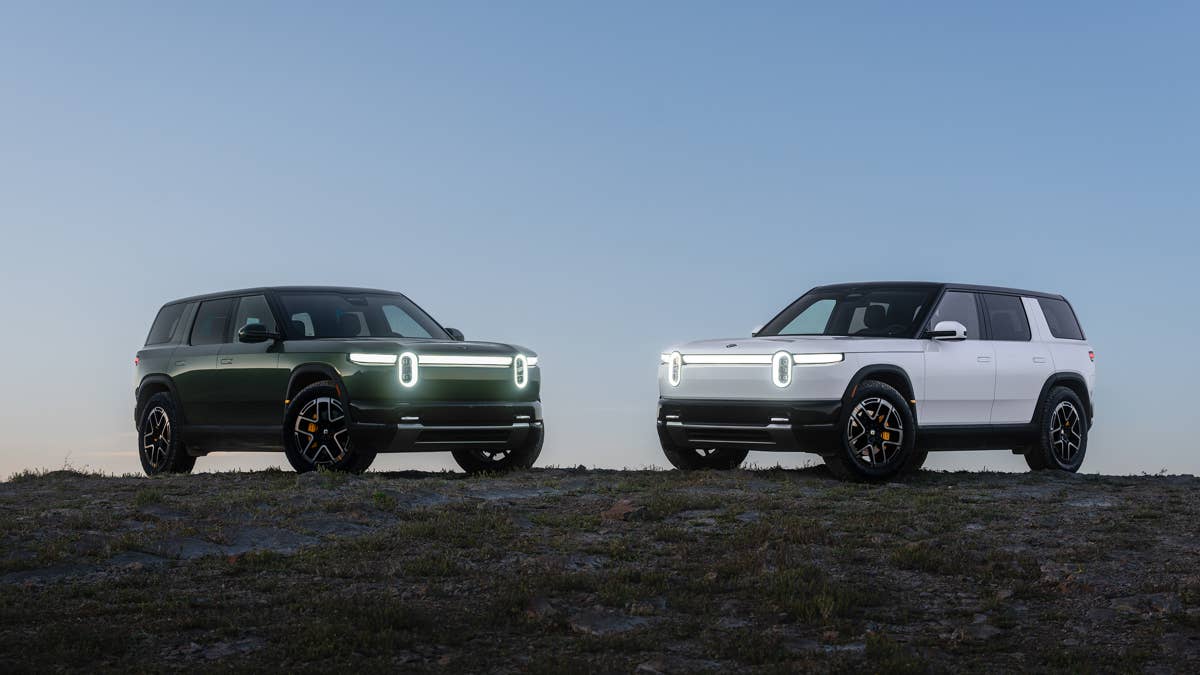
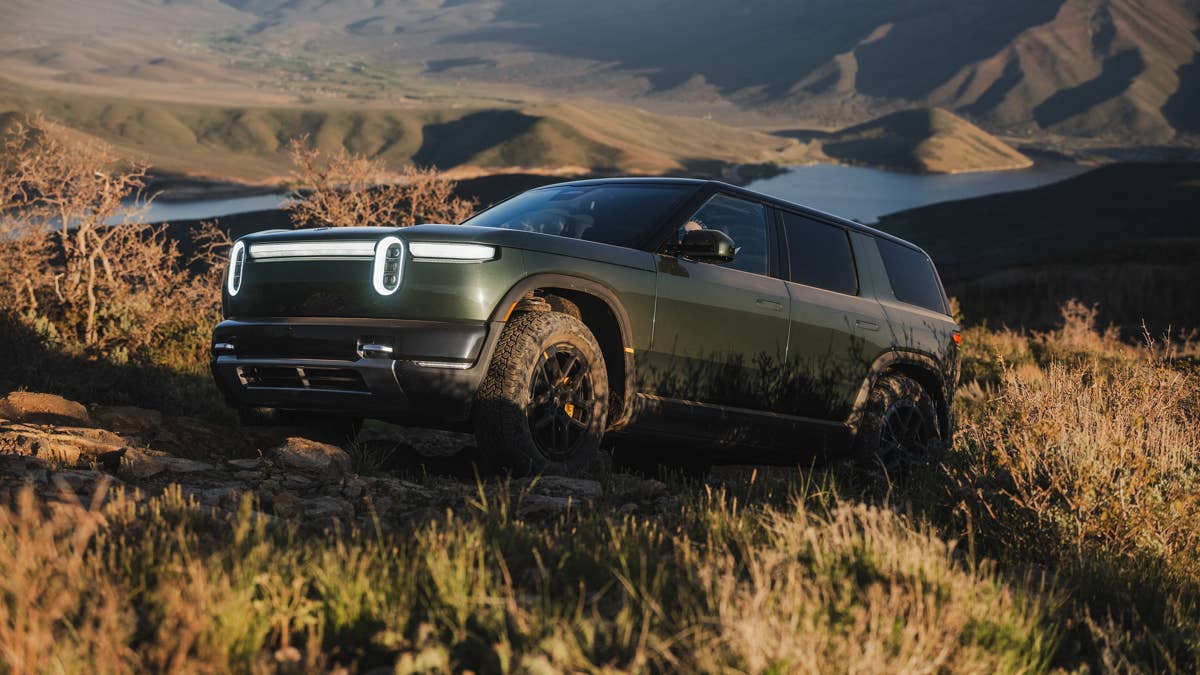
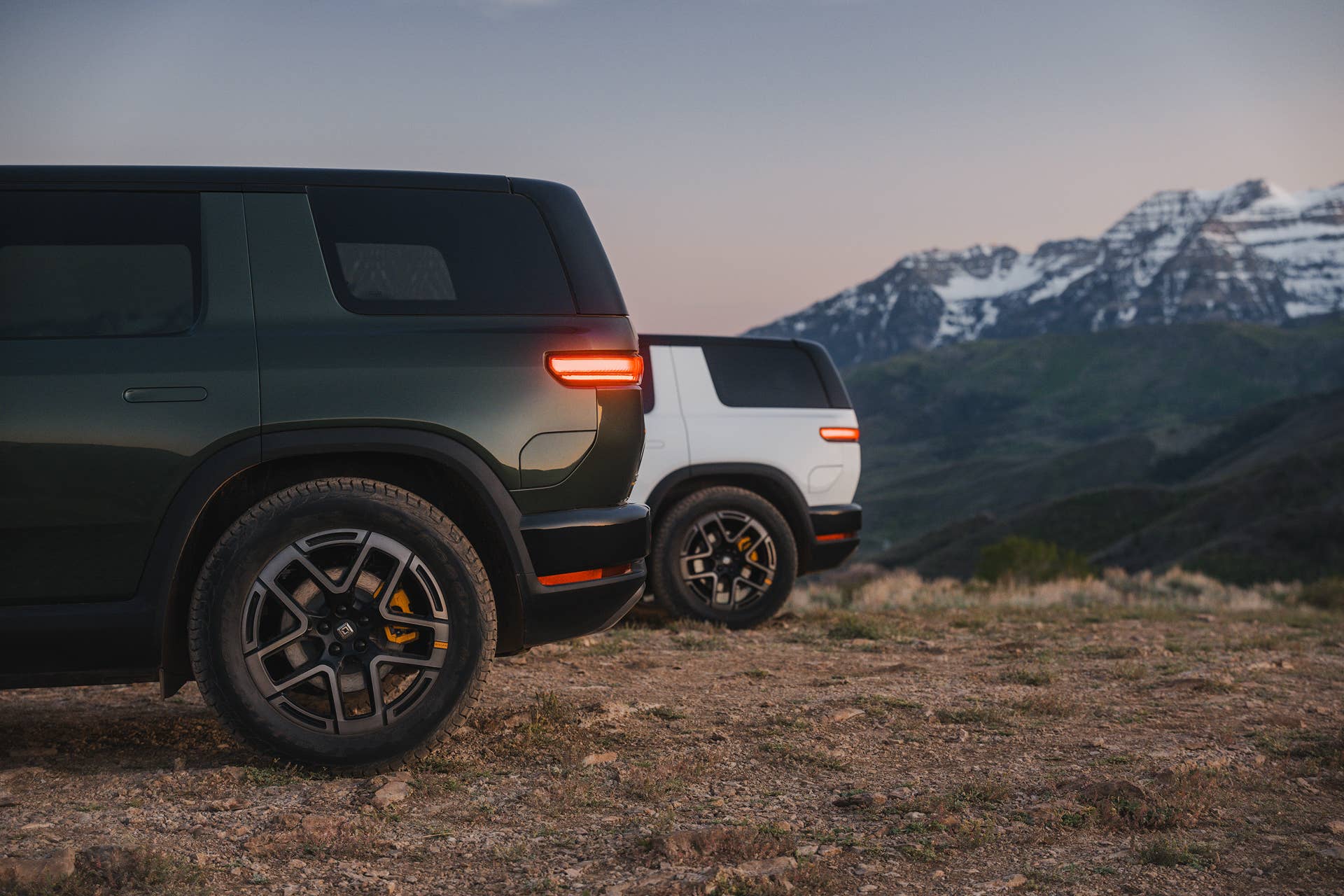
The R1S’s DNA has transferred over well. Its friendly vertical-lighting signature, upright body, clean surfacing, and slightly futuristic minimalism all make it instantly recognizable as a Rivian. But the R2 is tighter, sportier, and less imposing to the eye. It doesn’t have the same expedition-vehicle mass as the R1S, and that seems to work in its favour. From some angles, especially with its subtle rear spoiler and shorter overhangs, it even looks more athletic than expected. In person, the R2’s scale works brilliantly with Rivian’s design language; it’s noticeably smaller than the R1S, both from behind the wheel and from the outside. It looks capable without being obnoxious or cumbersome, premium without being delicate, and technical without resembling a kitchen appliance on wheels.
Cole Attisha
The R2 has to do more than impress existing Rivian fans; its toughest job is to tempt people who may currently be considering a Tesla Model Y, Hyundai Ioniq 5, Subaru Trailseeker, Ford Mustang Mach-E, or even a more traditional gasoline-powered adventure SUV. While those other models often lean into playful geometry and swoopy rooflines to make their points, the R2 takes the opposite approach—more like the Ford Bronco and the ToyotaLand Cruiser—using retro styling cues as a flavourful garnish on an otherwise quite modern-looking package.
Rivian
On The Road, The R2 Feels Heavy But Surprisingly Nimble
Every journalist at the event drove the R2 Performance, which launches with 656 horsepower, 609 lb-ft of torque and a claimed 0-60 mph time of 3.6 seconds. Those are pretty ridiculous numbers for an attainable midsize electric SUV, but silly numbers are a normal part of EV life these days. We live in an era where family crossovers can accelerate like the supercars of not long ago, even if they’ll spend most of their lives cruising interstates or masterminding the weekly Costco trip.
The R2 Performance is quick, obviously, but it isn’t as violent as other high-output EVs. Its acceleration doesn’t feel like a cheap carnival ride designed to rearrange your organs, or at least not unless you really push it, in which case it absolutely can. Despite its abundance, the R2’s power still feels accessible. It gathers speed with the unfettered authority of something that doesn’t really care how steep the grade is, how fast traffic is moving, or how narrow your passing gap is—plant your right foot, and it’ll do exactly what you need it to do.
Rivian
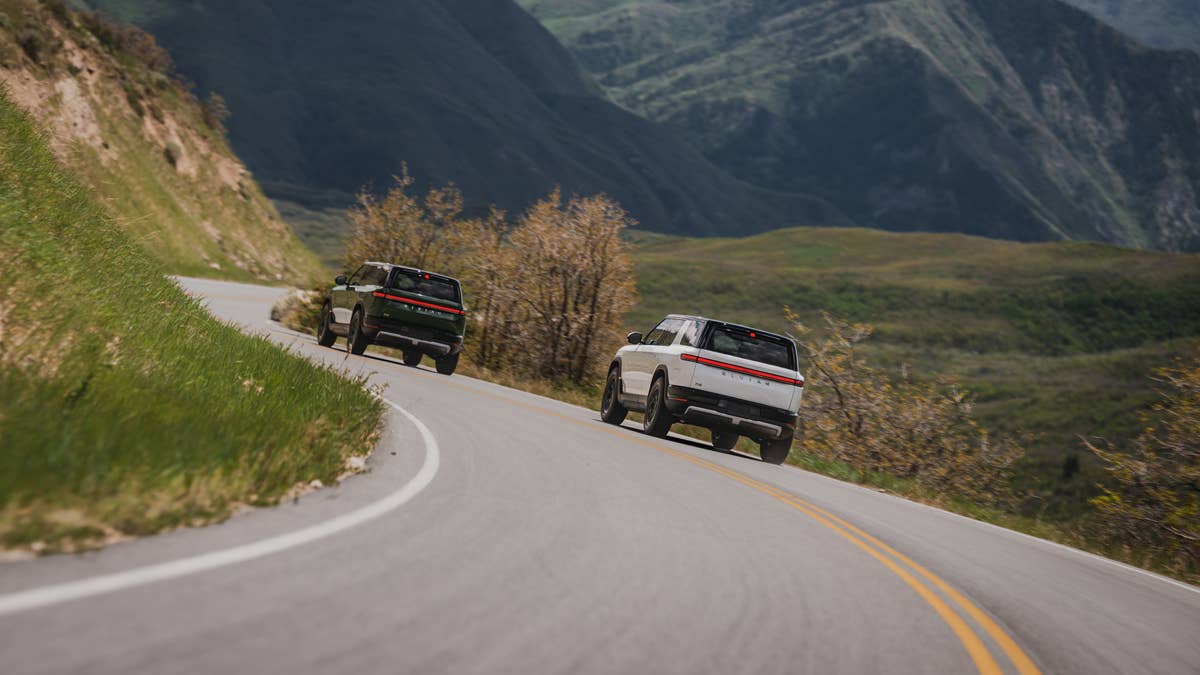
There is little drama to its on-road dynamics, which suits the R2. Its power isn’t just there to amuse passengers; it affords the vehicle, and thereby its driver, a deep well of confidence in any situation, no matter how perilous. You never feel as if you’re waiting for the R2 to make up its mind, or as though you might not make the gap during an oncoming-lane overtake. Need to merge, pass, climb or regain momentum? Fine. Done. What’s next?
On pavement, I drove the R2 Performance on 21-inch all-season tires, and the ride was firm but impressively quiet. There was some higher-frequency road noise at highway speeds, but wind noise seemed entirely absent. The cabin stayed calm even as the landscape outside began to move quickly, and that silence made the R2 feel more premium than rugged EVs often do. The best surprise was how easy it was to place when the pavement began to snake up towards Wasatch Mountain. Steering was accurate and nicely weighted in Sport mode, and though understeer inevitably presents itself, it does so in a communicative way, gently notifying its driver of the approaching limit.
Rivian
This is still a heavy electric SUV, and there’s no hiding that, but for something with an 88 kWh battery pack, four-wheel drive, high ground clearance, and clear off-road intent, the R2 felt surprisingly nimble around tighter corners. It, of course, isn’t quite playful in the way a smaller hot hatch or sports sedan is—it’s quick and competent rather than mischievous. But that competence is valuable, and the R2 Performance feels like a vehicle that can shrink around you just enough to make a twisty mountain road enjoyable, without sacrificing what it needs most when that road ends and there’s still a mountain left to climb.
Cole Attisha
Off-Road, The R2 Has Enough Rivian DNA In It To Get You Where You Need To Go
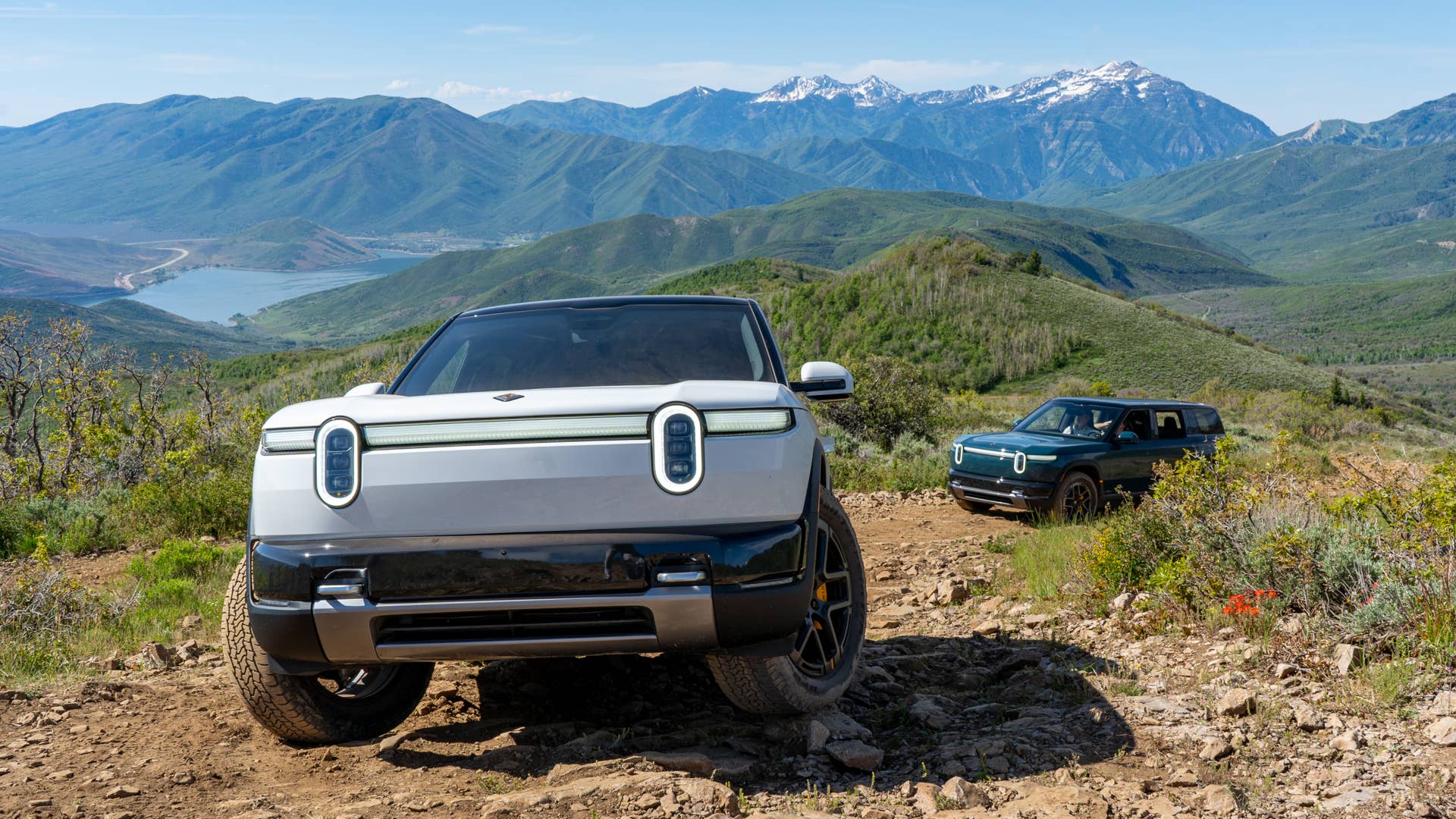
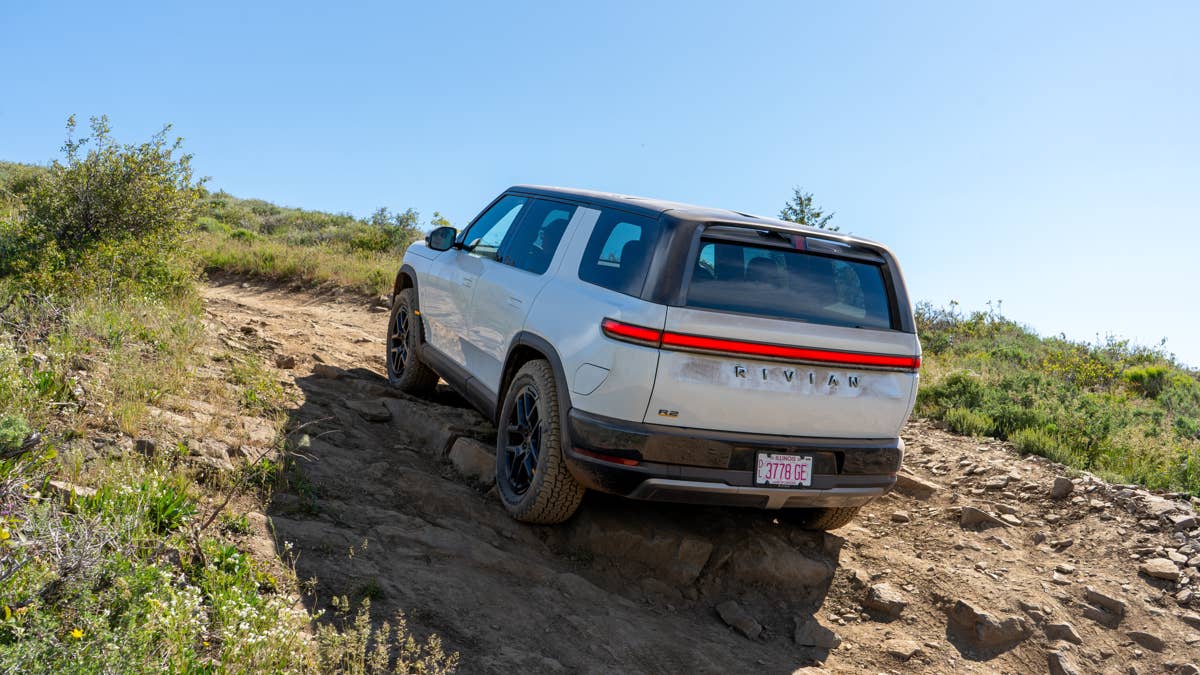
For the off-road portion of the trip, we switched into R2s equipped with factory-optional 20-inch all-terrain tires. The route was a mixed bag of challenging terrain: some sections felt like the sort of thing a well-driven Subaru crossover could handle with little hesitation, while others were a bit more technical: steeper, rockier, and genuinely impressive for a vehicle meant to be Rivian’s most accessible SUV yet.
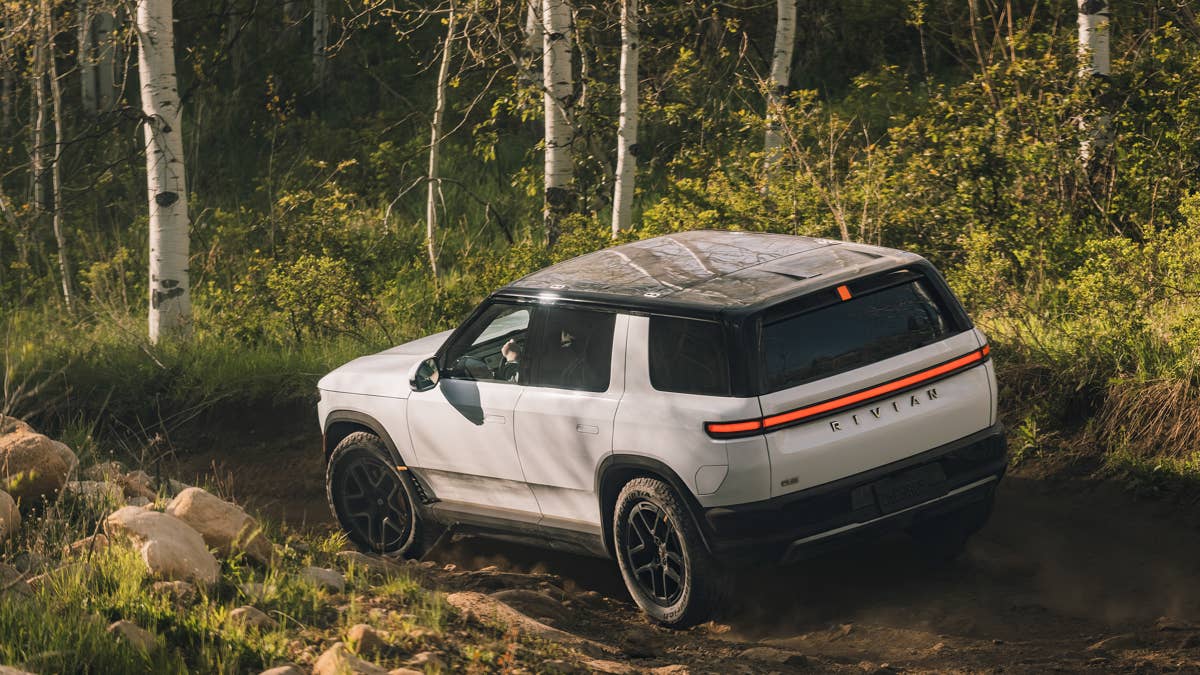
With 9.6 inches of ground clearance, a 25-degree approach angle, a 26-degree departure angle and a 20.6-degree breakover angle, the R2 has enough basic geometry to be taken seriously on the rough stuff. More importantly, it never lost that sense of composure that made it so endearing on paved roads. It didn’t clatter, panic, or ever feel as if it were being asked to do something beyond its limits. It simply got on with it, with a smile on its face.
Cole Attisha
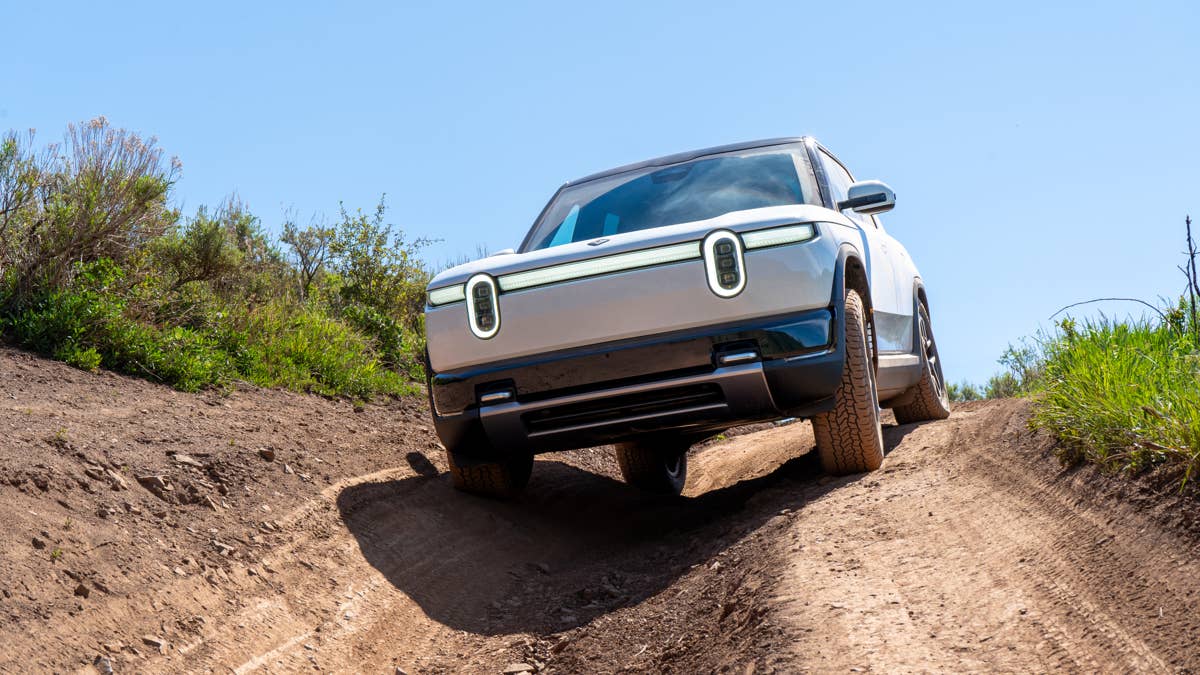
The R2’s immense power figure helped, sure, but not in a way that would suggest lesser-powered variants couldn’t match its capability. Off-road, the R2’s immediate and abundant torque made difficult sections feel surprisingly relaxed. There was always enough thrust available to climb, correct or maintain momentum, and the delivery was smooth enough that it never felt like the car was trying to launch itself into the next county.
Cole Attisha
To prove itself capable of more than sheer brute force, we aimed the R2 downhill, where its regenerative braking system was tasked with modulating its speed. With only the occasional light tap of the throttle and steady hands on the steering wheel, the R2 glided down the mountain with total ease. One noteworthy cause for concern we noticed occurred when we stopped on a steep downhill grade to take photos: the rear-axle electronic parking brake wasn’t strong enough to hold the SUV still on its own, and it began to slide slowly farther downhill. This was somewhat alarming, and certainly something to consider if you ever plan to park one on a steep, loose surface, although Rivian’s Director of Vehicle Dynamics assured us this was normal. Aside from this anecdote, the R2 performed the majority of its off-road tasks without hesitation and with surprising composure.
Would an R1S do more? Of course. The R1S is still the serious expedition-proven flagship, and that hasn’t changed. The R2, however, somehow still feels like the one more people will actually use for this kind of thing. The R2 never felt like a lifestyle prop merely pretending to be capable, and our excursion up the trails of Wasatch Mountain proved it can take a beating and still feel authentically Rivian in the process. It can commute, carve, climb and carry. It is a tool for life, and a sharp one at that.
Rivian
Simpler Suspension As A Feature, Not A Compromise
The R2 leaves behind the R1’s complex air suspension, which might sound like a downgrade at first. There is no height-adjustable gimmickry, no levelling trick for camping, and less of the mechanical spectacle that makes the R1S feel like such a high-end adventure gadget. But I’m not convinced that this is a bad thing, and neither is Rivian.
The R2 gets a mostly passive suspension system with McPherson struts up front and semi-active dampers, with the overall suspension setup being much simpler than that of the R1. That means the R2 loses some adjustability, but it also gains a sense of longer-term durability through easier repairability. A simpler suspension should mean fewer components, lower repair complexity, and a vehicle that feels less intimidating to own after the warranty expires, which all fit the R2’s overarching mission. It isn’t supposed to be Rivian’s moonshot SUV; it’s intended to be the one that more people can actually buy, drive, park, maintain, repair, and live with. If removing air suspension helps make that possible, I think Rivian made the right call.
Rivian
The Interior Feels Premium, Rugged, and Genuinely Useful—But There’s A Catch
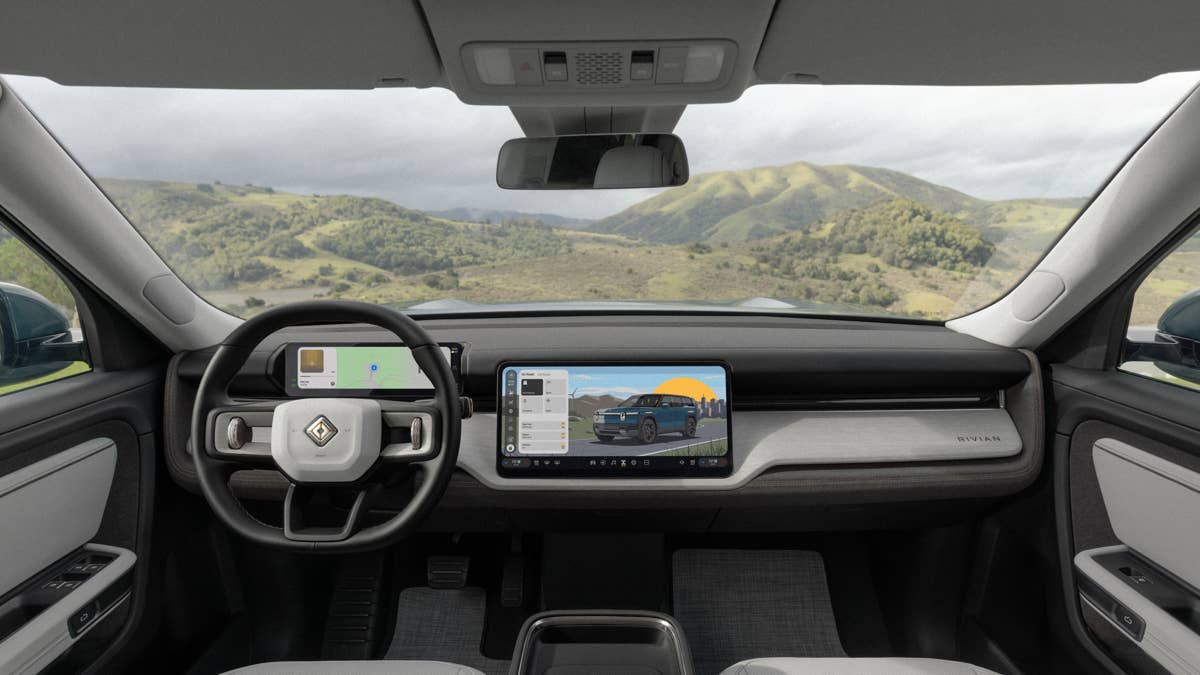
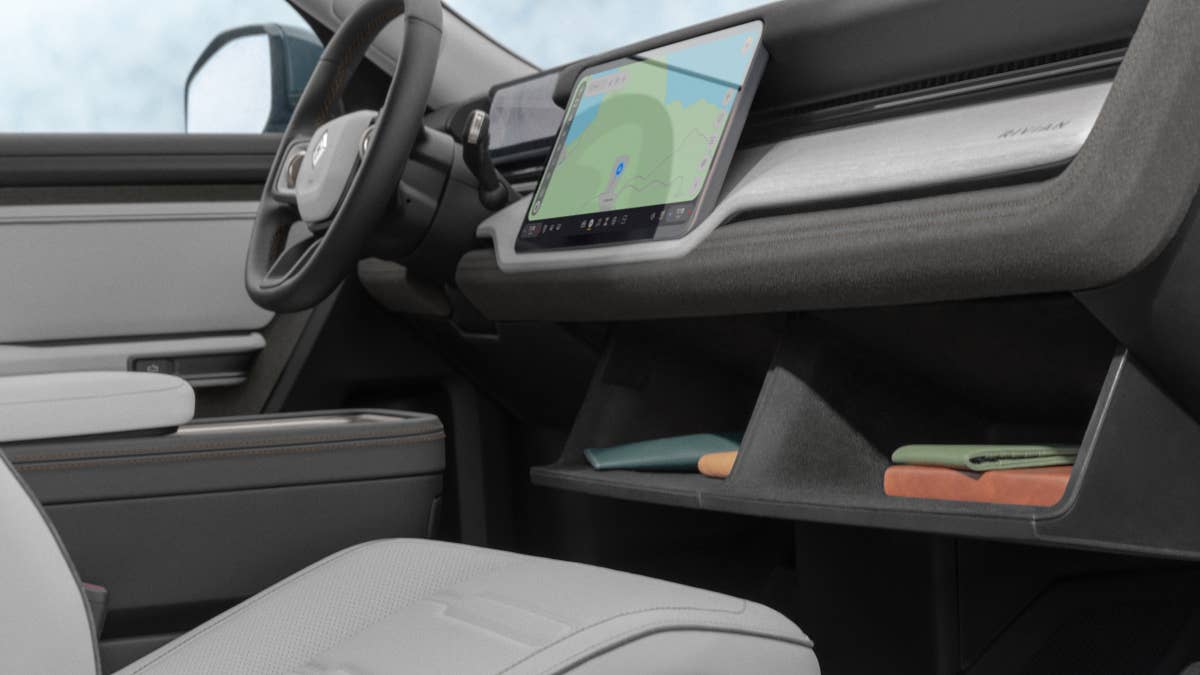
Inside, the R2 is one of those rare minimalist interiors that doesn’t feel cold or overly sterilized. I spent time in a Black Crater Signature cabin, and it struck a nice balance between premium and rugged qualities. The materials felt durable, the design was clean, and the cabin had just enough warmth and visual charisma to avoid the usual tech-startup trap of making everything feel like a dental office waiting room.
Rivian
Rivian’s nature-inspired minimalism works here because the space still feels especially useful. There are two glove boxes, which, after seeing them, made me wonder why no other EV has done this yet. The frunk is also genuinely useful; we used it for sweaters, backpacks, and camera gear, and it felt like the sort of storage area owners might actually use more than the trunk for smaller bags and items, as they won’t roll around as much or be exposed to potential burglars.
Rivian
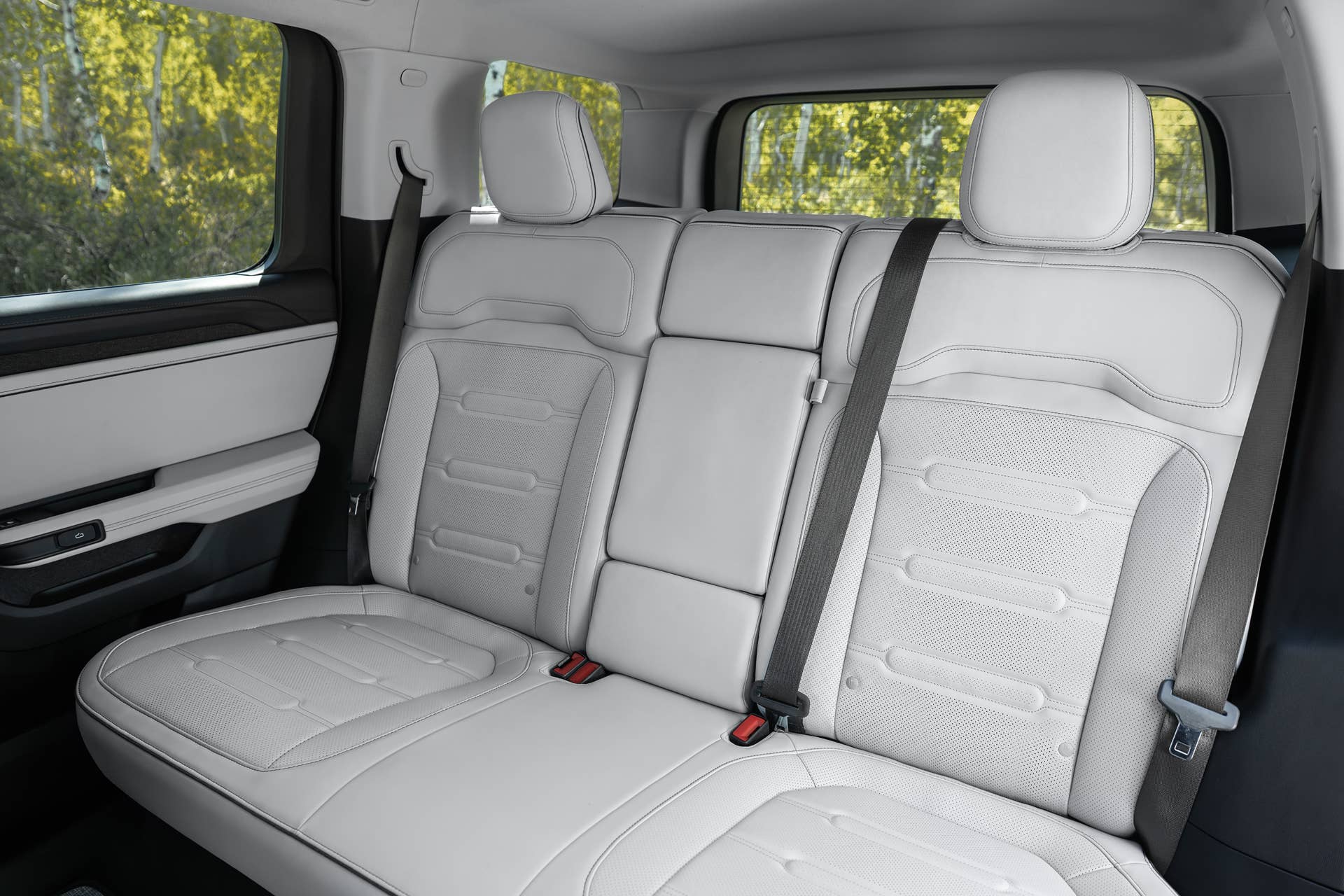
Much of the cabin’s airy openness comes from the glass roof, which is both a blessing and a curse. On a beautiful day in Utah, the cabin feels spectacularly connected to the outside world, especially thanks to its five-opening-window setup, all of which roll down entirely. On a hot day, however, the glass roof made the cabin feel as if Rivian had accidentally installed a greenhouse above our heads, and the air conditioning struggled to overpower the heat streaming through it. With no shade or cover, there wasn’t much we could do about it, either. For my drive partner and me, this was a serious flaw; an adventure SUV is supposed to work in heat, sun, and lengthy mountain drives. A panoramic roof is lovely, but not if the cabin easily becomes too warm to enjoy. Rivian says the glass is treated to block UV and reduce overheating, but from our experience, more work may be needed here.
Cole Attisha
The R2’s lack of an overhead sunshade wasn’t the only issue we noticed. Perhaps the most glaring omission was the lack of grab handles. In an SUV intended for rugged, off-road use, one would think grab handles should be abundant throughout the cabin. Hop into a Toyota 4Runner, a Land Rover Defender, or especially a Mercedes-Benz G-Class, and you’ll find these handles almost everywhere, not only making it easier for occupants to brace themselves over harsh terrain, but also making entering and exiting the vehicle an easier task, especially when the R2 is stopped on a 45-degree grade, and the loose, red sand outside is actively trying to make you slip and fall. I understand and appreciate that Rivian’s design philosophy calls for a clean cabin atmosphere, but grab handles are still one of those functional must-haves that I believe a vehicle of the R2’s nature is worse off without.
Rivian
The Best Features Are The Ones That Feel Most Human
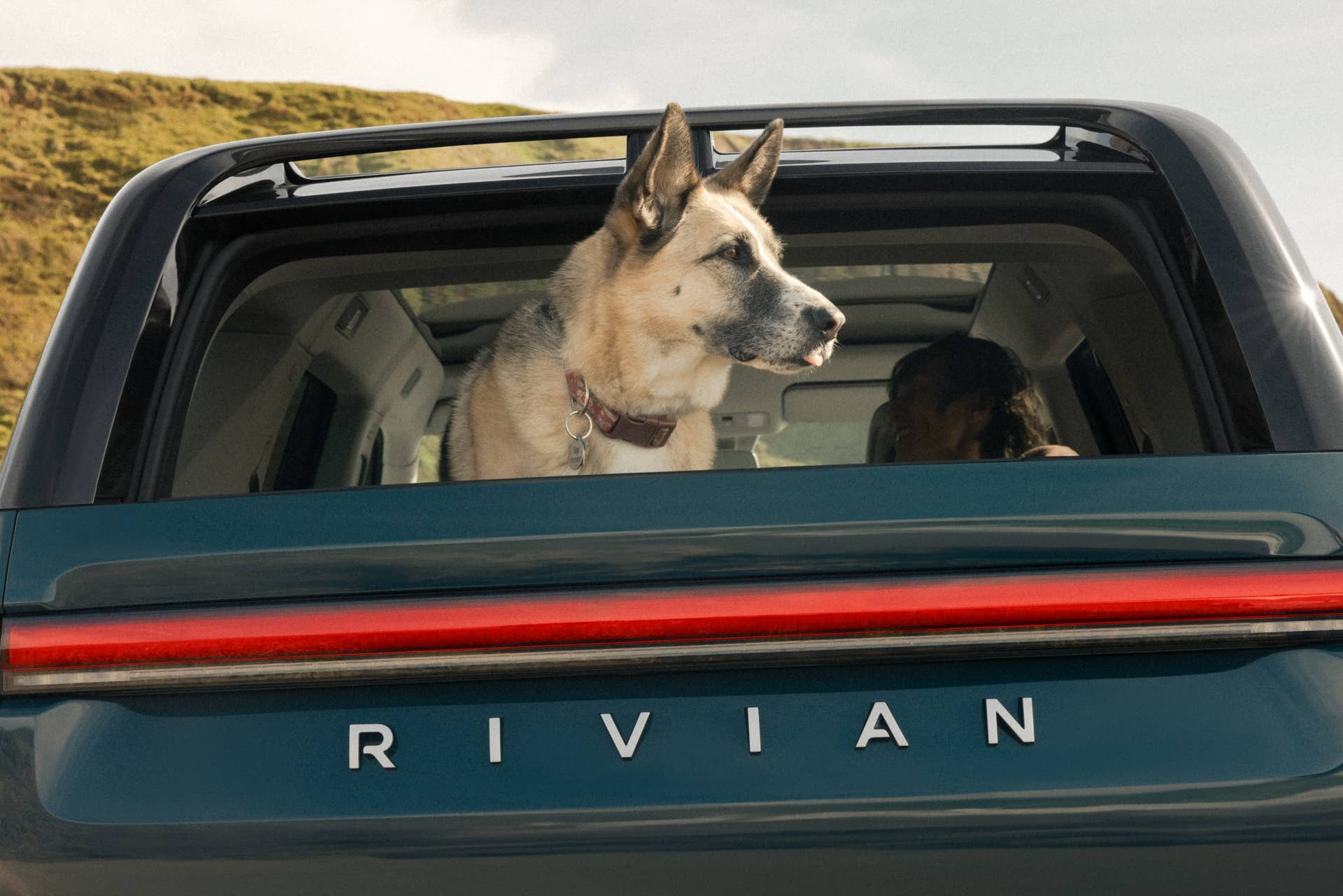
For all of Rivian’s talk about AI and robotic software, some of the R2’s best ideas are wonderfully simple. The rear drop glass is one of them, even if Toyota did it first. On Performance and Premium trims, the rear liftgate window lowers completely, which immediately gives the R2 a more open, old-school SUV feel. The Standard model doesn’t get it, which is unfortunate, but it seems Rivian wants to use it as a trim differentiator. It is a genuinely desirable feature, after all.
Rivian
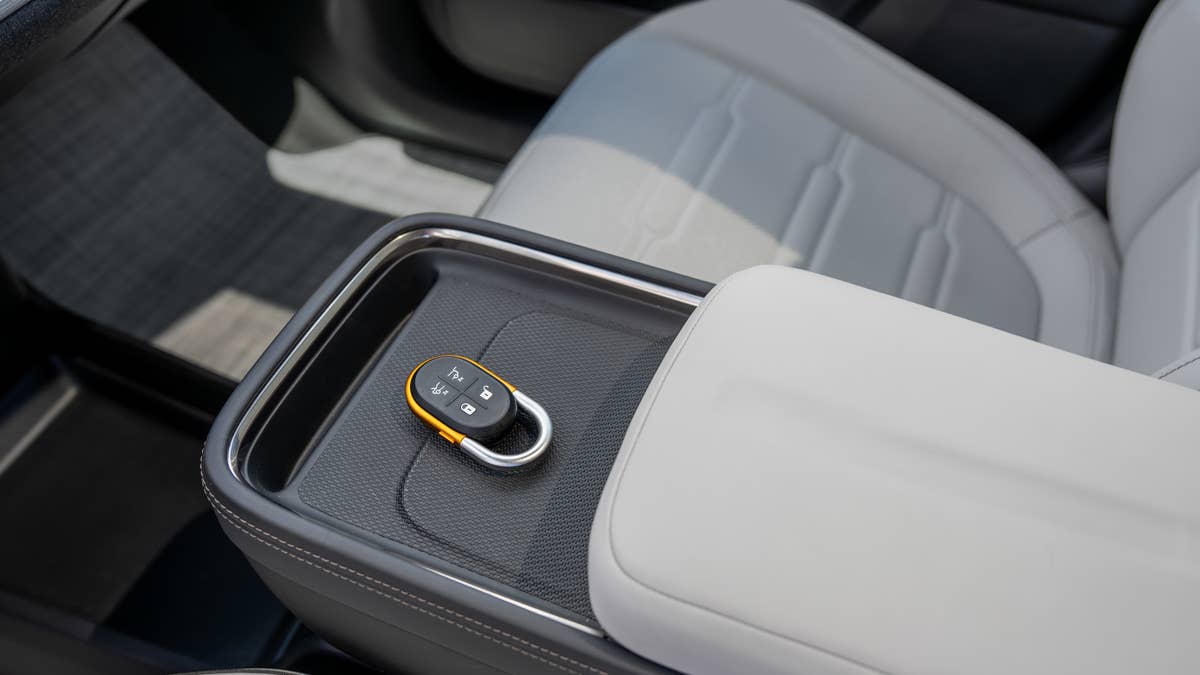
Better still, every openable window drops fully, concealing the glass entirely. There is even an overhead button that lowers or raises all five windows at once, which may not sound revolutionary, but it makes the R2 feel more connected to the outdoors than many SUVs with far more complicated adventure branding. Fresh air flows through the cabin, passengers can rest their arms on proper window sills, and the vehicle suddenly feels less like a sealed tech pod and more like a modern interpretation of a classic utility vehicle, which is exactly the kind of vibe I want from a Rivian. It is thoughtful, physical, and emotionally legible. The same applies to the door-mounted flashlight and removable power bank/hand warmer, as well as available accessories such as the carabiner-clip key fob and Rivian’s proprietary rooftop tent system. These are all little things, but little things matter when they support the lifestyle the vehicle is intended to support.
Rivian
Rivian’s New Physical Controls Are A Welcome Step Toward Common Sense
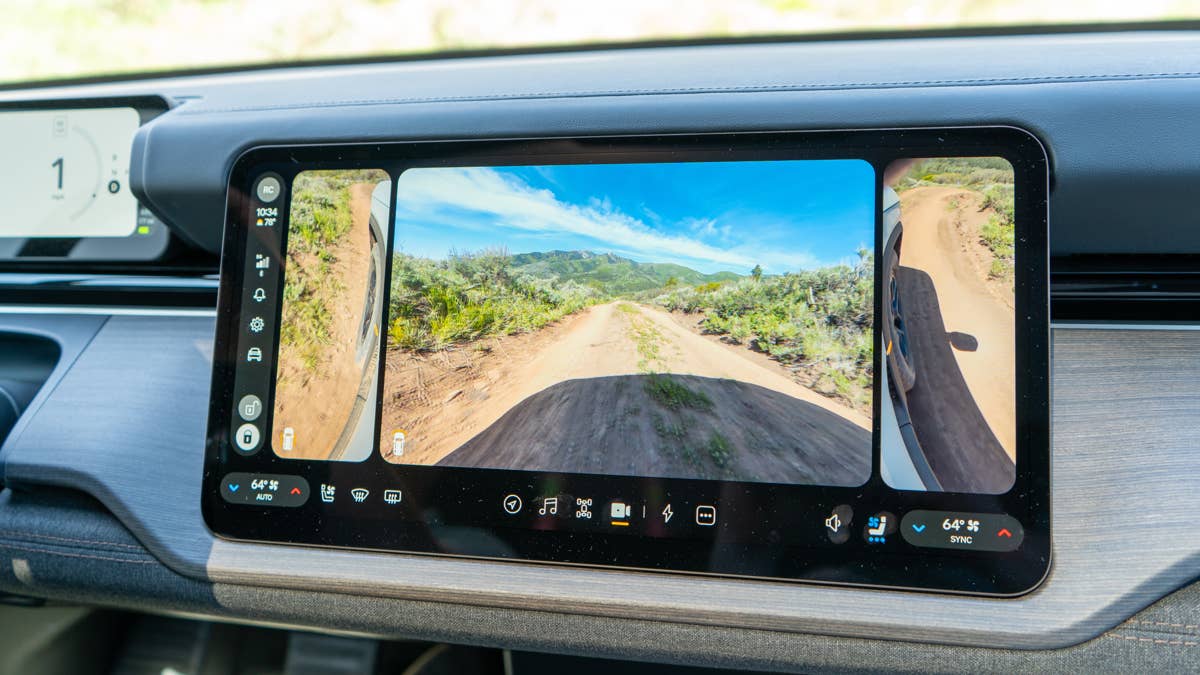
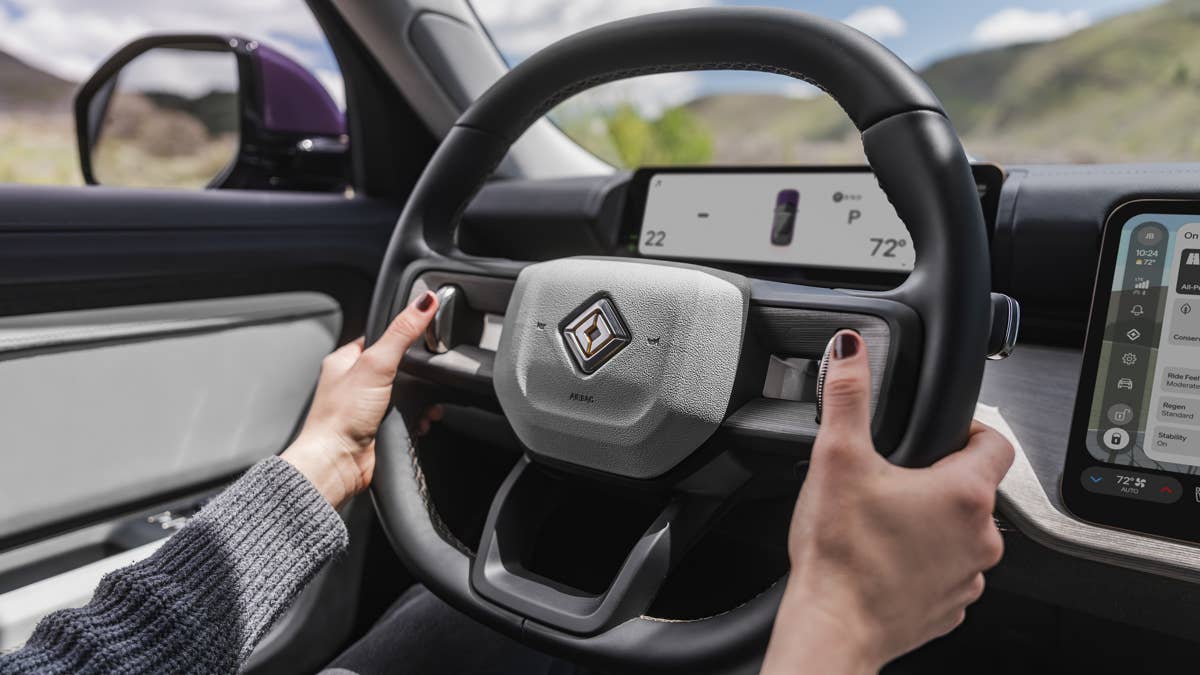
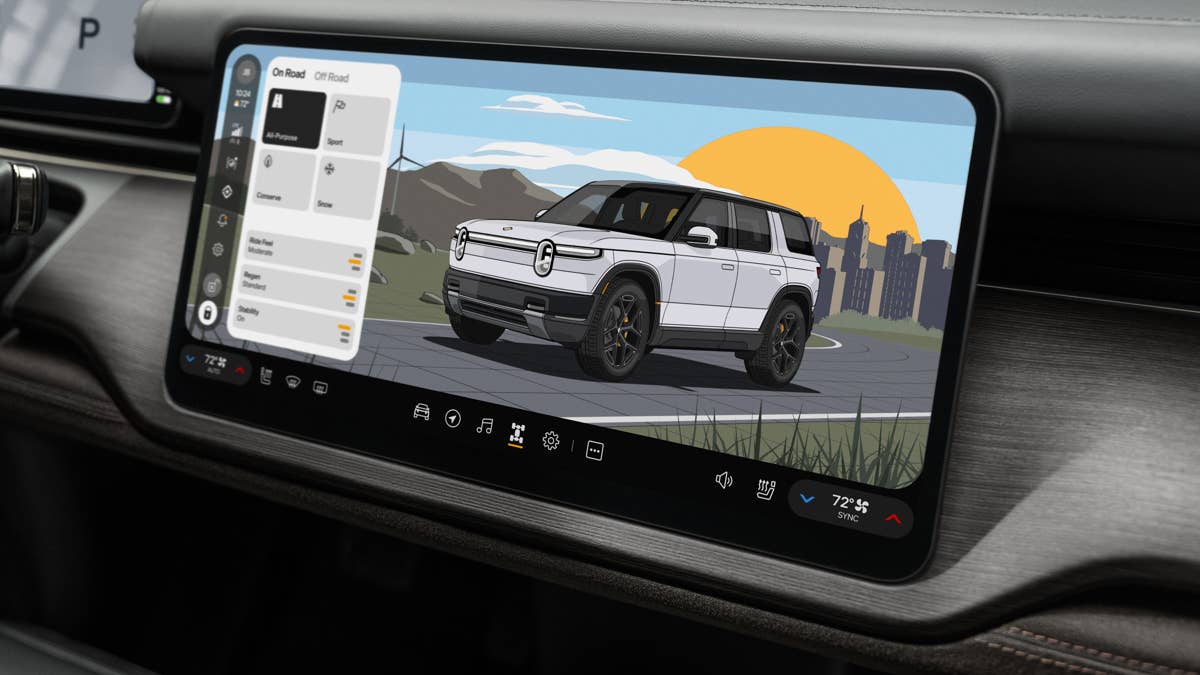
The R2 also introduces haptic “halo” rotary switches on the steering wheel to bring physical controls back for buyers who begged for them, and I liked them more than I expected. Rivian hasn’t fully abandoned its screen-forward philosophy, but these new controls give drivers back some tactile interaction without cluttering the cabin. During our drive, they handled functions such as stereo volume, track selection, and instrument cluster loadouts. They felt premium, well-weighted, and intelligently integrated, but they were also occasionally easy to bump accidentally. My drive partner, David Tracy from The Autopian, complained about that once or twice, and I could see why, but the issue didn’t ruin the experience. The gear selector was also intuitive, and, thankfully, it could be shifted without touching the brake or fully stopping, which made low-speed maneuvering and parking feel less needlessly fussy. The infotainment system itself was easy enough to use, though many functions remain buried in submenus. Overall, the R2’s interface is good, but it still occasionally makes you look for things that could be closer to the surface.
Rivian
The Tech Pitch Is Where The R2 Lost Me, If I’m Being Honest
Autonomy+ is built into the R2 hardware across the lineup, with optional service outside the Launch Package. Rivian says the system brings L2+ hands-free driving across millions of miles of roads in the U.S. and Canada, supported by 11 HDR cameras, five radars and substantial onboard AI compute. At the event, Rivian spoke frequently about autonomy, AI, robotics, vertical integration, software, and electrical architecture, and the phrases eventually began to lose all shape in my mind. I get it. Rivian has to be as much a technology company as a car company. CEO RJ Scaringe is clearly thinking far beyond this one SUV, and our conversations about autonomy, AI, robotics, and future products made it clear that Rivian’s ambitions extend well beyond selling pleasant electric crossovers to outdoorsy people with GoreTex raincoats and Salomon boots.
What I mean is, the R2 Performance had me excited to drive it because it was a handsome, boxy, 656-horsepower electric SUV with real off-road capability and a cabin full of useful ideas. That’s the sizzling steak. Hearing about AI compute, zonal architecture, and vertical integration felt, at times, like the classroom lecture that I had to endure before I could finally sink my teeth into it. Tech-focused buyers might love this stuff, and Rivian enthusiasts may even consider it central to the brand’s appeal. But for me, the R2 was most convincing when it simply behaved like a great car, not when it tried to convince me that my future life would be run by artificial intelligence—even if it might not be incorrect.
In my experience, adventure SUVs are rarely beloved for their electronic complexity, especially in the long term. Land Rovers and Land Cruisers are beloved for their mechanical capability, durability, visibility, character, and the confidence they inspire. Their electronics are often tolerated rather than celebrated, especially in Land Rover’s case, and these days, those retro off-roaders with simpler electronics tend to be the more valuable ones. But the R2 feels different because it is, to a great extent, software-defined, yet the same emotional rule still applies: people fall in love with what a vehicle lets them do, not how many microprocessors it packs.
Rivian
The R2’s Main Rival Is Still The Tesla Model Y
The obvious rival here is the Tesla Model Y, and Rivian knows it, having priced the R2 alongside the Model Y from the start. RJ Scaringe sees the R2’s form factor as a major competitive advantage, and I think he’s right. The Model Y is efficient, quick, well supported by Tesla’s charging network, and deeply familiar to EV buyers, but it doesn’t have nearly the same emotional pull as the R2. It doesn’t look like an adventure SUV, nor is it as capable as one, and it certainly isn’t as charming. It lacks the same open-air outdoorsiness, or the same sense that it was designed by people who actually enjoy touching grass.
Rivian
Lower-priced alternatives like the Hyundai Ioniq 5 XRT, Subaru Trailseeker, and Toyota bZ Woodland will make sense for buyers who want some electric outdoor flavour without spending Rivian money, but each comes with some sacrifice, whether in power, capability, premium feel, brand cachet, or the sheer completeness of the R2’s package. The R2 Performance, especially, feels like a more special thing than any of those vehicles, as competent as they may be. It’s quicker, more capable, more premium, and more distinctive. The question is whether buyers will pay for that.
Rivian
Pricing And Battery Range
The R2 Performance with Launch Package starts at $57,990 before destination, with an EPA-estimated range of 330 miles. Premium starts at $53,990 and includes dual-motor all-wheel drive and 330 miles of EPA-estimated range, while Standard RWD Long Range starts at $48,490 with up to 345 miles of Rivian-estimated range. A lower-range Standard RWD model is planned to start at $44,990. Destination/Freight charge is $1,495 across the lineup and is not included in the prices listed above. Rivian Assistant—an AI-powered voice assistant—will become available on R2 later this summer, and early launch R2 vehicles will be capable of Point-to-Point driving later this year, with deliveries and invite-to-order for reservation holders beginning immediately for select models.
Rivian
The R1S is desirable, but it is expensive enough that many buyers live mostly in the aspirational cloud. The R2 brings Rivian closer to people who may actually be cross-shopping mainstream EVs, premium compact SUVs, and adventure-oriented crossovers. As for charging, the R2 has a native NACS port, Supercharger access, and a claimed 10-80 percent charge time of 29 minutes under optimal conditions, which affords it serious road-trip credibility. The R2 doesn’t need to be cheap to matter, but it needs to feel attainable enough that people who once admired Rivian from a distance can start doing real math. For the first time, that feels legitimately plausible.
Rivian
Verdict: The R2 Earns Its Rivian Badge
The 2027 Rivian R2 Performance isn’t perfect. The glass-roof heat issue needs attention; the missing grab handles are a strange oversight in an SUV meant to leave pavement in the rearview; some functions remain buried too deeply in the screen; and Autonomy+ may become impressive with time, but my brief experience made me feel more cautious than converted. Rivian’s constant tech-forward messaging can also make its most human product feel, at times, as if it’s being forced to wear a lab coat over its hiking gear. But none of that changes what matters most: the R2 feels authentically Rivian through and through.
It would have been easy for Rivian to shrink the R1S into something cheaper, softer and decontented, then pray that the badge did the rest of the work. Instead, the R2 inherits enough of the R1’s core identity to justify the diamond logo on its nose. It has the upright stance, friendly lighting signature, premium minimalism, clever storage, electric punch, off-road confidence, and adventure-minded personality that made Rivian interesting in the first place. It’s also meaningfully more approachable than the R1—the R2 is smaller, easier to manoeuvre, less intimidating off-road, and more realistic for the kind of buyer who admires the R1S but doesn’t want to drive something that feels quite so large, expensive, or overbuilt for daily life. It loses a little bit of the R1’s theatre, but it keeps the important stuff.
The R2 is incredibly well-rounded, technologically advanced, genuinely capable, and occasionally flawed in ways that feel both frustrating and very Rivian. It can sprint like a performance EV, crawl through technical trails with ease, carry plenty of gear, swallow camera equipment in its frunk, lower all five windows at once, and connect you with the outdoors, rather than shield you from it. The R2 doesn’t need to be the toughest SUV in the world, the cheapest EV in its class, or the most functionally analog adventure vehicle ever built. It needs to make Rivian feel more attainable and usable without losing the essence that made the brand compelling, and it does so with great flair, without taking itself so seriously that it eliminates any sense of charm. For all the talk of cameras, AI, autonomy, and software-defined architecture, the R2’s strongest argument is still the simplest one: it feels like a Rivian. Not a watered-down one, nor a lifestyle-themed imitation. A real one, merely scaled for more people and more places. Flaws and all, that is its most admirable trait.
Rivian
