I’ve always been fascinated by the Volkswagen Type 4, because it has a sort of lost cause, last ditch effort that I find appealing, somehow. By the time the Type 4 came out in 1968, the 1930s-futuristic VW formula of a backbone chassis and rear-mounted engine were looking pretty archaic, and the transverse front engine/front wheel drive future was looming quite large. But VW wasn’t quite ready to give up the magic that made them so successful, and the Type 4 was their attempt to take these old ideas into the future. Or, maybe more accurately, present.
And, in that context, I think the Type 4 was pretty successful! VW kept a horizontally-opposed air-cooled, rear mounted engine, but this was an all-new design – not a re-working of the original like the Type 3 engine – with an aluminum block and fuel injection and stellar horsepower (for a 60s VW engine). We’re talking 85 hp! And later more!
The Type 4 was going to be Volkswagen’s upmarket car. A luxury car. Their first four-door passenger sedan! It’s this luxury context that I’m kind of fascinated with at the moment, because the elements that VW is considering luxurious or premium or whatever just seem so incredibly, um, humble by modern standards. Maybe even non-modern standards.
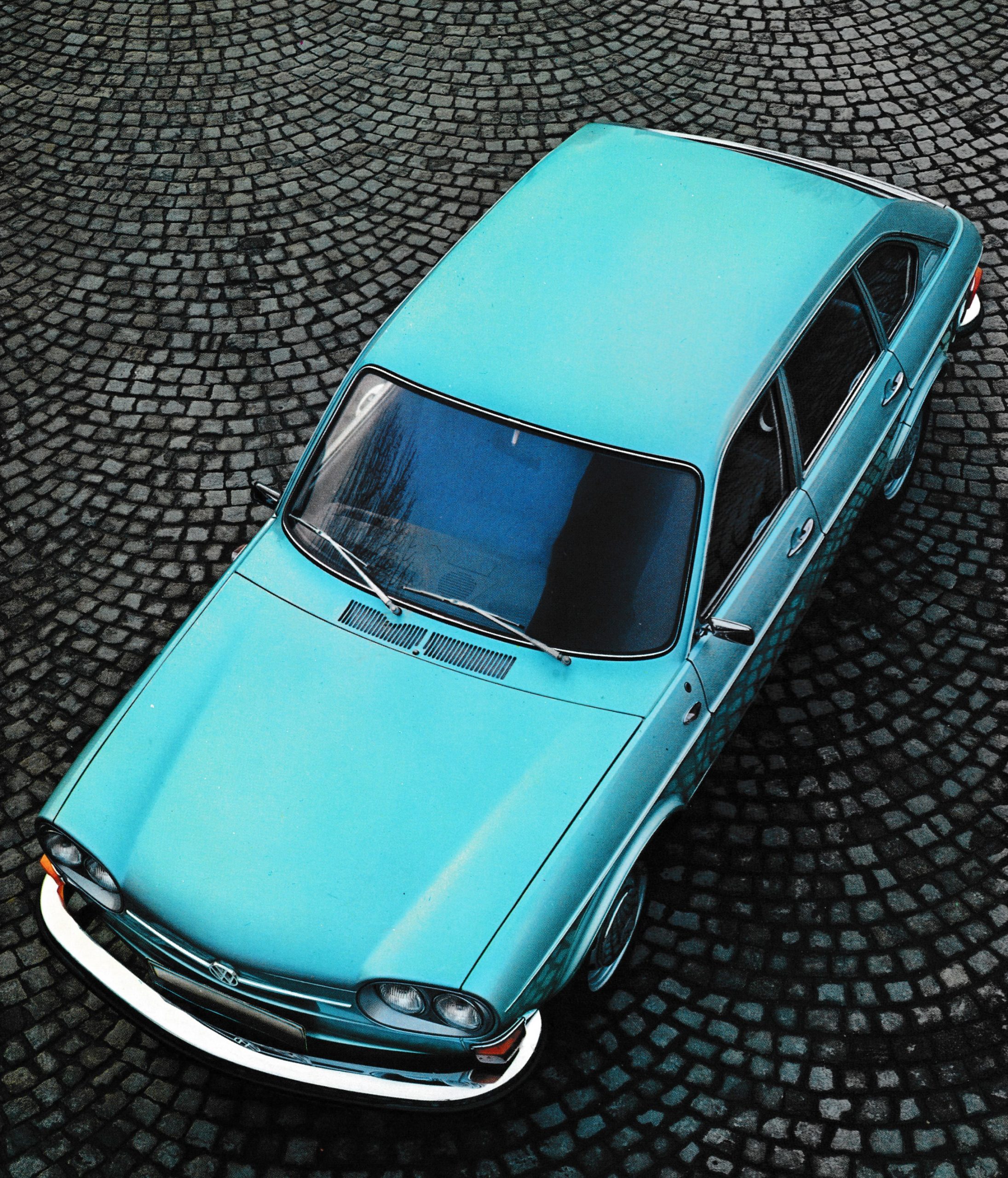
Pininfarina was said to have had a hand in the design, as the famous Italian design house was under an advisory contract with VW at the time. I personally think these cars are packaging marvels, as the MacPherson front suspension gives a ton of luggage room up front, along with a significant front overhang that looks kinda awkward, but gives plenty of more room for stuff.
The generous interior volume was a big deal to VW, and mentioned a lot in the brochures, even in the sedan version, not just the wagon. The front trunk has 14 cubic feet of luggage space, and there’s a rear luggage well with 6 cubic feet, for a total of 20 cubic feet of cargo area. Compare that to the trunk of an original VW Beetle (and some other cars):
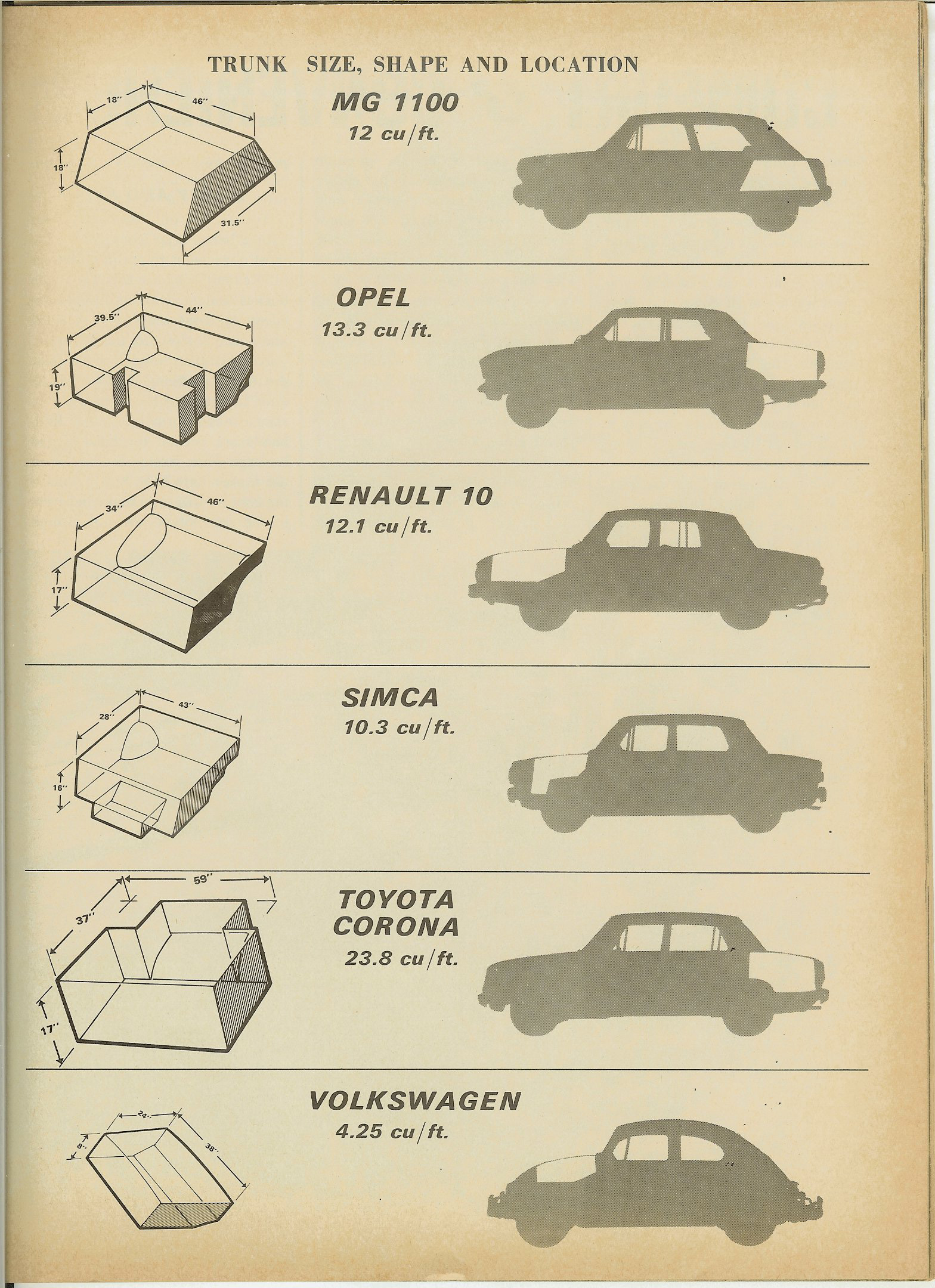
That’s a hell of a lot more space than the Beetle. A bit more than the also twin-trunked VW Type 3 (about 16.7 cubic feet for the Fastback) which was VW’s earlier upmarket attempt. VW was so proud of all this space that they introduced me to a word I never knew:
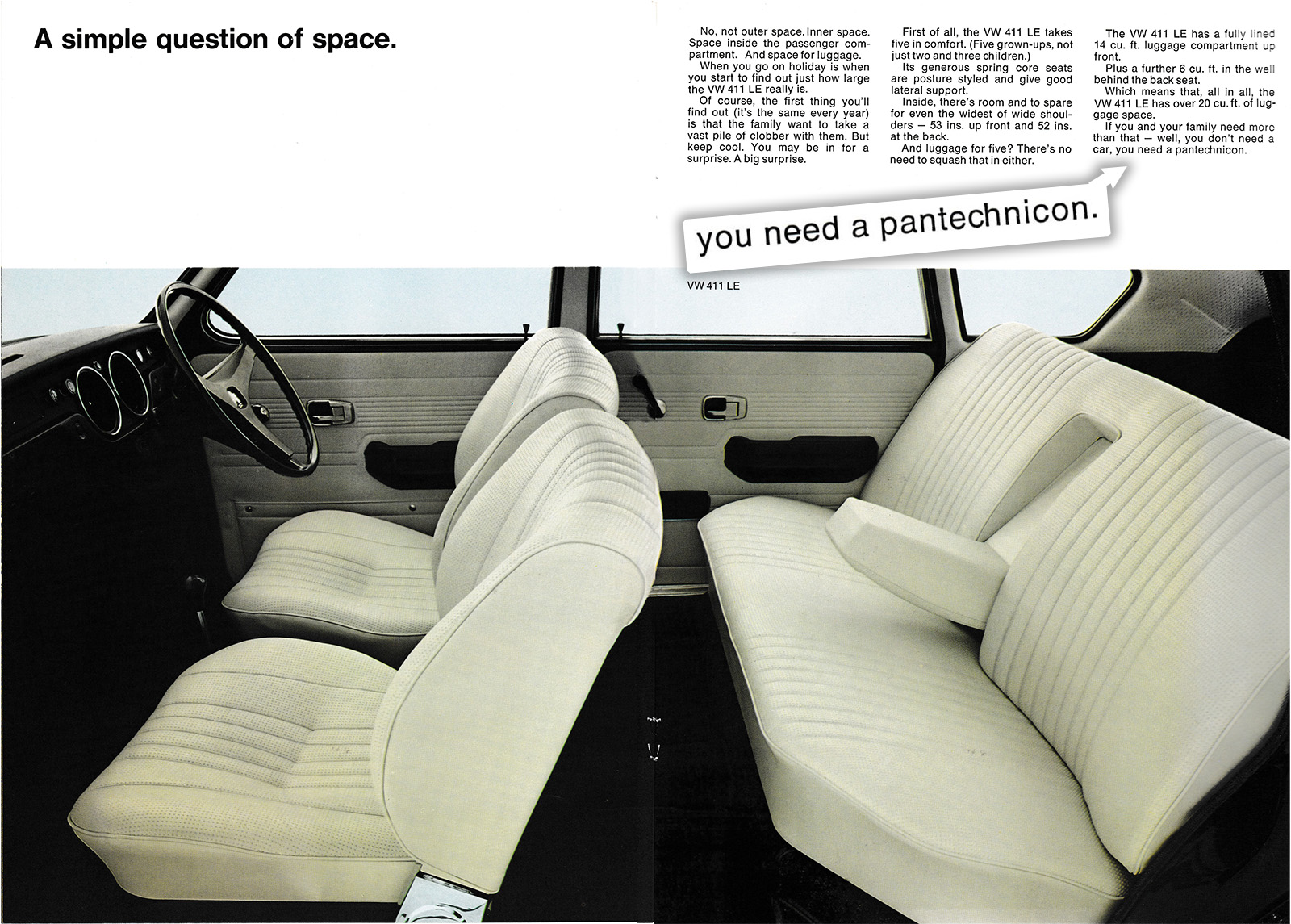
Pantechnicon? That sounds like a Victorian-era optical illusion toy you’d see in some London drawing room, or maybe a European university. But it actually means a big van, like a moving van. What an odd choice of word for a car brochure, right? Was this a commonly-used word back then?
There is a swanky fold-down armrest there, though, that’s pretty swanky. And, of course, four doors!
Weirdly – and, as I’ve discussed before – the wagon version only came in two doors, for bizarre reasons only long-gone VW product managers understand. But look at what they decide to highlight in the copy here. Sure, there’s the “impressive 62.9 cubic feet” of space with the rear seat folded (38.8 with it up) but I’m more interested in how such mundane and – you’d think – expected things like a “lockable” luggage compartment that’s carpeted and lined are pointed out specifically. Oh, and that the rear hatch “stays open automatically.” These all seem like such mundane details to call out!
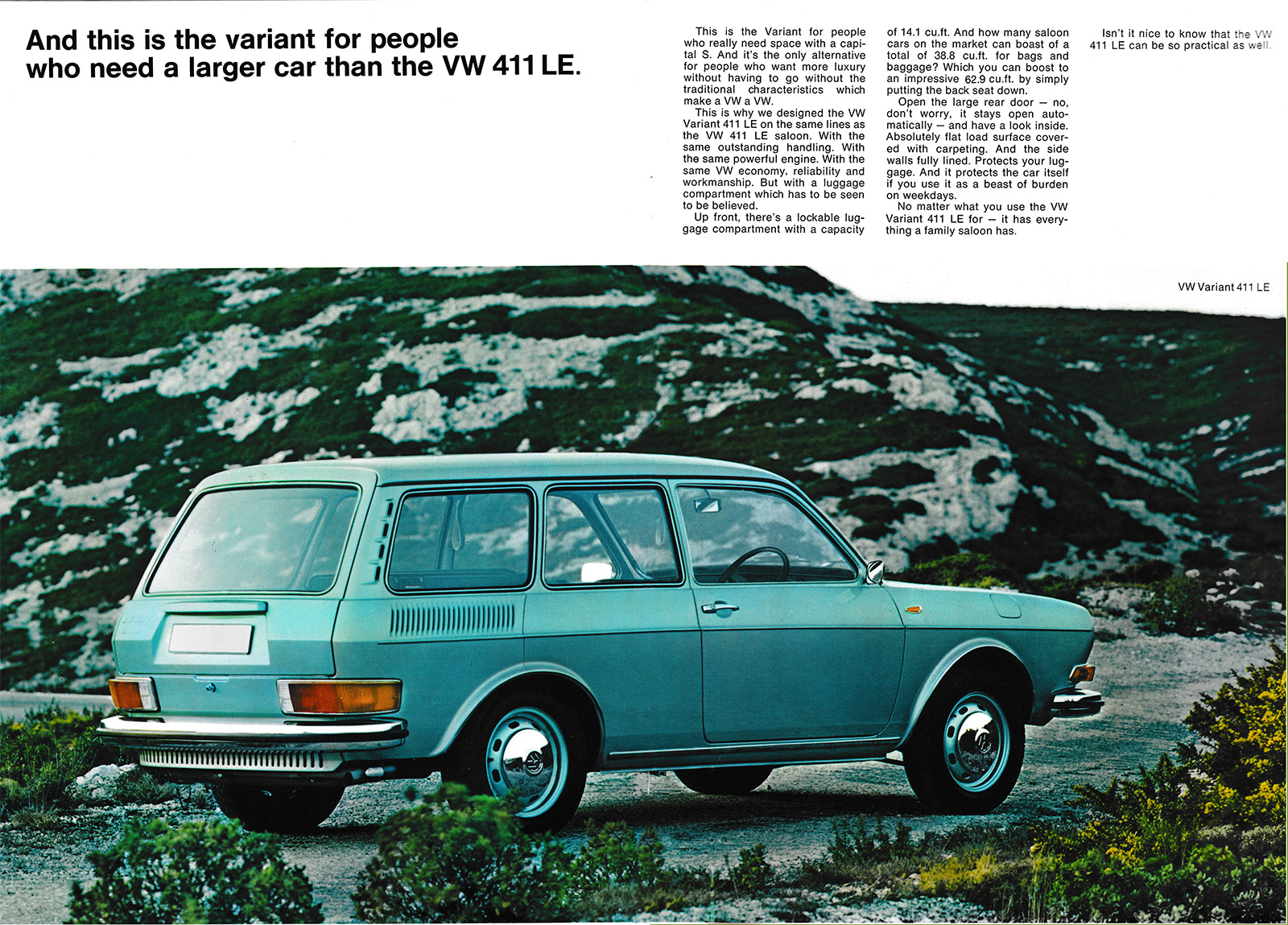
I mean, good, I’m glad the Type 4’s rear hatch doesn’t just slam down on you, that is nice. But is that what would be considered luxury?
The Type 4 was a well-appointed and built car, but it’s hardly lavish. Compared to what Americans considered luxurious, like upholstery that was certified bordello-grade and slabs of fake wood and vinyl tops and opera lights and landau bars, the Type 4 almost feels, I don’t know, not exactly spartan, but definitely sober.
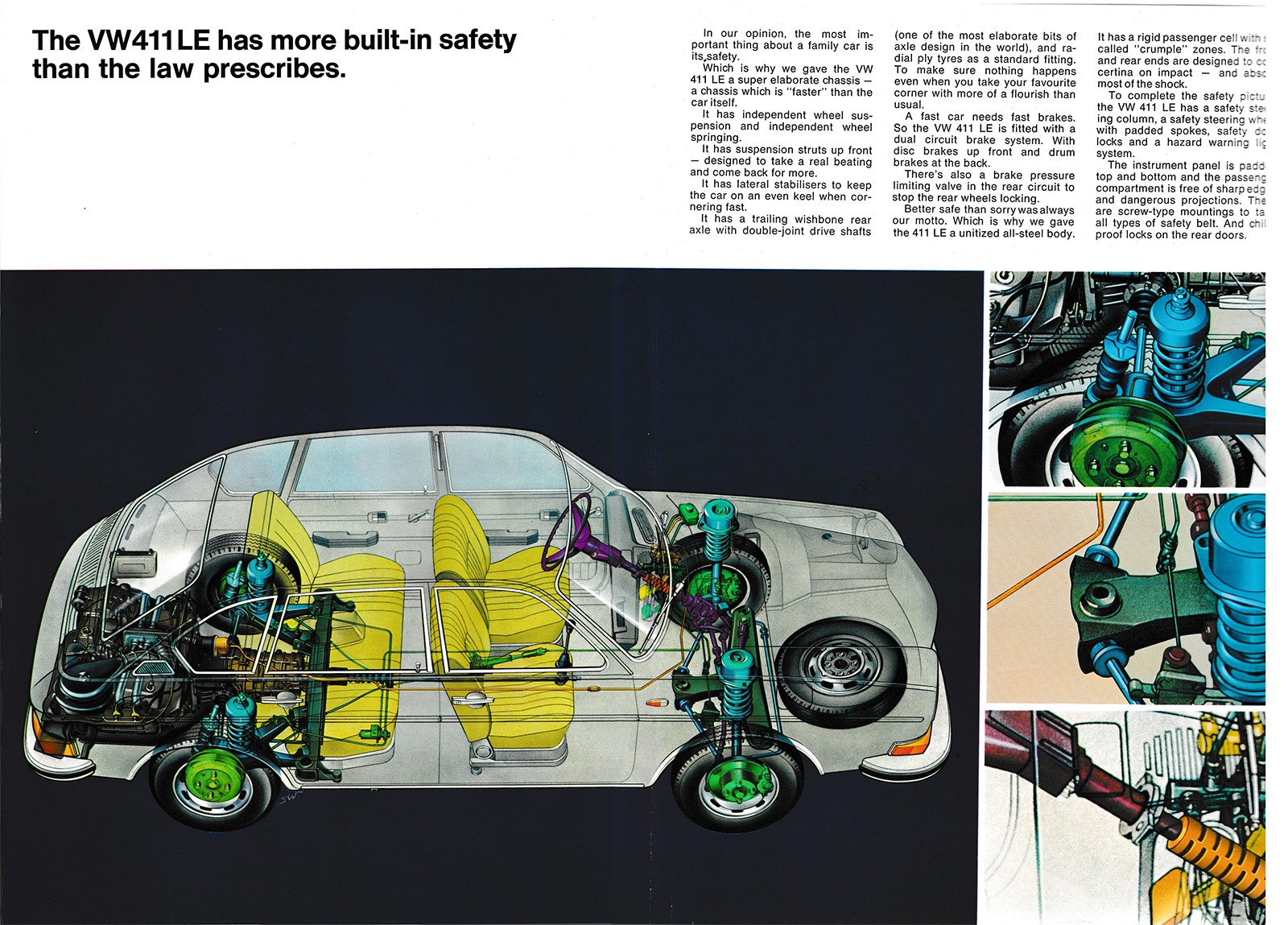
I do love this Type 4 cutaway that I’m sure I’ve shoved into articles before, but what I’m interested in here is the stuff they choose to point out, like brake pressure limiting valves and hazard warning systems. Important, sure, and there are definitely buyers who want to know the car has crumple zones and a padded dash, but the way the headline notes that it has more built-on safety features “than the law prescribes” just has a funny sort of tone.
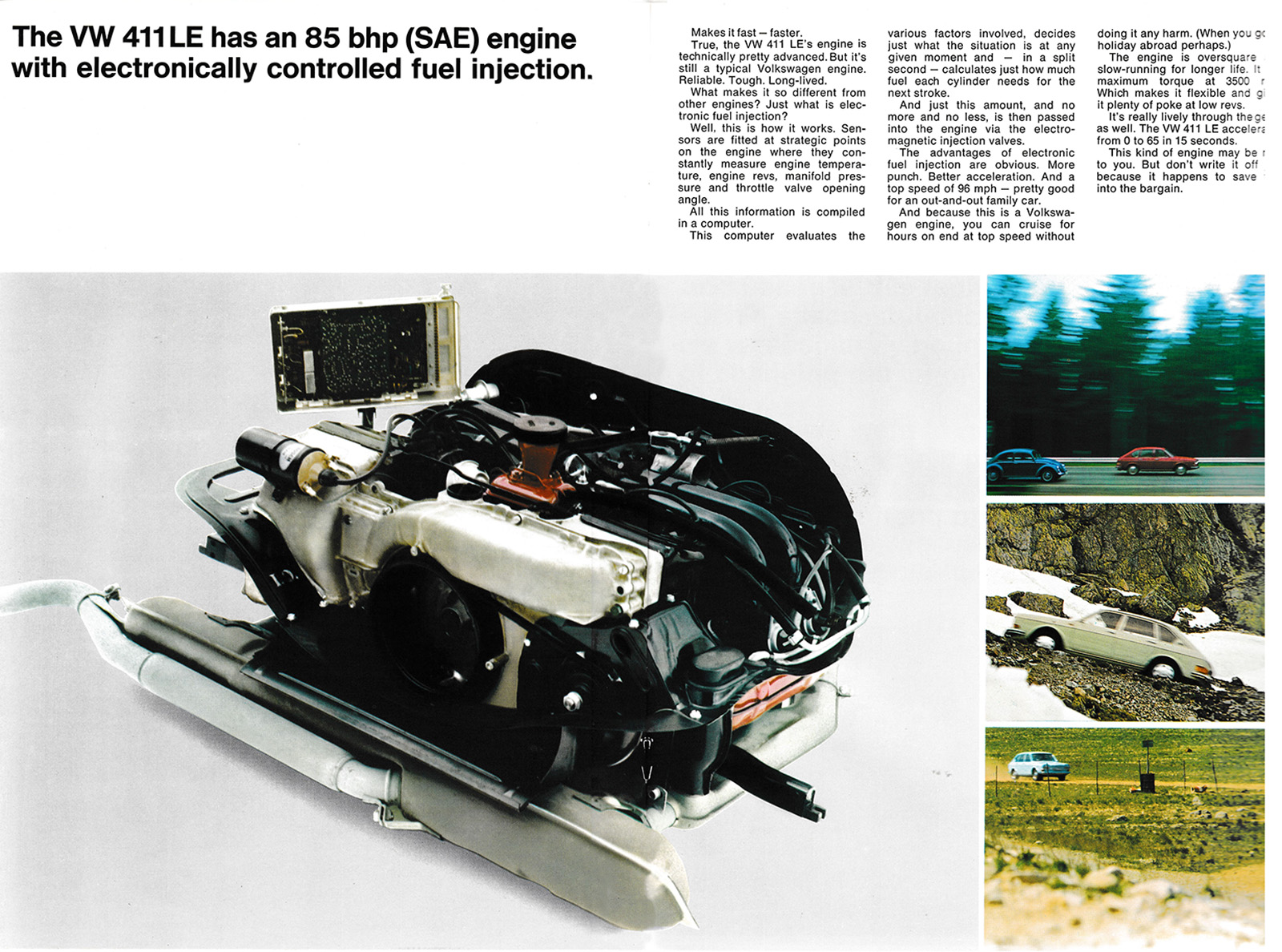
VW was sure proud of their Type 4 engine and especially its early ECU, which the copywriters delighted in calling a computer. I mean, it was, and it was a big deal, and the engine was pretty advanced. Top speed of 96 mph! 0-60 in a slow-sounding-but-really-not-bad 15 seconds! This engine made 100 hp in Porsche 914s and powere plenty of buses, too.
Really, if the Type 4 has a successful legacy, it was this engine, which was also, along with the later Porsche 993, one of the last really serious developments of an air-cooled engine for mainstream passenger car use.
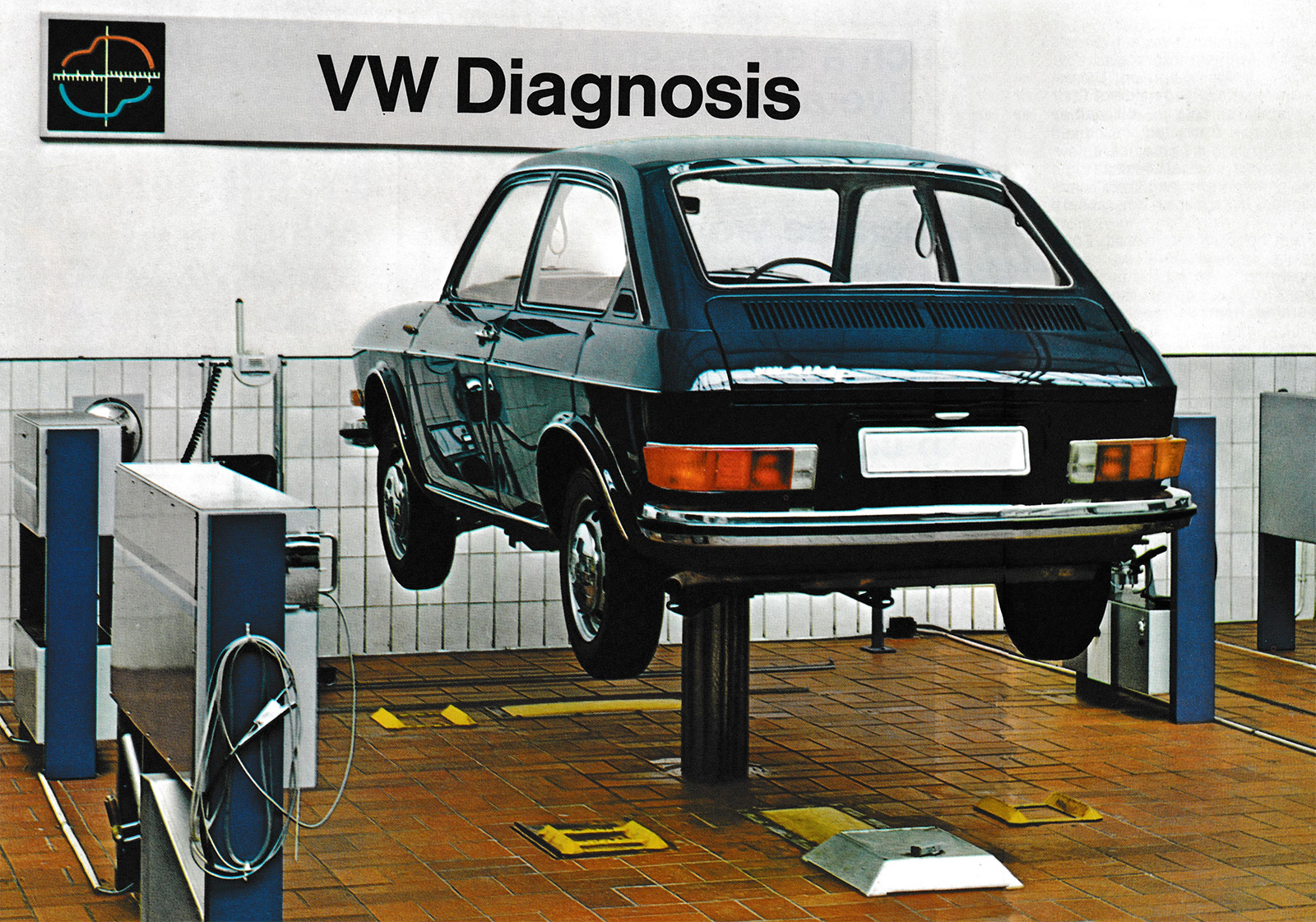
I also always liked how willing VW was to show their cars in the shop or on lifts. Also, this is the only picture in the brochure of the two-door Type 4.
These really are the most unloved of the air-cooled VWs, and I understand why, but I still think it’s kind of a shame. In hindsight it’s hard not to see these as a desperate grab at continued relevancy for the old VW formula, but at the time I think it was more about hope than desperation.
Maybe I’m reading too much into this?
The post The Humble ‘Luxuries’ Of The Volkswagen Type 4 appeared first on The Autopian.