The Worst Theta Engine
If you’ve kept an eye on Hyundai and Kia models from the 2010s, the Theta engine probably rings a bell. The Theta II 2.4-liter, in particular, picked up a reputation for trouble – think rod knock, bearing wear, oil starvation, and sudden failures. It showed up in everything from SUVs to family sedans, and over time, it became one of those engines owners learned to be wary of.
However, the worst Theta might not be in the usual family haulers. Based on what I Do Cars found, the 2.0-liter turbocharged RS Turbo in the Genesis Coupe could actually be the most problematic. These engines often struggle to reach 150,000 miles, and owners start asking about replacements long before the cars are old enough to be scrapped.
The engine in question came from a stock 2014 Genesis Coupe automatic, showing about 104,000 miles on the clock. On paper, it looked well cared for, with oil changes every 4,000 to 5,000 miles.
Looking Ugly Underneath
The Theta engine here looked fine at first glance. The spark plugs were okay, the turbo spun smoothly, and the intake ports were cleaner than expected, likely thanks to multi-port injection. Even under the valve cover, there was just some mild discoloration and barely any sludge, so it didn’t seem like the engine had been ignored.
But once the timing cover came off, things started to appear worse. There was metal contamination stuck in the timing guides, and bits of bearing material caught in the variable valve timing solenoid screens. That was the first real sign that damage had reached the oil system.
The real trouble showed up when the oil pan was removed. Inside, there was copper-colored powder, chunks of bearing debris, and metallic sludge sitting in the pan and oil pickup. The oil pump showed clear scoring from the contaminated oil, and several rod bearings were badly overheated and worn.
I Do Cars/YouTube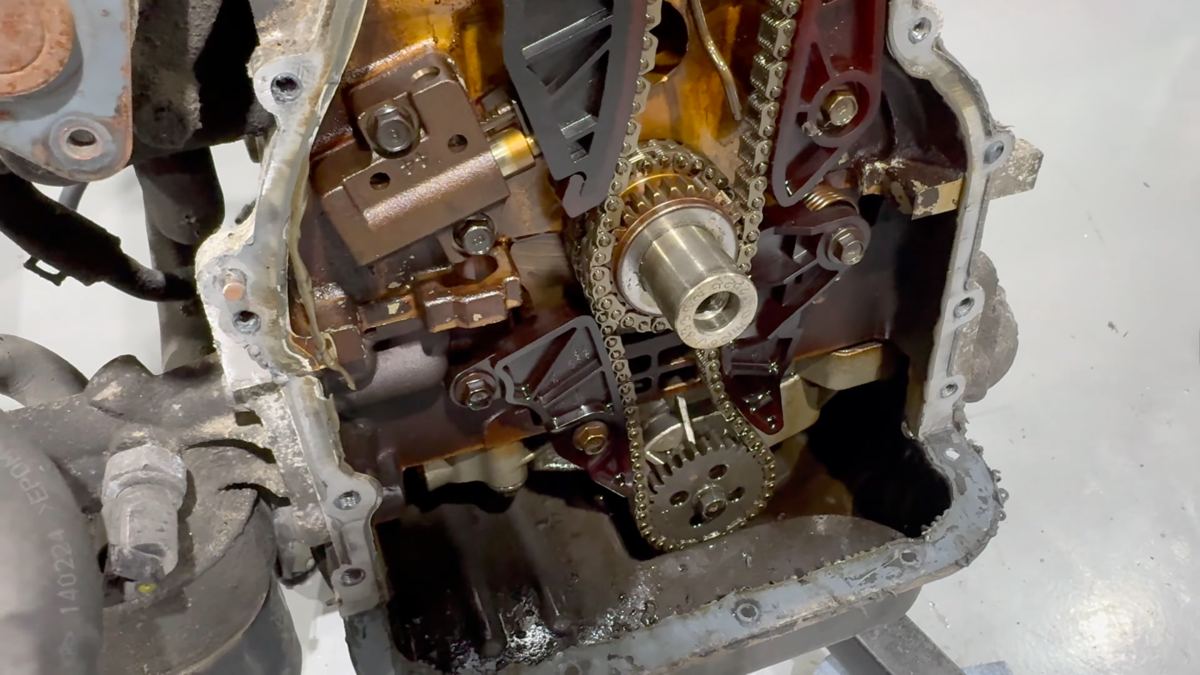
When Regular Maintenance Isn’t Enough
Most importantly, it wasn’t just a single bearing that failed. Multiple rods showed signs of heat, pistons had visible wear, and the crank journals were heavily damaged. The likely cause? Oil starvation or long-term oil consumption, possibly from an engine that was quietly burning oil without anyone noticing – a typical Theta problem.
Well, this teardown serves as a reminder that just having clean oil isn’t always enough. Even engines with solid service records can hide problems if oil consumption slips under the radar or lubrication issues build quietly. It’s worth checking your oil regularly between services, listening for odd noises, and keeping an eye on how much oil the engine uses.
And if you’re looking at a used Genesis Coupe 2.0T, it might be smart to check for bearing wear or even drop the oil pan and inspect the pickup before any issues get expensive.