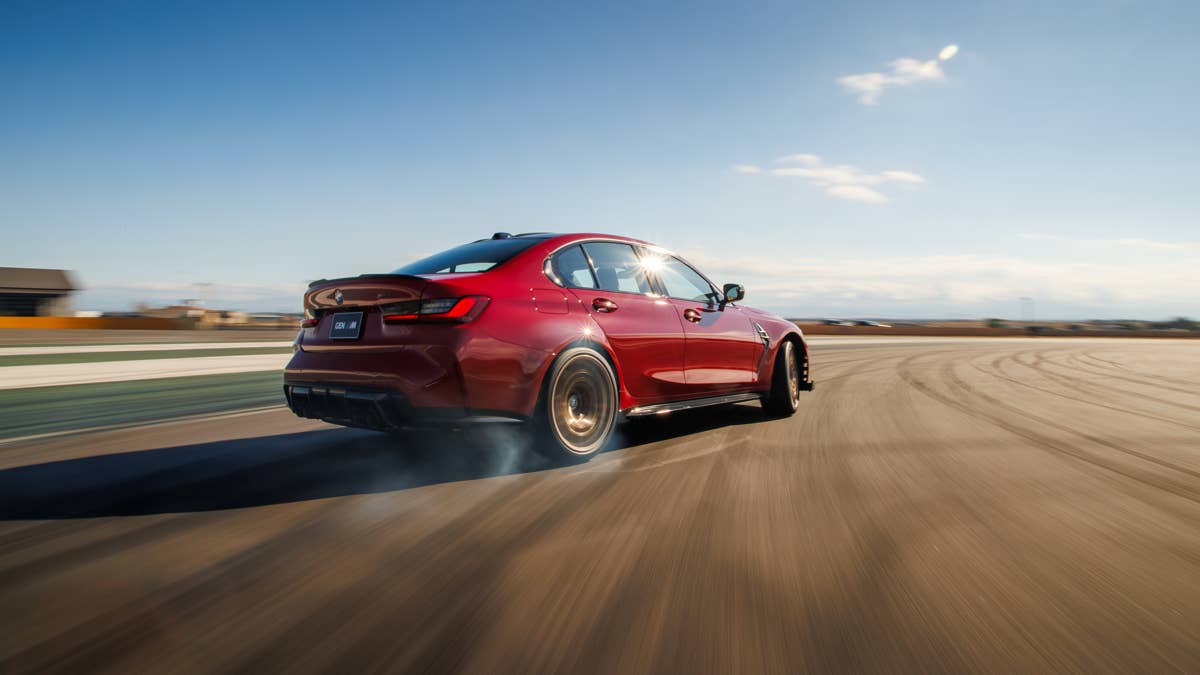
This week, BMW announced arguably its coolest G-series car yet: a 2027 BMW M3 CS with a manual transmission and rear-wheel drive. But why is it only being offered in the U.S. and Canada? What makes us worthy of such a focused means of experiencing the manual transmission when the rest of the world missed out? Jay Hanson, a spokesperson with BMW’s Product and Technology department, explained to BMWBlog that the U.S. is arguably the M division’s most important market, and what an automaker’s most important market wants, it gets:
“The U.S. is the largest market for BMW M, and our fans there, more than anywhere else, have made it very clear to us that they still want these special, high-performance cars with manual transmissions. They asked for it, and we delivered – the M3 CS Handschalter was created for them.”
America Has Always Been a Fan of BMW M’s Manual Transmission
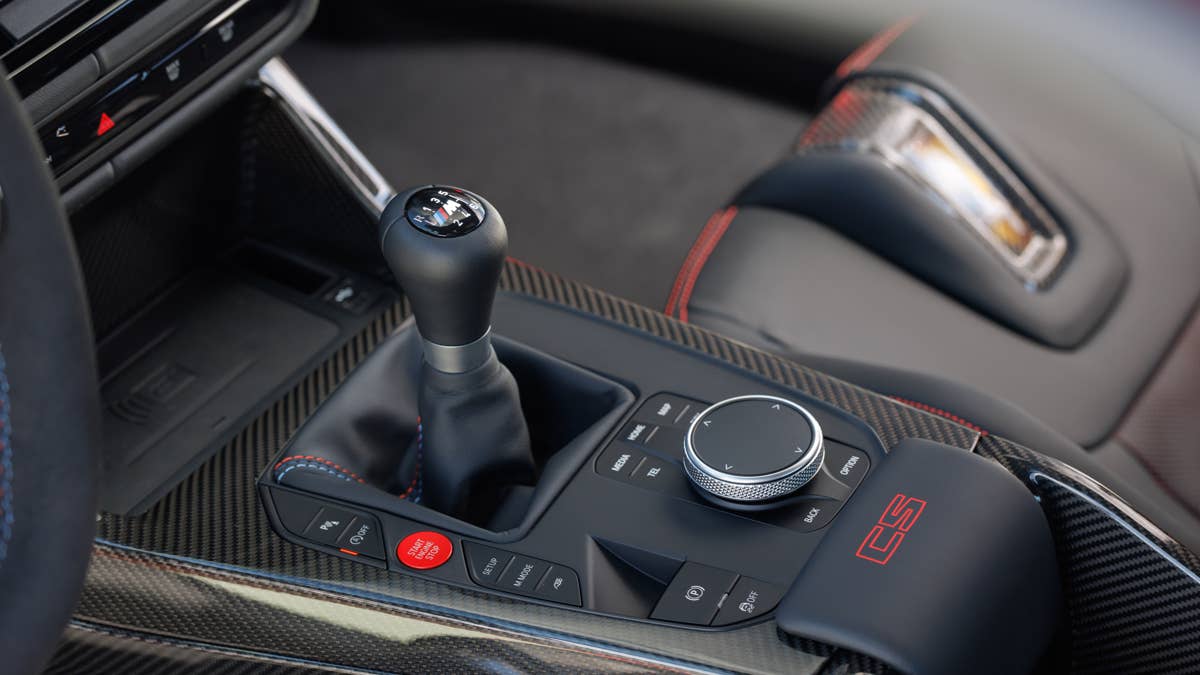
While so-called daily drivers are almost always equipped with an automatic transmission for the majority of U.S. drivers, Americans tend to feel differently about performance cars, and the M3 CS Handschalter is only the latest manual Bimmer we get to keep to ourselves. The E60 BMW M5 was sold worldwide exclusively with the SMG transmission, a single-clutch automated manual, but in the U.S., a true six-speed manual was demanded, and BMW obliged by making it a no-cost option. The take rate for the stick shift was only said to have been around 14 percent, or 1,366 cars, but these were the days when ‘paddle-shift’ technology was a relatively new concept that, despite its clumsiness and ineptitude relative to modern DCTs and automatics, allowed a buyer to role-play as a Formula One driver, and every manufacturer that had a similar system boasted how it felt like being in a supercar. It was next-gen tech, and it’s understandable why so many wanted to try it, especially when some manuals in high-performance cars had stiff clutch pedals.
Related: BMW Alpina Starts Its New Era With A Big V8 Sedan
Still, the fact that BMW was willing to go to the effort of providing a manual just for those few Americans who might not otherwise have bought an M5 showed that the brand understood the hardcore enthusiasts who make up an important portion of its buyer population, and they’re the ones who talk most passionately about how fun-to-drive their M car is. Today, being able to drive a manual car properly is arguably the same kind of flex as having the means to own a paddle-shift car used to be. And flexing comes at a premium. Or does it?
The Cynic’s View of the $108,450 M3 CS Is Flawed
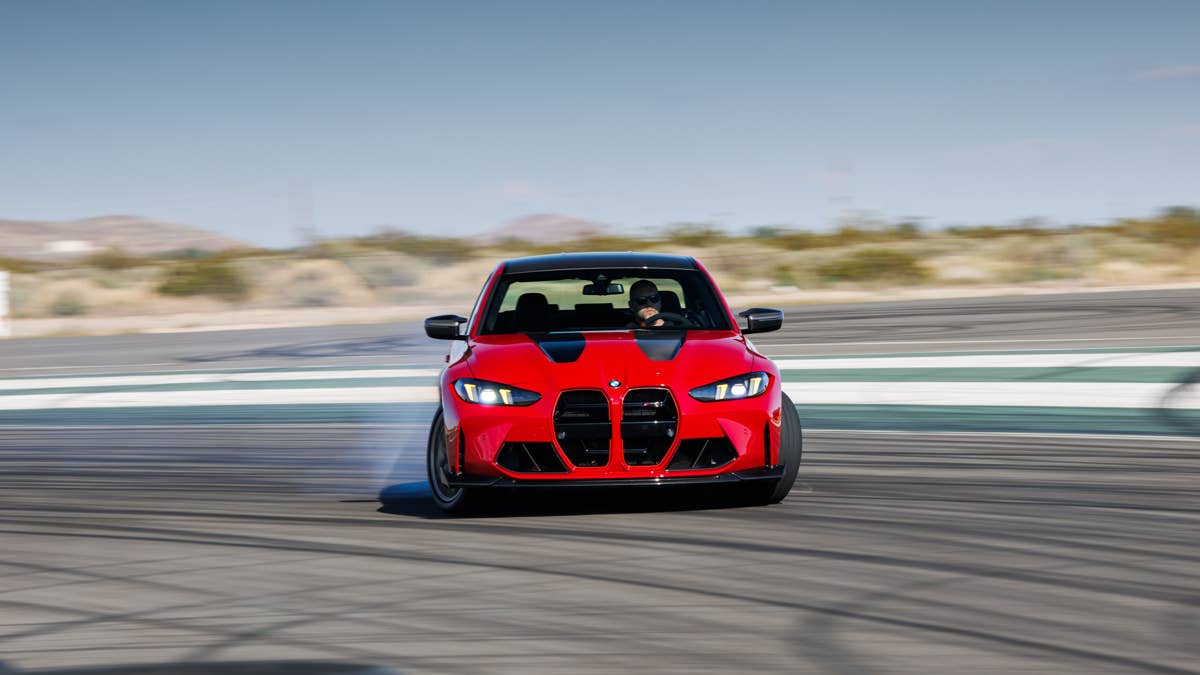
It’s understandable if you have to question why this pricy special variant of the G80 M3 has only appeared now. The E60 M5 was offered from 2004 to 2010, and already in late 2006, around the middle of its time with us, BMW announced the option of a manual for the U.S. Meanwhile, the G80 M3 has been around since 2020, and only as a farewell to this generation is the three-pedal M3 CS arriving. Introducing this choice at the end of the G80’s life cycle, for a single year, effectively limits availability. That’s great for resale values, but if it had come sooner and been sold in greater volume, the CS badge might be less closely associated with the phrase “collector status,” perhaps even avoiding most of the inevitable markups. Yes, this is the last non-hybrid M3, and it may well spell the end for the manual M3, too, which would make it the only M3 CS ever offered with three pedals. It’s also the lightest G80 in this form, but it shouldn’t be treated as something to preserve for posterity. Its performance should be plundered. It should be something to indulge in on a quiet canyon road, or during an untimed track day, not parked as an appreciating asset for all time.
On the other hand, much of the essence of the manual M3 CS can be had with the base M3, too, and BMW’s contemporary commitment to the stick isn’t only extended to those paying six figures, though it could easily have made it so for 2027. If you want a manual M3, you can have one for $80,650. A ‘normal’ M3 won’t be quite as light as a CS Handschalter, but you still get to row your own gears through 473 horsepower of rear-wheel-drive fun – and save nearly 30 grand in the process. The point is this: it’s easy to be cynical about special editions, but while AMG and Audi Sport have long deserted enthusiasts of the manual transmission, BMW M has celebrated them as best it can for as long as it can, and whatever happens with the next M3, manual or not, giving Americans the choice of three pedals for this long, in base or CS form, is worthy of respect.