Cheap cars used to make their compromises far more obvious. You could see it before you even opened the door—their proportions looked squished, their cabins felt like they were assembled by Fisher Price, and the driving experience often seemed centred around the idea that people with limited budgets would tolerate nearly anything, so long as it was inexpensive and financeable over a long term. They were the vehicles people bought because they had to, not because they wanted to. Thankfully, this is no longer entirely true.
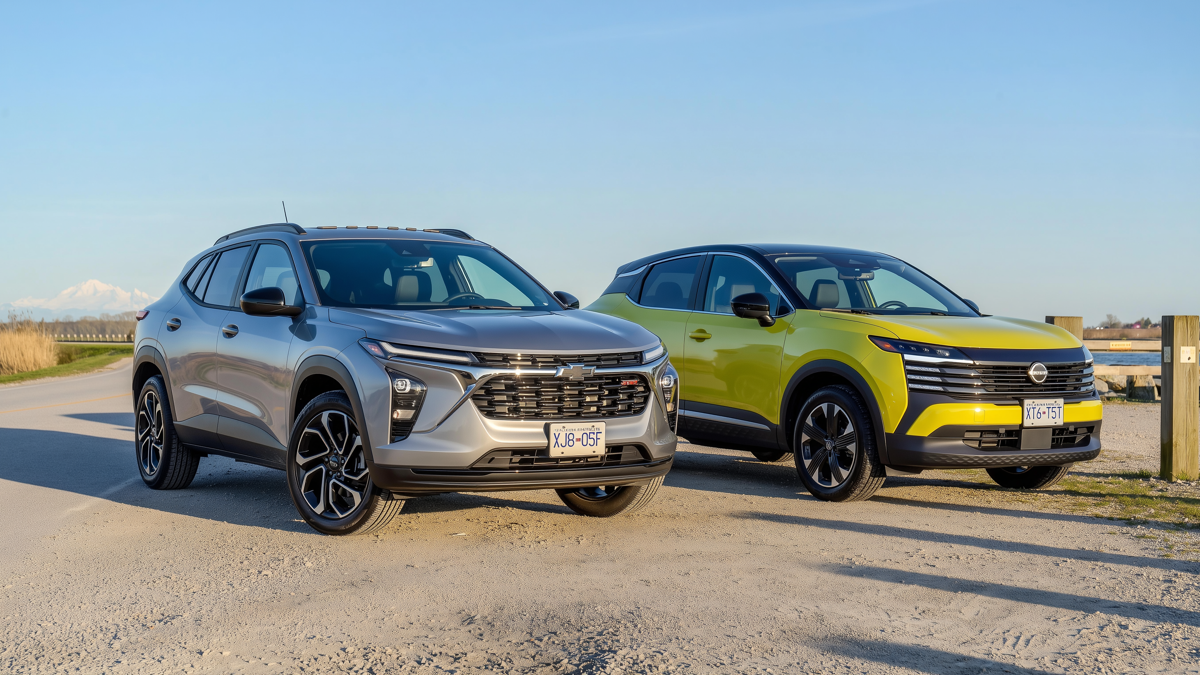
The 2026 Chevrolet Trax and 2026 Nissan Kicks are both proof that the affordable small SUV has matured. Both are better-looking than budget-minded crossovers used to be. Both offer enough technology to avoid feeling stripped bare. Both have cabins large enough to make a small family or a week’s groceries feel like reasonable, everyday asks rather than acts of optimism. And both begin at prices that still feel, even in today’s market, at least somewhat tethered to reality: the Trax starts at $21,700 in the U.S., while the Kicks starts at $22,730.
I’ve spent proper time with both—specifically a 2026 Chevrolet Trax 2RS and a 2026 Nissan Kicks SV AWD. The Trax leans on style, space, and an honesty that affords it a certain sense of dignity. It looks good, feels larger inside than its price suggests, and makes a strong first impression. The Kicks, meanwhile, feels more comprehensively thought through. It offers a more polished cabin, better seats, cleaner day-to-day drivability, and, crucially, available all-wheel drive for buyers who often deal with inclement weather. After driving both, the most important question for me is not whether either one is merely good enough to recommend. Rather, it’s about which one makes the stronger case once the novelty of a low payment and a bright paint colour wears off.
Cole Attisha
The Trax looks sharper, but the Kicks feels newer
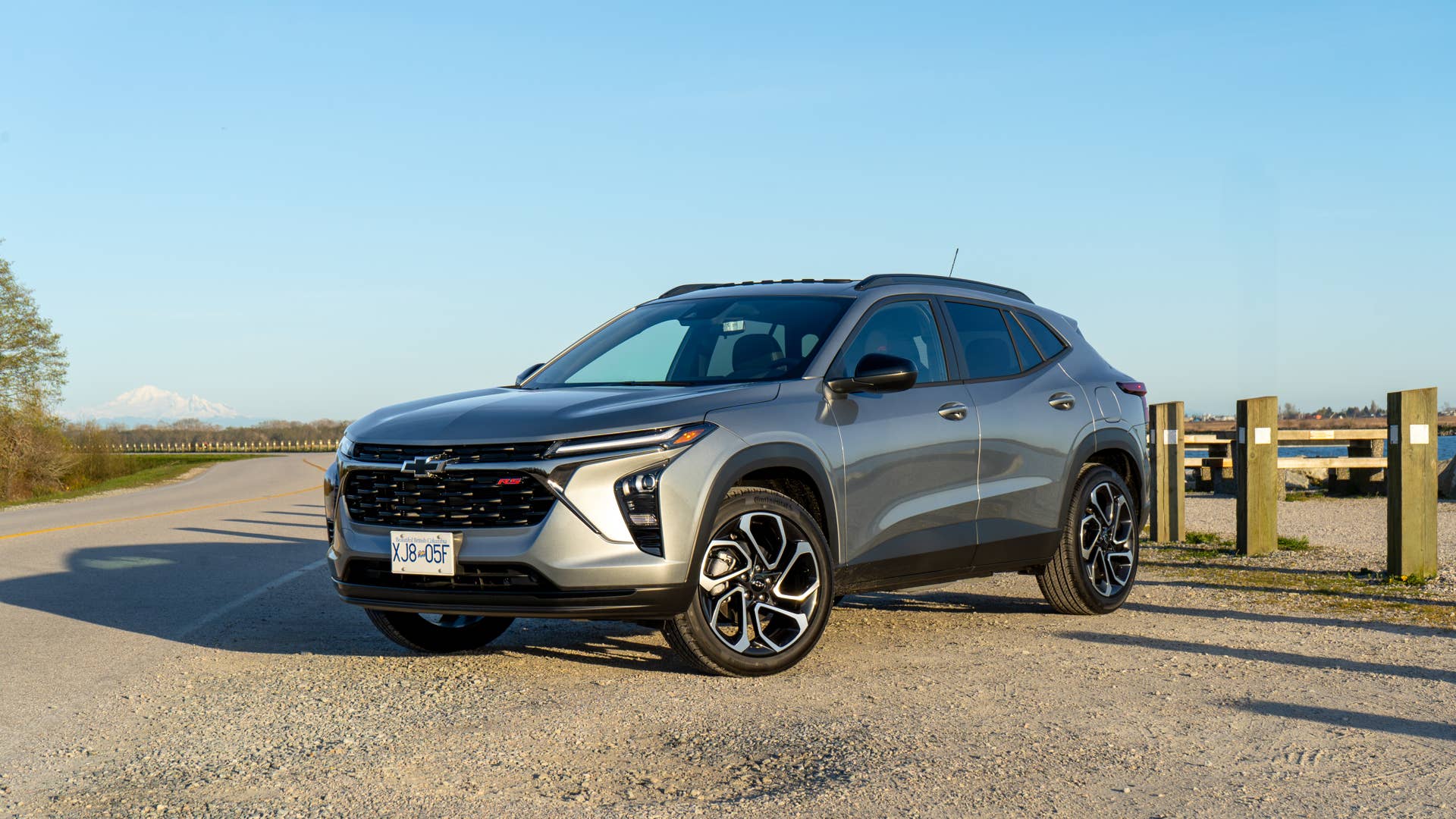
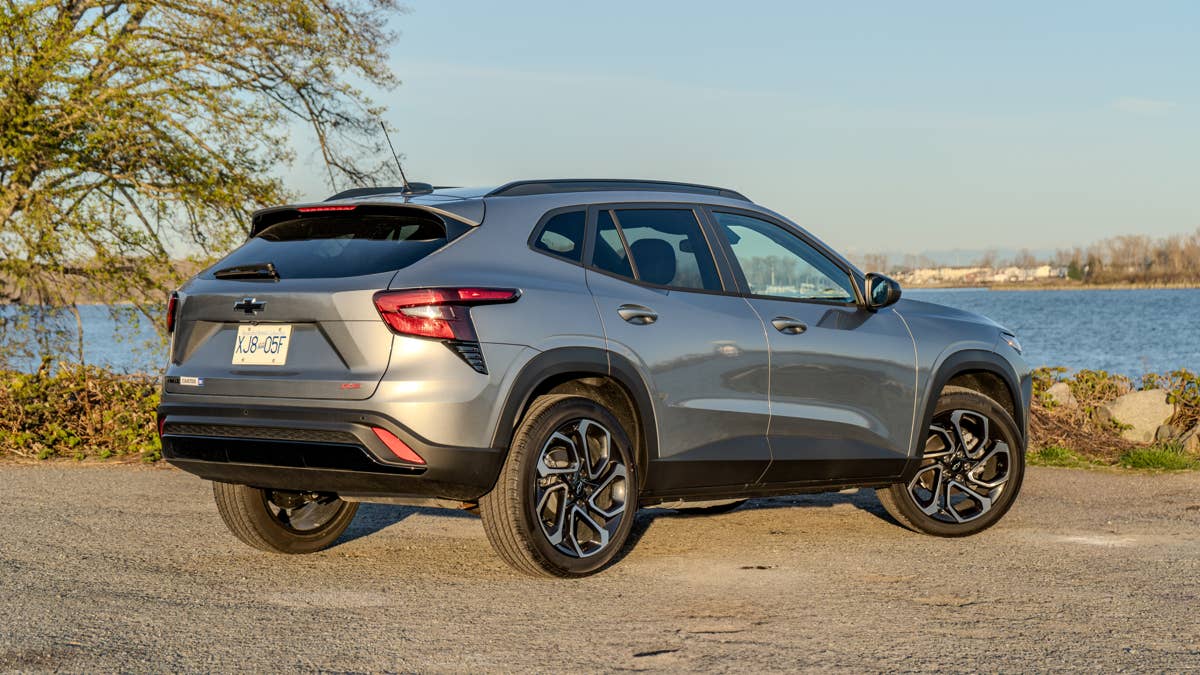
Chevrolet still deserves credit for how well the current Trax wears its budget positioning. Even a few years into this generation’s life cycle, it remains one of the most handsome vehicles in its corner of the market. In profile, it has a stretched, slightly wagon-like shape that makes it appear lower, longer, and more confident than the average subcompact SUV. In 2RS form, with its black trim, unique grille, 19-inch machined two-tone wheels, and red interior accents, it even manages to look stylish, without trying too hard. It does not scream “cheap car,” and in this segment, that is worth a heck of a lot.
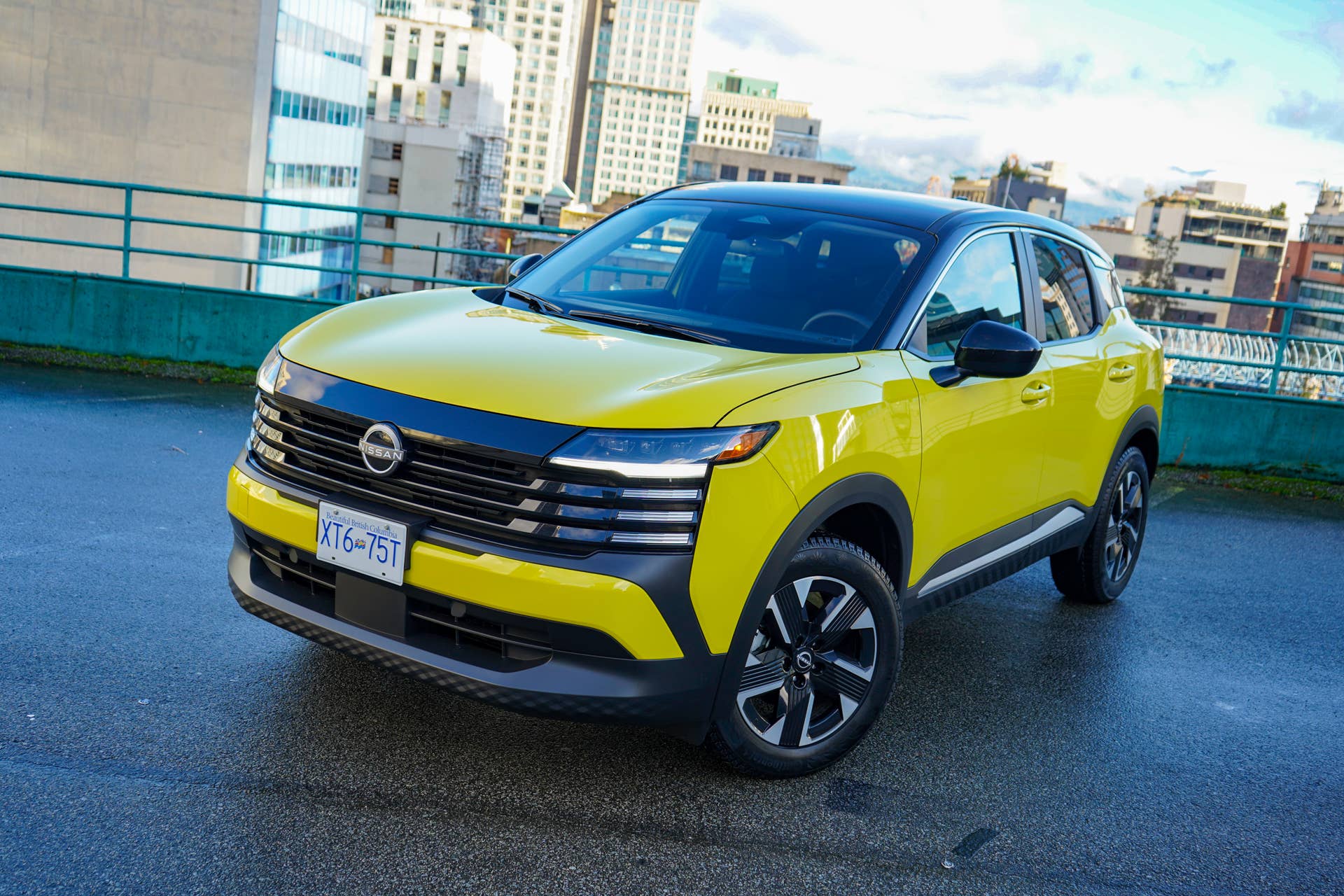
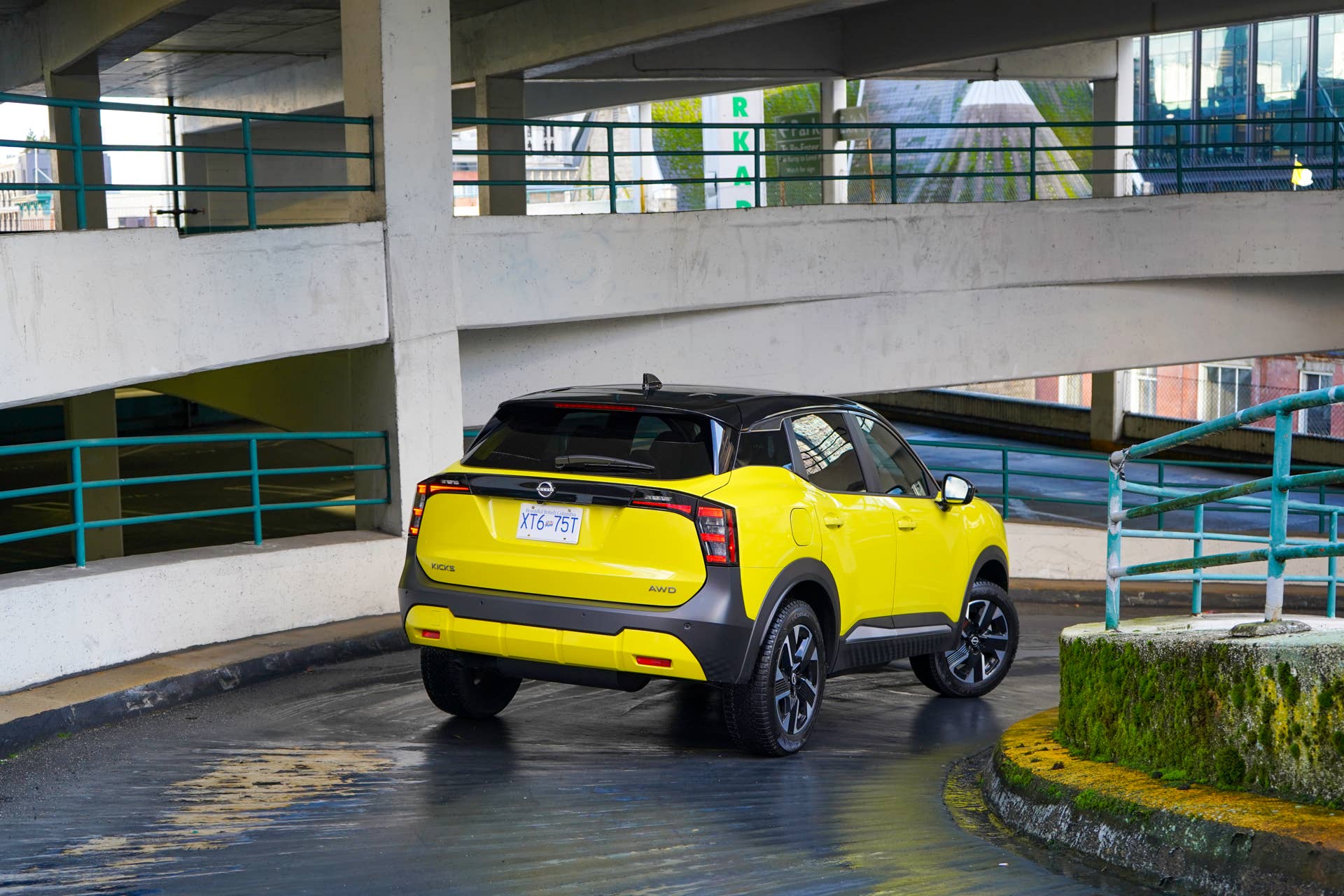
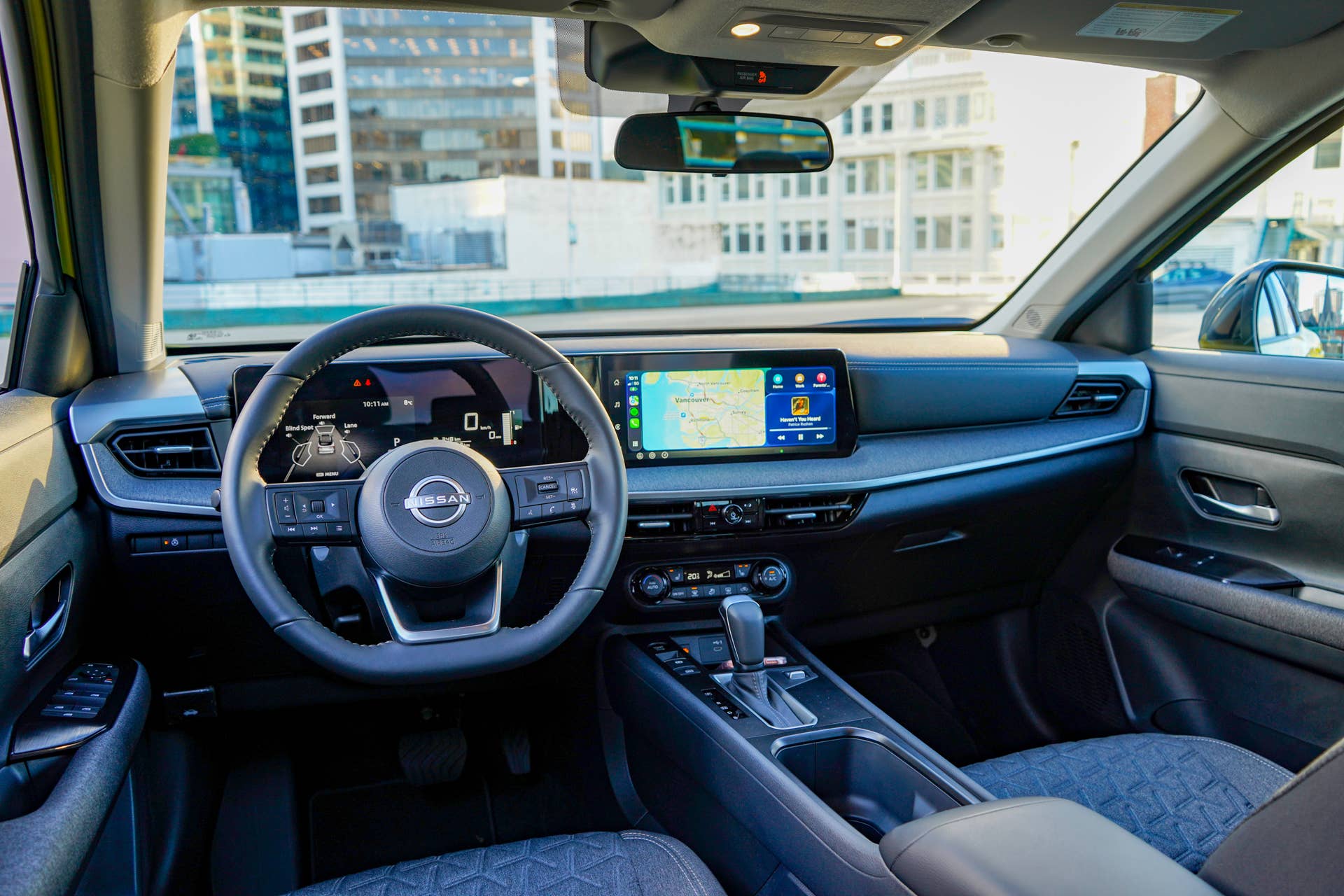
The Kicks takes a different route. Nissan’s redesign gave it a more adventurous, more contemporary shape, and the result is a vehicle that feels visually fresher even if it is not quite as cleanly handsome as the Chevy. The Kicks looks more youthful, more expressive, and more overtly new. That same impression carries into the cabin. For 2026, every Kicks gets a standard 12.3-inch touchscreen and wireless Apple CarPlay and Android Auto, while the redesign also brought a larger body, more available tech, and newly available AWD.
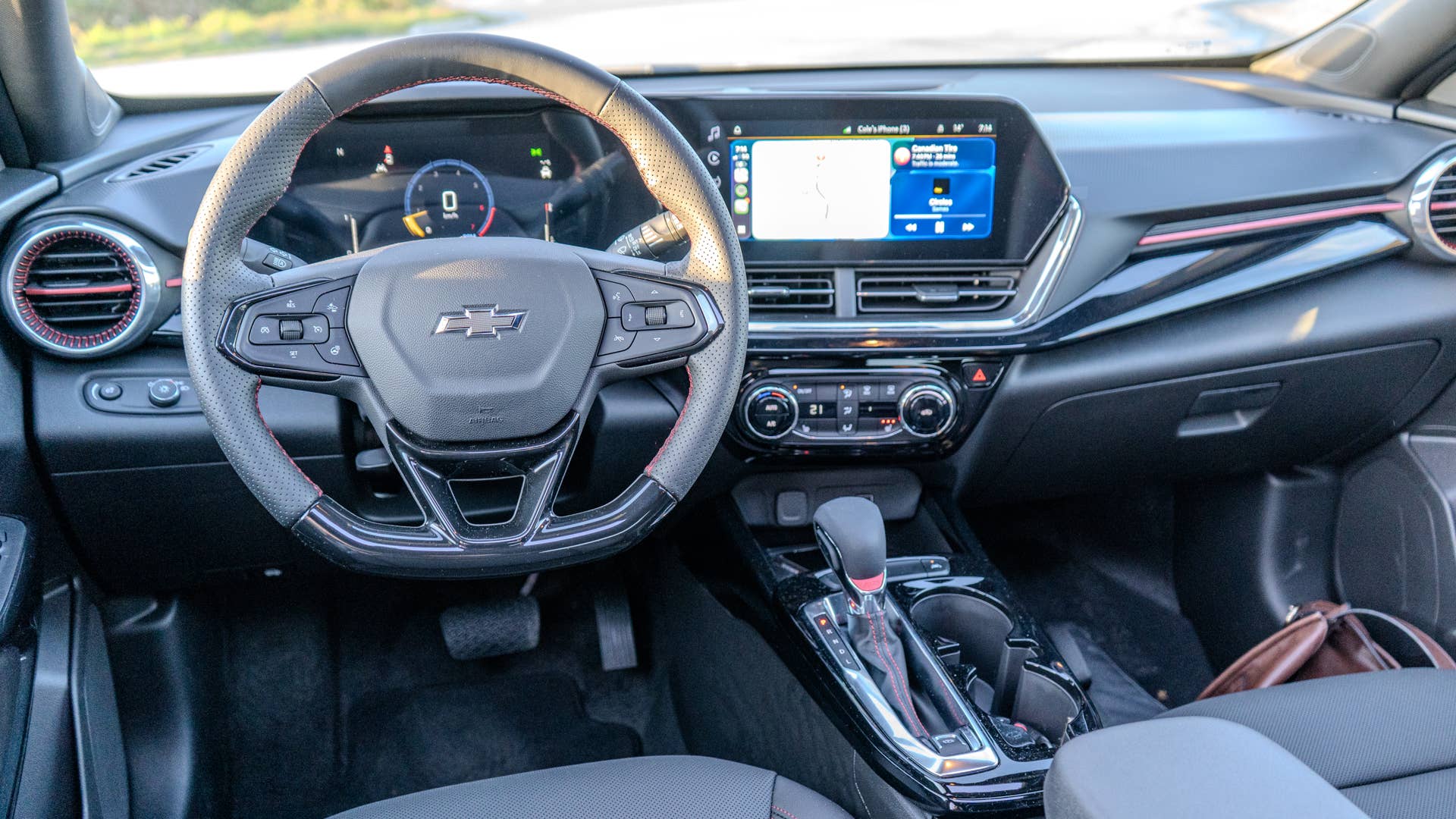
The Trax interior is tidy and agreeable. On LT, 2RS, and ACTIV trims, it gets an 11-inch central touchscreen and an 8-inch driver display, and the fundamentals are all there: wireless smartphone mirroring, a clean-enough layout, and materials that avoid feeling offensively cheap. But the Kicks cabin feels more thoughtfully outfitted. The graphics are crisper, the ergonomics are a touch more usable, and Nissan’s Zero Gravity seats are genuinely special at this price. The Chevy’s cabin is perfectly acceptable, but the Nissan is the one that feels as though someone really sweated even the smallest details.
Need New Tires? Save Up To 30% at Tire Rack
Find the perfect tires for your exact vehicle and driving style. Click here to shop all top-tier brands, including Michelin, Bridgestone, and more, directly at Tire Rack.
Cole Attisha
Which one is better to drive?
Every 2026 Trax uses a 1.2-litre turbocharged three-cylinder producing 137 horsepower and 162 lb-ft of torque, paired with a six-speed automatic and front-wheel drive only. The 2026 Kicks uses a naturally aspirated 2.0-litre four-cylinder making 141 horsepower and 140 lb-ft of torque, paired with a CVT, with front-wheel drive standard and AWD available. On paper, the Trax’s torque advantage looks promising, and in some circumstances, you can certainly feel it. The Chevy has nicely weighted steering for the class, decent body control, and unexpectedly good brake modulation. There’s a competence to its basic chassis tuning that makes it feel slightly more serious than some rivals. At highway speeds, it settles in well enough, and there is more refinement here than you might expect from a low-$20,000 crossover.
The problem is that the Trax’s powertrain never feels entirely happy in ordinary, around-town daily driving. There is a lull before boost arrives, then a somewhat abrupt swell of torque afterward, and the six-speed automatic can feel hesitant and indecisive around town. That means the Chevy is the one more likely to annoy you in stop-and-go commuting, where good intentions and decent steering feel matter less than smoothness and predictability. On wet roads, the combination of front-wheel drive and delayed turbo shove can also produce mild wheel slip more often than it should.
The Kicks does not win on steering feel. It rolls more, the wheel is lighter and less communicative, and it does not feel as buttoned-down or as naturally composed in the traditional enthusiast sense. It also, on paper at least, loses out to the Trax in the transmission battle—a CVT, especially one with Nissan stigma, shouldn’t feel more intuitive than a modern six-speed automatic, and yet here it somehow does, especially in “B” mode, which eliminates simulated shift points. The brakes are excellent as well, the overall drivability is more natural, and the Kicks feels less clumsy in daily urban use. Still, a small, affordable SUV should not be judged by how well it handles alpine switchbacks. It is judged in traffic, in parking lots, in bad weather, and on the ordinary, pothole-riddled roads that most people actually drive on. In these settings, the Nissan simply feels more agreeable. So while the Trax has some stronger individual dynamic traits—namely steering weight and a slightly tidier sense of cornering control—the Kicks is the one that feels more cohesive as a daily companion.
Cole Attisha
Fuel economy is close, but the Kicks outperforms in the real world, even with all-wheel drive
Officially, the 2026 Trax is rated at 28 mpg city, 32 mpg highway, and 30 mpg combined. Over my week with it, I averaged roughly 9.8 L/100 km, or about 24 mpg. The 2026 Kicks, meanwhile, is rated at 28/35/31 mpg in front-wheel-drive trims and 27/34/30 mpg in AWD form. In my own test of a Kicks SV AWD (on winter tires), it returned exactly 9.0 L/100 km, or roughly 26 mpg, despite all-wheel drive. The AWD Nissan sacrifices a bit of efficiency compared to its FWD variant, but remains competitive with the Trax regardless—even beating it on paper in highway efficiency and overall efficiency in my own testing.
If you live somewhere wetter, colder, hillier, or snowier, the Kicks’ available AWD offers a meaningful advantage without sacrificing noticable efficiency over the Trax. The AWD does eat into cargo space, because that extra hardware has to live somewhere, but it broadens the Kicks’ appeal in a way the Trax simply cannot match. Chevrolet’s front-drive-only layout will be perfectly adequate for plenty of buyers. It just isn’t as versatile a proposition.
Cole Attisha
Space and practicality: one is roomier where it counts, the other is more configurable
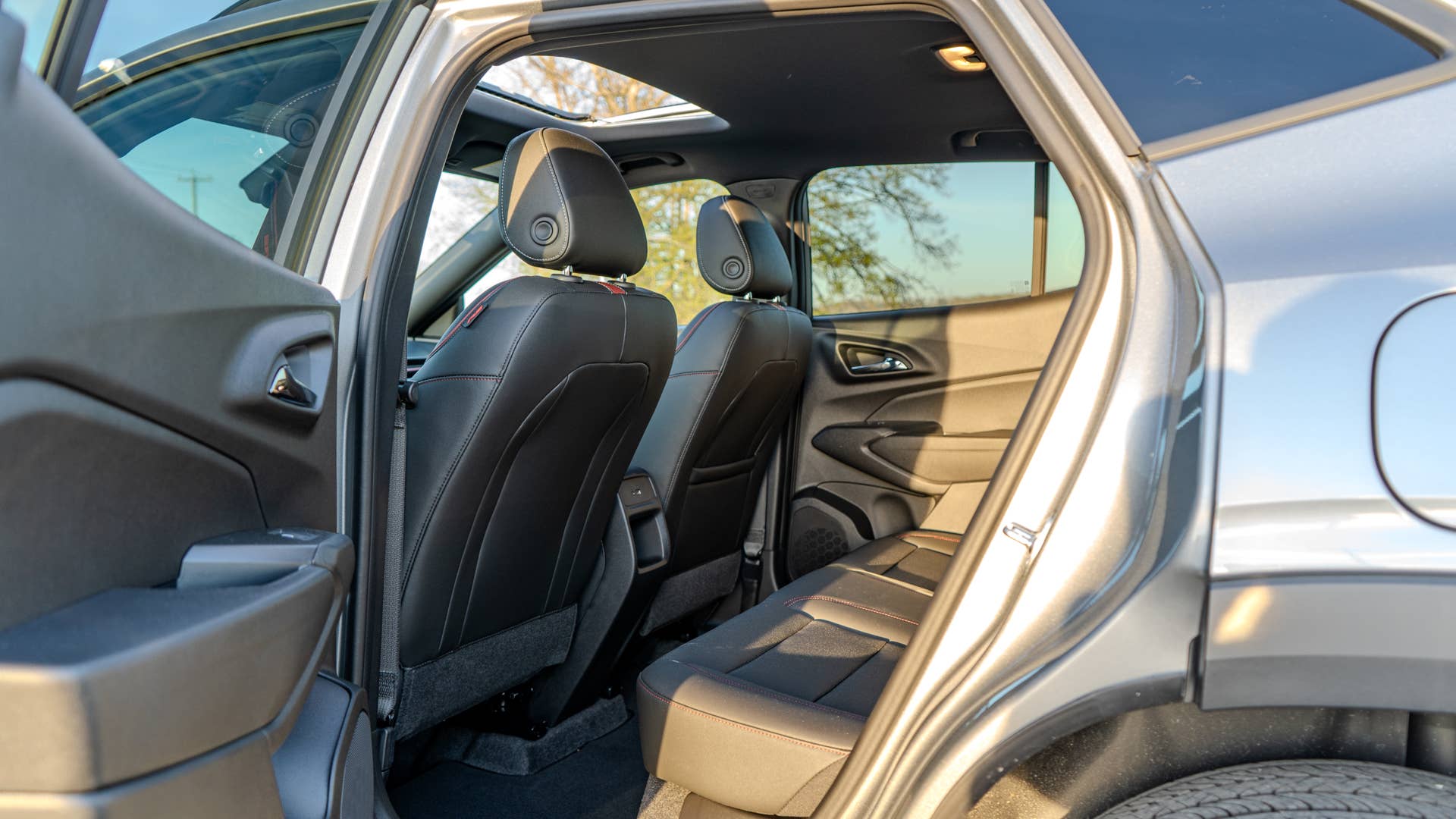
The Trax makes a strong case for itself on packaging, especially thanks to its wagon-like proportions. It offers 99.8 cubic feet of passenger volume, 41.9 inches of front legroom, and a notably generous 38.7 inches of rear legroom. Cargo volume measures 25.6 cubic feet behind the rear seats and 54.1 cubic feet with them folded. In reality, that translates into a back seat that adults can actually use and a cabin that feels more spacious than the Trax’s footprint might suggest. Rear-seat comfort, in particular, is one of the Chevy’s best cards.
Cole Attisha
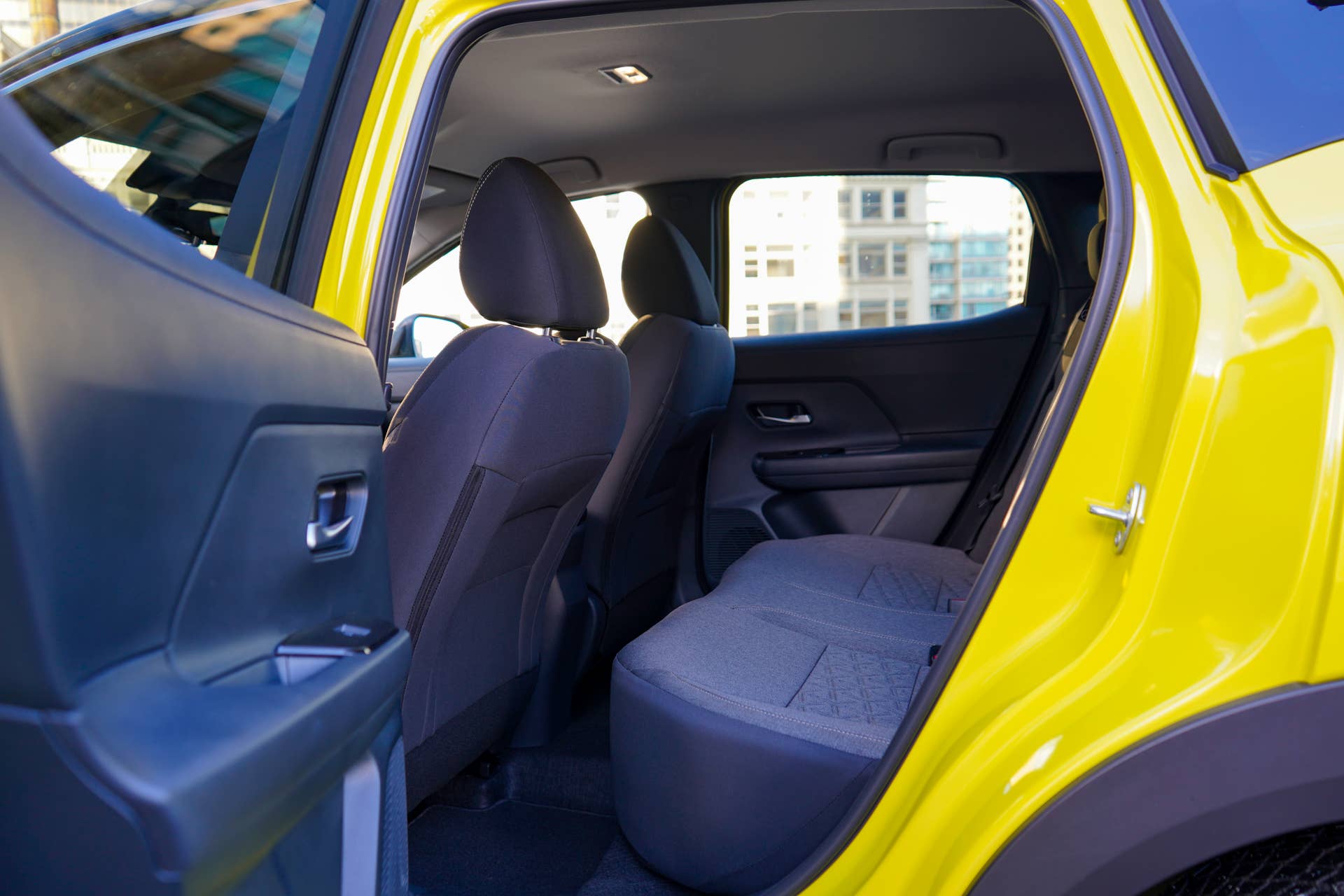
The Kicks answers with more total passenger volume and, in front-wheel-drive form, more cargo room. Nissan lists 125.6 cubic feet of passenger volume, 42.7 inches of front legroom, 34.5 inches of rear legroom, and up to 30.0 cubic feet of cargo space behind the second row and 60.0 cubic feet with the seats folded. The Kicks also offers 39.7 inches of front headroom and 38.5 inches of rear headroom in the SV AWD tester I drove, which did not have a sunroof. There is, however, a very important caveat here: opting for AWD means cutting into cargo space. The cargo figure drops from 30.0 cubic feet in the base front-drive setup to 29.2 cubic feet in other FWD trims to just 23.9 cubic feet in AWD-equipped models.
Cole Attisha
So while the Kicks lineup can claim a general cargo advantage in its most space-efficient form, opting for an AWD Kicks will leave you with less cargo space than the Trax. The Trax is also especially roomy in the rear seat, and its packaging is genuinely impressive. The Kicks remains versatile, but its best cargo numbers are tied to the front-drive variants. So the practical split is this: the Trax gives you a better back seat and an impressively open-feeling cabin for the money, while the Kicks offers more flexibility overall—especially in FWD form— but asks you to choose how much you value space versus all-weather confidence.
Cole Attisha
Tech and everyday usability favor Nissan
Both of these SUVs are modern enough to avoid any sort of teasing on my part, but the Nissan feels more complete in the little moments. The Trax gets the essentials right—its larger-screen trims offer plenty of display real estate, wireless Apple CarPlay and Android Auto work as they should, and Chevy Safety Assist is standard. But my time with it also revealed a dated-feeling backup camera and an overzealous forward-collision warning system that occasionally cried wolf. None of this was disastrous, though it does chip away at the sense that the vehicle was polished as much as it could have been.
The Kicks, by contrast, feels simpler in the right ways. The infotainment system is crisp and easy to pair, the controls are straightforward, and the cabin’s quieter overall demeanor helps it feel a class more expensive than it is. To be fair, the Kicks was updated more recently than the Trax, and the software here outdoes even the far more expensive Nissan Rogue‘s setup in day-to-day usability—which is still a generation behind, and would not even be remotely competitive with the Trax’s software.
Cole Attisha
Value: bargain versus better buy
The Trax remains one of the market’s best-looking bargains. With a base price of $21,700 and even the 2RS and ACTIV starting at just $25,400, it offers a lot of visual appeal and enough real practicality to feel like a smart purchase. For buyers who care most about design, price, and rear-seat room for passengers—and who do not need all-wheel drive—the Chevy’s appeal is obvious.
The Kicks starts a little higher and climbs from there. Nissan’s official pricing for the base Kicks begins at $22,730, with SV FWD at $24,470, SV AWD at $26,120, SR FWD at $27,565, and SR AWD at $29,065 before destination. It might ask for a little more up front, but the Kicks feels like it gives you something tangible back for the extra spend: a better-resolved interior, more polished everyday drivability, available AWD, and a cabin that simply feels more thoughtful. The Chevy is the one that looks like the better deal at first, because yes, it is less expensive. But the Nissan is the one that feels like the wiser purchase when you start imagining what the next three-to-five years of your life is going to look like.
Cole Attisha Using Gemini Pro
Verdict: the Nissan Kicks is the more complete small SUV
The 2026 Chevrolet Trax is still incredibly easy to like. It looks sharp, offers excellent rear-seat space for the class, offers substantial character from behind the wheel, and continues to prove that driving an affordable SUV does not need to feel humiliating. In warmer, drier parts of the continent, where all-wheel drive is little more than a reassuring line item on an order guide, the Trax makes a very convincing case for itself. It is stylish, practical, and fundamentally honest. But the 2026 Nissan Kicks is the one that would get my money.
Not just because it offers AWD, though that certainly matters to me given that I live in the Pacific Northwest where it seems to always be raining. More importantly to me, though, it simply feels more complete. The seats are better, the cabin is better resolved, and day-to-day drivability feels more natural. And the fact that buyers can choose between maximum cargo efficiency in FWD form or extra security in AWD form gives the Kicks a broader range of usefulness than the Trax can offer. So, the final verdict is fairly clear to me: The Trax is the better pick for the buyer who wants style, value, and a roomy back seat for the least money possible. The Kicks is the better choice for the buyer who wants the more rounded, more polished, and ultimately more recommendable affordable small SUV.