While consumer taste is the greatest driver of demand when it comes to how new cars are conceived and developed, ultimately, it’s up to government regulations to decide what can and cannot be sold to buyers. Usually, these regulations evolve slowly over time through incremental changes and come with years of warning before they’re actually implemented.
Lately, though, that hasn’t really been the case for the United States. A swath of deregulatory actions by the Environmental Protection Agency (EPA) over the past year has seen many longstanding emissions-related rules and benefits lessened or lifted entirely. Earlier this year, the agency eliminated its 2009 Greenhouse Gas endangerment finding, as well as all emissions standards for vehicles built in 2012 and beyond.
The EPA also killed the regulatory benefits granted to automakers for including stop-start technology in their cars, and decided it would no longer criminally charge people who delete complex diesel emissions systems from their vehicles. Some in Congress are pushing for diesel emissions system deletes to be fully legal. Just last month, the agency announced plans to “revamp” its funding of electric school buses and potentially revoke funding.
All of these longstanding rules are now either disappearing or changing drastically, catching automakers off guard and forcing them to rethink years-long product pipelines. That’s not good for anyone involved, according to an Infiniti executive I spoke to at the New York Auto Show.
Flip-Flopping On Policy Only Adds Stress
While chatting with Eric Ledieu, vice president of Infiniti in the Americas, at the Nissan booth at the show, I brought up the challenges automakers have recently had to face with regard to all these huge, sudden swings in policy. Unsurprisingly, he wasn’t exactly a fan.
[It’s] absolutely not beneficial for brands, for any brand,” Ledieu told me. “What the industry needs and likes, when you think about all of our lead times here in this hall, you’re talking about years, right?
“So, predictability is a good thing, right? And having things change that dynamically, that quickly, I think, has disrupted a lot of people,” he added. ”You see the headlines on how much money has been spent on R&D at every company, whether those monies ended up being brought to market or not, it’s different by company, but I think we’re always navigating that. I think everyone, if we could choose, we would choose a path—whatever the path is—to have it be stable.”

New cars don’t just appear out of nowhere—they take years of planning and foresight. A lot of that planning is based on customer demands, obviously, but just as much stems from making sure the cars adhere to that region’s regulations, whether that means passing local emissions tests or crash safety rules.
If Nissan were to, for example, spend a few million dollars to develop a new engine to achieve a certain mpg rating, only to discover that it didn’t need to do that because the regulations changed, that’s a bunch of wasted money that could’ve been spent elsewhere on the car to make it more competitive. The company loses out, and the consumers lose out too, since they’re getting a product that isn’t as good as it could’ve been.
Despite this regulatory flip-flopping, Ledieu remains confident in Nissan’s and Infiniti’s ability to make decisions on the fly.
One of Nissan’s core values is our ability to just react,” he told me. “It’s actually some of the best [work] in the industry for us because of our agility and our ability to pivot and our ability to turn left, turn right, whichever way we want to go. So, actually, I’d call us a large company. So when you think about it, a large company that still has the ability to be agile, it’s a fun place to be. It’s always dynamic. And we’re always challenging ourselves to do what we think is gonna not only be needed today, but also in the future.”
e-Power Is The Way
What is the future for Nissan and Infiniti, then? The company was arguably way ahead of the curve when it came to the softening of EV demand, when it canceled plans to build two electric sedans in the United States back in April 2025 (versus other brands like Honda, which canceled America-made EVs of its own only just last month).
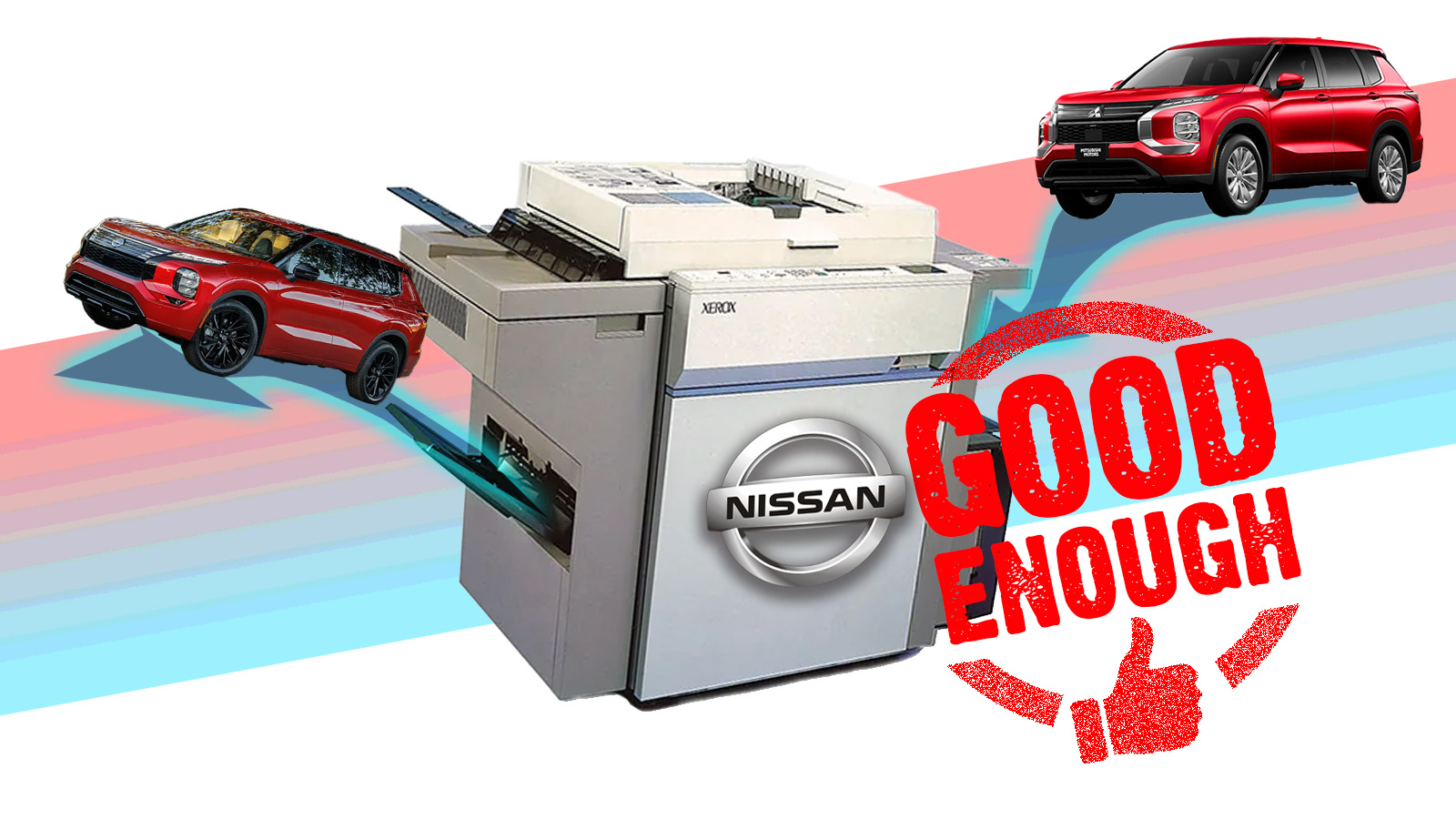
Instead, Nissan is focusing on hybrids in the near-term. Its first push into the space came in November with the new Rogue Plug-In Hybrid, which, to anyone with eyes and even a passing knowledge of plug-in hybrids, will know that it’s just a lightly reskinned Mitsubishi Outlander (not that that’s a bad thing).
As of the Auto Show, Nissan is getting serious with its hybrid offerings in America. The company announced yesterday it’s finally bringing its e-Power hybrid system—a series-type hybrid powertrain that’s been on sale overseas for a decade now—to the U.S. with the next-generation Rogue.
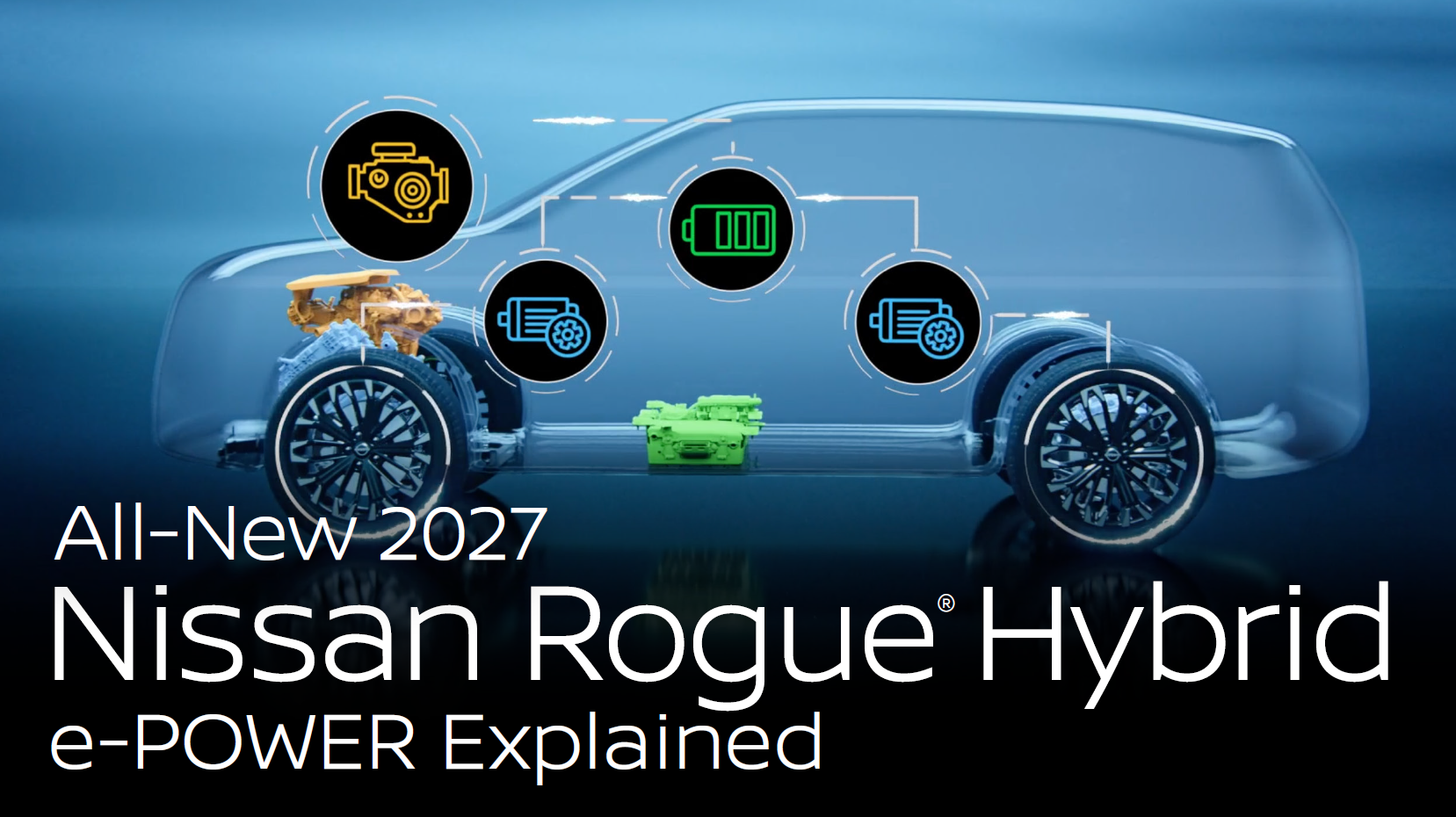
On paper, series hybrids offer the best of all worlds, according to Nissan, delivering the efficiency of a hybrid, the convenience of a gas-powered car, and the instant power of an EV. The engine has no physical connection to the wheels; it acts only as a generator for the onboard lithium-ion battery, which in turn powers the two electric motors (one at the front and another at the back). As a result, there’s no traditional transmission. For e-Power hybrids, there’s no plug involved, either—the only way to fill up is through the gas tank, simplifying things for owners. This is the path forward for Nissan in America, says Ledieu.
“We’ve been very much concentrated as of late, especially since North America is such a big part of our success, globally, to come up with power trains that the U.S. consumer would want,” he told me. “And so internal combustion is still very much a real alternative for many buyers. Next step would be hybrid, right? We talk about electrification in a lot of different ways. e-Power hybrid will absolutely be the way we execute our hybrid here in North America for the foreseeable future.”

Nissan isn’t saying which engine will be paired to its latest e-Power system in the upcoming Rogue, though I hope it uses the 1.5-liter turbocharged three-cylinder that, last year, it deemed the most thermally efficient production engine ever made. That setup is used in Europe for smaller cars like the Qashqai, so who knows if Nissan will deem it worthy enough for the bigger Rogue. Either way, the car should be pretty damn efficient.
Top graphic image: Nissan
The post ‘Not Beneficial For Any Brand’: Nissan Exec Says Regulatory Flip-Flopping Means Everyone Loses appeared first on The Autopian.