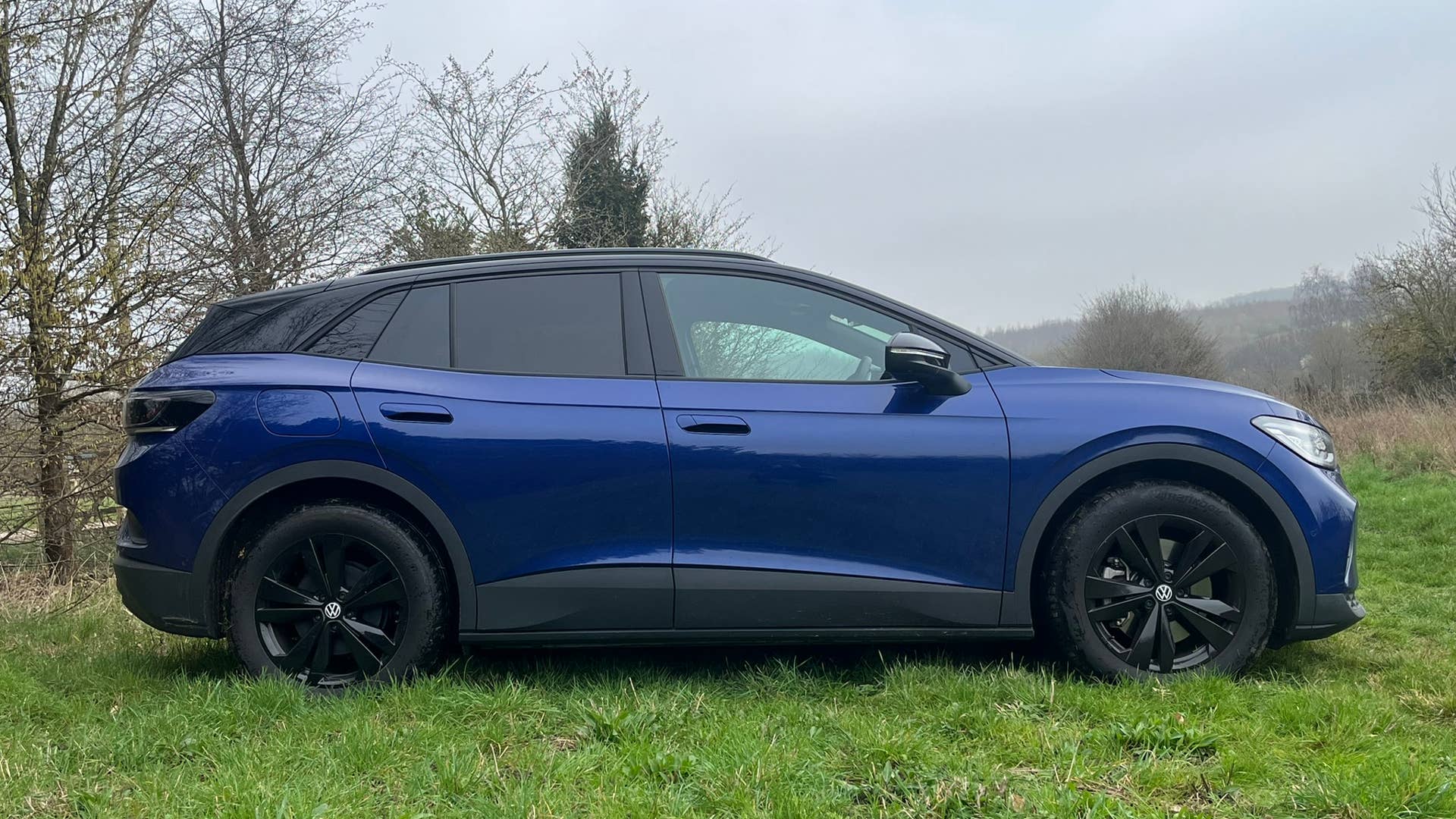
I spent a week living with the Volkswagen ID.4 the way most compact SUVs actually get used: commuting across town, running errands, charging overnight at home, and taking a 200-mile highway trip to stress-test it properly.
With the ID.4, it quickly became clear that VW had worked hard to make the compact electric SUV drive and feel like any other compact SUV. Many EVs feel like rolling technology demonstrations first and everyday vehicles second. The ID.4 approaches the problem from the opposite direction — and after a few days behind the wheel, it stopped feeling like an EV altogether and just felt like a quiet, comfortable Volkswagen crossover. Which I suspect, was always the point.
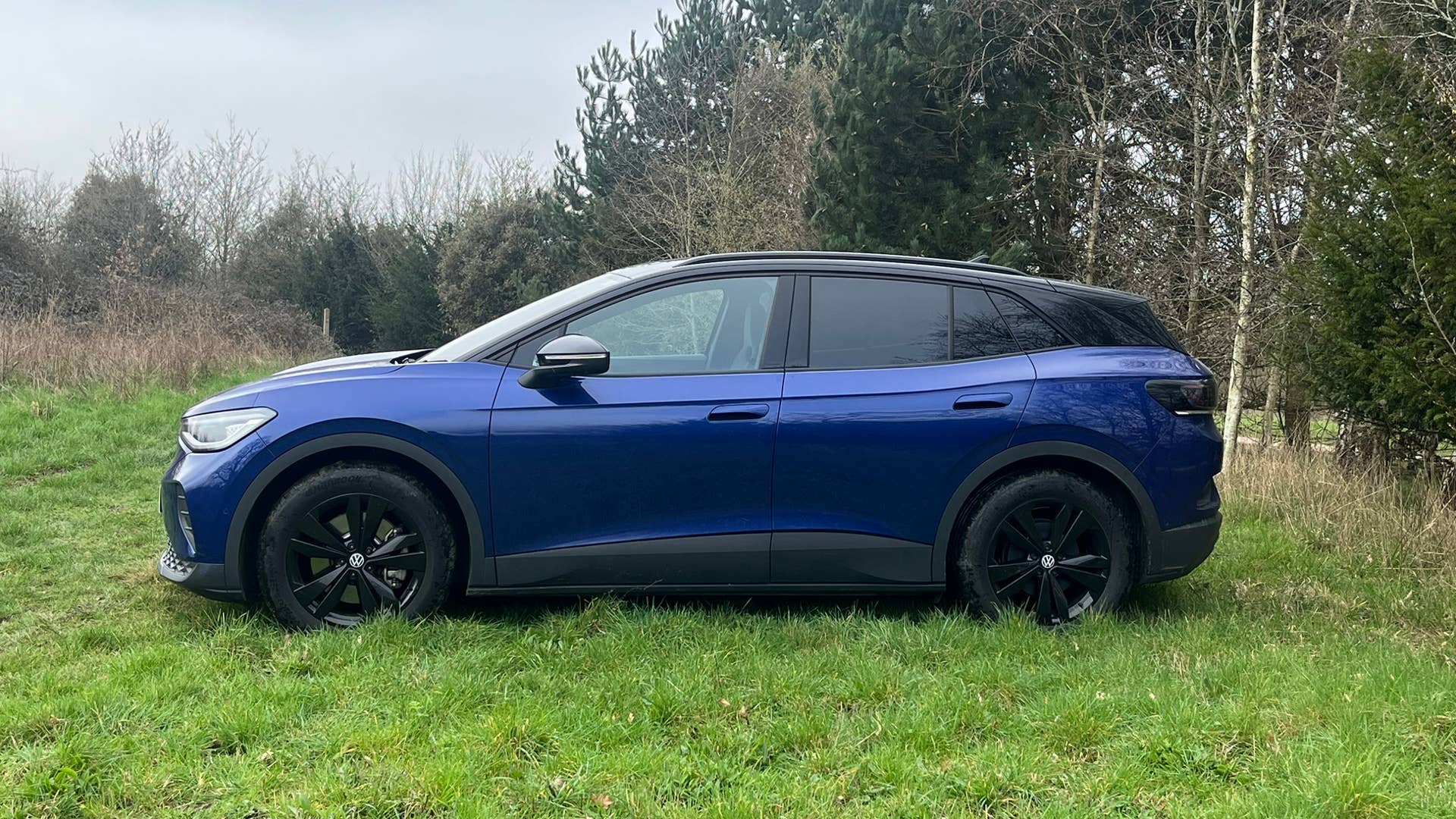
The Vehicle I Drove
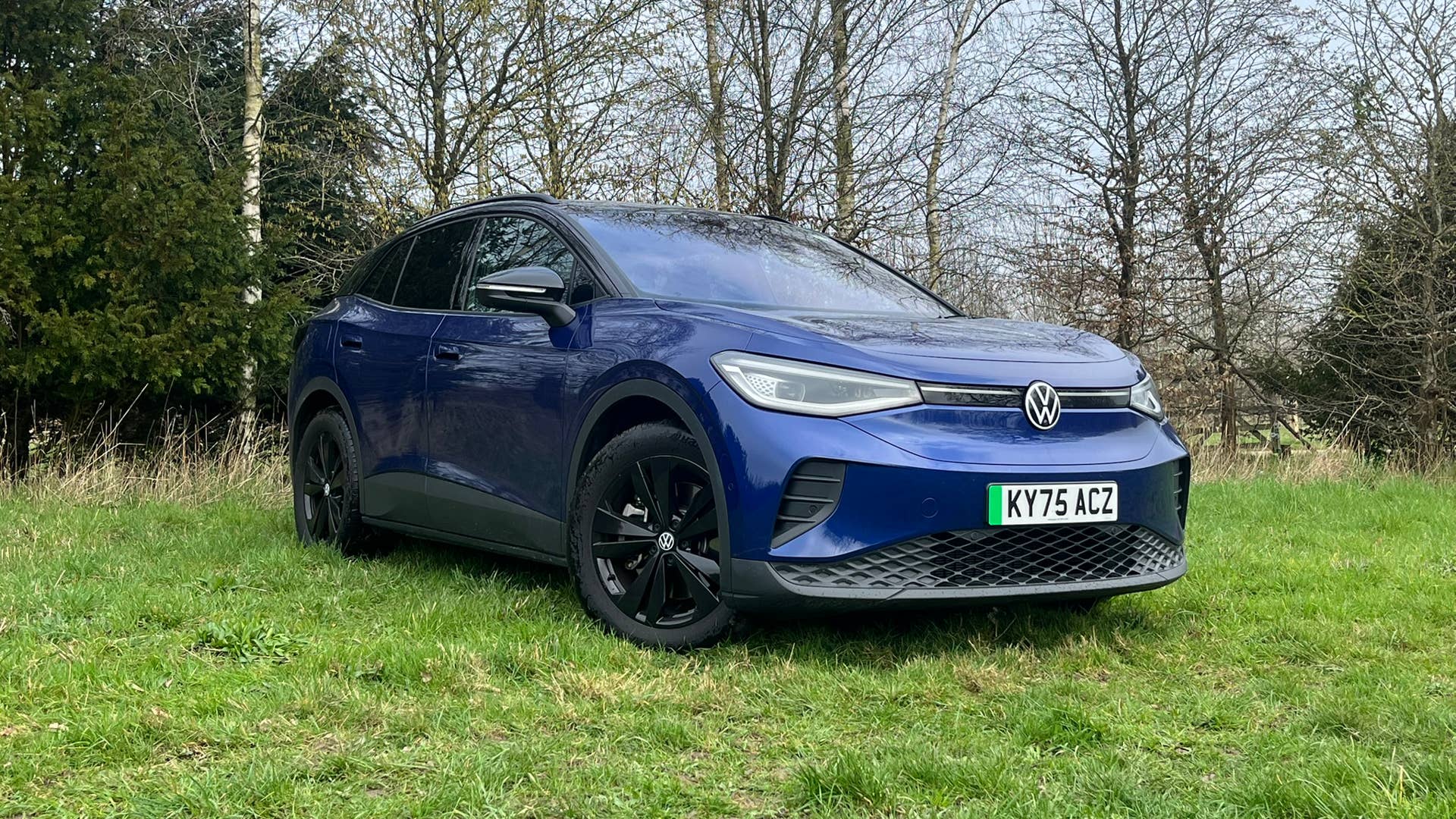
The car I drove was a Pro Black Edition in Blue Dusk metallic with a black roof — a well-optioned example that included the heat pump, Travel Assist semi-automated driving package, and a towbar. While this package isn’t available in the US, buyers can spec it to look very similar if they like the styling.
The ID.4 is built around a 77-kWh battery pack paired with either a single rear motor or a dual-motor AWD setup. The rear-drive version produces 286 PS (282 hp), while the AWD GTX model pushes further still. This Pro Black Edition is rear-wheel drive — and that actually suits it. Rear-drive provides agile handling and a usefully compact turning circle of just 11.6 metres, which you notice in car parks and tight urban streets.
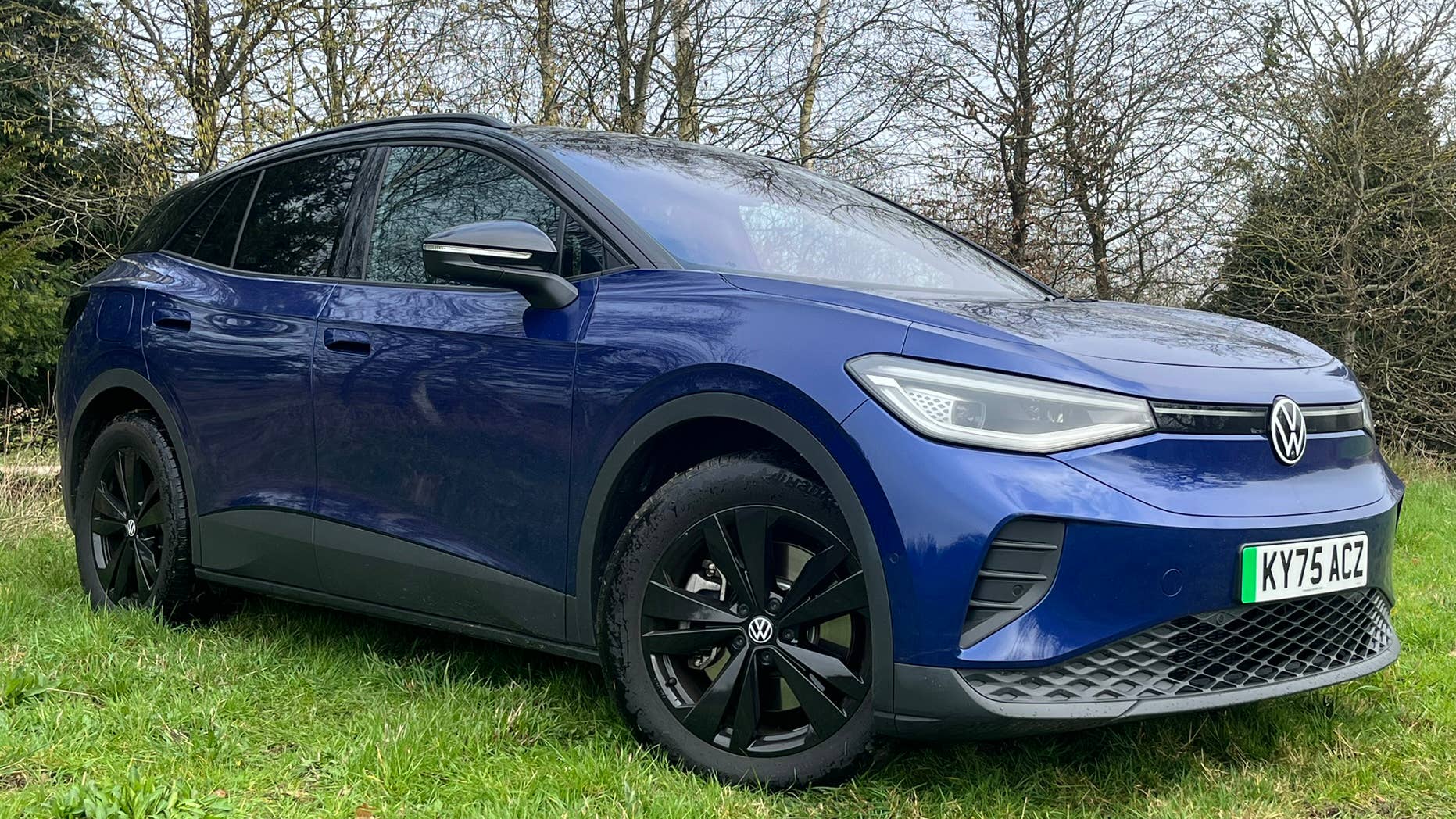
Those numbers don’t really define the car’s character, though. The ID.4 weighs over two tonnes, and Volkswagen clearly tuned it for smoothness and stability rather than speed. Acceleration is brisk when you ask for it — 0-62 mph in 6.6 seconds — but the delivery is calm rather than dramatic. More executive sedan than hot hatch.
Range is where the buying decision usually lives. The WLTP combined figure is 321 miles (the US EPA equivalent comes in around 291 miles for comparable rear-drive models — a typically more conservative measure of the same battery). That puts it comfortably ahead of most real-world anxiety and towards the top of the compact electric SUV pack.
Pricing for this Pro Black Edition starts at £46,400 on the road (mid-$40,000s in the US market), putting it against the Tesla Model Y, Ford Mustang Mach-E, Hyundai Ioniq 5, and Kia EV6. The Model Y is its most direct competition and probably the one most buyers will cross-shop.
Related: The 2026 Volkswagen ID.4 Has Many Trims, but Only One Is the Smart Buy
Design and Everyday Usability
From the driver’s seat of the ID.4, the experience is familiar to anyone who has driven a modern Volkswagen. The seating position is comfortable, visibility is good, and the car is easy to place in traffic.
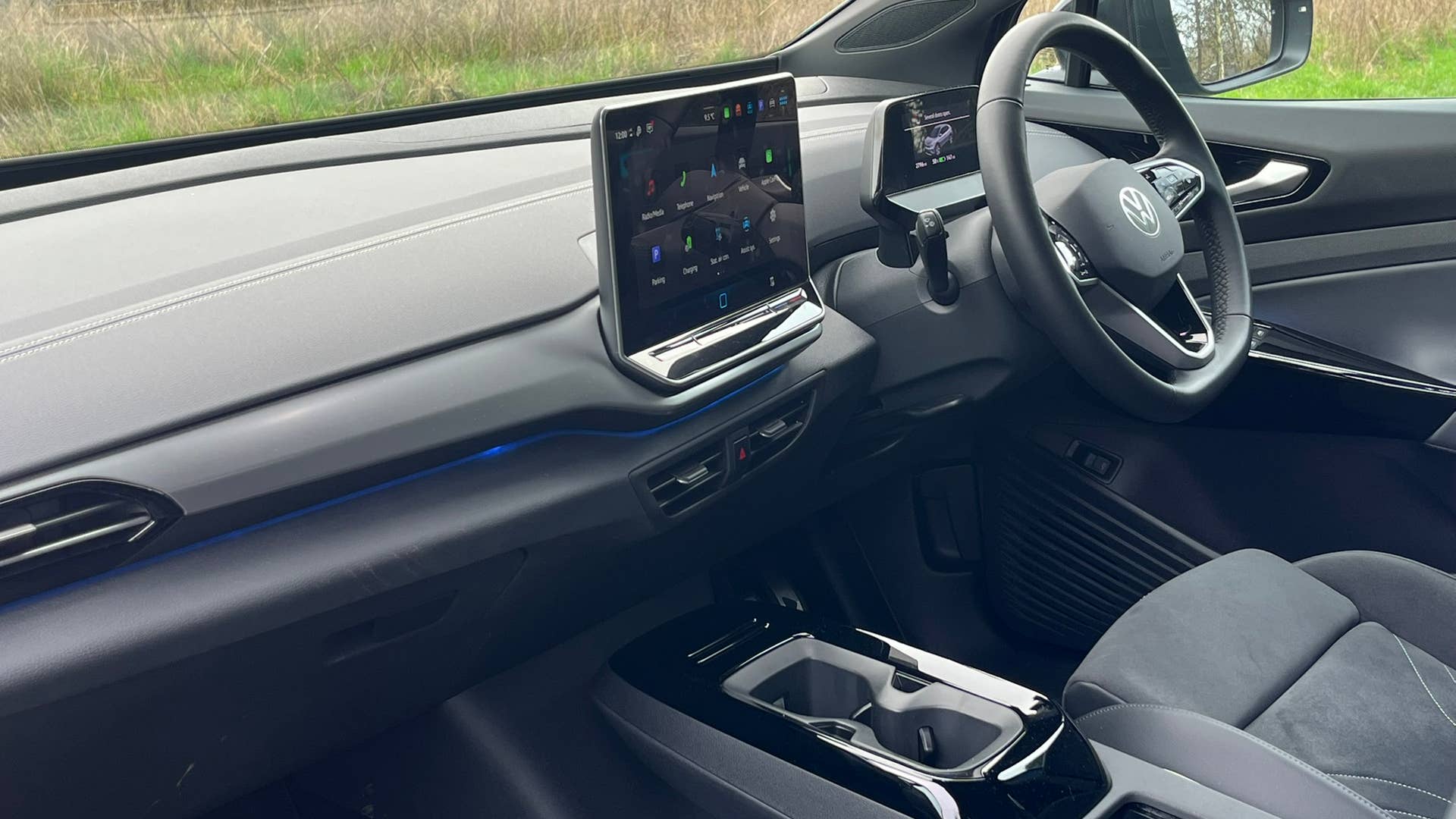
The cabin follows the minimalist EV trend. A 12.9-inch touchscreen controls most functions, paired with a small digital display behind the wheel. It looks clean. It is also, at times, genuinely annoying — touch-sensitive sliders and nested menus make simple adjustments like changing the fan speed more complicated than they have any right to be. Physical buttons would solve this immediately, and rumour has it the next refresh will bring them back.
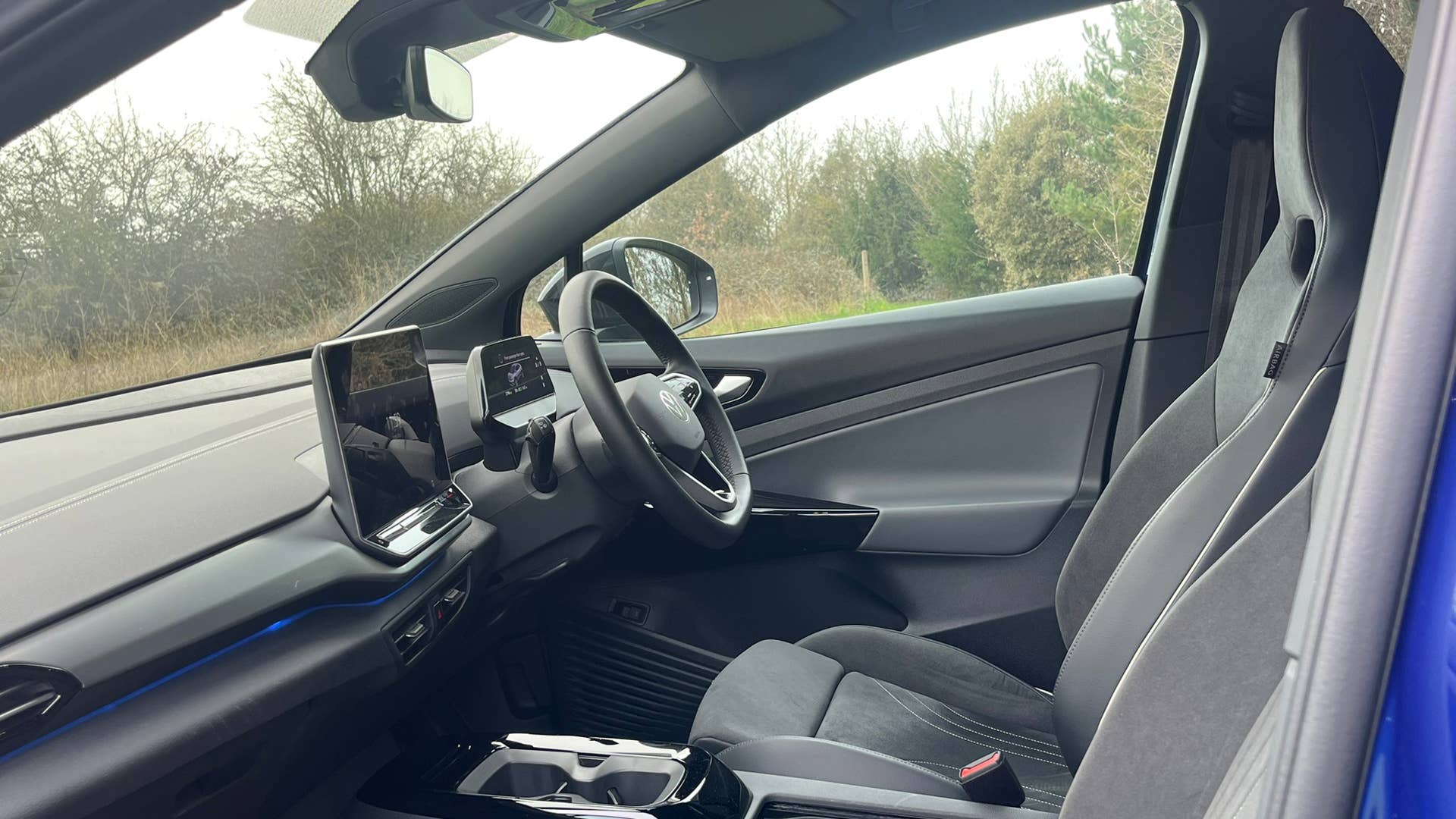
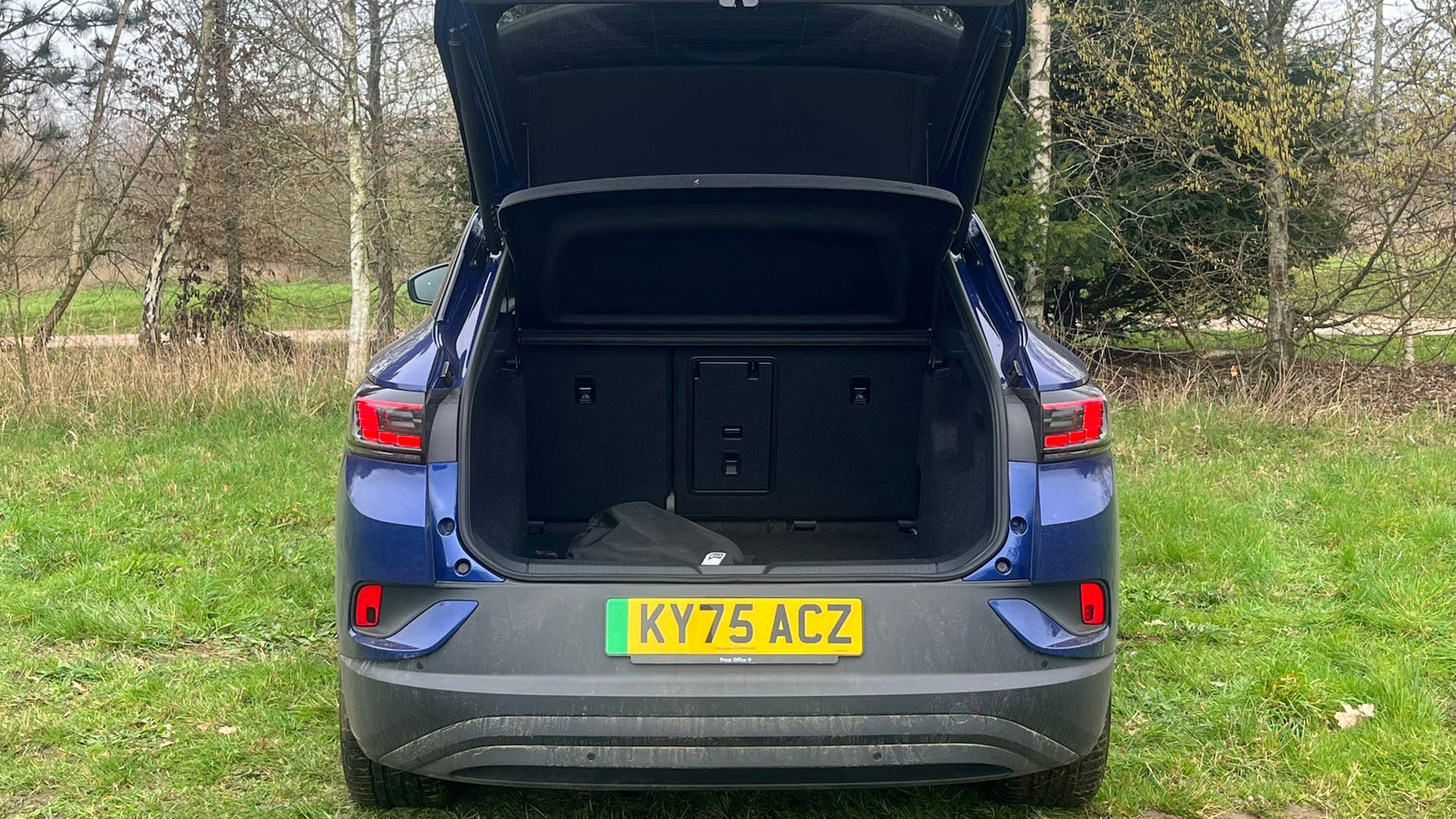
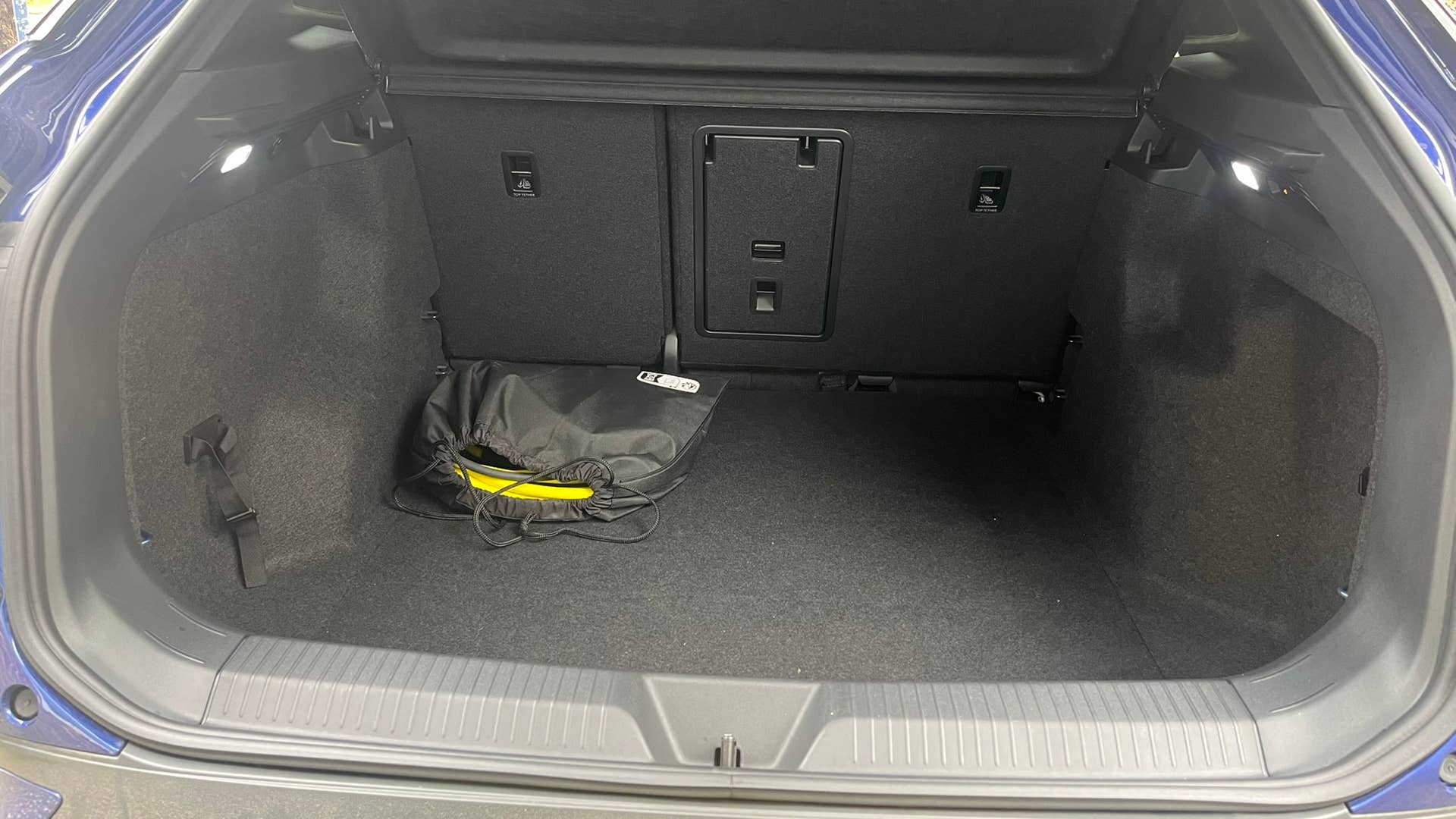
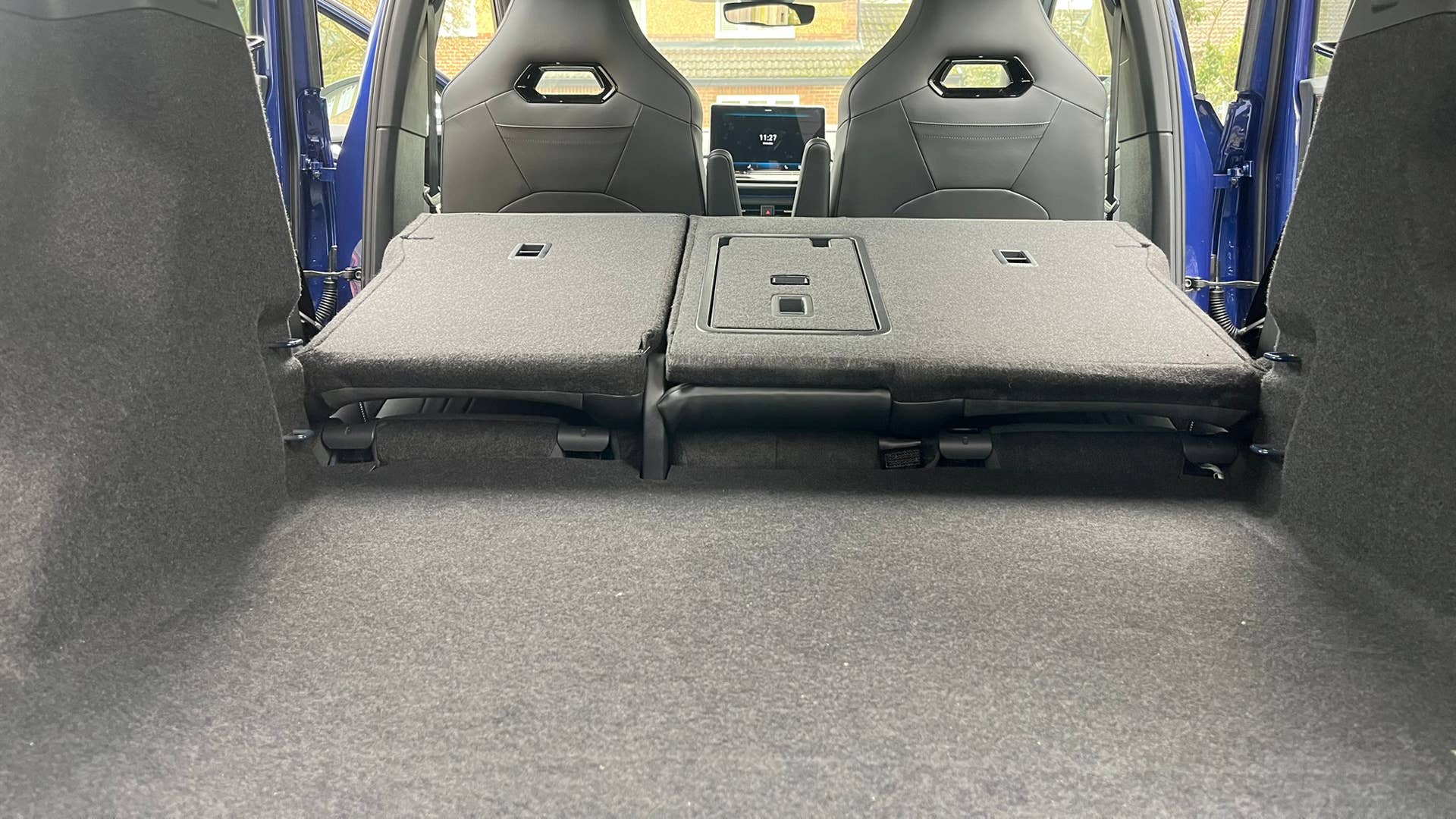
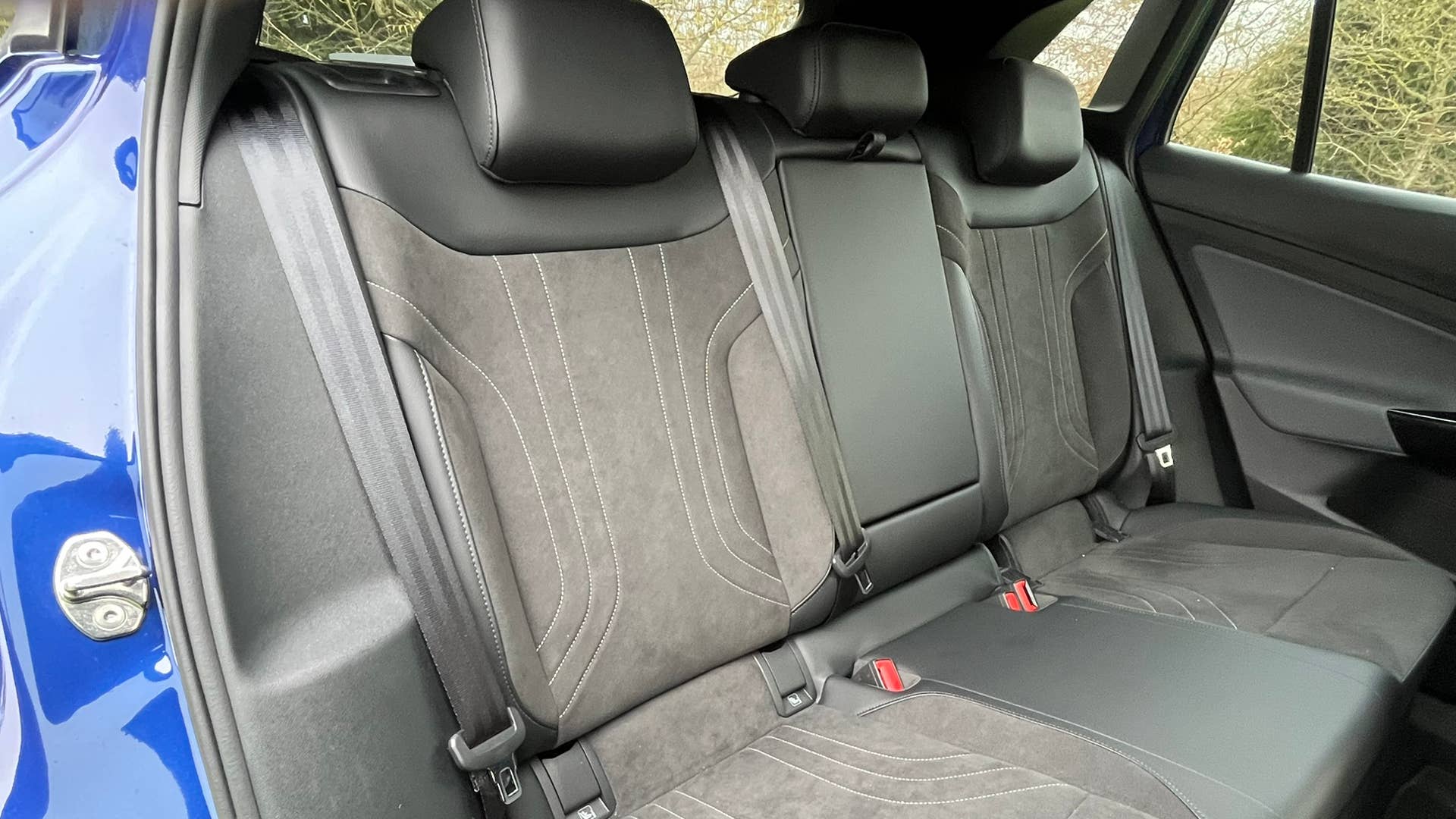
The fundamentals are strong, though. Volkswagen’s MEB electric platform allows a long wheelbase and flat floor, and that translates directly into usable space. Rear passengers get real legroom. The cargo area offers around 30 cubic feet with seats up, expanding to roughly 64 with them folded.
I never had reason to fully load the ID.4, but on one occasion I was tasked with taking a child’s bed to the dump, which it managed comfortably thanks to its square opening and low load floor. Two grown up boys and a car seat in the rear accompanied me on a couple of journeys and there were never any complaints about lack of space or legroom. The ID.4 is noticeably bigger on the inside than it looks from the outside.
Everyday Driving
Around town, the ID.4 feels exactly the way a family EV should. Acceleration is smooth and predictable, the throttle tuned to avoid the jerky surge some EVs deliver when you prod them. That said, the electric motor’s instant torque of 401 lb-ft, means pulling away from lights or getting onto roundabouts requires very little effort.
Steering is light and relaxed, which suits the car’s urban role well, and the ID.4 provides a low-stress driving experience that I’m sure owners will quickly appreciate after a few days behind the wheel.There’s something quietly likeable about the way it goes about its business — it doesn’t ask much of you, and it rewards that with a calm you don’t always notice until it’s gone.
Highway Driving: The 200-Mile Test
This is where the ID.4 feels most at home. At motorway speeds it settles into a calm, stable cruise — wind and road noise well controlled, the car tracking confidently without constant corrections. The suspension can feel slightly firm over rough sections at lower speeds, but it smooths out once you’re moving. The seats are well bolstered — power-adjustable with a massage function as standard on this trim — and with the massage function running, a two-hour journey went by quickly and I arrived without the fatigue I’d normally feel after that kind of drive. If you plan to use the ID.4 for lengthy work commutes or road trips, you’ll arrive feeling fresh and unstressed.
Charging Experience
Home charging is where the ID.4 shines as a daily proposition. Most nights I plugged the car into a Level 2 charger in the driveway and started the next morning with a full battery. Once that routine becomes habit, charging stops feeling like a chore — it’s just something the car does overnight, like your phone.
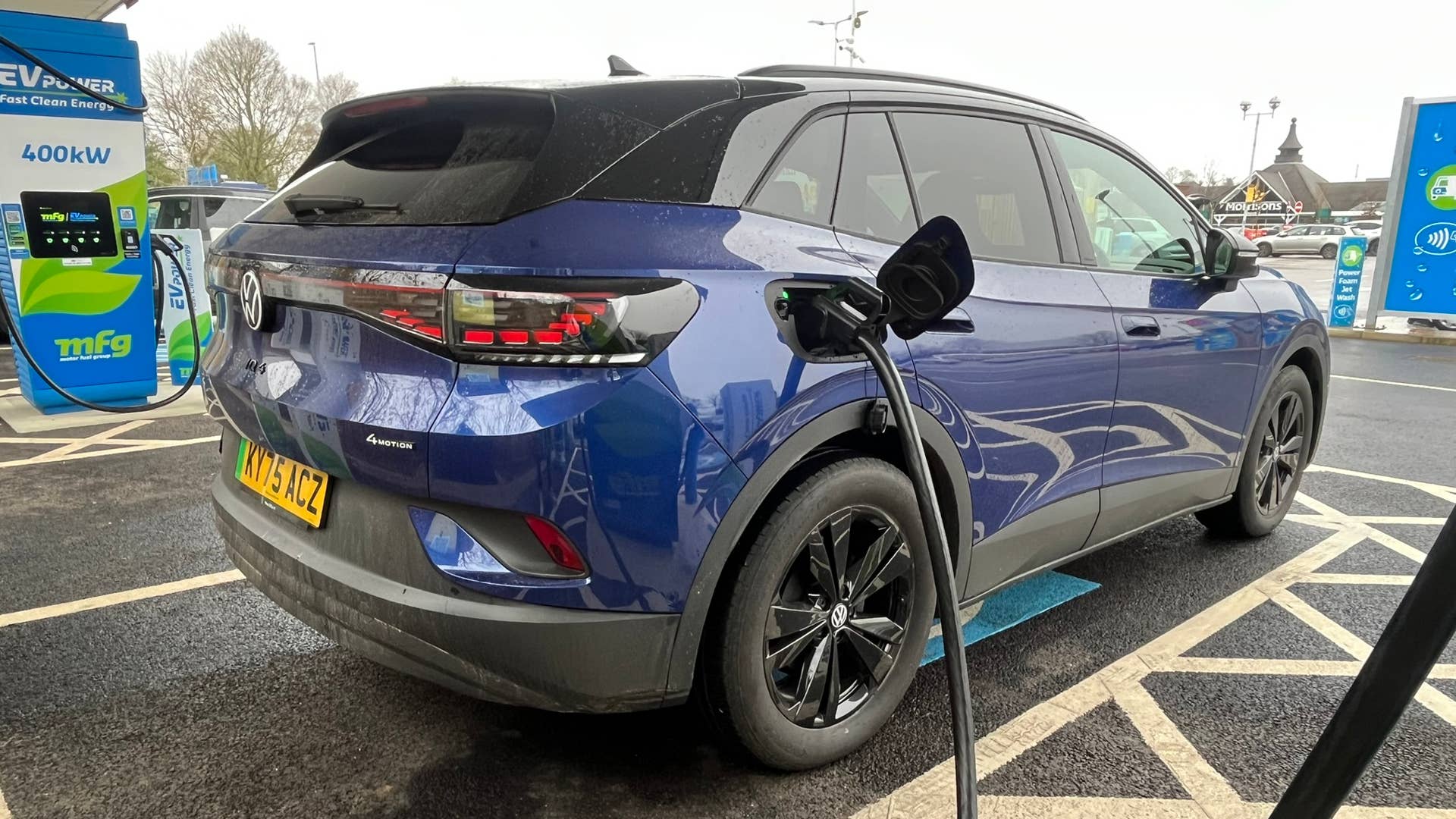
The highway trip required one fast-charging stop. I arrived at a charger with about 18 percent battery remaining and plugged into a 150-kW fast charger. The ID.4 supports up to 175 kW DC charging, and the official figure for a 10-80 percent charge is 28 minutes — which matched my experience closely enough. That was enough time to grab a coffee, a sandwich, and a visit to the restroom.
Tesla still holds an advantage here through its integrated Supercharger network, which remains more reliable and widespread than the patchwork of third-party chargers the ID.4 has to use. That gap is narrowing, but it hasn’t closed.
Who This Car Is For
The ID.4 makes the most sense for buyers transitioning from gasoline SUVs who want an EV that behaves like a car they already know. Comfort, interior space, and predictable usability are its strengths. If you want sharper performance or more distinctive design, the Mustang Mach-E has more personality and the Ioniq 5 has more visual ambition. The ID.4 isn’t competing on either of those fronts — and it doesn’t need to.
Verdict
The Volkswagen ID.4 isn’t the most exciting electric SUV on the market. It’s not the fastest, and it’s not the most technologically ambitious. But it may be one of the easiest to live with, which for most buyers is the more useful quality.
The touchscreen frustrations are real and the charging network still lags behind Tesla, but the driving experience is polished, the range is genuinely impressive at 321 miles WLTP (291 miles EPA), and the interior space is generous for the footprint. It’s a car that gets out of your way and lets you get on with things — and after a week, I found myself missing it.
A refresh is reportedly due for 2027, and if the rumoured return of physical buttons is anything to go by, VW knows where the current car falls short. Spy photos suggest sharper headlights, more aggressive bumpers, and a less rounded silhouette — a deliberate move away from generic EV styling towards something that looks more recognisably Volkswagen. More intriguingly, some reports suggest the ID.4 name may not survive the update at all, with ID. Tiguan mooted as a replacement.