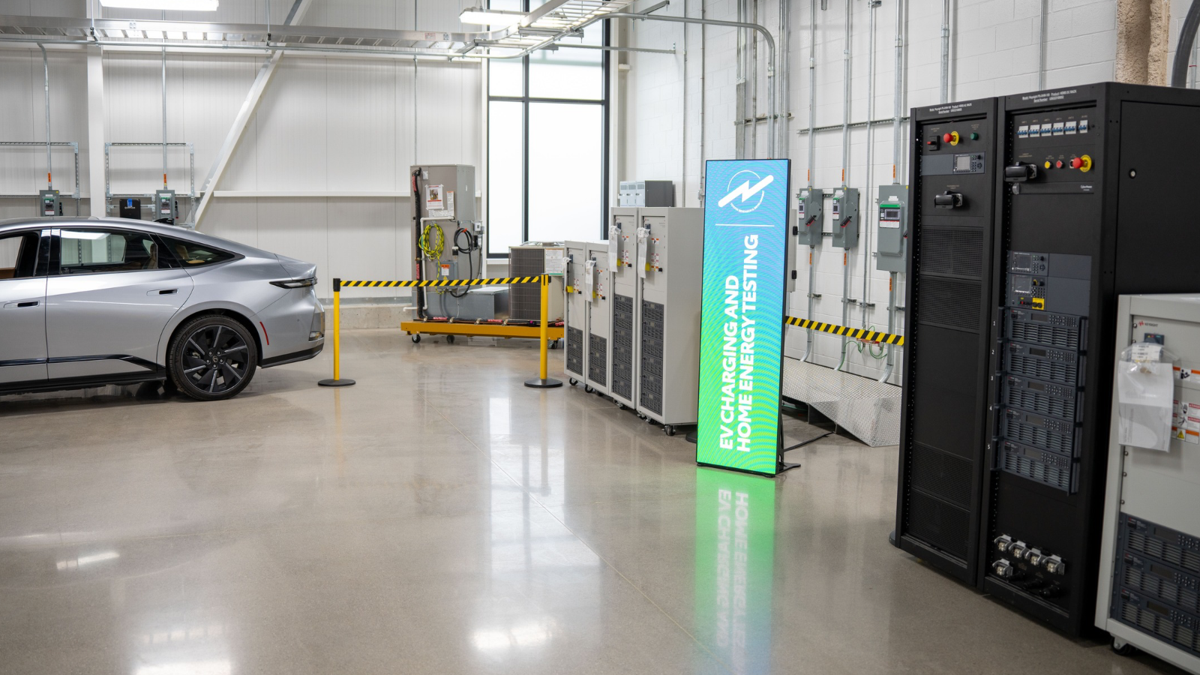
IIf you’re an environmentalist, the cancellation of all of its electric cars probably feels like a betrayal by Honda. It’s the “Earth Dreams” company. Honda was supposed to be the chosen one. I understand that feeling. You’re wrong, but I understand it.
I spent most of yesterday in a room with fellow journalists and auto industry analysts listening to an electric car company, Lucid, talk about its potential future. This was a company that’s gotten billions of dollars in investment, mostly from Saudi Arabia, and its hope was that it would be cash flow positive by the end of the decade. Lucid is, from a vehicle engineering standpoint, the most advanced electric carmaker in the world, and it’s going to need years to just start seeing a return on that investment.
What journalists were saying in the room, and online, was that what happened at Honda was terrible. An awful decision. Also, pretty much everyone agreed, the right decision. Honda wasn’t going to make any money on those cars, and so its $15 billion got added to the other write-downs, which now reaches above $70 billion in EV-related losses.
The Morning Dump today is going to focus on hybrids, EVs, and maybe where this is all going.
EV Registrations Fall In The US As Hybrids Rise
One way to make people healthier, from a diet perspective, would be to get rid of all the Burger Kings and replace them with Erewhons–the fancy and expensive organic grocery stores. That probably won’t work for most people. It doesn’t mean you get rid of organic grocery stores or stop building more, but perhaps there’s something to be gained by just making Burger King a little bit healthier.
This is how I feel about hybrids.
When I say that the 2020s are the “Decade of the Hybrid” I think there’s a tendency by irregular readers to assume I’m anti-EV and I have to first explain that I’m not. I think most people would find an electric vehicle a better commuter option than their current gas or even hybrid car, assuming they have access to home-charging. I also understand that the net-positive impact of more EVs far outweighs any environmental cost of their production over the lifespan of the vehicle.
My most controversial take is that the push for more electric cars is, itself, a kind of giving up on the real answer: higher density development. Simply replacing gas-powered cars with electric ones doesn’t do anything to reduce the number of miles driven. I always come back to this, but Los Angeles is basically twice as dense, population-wise, as Houston. This means that, in Houston, it takes twice as much energy to pick up the trash or deliver pizzas. Replacing pizza delivery vehicles and garbage trucks with EV equivalents is good, but in some ways it’s a half-measure. If we really cared about changing the environment, we as a society would put a lot more effort into fixing density and improving public transportation.
There’s a joke that people from the suburbs love cruises so much because it gives them a taste of what it’s like to live in a walkable city that doesn’t require cars, and that’s basically true. It’s nice! Dense places can be efficient, can promote community, and cities not oriented around cars are places with fewer car-related deaths.
It doesn’t mean that switching cars to electricity is bad. If you look at Europe, a fairly dense place already, as of 2019 about 25% of the continent’s total CO2 emission came from road transportation, and road cars made up 60.6% of emissions of that number. If you look at Norway, the only large country that sells almost entirely electric vehicles, even as of the end of 2024, 68% of the cars on the road were gas-powered. The next closes country is Iceland, at 18%, and then Denmark at 17%. Even in the most pro-EV countries, the transition is painfully slow.
The shortcoming of the pro-EV argument is that it assumes society isn’t going to be motivated enough to change the way it lives slowly and carefully over time, but will just be motivated enough to change its cars immediately.
What the Inflation Reduction Act and the Biden Administration proposed was basically a moon shot. A pull-out-the-stops attempt to get industry to switch to electrification. It didn’t work. Even before the new White House and US Congress killed the plan, it was falling apart because the demand wasn’t there.
If the assumption is that people won’t change their habits, then the better option is: Electric cars for some, hybrids for almost everyone else. The math gets complicated, so I’ll approach it from an extreme example. The Ford F-Series, broadly construed, is the most popular vehicle in America and Ford sold more than 800,000 of those last year. These are vehicles that presumably get driven a lot, as many of them are work trucks. The impact of improving the fuel economy average of an F-Series by 1 MPG is going to be way greater than, say, 15,000 Escape Hybrid buyers being pushed into Mach-Es.
Toyota has this ratio its engineers developed, which is that the raw battery material needed to make a single electric car is the equivalent of making six plug-in hybrids or 90 regular hybrids. That’s basically what Honda is doing.
Imagine if at least some of the $70 billion that is being written off to develop EVs had gone to more hybrid development. Would the net environmental impact have been faster and outpaced switching a small percentage of buyers to EVs? The problem with the switch to electric cars is that it requires all of society to move as one, in the same direction, for a long period of time. This is enormously expensive, and the politics of it aren’t great. [Ed Note: Two years ago I Wrote “America Focusing On Electric Cars And Not Plug-In Hybrids Was A Huge Mistake.” I stand by that. -DT]
Hybrids no longer seem to carry that same political charge. They require no change in behavior. They’re not that much more expensive and, in an environment where gas prices might rise a lot, the economics start to make a lot of sense.
That’s where most drivers seem to be. In the absence of tax credits, EV sales dropped off in the United States to just 5.1% share of the light vehicle market according to S&P Global Mobility, via Automotive News, down from 8.3% of the market last January.
Sales are now mostly Tesla Model Ys and everyone else, with Cadillac as the #2 brand:
Cadillac, at No. 2 among EV makers, grew its registrations by 8.1 percent in January to 3,189 with its expanded portfolio. The Vistiq three-row crossover had 737 registrations versus none a year earlier. The Lyriq midsize crossover fell 47 percent to 1,040 registrations.
Cadillac’s EV share rose 2.4 percentage points in January from a year earlier, to 5.3 percent, the data showed.
Remember when everyone was going to swap F-150s for Cybertrucks? The Tesla truck only managed to sell 1,458 units, compared to 47,981 F-Series trucks.
Ok, so that’s the United States. What about China, a place where the government has more ability to push the population in a single direction.
Even Chinese Consumers Are Embracing Hybrids

Would you believe that Volkswagen and Toyota, via joint ventures, were the two biggest automakers in China in February? That’s what happened, with Geely coming in third and BYD falling to fourth place.
What’s going on here? I’ll let Reuters explain:
The legacy automakers’ comeback in the market where they have been struggling to catch up with local rivals in EVs comes as purchase tax exemptions on electric cars expire and Beijing scales back subsidies for trading in EVs.
As subsidies fade, hybrid EVs that Toyota specialises in were shown to have steered some consumers away from PHEVs, said Cui Dongshu, secretary-general at CPCA.
Local automakers betting on budget electric and plug-in hybrid vehicles take the biggest hits from the curtailed incentives.
BYD, which unseated VW as the biggest carmaker in China by sales in 2024 and held onto the crown last year, fell to fourth place with 7.1% market share in the January-February period when its overall sales posted the biggest drop since the pandemic.
As CNEVPost points out, retail sales of what China calls NEVs (electric vehicles + hybrids + fuel cell cars) dropped 32% year-over-year. In China, where infrastructure is better and EVs are cheaper, consumers still need support to buy cars.
The Honda Prologue Is Probably Dead, Too

Honda had already let slip, via financial reporting, that it was going to be cutting back on Honda Prologue production. It sort of made sense, given that GM was building the Prologue for the company and Honda had already decided to kill its Acura ZDX sibling.
Now Automotive News thinks the Prologue is just dead, dead:
Honda is expected to pull the plug on its sole electric vehicle in the U.S., the Prologue, after the current production run ends in December.
The automaker isn’t planning a second generation of the midsize crossover, which General Motors builds for Honda on a shared EV platform, according to industry forecaster AutoForecast Solutions.
A Honda spokesperson declined to comment on future product plans but said the Prologue remains in the lineup.
The Prologue will only remain in the lineup because they’re selling so slowly and, therefore, Honda has a bunch of them.
Is This All Very Shortsighted?
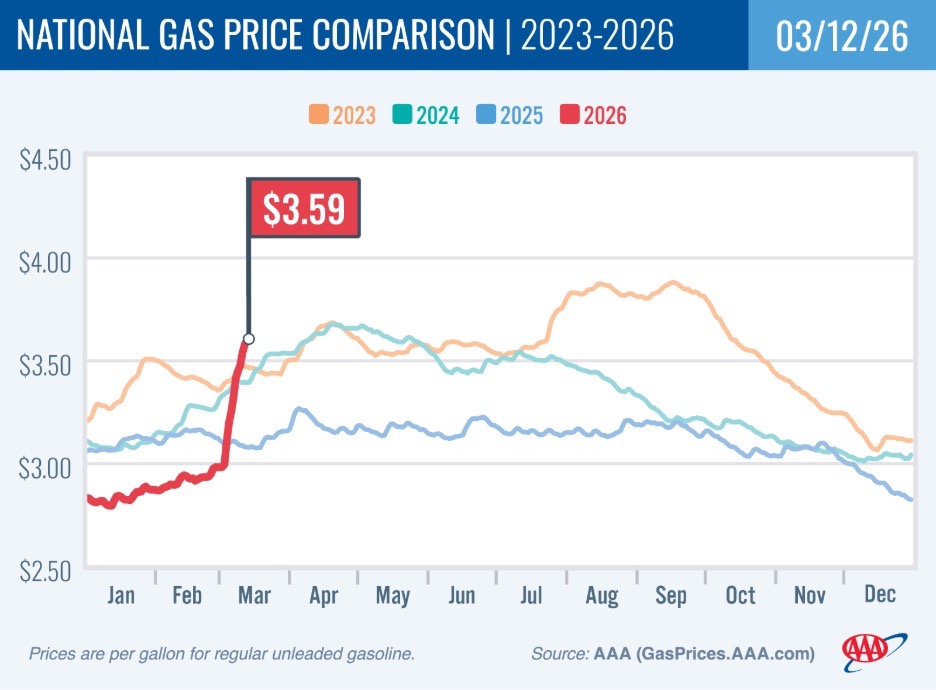
The country is at War with Iran in order to pursue unclear objectives. When this ends and where it’s all going is anyone’s guess, but what’s clear is that there’s at least going to be a temporary increase in gasoline prices. As you can see in the graph above from AAA, this is the time of year when gas prices usually go up, though not at this extreme rate.
It does feel like it would be a great time to have a lot of electric cars, right? Or at least more hybrids. The problem for automakers is, historically, a prolonged period of gas swings usually mean that people stop buying cars altogether.
In six past instances of oil crises, auto sales dropped by more than 10% of average sales. Three of those times, they plunged by 40% or more of average sales, according to Anderson Economic Group.
The group notes that it is impossible to predict what might ultimately happen as a result of the war in Iran, but past episodes that involved wars and oil embargoes had significant effects on U.S. auto sales.
“History shows that Americans cut back sharply on buying cars when wars, invasions, and oil embargoes occur,” Patrick Anderson, CEO of Anderson Economic Group, said in a statement. “While we don’t know how long this war will last or what the effects will be, at least six times since the 1970s, an event such as this has caused a sharp drop in auto sales.”
People now have the option to buy a car that’s way more efficient, which wasn’t necessarily true in the past. Maybe that’ll help.
What I’m Listening To While Writing TMD
If there’s an album that feels more like the pre-GFC malaise of the late 2000s than The Postal Service’s “Give Up” I don’t know it. Please fish your iPod out of the basement and put on “The District Sleeps Alone Tonight.”
The Big Question
Are you taking a spring holiday? Are you driving? Are you starting to be impacted by fuel prices?
Top graphic image: Acura
The post Electric Cars Were Never Going To Save Us appeared first on The Autopian.