I have to admit, modern Chrysler kind of fascinates me. It’s one car. It’s like the automotive equivalent of Vichy France or Brunei or Nicaea – a rump state. A strange and sad reminder of a once-proud empire, still clinging to the old heraldry and trappings of a time long since gone, lumbering on as a sort of ghost, a memory rendered in metal and rubber, getting by as best it can but desperately avoiding quiet moments of reflection when the full brunt of reality can no longer be ignored. It didn’t have to be like this.
The hows and whys that Chrysler ended up in this position are complex and could probably fill a book I’d put off reading, but that’s not why I’m talking about this right now. I’m talking about it because today we wrote about how Chrysler is now officially a one-car brand and that reminded me just how big and bold and visible Chrysler was with concept cars in the 1990s to early 2000s. It feels like for a while every car magazine I saw had some manner of exciting and delightfully overdone Chrysler concept car on the cover.
That was an exciting time! And I think on this day of being reminded of Chrysler’s contraction, it’s worth taking a moment to remember all the exciting and even romantic sorts of cars Chrysler was imagining for their future that never quite came to be. Well, some of it came to be, in some ways. Let’s just get into it.
Chrysler Chronos
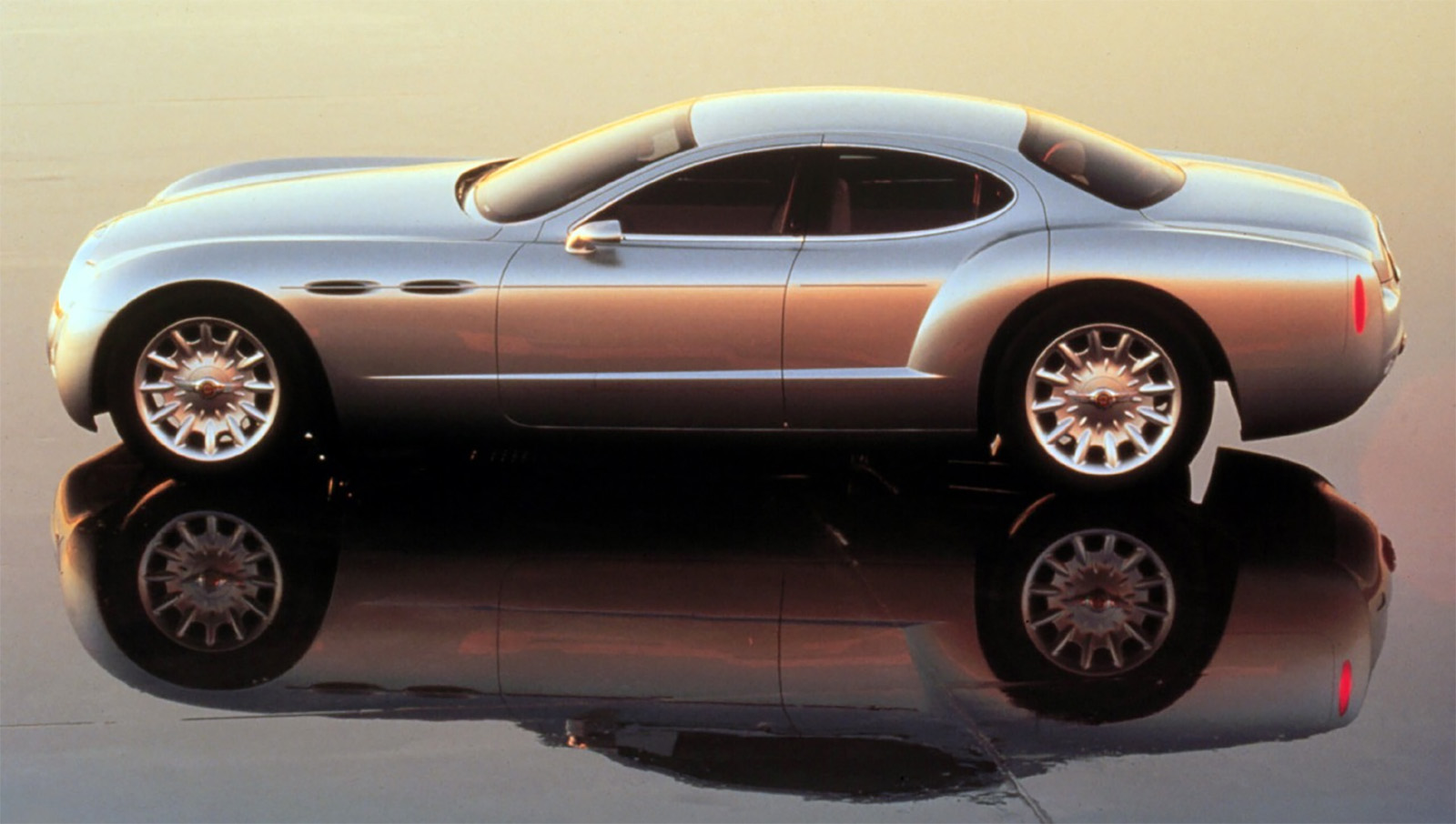
I think what I like best about this period of Chrysler concept cars is that they all, generally at least, felt like they were operating from the same fundamental set of rules. And those rules seemed to be ones laid down by legendary designer Virgil Exner, head of Chrysler’s design throughout the 1950s and 1960s. It was like someone in Chrysler’s design team managed to get hold of some of Exner’s ashes and had the entire design department snort a fat rail of Exner to get inspired.
And boy, did they get inspired; look at this 1998 concept, the Chronos. In some ways, this was one of the most direct Exner-golden-era-influenced cars.
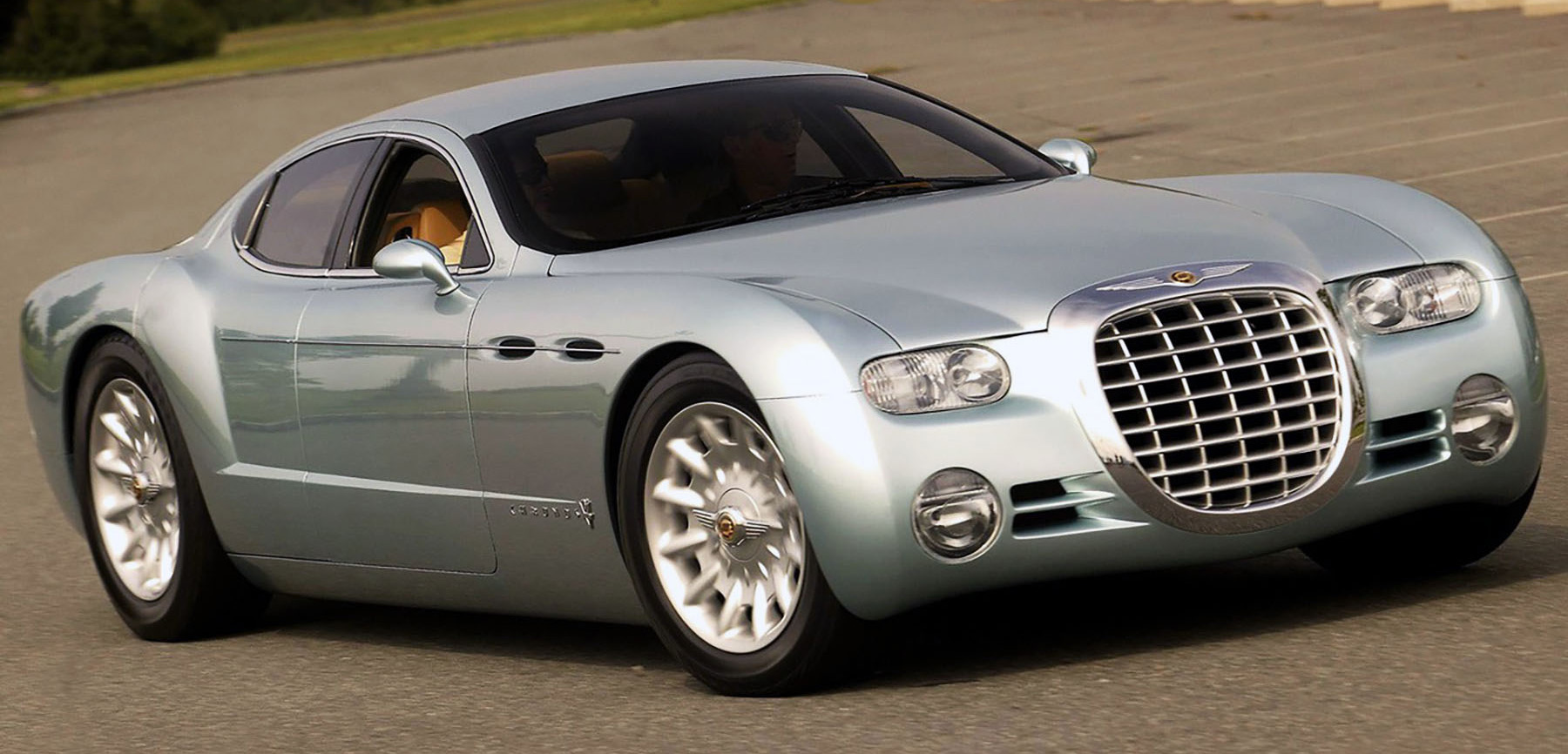
The proportions and curves and whole design language really feel like the legendary Chrysler D’Elegance updated with a ’90s design vocabulary and stretched into a four-door sedan. I mean, look at the original:
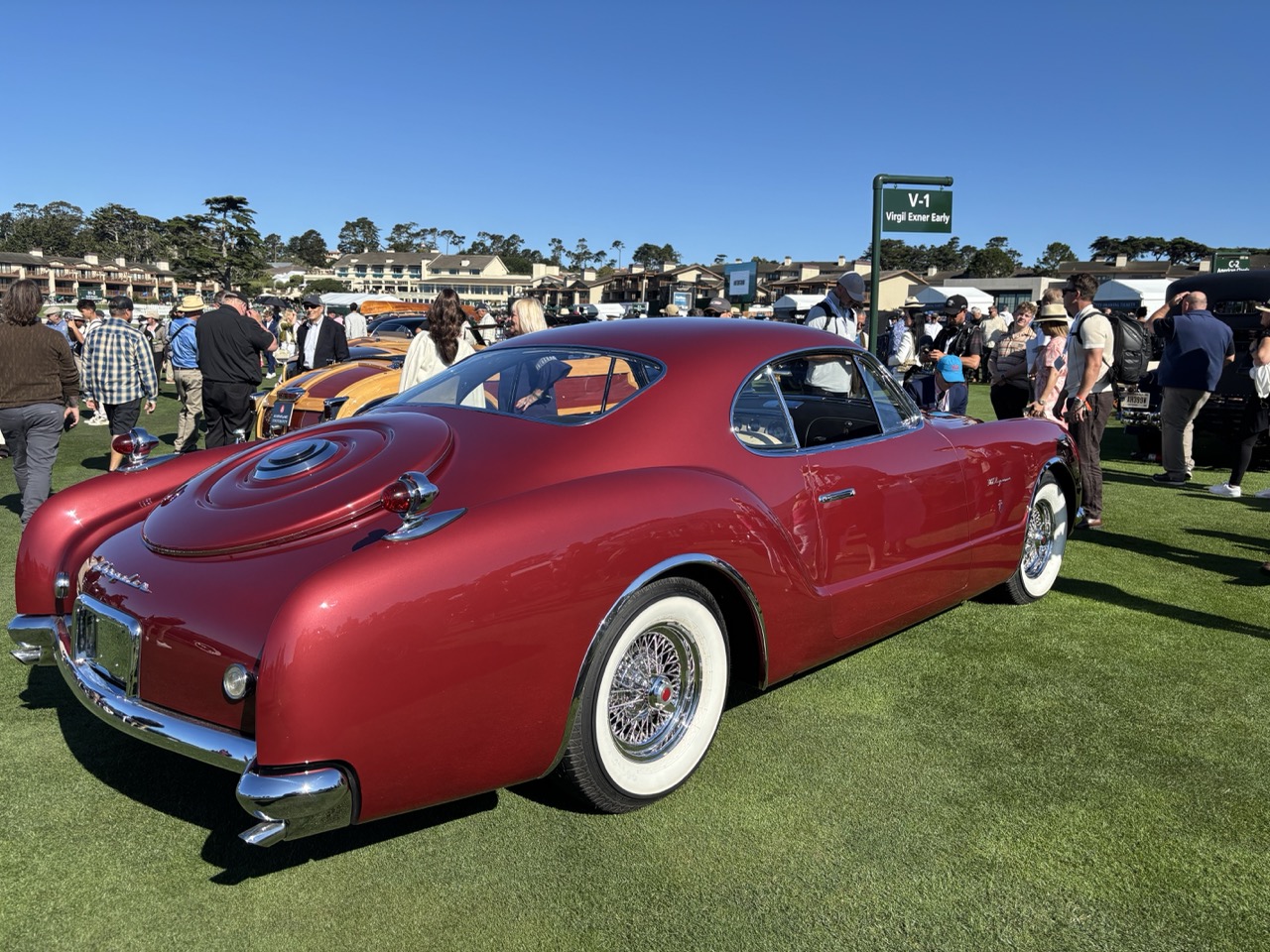
Remember, the D’Elegance was also the car from which Volkswagen and Ghia cribbed the design for the Karmann-Ghia:
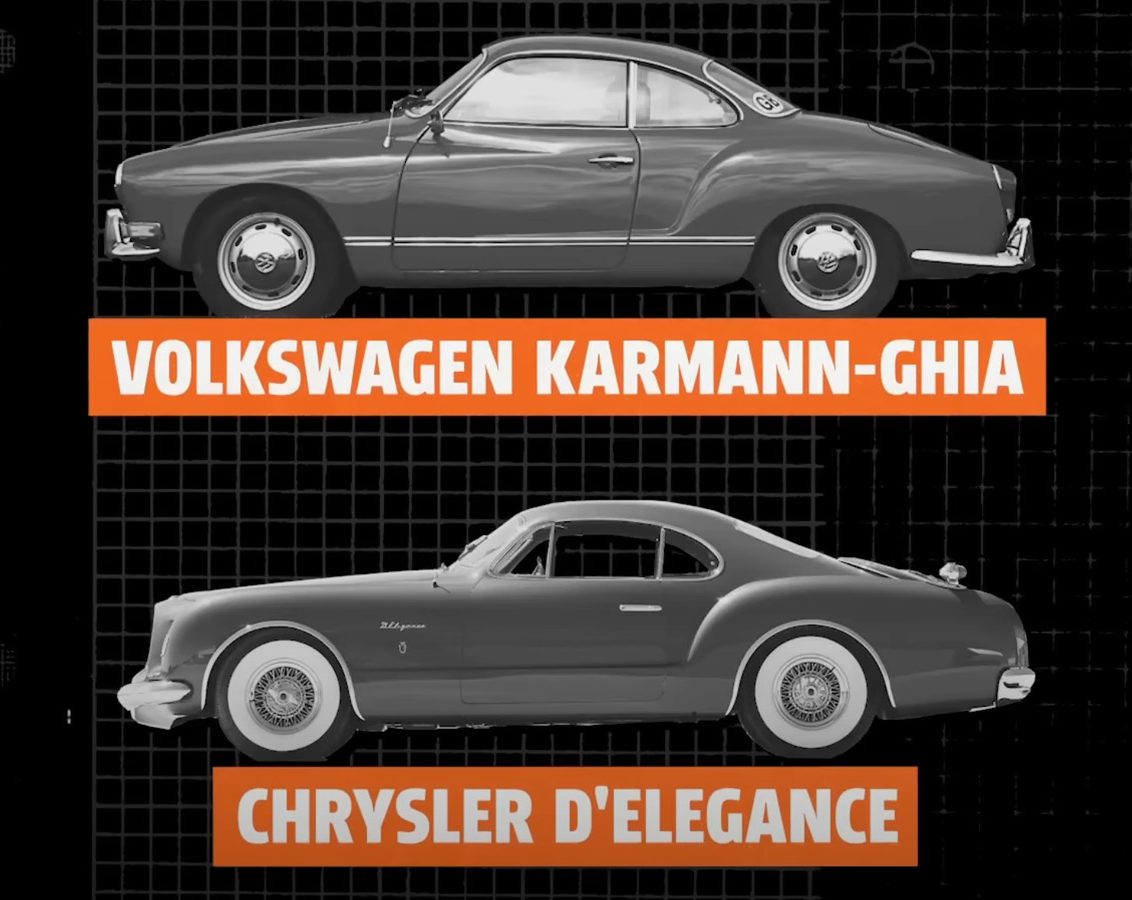
It was an exciting concept car! I desperately wanted big American sedans to look like that! That’s a future I could get into. I’d even consider dressing a little better if this is what cars looked like.
Chrysler Phaeton
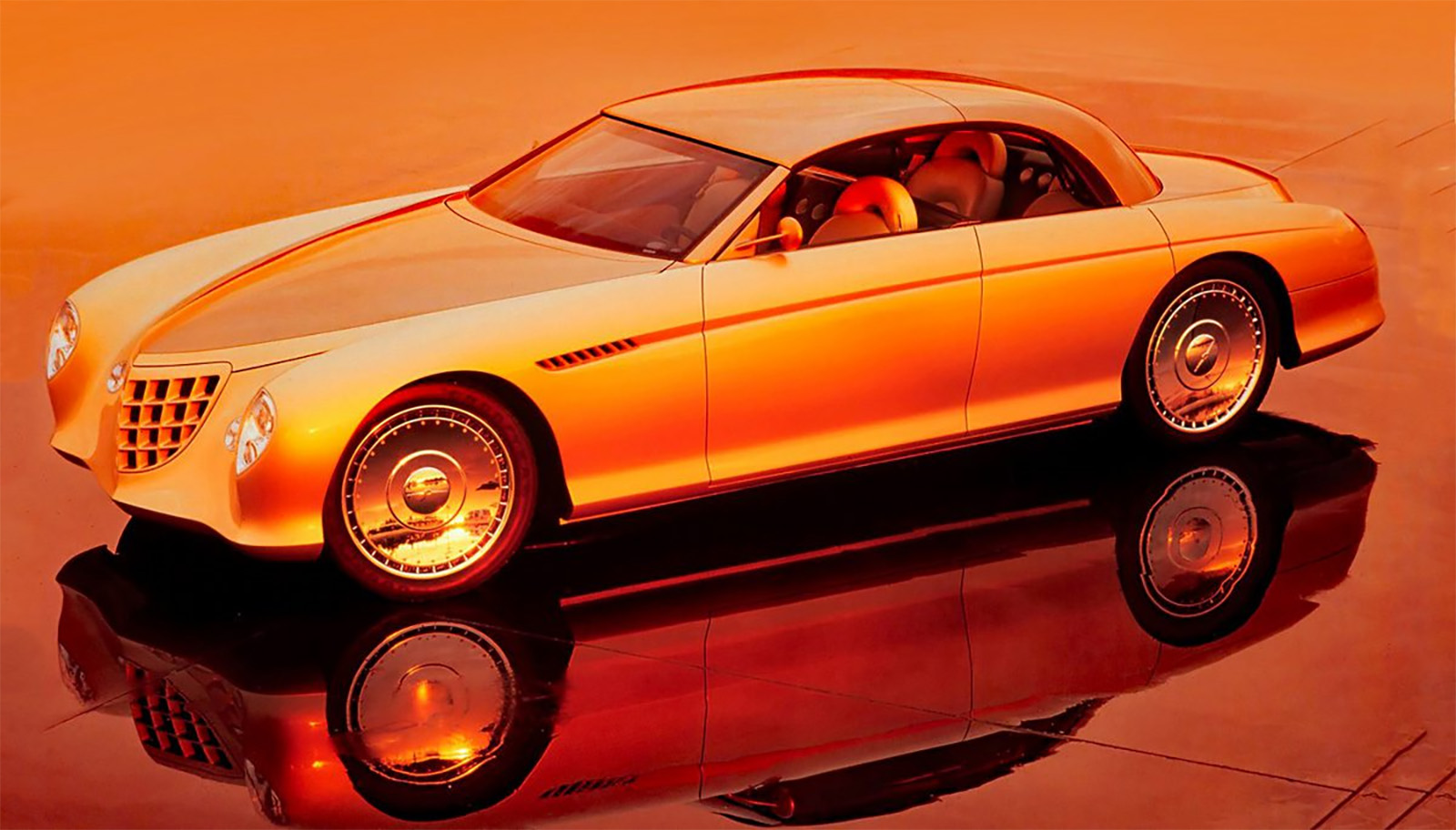
In a similar vein, there was the Chrysler Phaeton in 1997, which sought to replicate the drama and presence of Chrysler’s Imperial Parade Phaetons, special open-topped cars specifically designed to ferry Terribly Important People around in parades and other contexts for the great unwashed to gaze upon them with wonder and reverence. You know, people like ambassadors and Poet Laureates and performers of the caliber of, say, Gallagher II.
The Phaeton had a retractable hardtop made by American Sunroof Company (ASC) and even featured a powered retractable rear-seat windshield and additional gauges for rear-seat passengers:
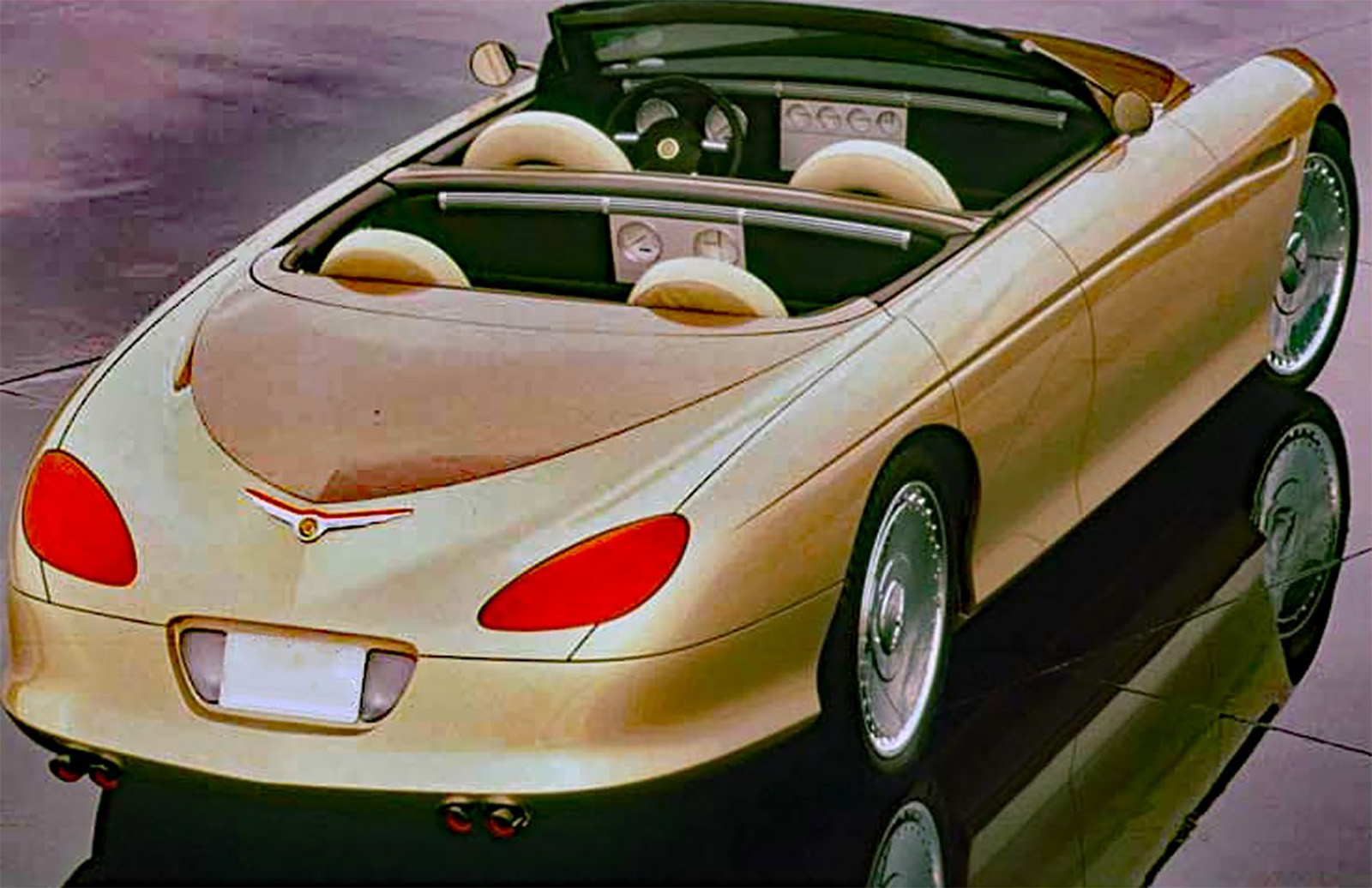
Even with the top up, this was still a pillarless hardtop design, and despite its considerable bulk and length, it was a strikingly elegant car. Though just a concept, this thing had a real drivetrain, two Chrysler LH V6 engines mated together to form one V12.
I think, more importantly, you see the pattern here, and it’s all about drama. Chrysler understood that our cars should be a little reminder that even if your day-to-day routine feels mundane, there’s no reason why you can’t at least pretend everything is more stylish and elegant and thrilling, right?
Chrysler Atlantic
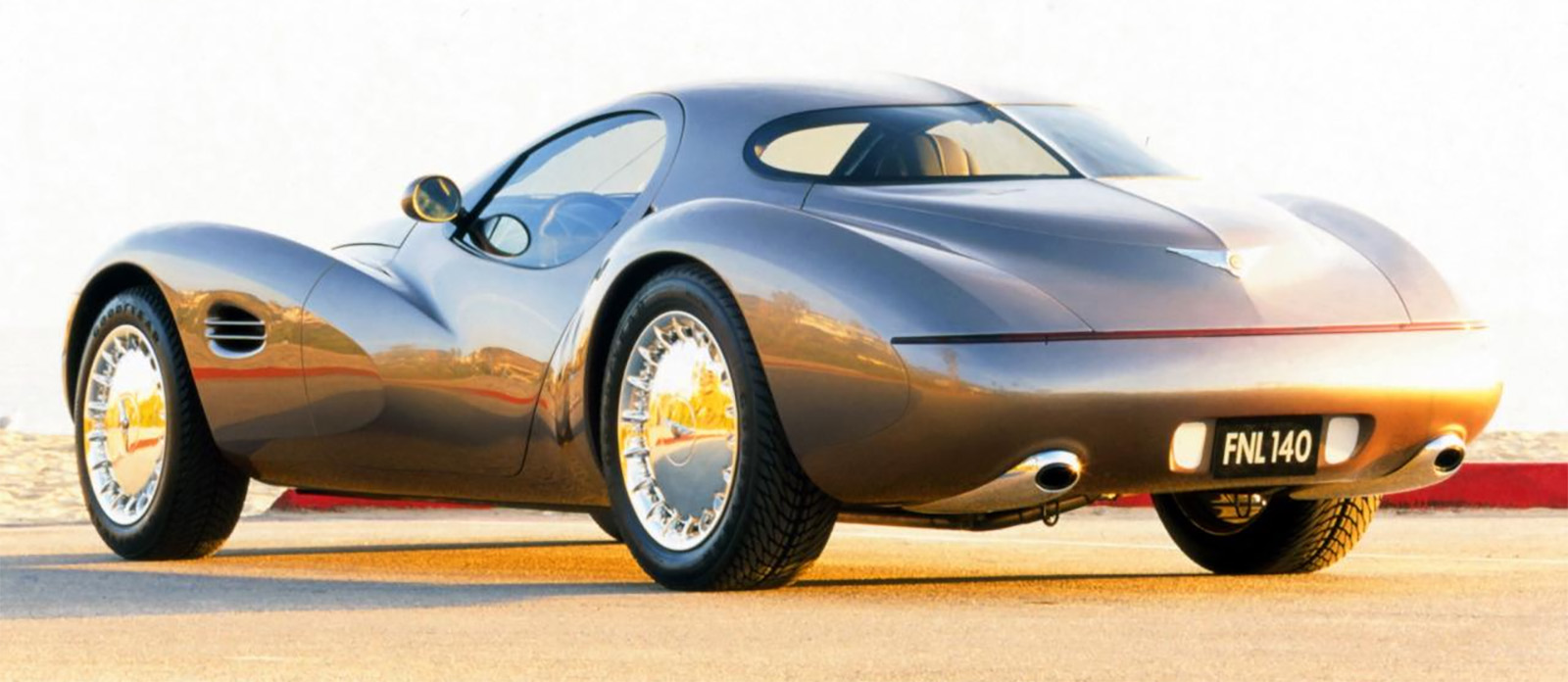
I really love the Chrysler Atlantic, because it’s such an unhinged idea. Chrysler, in 1995, decided to make a modernized revival of the Bugatti Type 57SC Atlantique, a legendary car they had absolutely nothing to do with. Oh, and there’s also a lot of Talbot-Lago T150 SS in this design, too, another car Chrysler had no hand in. Who does that? Sure, carmakers resurrect their old heritage cars all the time and attempt to revive them, but who tries to bring back a car they didn’t make?
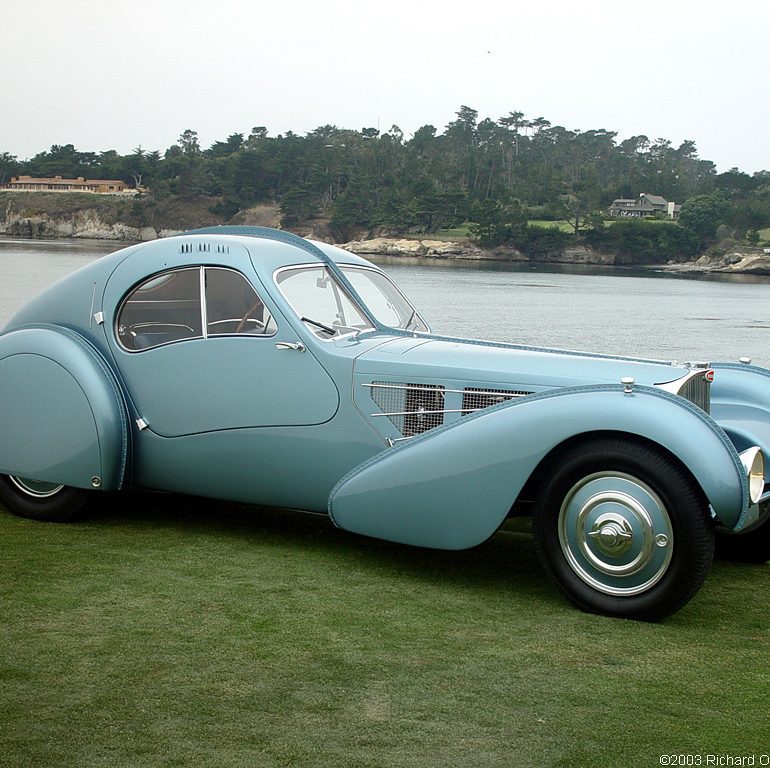

Chrysler had no ties to Bugatti, yet they made one of the most exciting classic Bugatti revivals of the 1990s, or perhaps ever? Would Bugatti have been cool with this if they went to market? Did Chrysler (or maybe designer Bob Hubbach) even bother with a phone call to Bugatti to give a heads-up? I doubt it. They just did it, because it’s fantastic and dramatic, and I think they wanted more of that in the world.
They also made it run with a pair of Neon inline-four engines stapled together to form a very strange straight-eight engine that, allegedly, didn’t sound that great. Still, who cares? I love this absurd thing.
Chrysler CCV

You know what’s really nuts? The Atlantic wasn’t the only time Chrysler decided to just remake an old legendary car. In 1997, Chrysler decided they’d just go ahead and make a modern version of another iconic French car, but at the other end of the spectrum this time: the Citroën 2CV. They did the re-imagine-another-company’s-car thing again.
I’ve written about the resulting car before, the Chrysler CCV, an extremely clever and bold re-imagining of the 2CV. Chrysler’s concept was made from soda-bottle plastics and had a little V-twin Briggs and Stratton engine and was about as close in concept and soul to the original 2CV as one could get in the late 1990s. It never really went anywhere despite some daring plans, but it’s just another great example of how daring 1990s Chrysler could be.
Chrysler Citadel
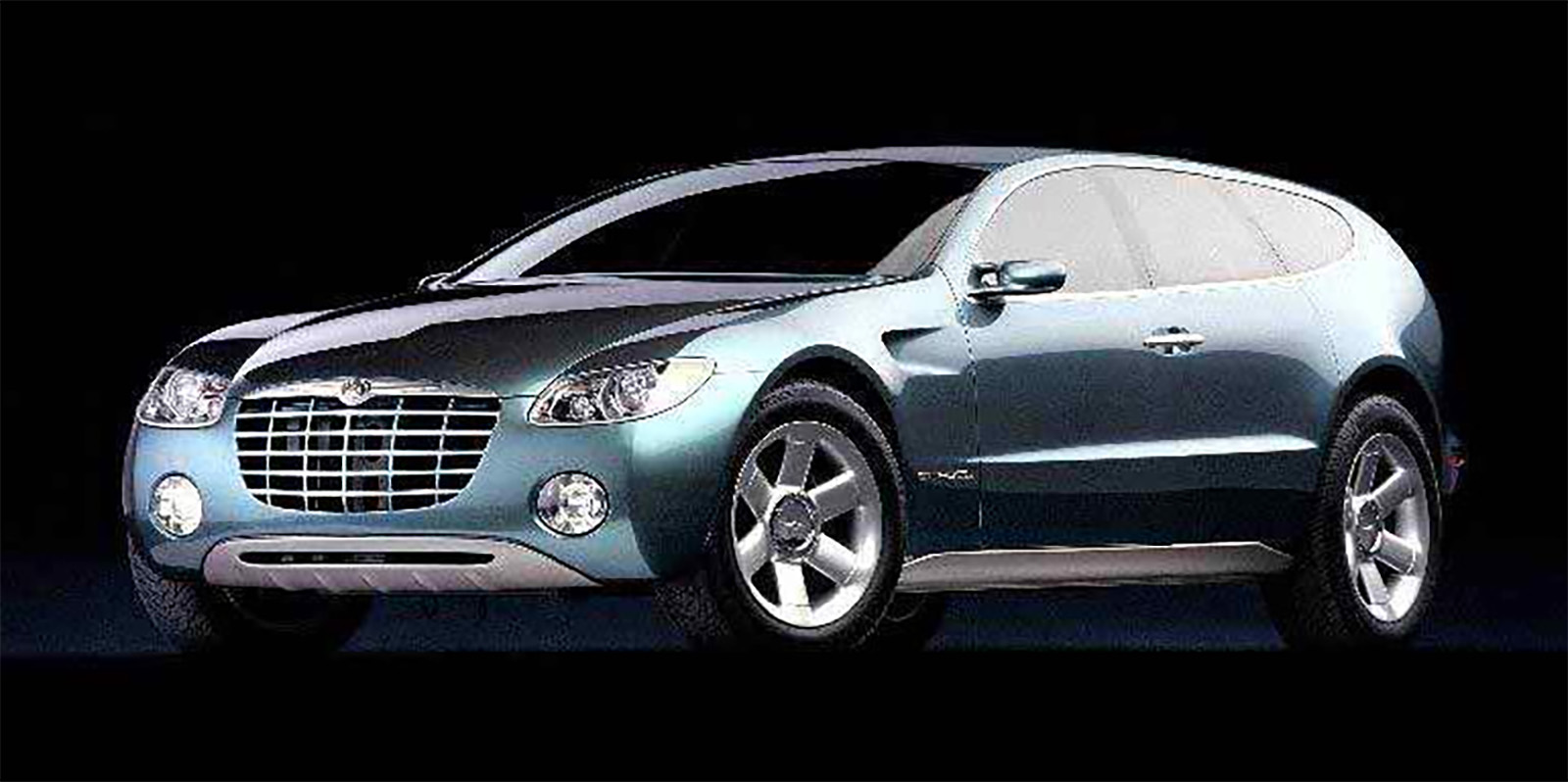
This may be the closest one to what modern Chrysler has become, because, well, it’s a minivan, like 100% of the current Chrysler lineup is. But the Citadel, shown in 1999, isn’t exactly like current Chrysler, because the Citadel makes me kind of excited to be alive instead of feeling like maybe nothing really matters, like modern Chrysler does.
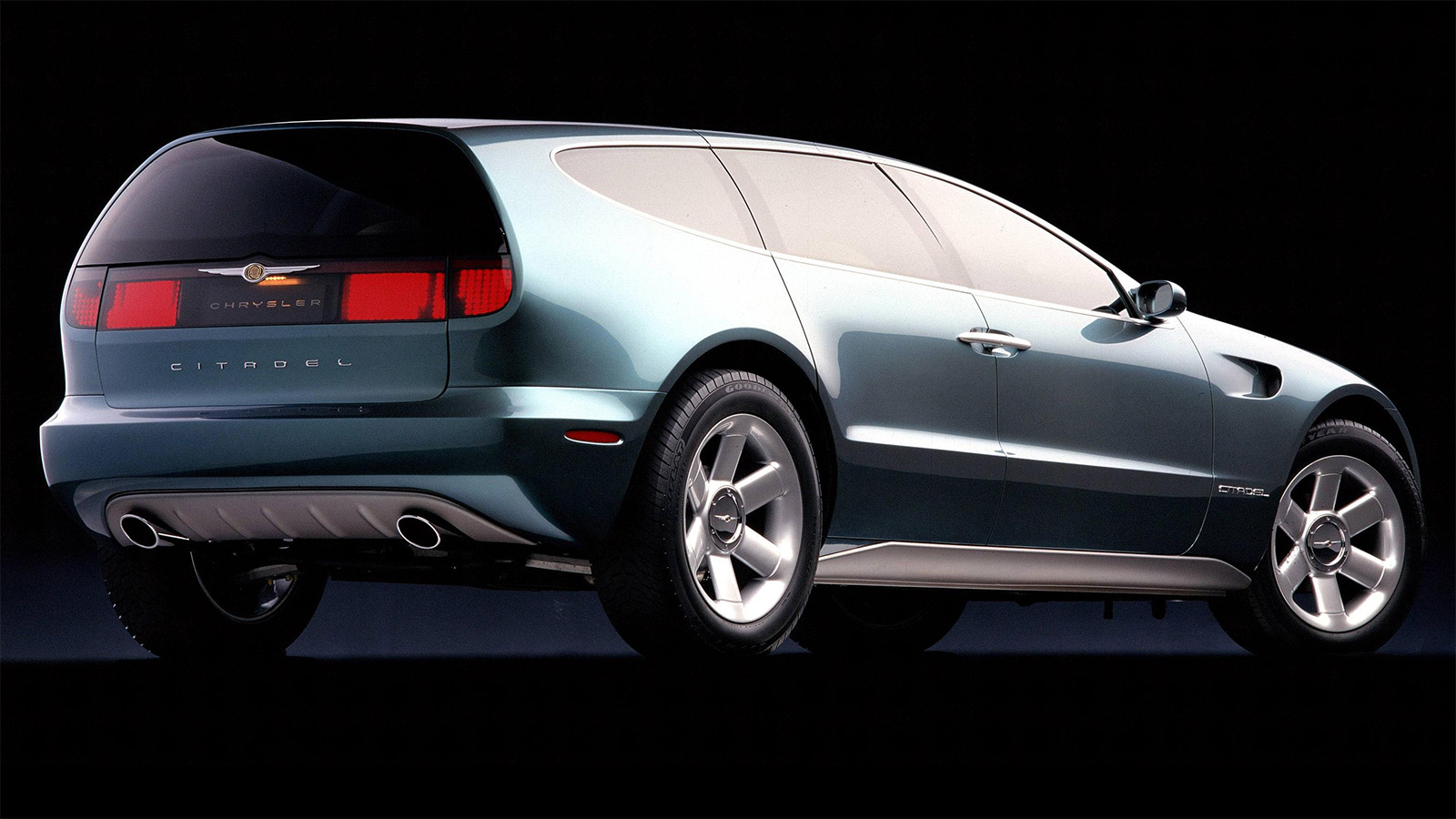
The Citadel was a take on the minivan that sort of reminds me of how the Brubaker Box imagined vans to be: long and low, still useful but also slightly menacing and purposeful-looking. The silhouette of the Citadel is sleek and taut, and that Kamm-like cutoff rear end is a fantastic touch.
The Citadel had a gas-electric hybrid drivetrain driving the rear wheels, tuned for performance. I think it still feels modern today, and if Chrysler announced that, yes, they were going to remain a minivan-only company, but this was the minivan they were talking about, I think I’d be absolutely thrilled.
There were more concepts from this era worth talking about, of course, and I encourage you to shove links in the comments and discuss, at length and loudly.
What happened to you, Chrysler? All of this excitement and imagination and optimism, daring you used to have, and now look. A shell of what you once were. I’m not giving up hope, though. I think some of what once made Chrysler exciting has to be still there somewhere, soaked into some patch of carpet or forgotten in a closet behind a break room.
Someone at Stellantis just needs to find it and set it free.
The post It’s Ridiculous That Chrysler Only Sells One Car When They Had So Many Good ’90s Concepts appeared first on The Autopian.