I own a Citroën 2CV. It still feels exciting to type that. I know for a huge chunk of the world’s population, this isn’t a big deal, or even something to get excited about, but for me, a former child who grew up in an America woefully deprived of wonderfully strange French air-cooled cars, it’s still a pretty big deal. And now that the 2CV is actually self-propelled, the whole tone of working on the car has changed, for the better. There’s a vast world of difference in getting a car sorted that you know is capable of running and driving as opposed to one that only drives on a full tank of hope.
There’s still plenty to do on the car, of course. As you may recall from the last update, I was able to drive it from the shop that rebuilt the carburetor, but it was running from a big five-gallon gas can in the front passenger footwell. That still hasn’t been sorted out yet, and, I suspect, probably should be. But I did get some other stuff done.
First, because I know my own self-control is so abysmal and I would be driving it at least a little bit, I needed to take care of some important essentials. Like changing the oil.
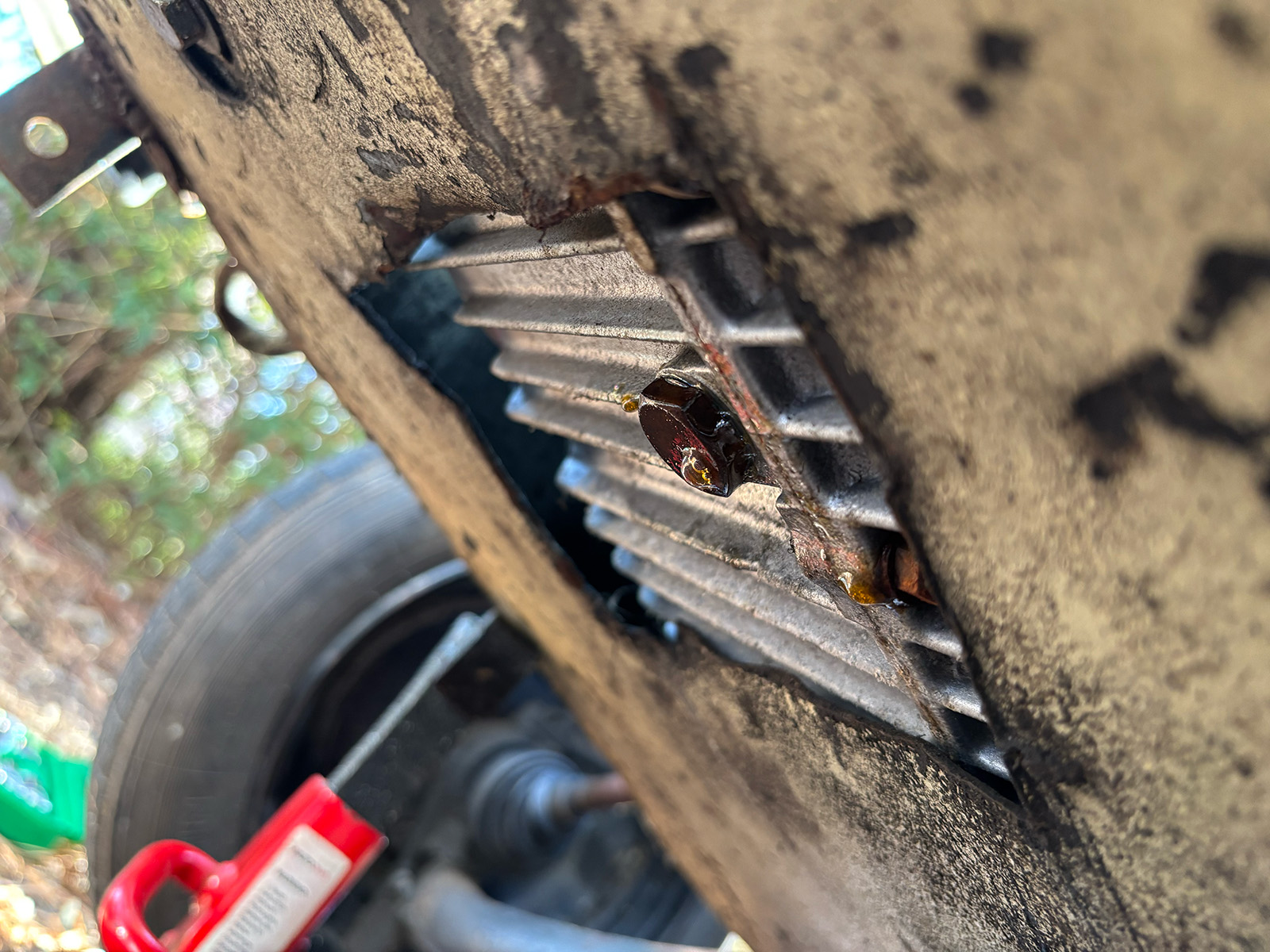
Remember, this car had been sitting in a field for over a decade, and I have no idea how long before that the oil was actually changed, so I think it’s safe to say it was due. The oil drain plug sits in a nice little cutout in the chassis, which has, impressively, a pretty decent “stone guard panel” which looks and feels something like a skidplate. I don’t think I realized the car was so equipped, but I like it.
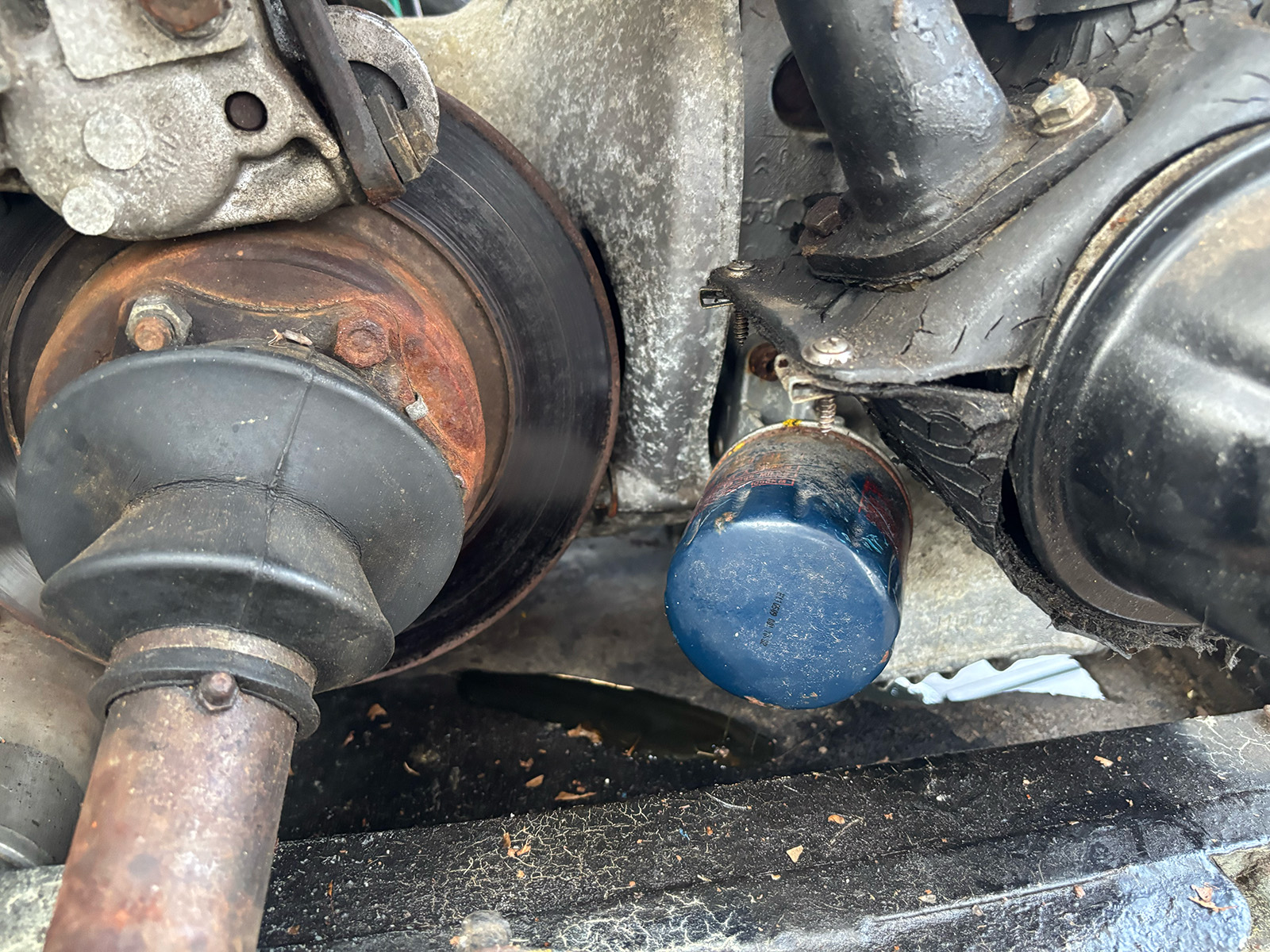
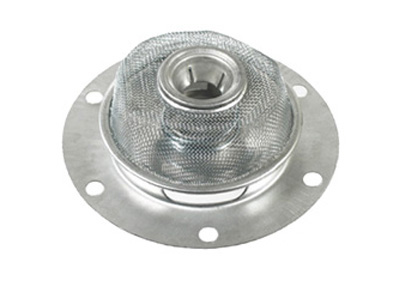
Another interesting thing to note about the 2CV engine is this: it has an oil filter. Now, that’s not a big deal to most people, but as someone who has primarily owned VW Beetles and who used to look at the 2CV engine as a sort of half-Beetle engine (you know, an air-cooled flat-twin instead of an air-cooled flat-four) an actual oil filter is something of a surprise. Beetles just had an oil strainer, a simple little mesh screen doohickey that just trapped the biggest, meatiest chunks out of the oil. That real filter on the 2CV engine is a good reminder of just how different these engines are.
The 2CV engine is simple in the extreme, but not exactly crude. They’re designed to be minimalistic, but the way they’re built and designed is surprisingly sophisticated. Take the head gaskets, for example: there aren’t any. The cylinder barrels and the head don’t need a gasket because the surfaces they share are so carefully and precisely machined that the metal-to-metal contact is good enough. That’s impressive as hell!
I love both engines, of course, but this is just fascinating, I think.
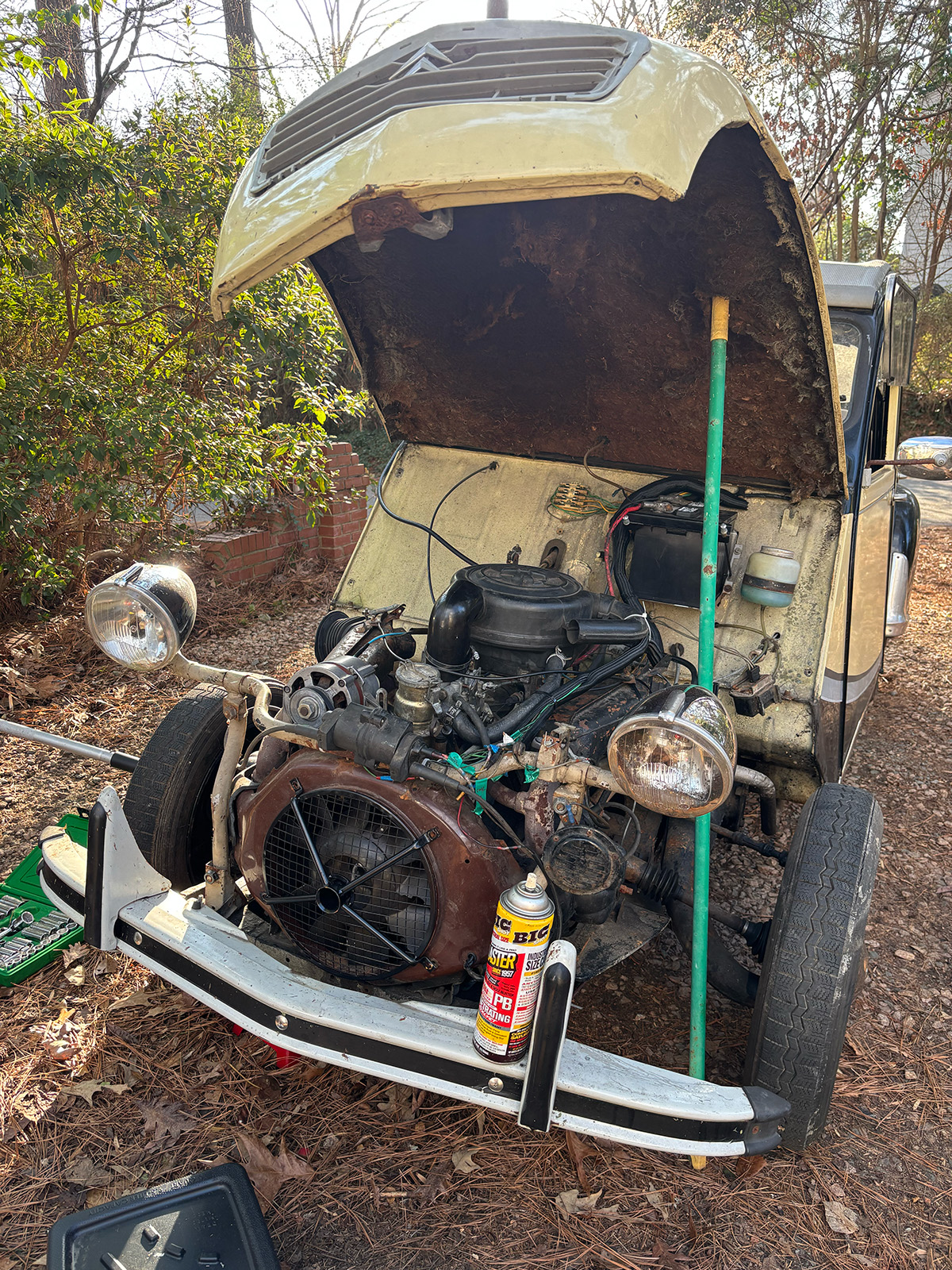
What else did I do? Oh yeah, I secured the battery tie-down, I put the fan mesh cover back on, oh and I installed those chonky, insulated heater hoses:
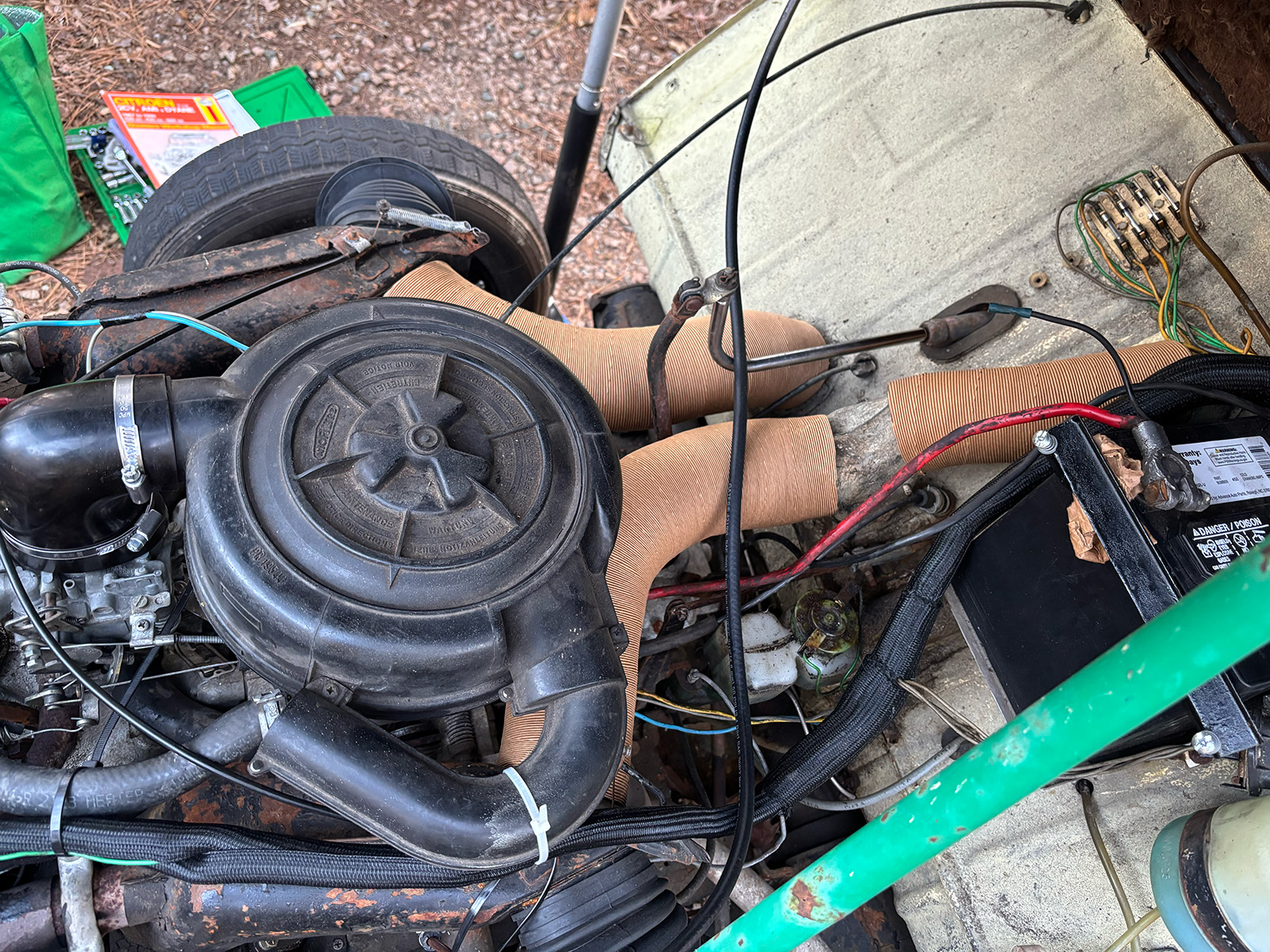
Aside from bringing heating and defogging air into the cabin, they also do a lot to help keep the engine noise a bit more insulated, though it’s still a pretty loud car.
Oh! Last time I mentioned the alternator didn’t seem to be charging. Well, I went to my Citroën mentor Til’s house with the car (he gave me the oil filter and some other crucial bits) and he noticed why the alternator wasn’t charging: there’s a broken connection:
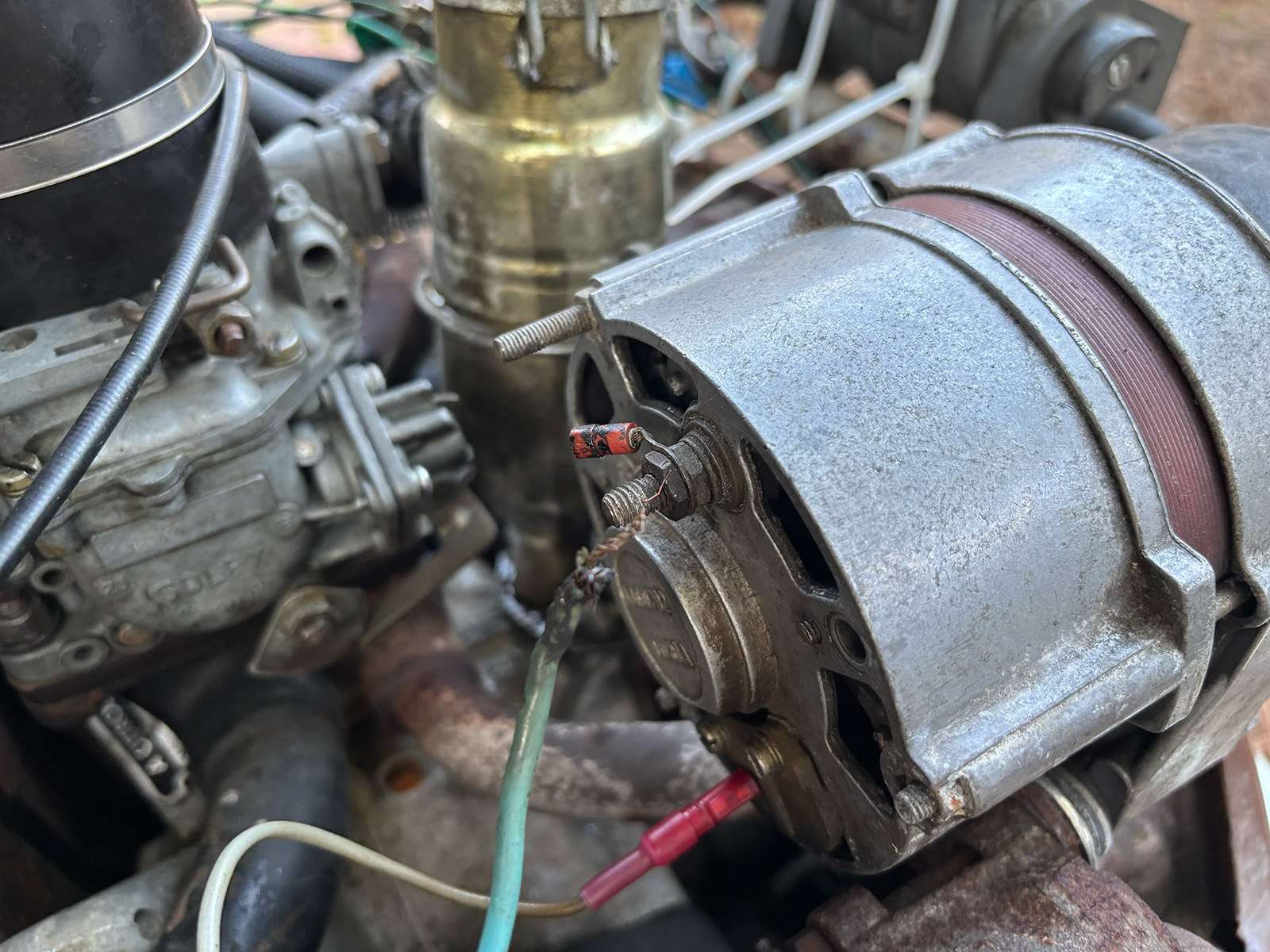
I feel pretty silly for having missed something so obvious, but I put a new terminal on that wire and got it hooked back up, and sure enough, that alternator seemed to be working great. Until it started to work, um, too well.
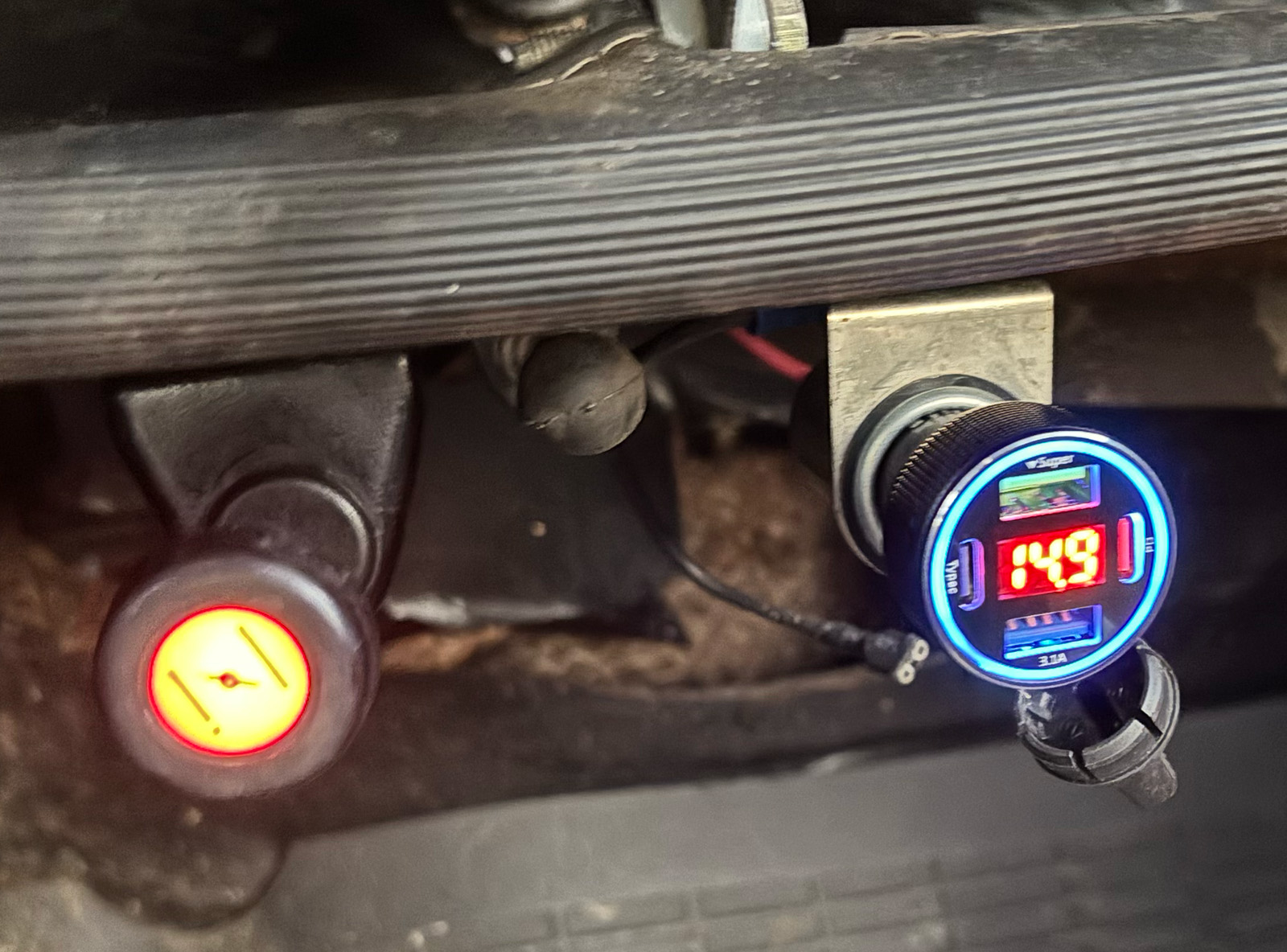
I was happy to see the voltage register between 13 and 14 volts, but as I kept driving, the voltage kept climbing. This picture shows it at an eyebrow-raising but not really worrisome 14.9 volts, but it kept going, peaking at 17 volts at one point! That’s too many volts. I think I should check out the voltage regulator next, because I can’t go on like this; it’ll blow everything out if I keep running at 17 volts!
I also ordered some LHM fluid for the brakes; disc-brake-model 2CVs use the same sort of fancy french brake fluid, Liquide Hydraulique Minéral, as the grander Citroën DS uses, and it’s really difficult to find in America. When that gets here I’ll top up the fluid and bleed the brakes.
What else do I need to do? Fuel tank is the big next thing, the passenger side CV boot needs repair, the fenders and filler panels need to go back on, the horn needs better mounting, the headlamp adjustment screws need installed, the tires need replacing, I need to put in the front passenger seat – oh! Did I show you how I fixed the seats? Til gave me some of the OEM rubber bands to replace the many dry-rotted ones, but I didn’t really have enough so I tried something else that actually worked great: ratchet straps:
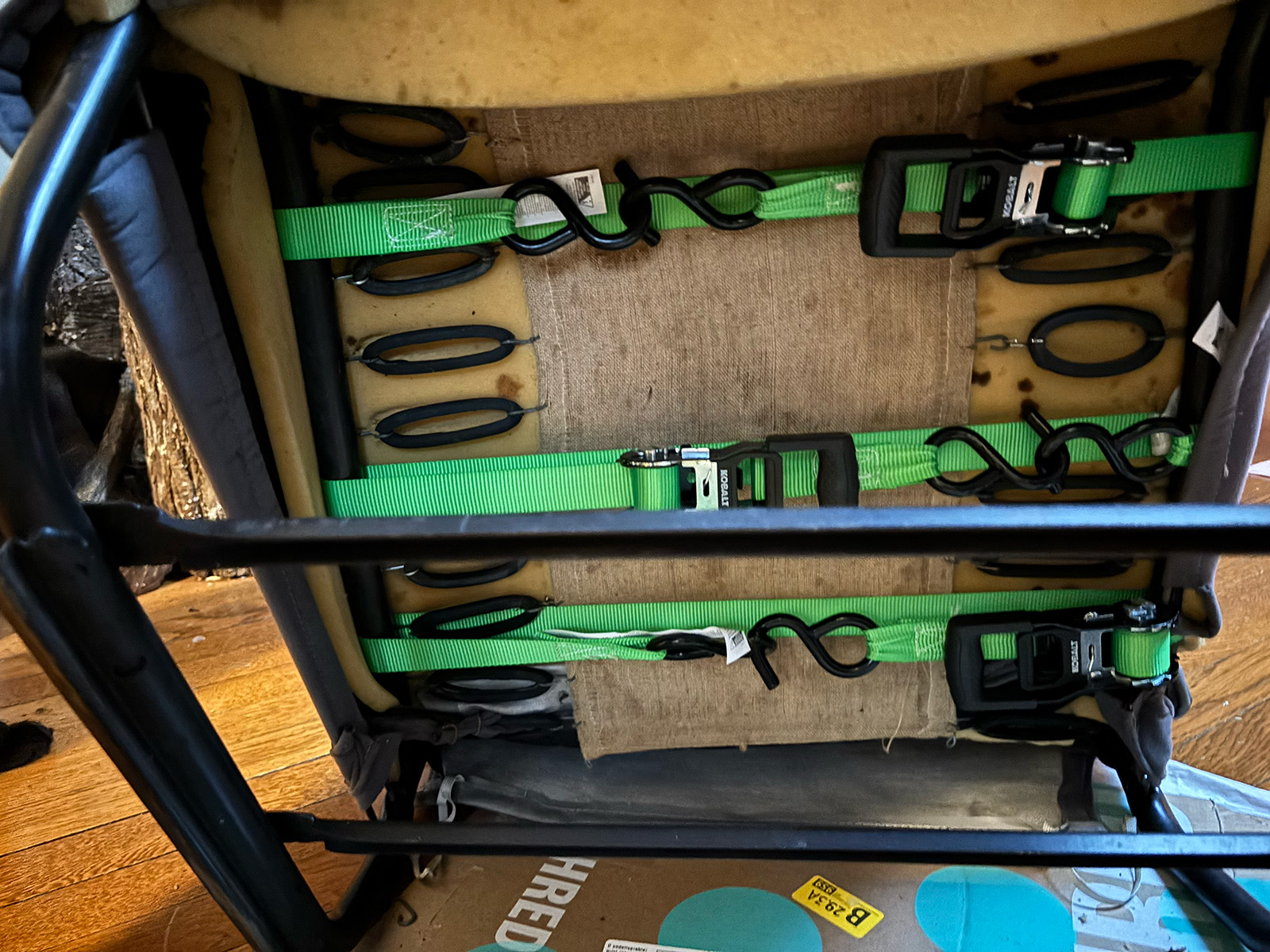
These ratchet straps actually make really good seat springs! I think I may need one more on the driver’s seat, but they make the seats vastly better than what they were like before!
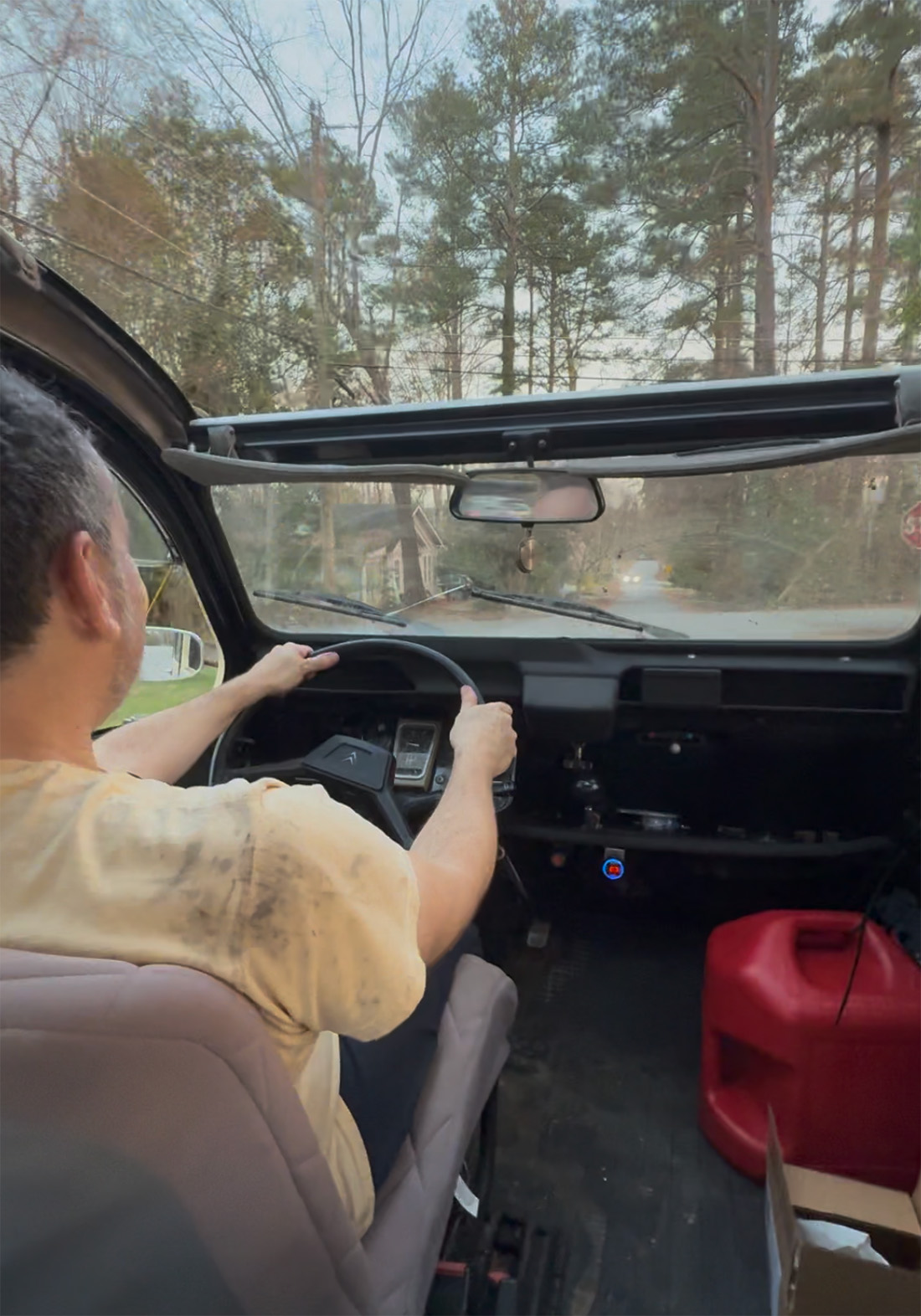
Mostly I’m just excited about how willing and eager this thing feels to drive. It wants to go, and I don’t blame it. If I had sat for a decade in a field, decaying and getting shot at by ne’er-do-wells, I’d be very excited to be back on the road, too.
I’m not close to being finished yet, but I’m so much further along than before. And that’s very exciting.
The post Here’s An Update On My Citroën 2CV Because You Have A Right To Know appeared first on The Autopian.