There are a lot of features in new car interiors that people don’t like, but really, I think they get too much hate. Screens are a good example—I don’t very much mind having two big screens staring back at me at all times. It’s nice to have the customization and adjustability in the gauge cluster to see the data I want to see. And I’d be lying if I didn’t run Apple CarPlay for music and navigation on every new car I drive—something that requires a screen to operate. Would I rather have a set of nice, analog gauges in my sports car? Yes, definitely. But for a daily driver, a screen-heavy cabin is just fine.
If there’s one thing I absolutely don’t like about new car interiors, it’s the widespread adoption of touch-capacitive buttons. These types of input controls, which don’t actually give any meaningful feedback when you interact with them, are harder to use correctly and don’t provide nearly the same satisfaction as using a real, tactile button, knob, rocker, or scroll wheel.
Mercedes-Benz is guilty of doing this to the extreme on many of its models. For the past few years, many of the controls in its interiors were relegated to touch-capacitive buttons, including many of the buttons on the steering wheel. In my experience using these buttons, it made for lots of missed or incorrect presses and, in the case of the steering wheel buttons, lots of accidental presses. It frustrated me to no end.
Thankfully, that era is starting to come to an end. Mercedes began adding buttons back to the steering wheel of its SUVs back in September. It’s just revealed the refreshed 2026 S-Class, and it’s giving a real, actual, physical control back to one of the interior’s most important features: The volume knob.
How It Was, And How It Is

On the previous S-Class, drivers had two ways to control volume with their hands. They could use the horizontal touch-capacitive scroll bar mounted just beneath the central touchscreen, which worked by gently dragging your finger from left to right (which is both annoying and kind of hard to do while you’re driving).
Alternatively, drivers could adjust the volume by using the vertical slider on the spoke of the steering wheel (shown in the lead image of this article). This is equally frustrating, as it requires a delicate, consistent touch to make any material adjustment to the volume. It was pointlessly clunky for the sake of aesthetics.
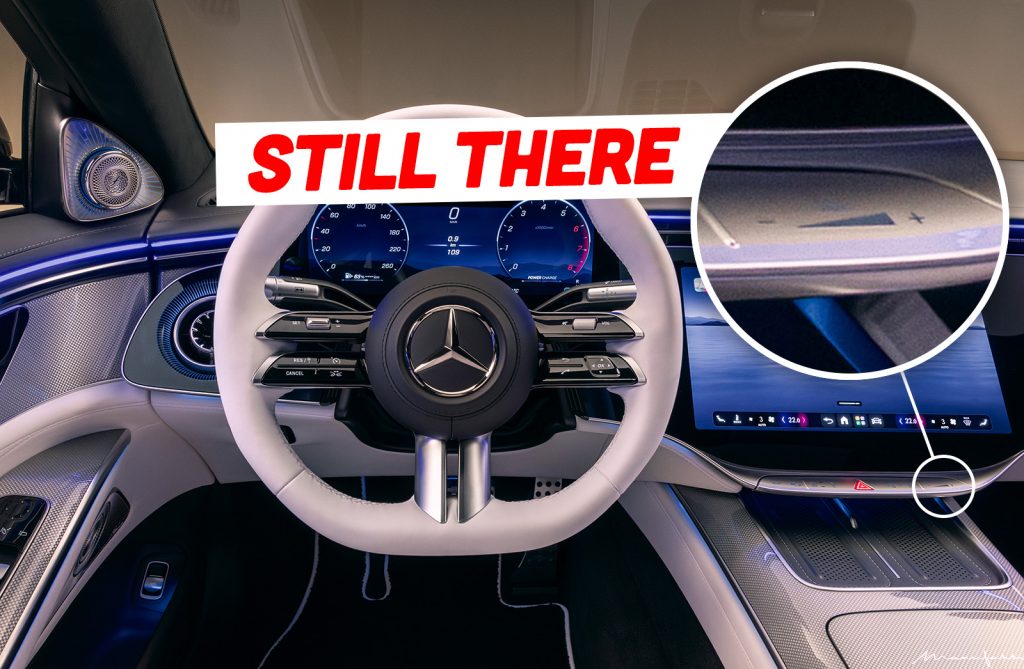
The central volume control, sadly, looks to have been retained for the 2026 S-Class, which is a shame for passenger princesses who prefer to control the volume in the cabin. But for the driver, the touch-capactive setup has been thrown out in favor of a physical scroll wheel:
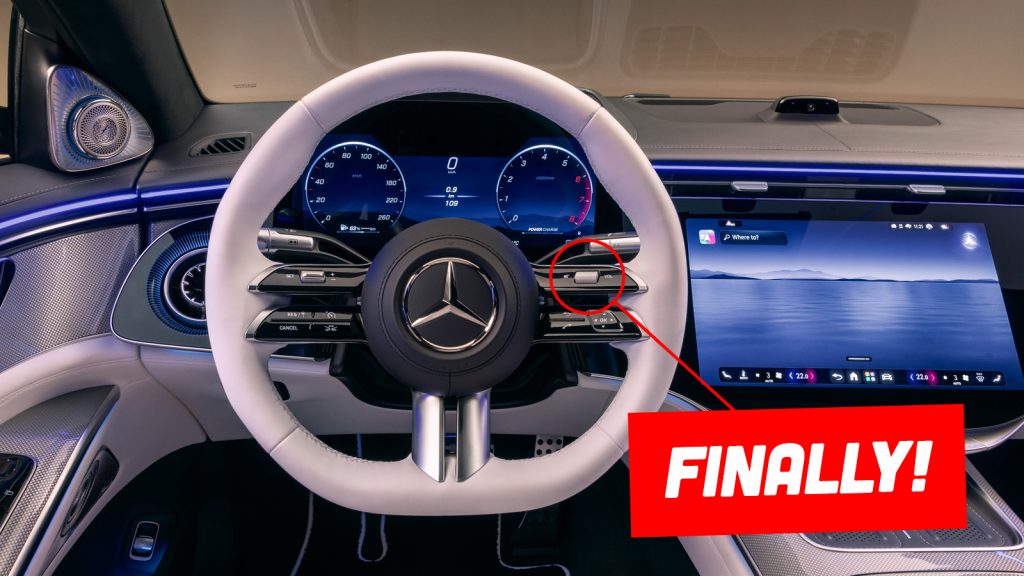
The steering wheel, which was previously all touch-capacitive, also includes a new rocker switch on the left-hand side for adaptive cruise controls. Unsurprisingly, I wasn’t the only one who didn’t like the previous slider controls, according to Mercedes. People who actually bought the car didn’t like it, either. From the press release:
The new multifunction steering wheel boasts improved ergonomics and intuitive operation. Based on customer feedback, Mercedes-Benz has reintroduced a rocker switch for Digital Extra: Distance Assist DISTRONIC and a roller switch for volume control. The capacitive switch panels are seamlessly integrated and provide tactile aids for better orientation.
Like Ferrari before it, Mercedes is caving on its touch-capacitive heavy design. Unlike Ferrari, though, Mercedes doesn’t go far enough. Many of the buttons on the S-Class’s wheel, including the cruise control buttons and the navigation pad, are still touch-capacitive. I won’t rest on this subject until Mercedes (and every other manufacturer that uses touch-capacitive buttons) stops for good. But seeing as how the volume knob is one of the controls I use the most, I’m glad it was the first to be addressed.
What About The Rest Of The Car?

Mercedes says more than 50% of the 2026 S-Class is “newly developed, updated, and refined.” In addition to the interior updates shown above, the car’s fascia has been updated with a 20-percent larger grille that’s illuminated as standard, alongside the hood ornament, which is also illuminated. There’s also a new daytime running light setup that resembles the brand’s tri-star logo, as first seen on the E-Class. The car’s massive grille reminds me of AMG’s “Red Pig” 300 SEL 6.8 AMG, a sedan-turned-race car that won its class at a 24-hour Spa Francorchamps event in the early 1970s.

The back seat, meanwhile, is described as a “boardroom on wheels” with a “first-class experience,” according to Mercedes, which should tell you all you need to know about the type of consumer this car is targeting. Individual rear seating is an option, obviously, allowing buyers to have two recliners in place of the standard bench. Then there’s the backseat tech, which is absolutely stuffed to the brim:
The two new MBUX remote controls for rear passengers provide effortless operation of vehicle functions such as climate control and window shades, as well as the larger 13.1-inch displays of the MBUX High-End Rear Seat Entertainment System. These rear passenger displays also feature integrated HD cameras, making them ideal for video conferencing with Microsoft Teams, Zoom or Webex.

In the new S‑Class, entertainment becomes effortless. The expanding portfolio of apps includes video streaming platforms such as Disney+ and RIDEVU by Sony Pictures Entertainment – available on both the front passenger display and the dual displays of the MBUX High-End Rear Seat Entertainment System.
As for powertrains, buyers will have three to choose from at launch here in the U.S.: The base S500 4Matic gets a turbocharged inline-six paired to a 48-volt mild hybrid system, making 442 horsepower and 443 pound-feet of torque (or up to 472 lb-ft for short periods with the help of the integrated starter-generator). The mid-range option, the S580 4Matic, gets the twin-turbo V8, also paired with the mild-hybrid system, which makes 530 horsepower and 553 lb-ft of torque.

If you want the most power, though, it’s not the V8 you want, it’s the S580e 4Matic. It takes the six-cylinder from the base car and combines it with an electric motor, making for a combined output of 576 horsepower and 553 lb-ft of torque. Though if it’s power you’re after, you’re probably just better off waiting for the AMG version to show up (which, if I know my Mercedes product launch timings, should be sometime later this year).
Top graphic image: Mercedes-Benz
The post Mercedes-Benz Is Finally Getting Rid Of The S-Class’s Worst Feature appeared first on The Autopian.