If I asked you to imagine a typical King of the Hammers (KoH), you’re probably conjuring images of boisterous drunks in trucks yelling about rock, flag, and eagle while a 1000-hp trophy truck rips by them at over 100 miles per hour on the whoops of a desert landscape, and it’s incredibly fun! But you also probably think of the nights in Johnson Valley, where high-octane speeds and a day of crushing Coors finally caught up with the crowd, and they all feel the need to act like they’re as good on the trail as the professionals. The result is a lot of wrecked rigs, fights, and fireworks that all too frequently result in a couple of lost fingers.
I’ve regurgitated those same talking points, and not even as an indictment of the event itself, but rather a natural conclusion of all the circumstances. Hell, the creator of the event himself, Dave Cole, is painfully aware of the reputation.
“The knuckleheads with the fireworks? That’s just got to stop,” said Dave.
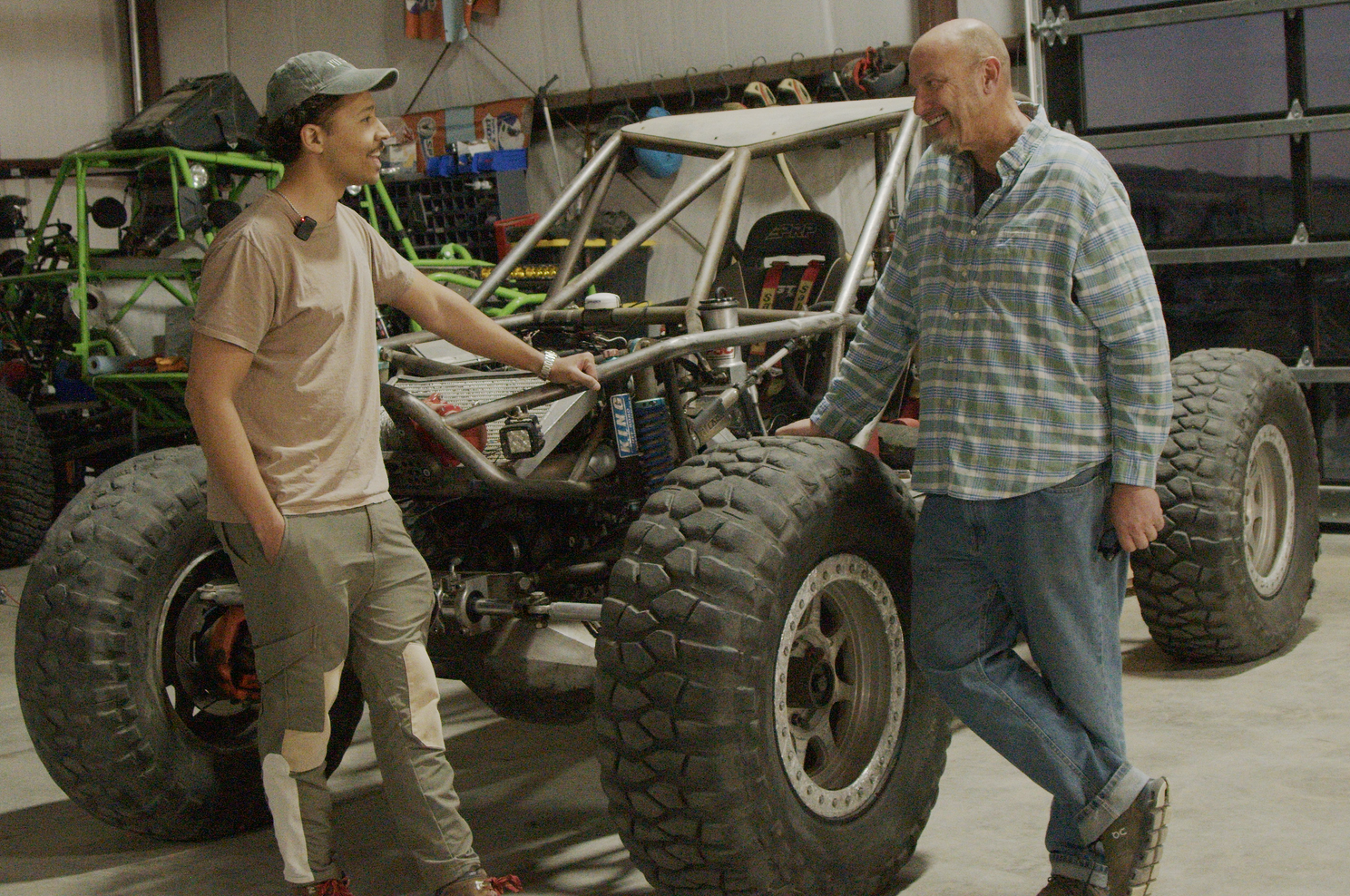
The truth is, after spending a day in the Valley with Dave, the Hammerking Productions team, and a handful of riders, I’ve learned it’s so much more than that mess. In all actuality, it’s a grassroots affair that has a lot of care for the land they ride on for those three weeks. But first…
How to Make Friends and Fight the US Military All At Once

Dave Cole was already a competitive rock crawler with championships under his name before the inaugural King of the Hammers. At the time, the off-road racing market was small, and rock crawling was an even smaller slice of that pie. That had to change.
“We needed to do more to make a more exciting sport,” said a barefoot Dave in his garage. “The Marines petitioned to take the land and close down the OHV area that I love to wheel at.”

The thing is, Johnson Valley, where Hammers is held, is super close to the exhaustively named “Marine Corps Air Ground Combat Center Twentynine Palms,” and the military reallyyyy wanted the real estate for training and other things that make Marines go “OORAH!”
“And one of the main criteria that [the Marines] had for not taking this land […] was that there was nobody coming here,” said Dave.
With the valley that Dave calls home being eyed by one of the biggest and baddest fighting forces on earth, he decided to do the only rational thing you could do in that situation: he picked a fight with the US Military, not with fisticuffs or other forms of violence, but by creating the festival we all know and love today.


As the story goes, there were 50 people interested in competing, and he charged them $600 to enter, giving him $30,000 for the effort, with the only real cost of the event being a small event fee of $1,300. With the winner getting a purse of $10,000, Dave was left with a cozy little payday for something he was already doing with his pals for free.
The inaugural event had roughly 1,000 people there, but word of the event and its energy got around fast. Before he knew it, he had enough media coverage that you could stack all the magazines, and they’d be seven stories tall.


As KoH grew to a multi-week festival that regularly brings crowds of roughly 100,000, it also got a little more Mad Max-ian and found itself looking more like the train crash that some folks just can’t look away from. Don’t judge that book by its cover, though, because Dave almost looks at Hammers as the gateway for people to become better behaved off-roaders, and it seems like it’s working.
Just One Bag of Trash

“You can get free tickets just by picking up a bag of trash. Just show up. Go pick up a bag of trash. It’s out there.”
I won’t lie, I didn’t see a single piece of trash across the desert the whole day we were out there, which is a testament to the fans holding themselves accountable during the event and the cleanup crew that comes after.
“If 80,000 people came out here and trashed it, we’d never be able to pick it up in three days,” Dave said. “Because 80,000 people take care of it and look after it, and also help clean up as well, when we go to clean up, it’s much less of a burden.”
Even with an incredible starting point, Dave and a team of volunteers, comprised largely of folks from the Gambler 500, hit the desert with trash bags and grabbers while the tens of thousands of attendees pack up and make their way back to their daily lives.
“They go out at like 6:00 a.m. every morning and just kind of walk through the spectator areas for some light cleanup because it’s not that bad,” he said.

“That’s the only way it’s possible. It’s not because we’re doing heroic efforts, it’s because everybody else is too,” Dave added.
Keeping the chaos of an event like this localized to Johnson Valley makes sense because it’s a place with very little vegetation and wildlife compared to a dense forest with a delicate ecosystem. The way Dave looks at it, having the event here saves areas like Big Bear from the folks who give off-roading a bad rap.
“I want to preserve the off-roading period, not just here,” Dave said. “If you learn to be respectful of the land here and how to be accountable when you go back to those places, you’ll bring the good vibe with you.”

The 2026 King of the Hammers runs from January 22nd to February 7th. You can buy tickets here, and maybe, find trash here. And if you’re pre-annoyed with the idea of driving hours back to the city with that bag of trash, Dave will sweeten the deal a bit more for you:
“I’ll even throw it away for you. I’ll put it right in my dumpster.”
You can watch more from my day with the King of the Hammers team by clicking on the video below!
Top graphic images: Griffin Riley
The post King of the Hammers Is The Rowdiest Party For Hippies And Car Nuts Alike appeared first on The Autopian.