This morning I’m tanking my neighborhood’s property values with a crusty Jeep J10 on jack stands. I’m in the process of servicing the rear brakes prior to shipping the vehicle to Michigan, where I plan to sell it. Anyway, this “servicing” involves me not just replacing the brake shoes and hardware, but also repairing the wheel cylinders, which brings me to something that always blows my mind when I think about it: Cars before 1967 were absolute deathtraps. And not just because they weren’t designed for crashes, but because their brake design made crashes seemingly inevitable.
My Jeep J10’s rear brakes haven’t worked in months, and the reason is pretty obvious to anyone who steps on the pedal. The pedal feels soft and spongy instead of hard and firm, and one peek into the brake master cylinder shows: The rear reservoir is almost bone-dry.
Check it out:
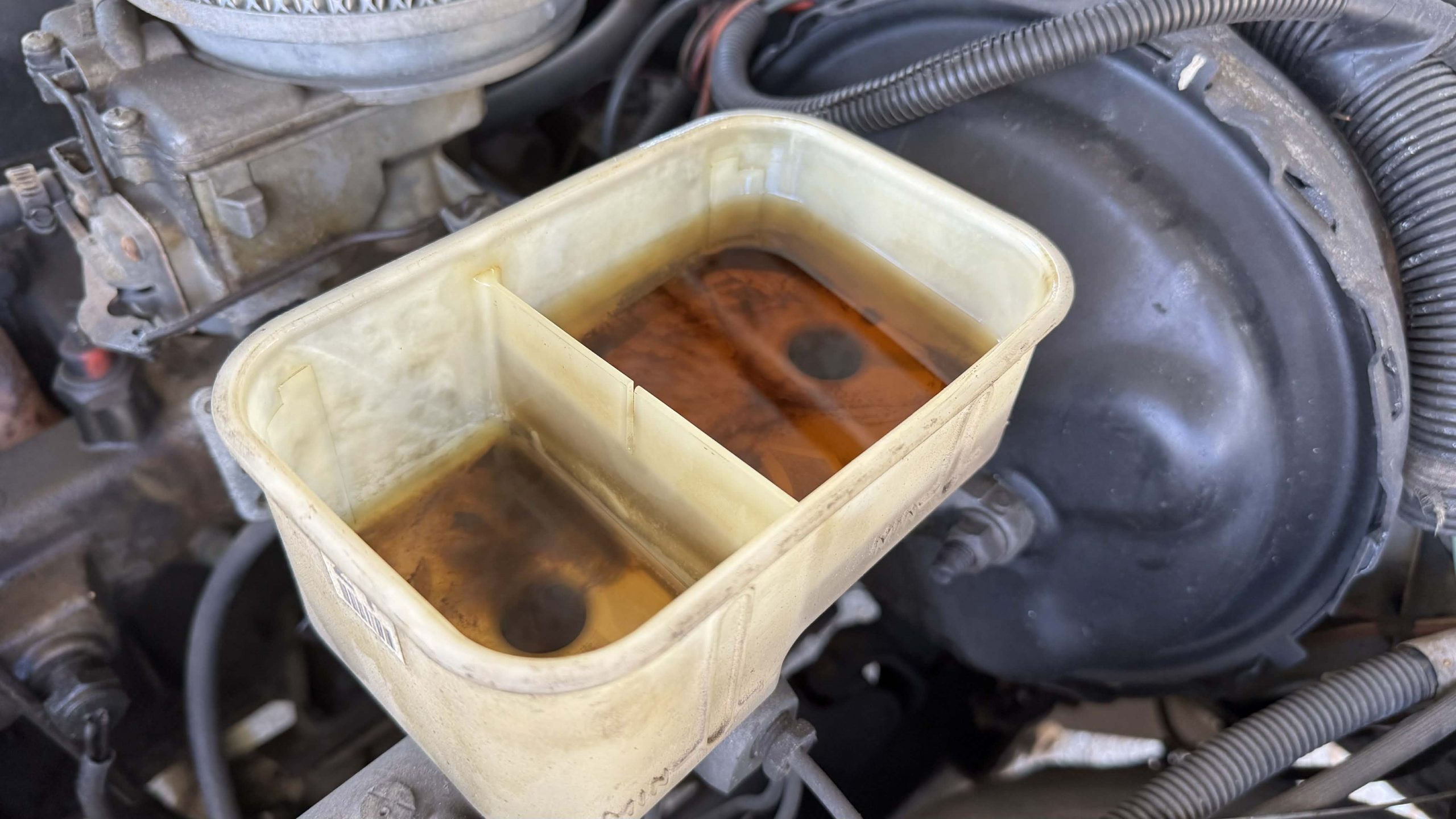
In other words, the fluid that my foot is supposed to push through the brake lines and hoses in order to activate the rear brakes has leaked out onto the roadway. This means I have absolutely no rear brakes.
Drum Brakes
Before I go into what the root cause is, I just want to briefly explain how drum brakes work. Instead of brake fluid coming into a caliper like this…


…and pushing a piston (or multiple pistons) against some brake pads so as to squeeze them against a disc like this…
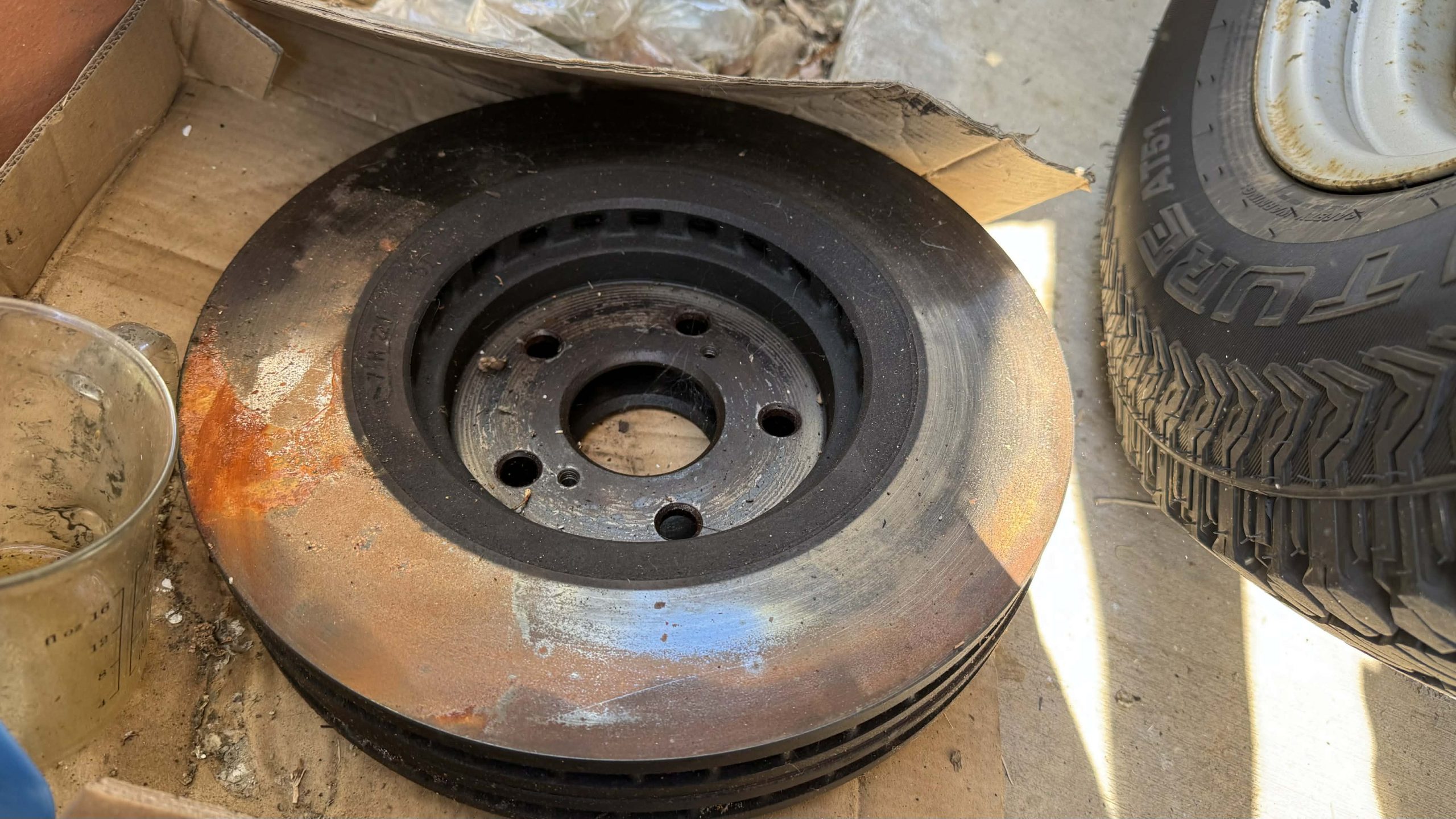
…drum brakes use a small wheel cylinder to “spread” some brake shoes against a spinning metal drum. A wheel cylinder is an extremely simple device containing two pistons — one on each end of, essentially, a smooth pipe (cylinder). Basically, fluid comes in from a brake line through this hole:

It enters the wheel cylinder at the center and pushes two pistons outward.
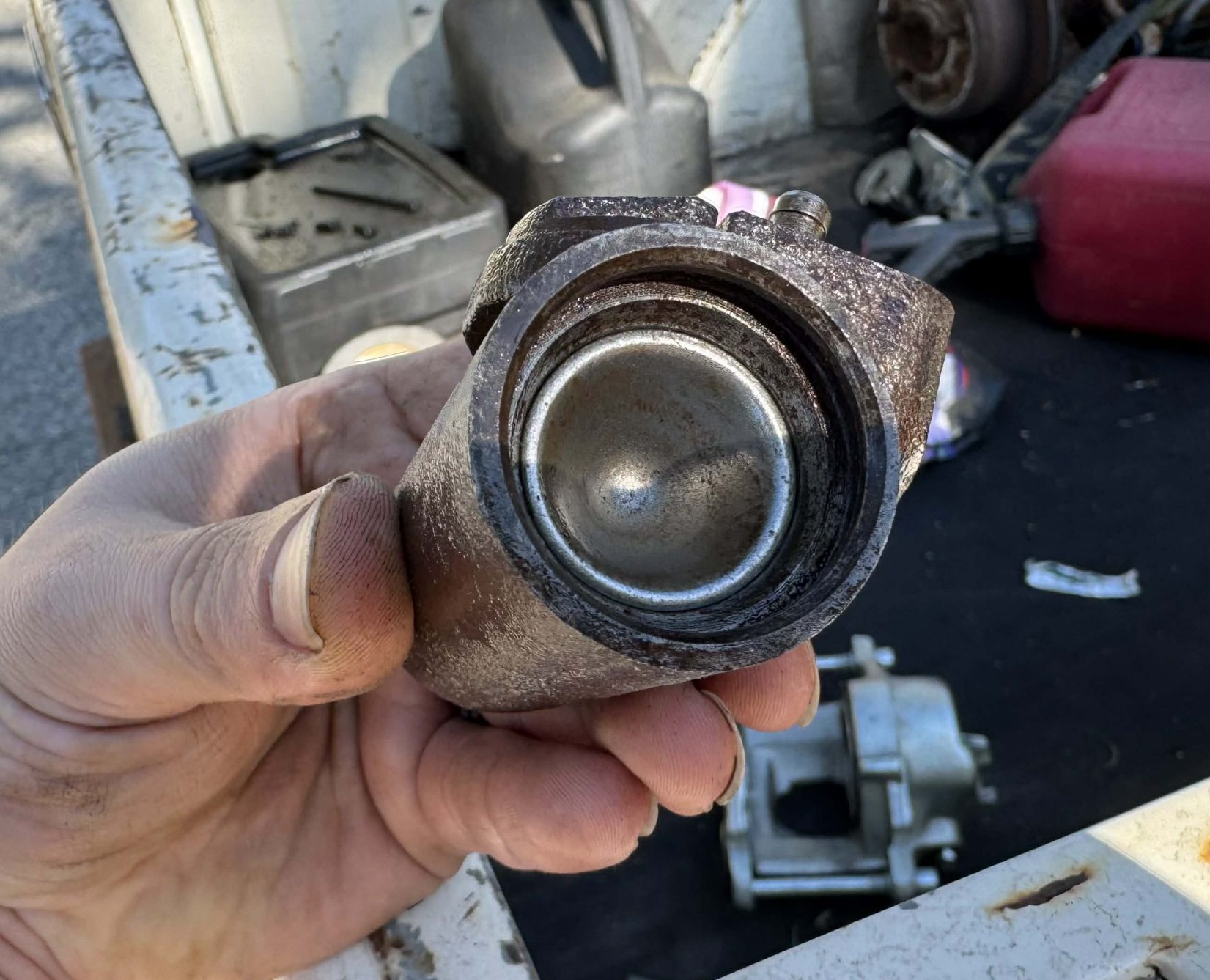
You can see the metal piston above and both of them (which each get a rubber inboard seal, with a spring between the two seals — and each piston gets a rubber outboard dust seal as well) in the image below:

The pistons moving outward spread brake shoes like these (the arrows are pointing to the brake shoe “liners” i.e. friction material)…

…against a drum like this:
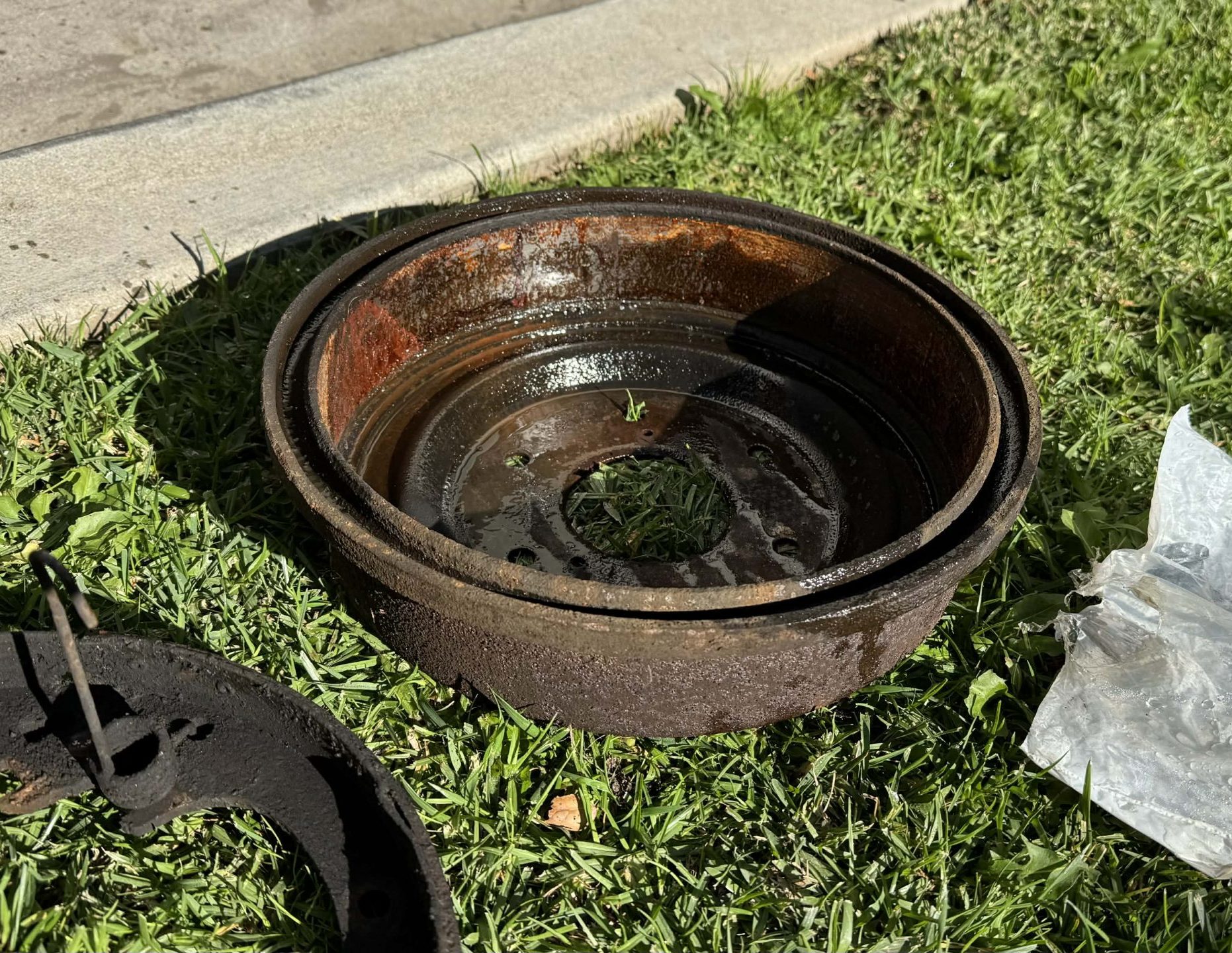
That drum has holes in it for the vehicle’s lug studs to which the wheels are fastened. Therefore, stopping the drum means stopping the wheels from spinning, thus stopping the car.
Drum Brake Systems Are Prone To Failure If Not Maintained
Anyway, with that out of the way, I want to point out what’s causing my Jeep J10’s brakes to fail, as it’s something I’ve experienced numerous times on older vehicles. Vehicles with drum brakes feature what’s called a brake adjuster crew. This is usually located on the bottom of the drum brake assembly, between the bottoms of the brake shoes. Here you can see it clearly:
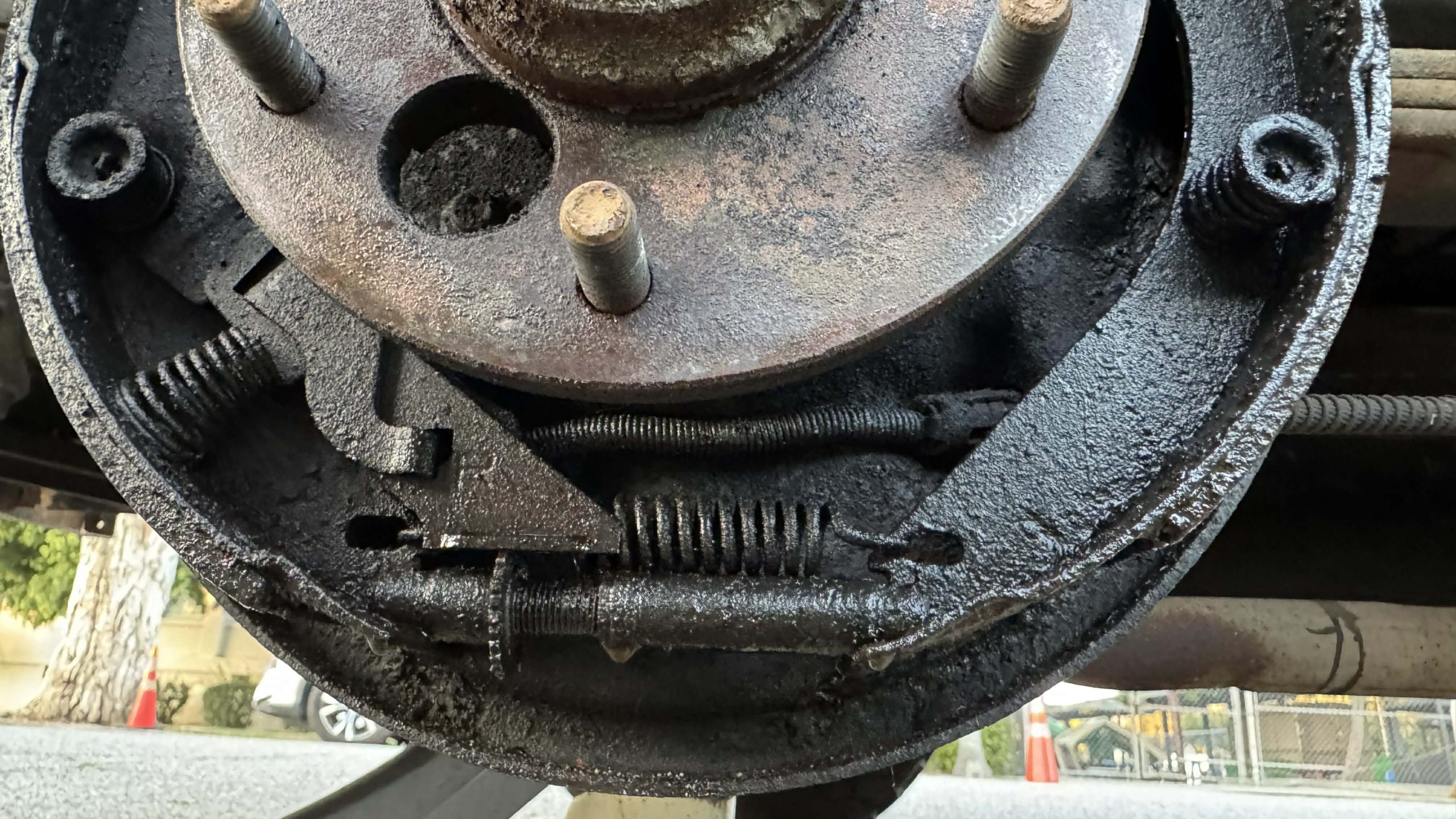
The brake adjuster screw’s job is to compensate for the wear of the brake shoes themselves as their material turns to dust during stops. The shoes become thinner, and the adjusters push the bottoms of the shoes outboard a bit more to compensate so that brake material is right up against the drum when the driver is not on the brake, that way those shoes can make healthy contact with the metal brake drums.
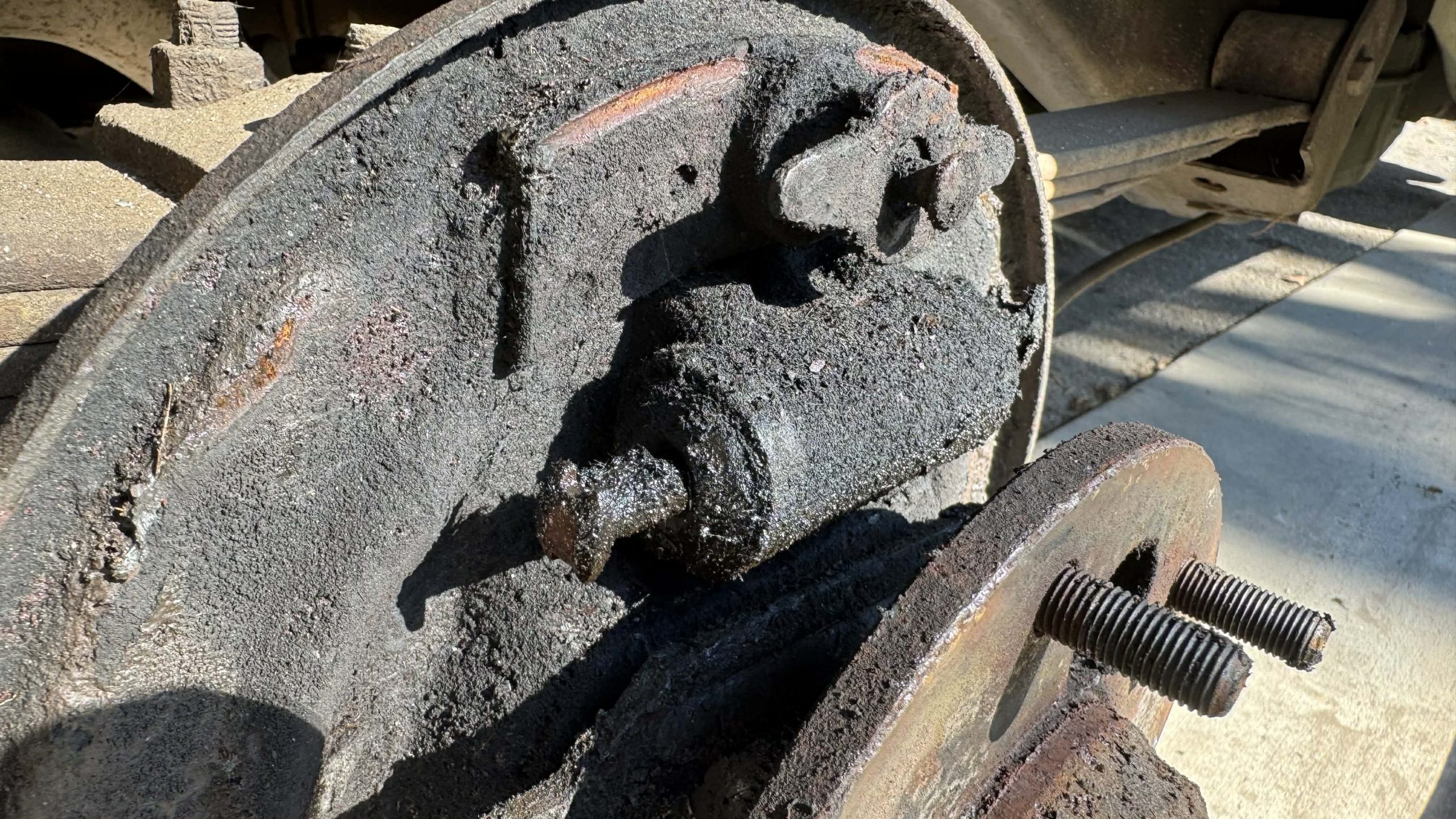
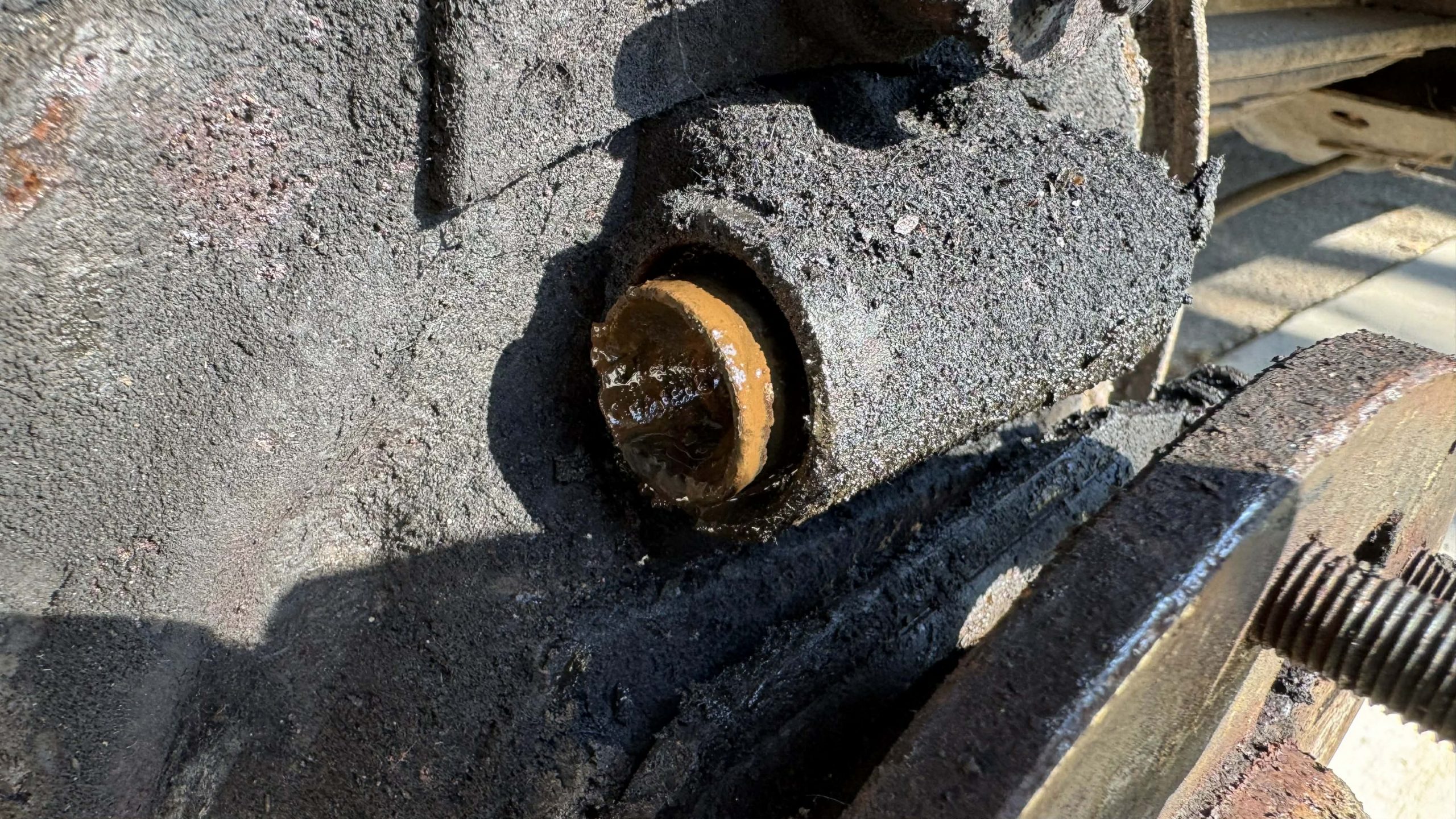
What happens pretty much all the time — and this happens with any threaded screw that isn’t protected from the elements — is that the screw rusts and seizes up. No longer able to rotate due to locked-up threads, the adjuster can no longer compensate for brake shoe wear, and eventually those brake shoes have to move a long distance in order to make contact with the brake drum. Since the adjuster hasn’t compensated and moved the shoes closer to the drum, the wheel cylinders have to do it, and this means those pistons have to move too far the cylinder to the point that they fall out, causing the fluid to escape. This is a major leak in a brake system. That’s almost certainly what happened with my J10:
Pre-1967 Cars Were Unforgiving If You Had A Brake Leak
Luckily, my Jeep J10 was built after 1966 (it’s a 1985), otherwise this rather common wheel cylinder failure would have led to complete brake failure, and I would have crashed into whatever was ahead of me. No, luckily — as shown in the brake master cylinder photo — I had fluid still in my front hydraulic brake system, so my front disc brakes were still working.
But, had this failure happened in a pre-1967 American car, I’d have been completely screwed thanks to a part I like to call “The Widowmaker.” This part is the single reservoir master cylinder:
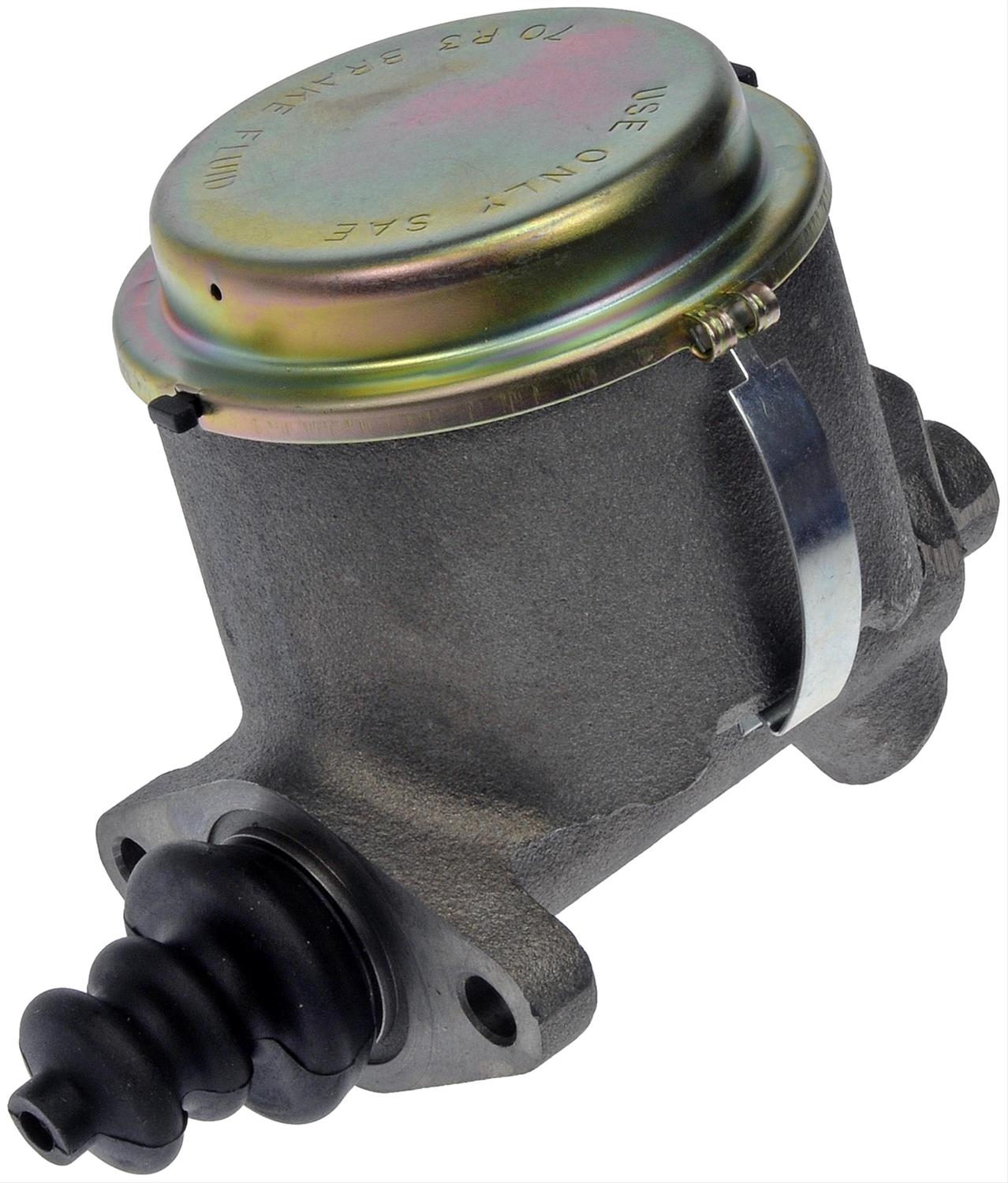
This is a single cylinder/reservoir that connects all four brakes hydraulically. This means that, if a wheel cylinder springs a leak or a brake line rusts out or an old rubber hose gets a pinhole, the brake pressure needed to actuate all four brakes will be lost. One single failure anywhere along this rather large brake system — a master cylinder, a bunch of brake lines, and a bunch of hoses — would lead to no brakes at all (except for maybe your parking brake, if you keep that cable nice and taught, and far too few people do).
There’s a reason why, in 1967, a dual-reservoir master cylinder was federally mandated. This new system means two wheels (for older cars, it coupled the two fronts and the two rears, though modern systems tend to couple each front wheel with the rear wheel on the other side of the car) are hydraulically coupled, so a leak in the system only leads to the loss of two brakes.
Many Old Cars Didn’t Make Brake Fluid Inspection Easy
But prior to 1967, almost every U.S.-sold car featured the Widowmaker, and what’s especially bad is that many of these Widowmakers were not in particularly serviceable locations.

For example, my 1954 Willys CJ-3B’s single-reservoir brake master cylinder was in the engine bay, below the driver’s toe-board, with a tiny access hole that made checking the fluid level (and filling it) extremely difficult.
Old Car Brake Systems Were Deathtraps
I’m amazed that, 59 years ago, every car on the road had a fairly failure-prone braking system that was extremely unforgiving if it did fail, and also not particularly easy to keep an eye on, either.
To be sure, oftentimes brake leaks are gradual, and they lead to a soft pedal that should let the driver know something is up. But sometimes leaks are big, and sometimes drivers might ignore a soft pedal, and if they do that long enough for all the liquid to drain out of the system, they might find themselves with a grille full of the car ahead’s rear bumper.
I know the old-timers are going to say “people just maintained their cars better back then because they had to,” and that probably has to be the case or else our grandparents wouldn’t have survived the 1950s. All I know is: Any car I own that’s pre-1967, I’ll try my best to fit with a dual-reservoir master cylinder, because I want at least a single line of defense beyond my park brake. Because the Widowmaker offered none.
Top graphic images: Ford; Summit Racing; David Tracy
The post It’s Truly Amazing How Unsafe Car Brakes Were Prior To 1967 appeared first on The Autopian.