There’s two things that keep this world moving: trucks and compromises. It’s easy to see the value of the truck part, but the compromise part may be more subtle. But the truth is, compromises are just accepting reality and doing your best to make the most of what you have. That’s what an EREV (Extended Range Electric Vehicle) is: a great compromise. An EREV gives you all the benefits of electric drivetrains – high torque from takeoff, fewer moving parts, great acceleration, quiet, all that – but also you’re not tethered to an EV charging infrastructure that, let’s be honest, still isn’t really done. It’s the best of both worlds, and now Ford is building EREV F-150 Lightning trucks.
Ford is ending production of the battery-electric F-150 Lightning and replacing it with the F-150 Lightning EREV, which is something we’ve suspected would happen for a while. You know why we thought that? Because it makes a hell of a lot of sense, that’s why. You know how trying to tow with most battery-electric trucks means you can go, like 100 miles or so, and then you’re screwed? Or what about losing a full quarter of your range if you have a full payload? Who wants that? Nobody, that’s who.
Adding a combustion motor that can act as a generator for the electric motors and battery changes the game completely. Here’s what Ford’s press release has to say about it:
Leveraging advanced Extended Range Electric Vehicle (EREV) technology, the next-generation F-150 Lightning will offer the best of both worlds: the seamless, instant power of an electric powertrain and the freedom of a generator-backed estimated range of more than 700 miles.
Unlike a traditional hybrid, the F-150 Lightning EREV is propelled 100 percent by electric motors. This ensures owners get the pure EV driving experience they love – including rapid acceleration and quiet operation – while eliminating the need to stop and charge during long-distance towing. Like the current F-150 Lightning, the next-gen version will also offer exportable electricity that can power everything from work sites to camp sites to homes during a power outage.
The current battery-electric F-150 Lightning has a range between 240 and 320 miles. The EREV more than doubles that to 700 miles, and, even better, if you drive it somewhere out in the sticks, you don’t have to worry about trying to find some nonexistent charging station. You know you can find a gas station.
EREVs make so much damn sense; for most of the time, you can use this like a pure battery EV, but when you’re hauling or towing or on a long trip, you can free yourself from the restrictions of an EV. Sure, in a perfect world maybe we wouldn’t need the combustion motor, maybe we’d be running these things on fusion reactors that use pollution for fuel and the exhaust is giggles. But that’s not reality. For reality, an EREV makes a hell of a lot of sense.
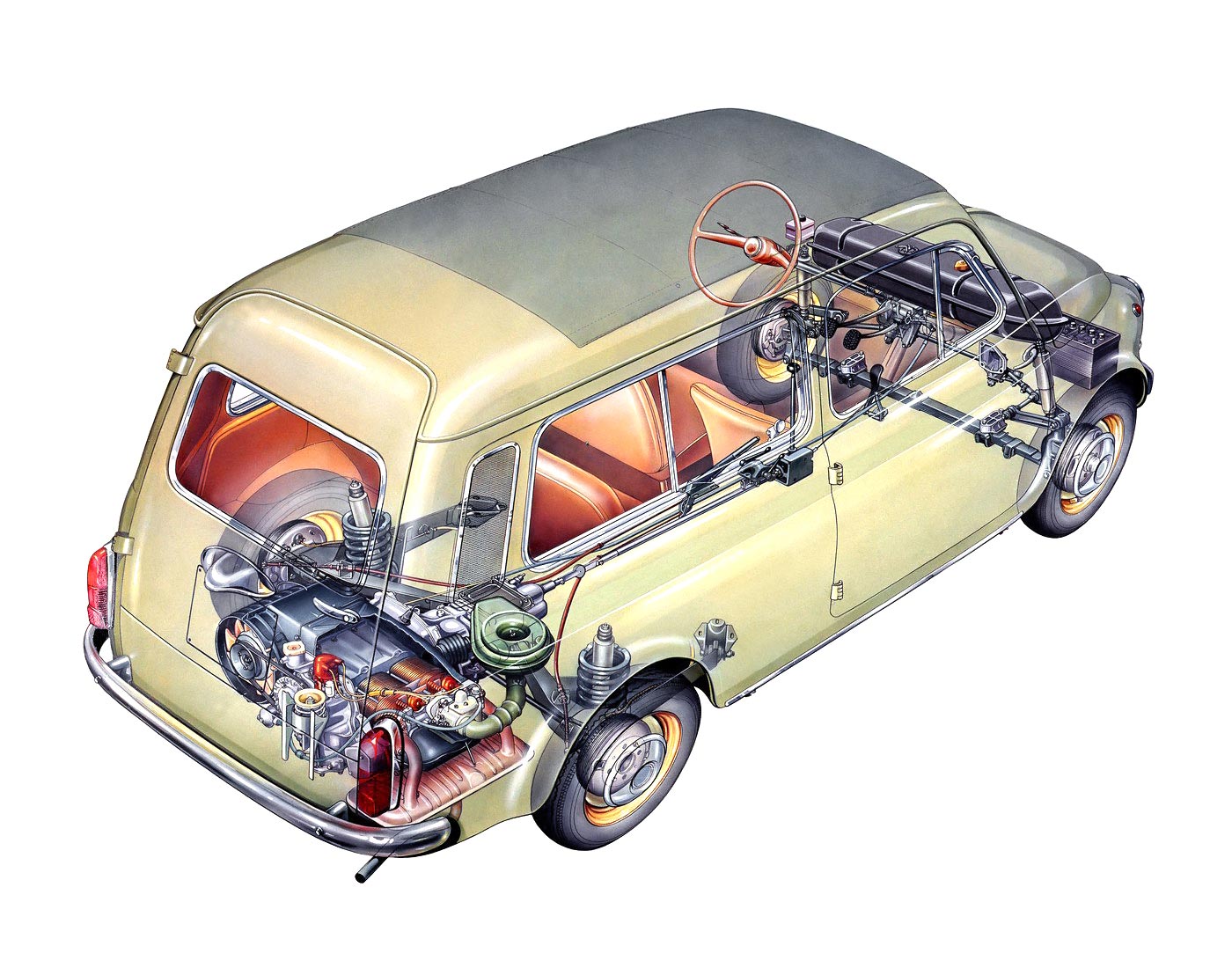
I’m curious to see where Ford will package the combustion engine, and what engine they’ll use. Will it consume the entire cavernous frunk of the F-150 Lightning? Just part of it? Will they cram it under the bed, somehow, an inline engine laid sideways, like a Fiat 500 Giardiniera? I’m very excited to see.
This is a good move on Ford’s part. About time.
The other announcement Ford made was that it would turn some of its planned battery production into commercial Energy Storage Systems (ESS), which is to say giant batteries for industrial use, which seems like another good compromise.
The post Ford Will Add A Gas Engine To The F-150 Lightning To Create A 700-Mile EREV appeared first on The Autopian.