Truck manufacturers, fleets, and owner-operators are always trying to figure out how to stretch every cent farther. If their semi-tractors could just carry a little more cargo or get better fuel economy, operators might be able to put a little more cash in their pockets. In the past 50 years or so, this objective pushed several truck designers to focus on one of the biggest problems facing big rigs: aerodynamics. One company went all-in on aero and tried to build the ultimate wind-slicing hauler. The Design Project Engineering Performance Cab was hoped to revolutionize trucking with 40 percent fuel efficiency gains and an interior so large, it was like having your own hotel room.
The Performance Cab comes from a fascinating part of American trucking history. For most of trucking history, which spans more than a century of time, aerodynamics weren’t much of a concern. The trucking industry battled heavy length and weight restrictions until the 1980s. Because of these restrictions, which were sometimes so tough it led to tractor-trailers in Illinois being no longer than 35 feet long, the cab-over-engine truck design ruled supreme.
Cabover semis, at least as they were built for much of American trucking history, sacrificed cab space, comfort, and sometimes serviceability to maximize loads. If the truck itself were as small as possible, the operator could fit more cargo into their trailers, and thus, hopefully bring in more bacon. Fuel economy was putrid for much of this time, with rigs that averaged 5 mpg being pretty common. The fact that these trucks had the aerodynamics of the Willis Tower had a lot to do with it. At the same time, however, diesel was also cheap. The Willis Tower would suffice.
The tumultuous 1970s brought winds of change. Most trucks continued to return terrible fuel economy, but now diesel fuel wasn’t so cheap anymore. This laid the groundwork for innovations that remain enjoyed by the modern trucking industry. If you couldn’t change the price of fuel, perhaps you could change the design of the truck itself to be more efficient?
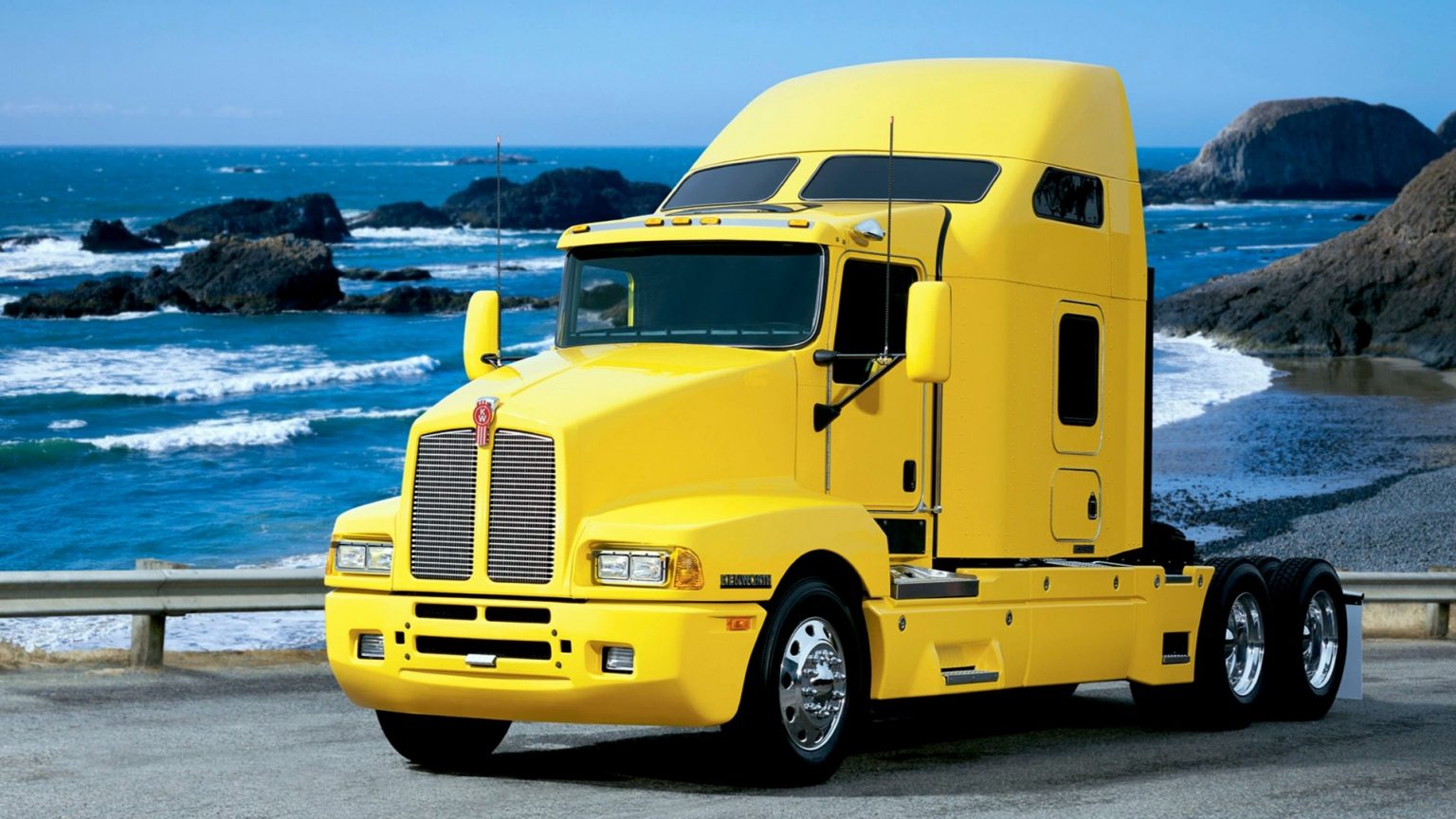
There are several old semis that earned better mileage through smoother bodies. The Paymaster was ahead of its time, adorning an aero design in 1969 before the first major oil crisis arrived in 1973. Then there is the 1984 Kenworth T600, a revolutionary aerodynamic conventional truck. Don’t forget about the 1988 Peterbilt Model 372, an aerodynamic cabover that tried to win hearts with a huge sleeper and 11 mpg. Most of these older projects, with the exception of the T600, didn’t catch on at the time, though their ideas live on in modern semi-tractors.
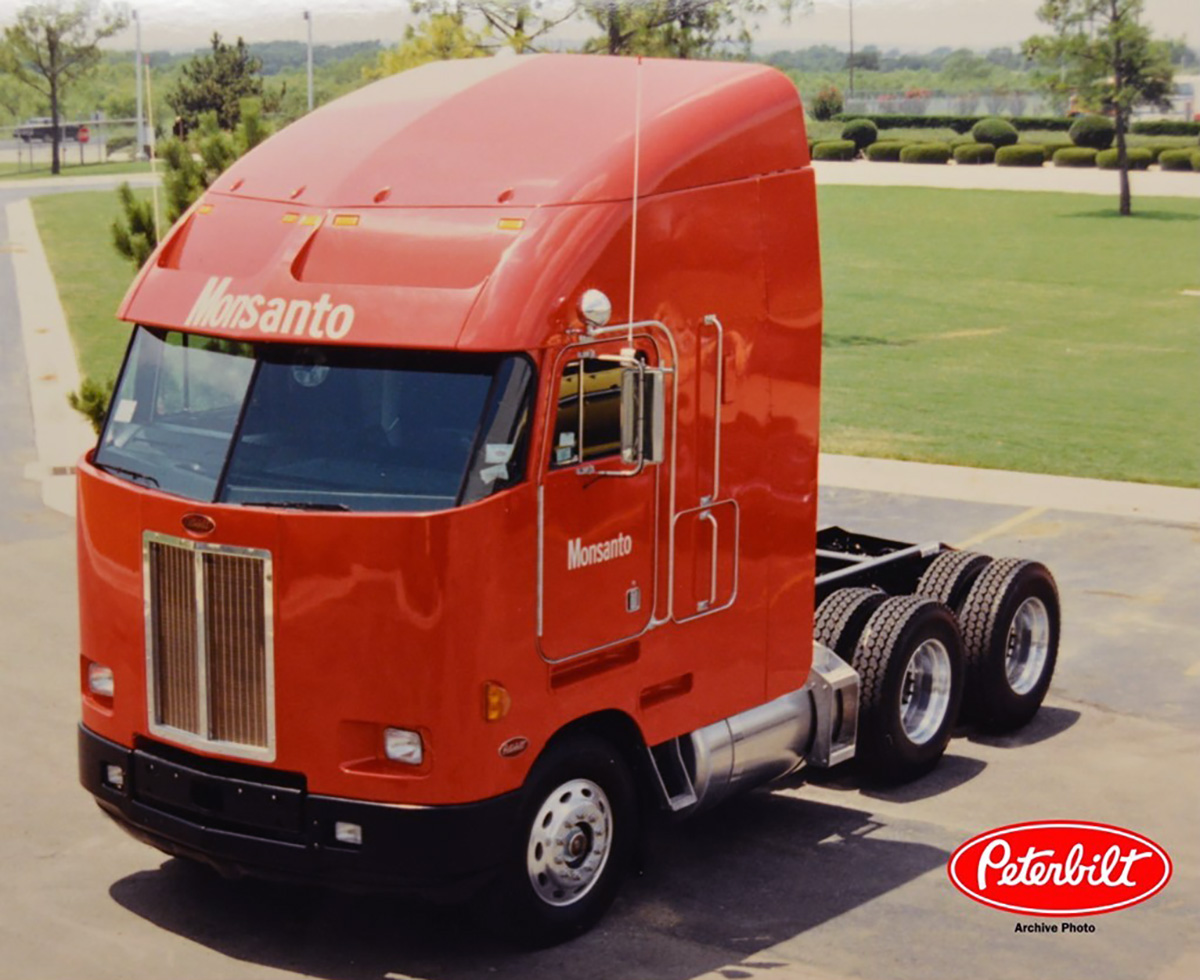
One of the Model 372’s failings was that it was the right idea at the wrong time. The fact that it got 11 mpg was great, but by the time it hit the market, the cabover was already losing ground to the conventional truck configuration, where the engine and front axle are ahead of the cab. The Motor Carrier Act of 1980 advanced deregulation of market entry, and the Surface Transportation Assistance Act of 1982 set national standards for total length and weight. These more unified standards allowed for longer tractors, which helped the conventional semi become the default truck in America.
But the Model 372 wasn’t the only cabover that tried to flourish in a new world. There was also the Design Project Engineering Performance Cab, a truck that was so ambitious that the company that sold it promised 40 percent efficiency gains, plus cash bonuses to truckers who got other truckers to buy one.
Made To Rebody Existing Trucks
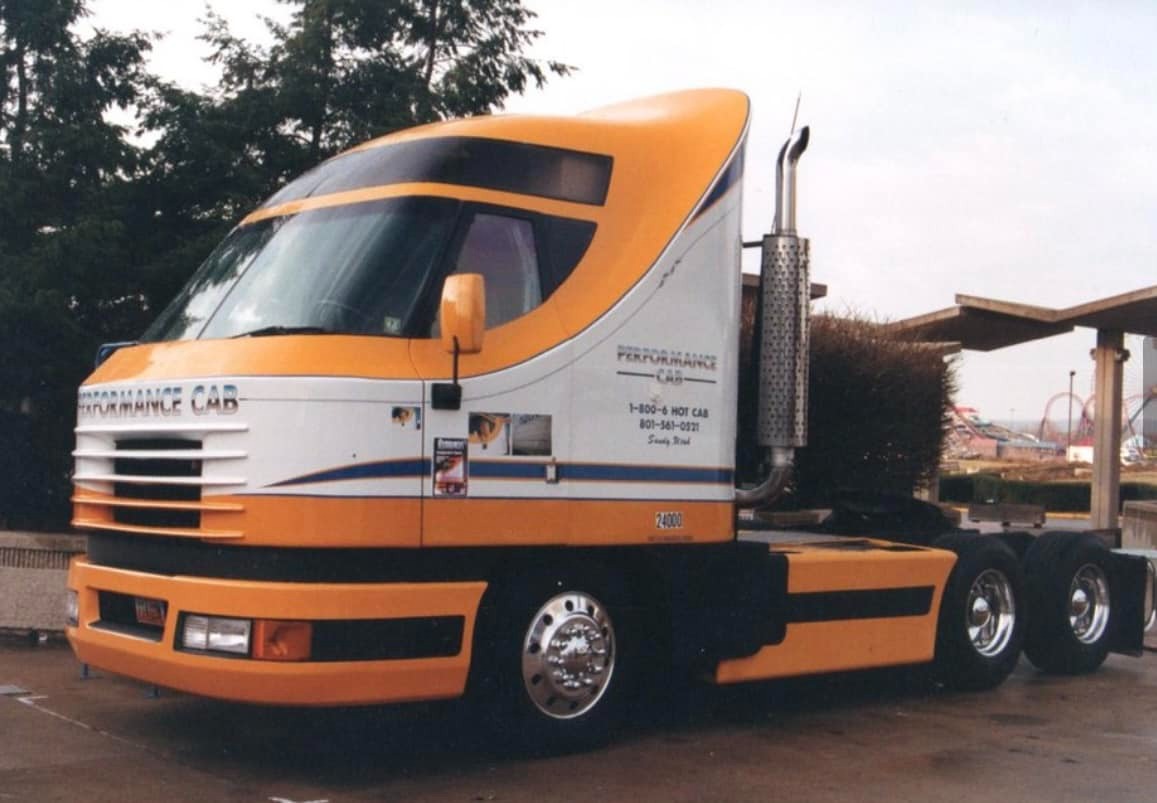
I love to write about the origins of a vehicle. I have to know who designed the vehicle and why. Sometimes, the story of how an engineer or designer came up with an idea is just as good, if not better, than the vehicle itself. I have spent much of 2025 attempting to learn the story of the Performance Cab. Something like this doesn’t just materialize out of thin air.
Unfortunately, many details about the truck and the two companies that tried to sell it are fuzzy. I found a man who claimed to be the son of the designer. He claims that his dad was a long-haul trucker and came up with the idea for the Performance Cab while his mom was pregnant with him. I reached out to this man, and while he said this story is true and that he was going to send me details, our conversation stalled out, and I found myself no closer to learning the truck’s story.
What I have been able to decipher is that the truck’s design appears to have materialized in the mid-1980s. In 1985, Pegasus Truck Cab Conversions, Inc. of Orem, Utah, filed for a patent on a truck cab, listing Robert E. Smith as the cab’s inventor. The company registered the “Pegasus” name as a trademark in 1988, and based on the legal documents that I could find, the President of Pegasus was William A. Fresh.
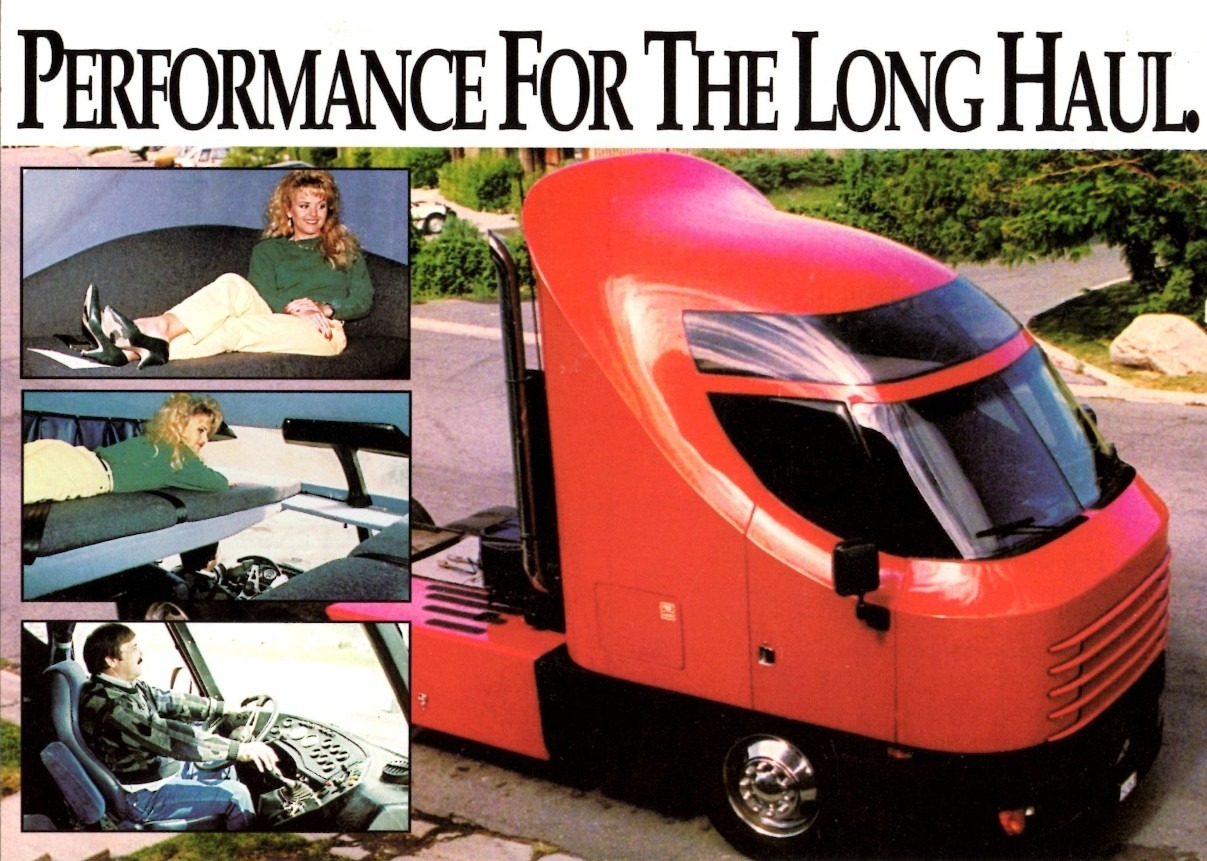
The company’s product was a bit different from the other trucks I have written about. Pegasus did not develop an entire truck. Instead, it developed a body that you were supposed to bolt onto an existing cabover truck. The Pegasus Cab, as the body was originally called, was supposed to be a highly aerodynamic semi and a hotel room in one. The body was something else and resembled a huge wing of sorts.
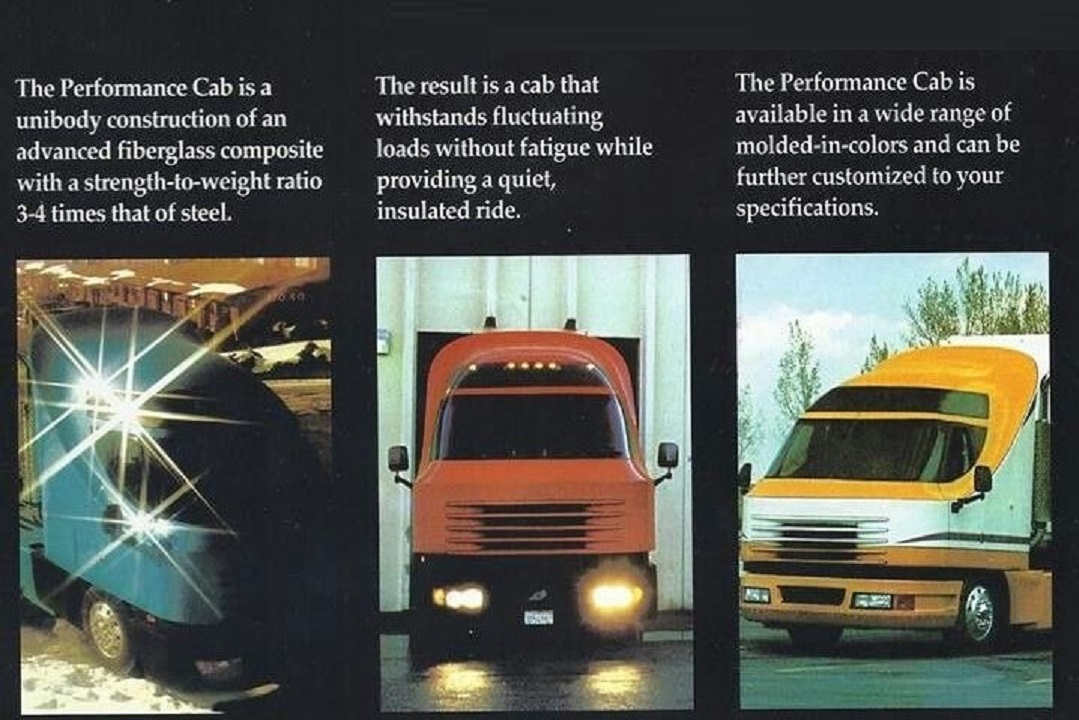
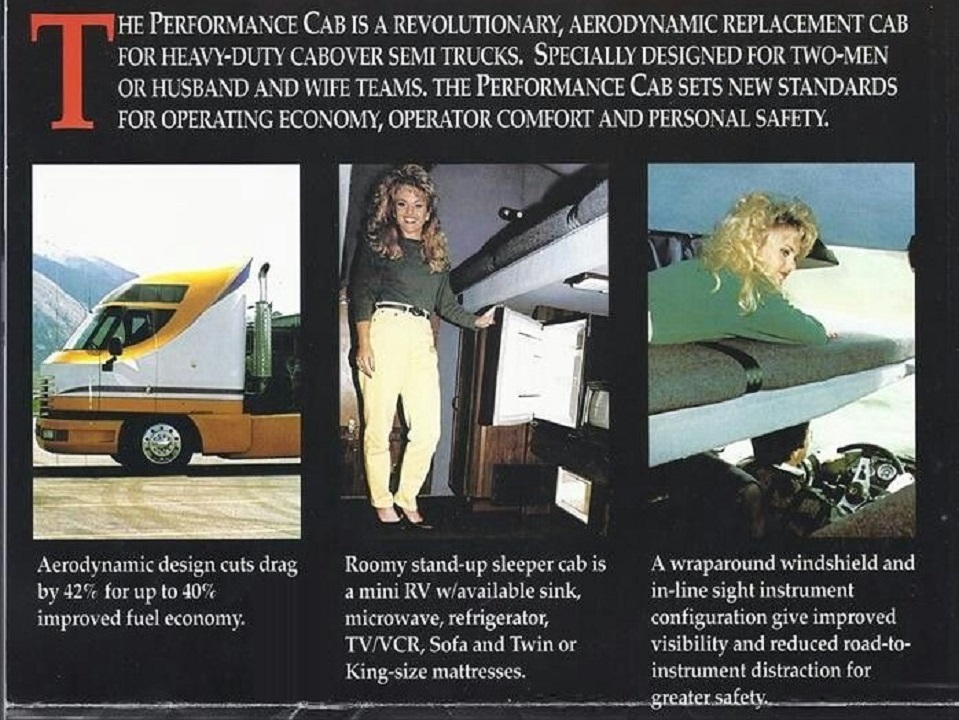
There are about two publicly known brochures for the Pegasus Cab, and one says that the body is made out of a fiberglass composite that was molded in color. Since the cab was designed to be mounted onto several cabover designs, Pegasus didn’t advertise any single number for aerodynamic or fuel efficiency gains. Instead, the company said, mounting its cab onto your truck could result in “up to 42” percent less drag and between 15 percent and 40 percent fuel savings.
This alone was supposed to be catnip for operators, but Pegasus sweetened the deal by saying that the Pegasus Cab would come with a galley kitchen, a dining table, a television, a toilet, a sink, and twin bunks that converted into either a queen or a king bed. If that sounds like Pegasus slapped an RV on the back of a semi, you’re not wrong. The truck was even advertised as an RV that can haul huge loads.

The marketing for the Pegasus Cab targeted team drivers, with the idea that one driver could get rest in the RV portion of the cab while the other drove. All of this, from the fuel economy gains to the idea that you wouldn’t need to book hotels anymore, was supposed to put money into the pockets of truckers. Allegedly, at least one of the prototypes was built on a 1980s GMC Astro Class 8 semi chassis.
According to the man who claims to be the son of the truck’s inventor, about five or six prototypes were built. Marketing images seem to suggest that at least one of the prototypes was put into service. Amazingly, I’ve found no usable information on the Internet Archive or in my other sources. If a trucking journal wrote about the Pegasus Cab or Performance Cab, it may not be on the Internet.
No examples were sold, however, and Pegasus quickly ran into money troubles. A Utah records search reveals that Pegasus Truck Cab Conversions, Inc., which would change its name to Pegasus Truck Cab, Inc. at some point, secured financing from Lobo Gold & Resources, Inc., of Ontario, Canada. This financing covered everything from furniture to patents.
Only two years later, the U.S. Internal Revenue Service filed a tax lien against Pegasus Truck Cab due to nearly $34,000 in unpaid taxes. The trail for Pegasus Truck Cab goes cold from here.
The Pegasus Reborn
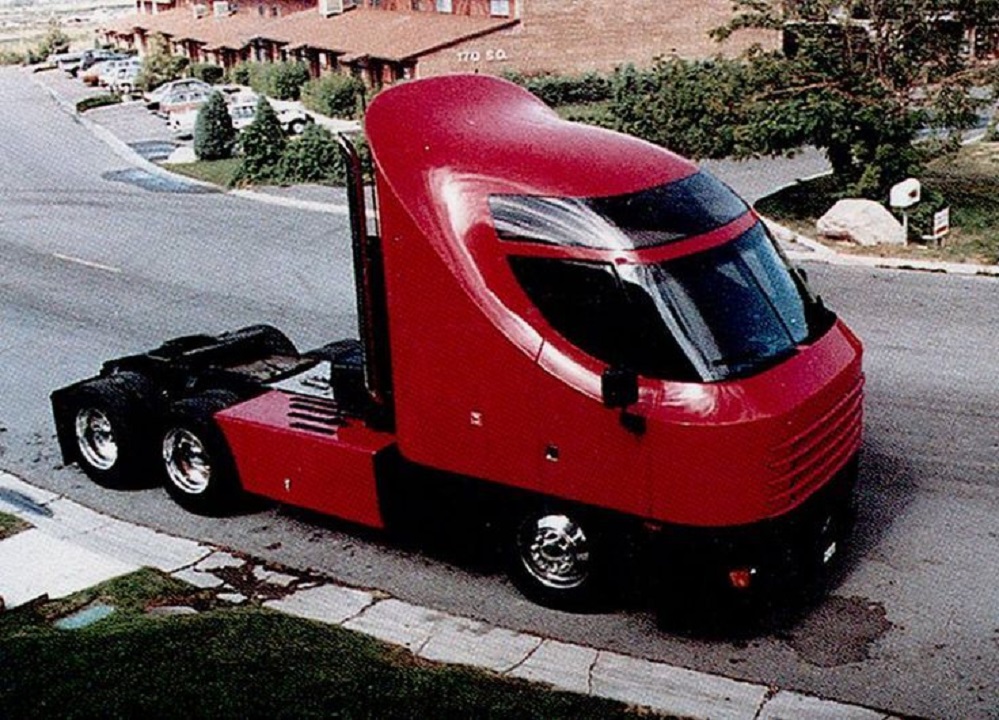
Yet, this wasn’t the end of the truck’s story. In the early 1990s, the truck appeared on the radar again, but under a new name and a new company. This time, the truck was called the Performance Cab, and it was being marketed by Design Project Engineering, Inc. (DPE) of Pleasant Grove, Utah. The original owners of the Pegasus Cab patents transferred their interest to Design Project Engineering.
From what I could find, it appears that DPE made a great push to market the Performance Cab, publishing the brochure you’ve seen here, and the truck also made an appearance in the 1994 short film Override. DPE also advertised a referral program, which said that truckers and fleets would get $250 for getting someone else to buy a Performance Cab.
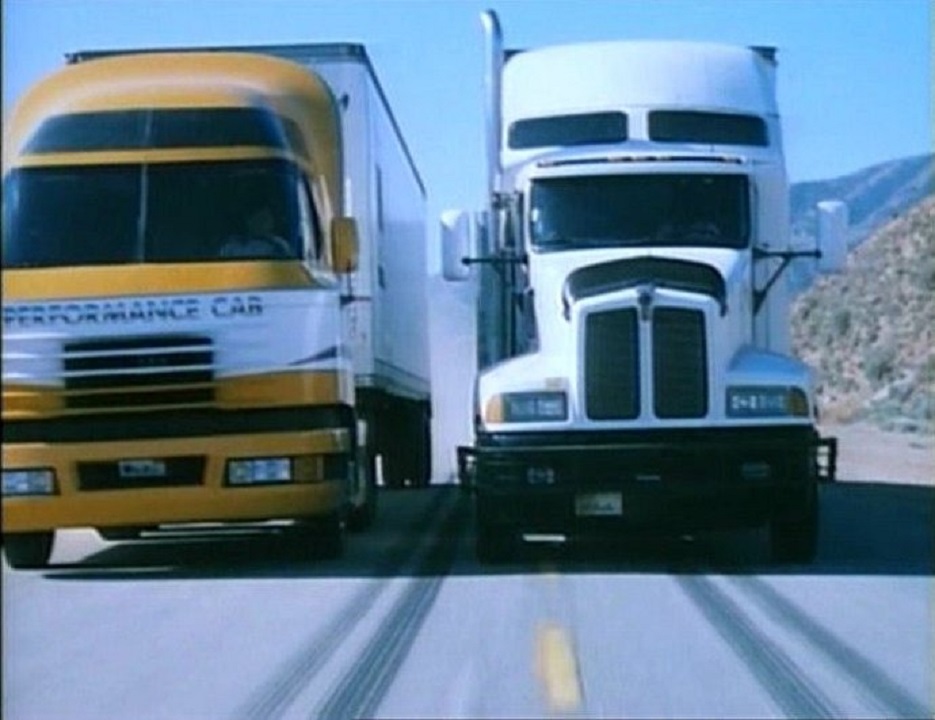
Yet once again, it appears that DPE failed to actually sell any units. It even seems like the fate of DPE was similar to Pegasus, as in 1995, the IRS filed a tax lien on DPE for $15,309.34 in unpaid taxes. This lien was released in 2005.
The trail goes completely cold from there. The prototype trucks disappeared, and any online discussion about the rig has less information than I’ve published here. Not even I am happy with the depth here. There are so many unanswered questions that I have been trying to get to the bottom of for months. Who came up with the idea for this truck, and why? Did the prototypes live up to the promises? Why were zero production examples built, and how did the companies offering this rig seemingly falter so quickly?

You can make some educated guesses about the challenges this truck would have faced. Conventional trucks were already becoming the dominant truck of the late 1980s and were pretty much the default choice not long after. So, the Pegasus Cab and the Performance Cab would have been novel ideas for a shrinking market. Likewise, big names like Kenworth, Freightliner, and Peterbilt were already getting into the aero truck market, so truckers didn’t need to try out a new company they might have known nothing about.
Still, I don’t want guesses; I want answers. If you know the answers to these questions, please reach out to me at mercedes@theautopian.com. This truck will be stuck in my mind until I can close the loop on this story.
Either way, the Pegasus Cab and Performance Cab are weird examples of what some thought would be the future of American trucking. Everyone was obsessed with efficiency, but had differing methods to get there. To some, the future was still a cabover, only one that looked like a giant wing and apparently had an RV slapped onto the back of it.
Top graphic image: Design Project Engineering
The post A Company Once Tried To Make Trucking 40 Percent More Efficient By Turning The Truck Into A Giant Wing appeared first on The Autopian.