Since I’m at this Toyota event, I’ve been thinking about Toyotas, so in that sense, I guess they’ve already won. Congratulations, you cunning bastards. But, really, joke’s on them, because the Toyota I’mm thinking of has been out of production for over 50 years and has almost nothing to do with modern Toyotas. It was also Toyota’s first sports car ever, and is a genuine little gem. I’m talking about the Toyota Sports 800.
The Toyota Sports 800 was built between 1965 and 1969, and was targeted at an American audience, much like how other early Japanese sports cars of a this era, the Honda S500 and Datsun Fairlady/Sports, for example, were. The difference with Toyota’s tiny sports car offering is that where the other two Japanese automakers were building, essentially, their own versions of the classic British roadster, Toyota decided to do something a bit more original.
The Sports 800 used the air-cooled flat-twin engine from the Toyota Publica, which was a small, affordable car built to meet the Japanese government’s “national car concept,” essentially a “people’s car” project designed to encourage the development of a small, affordable car to get every family on wheels. The Publica took its mechanical inspiration from the Citroën 2CV, though front-wheel drive was considered a bit too radical, so the Publica was RWD.
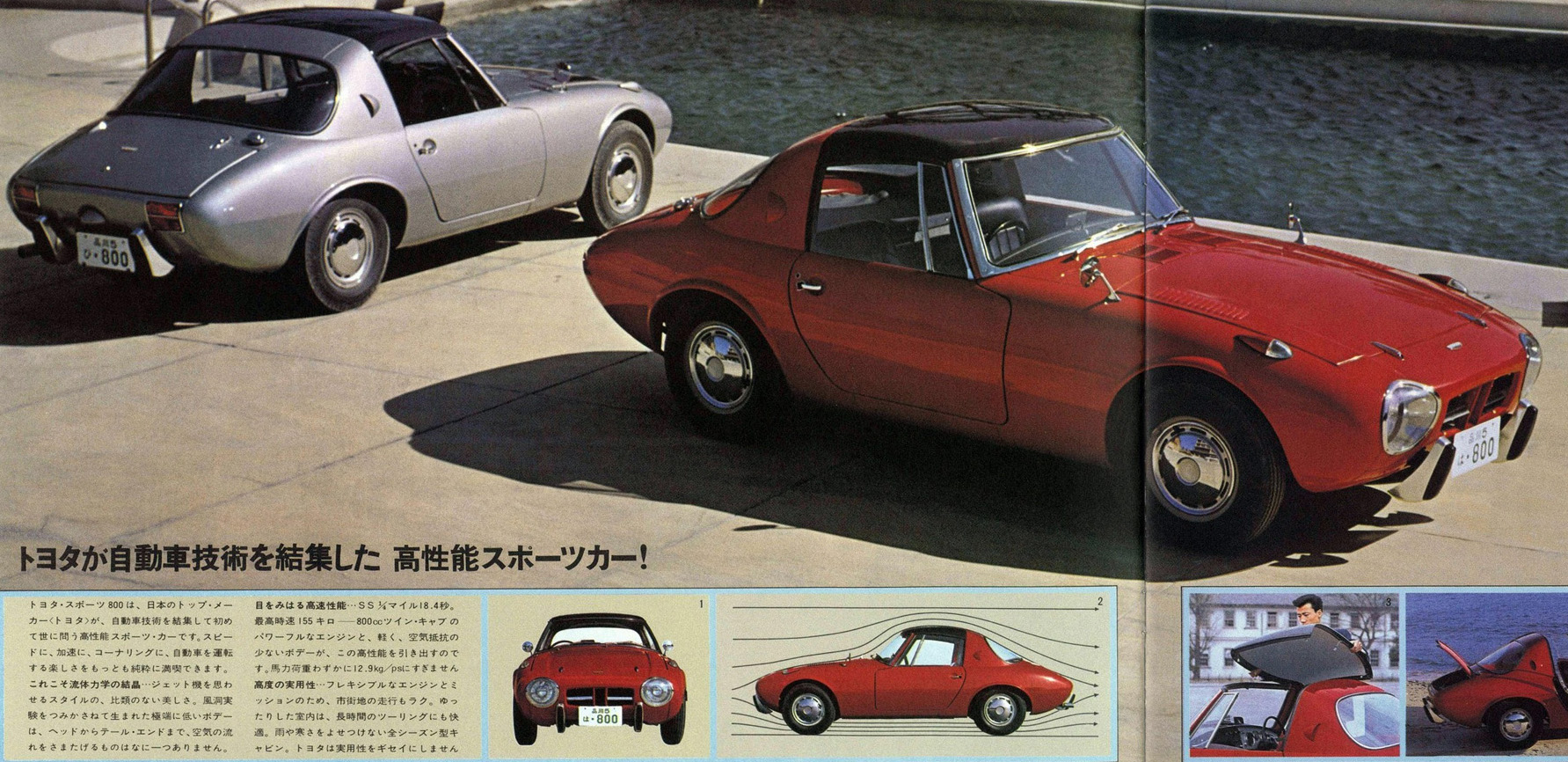
In the Sports 800, the 2CV-inspired engine (it wasn’t strictly a copy; just a similar design) gained twin carbs, or, if you want to make it sound more impressive, one carburetor per cylinder, kicking output up to a dizzying 45 (or 49, depending on the type of rating) horsepower.
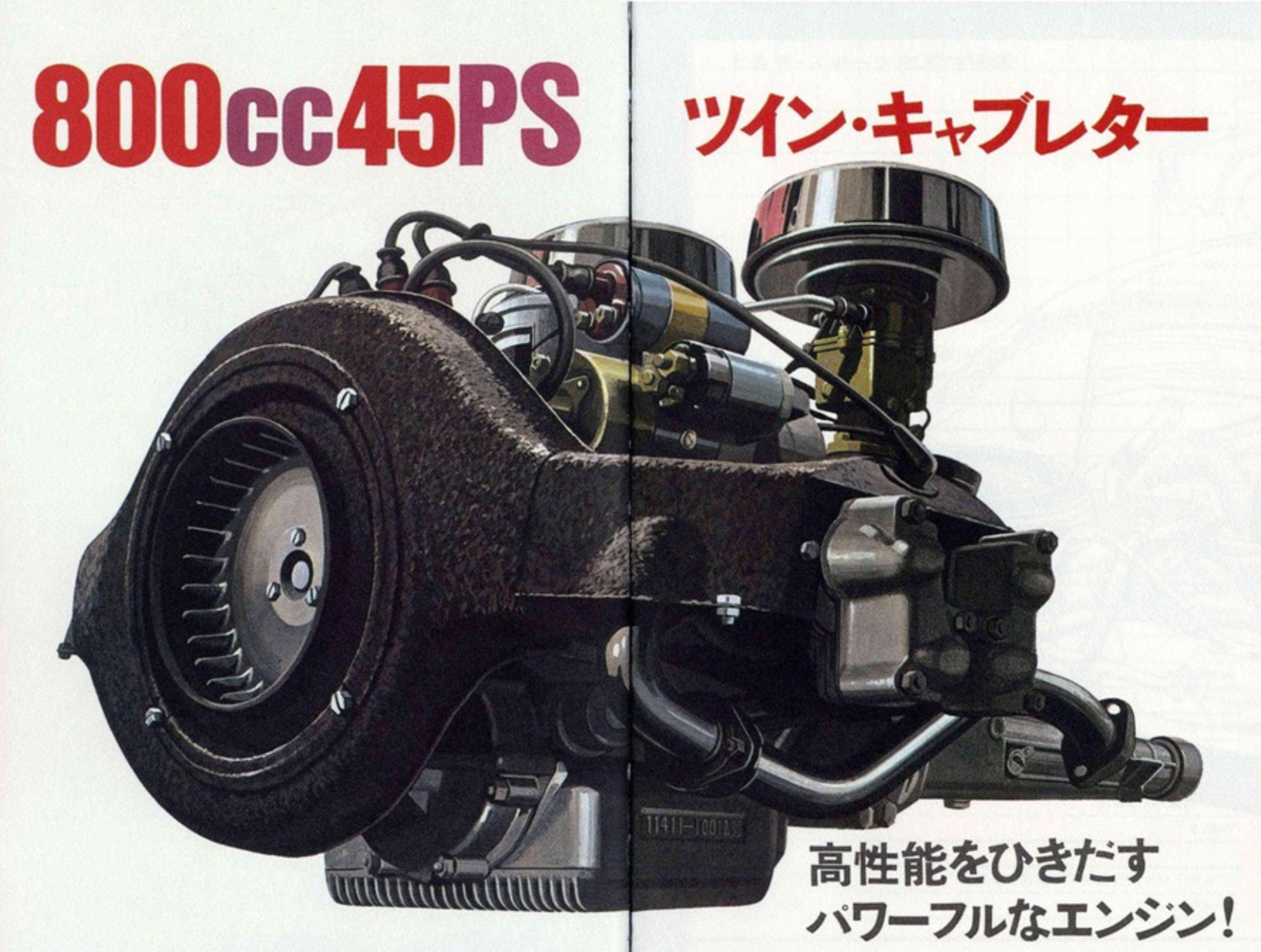
This engine made much more power than the standard 2CV lump, thanks to the extra carb and greater displacement. A 602cc 2CV engine would only make between 29 and 32 hp, so in context, this thing was a real monster. That lower Japanese text, with the exclamation point there, is crowing about those two carbs. I’d be proud, too!
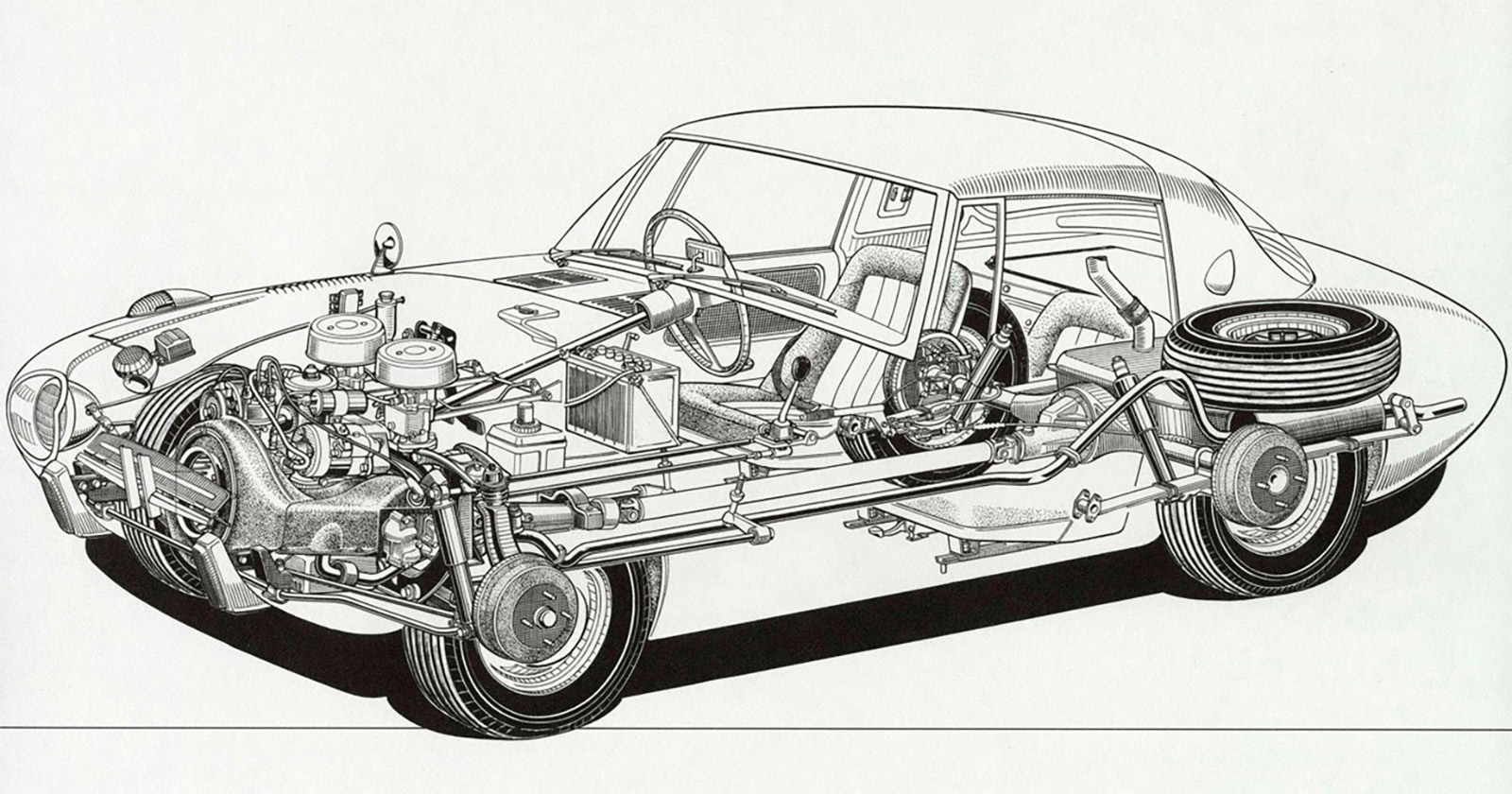
The Sports 800 was a real tiny marvel. That air-cooled flat twin was tucked into a little, probably at least sorta aerodynamic targa-topped body, and the center of gravity was nice and low. These weren’t quick from an outside observer’s perspective (it was at least 16 seconds or so to get close to 60 mph) but for those inside the car, it was a blast.
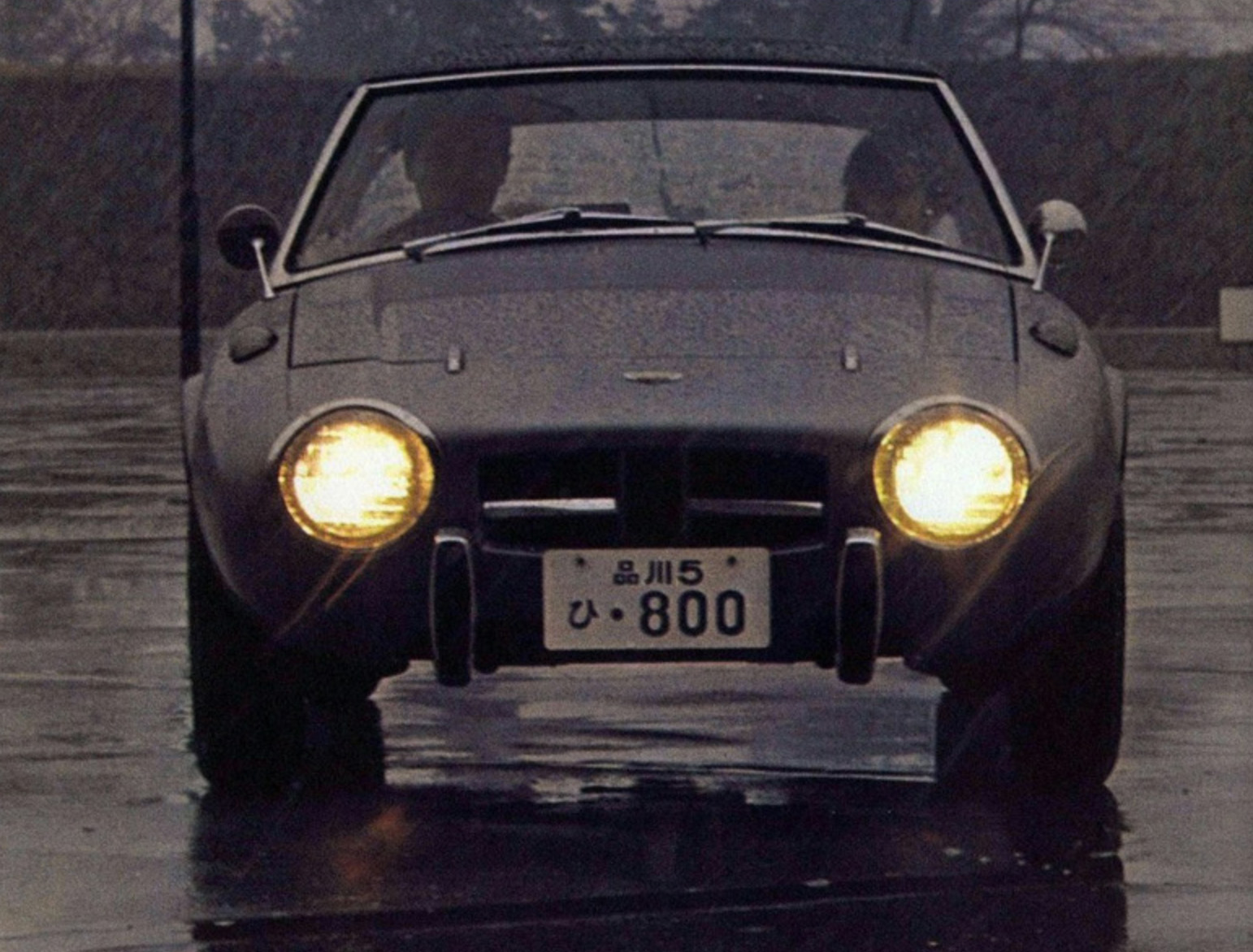
And while there wasn’t a lot of inside, what there was was well-designed and pretty comfortable, at least if you weren’t too big.
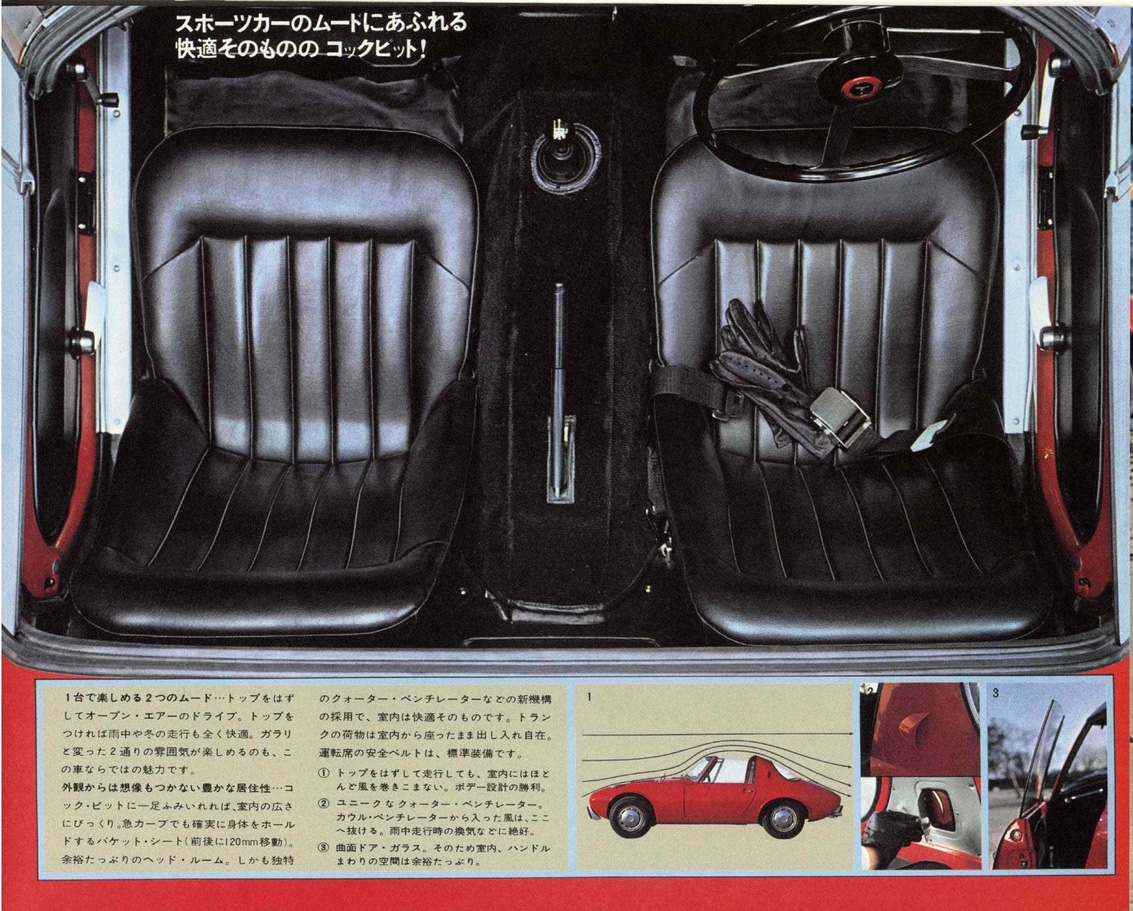
Deep bucket seats, some room for your legs, a little lockable storage cubby between the seats in the rear bulkhead, and, if you lifted the roof off, infinite headroom, at least when the sun or moon wasn’t directly overhead, which would limit the headroom to 93 million miles and 238,900 miles, respectively.
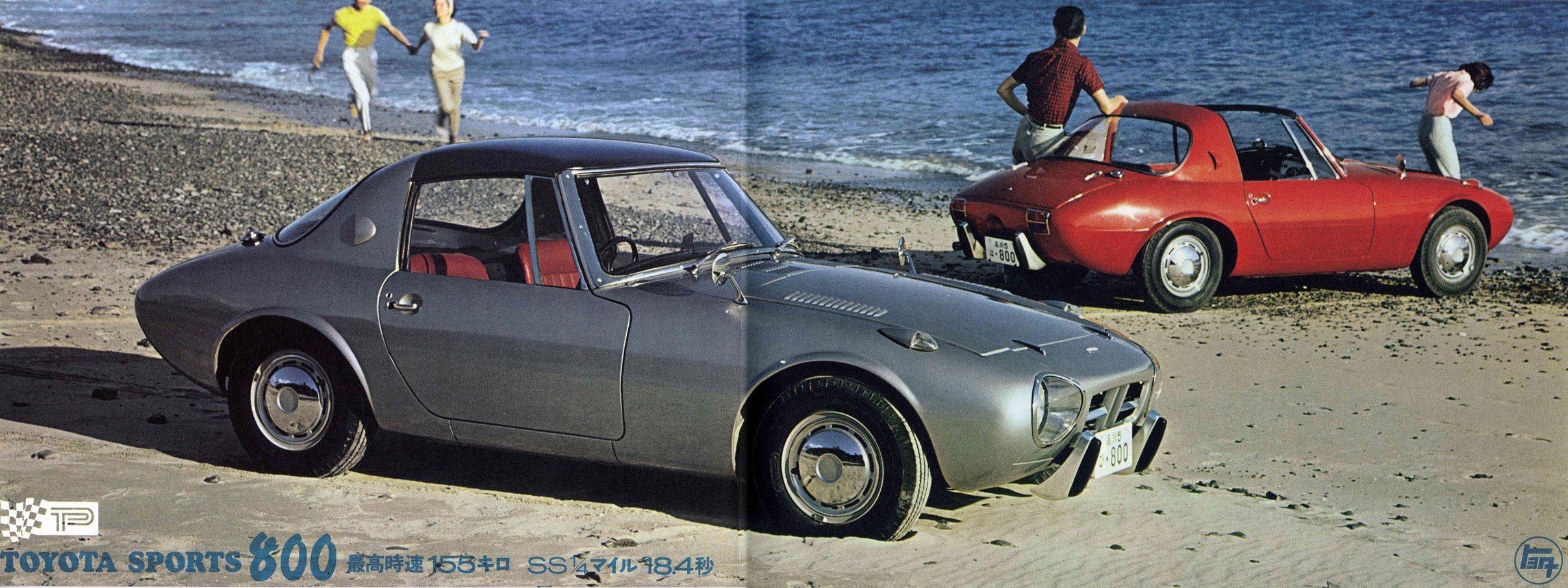
The design of the Sports 800 was especially appealing, looking sleek and modern and not really like anything else on the road at the time. It wasn’t over-ornamented, and had really satisfying, classic sportscar long hood/short deck proportions. It came out the same year as Porsche’s 911 Targa, so its lift-off roof was bang up-to-date. It even shared some styling details with its much more famous younger brother, the Toyota 2000GT:
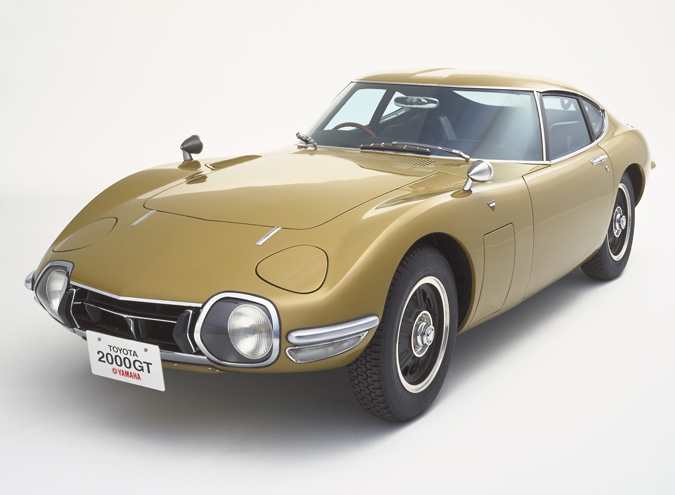
The front end design is quite similar; design-wise, you can see how the 2000GT is an evolution of the little 800.
Today, you could perhaps argue that the Toyota GT86 is the modern interpretation of this car, as it’s the only Toyota to return to a horizontally-opposed engine (albeit from Subaru) and it’s conceptually a similar sort of accessible small sports car. I think Toyota thinks so, too, as I remember they brought out a Sports 800 to the launch of the Scion FR-S (remember when the GT86 was called that?) back in 2012.
That was the first time I saw a Sports 800 in person, and I’ve been smitten ever since.
The post Toyota’s Very First Sports Car Is Still My Favorite And Has A 2CV Tie-In appeared first on The Autopian.