I don’t listen to music on Spotify, but the app was apparently telling listeners how old they were by their musical taste. That’s rude. Apple Music did no such thing. Instead, it let me know I was one of the top 100 listeners of Elastica on the planet. I’m pretty sure no member of Elastica listens to as much Elastica as I listened to this year.
My instinct this morning was to write about the big Oval Office meeting featuring various leaders from American automakers. Thomas already wrote about the surprising Kei car announcement. There was a lot of discussion without a lot of detail. I think I’m going to wait for the details.
What’s worth talking about today is Mazda, which finds itself doing slightly better than you’d maybe guess. It’s made its average car more expensive, while also increasing market share. How it did this is important when considering that dealers, on the whole, have a negative view of the market since the pandemic.
Honda dealers probably feel good about things overall, given where its sales have been, and there’s a fun little nugget this month about Prelude sales. And, finally, The Morning Dump will take a look at hybrid reliability.
What Can We Learn From Mazda?

When I was on the launch for the Mazda CX-70, I was surprised to see that the company parked a brand-new BMW X7 next to it for comparison. The X7 is an exceptional SUV and nicer than the Mazda.
How much nicer? The price delta does suggest that the Mazda is probably a good value (An X7 is now like double the price). That seems to be the strategy for the company as it tries to enter the gray space between what a Toyota offers and what a Lexus offers.
It seems to be working, as in the last eight years the company’s market share has recovered to 2.6% from 1.7%, which is a reasonable turnaround. More importantly, the average transaction price has climbed to $33,000 per vehicle from $24,000. Hans Griemel did an interview with CEO Masahiro Moro, and the focus was on the difference between the retail experience and the product itself:
“For a long time, people said Mazda relied too much on product-led growth, because we were very strong on product,” Moro said in a Nov. 19 Talk From The Top interview at the company’s Tokyo high-rise office.
“But in North America, especially in the U.S. and now Mexico, we are now seeing something very, very different. We see retail-driven growth. This is maybe the biggest change in recent years,” he said.
Premium cars, increasingly, demand an even more premium price, and trimflation means your theoretically affordable midsize crossover is now what you’d have paid to buy a BMW a few years ago. That space in between is greater than ever, and your average Kia dealer is going to have a hard time replicating that luxury experience.
One big advantage that dealers can still wield over online retailers is a positive, perhaps luxury experience when buying a car. Subaru has already started doing this with its REI-fication of its own stores.
Obviously, there’s a lot of grey space at the bottom of the market as well, but in this environment, it’s harder to fill.
Dealer Sentiment Drops To Lowest Level Since The Pandemic
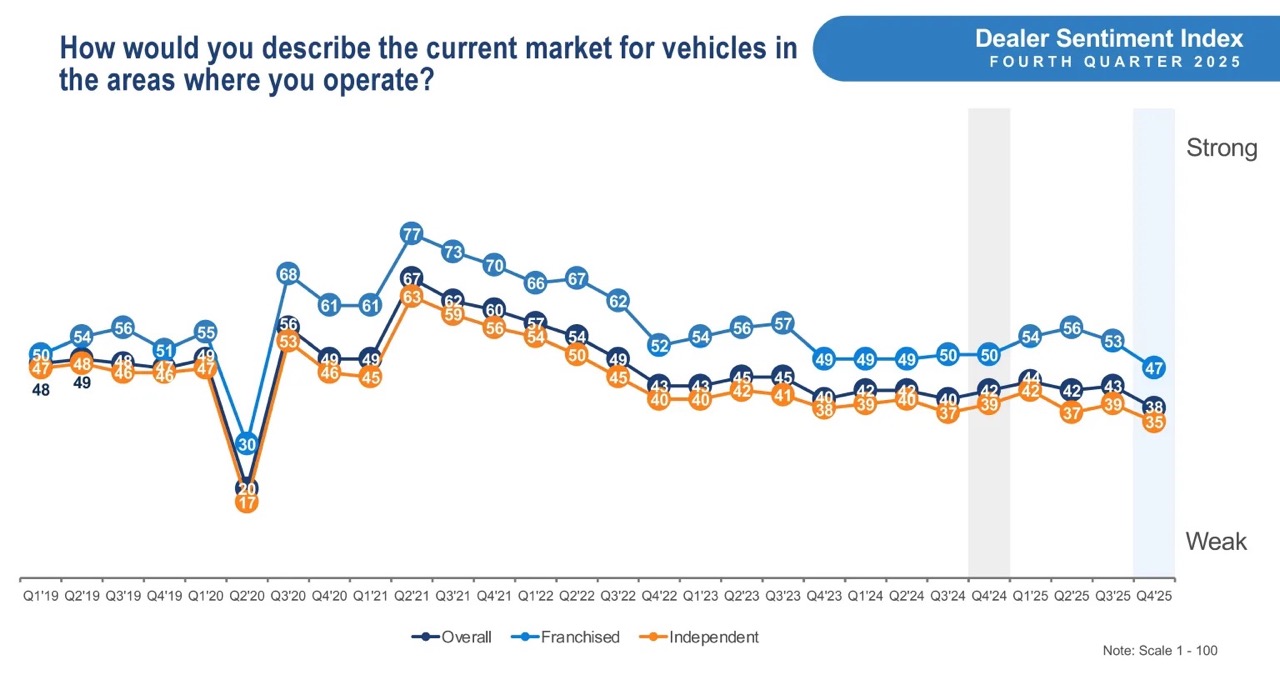
Yikes, the Q4 Cox Automotive Dealer Sentiment Index (CADSI) data is out (you can see the question being asked at the top of the plot above), and it’s rough, with huge declines in sentiment.
“Dealers are signaling caution as 2025 ends,” said Mark Strand, deputy chief economist at Cox Automotive. “Persistent economic uncertainty and fading consumer confidence are weighing on sentiment. Compared to the rest of the year, the current market feels like it’s running out of gas. As we look ahead at 2026, renewed market momentum is entirely possible, especially if we get material interest-rate relief and a rebound in consumer confidence.”
Something is going to have to give for the market to improve next year, whether that’s products, the economy, or interest rates.
People Are Buying Preludes; At Least 30 People
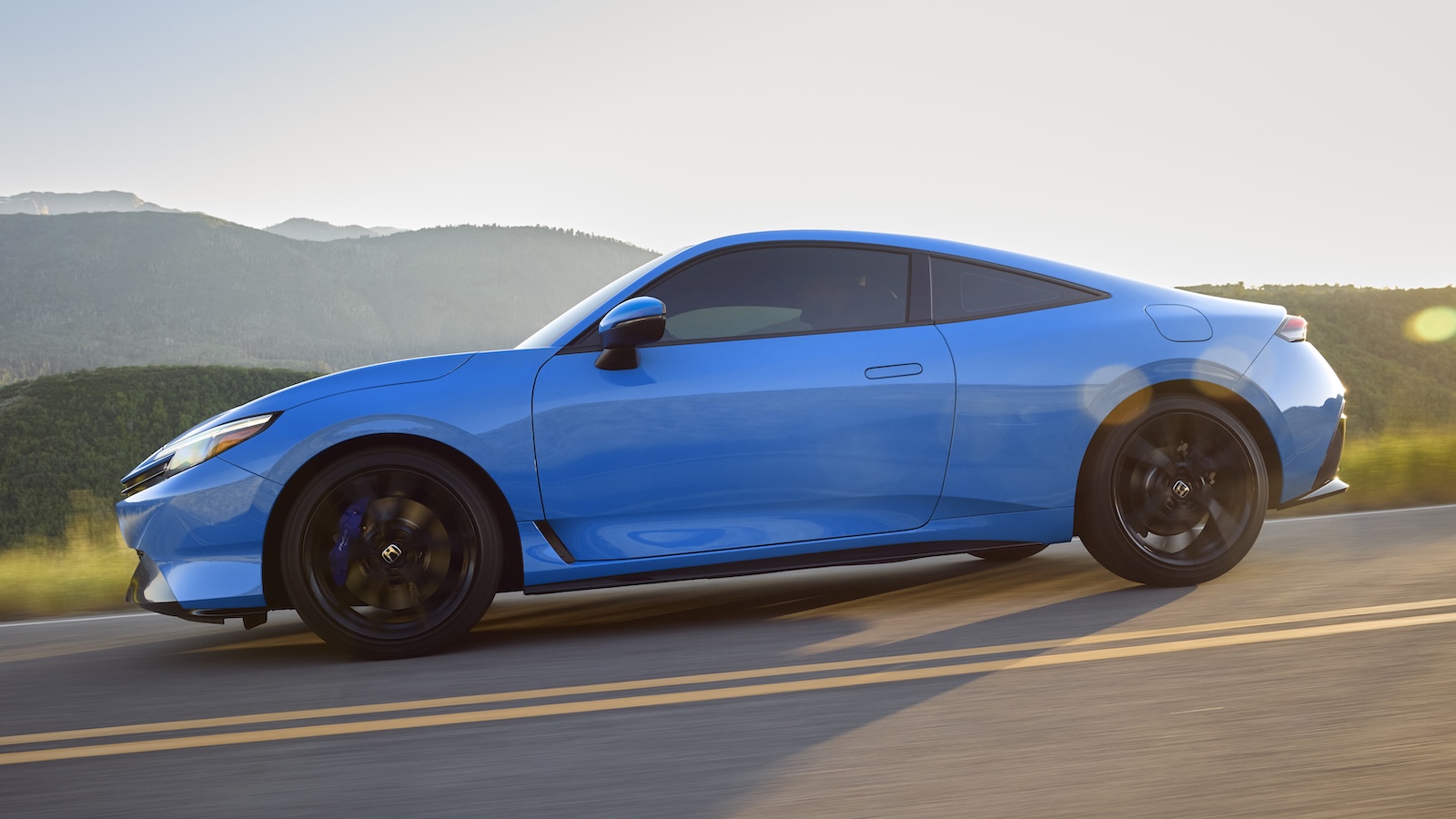
I still have positive feelings about the 2026 Honda Prelude, and I look forward to driving one when I get the chance. It’s a little expensive, but so is everything else. Will it sell?
As noticed by someone on Reddit, there were at least 30 of them sold in November. This is a brand new car, and it only got to dealerships at the very end of the month, so this data is mostly entertaining and not actually meaningful. Given how long it takes to ramp up production and sales, it’ll probably be the end of Q1 2026 before anyone can make a completely fair judgment about the vehicle.
I hope it succeeds. We need more coupes and more hybrids, and this is both.
Survey Shows Hybrids Are More Reliable Than Non-Hybrids
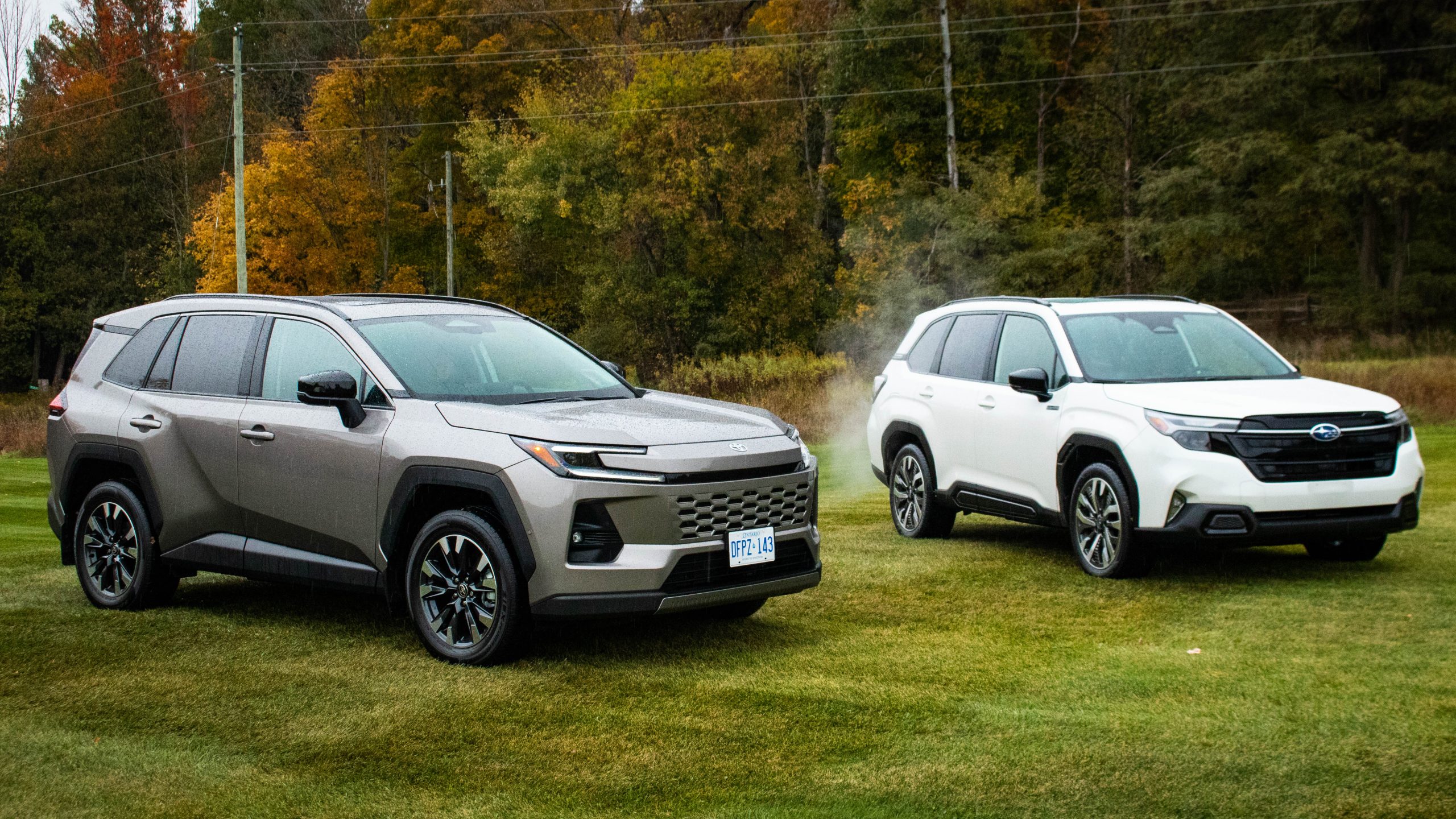
Something about this news feels familiar to me… but Thursdays often feel like Tuesdays to me, and vice versa.
Hybrids have been in regular usage in the United States for a quarter of a century, meaning it’s a fairly established technology. Perhaps my “decade of the hybrid” language is too late. Maybe it’s not 2024-2034, maybe it’s 2020-2030?
I say all of this because our friends at Consumer Reports are out with their annual scorecard, and Subaru and BMW are right at the top. The Subaru bit may be somewhat surprising given some of our experiences around here, but as I’ve mentioned before, there are some good reasons for this. Specifically, owner satisfaction is high, the cars come with a lot of standard safety equipment, and Subaru makes no truck-based vehicles to pull down the score (as Toyota does, for instance).
“I’ve always been very honest about this. Consumer Reports does not rate vehicles based on what Jake likes, or Stef likes, or a bunch of us who are auto enthusiasts like,” Jake Fisher, senior director of auto testing at CR, explained to me. “These are definitely not ratings for an auto enthusiast, these are ratings for that small niche group… that are like 90% of the market [and aren’t] looking for rear-wheel-drive, stick shift sports cars.”
Owned. For his part, Jake recently bought a Honda Civic Si, which is both a reliable and CR-recommended car, as well as an absolute hoot.
What really struck me from the press release was this:
When it comes to the reliability of electrified powertrains, hybrids continue to stand out. On average, hybrids have about 15 percent fewer problems than internal combustion engine (ICE) cars, a significant boon to the growing number of Americans who are buying hybrids. A record 1.6 million were sold last year, according to U.S. Department of Energy.
Of the approximately 30 hybrids for which CR has sufficient data, only the Hyundai Sonata Hybrid, Lincoln Nautilus Hybrid, and Mazda CX-50 Hybrid have below-average predicted reliability scores. CR’s survey shows both EVs and PHEVs continue to experience growing pains. On average, they have about 80 percent more problems than ICE cars. For half the brands in this year’s rankings, the least reliable car is a plug-in hybrid or fully electric vehicle. Seven of the 10 least reliable cars are either PHEVs or EVs, with issues related to EV battery, charging, and drive systems being among the commonly reported problems.
Fisher expanded on this with me, pointing out that “You’re just not relying on your brakes as much because you have the regenerative braking,” and the engine is under less stress in certain situations. Driver behavior, also, is likely gentler with your average hybrid than, say, a WRX.
Of course, as pointed out, plug-in hybrids aren’t faring as well. Some of this comes down to which automakers focus on which technology. Honda and Toyota are the leaders in hybrids (which is probably affecting why hybrids fare so well in reliability), whereas Stellantis is the leader in PHEVs.
“Stellantis as a whole has always had issues with reliability. They’ve changed ownership a few times, [and] bringing in FIAT helping them out with reliability… certainly is not the best strategy,” Fisher said.
Yup. Jeep, as per usual, is at the bottom.
What I’m Listening To While Writing TMD
Did I have any choice? It’s Elastica with the rockin’ and extremely mean (probably to Damon Albarn) “Stutter.”
The Big Question
Which brands need to move upmarket? What about down?
Top photo: Mazda
The post Mazda Wants To Be In That Sweet Spot Just Below Premium But Still Affordable appeared first on The Autopian.