Technologically, we’re in a very interesting place at the moment. We’re on the precipice of many interesting developments in artificial intelligence (AI) and robotics, though I’m not really convinced anyone has a clear path or idea about how to actually best use this technology. Development is continuing unabated, and at a remarkable pace, and very likely will keep developing whether or not we actually figure out what we should be doing with all of this stuff, if we can maximize its potential to improve the largest number of lives possible, or if we’re just going to make machines that let people who run corporations destroy jobs and force huge parts of the population into poverty. I guess we just wait and see! Until then, we can enjoy things like Chinese automaker Xpeng’s recent AI Day in Guangzhou, where they showed off a robotaxi and a humanoid robot that walked with remarkable smoothness and, yes, had breasts.
Breasts. You know, like a mammal does. Those must be crucial components for a humanoid robot, right? No need to read more into the possible uses of a humanoid robot that mimics the shape and contours of an actual human body, reflecting a design concept that the company notes has “a humanoid spine, bionic muscles, and fully covered flexible skin, and supports customization for different body shapes.” XPENG explains the company’s philosophy further:
“Whether robots should be human-like” is a topic that has attracted a lot of attention in the industry. XPENG’s answer is to “extreme anthropomorphism”. Because when humanoid robots achieve “extreme anthropomorphism”, how to achieve several major problems that are easier to commercialize, easier to generalize, and easier to obtain training data can be solved.”
You can see the remarkably smooth and human-like way the robots walk and move here:
It’s still a little odd and jerky in places, but it’s also weirdly naturalistic as well. It’s impressive and kind of creepy, all at once, and it’s very hard not to make comparisons to Tesla, which is also an electric carmaker that wants to recast itself as an AI company that makes robotic, self-driving vehicles and humanoid robots, just as XPENG is trying to do. This recent video does seem to show a more advanced walking cycle than Tesla’s Optima robot, which has a gait similar to someone with an unfortunate and generous pantload:
Interestingly, the XPENG robots are described as following Isaac Asimov’s famous Three Laws of Robotics, and have added one additional one,”Privacy data does not leave the robot,” which does seem a very useful addition to the Three Laws.
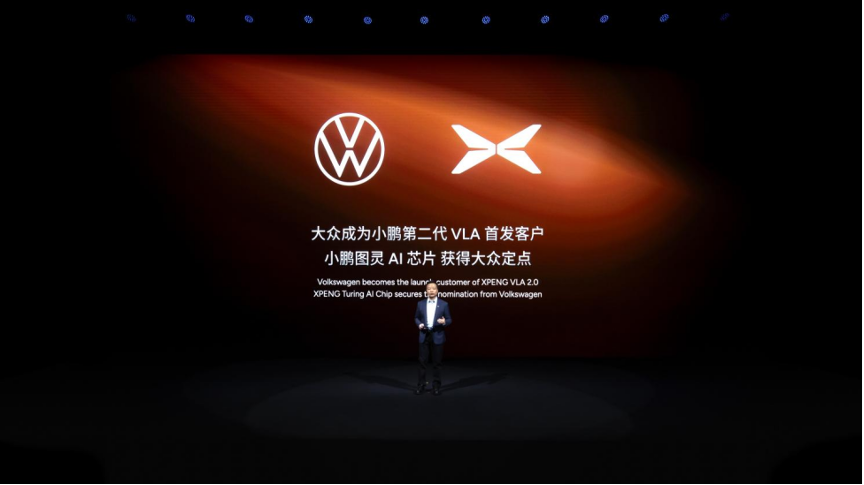
The partnership with Volkswagen is interesting, and it’s so far not clear if this partnership extends to VW’s global brands or would be limited to VW’s Chinese operations. I think it makes sense for Volkswagen to license an AI automated driving system as opposed to developing one in-house; as things continue to develop in the automated driving space, I suspect standards will become more and more important, predictable behaviors based on inputs, and that favors a fewer number of AI operating systems as opposed to every company attempting to develop their own proprietary systems.
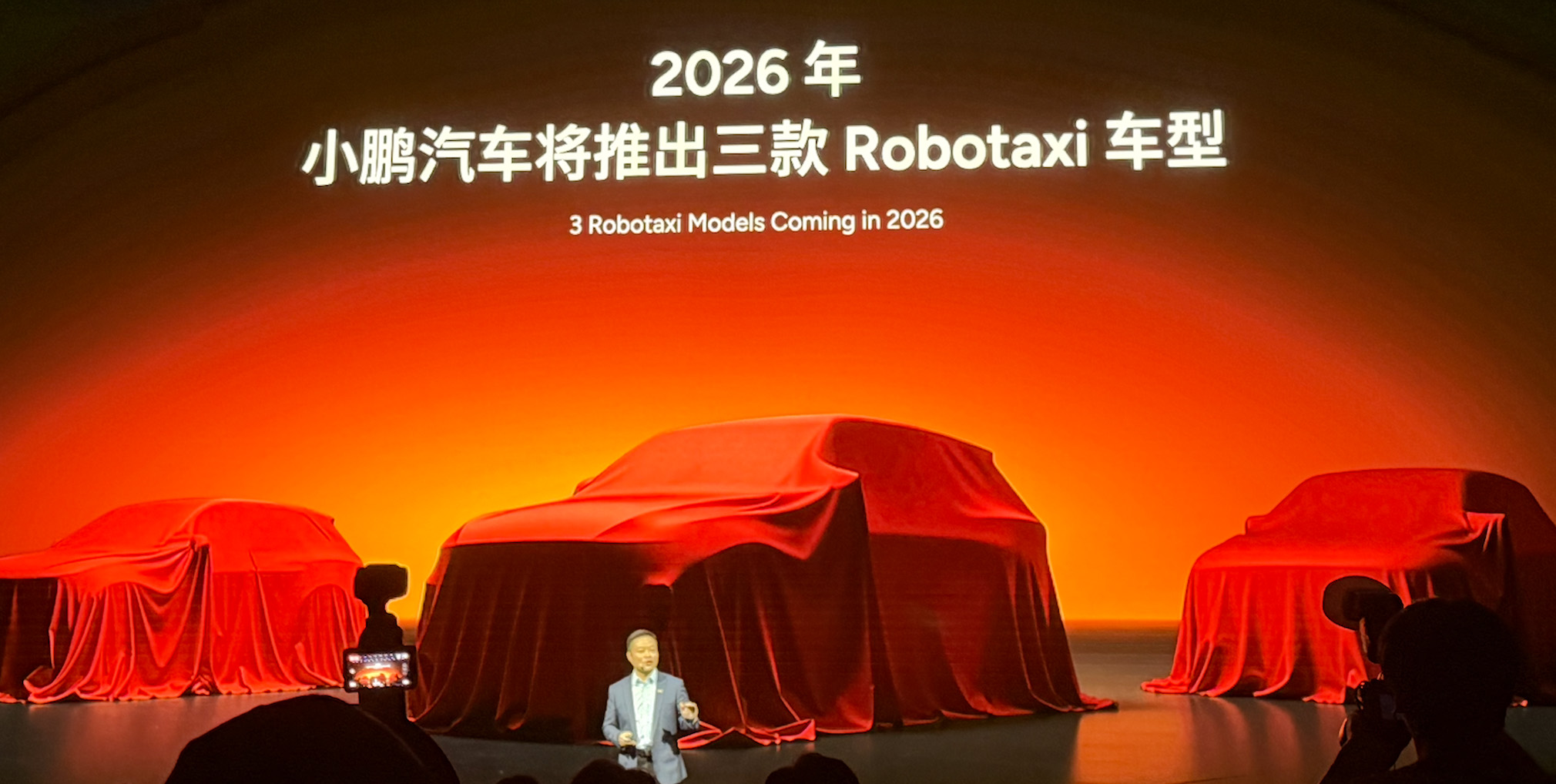
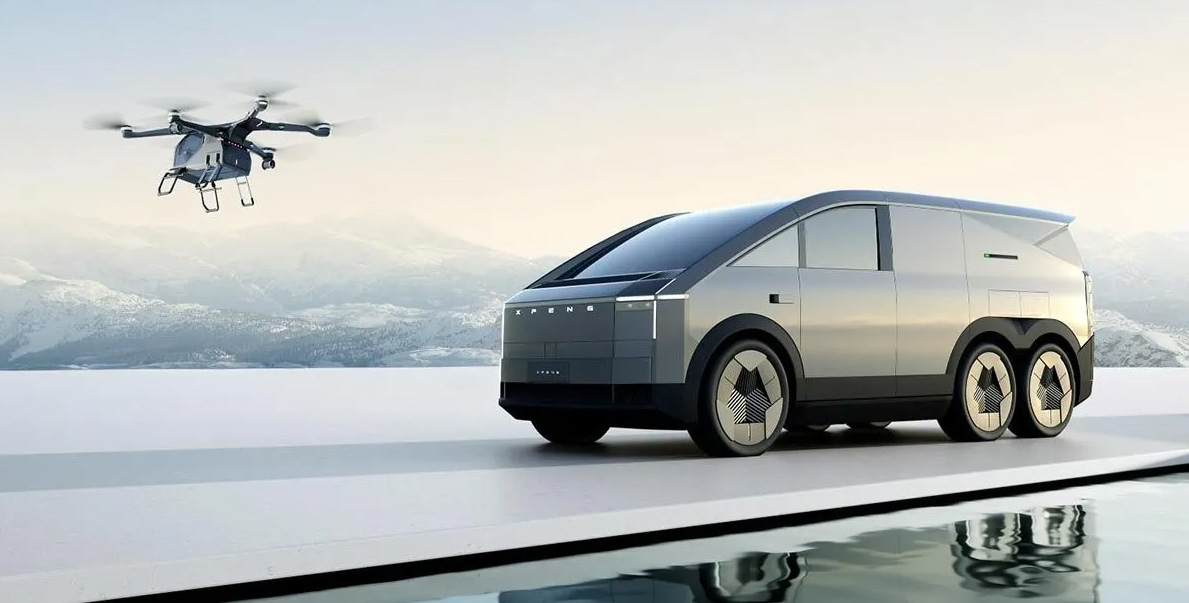
XPENG showed three Level 4-capable robotaxi models, all shrouded in those car-drapes, but all three resemble SUV/Crossover types of profiles and sizes. XPENG does make a very strange six-wheeled electric van that I was sort of expecting to be employed for robotaxi use, but that seems to be part of XPENG’s “flying car” projects, and I’m too sick of flying car “news” that never turns into anything real, so I’m just going to leave that be for now.
The bigger question for all of these things, especially the humanoid robots, is: who are these for, exactly, and what do we want to do with them? The sorts of very anthropomorphic humanoid robots shown at XPENG’s event aren’t really suited for factory work or other sorts of intense physical tasks; these are robots that are designed to replace receptionists and tour guides and other similar sorts of jobs, but does that actually make, you know, sense?
Of course, one can imagine more illicit applications for robots that so carefully mimic human forms, and if XPENG has another explanation for why a robot should have breasts other than to be an object that has some manner of sex appeal, I’d love to hear it. These all have solid-state batteries, but I don’t think the breasts are used to house those.
Would people buy these for their homes? What would they use them for? So far, they haven’t demonstrated a way to deal with common household tasks, at least not in any practical way, though I suppose they will get there. But would you pay $20,000 for a machine to, what, fold clothes and vacuum? Hiring a maid is significantly cheaper and, I suspect, will do a better job, at least in the next decade or so.
As I said, we’re in some strange, transitional times. I think it’s important to remember that we still have some agency here, and should figure out, collectively, what we want from AI and robots, ideally before all the things we don’t want come to pass.
Until then, I guess now is the time to start a business making tube tops for humanoid robots.
The post Chinese Carmaker Xpeng Has An AI Deal With VW And A Humanoid Robot That Is Creepily Humanlike And Yes It Has Boobs appeared first on The Autopian.