Will car buyers ever get a break? The answer seems to be yes, just not immediately. Going into the end of the year, loan rates are likely to stay elevated while deals become a little harder to come by. Overall, though, the news looks better for 2026.
Wasn’t there a rate cut yesterday? Yes, there was. And if you’re trying to buy a house, that’s great news. I’ll explain why neither used nor new car rates are going in the same direction. It’ll be a Morning Dump where I get to mention Quantitative Tightening, which is always fun.
The other side of cars being more expensive is, of course, tariffs and EV investments. Stellantis is taking a big hit from changing its plans, but that’s probably just a one-time thing. Volkswagen is in terrible shape with both and is uniquely susceptible to a lack of trade deals, as well as some fun new geopolitical concerns.
China and the United States now have a quasi-deal that’ll have to be renegotiated every year, but will take a lot of pressure off trade. Could 2026 be a calm year? That would be nice.
The Car Loan Fairy May Not Come Until 2026

The good news is that the Federal Reserve Board of Governors approved a Fed Funds Rate of 3.75%-4.00%. This was expected and, to some degree, ‘priced in’ as market watchers like to say, so don’t expect huge market moves today.
This caused 10-year U.S. Treasury bonds to move higher while, at the same time, mortgage rates are going down. As I mentioned above, auto rates are going up. If you bought a new car during the pandemic and got a 0% finance rate that matched a low Fed Funds Rate, you might wonder why the two are so disconnected.
As Cox Automotive Chief Economist Jonathan Smoke explains, there’s more going on than simply bond yields and how much it costs to borrow money:
New rates are moving higher mostly due to fewer special offers from the captive finance arms of the manufacturers. Fewer special, low-rate offers means an increase for prime-and-above borrowers who disproportionately benefit from the special offers.
Inventory is falling as carmakers cut back on EV production, retool, slow imports due to tariffs, and otherwise do whatever they can to not end up with a glut of cars on dealer lots. That lack of cars means there’s less incentive to offer low rates, causing averages to go up.
Ok, but what about used cars? As Smoke points out, the blow-up of lenders like Tricolor has spooked the market, but overall fears about the economy haven’t particularly dissuaded subprime borrowers, who keep financing cars at super high rates.
The good news is that analysts like Cox Automotive see some of this chilling out, eventually:
Average auto loan rates are likely to remain high through November. December will bring more year-end rate offers in the new market, which should help pull the average rate back down. The used market is not likely to see rates decline until loan performance improves, and this is the time of year when loan performance always degrades.
The seasonal pattern suggests that loan performance should begin improving by March, and 2026 could see improvement start sooner as consumers benefit from reduced tax withholdings leading to higher take-home pay in January. Then, starting in February, we should begin to see the impact of record-high tax refunds.
In addition, Fed Chair Jerome Powell said that the policy of Quantitative Tightening is going to end, so that’ll hopefully help take some of the pressure out of rates next year, according to Smoke.
Obviously, if you have a good-sized down payment and a high credit score, you’ll probably be fine.
Stellantis Finally Posts Good Numbers
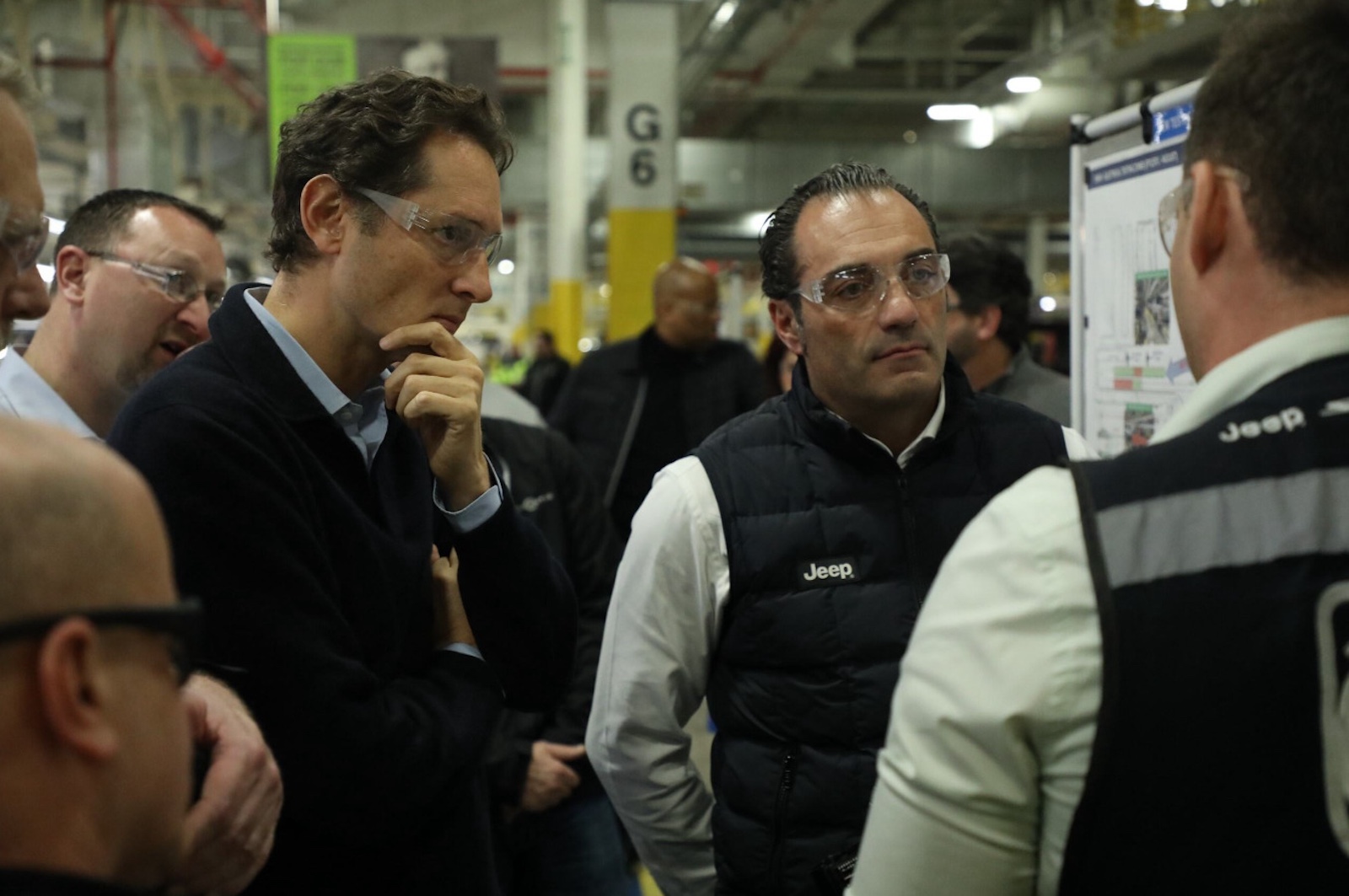
After a long period of shrinkage, Stellantis posted positive numbers in its Q3 investor update. Specifically, both shipments and net revenues grew by 13%, including growth in shipments of 35% in North America.
How’s the company doing this? It points to a stronger position in North America, including the return of both SRT products and the Hemi V8, which bring with them higher margins.
Looking at the overall picture, it seems like things could be worse (unless you look at Maserati, which is cratering). The company expects about $1.2 billion in tariff hits for 2025. Not great, not terrible.
There is an interesting line in the report that’s worth looking at:
As we continue making important and necessary changes to our strategic and product plans, also in response to regulatory, geopolitical, macro-economic and other external and internal developments, we anticipate incurring charges in H2 2025, which, once finalized, we expect will largely be excluded from AOI.
Stellantis doesn’t go into details, but my guess is some mix of sending more production to the United States and slow-rolling many of its EV plans.
Volkswagen Lost $1.5 Billion Thanks In Part To Tariffs, Worries bout Chip Shortage

Here’s the full release from Volkswagen Group that details how far it has fallen so far this year. None of this is a surprise, as the slowing of EV sales in the United States, troubles in China, and tariffs all combine to cause trouble. This is to say nothing of Porsche, which is a perfect combination of all those issues.
Volkswagen forecasts it’ll make about as much as it made in 2024, with an equally mid margin. Here’s something interesting buried in the report, though:
The forecast is based on the assumption of adequate availability of semiconductors.
This is the issue between the Dutch government and the Chinese government, which has seen semiconductors yet again become an issue for carmakers. Bloomberg has more:
The spiraling standoff between the Netherlands and China over Nexperia, owned by China’s Wingtech Technology Co., comes after the Dutch government seized control of operations in the country. Beijing this month retaliated with an export ban from Nexperia’s facilities in the country, triggering a frantic search for alternatives.
“The solution should be on the political side because its not a technical shortfall or a capacity shortfall,” Antlitz said. “It’s really induced by political discussion, and this is where we hope that all the relevant parties sit together and find solutions.”
It’s always the Dutch Van Houtens that are the problem, amirite?
China Comes To Terms With The United States, Sort Of

The ongoing trade war between the United States and China, which was started because of, uh, fentanyl, looks like it’s about to cool. President Trump and Chinese President Xi Jinping both agreed to a bunch of measures that’ll calm things down. Maybe.
Specifically, the White House will lower tariffs by 10% while China will release rare earth minerals and buy American soybeans.
Per Nikkei Asia:
Xi told Trump that the superpowers “should be partners and friends” because that is what “reality demands.” The talks on the margins of APEC in South Korea, however, appeared to stop short of a fully fledged trade deal, with Trump acknowledging that discussions between the rival powers “will go on for a long time.”
“I put a 20% tariff on China because of the fentanyl coming in,” Trump told reporters aboard Air Force One as he flew out of Busan moments after meeting Xi, referring to a drug-abuse epidemic that has swept the U.S. “Based on his statements today, I reduced it by 10%.”
As the report points out, the effective tariff rate against China is still about 40% even after the drop. So what does this really change? Again. from the Nikkei Asia report:
Some observers were underwhelmed by the initial outcome. “Frankly, the U.S. does not seem to have gotten much,” said Alicia Garcia-Herrero, Asia-Pacific chief economist at Natixis.
Markets, which had rallied in recent days on hopes for a positive result, were rocky in the wake of the meeting. China’s benchmark CSI 300 Index ended the day down 0.8%. U.S. stock futures swung between gains and losses.
It doesn’t seem like a lot, but it’s not nothing.
What I’m Listening To While Writing TMD
I keep being in the same city as Wolf Alice and not being able to get away to see a show. I gotta fix this, just to see them perform “Just Two Girls.”
The Big Question
How much do loan rates impact your car buying purchases, new or used?
Top graphic images: Audi; DepositPhotos.com
The post Why Loan Rates Are Going Up For Cars As Home Mortgage Rates Drop appeared first on The Autopian.