First of all, I need everyone to stay calm. Freaking out and throwing chairs (you know who you are) is not helping. At all. Except that time we needed those chairs moved, fast, that time it actually was really helpful and thank you again for that. But when it comes to the subject at hand today – the Mercury Lynx – the only way we can do this is if everyone remains tranquil.
The Mercury Lynx (Mercury’s first FWD car!) was the badge-engineered version of the US-market Ford Escort, and what I mostly want to focus on this morning are the “tells” of upscaliciticicityness, those ineffable markers that telegraph to the world that you are a person who spent a little more on their car.
We’ve already addressed how the US-market Escort and the European-market Escorts differed, and used those subtle markers and styling differences as a way to discern what means “American” or “European” in the human mind:

… and now we’re going to do the same thing to see if we can distill down what meant “premium” or “luxurious” to the 1980s American mind by comparing the Ford and Mercury versions of this same car:
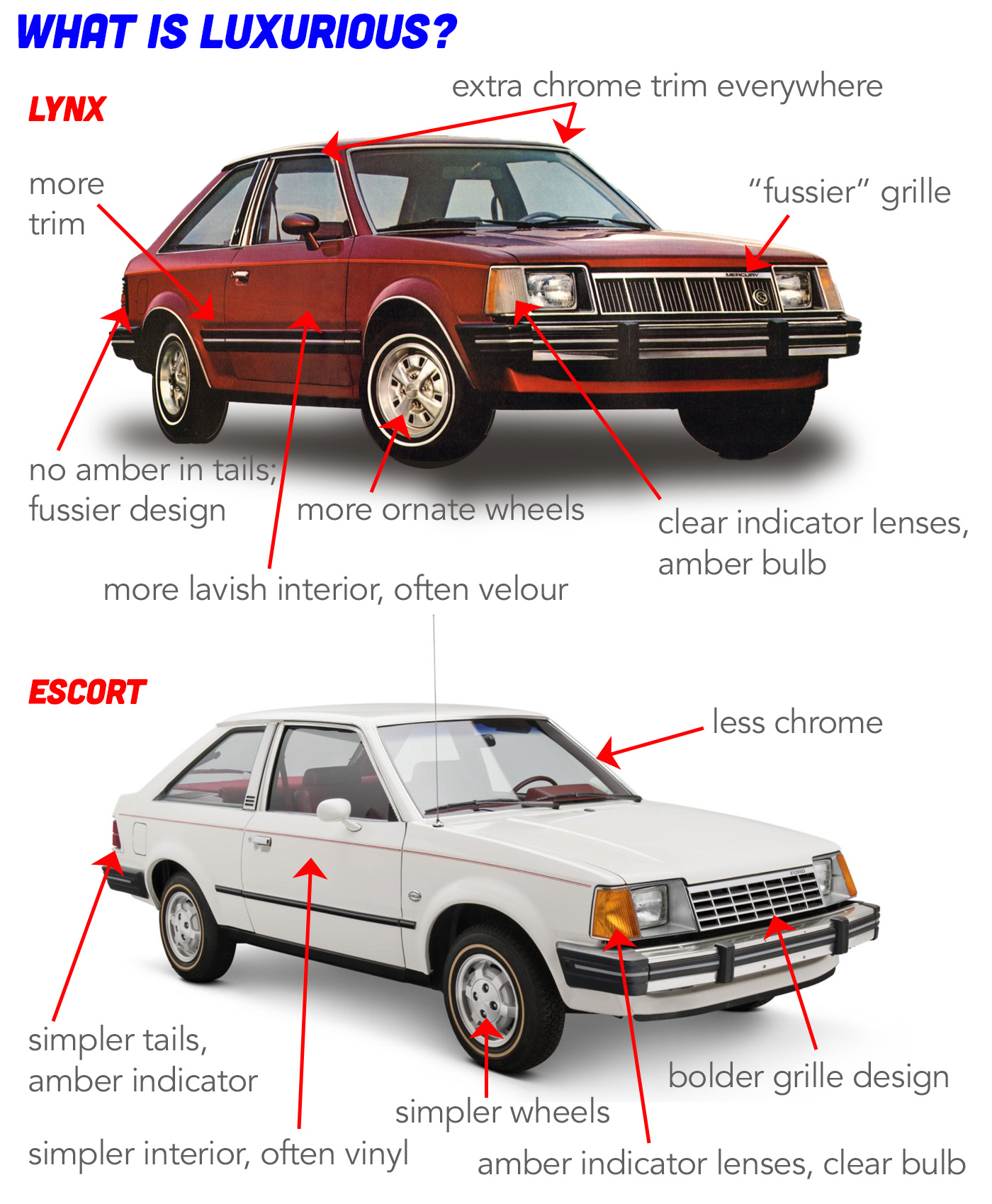
These tells represent some of the most basic signifiers of an “upmarket” car, because the Mercury Lynx was really barely changed from its Escort sibling. As a result, the changes we do see can be interpreted as being a sort of baseline for conveying the concept of a more premium or luxurious car.
They’re mostly aesthetic choices, and revolve around the concepts of increased ornamentation, usually in the form of chrome trim, and what I always think of as a sort of “finer” scale to the detailing. Smaller design elements, higher density of those elements, thinner lines, that sort of thing. The two grilles here are a good example of this, as are the taillights, with the Mercury version having a lot more linear detailing and no amber indicators.
Speaking of, amber as a color seems to have been deemed downmarket, and “premium” cars often have clear indicator lenses with amber bulbs inside as opposed to vivid amber lenses.
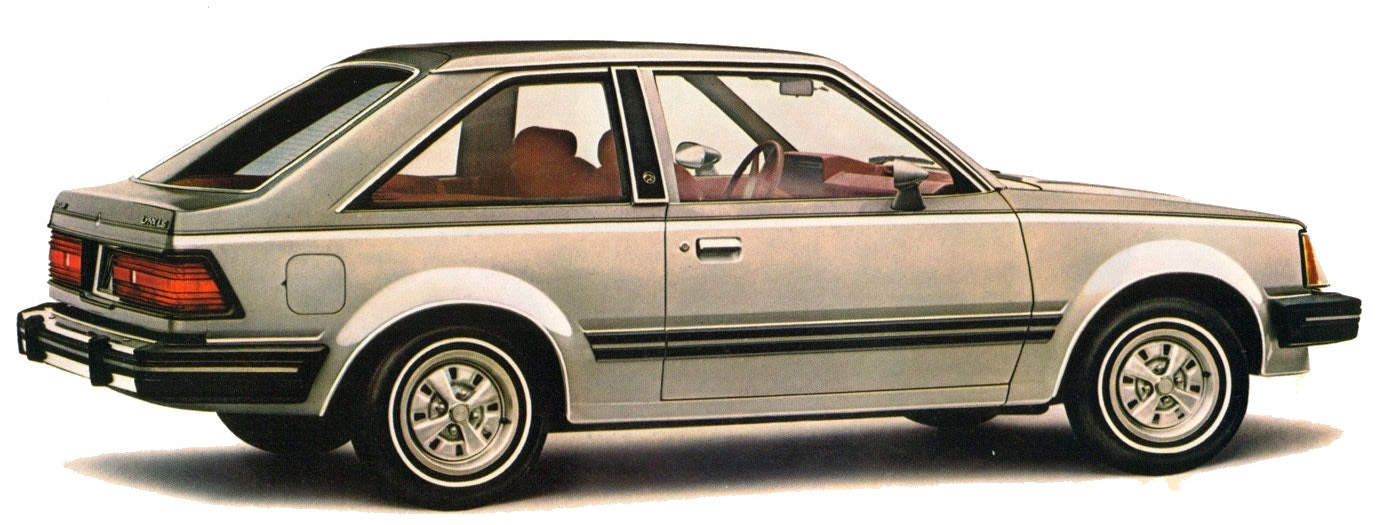
These are telling distinctions, I think, and I suspect there are many important cultural anthropology papers waiting to be written based on these concepts. You can cite me in the footnotes, if so.
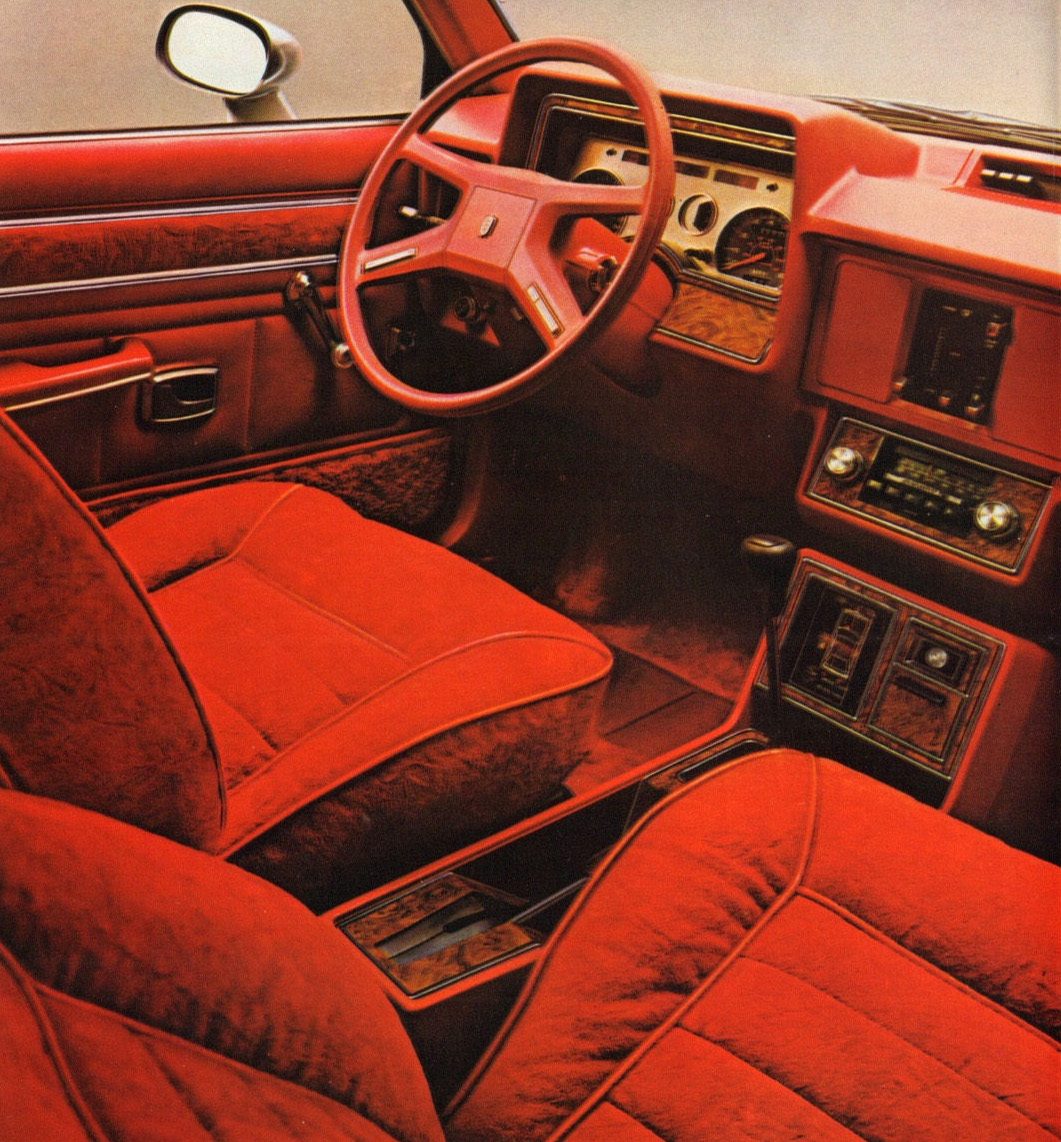
The interior, of course, is where the magic really happens, as you can see in this gloriously scarlet vision above. Upholstery is deliriously velour, rich and deep, and look at that fake wood! It looks like some sort of bird’s-eye maple? Definitely a more ornate grain than the usual fake wood trim, which is sourced from fake oak trees or even fake pine.
And look how much fake wood there is! Every surface has been slathered with it! I also like how in this car, which seems to lack air-conditioning (!) has two flat red panels replacing the air vents. It’s amazing to think of a time when an upmarket anything wouldn’t have included air conditioning.
Of course, the other part of making a car feel premium is how it’s being marketed, and there’s no quicker way to classy than taking a ride on the Vangelis train:
Also, look at those lynxes!
If the man who scored Blade Runner isn’t enough class for you, what about a giant white sphere set into what looks a lot like what would become the Windows XP desktop more than a decade and a half later?
I also love how much attention is given to the digital clock. The sporty version of the Lynx, the LTX, wasn’t really the equal of a VW Rabbit GTI or anything like that, but it was likely a little more fun than the base Lynxen:
I haven’t seen a Lynx in decades, but I hope if, somehow, you encounter one, you’ll take a moment to really consider the many cultural questions they evoke.
The post Everyone Calm Down Already We’re Going To Talk About The Mercury Lynx appeared first on The Autopian.