In 2026, Volkswagen will pull the plug on not just its greatest SUV, but one of the most underrated SUVs of all time. For nearly 24 years, the Volkswagen Touareg has been a serious towing and off-roading beast wrapped in friendly looks, and most people don’t even know it. Here’s why the world is going to get a lot duller next year.
The Volkswagen Touareg hasn’t been sold in the United States since 2017. Its replacement was and remains something entirely different. The Volkswagen Atlas can’t tow as much weight, doesn’t have nearly as interesting of a powertrain, and has none of the Touareg’s off-roading prowess. But it is a cash cow, as it’s a cheaper crossover with three rows of seats. Buyers have voted with their wallets, and the Atlas appears to be a better fit with American Volkswagen buyers, who care more about the school run than towing a sizable Airstream.
But that doesn’t mean that the Touareg was a bad SUV. I’d say it’s just the opposite. When the Touareg launched in 2002, it represented the apex of what Volkswagen could do with an SUV. It was a showcase of inventive engineering and proved that tough SUVs didn’t need to look like a Lego brick, handle like an outhouse, or accelerate like a glacier. The Touareg, along with its fancier and faster Porsche Cayenne sibling, were proper super SUVs and it’s amazing that they even happened in the first place.

An Unlikely Development
What’s fascinating is that the Touareg’s development didn’t initially start with Volkswagen. Back in the early 1990s, Porsche, which was not married to Volkswagen at the time, was edging close to collapse. In 1992, the company reported 240 million Deutschmark loss. Porsche attempted to stem the bleeding by optimizing production, reducing staffing, and developing the cheaper, more accessible Boxster.
However, it was found that while the Boxster was a brilliant entry point into Porsche, the Boxster and the 911 alone couldn’t save Porsche. Hans Riedel, the board member in charge of Porsche’s sales, ran an analysis. Riedel found that the leaner, more accessible Porsche had only bought itself time. Anton Hunger, the communications head for former Chairman of the Executive Board Wendelin Wiedeking, said, from Porsche: “It was apparent that the sports car had its limits on the market.” “The sales division had clearly demonstrated this using market research. In the long run, Porsche would have ended up on a downward slope again.”
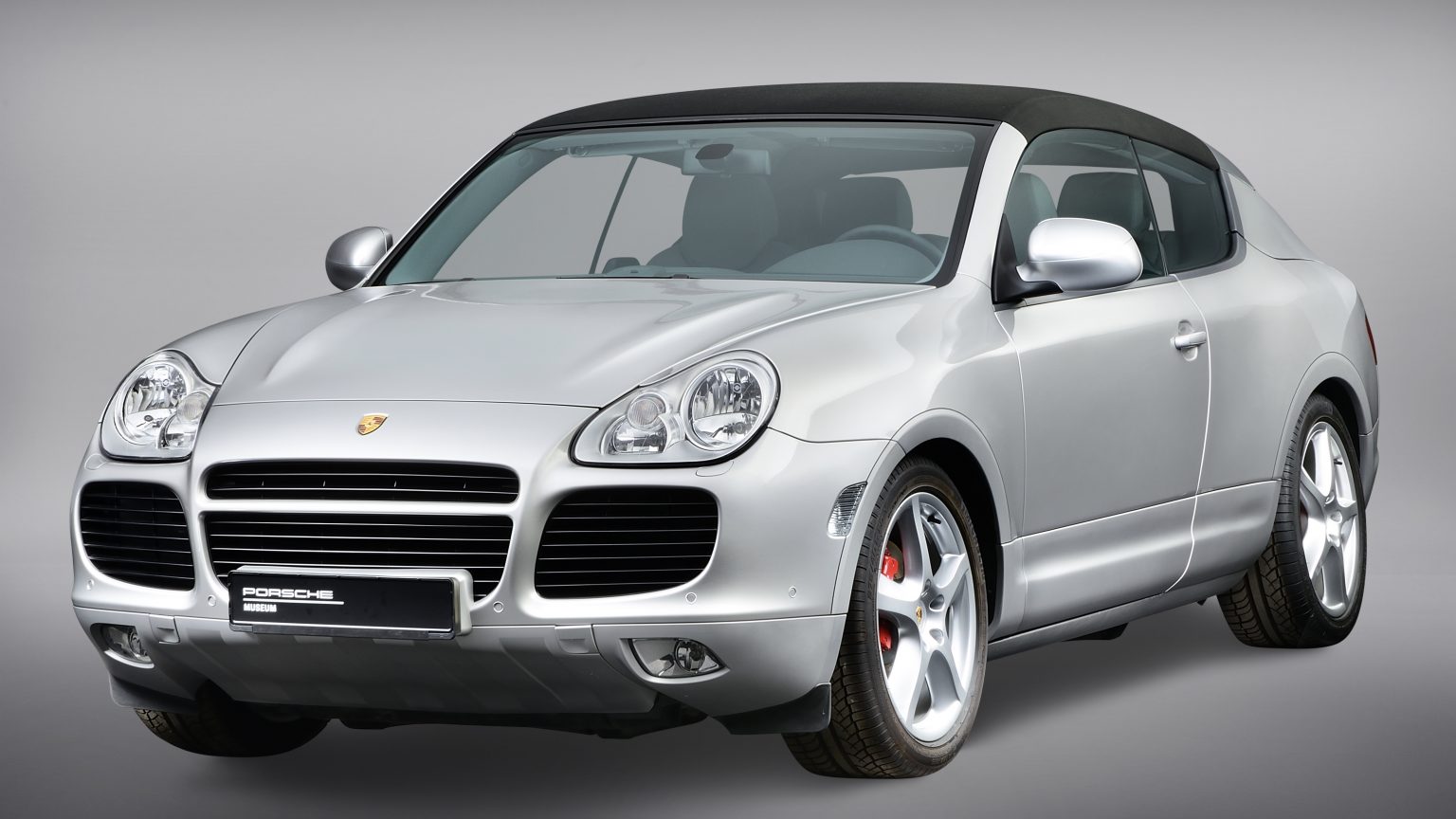
Porsche realized that, if there wasn’t any more juice to squeeze out of the sports car market, the proposed “third Porsche” would have to be something entirely different. By now, it was the mid-1990s, and Porsche considered five different vehicles that were not sports cars.
Naturally, Porsche looked to its largest market, America, for ideas on what to do. There were two major trends in America at the time, minivans and SUVs. Eventually, Porsche’s five concepts were narrowed down to two. Porsche’s research had shown that minivans were popular with families, so maybe it should have made a family car. The company was seriously considering making a seriously fast minivan, but the U.S. arm of Porsche wasn’t fond of that idea. That left Porsche with its answer. It was going to build an SUV. In hindsight, this was the right call. While the minivan was popular in the 1990s, the SUV was the next big thing.

Of course, a Porsche SUV couldn’t be just any ol’ SUV. Porsche couldn’t just build a German equivalent of a Ford Explorer and call it a day. It had to have that Porsche DNA, so it had to be fast, it had to handle well, and it had to be something someone would aspire to own. Unfortunately, Porsche wasn’t really in a position to make its own SUV entirely from scratch, so it looked for a partner. At first, this was Mercedes-Benz. Porsche thought it could take the body and tech of the M-Class and infuse it with Porsche engines, chassis and design. Mercedes-Benz liked the idea and rubber-stamped the partnership in summer 1996, only to bail before the year was out.
This left Porsche to shop around again, and this time, Porsche landed back at its old friends at Volkswagen. This time, crazed engineer Ferdinand Piëch was at the helm, and not only did he love the idea of a super Porsche SUV, but he figured Volkswagen could use its own version of it. Piëch was on a mission to move Volkwagen upmarket and flex the Group’s engineering muscles. During Piëch’s rule, Volkswagen would print out such awesome vehicles like the Phaeton, the New Beetle, the Passat W8, and ever faster variants of the Golf. A techy and surprisingly hardcore SUV was a perfect fit for a VW that was reinventing itself.
The Super SUV From Volkswagen

The Volkswagen Touareg and Porsche Cayenne were developed on their own specific platform that was co-developed between the two brands, and when they launched in 2002, they had almost entirely flipped the SUV script. I wrote about the awesome engineering behind the twins before:
Everything about these SUVs is alternative. Engineers liked how reliable body-on-frame SUVs were, but also liked the stiffness offered by a unibody platform, so they tried to make a chassis that was the best of both. As a result, the Cayenne and the Touareg utilize a unibody with an integral frame structure. Porsche and VW are so confident in the structure that they think you can lawn-dart your SUV into terrain without tweaking the unibody.
Porsche and Volkswagen then loaded their respective SUVs with real off-roading equipment. Both SUVs can get on their tippy toes thanks to air suspension, have nearly Jeep-like off-roading angles, and ford around 23 inches of water. Both were designed to conquer slopes as steep as 45 degrees and ride along banks as sharp as 35 degrees.
All of this was supported by a permanent four-wheel-drive system with an automatic center differential. You could also lock the power split to be equal between the axles or crawl your way around with the low range. The Germans were also super serious about limiting slippage, employing a combination of limited-slip differentials, off-road traction control, and ABS to limit unwanted wheelspin. It even had an early form of downhill assist. Volkswagen and Porsche then sold you a package that added underbody protection, sliders, and even a locking rear differential.

Touaregs have proven themselves to be shockingly good when the going gets tough. Sure, these SUVs look all soft-like — I’ve heard some people confuse the Touareg with the Tiguan before — but they are anything but. Touaregs have been taken through Moab, skipped across the desert in Johnson Valley, and even participated in Dakar. Actually, I’m underselling that last one. Volkswagen’s racing version of the Touareg won three times in the Dakar rally, beginning in 2009. Volkswagen also drove a second-generation model from Tierra del Fuego in Argentina to Alaska in under 12 days.
The awesome part is that this off-roading prowess wasn’t locked to the most expensive version. I used to own a 2005 Volkswagen Touareg VR6, a base model. Yet, mine still had the permanent four-wheel-drive, the center locking differential, limited-slip differentials, and the excellent off-road traction control.
My old Touareg was so good off-road that when I took it to Holly Oaks, a Michigan off-road park often used as a proving ground by Detroit automakers, it managed to climb a steep, technical hill while on regular street tires and on a worn out lowered suspension. It even impressed Jeep man David Tracy.
It Got Cooler
But remember how I called the Touareg and the Cayenne super SUVs? Being good off-road was only a third of the magic. From my previous coverage:
Both SUVs also serve different roles. The Porsche Cayenne was the spiciest of the two. Here in America, a Porsche Cayenne Turbo S had a 4.8-liter twin-turbo V8 making 550 HP. That thing boogied to 60 mph in 4.4 seconds, or nearly a second faster than my Saturn Sky Red Line.

On the other hand, the Touareg better embraced the burly off-roader role. Its engines never got as spicy as the Porsche’s, but Volkswagen did give us something special with the 5.0-liter V10 TDI, sold beginning in 2004 and bowing out after 2008. This engine is a stupid, corrupting piece of engineering. It’s gear-driven and has two of everything. That’s two turbos, two air filters, two sets of piping, and even two ECUs. This beast sees itself as more or less two five-cylinder diesel engines, not one mean V10. It even sounds ridiculous, combining the best hits of a Cummins soundtrack with that of a Lamborghini.
The fascinating thing about this engine is that all of this complexity did not result in a huge power number on paper. This V10 diesel makes 310 HP and 553 lb-ft torque, or similar numbers to what a 6.0-liter Ford Power Stroke made. However, the V10 TDI’s power hits like a sledgehammer. The power comes on early and hard, putting your head into the headrest and keeping it there until you’re well above 100 mph.

Versions of the Touareg outside of America could have such options as Volkswagen’s iconic 444 HP W12 engine and even a six-speed manual transmission.
The final piece of the puzzle is the fact that these were small-ish SUVs (by today’s standards) that towed 7,716 pounds. These things were luxurious, fast, and towed a lot of weight for their size. I think both the Cayenne and the Touareg are both deserving of being called “super.”

It didn’t stop there, either, as the platform that underpinned the “Treg” (as enthusiasts sometimes call them) would become the basis for the Audi Q7. Later, the Touareg and Cayenne would share roots with the Bentley Bentayga and the Lamborghini Urus, all extremely important vehicles in the VAG portfolio. It’s hard to deny just how important the Touareg was.
Volkswagen didn’t exactly let the Touareg wither, either. Later iterations of the Touareg got more refined interiors and updated technology. Touaregs would get tech that we take for granted today like adaptive cruise control, collision avoidance systems, adaptive suspension, and multiple cameras. While the V10 diesel didn’t stick around, a V6 diesel did, and it pumped out great power and fuel economy without as many headaches as the V10.
The Touareg Wasn’t A Hot Seller
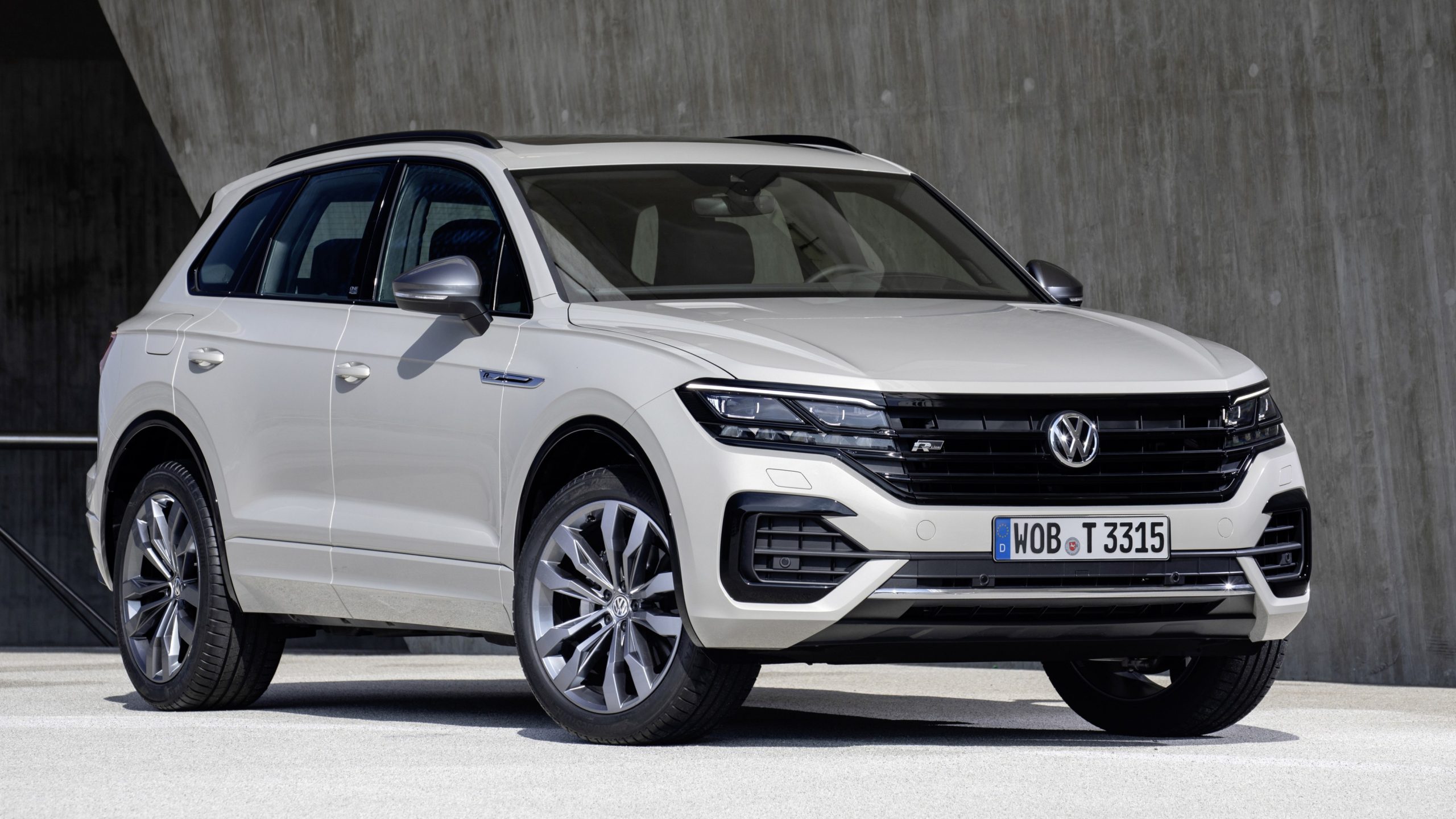
The Touareg never lit sales charts on fire. Depending on who you ask, between 2003 and 2017, the Touareg sold under 130,000 units in the United States. At the time of publishing, Volkswagen has managed to move only 1.2 million Touaregs worldwide since its launch. But at the same time, this sort of made sense. The Touareg was a halo car for Volkswagen. The base VR6 model had a starting price of $35,515 in 2004 ($62,127 in 2025) whereas a V10 TDI was $58,415 ($102,187 in 2025) before you piled on any options. The Touareg was always expensive.
Despite the slow sales, the Touareg managed to capture some superfans. Admittedly, I am one of them. Back in 2022, I wrote about how people were spending over sticker to purchase some of the last Volkswagen Touareg TDIs in America after they were fixed post-Dieselgate.

It’s even easier to see why Volkswagen killed the Touareg in America when you compare final prices. In 2017, the cheapest Touareg was $50,405. In 2018, the cheaper Atlas, which gave up 2,700 pounds of towing capacity and off-road capability, but gained an extra row of seats, was $31,745. Honestly, for Volkswagen of America, this was probably a no-brainer. The Atlas has sold like hotcakes, too, with sales exceeding 70,000 units in most years.
I also need to note that Volkswagen also softened the Touareg dramatically over the years. In 2018, the Touareg entered its third generation. It kept the high tow rating, but shrugged off most of its off-road gear to be more of a luxury on-road SUV. So, in a way, keeping the Touareg would have probably been pretty redundant, anyway.
One Last Ride

If you’re one of our international readers, you still have a chance to score a Touareg new. The Touareg will be bowing out in 2026 with a Final Edition that will be launched in March. This will set you back more or less the equivalent of $87,500, or more than $30,000 more than Americans would pay for an Atlas SEL Premium R-Line. Apparently, the Final Edition, which Volkswagen insists is in all caps, is just a cosmetic package that puts “Final Edition” badges on the exterior and interior. That’s it.
Volkswagen’s announcement is pretty sad. The Touareg has gone from being a seriously underrated beast of an SUV, perhaps one of the most underrated in history, to being dead. I’ve said it before, but it seems like Volkswagen is on a path to killing fun. Volkswagen used to take chances and used to take big swings. Not all of these swings hit, and as a serial Volkswagen owner I can tell you that reliability was sometimes a joke, but at least Volkswagen wasn’t afraid of having a ton of fun.
Nowadays, it seems like Volkswagen just wants to sell you big, Americanized crossovers, or a van that looks spectacular, but had middling range and an unattractive price. At least the Golf R is still kicking! Still, I keep on imagining the day when Volkswagen gets crazy again and does wild engineering projects just to show that it could. Maybe, one day we’ll see that again.
Top graphic image: Volkswagen
The post Volkswagen Is Killing The Touareg After 24 Years. Here’s Why It Was One Of History’s Most Underrated SUVs appeared first on The Autopian.