Pontiac was always a bit like the middle or second-to-youngest sibling in the family who had to work extra hard to get attention, and struggle with whatever the bigger brothers or sisters had to hand down. Big-volume player Chevy had the new toys, and Pontiac needed to make do in any way they could. Often, they improved upon them, but even when they did, their efforts were in vain and quickly forgotten.
A little while back, we explored how Pontiac’s small car efforts were always whatever the other GM family members could spare. The Daewoo-made Opel Kadett-based LeMans was an unfortunate example of this, but they actually had one inherited from Chevy that was arguably just as bad, if not worse.
To add insult to injury, Chevrolet got a fancy twin-cam gold-trimmed version of this unfortunate small car called the Cosworth Vega. Pontiac? They received an embarrassment of pasted-on plastic and vinyl cosplaying as “sporty” called the Pontiac Astre “Li’l Wid Track.” There’s a whole lot of pain to unpack here.
You Mean We Couldn’t Trust John DeLorean?
We begin with a direct quote from Chevrolet’s general manager, one John Z. DeLorean, at the time of the 1971 Vega’s launch.
“There’s nothing that comes within a mile of the Vega for performance and handling. This car will outhandle almost any sports car built in Europe. By virtue of a number of different things, the Vega is going to be built at a quality level never before attained in manufacturing in this country, and probably in the world.”

Almost ten years later, that same person had this to say about the car:
“The Vega was a disaster from the word go … My repugnance and distaste for selling and marketing a product I did not believe in had reached its peak at Chevrolet with the Vega … After eight miles (at Milford Proving Ground), the front of the (prototype) Vega broke off. The front end of the car seperated from the rest of the vehicle. It must have set a record for the shortest time for a new car to fall apart.”
You might have reason to not trust someone known later for very questionable business deals, but you can’t deny that DeLorean delivered the goods during his time at Pontiac. He knew how to make successful products like the GTO, OHC six, and Grand Prix, and he was also well aware that being forced by his superiors to create a revolutionary subcompact Chevrolet from scratch in just two years was a recipe for catastrophe. Indeed, it was. I’ll give you the highlights, or lowlights as it were.
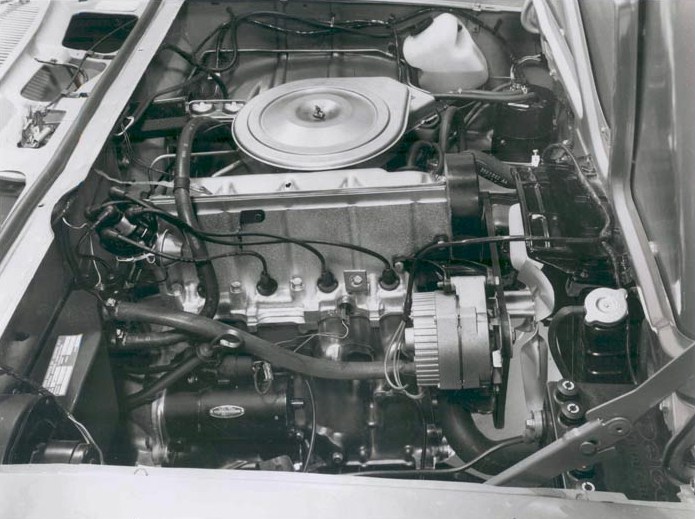
First, Delorean’s boss (Ed Cole) pushed for the Vega to employ an aluminum-block OHC four engine without cylinder liners, and honestly thought the block’s heat dissipation would allow it to run without a radiator. Seriously. After much objection, he was overruled, but the radiator that it did get was too small. If you didn’t make sure the coolant level was topped off, the engine overheated and either scored the linerless cylinder bores or blew a head gasket. And if you did escape scored bores and the head gasket held together, vibration could rattle the carburetor right off the top of the motor.
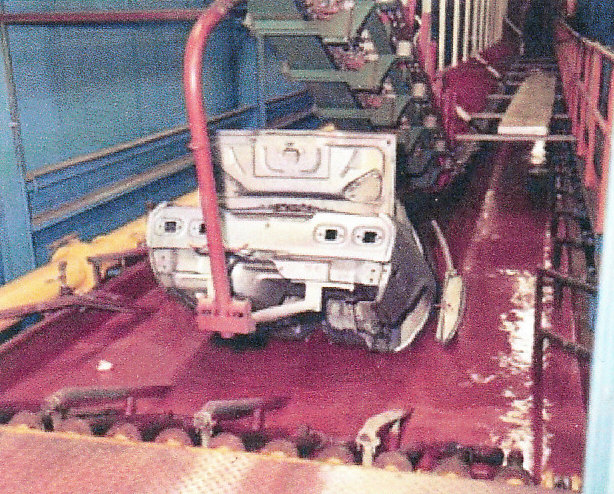
It gets worse. You’d think dunking a unibody into a tank of rustproofing would be a perfect way to ward off corrosion, as every nook and cranny would get covered in the magic red stuff when the body was fully submerged – except nobody noticed the body trapped air in places as it sank, leaving expanses of untreated bare metal exposed to water and salt slush kicked up into the wheel wells, which were left unlined in order to save a few bucks.
Add in a strike-plagued workforce (plenty of other under-engineered bits and lapses in quality I could go on about) and you can understand why the Vega could rightfully be called one of the worst cars in the history of the western world.
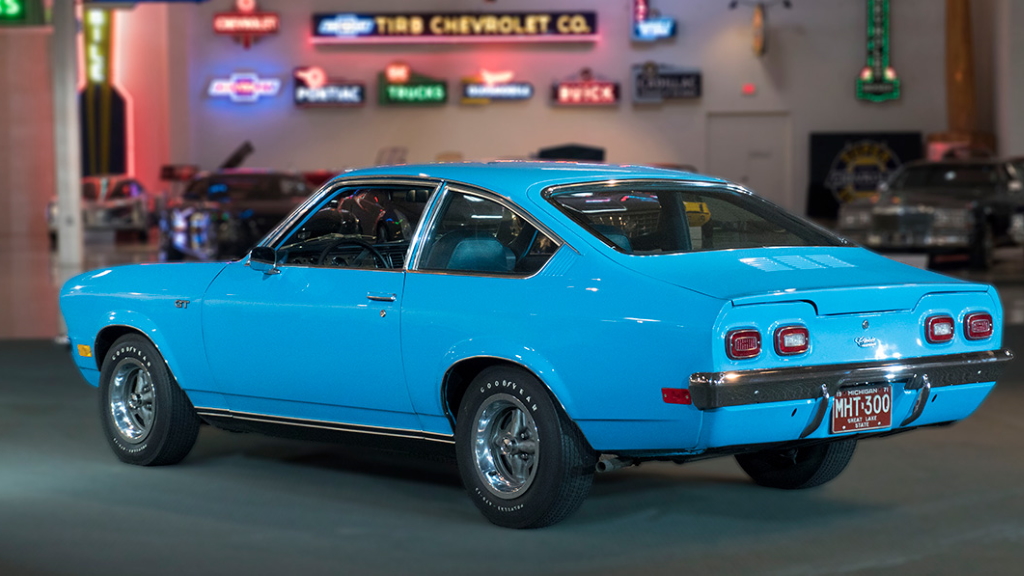
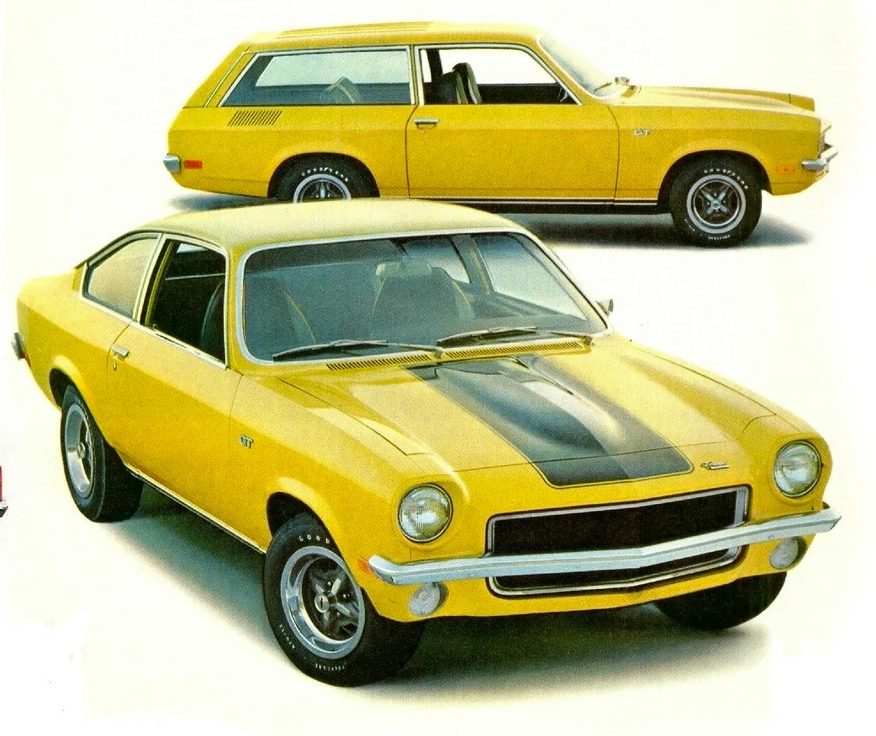
And yet, the Vega actually sold quite well. Why did people buy this thing? Well, if you drove one that had been meticulously assembled (like the press cars probably were), you’d have been impressed by the handling and even the performance of the higher-powered 90-horsepower, double-barrel-carb version of that ill-fated motor. And just look at the thing; sure, if you’re Of A Certain Age just the sight of a Vega triggers the scent of antifreeze and rust, but if you can distance yourself from those preconceptions and judge it on a purely aesthetic basis, it’s a very attractive car. That early coupe looks like a miniature Camaro, or Camaro shooting brake in the case of the “Kammback” wagon. GM supposedly used a Fiat 124 coupe for inspiration; they nailed the look but unfortunately captured the dubious durability of that Italian car as well.

Initially, Chevy kept the Vega to itself in the United States – but that doesn’t mean Pontiac didn’t sell their own version of the Vega elsewhere.
We Want Junk, Too
Based on all the talk of tariffs and the North American Free Trade Agreement, you’re probably aware that you can’t simply drive truckloads full of American cars over the border and sell them. That’s why, over the years, there were some strangely-branded versions of cars common to the US market for sales in the Great White North from Mercury pickup trucks to Acadians and Beaumonts. One of those cars was the Canadian-built 1973 Pontiac Astra, a subcompact that looked a whole lot like a Vega with a split front grille because that’s what it was: there were really no other significant changes.
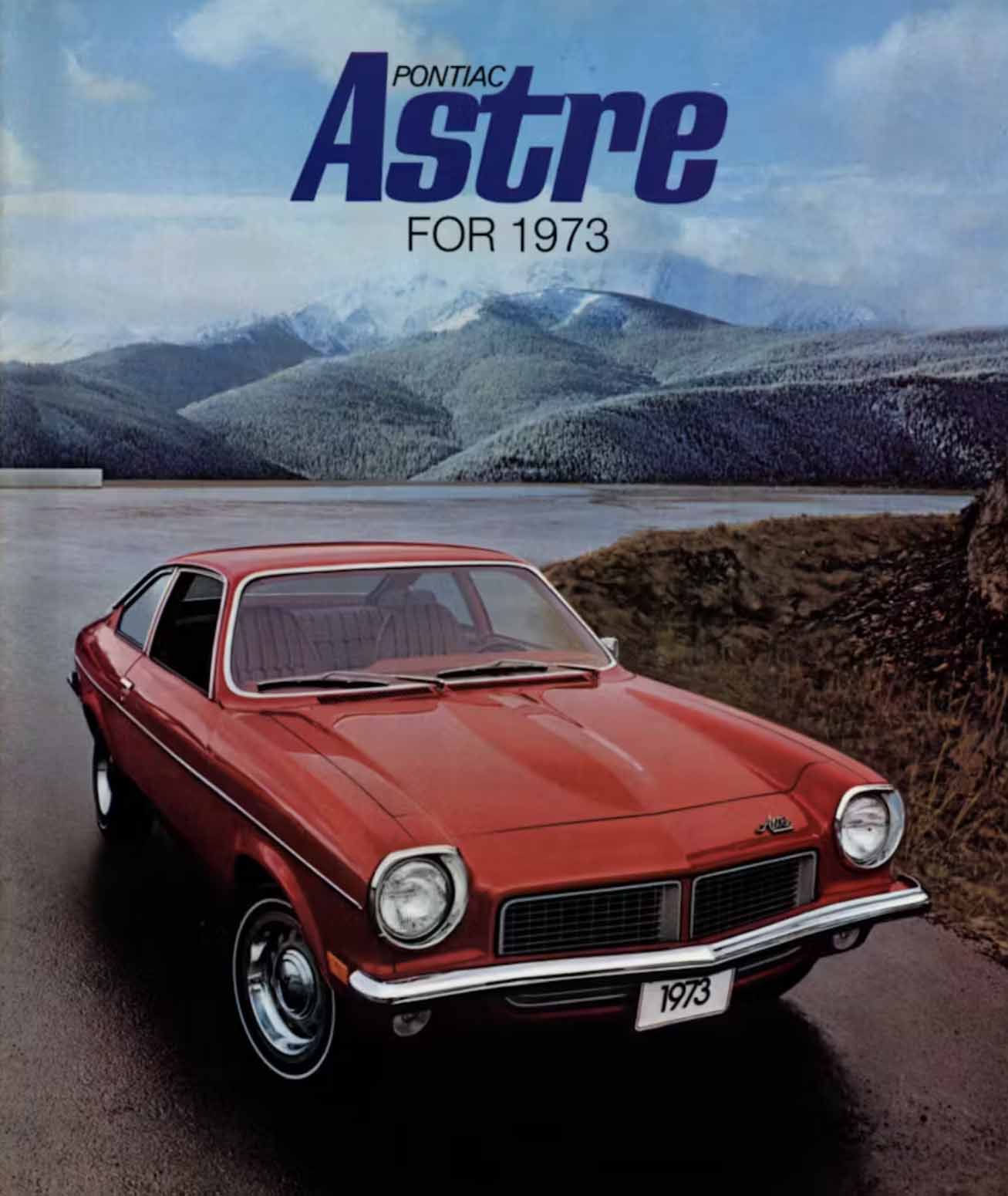
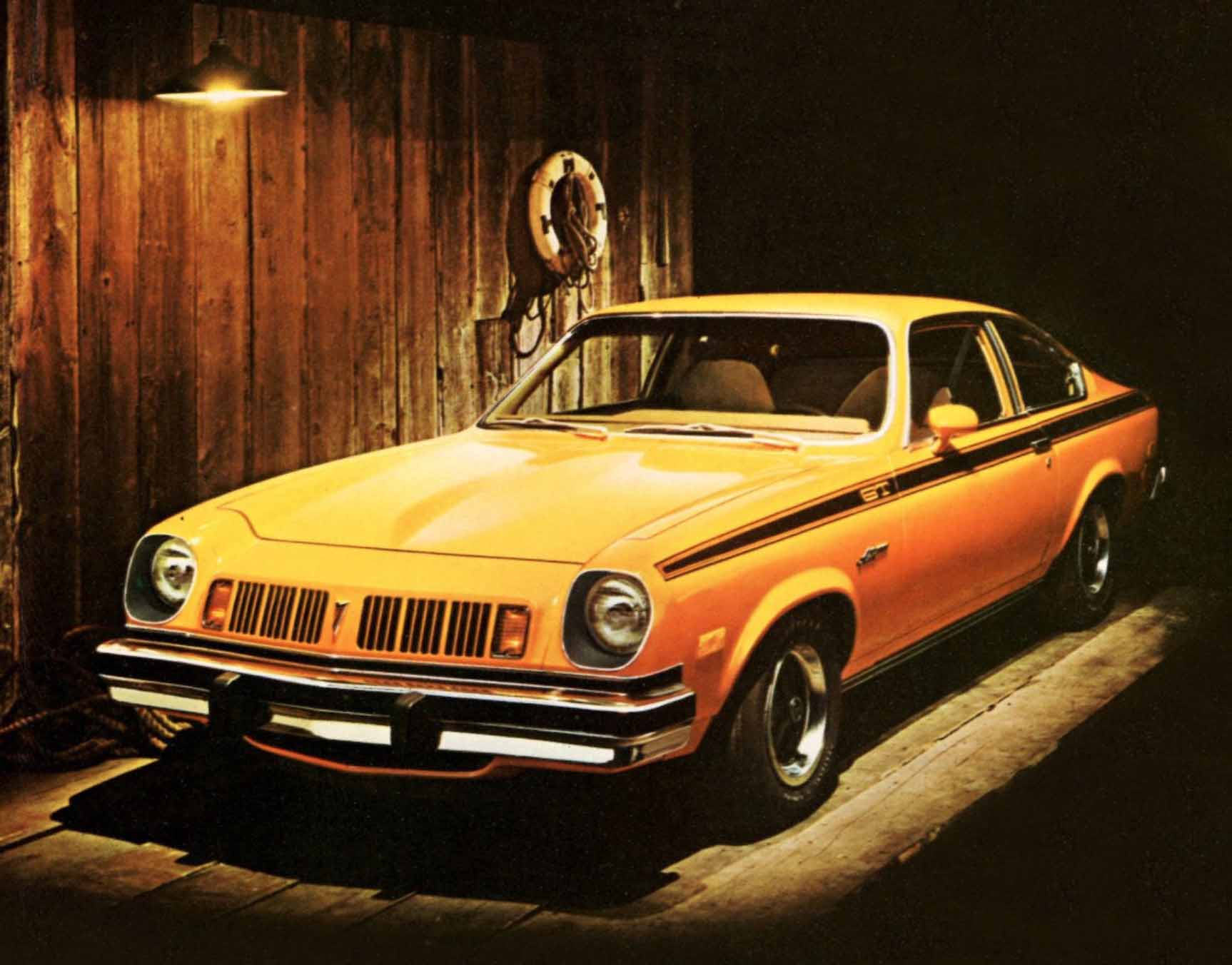
The Astra remained a Canada-only offering in 1974 when the big five-mile-per-hour bumpers became the law in the US. Pontiac’s version gained a new, unique nose and also cool slot taillights similar to those on a ’68 Firebird. I still like the earlier models best, but the restyle and incorporation of the ram bars was better than it could have been (and it still resembled the concurrent Camaro).
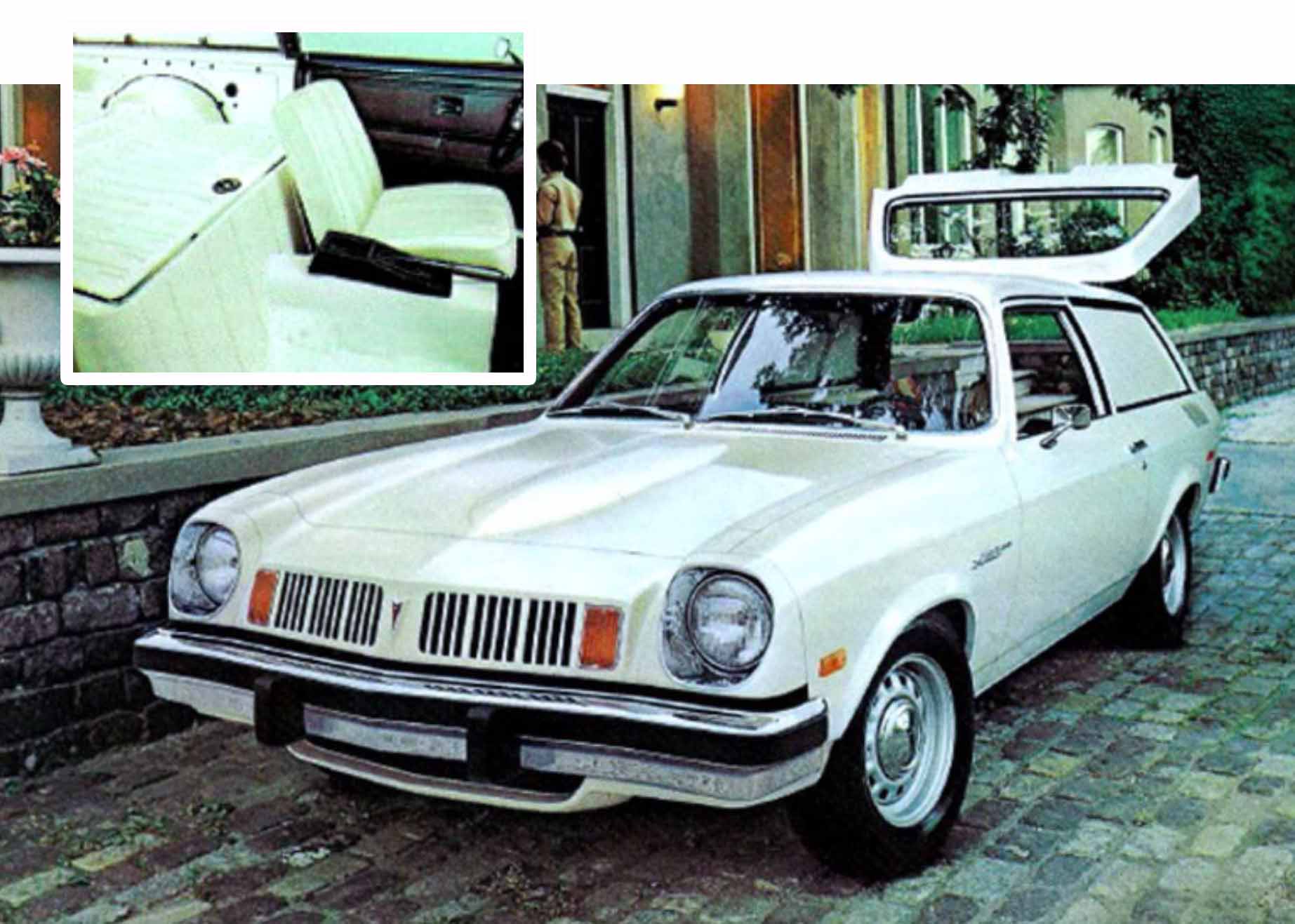
You could get essentially any of the Vega’s body styles as an Astre, including the odd “panel van” with a big storage locker where the rear seat used to be, and the passenger seat offered as an option.
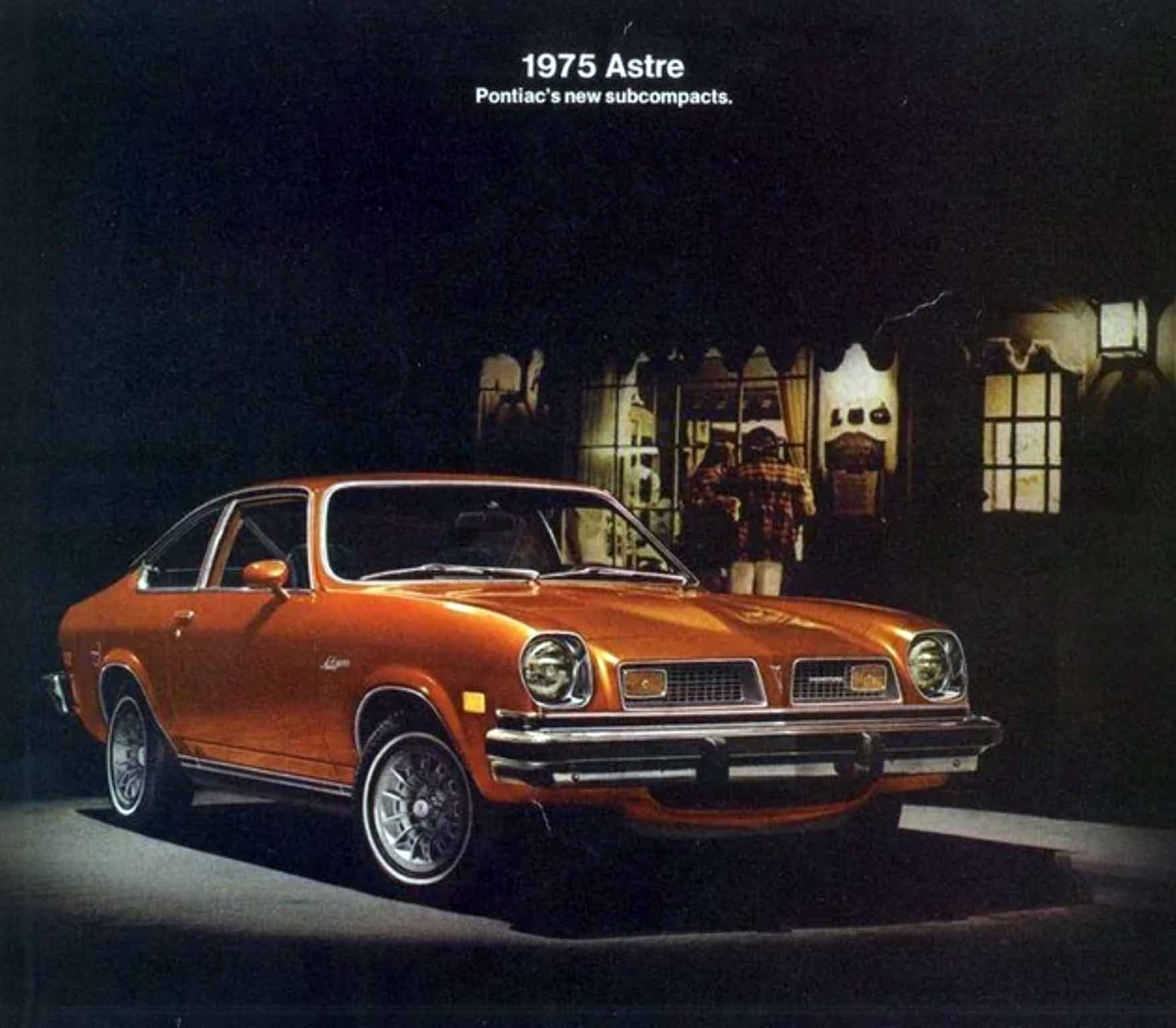
The Astre wouldn’t stay Canada-only. By 1975, every car dealership in America wanted a subcompact in a post-gas-crisis economy, and Pontiac was tired of our syrup-swilling friends getting something they didn’t have. General Motors finally capitulated and launched the US version of the Pontiac-rebadged Vega, now with something like “300 improvements” (like adding a coolant recovery tank and fender liners) to fix things that should have never been wrong in the first place. Remember, in the seventies, the latter part of the road testing and durability process at GM was done by you, the customer. Regardless, the later Vegas were vastly improved over the first versions.
The US market still got the split-grille nose that looked good and Firebird-like, as if it would be driven by a Jim Rockford if he ran into harder times than he was already used to.

Coming to the party four years late, the Pontiac guys felt they needed something to let the world know that you didn’t have to go down the road to a Chevy dealer to purchase garbage; Pontiac had its own crap car now! To promote this econocar, Pontiac decided to talk to the man who worked magic for the brand a decade before: Jim Wangers.
High Performance, Uh, Decal Adhesive?
You might not know the name Jim Wangers, but you sure know what a Pontiac GTO is. That’s because Wangers was working at Pontiac’s ad agency in the sixties and made sure that the Tempest muscle car received more exposure than any Mopar ever did. In the seventies, Wangers ran a firm called Motortown, a Detroit-based company that modified cars from Big Three car makers into rather cheesy mock-muscle cars like the Mustang Cobra II (Farrah Fawcett’s car in Charlie’s Angels) or the even worse Dodge Aspen R/T. Dropping off an Astre on Wanger’s doorstep, Pontiac knew that if anyone could make this disguised Vega into something special, he was the man.
What Wangers came up with called upon Pontiac’s old ad campaign from the sixties. Back then, Pontiac was known for “wide track” cars because, for a time, Pontiac pushed the wheels out as far as possible and the cars really did have a wider track. By 1975, that advantage had largely evaporated, but Wangers knew how to sell sand in the desert; the “Li’l Wide Track” was born. That’s right, he didn’t even spell out the word “little.”
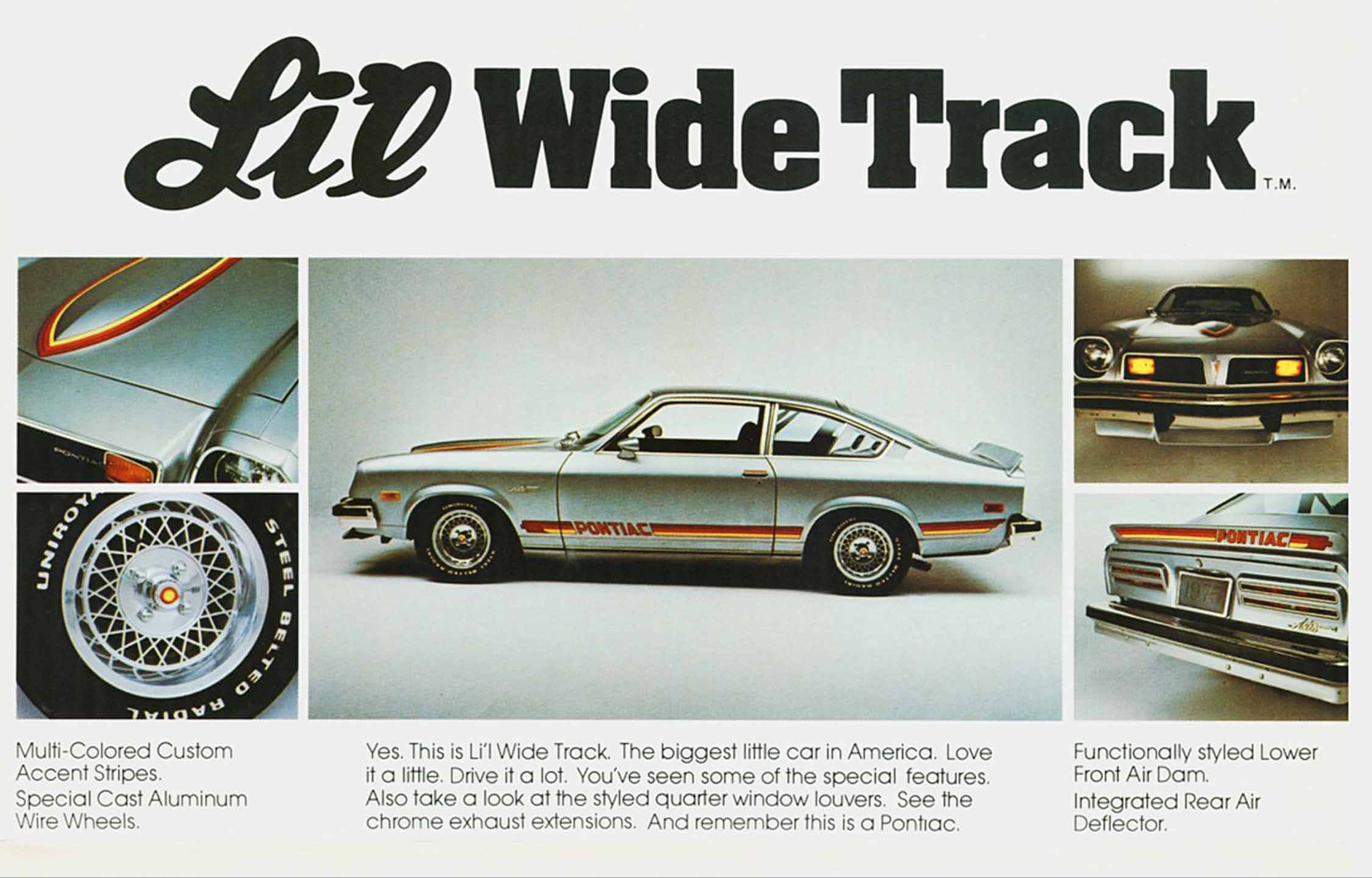
It might just be the photography above, but I’m willing to bet that the silver paint on the door not matching the other panels was done at the factory.
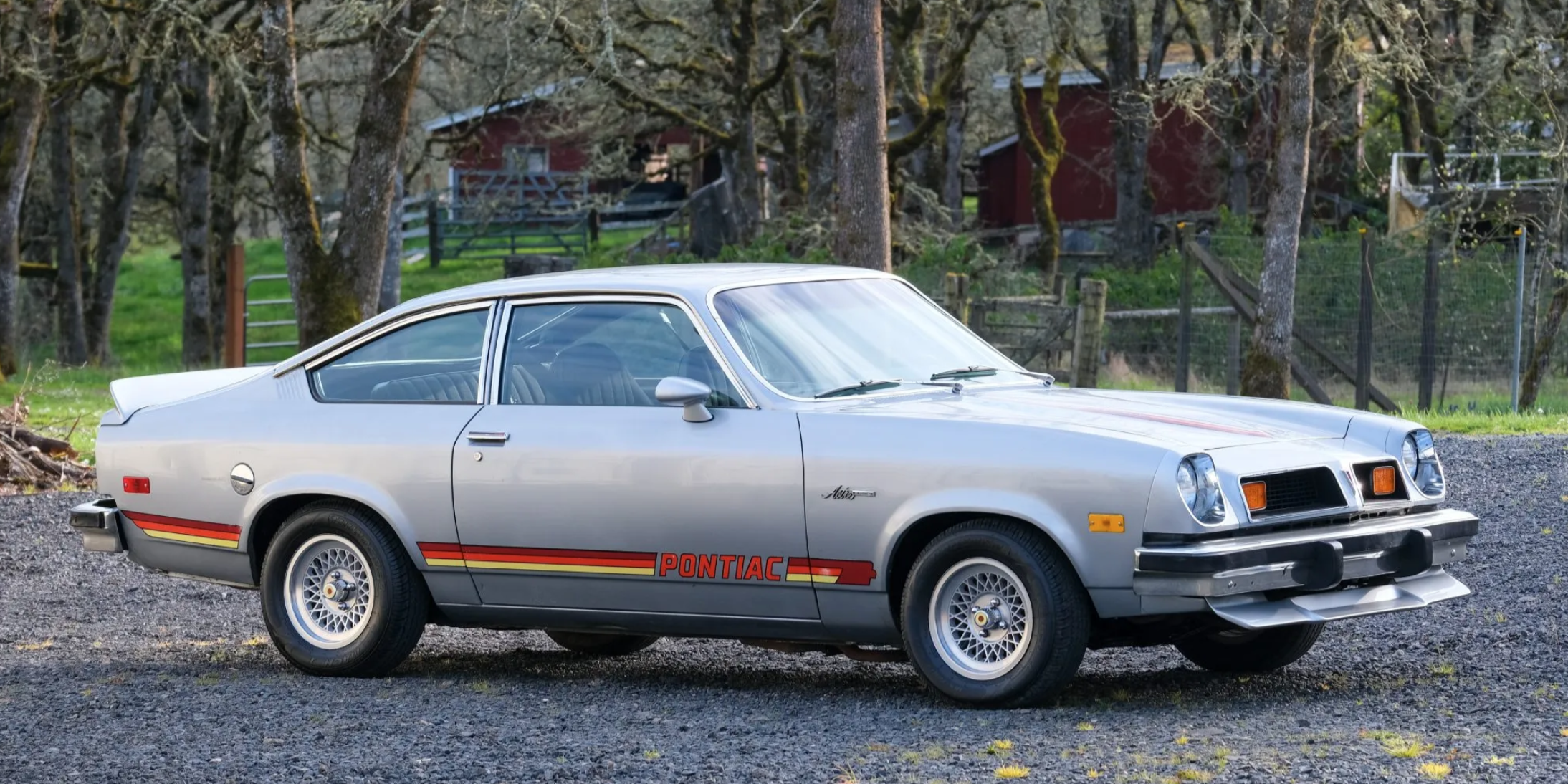
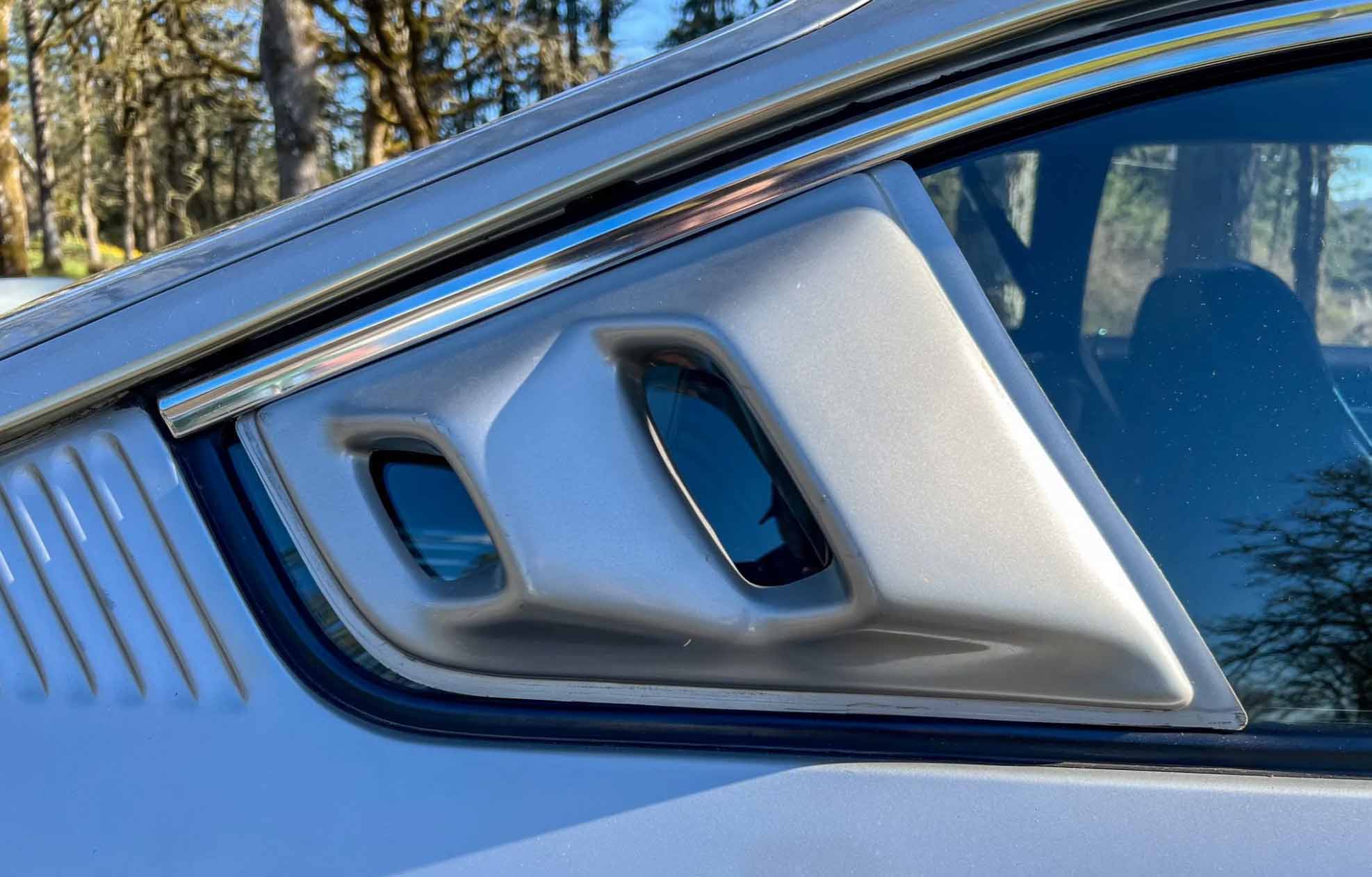
The Li’l Wide Track was everything you’d expect from a heart-of-the-malaise-era “performance” package: a front air dam, a spoiler in back, whopping 13-inch alloy wheels, rear window louvers, a chrome exhaust tip, tons of brightly colored decals, and no performance improvements whatsoever to the two-barrel 140 cu. in. 87 horsepower four, and no handling enhancements, either. Absolutely nothing.
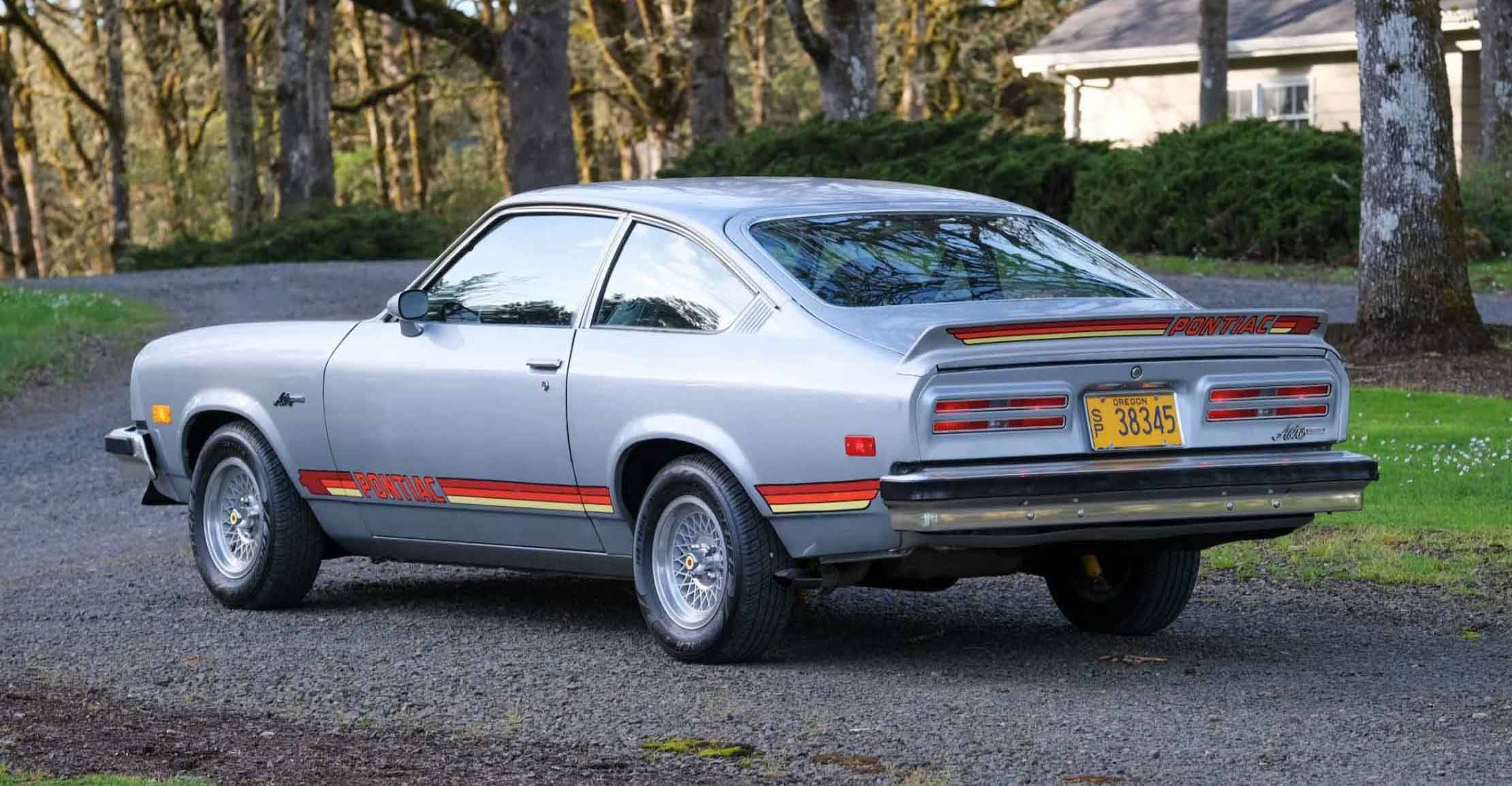
Note that the example above doesn’t have the side window louvers that Motortown added to every Li’l Wide Track, since one apparently fell off; not surprising, as I’m sure they were just adhesive-mounted onto the glass fifty years ago.
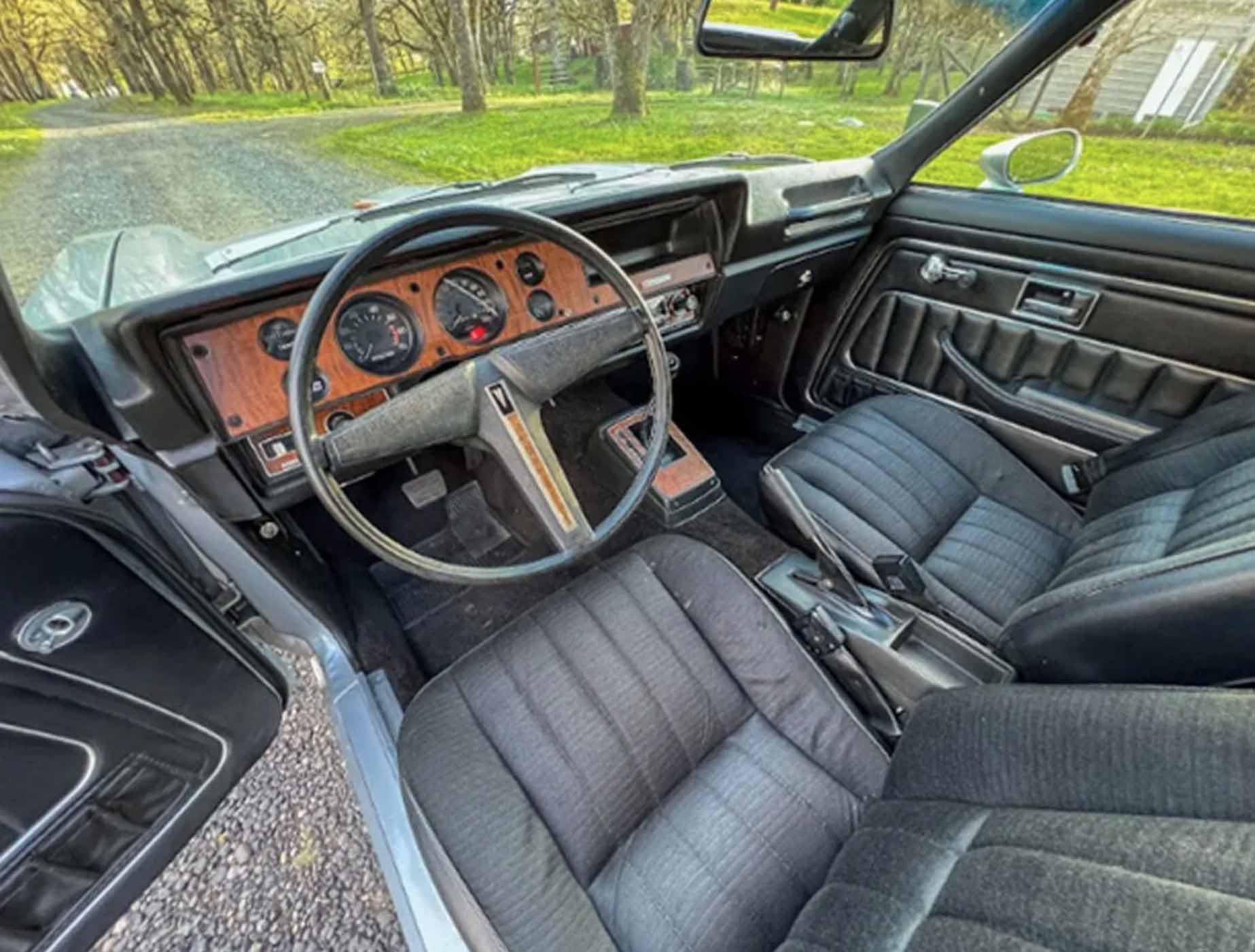
As with most subcompacts of the time, you pretty much sat on the floor of this thing. At least Pontiac offered rather comprehensive instrumentation as an option.
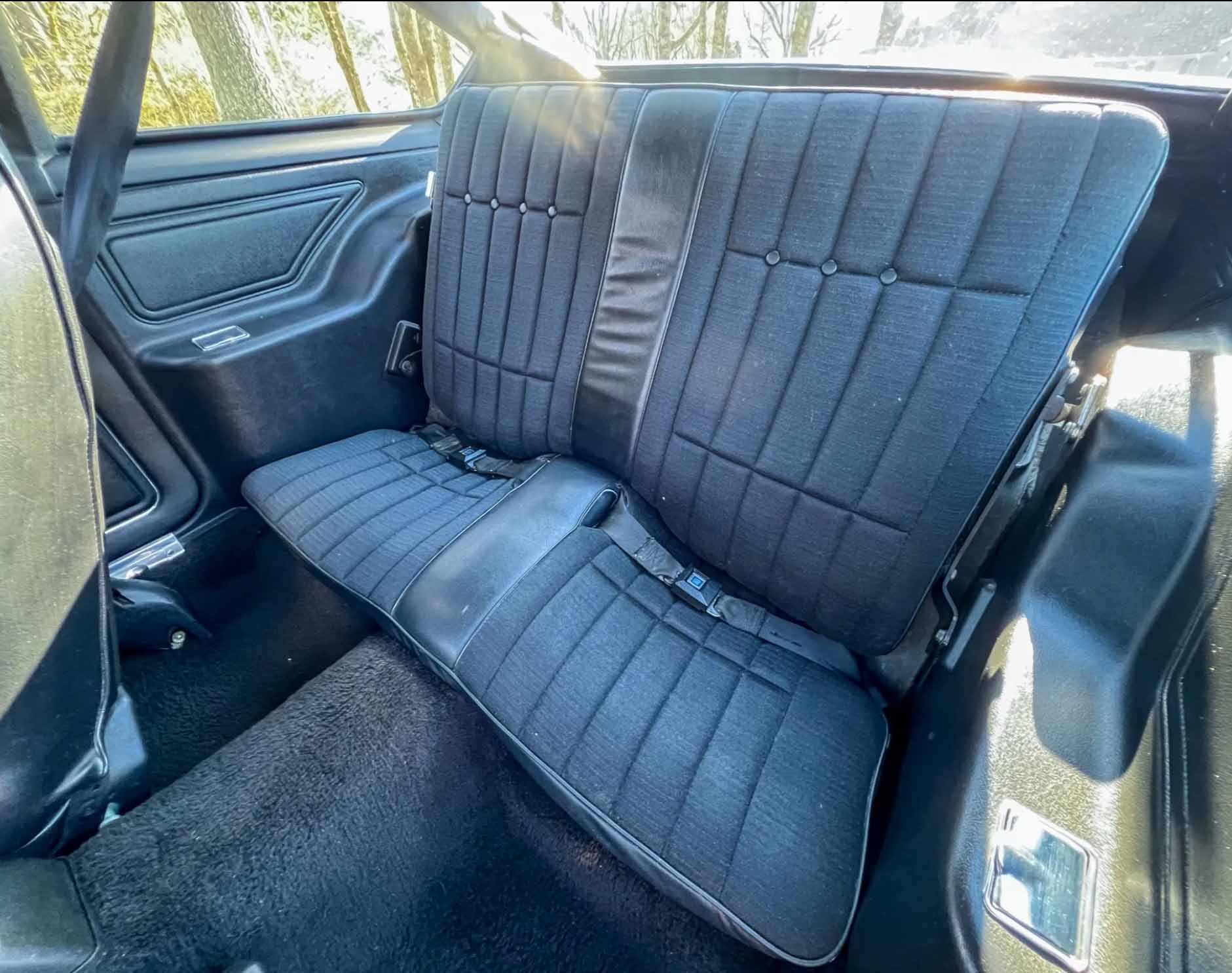
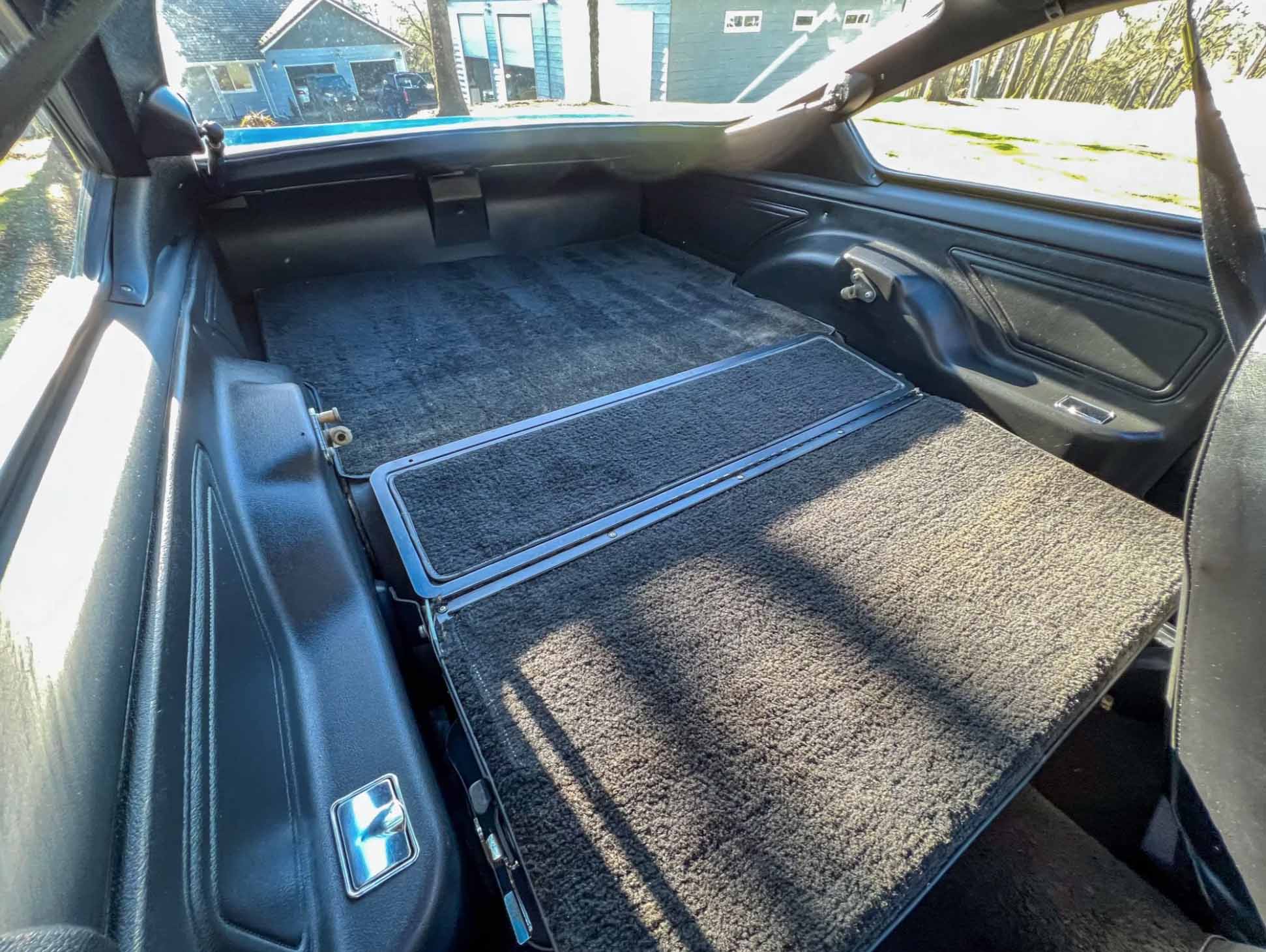
The rear seat is also the expected butt-pit variety, but it could fold down in the hatchback models like this to create a pretty spacious area:
Here’s a video of that Bring A Trailer car from a little while back. It’s just so strange for me to see an actual running and driving Vega with the original motor, which by 1975 was called the “Durabilt 140” and featured a new cylinder-head design, improved cooling, and a five-year, 60,000-mile engine warranty to attempt to lure back leery customers.
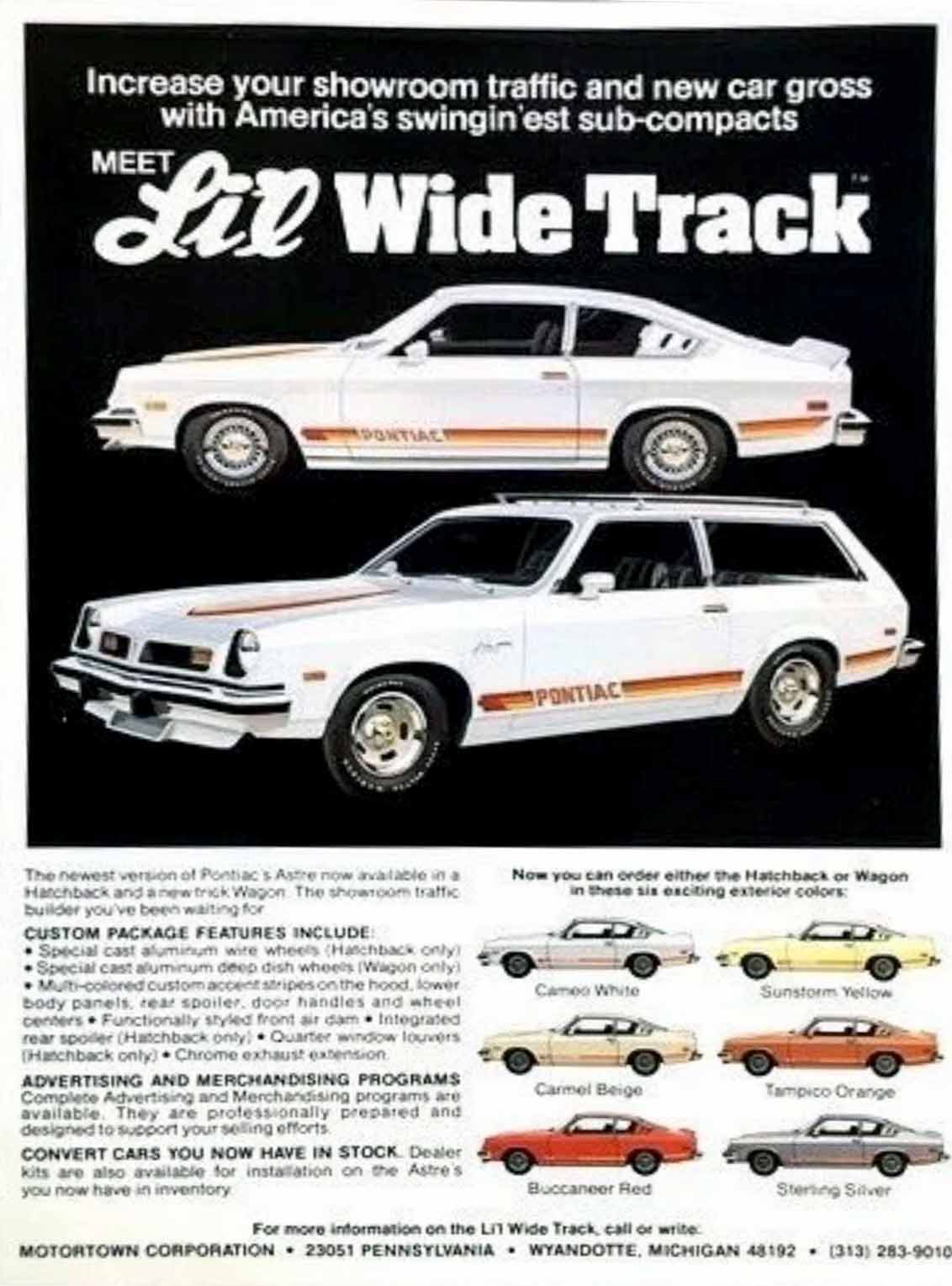
It’s estimated 3,000 Li’l Wide Track Astres were produced; all of the production units were silver and were offered – I swear that I’m not making this up – with an automatic transmission only. Supposedly, the components from the package were later offered as a dealer-installed kit so you could have chosen different colors or even added the bits onto a stickshift car, or even a station wagon like the one shown in the ad below (Wangers claimed that he never produced a customer Kammback).
Ultimately, even if this special edition did bring attention to Pontiac’s Vega clone, the sales of the Astre never touched the Vega. The Li’l Wide Track only lasted for the debut and didn’t make it until 1977 for the Astre’s finally year when it ditched its notorious motor for the more reliable Iron Duke and was finally more or less as crappy but not crappier than the average American subcompact (the chassis and even the wagon body lived on as the Pontiac Sunbird through the 1980 model year).
How Can You Hate Something With Li’l In The Name?
Given a long enough timeline, anything will appreciate in value, but for the Astre that might take until the next century. Nice-condition non-Cosworth Vegas still tend to shift for under $10,000. The Li’l Wide Track in the pictures above is about the only one I could find that was on the market in recent memory; it’s been listed at one site for around $15,000, but it stalled at around five thousand less than that at Bring A Trailer. This Pontiac is about all the proof you need that rarity doesn’t equal value. But that doesn’t mean I don’t want it.

You see, in my search for the worst Pontiac ever, it was difficult trying to skirt under the very low bar set by that Korean-made-Opel LeMans; one would assume that you couldn’t get much lower than an Astre Li’l Wide Track. Still, as I look at this thing, I can’t help but smile. Marie Kondo says that if something gives you joy, you should keep it, even though I highly doubt she was referring to a cosmetically customized and rebadged Chevy Vega.
It’s a great-looking little coupe, and the silly graphic enhancements turn it into something that people will walk past half a dozen McLaren who-cares-what-model-it-is at Cars & Coffee to snap a shot of. I promise you, you won’t see another one.
Pontiac Points: 42/ 100
Verdict: If you don’t take it seriously, certainly worth a few grins. Plus, the name says that at least the people making it were in on the joke.
The post GM’s Most Notorious Small Car Ever Cursed Pontiac As The Li’l Wide Track appeared first on The Autopian.