Buying a turn-of-the-millennium Porsche is a gateway to a driving experience so sublime, you’re able to laugh off jokes about IMS bearings with a sort of elegantly condescending chuckle. However, as these cars age, some of them have developed a problem potentially more expensive than replacing the IMS bearing, and it has to do with headlamps. Specifically, if you use them too much, you might be facing a repair bill north of $4,000, depending on how you want to fix things.
The so-called “fried egg” headlights on the 996-generation 911 and 986 Boxster were Porsche’s first modern single-piece composite headlamp assemblies. Those lights you see on 993s? They’re actually a two-piece design with a separate lens and inner assembly. It was a necessary evolution, but as with many things, getting them right on the first try was tricky. To produce the required beam pattern for highway use, Porsche put a plastic Fresnel lens right in front of the low-beam bulb. However, halogen bulbs get hot. Really, really hot. Especially if some muppet’s retrofitted high-wattage bulbs, but standard bulbs get hot too. It’s not a huge problem when plastics sit relatively far away from the bulb, but when they sit up close, anyone who left a plastic toy near a central heating register as a child will know what eventually happens.
Yep, it’s possible to have refried eggs, because the inner lenses in these headlights can discolor and even burn through over time. It’s especially bad in cars with daytime running lights because the low beams are always lit up, but it still happens all over the place.
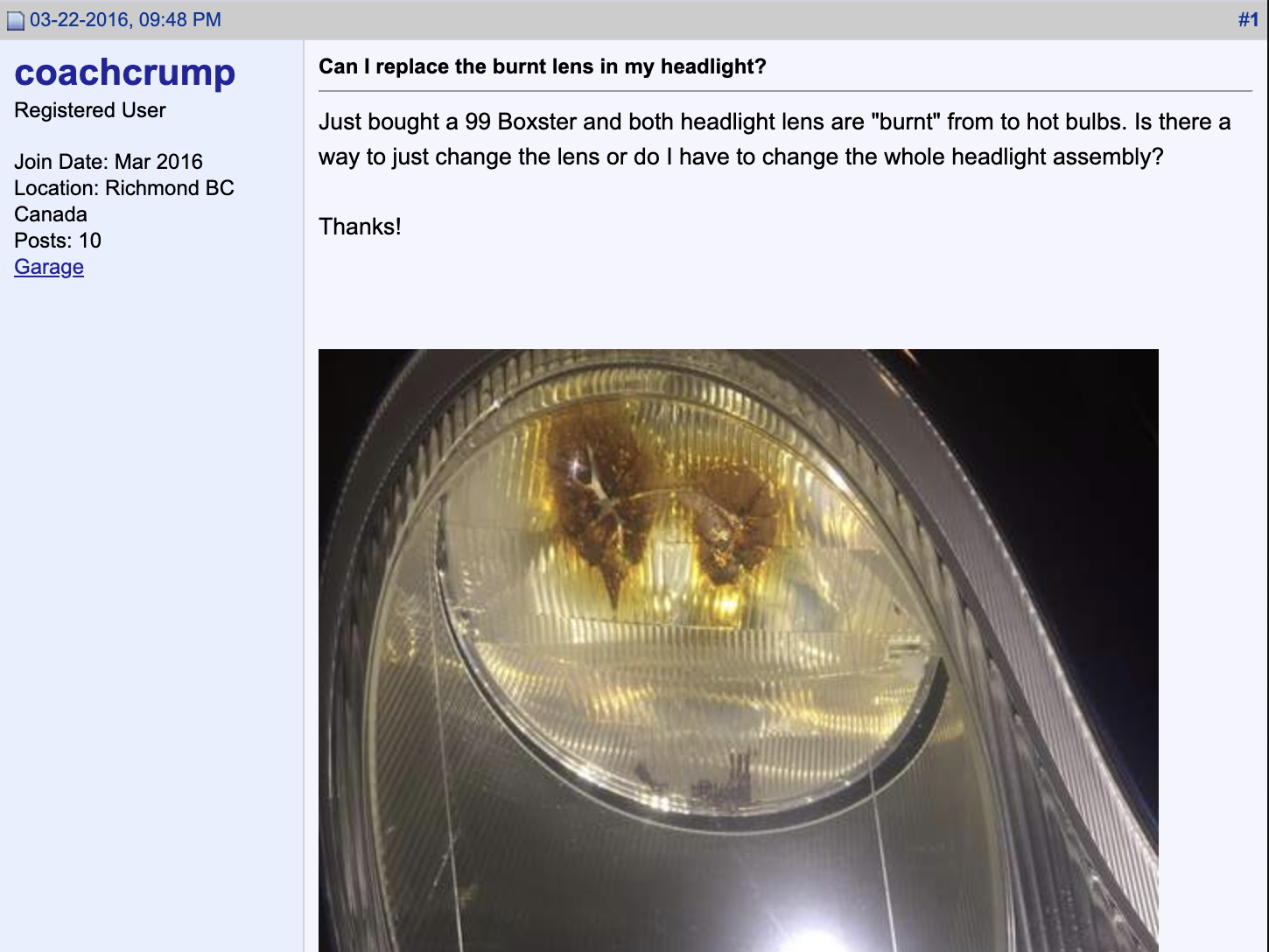
Here’s a post from a user on 986Forum demonstrating exactly how bad inner headlight lens burn-in can get. Beyond some serious browning, there are cracks and holes in this Boxster’s inner headlight lens.
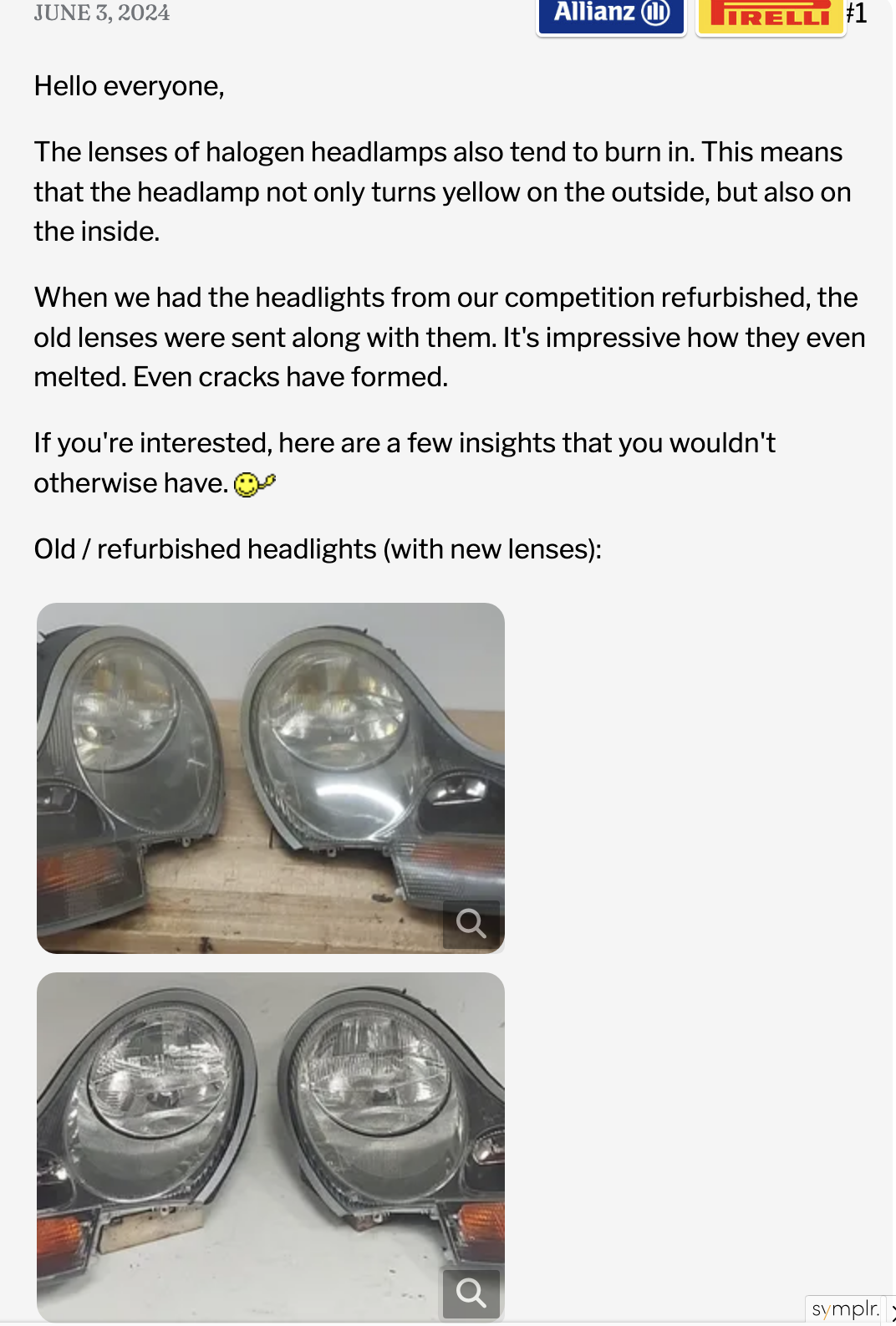
Things aren’t much better across the pond, despite using different inner headlight lenses. This post from European Porsche forum pff.de shows burned inner lenses on fried egg headlights, along with the results of a refurbishment process. More on that later.
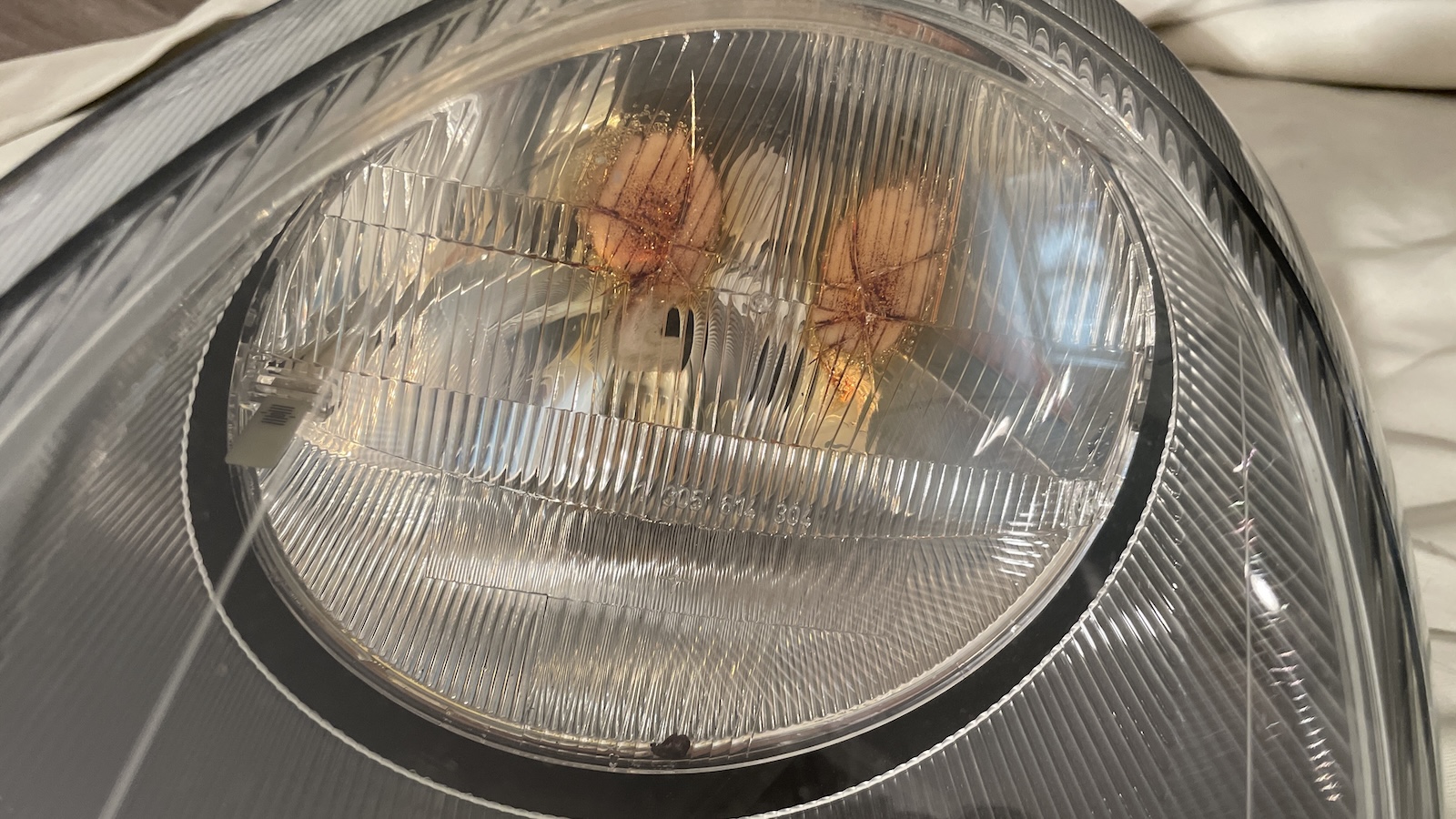
Believe it or not, I’ve experienced the pains of this phenomenon firsthand. You’re looking at one of the actual original headlights from my 986 Boxster after only about 68,000 miles of headlight use. Needless to say, these got swapped out for good units immediately, which ended up running a pretty penny.
See, there are effectively three ways to fix this issue. If you have a big enough oven, a delicate touch, and plenty of patience, you can order a set of replacement U.S.-spec inner lenses from Partworks for €232.70, or about $279 at current conversion rates. Unfortunately, not only is baking headlight apart a pain, mine were resealed at one point with something that wasn’t butyl.
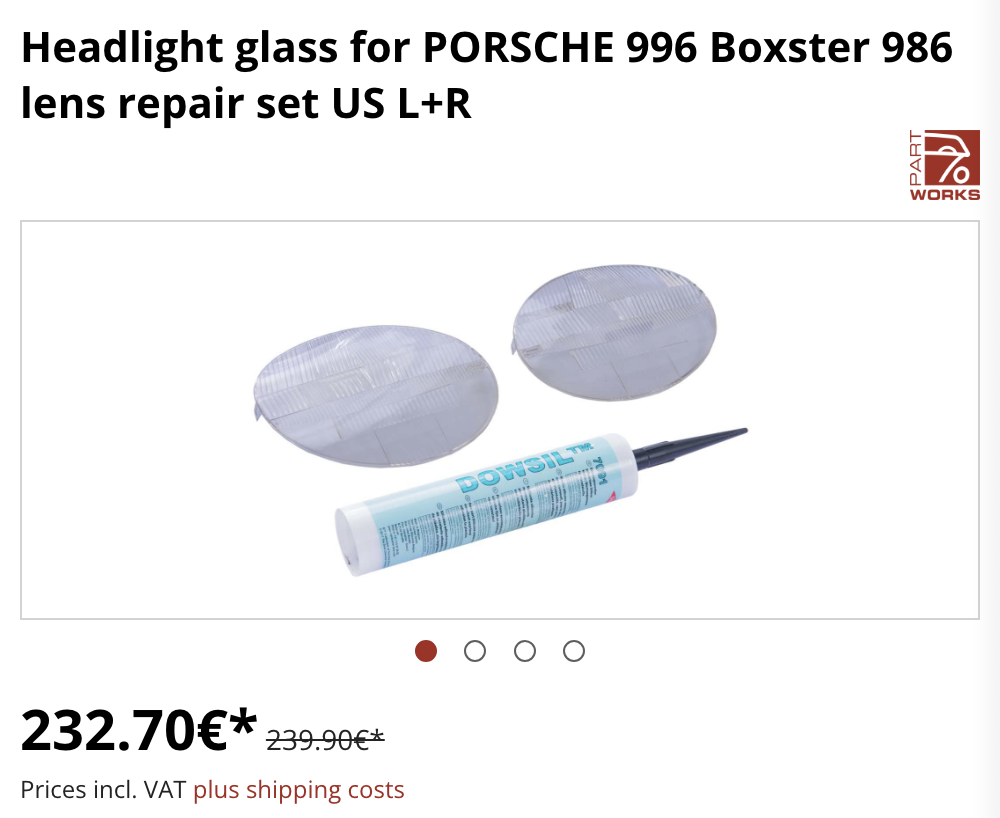
Want to go the easy route? New halogen headlights retail for $2,238.99 each and are currently backordered. That means if both your inner lenses are blown through, you’d be looking at a bill of nearly $4,500 to replace both assemblies. That just isn’t economical when you consider what these cars go for, which leads to the third solution.

Why not go used? I managed to get two complete headlight assemblies with clear inner lenses from eBay Motors a couple of years ago for less than $2,000 Canadian. Again, not inexpensive, but certainly preferable to a proper heart attack bill. Still, if you use standard halogen bulbs, the inner lenses will only burn through again with time, right?
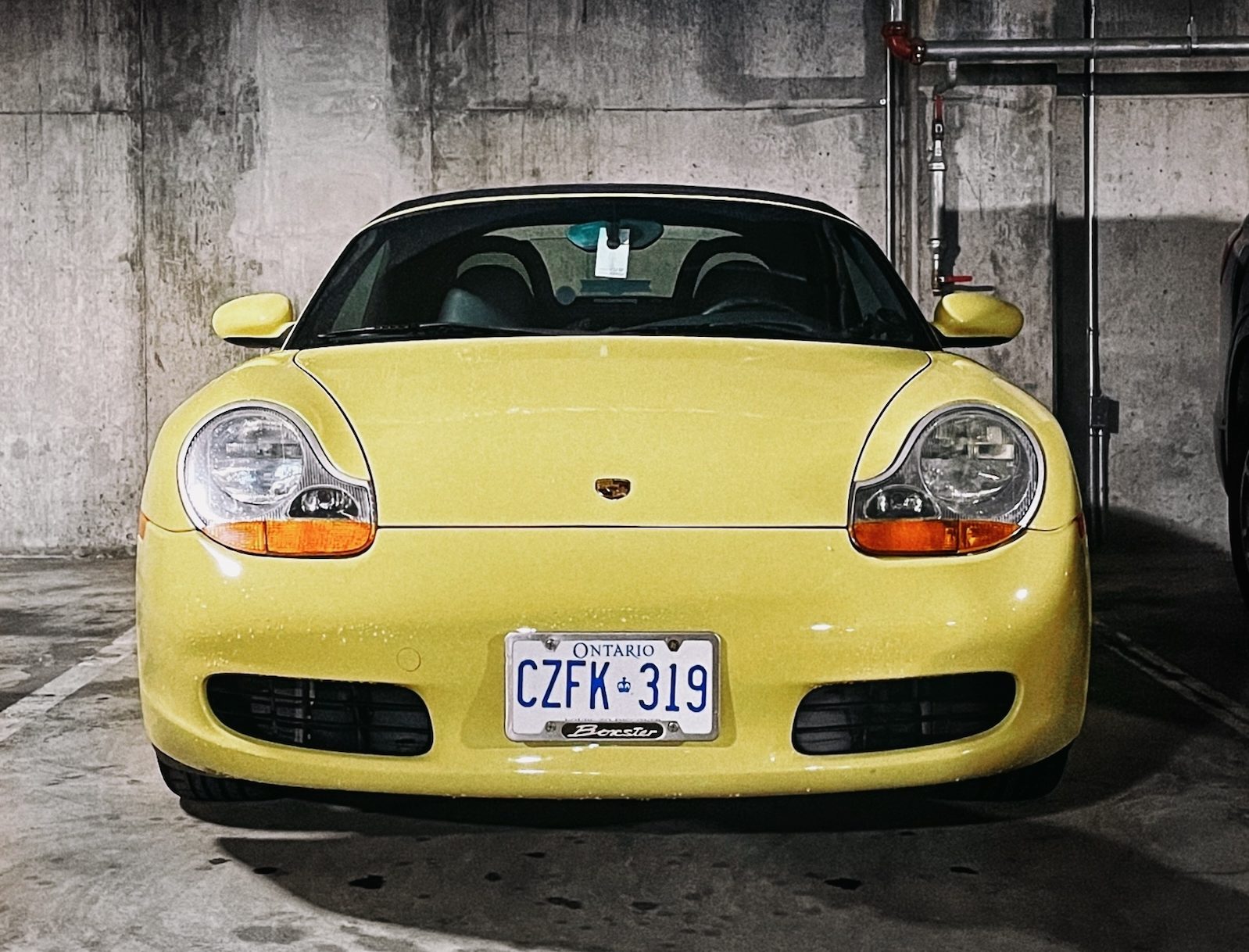
There are really three ways to prevent this, only two of which are available in America. The first is to upgrade to the Xenon Litronic headlights for a couple of bands. The light output’s great compared to the halogens, and the projector layout means no inner lens burnout, but good luck sourcing them with the amber indicators. The second is to retrofit your own bi-xenon or bi-LED projectors into the halogen housings. It’s a fiddly project, but one that yields great results. However, I went with the third option.

While LED bulbs in reflector housings historically haven’t been great, some have evolved enough to be TÜV-approved, meaning they’re certified and safe enough for the autobahn. In approved housings, these bulbs have nice, tight optics that won’t blind oncoming motorists and run cool enough on the front side to prevent lens burn. Porsche even sells its own set in Canada that’s approved for road use in fried egg housings, but they aren’t available in America yet.
It took a few bob, but I’ve long since fixed my refried eggs and hopefully prevented the issue from happening again in the future. Still, what a bizarre problem. Halogen composite headlights aren’t supposed to eat themselves, but it just sort of happens with these assemblies. Oh well, at least cooler bulbs finally exist now, and I doubt they’d be put out into the world if the lawyers were worried.
Top graphic images: Thomas Hundal
Support our mission of championing car culture by becoming an Official Autopian Member.
The post Why Using Your Headlights Too Much On An Early 2000s Porsche Might Result In A $4,500 Repair Bill appeared first on The Autopian.