Can you think of any products for sale today that are fundamentally less advanced than some that were made fifty years ago? It’s not common, but motorhomes are a shining example.
In 1973, General Motors introduced a new-from-the-ground-up camper with front-wheel drive, air suspension, and a low-profile aerodynamic body. Giving the largest, richest auto maker in the world at the time a clean sheet of paper to make the ultimate camper in the space age of the sixties meant that you’d get something very hard to replicate, even decades later. General Motors came up with a no-holds-barred futuristic machine that makes today’s RV products of the cottage industry who builds them seem hopelessly outdated.
Now, don’t go immediately faulting the RV makers. There’s no way that small, low-volume manufacturers can accomplish what the largest automobile companies in the world with almost endless technical resources could do. However, if any of the Big Three or other major automaker decides to get back into the motorhome game, it’s fun to imagine the possibilities.


Our Mercedes Streeter presented this scenario a few weeks back as an Autopian Asks. We had a lot of interesting answers from commenters like Honda, Toyota, or even Tesla, but the one that Mercedes herself presented about a Stellantis solution seemed comical yet appealing. I can see a way to rather easily make her request a reality with a little help from another highly advanced design from the same early-seventies pre-gas crunch heyday of motorhomes. This one was just as radical looking as the famous GM camper, and it’s highly worth revisiting and cleaning up some details that had people calling it “ugly”.
Did I mention that it’s going to be extremely fast?
Get Your Motorhome Running, Head Out On The Highway
I’m not sure about your neighborhood, but in mine, it seems like every corner now features some kind of retirement center. With the population getting older, people in their later years often want to downsize to free up money and time that they no longer want to spend on lawn crews or snow plowing. Plus, a lot of these Boomers want to spend much of their year now living out the Easy Rider fantasy of hitting the open road for long stretches of time.
Naturally, these seventy-somethings are for the most part not going to get on custom Harleys and ride for months straight across the country. No, they’ll want a camper for the job, even if they don’t use the area behind the seats for more than the bathroom and making coffee. However, I think a lot of them are going to be a bit shocked by the motorhomes available. They’ll need to adjust their expectations to understand that these things simply don’t provide a driving experience akin to a car or even a large pickup truck. Also, as Mercedes Streeter has pointed out, in many cases the engineering, assembly quality, and materials fall below what they’d expect to see on a passenger car from a major OEM product.

Plus, the vast majority of these things are just fiberglass boxes with slightly radiused edges decorated with the most lurid Mike-Tyson-face-tattoo graphics imaginable. You can see how these fresh retirees who are new to motorhomes might balk at spending six figures on something that doesn’t seem as well-designed or built as their granddaughter’s used Corolla.
With the recreational vehicle market supposedly growing, it would seem like a great opportunity for a Big Three maker to get back in the game with an OEM-level product. Or, at the very least, they could partner with an existing RV manufacturer to provide them with some components and know-how that’s a cut above the mainstream. Mercedes Streeter had the idea of getting Stellantis into the mix with some stunning mechanical components, and I’d like to resurrect and rehabilitate an underappreciated motorhome. The one I have in mind wasn’t from a major manufacturer but was the vision of a designer who had helped to create some of the Big Three’s greatest American car styling icons ever. Yes, we’re going to dredge up the Rectrans Discoverer.
Spock, My Shuttlecraft! My (Shatner Pause) Shuttlecraft!
When seasoned veterans of large car companies go off on their own, the results of their efforts are often otherworldly. Former GM executive John DeLorean’s gullwinged stainless steel sports car is proof of that. It was the same case with the man who had hired DeLorean at Pontiac: “Bunkie” Knudsen. Knudsen had left GM to become President of Ford; after getting fired by Henry Ford II, Bunkie decided to go after the growing RV market with a unique product that would be head and shoulders above the typical offerings (he was possibly aware of the upcoming GMC Motorhome).

Knudsen knew just who to hire to design this next generation camper: Larry Shinoda. Shinoda had been involved with high-profile projects under the legendary Bill Mitchell, including the Mako Shark I and II, which became the C2 and C3 Corvettes, respectively. Shinoda followed Knudsen to Ford, where he worked on the Mustang Boss 302. Together, the two had a goal in mind, as described by Mercedes Streeter in her excellent post on the Rectrans:
Rectrans Inc. was founded in 1970 by Knudsen and featured Shinoda as its designer. As reported by eBay Motors back in 2017, the two had one goal: Build a motorhome to score just 10 mpg.
Now, this doesn’t sound like much of a challenge. (However) the Rectrans Discoverer was a larger motorhome featuring a chunky V8 engine and built in the 1970s. With that in mind, 10 mpg might be a big ask. Old gas-powered large motorhomes are notorious for single-digit fuel economy.
To achieve this goal, it’s reported that the Rectrans Discoverer 25 was subject to wind tunnel testing, which resulted in the Star Trek shuttlecraft shape that you see here. The typical motorhome of the day was basically a rectangular box on wheels. And remember, this predates the GMC Motorhome by a couple of years.
The Rectrans Discoverer 25 rides on a Dodge M-300 chassis, which found itself under other motorhomes of the day. Power comes from a 413-cubic-inch Chrysler RB big-block V8. In this application, it’s making 265 HP. It’s unclear if the reported goal of 10 mpg was ever met. I found a few brochures for the Discoverer 25 and none of them even mention fuel economy numbers.
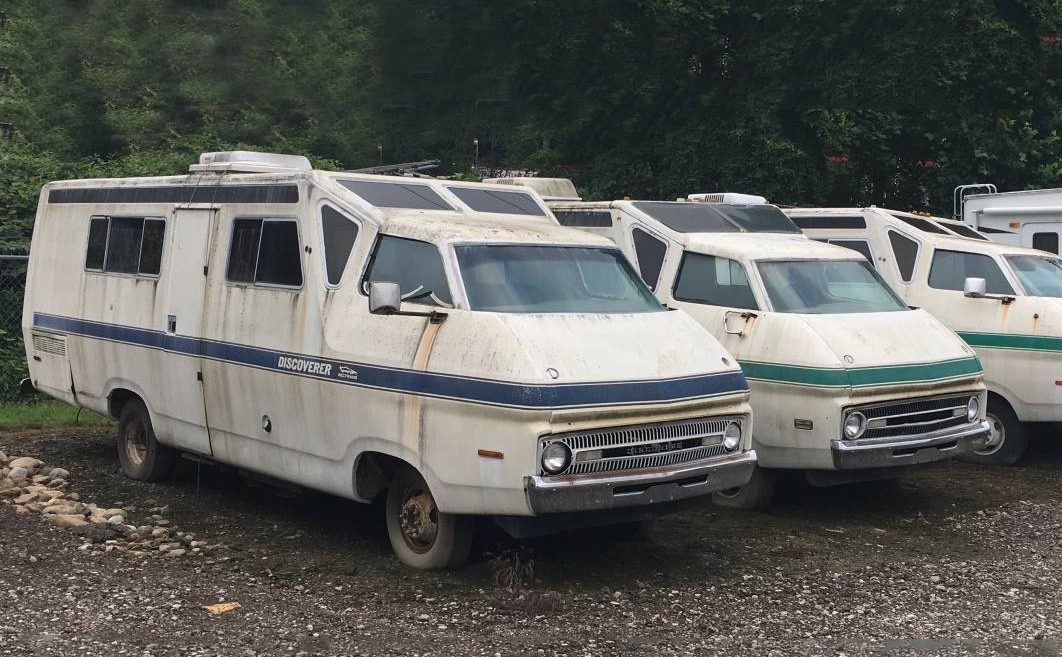
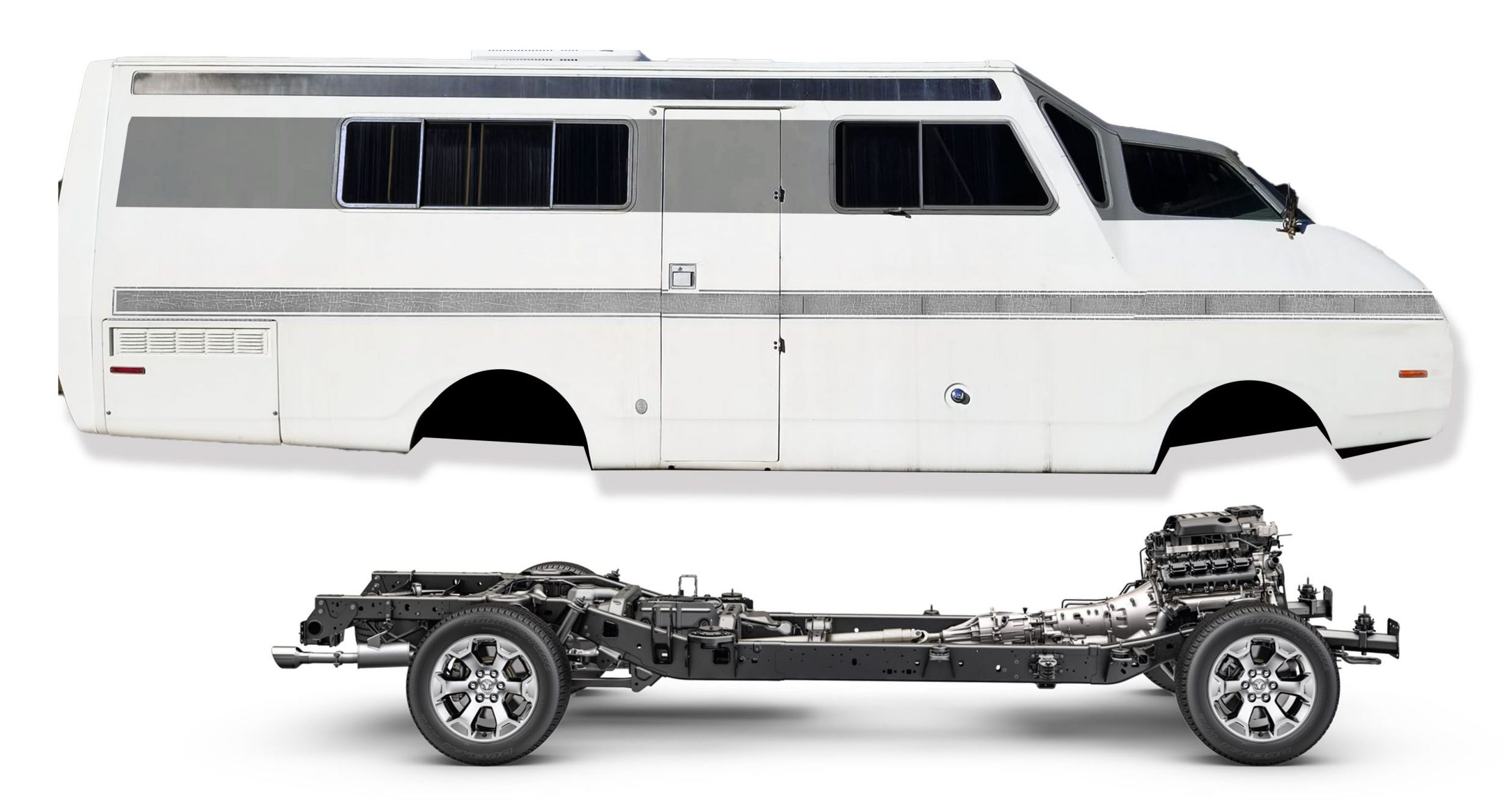
Interestingly enough, the wheelbase of that Rectrans 25 is almost identical to the current RAM pickup; a testimony to how large vehicles have become today. Does that mean that we could find the old fiberglass molds for the old Rectrans, or just digitize a decrepit for-sale example, and recreate the thing on top of a modern RAM chassis? I’m not sure what’s possible, but that’s exactly what we’re going to propose for our Hellcat-powered motorhome, the Hell Rec’R. Let’s begin..
Now The Name, That’s Ugly
Interestingly, the styling of the Rectrans has been frequently criticized by viewers who say “it’s so ugly it’s beautiful” and other such hackneyed quips. I don’t understand the dislike, but I do think the detailing on the thing is a bit horrific and negatively affects the shape.
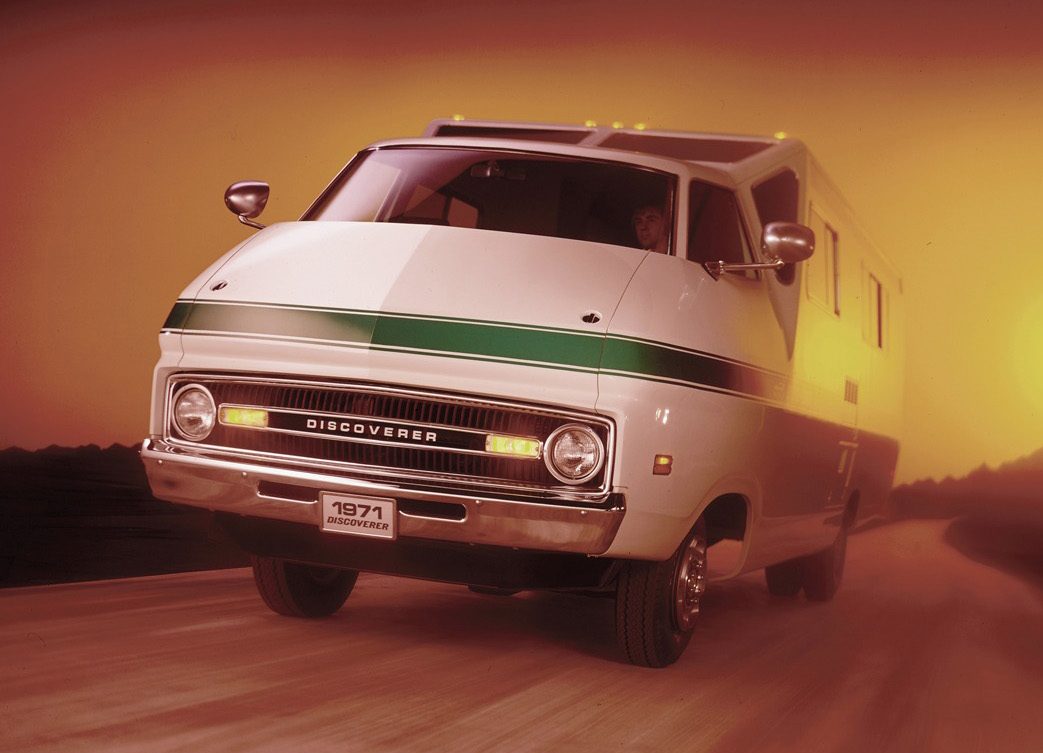
First, the recognizable Dodge grille and what I can assume is a windshield from the same vehicle moved several feet apart make the front end appear to be a full-sized van that went all Stay-Puft marshmallow on us. Combined with the tiny-looking wheels, you get a cartoonishly bloated appearance. Also, the triangular flat glass panels on the upswept area behind the driving compartment look rather clunky and are almost certainly a victim of this small company’s inability to make a vast curved window for the space. Some minor tweaks will go a long way to fixing this.
I’ve modified the nose to be smoother and incorporate a Charger-style grille with an LED ring sunken into the front. The chrome bumper is gone, replaced by body colored fascia with brake vents and a splitter. Yes, it’s a Mopar, so you know we’ll have to keep the yellow splitter guards in place long after the thing leaves the dealer lot. Flared round wheel openings improve the appearance as well, but the biggest improvement to me is from painting the roof black from the windshield all the way over those disjointed triangular windows. This visually cleans up that space quite nicely and lets you experience Shinoda’s design without being distracted by all of those triangles.

How about an open-topped motorhome? Why not offer removable T-tops over the driver and front passenger; you could easily lift these up and stow them inside behind the dinette in the motorhome?

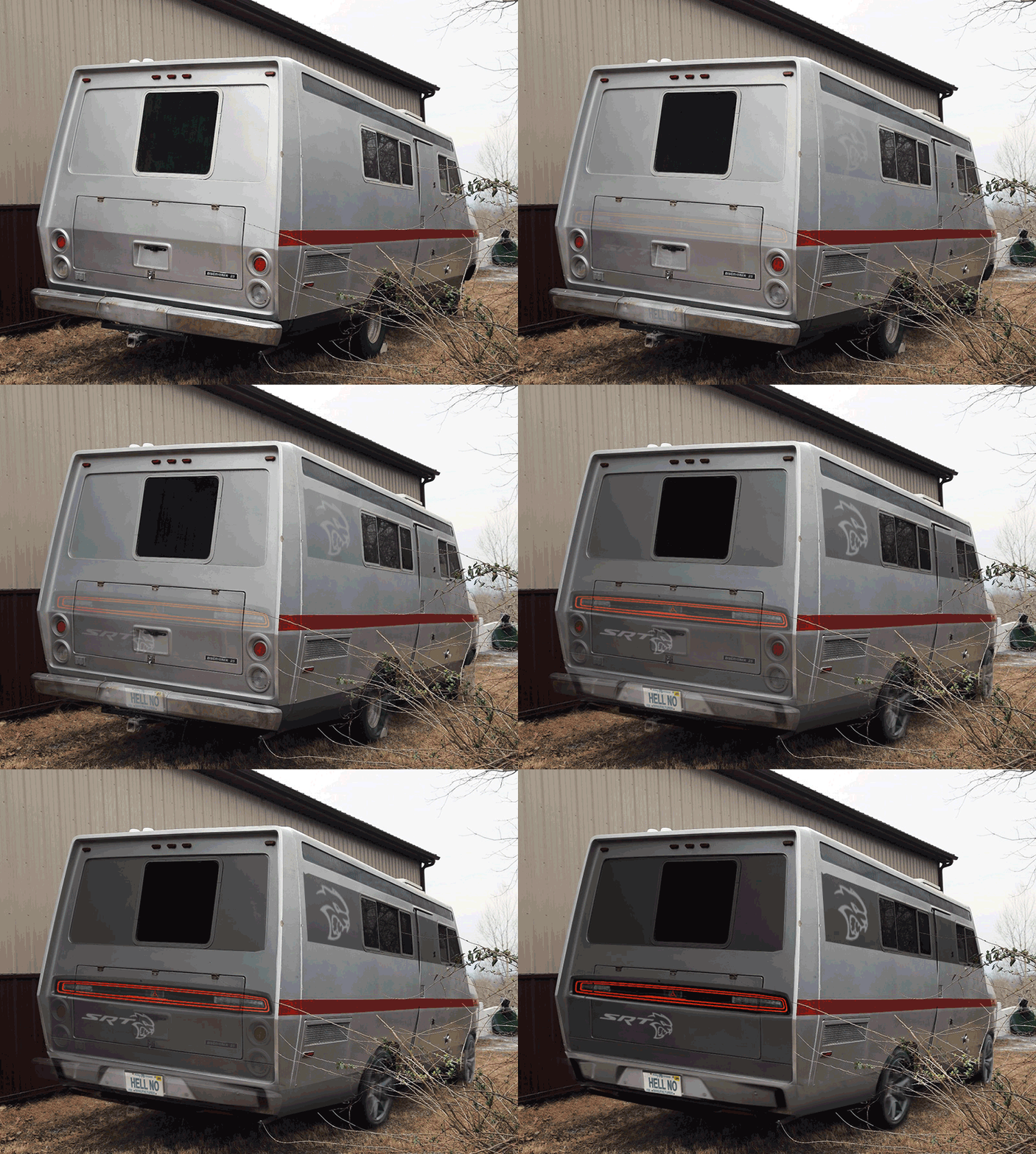
Here’s an animation of the original Rectrans and the Hell Rec’R.

In the back, you can see how the original Rectrans has a sunken area to visually lighten up the mass and round off-the-shelf double-shot round taillights (a little bit of Corvette there, Larry?).
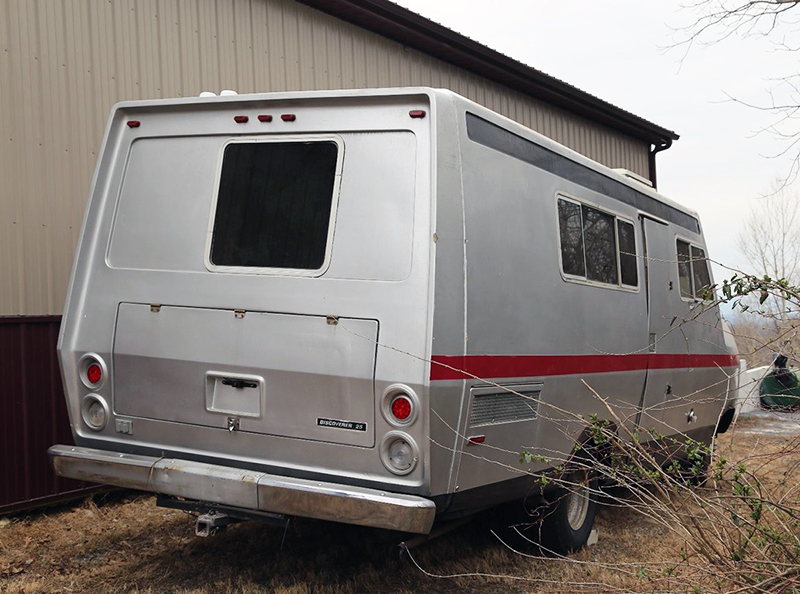
Our Hell Rec’R would paint that area a darker color to further break up the mass and add in wide taillights similar to a Charger. The chrome bumper is gone, replaced by the rolled body-colored pan.

The animation shows the differences:
Well, we’ve made the body changes, but how are we going to make this thing actually move? Well, as advanced as the GMC Motorhome was our reborn Rectrans will stay relatively conventional with the RAM frame and mechanicals. Of course, those mechanicals underpin a nice-driving pickup truck with four-wheel disc brakes and up-to-date suspension technology that the original Rectrans couldn’t dream of. I’m seeing complete pickup frames with essentially everything except the body shipped to a manufacturer in Elkhart, Indiana where a fiberglass monocoque with any needed aluminum reinforcements and steel frame extensions would be added on. Stellantis could provide the electronics, instruments, and wiring to basically make this a factory-sanctioned and even factory-warrantied project that just happens to be assembled in an off-site location by seasoned motorcoach makers. Actually, this whole thing seems remarkably and frighteningly producible.
I would imagine that we could make RAM Hell Rec’Rs in far less boisterous versions as well. A less-powerful Hemi V8 or better yet a Cummins turbo diesel combined with less aggressive tires and suspension might yield the more luxury-oriented RAM Home Rec’R:
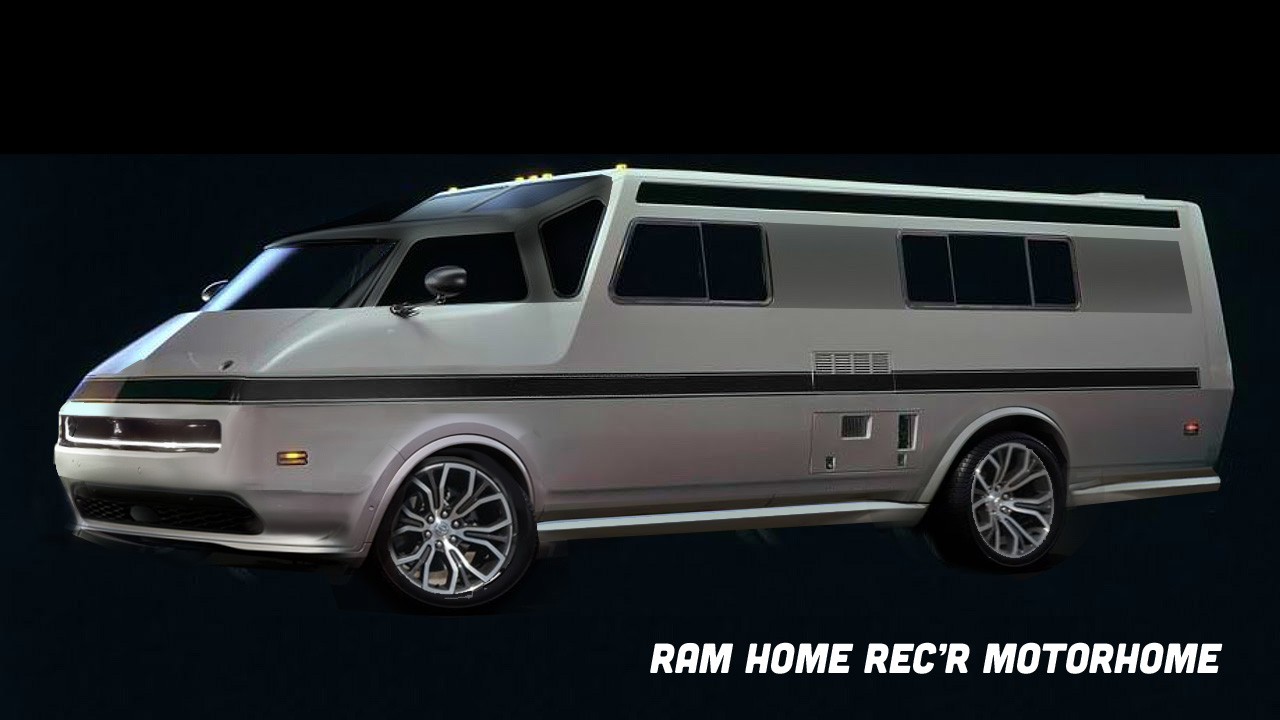
Stellantis and whatever northern Indiana RV specialist would have you covered, regardless of your tastes, or lack thereof. If the journey is just as important as the destination, then either of these revived Rectrans products would be for you.
Yes, We’d Have Red LED Lighting Everywhere
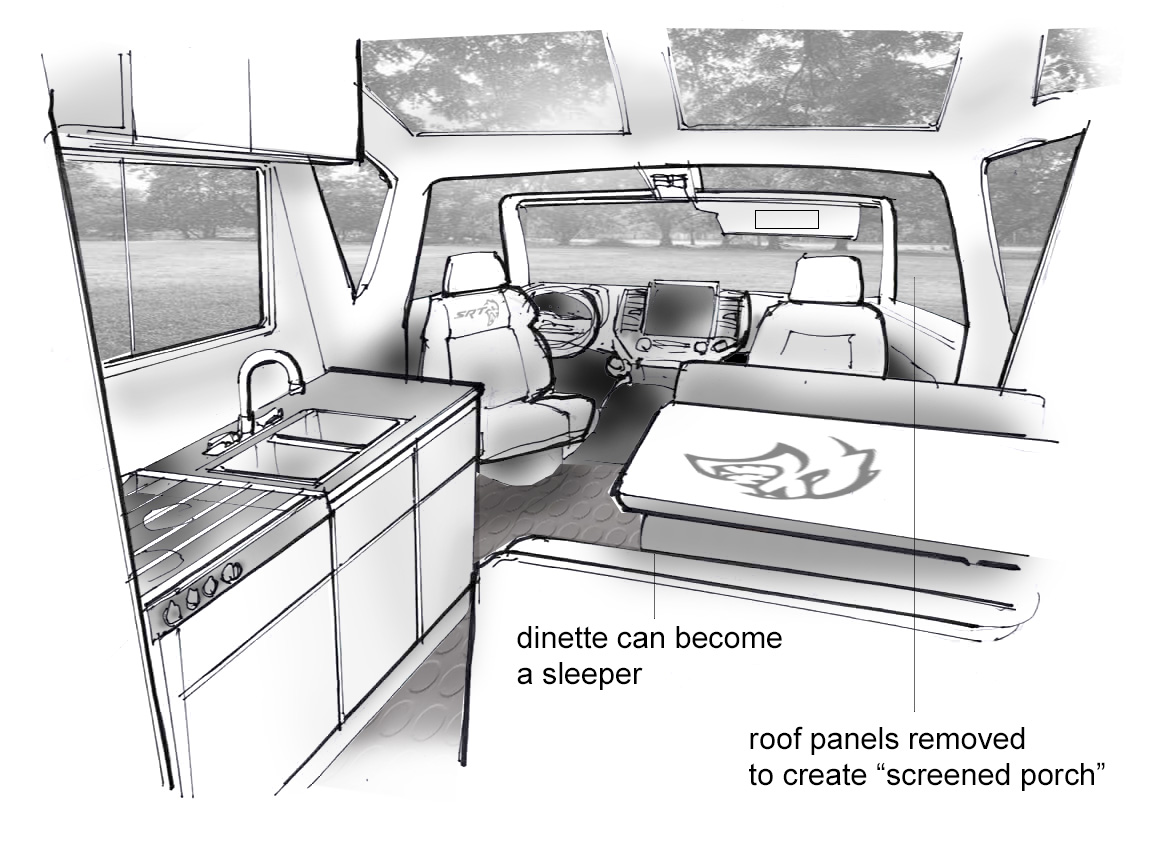
Looking at the original floorplan of the Rectrans, we’d replicate much of it for the Hell Rec’R inside with a luxurious cabin designed basically for a traveling couple, though it could easily convert to something that would sleep a total of four people if you convert the dinette.

Mercedes Streeter requested that the interior of this Hellcat-powered camper be in tones of black and grey with prominent Hellcat logos on things like the bedspread, the walls, and countertops. That sounded like something that went well beyond the limits of good taste and common sense so I have no problem doing it.

Those Rectrans windows really lightened up the interior; if you ever needed a reason to believe that Larry Shinoda was a designer on par with more well-known names, this spacious-looking interior shell is more proof. Here’s a fun feature of the Hell Rec’R: those removable T-tops could come off at the campsite, and a screen net might stretch over the opening to keep out the ‘skeeters to give you a bug-free conversation “porch.” Note the dash taken straight out of a new RAM pickup and seats from a Hellcat Charger or Challenger.
Home Is Where The Hellcat Is
Some would say that the greatest injustice done to legendary designer Larry Shinoda was when Chrysler stole his concept of the Jeep ZJ without crediting him (they eventually settled out of court). To me, I think the worst crime is the lack of respect for his Rectrans design. I really wanted to rehabilitate the look of this misunderstood motorhome that gets far too much hate and not nearly enough of the recognition that it deserves, and glad that I got the chance here.
I tend to ignore the wisdom of people who own nearly two dozen vehicles they don’t even drive with much regularity, but with this Hellcat motorhome, I think Mercedes Streeter was on point. Or maybe I’m just getting caught up in the distorted vision of reality that affects most of the staff. Either way, I think that the Hell Rec’R is something that needs to exist right now. Am I wrong?
The post This Hellcat-Powered Rectrans Motorhome Is A Wonderful, Terrible Concept That Must Be Made Real appeared first on The Autopian.