The government always picks winners and losers. It doesn’t matter if it’s a more consensus-minded society like Sweden, or top-down authoritarianism like China. Governments pick winners and losers. In America, those losers are anyone in the EV supply chain.
There’s a new article out that talks about the ‘Battery Belt,’ which is a useful neologism for the mostly rural and historically Republican areas that were supposed to be the source of batteries for future electric cars. That’s not happening at the speed most predicted, so what happens to those communities?
The Morning Dump is a news roundup, and all the news today is built around batteries. We know what’s happening, but who is to blame?
Is it the automakers who had too lofty ambitions? Is it the politicians who halted an industrial policy before it could be started? And where does this go?
‘That’s On Everybody’s Mind, Quite Frankly’

Back in 2022, Ford announced it would spend billions building a battery and EV truck-making facility in Stanton, Tennessee. This small town of 450 people would suddenly get thousands of new workers.
This facility was to be a part of the Battery Belt and, maybe, still will be. Ford keeps delaying the project, just like nearly every major automaker with EV ambitions in the United States.
What if it never happens? From the Reuters piece on the dashed dreams of the Battery Belt, that’s the question:
The uncertain fate of these massive, high-tech factories and their employment has rattled the small rural communities that spent years hitching their economic futures to these projects.
“That’s on everybody’s mind, quite frankly,” said Allan Sterbinsky, who retired as mayor of Stanton in December and advocated for the site for years before Ford came to town. Some residents worry that Ford will never follow through on the plant, the former mayor says. Others hope the company will repurpose the 3,600-acre site if demand doesn’t increase for EVs.
A Ford spokesperson pointed to the automaker’s community work in Stanton, including grants to public safety organizations as part of a broader $9 million commitment to the area.
Essentially, the industry was preparing to build enough battery capacity to cover roughly 80% of the current car market, or around 13 million cars. Now? Maybe a quarter of that will be necessary.
What happens to these communities? How did we end up here?
‘Electric Vehicle Subsidies Were… Distorting The Market’
I have already written at length here about how electric vehicle subsidies were, ultimately, bad politics, even if you think they were good governance.
Ford and General Motors thought they’d be clever and use a loophole in the IRS guidance around the ending of the IRA tax credit to extend it for a few months. Both GM and Ford have bailed on those plans after two Republican Senators cried foul.
Here’s the letter from the Senators that explains some of their reasoning:
We write to alert you to a serious violation of Congressional intent that threatens great harm to U.S. taxpayer dollars and ask for your immediate assistance in rectifying this problem.
As you know, Congress recently enacted Public Law 119-21, the One Big Beautiful Bill Act, giving working class families massive tax relief, ending the Green New Scam, and fully funding our border security and national security needs. As part of this law, Congress amended Sections 25E, 30D, and 45W of the tax code, which collectively provide tax credits for the purchase of certain “clean vehicles.” These electric vehicle subsidies were costing taxpayers billions of dollars each year and distorting the market for automakers and dealers across the country, and we are extremely pleased that Congress acted decisively to cut these credits off.
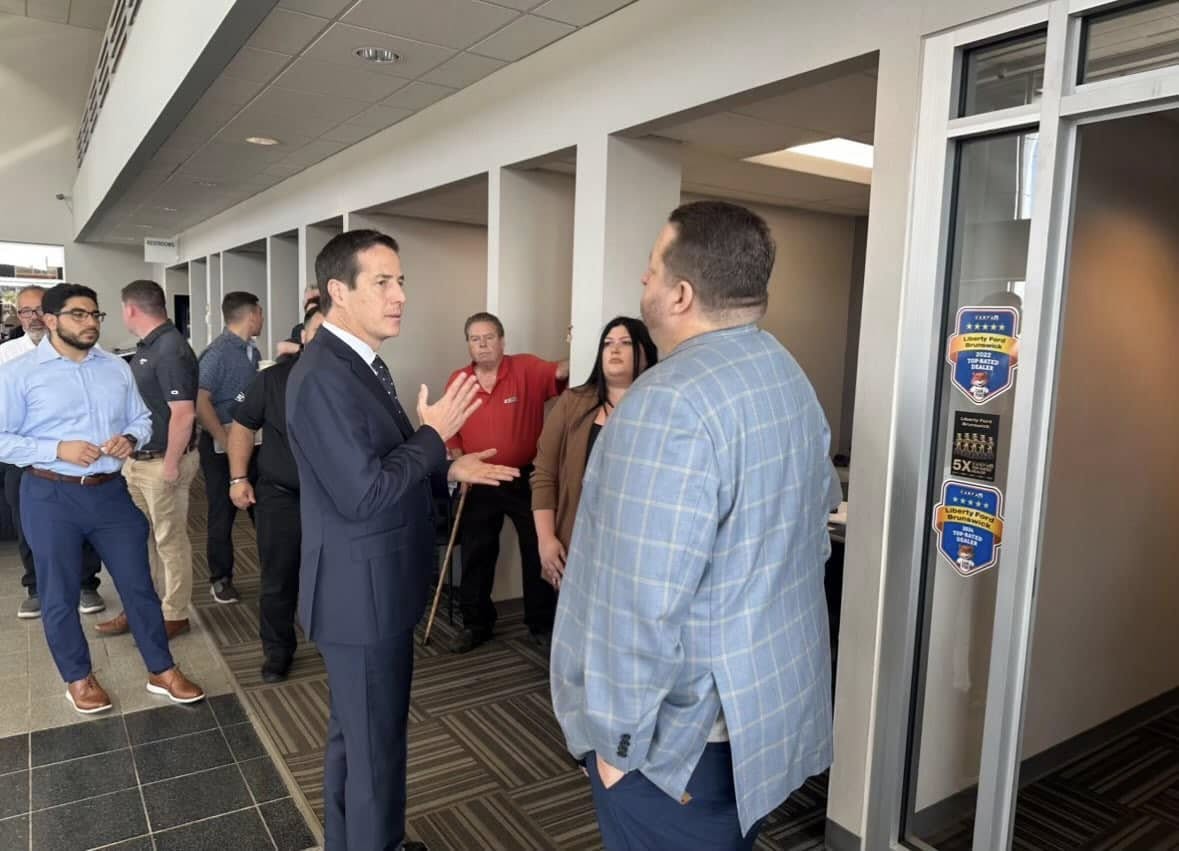
Senator Moreno is a car dealer, so you might expect he’d have some sort of sympathy for dealers or automakers who are now trying to move these vehicles (that the previous government pushed).
I think the bit about how these subsidies were “distorting the market for automakers” kind of gives the game away. A 2023 report from Climate Power showed that there were 24 planned battery projects and 11 electric vehicle projects in rural areas, representing more than $20 billion in investments. Because it’s hard to build plants in urban areas, it’s not surprising that most of these plans were in Republican districts. They are in a mix of historically swing and not-so swing Republican states, however.
The political ramifications of potentially killing many of these projects seem, from the Republican side at least, not to be as big of a deal as continuing the tax credit.
‘It’s Going To Be Smaller, Way Smaller Than We Thought’
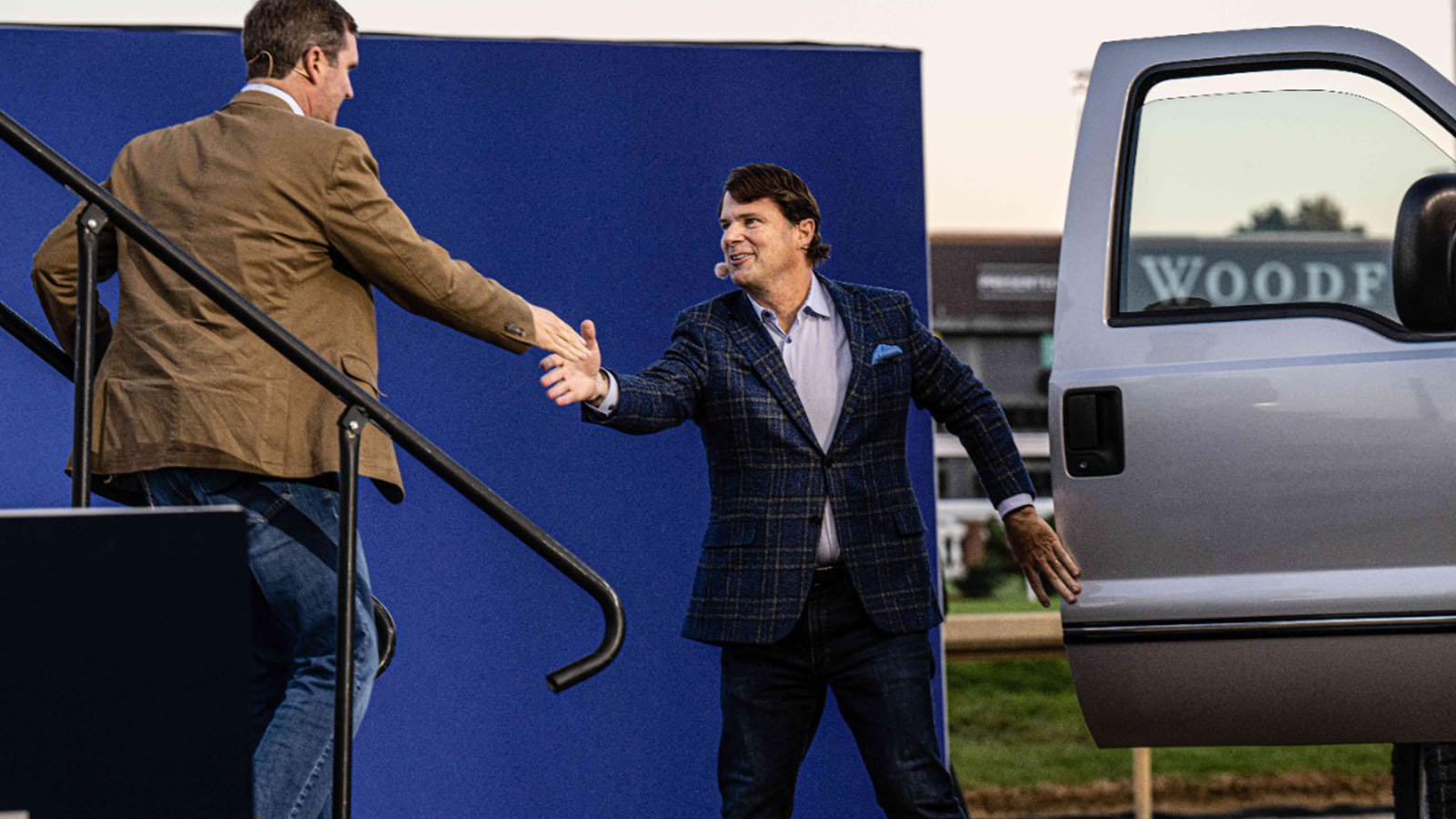
Credit to Ford CEO Jim Farley for having a quote for every topic. While recently expanding on his belief that we need more skilled tradespeople (we do), he also made a point of being honest about how expectations for EV adoption were not matched to the reality of consumer demand.
Farley on Tuesday said he “wouldn’t be surprised” if sales of EVs fell from a market share of around 10% to 12% this month — which is expected to be a record — to 5% after the incentive program ends.
“I think it’s going to be a vibrant industry, but it’s going to be smaller, way smaller than we thought, especially with the policy change in the tailpipe emissions, plus the $7,500 consumer incentive going away,” he said during a Ford event about promoting skilled trades and workers in Detroit. “We’re going to find out in a month. I wouldn’t be surprised that the EV sales in the U.S. go down to 5%.”
Farley said the industry learned that “partial electrification,” such as hybrids, are easier for customers to accept for the time being.
Even if the Democrats won every seat in every election and the White House, it’s not like all that battery capacity we were building would have exactly been necessary (some plans were being paused before the election). We’d have ended up somewhere in between, or at least closer to in between than where we are now.
Either way, the post-Tesla overheated projections definitely contributed to this mess.
‘It’s Not Something (We), In Any Way, Shape, Or Form, Expect To Give Up’

Could General Motors do the one thing it doesn’t normally do? Could GM be right on the technology and ahead of the market, and not suddenly retreat at the first sign of an obstacle?
Here’s a quote from a Detroit Free Press interview with GM President of North America Duncan Alred:
Still, GM invested significant money and planning to offer the range of EVs it has today. Though the industry is bracing for an EV sales slump, GM’s leaders insist that investing deeply and early in a broad range of electric offerings was not a mistake.
“We believe EVs will remain a strong part of the GM portfolio. Quite honestly, it’s one of the reasons why our market share has grown so much this year,” Aldred said. “It’s not something (we), in any way, shape or form, expect to give up.”
Year to date, GM estimates that its 17.2% market share across vehicle propulsion systems is the highest it’s been in 10 years. So far this year, EV total sales more than doubled to 144,668 vehicles.
Cool? Cool! GM is already deeply invested in its EV project and has approximately a dozen models out there, compared to just three for Ford. It also has affordable vehicles like the reborn Bolt coming to the market.
EVs are the right car for a lot of people, including consumers who haven’t been able to afford one yet.
If everyone else (other than Tesla) is retreating to some degree, it’s maybe not the worst position for GM to be in to soak up all that excess market share.
What I’m Listening To While Writing TMD
I started dancing to this in the car with my daughter before realizing I definitely could not allow the song to continue to the chorus. Either way, Nelly’s “Hot In Herre” is a bop. Also, peep that Aston.
The Big Question
What’s low-key your favorite car cameo in a music video?
Top photo: Colombo, Ford
The post Who Killed The Battery Belt? appeared first on The Autopian.

