It should be no secret to the readers of this site that I love the Smart Fortwo. I have each generation of Fortwo that sold in America, and even one that was never officially sold here. My affinity for the tiny German car was tested yesterday when my second-cheapest and objectively worst Smart tried to bite me. This car, which I paid only $1,200 for, blew its wheel cylinder, something that, until now, I have never experienced before. Here’s what that was like.
If you live a life of collecting crapboxes like I do, you’re bound to experience some truly stupid issues that normal people basically never have to worry about. Until recent times, I have almost always purchased cars at the very bottoms of their depreciation curves, when they’ve accumulated enough miles to have reached the moon. These cars are often riddled with issues like bad paint, rust, non-functional air-conditioners, or leaks large enough to make the Exxon Valdez blush. I used to lord over a hoard of absolute beaters. I’m talking cars where “runs and drives” are their sole positive attributes.
Thanks to the Autopian, I now have the ability to buy nicer cars and not feel so bad about it. I have since scored such finds as my pristine 27,000-mile 2009 Smart Fortwo, my beautiful 1997 Honda Life, and an almost minty 1998 MGF roadster. I then purged myself of the worst of the worst, like my crashed Volkswagen Touareg VR6, my rustbucket Volkswagen Passat TDI, and my bargain basement Volkswagen Phaeton. Yet, I have still held on to at least one car from my janky past, and it was my 2008 Smart Fortwo. Well, that was until it tried to burn me.

I bought this Smart Fortwo back in the fall of 2020 for a strategic reason. Until that point, I had been using my 2012 Smart Fortwo as an off-road car. My little car was so good at punching above its weight off-road that, at the Gambler 500 Tennessee 2019, I won an award for doing the most with the least.
However, my 2012 Smart was originally my baby. I bought it new in 2012, and while the car was an absolute beast at doing what it wasn’t built to handle, I felt guilty for ruining my teenage dream car. That’s when I cooked up a plan. What if I bought a Smart that was already well past its prime? I’d just buy a Smart that already had a lot of problems, and, in theory, I wouldn’t feel bad about beating it up some more.
My Worst Car
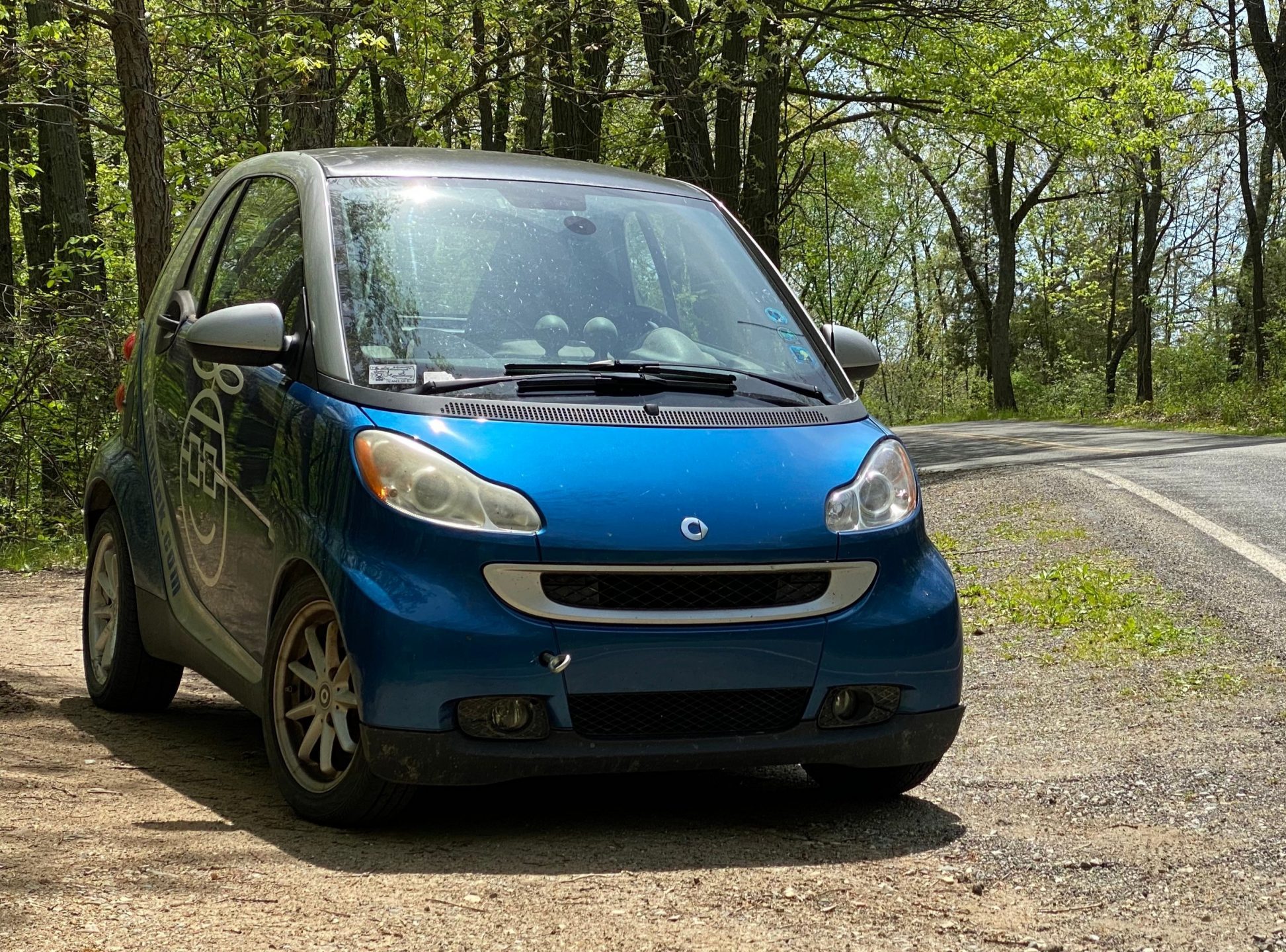
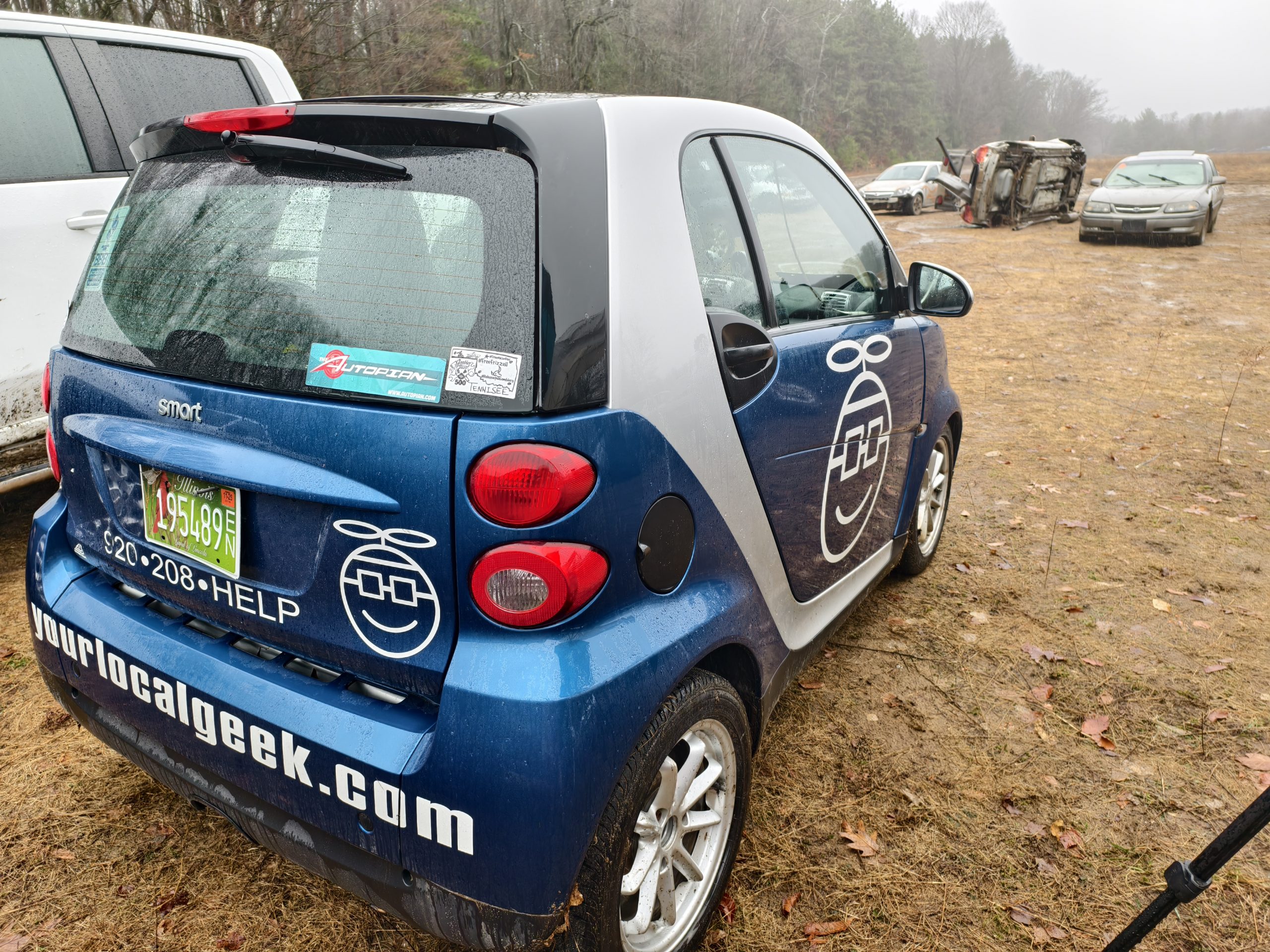
That opportunity came in fall 2020 when a fellow near Road America in Wisconsin put his Smart up for sale. Sure, the car had 100,000 miles, the decals of a defunct business stuck on it, and a laundry list of to-do items. It already had a somewhat mismatched body due to taking on the brunt of hitting a deer. But it was listed for the princely sum of just $1,200 (or was it $1,400? I don’t remember). I pounced on it as soon as I could.
Sure enough, this car was a pile of crap. Documentation I got with the car indicated that the control arm bushings were on their way out, the strut springs had snapped off their upper inch, and the ABS tone rings also left the chat years before. Perhaps even weirder than all of those issues was the big rust spot on the inside of the car, which I had never seen in a Smart before or since. But this was perfect! I didn’t want a good Smart to beat up, after all.

I then took the car on the Gambler 500 as planned, and the car got absolutely trashed. Somehow, I did not consider that my 2012 Smart had a 1.5-inch tire lift and a healthy suspension. This car was at least 2.5 inches closer to the ground thanks to the bad springs and stock tires. Add in a Sheryl, who was my passenger, and I wouldn’t be surprised if I had lost 3.5 inches of ride height compared to the 2012. I didn’t realize that until I attempted to drive the car up the same small waterfall that my 2012 had aced the year before, and heard the loud crunch of the vehicle’s front bumper breaking after it failed to clear rocks. Oops.
I’d spend the rest of the weekend hearing all sorts of crunches and cracks, but the car survived. I even got the chance to drive the car through the famous Nemo Tunnel before it closed.

I was surprised to learn that, unexpectedly, I was actually quite sad about beating this car up. Sure, it was crap when I bought it, but it didn’t deserve to get brutally beaten. So, I just started driving the car as my daily. This car witnessed some of the earliest moments of my car journalism career. I drove it to my first-ever press event, the spring 2021 launch of the 2022 Volkswagen Taos. I used this car to pick up David from the train station before he embarked on his journey to buy a Jeep FC and get “twrenchfoot.” I drove this car when I went to the old Packard plant in Michigan for the first time. Weirdly, I created a lot of memories in this absolute pile of junk.
But it was a steaming pile, one that very quickly developed a paint peeling problem, bad wheel bearings, and a transmission that didn’t know if it wanted to shift. So, once I started buying better cars in 2021, I parked the car in outdoor storage. I occasionally started the car’s engine, but otherwise didn’t do anything with it. I thought that, maybe, one day I’d install a lift kit and turn it into a little mud buggy. But that time would never come, and the car just sat.
Back in late 2024, I finally gave the car a purpose again after I sold off all of my terrible Volkswagens. I gave the car a much-needed bath, fluid changes, and a few repairs. I thought I’d use this car as my own Autopian Test Car. I wanted to make a yoke for this stupid car and try out some experiments. But, admittedly, time got in my way. Still, I drove the car as my daily, anyway. Besides, it was an impressive junker, with a working air-conditioner and in okay enough shape to at least drive a road trip. Here it is at the second annual Opposite-Lock OppoX earlier this year!
What Was That Sound?
Fast-forward to last week, and I find myself driving to my mini warehouse to take pictures of my moldy Saturn Sky Red Line for that piece. I take my pictures and start heading home, stopping at a gas station near my apartment. After I topped up the tank, I hopped in and attempted to set out. That’s when I heard a loud pop from behind my ears.
It didn’t take long to figure out the cause, as I saw some slow drips coming from the left rear wheel. A little poking around suggested that what popped was the wheel cylinder.
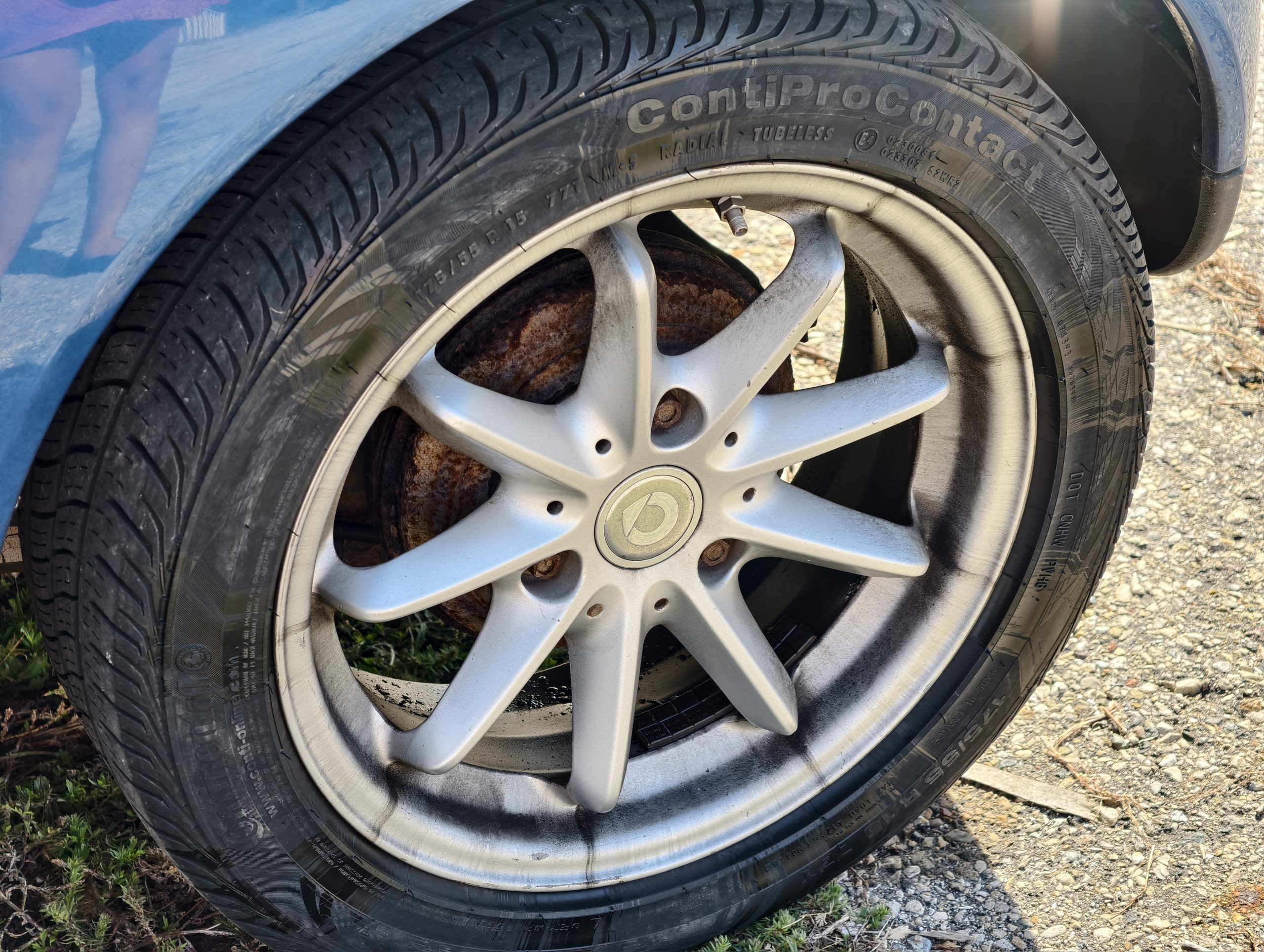
Yes, I had such a bad week last week that I discovered mold on my Saturn and then had this brake problem on the same day.
If you’re curious about how drum brakes work, check out this video from Bendix:
But what you need to know here is that the wheel cylinder uses pressure from the brake fluid to push two pistons outward. These pistons then move the brake shoes out, which causes the shoes to rub on the inside of the drum. The seals of the wheel cylinder can fail, causing a leak.
Now, one of the symptoms of a failing wheel cylinder is a mushy brake pedal. Weirdly, my braking action was fine until I heard the loud bang from that wheel.
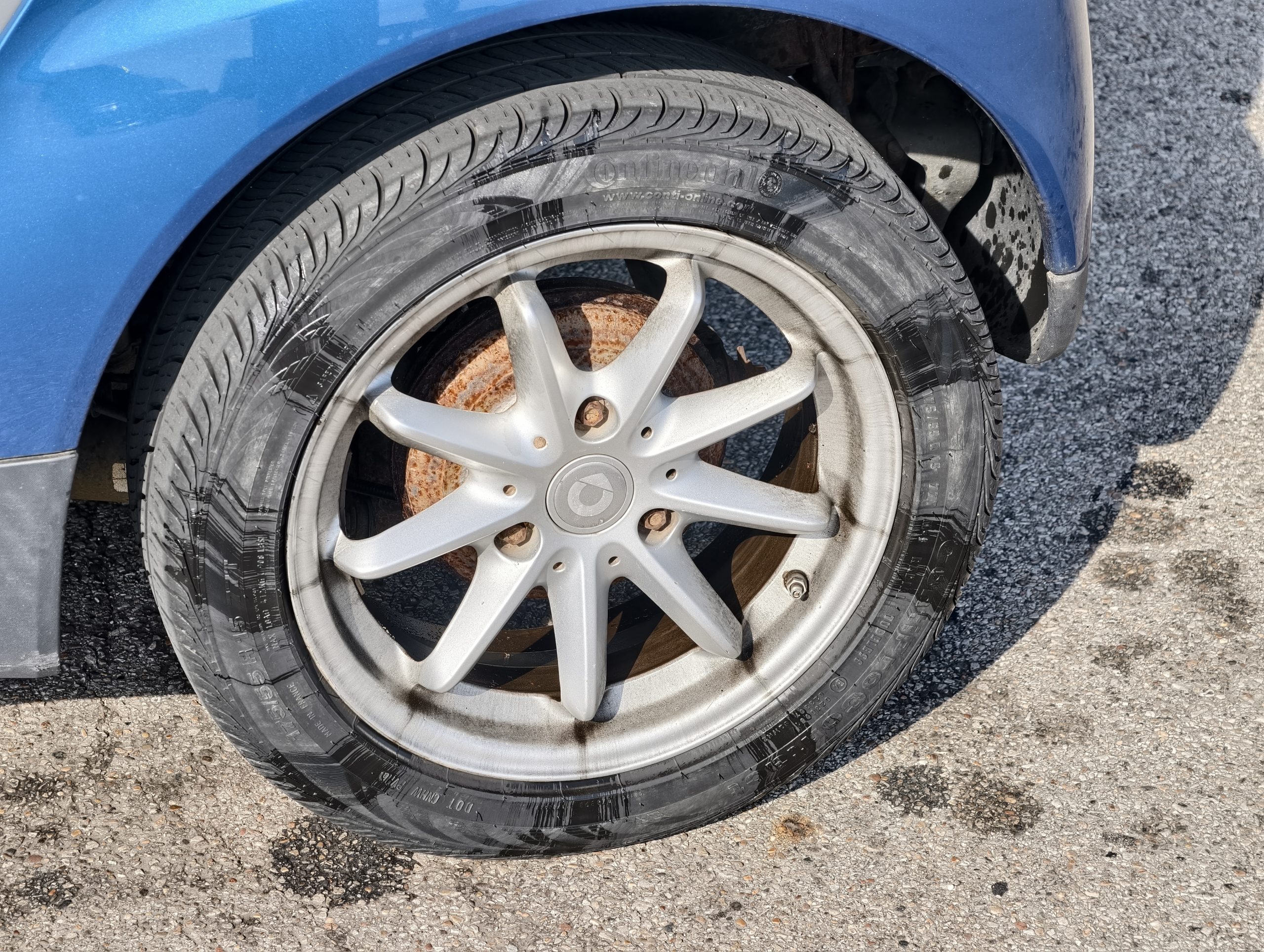
The brakes still worked, but they had a slow leak. Thankfully, the gas station where the wheel cylinder decided to break was near my apartment, and I crawled the car back to its parking space without needing to punch the brakes. Still, the car leaked an impressive amount of fluid in that time.
I fully tested the braking system when I got home, and it was enlightening. After about 20 pumps or so, the leak increased from a slow drip to a darn near torrent.
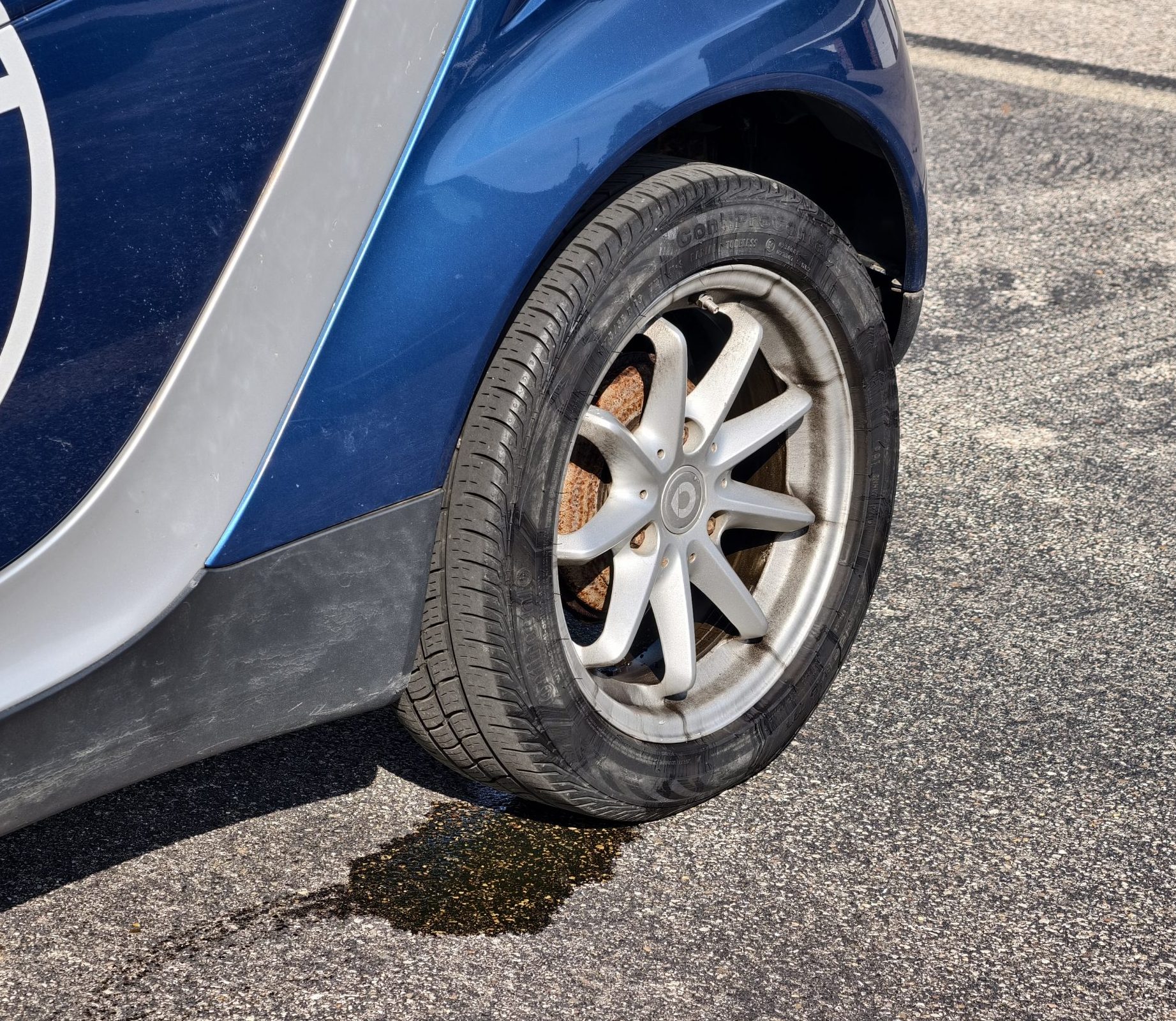
The pedal travel was inconsistent, with pressure in the brake pedal varying with every press. Most of the time, the brakes didn’t do anything until the pedal got nearly to the floor. Yet, the brakes activated through enough pumps that I lost count. I did not do a driving test on the bad brakes, but I suspect that the car would have pulled slightly since the left rear brake was no longer participating as much, if at all. I tried to remove the drum, but found myself unable to get the hardware off due to rust.
I have never driven a car with a leaking wheel cylinder before. The only other time I’ve had a big braking issue was when my 1991 Ford Festiva Go-Kart blew a brake line at a private off-road park. The loss of braking was practically immediate. Here, at least during my home tests, the car tried clinging to the brakes.

Learning how this failure mode works was neat, but also the final straw for me and this car. I was sort of never happy with the fact that the car’s paint was in such bad shape that removing the business decals also removed the paint. I hated the giant rust spot, and Smart body panels are hard to come by nowadays. So, the car was sort of just perpetually broken. I realized that it would cost me about the same to fix everything wrong with the car as it would cost me to just buy one that isn’t a stinking pile.
Another Life
So, I finally made the call to say goodbye to my worst car. I listed it for sale for $500, and I had it sold in about two hours. I made sure to make the car sound extremely awful in my listing, and yet, people were all over it.
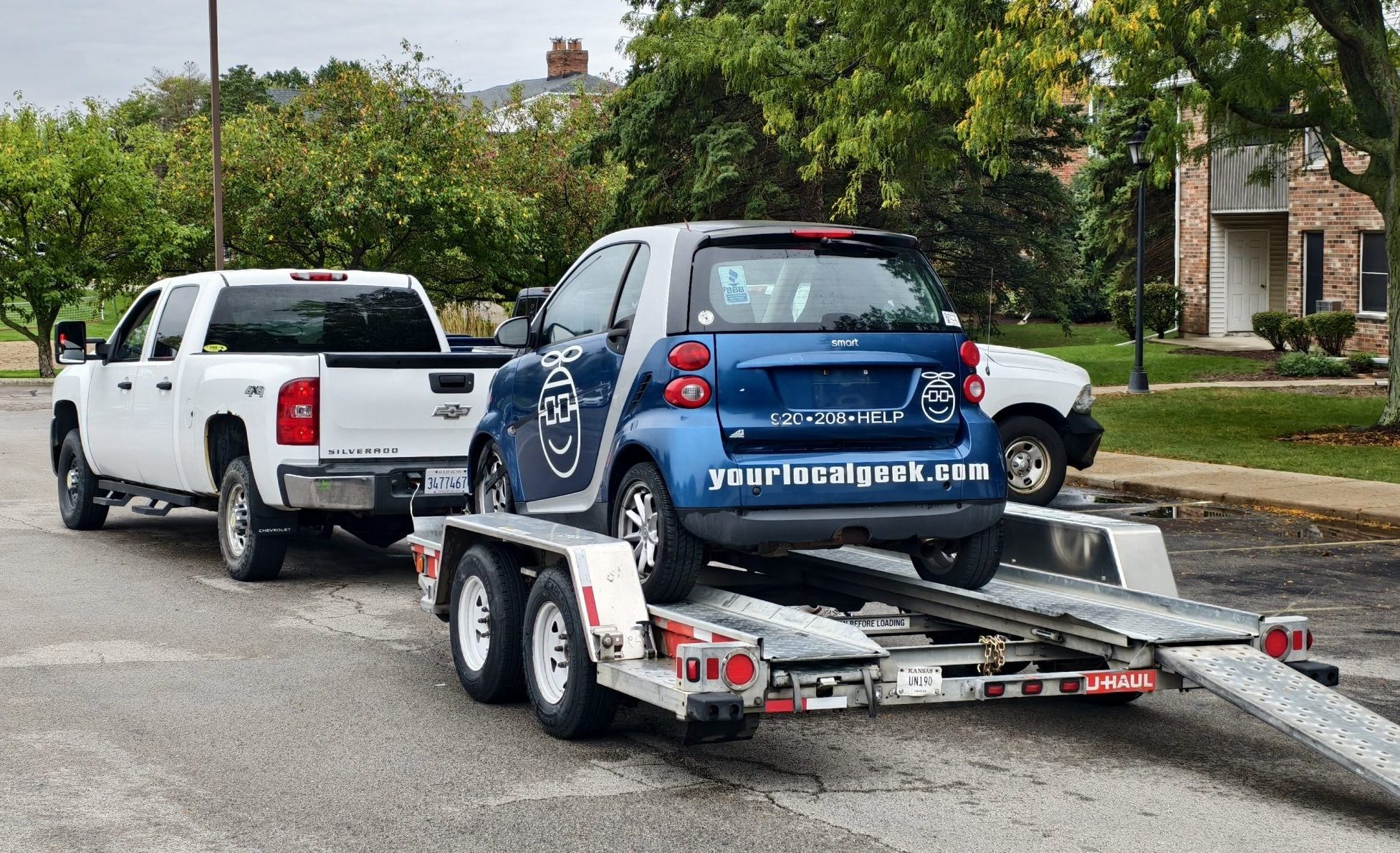
As it turns out, there are a lot of Chicago-area Smart owners who just desperately need body parts, even if they’re crappy. The guy who bought my car said that he wrecked the front of his Smart, and has found it impossible to find blue replacement panels. He wasn’t interested in buying a decent Smart just to take its panels. So, my Smart will give its front end to his Smart. It sounds like he’ll then sell what parts are in decent shape. The engine and transmission are great, and there are lots of smaller bits that are good like the door panels, window regulators, and so on.
I love this result. I think my car was beyond economic repair, because, again, working Smarts are cheap. However, this car will now get to live on in who knows how many other Smarts. It also means that I lost only $700 to $900 or so after beating the ever living crap out of this car for years. But really, I’m just stoked to hear that my car will help others stay on the road.

Anyway, if you’re driving and your brake pedal’s behavior suddenly changes, or you hear a loud bang coming from your wheels, don’t just ignore it. Your car is telling you something is wrong. Don’t fly down a highway and learn at the last second that your brakes no longer work.
The good news is that wheel cylinders are cheap and can be replaced by the backyard wrencher. But if you live in the Rust Belt like I do, don’t be surprised if you have to fight ornery iron oxide every step of the way. In the worst case, there’s no shame in hiring a professional.
As for me, that means I’m now down to five Smarts, which is admittedly very silly. I’m not in a rush to replace this car. I think, for now, I’ll just enjoy a crap car exiting my collection and no longer having to worry about it.
Top graphic image: Mercedes Streeter
The post My Stupid $1,200 Car Just Failed In A Spectacular Way That I’ve Never Experienced Before appeared first on The Autopian.